Don't do this! Revealing 10 Common Errors in Supervision
Dr. Dawn-Elise Snipes outlines 12 common errors in clinical supervision, including failing to observe supervisees, passive supervision, and ending oversight at licensure. She offers corrective practices like direct observation, Socratic questioning, and individualized development plans to improve supervisee skills and client outcomes.
This episode was pre recorded as part of a live continuing education webinar on demand. CEUs are still available for this presentation through all CEUs. Register@Allce.com Counselortoolbox.
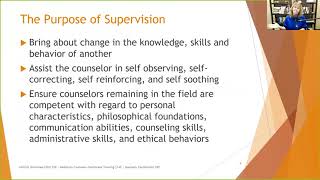
Welcome everybody. Today we're going to be talking about 12 common errors in supervision. And just to go over them really quickly, we're going to talk about doing harm to the counselor. Failing to observe and what that means. Passive supervision. Failure to focus on reciprocal effects, failure to ask Socratic questions, terminating supervision upon licensure, undisciplined supervision. Failure to individualize training plans, failure to set boundaries, not practicing what we preach, failure to provide adequate support to the counselor and blurring that line between supervision and counseling. So I want you to think a little bit about the supervisor that you had, especially your supervisor for licensure. Not necessarily the one you have now, but you can think about that one too if you want. Think about what things he or she did that you liked, that were helpful, that were inspiring, that were motivating, and what things you wish he or she would have done a little bit more of or done at all. I know my supervisor didn't do a whole lot of direct observation, which I wish he would have done a little bit more of. And I really rather enjoyed my time when we had to record our sessions and review videotapes. We did that in graduate school. It wasn't really part of my supervision, but I did learn a lot. Although I hated watching them. I did learn a lot by watching my sessions and the non verbals and all that kind of stuff. Another thing that I wish my supervisor would have done maybe is to hone in on a particular technique such as motivational interviewing or brief therapy or something and encourage me to reflect upon my session and look at how I could have integrated those skills a little bit more. So those are just some things that I think of off the top of my head that I wish my supervisor would have done and I try to do with my supervisees because that's what I would have wanted. But that doesn't necessarily mean it's what they want. And we're going to talk about that individualized plan as we go through the six series. And what is one thing that you're going to do differently as a supervisor? So the purpose of supervision is to bring about change in the knowledge, skills and behavior of another person. Now it's interesting here because supervision. You think you're supervising a supervisee. Well, yeah, that's true. But that supervisee is trying to bring about change in the knowledge Skills and behavior of the client. So by bringing about the knowledge, bringing about change in our supervisee, we're affecting how he or she brings about change in the client. So we want to look at, make sure to follow it all the way through. If I do this, if I have the supervisee start practicing this, yes, it may help him or her learn a particular technique. But is it, are we jumping the gun by having that person employ this technique in session right yet because they're not comfortable with it enough to really implement it effectively, whereby if they start using this, they may actually slow their client's progress down. So we want to look at what are the effects, the domino effects of everything that we do. Supervision assists the counselor in self observing, self correcting, self reinforcing and, and self soothing. And the last two, we don't focus on a lot. A lot of times when we talk about supervision, we focus on observation and correction. You know, what did you do and what could you have done better? Self reinforcing is really important. When my supervisees come in at the beginning of supervision, I start out by saying, tell me three things that went really well this week. Tell me one thing that in retrospect you wish you would have done a little bit differently or that didn't go so well. So we start off the session by identifying, and I intentionally choose three good things and one area for improvement because I want to highlight the strengths that the clinician brings. And then we go through each particular client that they have. But I want them to be able to self reinforce and identify what they do. And even if their clients aren't making progress like they hoped the client would make progress, they can look and say, what am I doing? What am I doing well, and how is the process going? Not everybody, not every client is going to progress at the rate that we would hope they would. And you know, it could be their readiness for change, it could be a variety of other factors. So we want to have the, the clinician be able to look at their work and go, I'm doing a good job. And their ability to self soothe. I mean, sometimes they're going to make mistakes or sometimes their clients are going to relapse or whatever the case may be. So the ability for the clinician to reflect and, you know, take care of their own ego, if you will, deal with issues when a client drops out, deal with issues when a client relapses, and not take it personally. We want to ensure counselors remaining in the field are competent with regard to personal characteristics, philosophical foundations, communication, Abilities, counseling skills, administrative skills, and ethical behaviors. That is like the whole kitchen sink. With regard to personal characteristics, what they're really referring to here is their not only the ability to communicate, but also their self awareness in terms of their cultural foundations, their self awareness in terms of the ability to maintain appropriate boundaries and reciprocally self disclose in a safe and effective manner. We want to make sure that their philosophical foundations are sound. You don't necessarily have to have the same philosophical foundation as your supervisee. You know, you can have differing opinions of some things, but they need to be sound. So we want to know what theories is this based on? And can you articulate what causes mental illness? Can you articulate what causes mental health? Can you articulate a rationale for what you're doing? We want to make sure that they're good communicators. If they are not good at active listening, if they're not good at being in session with a client and listening and hearing and all that stuff that we do, then we need to work on it. Sometimes new clinicians especially are so eager to get in there and help that they end up directing the session and they end up telling the client what to do, and they end up jumping in and offering suggestions prematurely. So we want to make sure that the clinicians are able to hear, to listen, to process, and we'll get to ask Socratic questions, help the client come up with the answers, help the client figure out how to solve this problem instead of just handing it to them on the silver platter. That way in the future, when the client has a similar problem, they have those skills, they've already solved that problem once before, or a similar one, and they can solve it again. Obviously, we want to make sure their counseling skills are strong, their administrative skills, can they write a progress note? Are they willing to write a progress note in a timely fashion? Can they write a treatment plan? I've run into scores of clinicians, licensed clinicians, who've been in the field for decades, who still can't write a treatment plan to save their life. And in regard to ethical behaviors, boundaries, dual relationships do no harm. All those things that we cover in ethics. So when we're in supervision, it's not just about looking at are you able to take client A and move them from point A to point B, we're looking at how are you doing it, Are you effective? Are you able to replicate this? Are you doing it ethically and, and are you documenting it along the way? Are you able to round out the picture so you can get Reimbursed for services and cover your tushy in legal proceedings and everything. We need to make sure that they have all those skills available to them. So we're not just talking about talking, we're talking about the whole kitten caboodle. So clinical supervision is shaped by a variety of things, namely the theoretical model from which it's derived. When you are providing clinical supervision, are you approaching it from more of a theoretical model or more of an educational model? The theoretical model is going to talk about the hows and the meta concepts and the ideas about where mental health and mental illness come from. Education is focused more on techniques where, when you encounter XYZ problem, then there is this answer or this range of answers that you can use. So an effective supervisor is available. That's key. I've had supervisors in the past, and not my clinical supervisor, but I've had administrative supervisors, for example, who were not available. They would be hit or miss. You know, sometimes they would be there for supervision, but more often than not they'd end up standing me up for our supervision appointment. So they weren't real available to me then. I've had the other end of the spectrum where I would get 30 emails a day from the supervisor that was more administrative stuff. But there's a happy medium in there. So can you be available, especially at the appointed times? You know, you need to be available during that supervision slot that you've got. But clinicians are counseling outside of that slot. They're with clients, and if they run into a problem, they need to be able to access you as a supervisor. And if you're not available for some reason, you go on vacation, you're out sick, whatever the case may be, who else can they call? There has to be a backup plan. So you need to be available and accessible. So kind of goes along with availability. How does the person reach you? In some states, in order to. For an intern to be practicing, to be seeing a client, the clinical supervisor has to be on site. That's not true in every single state. But how do you access the supervisor when there's a problem? Can you call them? Can you text them? Can you, you know, what happens and what time frame are we talking about for response? The supervisor has to be able. If the supervisor is burned out, overburdened, overworked, just swamped with a thousand other things going on, they may not be able to emotionally or cognitively focus on everything that goes into supervision. And remember, supervision is not just a let's run down the cases and talk about what's going on? You need to look at what's going on with the client. How are you addressing it? Why are you addressing it in this way? What are the other options for addressing it? How are you documenting it and any ethical issues that may come up. The fourth one is affable. You need to be friendly if you have a supervisor that is standoffish. And this can be particularly tricky if you are both the administrative supervisor, the hiring firing supervisor, as well as the clinical supervisor. And it's ideal not to be both, but a lot of times it just happens that way. So if it happens that way, how can you be affable? How can you be open and receptive and, you know, so you aren't intimidating. So you are sort of a friendly face. Supervision is not supposed to be like going in for your oral boards every single week, you know, it's not supposed to be intimidating. It's supposed to be one of mentorship. So we want to try to create that feeling so a supervisee comes in and shares their ideas and you can kind of play with them. I had a one supervisee who was just brilliant. You know, it was a shame he didn't get into the field until he was. This was his second career. But he was very intuitive and he would come in and he would bring, you know, all of his case studies. Everything was ready and squared away when he came in. But he had a lot of ideas and sometimes, not infrequently, he would come up with solutions and interventions that I hadn't thought of. And I would tell him that. I'm like, you know what? I wouldn't have even thought of doing that with that particular client. That is an awesome intervention. We need to make sure that supervisees realize that they are creative and they have strengths that they can pull on. So errors one and two, doing harm to the counselors and failing to observe, they kind of go into. Into each other. So one of the things that we can fail to do, you know, in, in our effort to do what's best for the client, if we're looking and saying we need to make sure the client is getting the best services possible, we can direct the supervisee. We can fail to ask Socratic questions, we can fail to bring about change in the supervisee by just basically barking orders at them and saying, you need to do this, this, and this with that client. And not only does that fail to develop the supervisee's skills, but it also can erode the supervisee's client confidence and sense of self, efficacy so we can do harm to the counselor if we're not focused on, you know, we're trying to build this person up. We're trying to encourage and mentor them. We are not, you know, that strict teacher that stands up at the front of the room with a ruler going, you got to get this right. So components of supervision require an experienced supervisor. And some supervisors are new to supervision, but they're experienced in no state that I'm aware of. But I could be wrong. Can somebody become a supervisor the same year they get their license? In most states, you have to be a licensed clinician for at least three to five years before you can even think of becoming a supervisor. So a supervisor is experienced in that he or she has been working in the field, a licensed practitioner, for five years, plus all of the internship and other stuff that led up to that. You have to have clients in clinical settings. Well, yeah, you can't just have, you know, a wellness fair and have people come in and do depression screenings. This is not going to build skills, except for maybe screening skills. This is not going to develop everything that a clinician needs to be a clinician. A primary concern to do no harm with regard to both the client and supervisee. And like I said earlier, we can get so focused on doing no harm to the client that we fail to loosen the reins on the supervisee. And I've seen supervisors who are very strict and regimented with their supervisees, so much so that the supervisees fail to sort of flourish. Supervision requires monitoring, counselor performance through observation. Both general. You know, when they come into supervision, are they prepared? Do they have their notes written? Do they have a concept of what's going on? Can they explain what they're doing, why they're doing it, when they would do it again, yada, yada. But we also need to supervise supervisees in session. We need to observe them at work. Now, that can be through video, that can be through one way mirrors, that can be through a variety of different techniques that we'll talk about in one of the upcoming sessions. But we need to see what the supervisee can't. The supervisee can't see themselves. They're not a fly on the wall that can actually see what's going on. They have their perception of their facial expressions and what they're doing, but they can't see it. And there's a whole different. It's a whole different ball game when you look at the video or when you look at somebody in a live session to see not only the clinicians Non verbals, but. But how they're meshing or clashing with the client's verbals and nonverbals. So again, it's really important to get that objective fly on the wall picture of what's going on and not just rely on supervisee self report, case notes, transcripts, etc. And there has to be a goal of changing the counselor's behavior. Now that doesn't mean making them adhere to your therapeutic style. That means helping them be all they can be. To quote a old slogan, help them become effective, efficient counselors. Help them become excellent at what they do, at their theory, at implementing the techniques that they believe in. So the question comes, how do you change a counselor's behavior? And you know, I'm kind of asking that if you want to offer some suggestions for how you would change a supervisee's behavior, how you would help them. For example, they maybe they identified that they want to become more skilled in dialectical behavior therapy techniques. Well, that's awesome. Okay, this is one of your goals in your personal development plan. Score. So how are we going to change that counselor's behavior in order to help them become more proficient in DBT techniques? And there are a variety of ways you can do it. You can have them identify one technique and use it, try to use it in every session all week. You can have them review tapes every time that there's an opportunity to use a DBT technique, pause the tape and identify how they could have used a DBT technique instead of whatever they chose to use. You can role play and practice using those techniques. And I like to do that with my supervisees before I send them in with new techniques. We role play and supervision for one or two sessions until I feel like they're. They feel comfortable with that technique before I, you know, throw them to the wolves, so to speak, and say, okay, now try it with an actual client. Because I remember one of my first experiences. My supervisor told me to try the miracle question with a client. And you know, he'd been using it for years and years, so it was second nature to him. He didn't think anything about it. And I, on the other hand, had never used it before. And I went in and I asked the client, if you woke up tomorrow and you were happy, what would be different? Well, he was going to be a millionaire, he was going to be an astronaut. And I mean, it just. And I was like, think, okay, where did I go wrong? So had I approached my supervisor, had we role played that, he might have said, you know, you really need to scale that down a little bit and get a little bit more specific about what the client hopes to change. Realistically. Providing supervisees homework so they can learn a particular technique and then demonstrate it in supervision in a role play was a suggestion from one of the participants here. And then ask them to practice it during some of the sessions and discuss how it goes. And that's important. Once you give them a technique and you say, all right, you know, why don't you try that in session this week? You need to process it later. You need to process it when it. When they came back so they can say, you know, it went great or it fell a little flat, I guess, because sometimes supervisees will think it's the technique when it's actually the administration or vice versa. It could be the administration was spot on and the technique just fell flat with that particular client. So you can talk about, you know, why it didn't go as well. And if it fell flat with that particular client, you can talk about why that particular technique might not work really well with that client. Supervision requires leadership. Passive supervision fails to develop skills and competencies. If your supervisees come in every week, and even if they are, you know, they're awesome, they come in, they have every case note ready, and they just go through their clients. They're like, this is what's going on with this particular client. This is what we did in session. This is the goals for next week. Bada bing, next one. And you just go through all the clients like that. That's great. But that's passive. That's not encouraging the supervisee to look at. Why did you use this intervention here? What were you hoping to get out of this? You know, you got it, evidently. How do you think you brought about this change? The client reports she's doing better, or what things did you do that helped spur that along? What skills and tools did you use with this client in this particular situation? So we want to really encourage supervisees to be reflective. And sometimes I'll give supervisees the challenge of. In each session, I want you to identify an intervention that you use that went well, but also identify two other interventions that you could have used and you chose not to. And then we'll talk about how those may have gone and why you chose the one you did over the two alternatives. So kind of playing devil's advocate to encourage them to expand their horizons and think about alternative interventions. Leadership also raises the level of accountability and effectiveness in counseling services and programs. So we're holding the clinicians the supervisees accountable for what's going on. Now, it doesn't mean that if their client leaves against medical advice or drops out that it's going to be a black mark on their record. No, but what we want is clinicians that really realize that they are accountable, they have a stake in this. So they need to be willing to participate and be active in the process, in developing their skills as well as developing the skills of others. Leadership is based on the set of core values that involves teaching, which is just as you would expect. Explain what's going on, educate about techniques, be very didactic. Basic stuff. Mentoring, where you practice, you do role plays, you show the person you know, maybe you do a role play with somebody else to demonstrate how it would be done. And coaching, cheerleading, encouraging, and processing. So it kind of goes in this sort of knowledge, skills and abilities format, like you would do with the treatment plan. We teach concept, we teach a technique, we mentor it, they practice it. And then we say, all right, you're ready to use it, Try it. And then we process how did it go? And give them some encouragement if it didn't go well, and cheerlead if they don't feel like they were as effective as they could be, or if they're like, oh, I should have used that technique we talked about last week. And I just keep forgetting. I do that a lot. I'll go to conferences, and great information comes out of it. I learned some great techniques, and I get back in session and I do the same old, same old. And I walk out of my session and I'm like, there are six other things I could have done. Why didn't I do it? Because it's routine. We're used to doing the things that we're most comfortable with. It's hard to integrate new skills. So cheerleading and encouraging supervisees to figure out how can you remind yourself to integrate these new techniques and tools? Leadership also emphasizes observing the client, counselor, and organization. Making sure that looking at how's the client doing, how's the counselor doing? And how is everybody functioning within the organization? Because we have a bunch of stakeholders going on goes kaput. There's nowhere for the client to receive services and nowhere for the counselor to work. So we've got to pay attention to all three and how they interact. If the organization, for some reason, is not meeting the needs of the counselor of the supervisee, for example, maybe there's not enough clients, or maybe the supervisee is just swamped in paperwork and other things that they're supposed to be doing. And they're not able to get their clinical hours in. We need to look at how can we advocate for them and make sure that they're getting their needs met and they have the ability to serve their clients. And from a supervisor's perspective, and I'm not exactly sure where we fit in there, but probably under organization, we need to make sure that we have the time. The organization is allotting us the time to develop the skills and, you know, provide the supervision that the supervisees need. And it's not, it's not a billable hour. So the organization might be going, well, you gotta see clients and just squeeze this in where you can. That's not supervision. Supervision is a really methodical process, but it enhances clinician effectiveness. It enhances client experiences which enhance the organization overall because it makes everybody look a lot better. And leadership emphasizes doing no harm to the client, counselor, or organization. So as a supervisor, we've got to balance all of these things. Yes, there's paperwork that's got to be done, so we help clinicians figure out how to do that effectively and in a timely fashion. I had one supervisee who, oh my gosh, she wrote beautiful progress notes, but she wrote dissertations. And, you know, eventually we had to have a little talk because she was getting behind in her work and she was getting overwhelmed and she was getting frustrated because she was writing these, these dissertation progress notes. So we had to sit down and talk about what actually has to be in the note. Let's make a little formula here so you can get those done. And I appreciate, you know, the effort. And whenever we had audits, I could always count on her charts, you know, passing audit because they were just eloquent. But she couldn't maintain that and maintain her sanity at the same time. So we had to, you know, look at finding that balance. 10 principles for leadership. Take full responsibility for the decisions you make. If you turn a clinician loose and you say, I think you can try these techniques with this particular client or with your clients this week and it goes kaput, you know, be willing to accept part of that. And I thought you were prepared or I miss, I overestimated how ready you were or whatever was. If you put a client and a clinician together and it goes really poorly, you know, you may need to take responsibility for that, but be willing to say, yes, you know, I did that. If you put clients in, or clinicians in a challenging situation, you know, that can be growth inspiring, but. But we need to be willing to take responsibility for it. And go, yes, you're right, I did put you with this particularly challenging client, but I think you can handle it. And I did it for a reason. Put subordinates well being above your own and that doesn't mean work yourself into the ground and let them have a field day. But we don't want to necessarily put our well being for. We don't want to say, well, I'm too tired so you've got to just deal for right now. And a lot of times I'll see this with supervisors who are overworked, who start missing supervision sessions. And we need to put supervisees well being there, they need their supervision, they need to be able to contact us, they need us to be available, affable, accessible, all that stuff. So we need to make sure that we put that as a priority in, in our work life. Give subordinates full credit for successes. This is so important, even if it's just in session. If somebody does something really good, give them kudos for that. Don't try to say take, don't try to take credit for it. Give them full credit if they come up with something that you wouldn't have even thought of. Let them know that if they do really well with a client, if they get a compliment from a client, let them know that and give them full credit for it. Take risks when they're in the best interest of the organization or the client. And you know, obviously we want to look at making sure that it's not going to harm anybody. Protect, support and defend subordinates to senior management. And this is challenging, you know, whether you're a clinical or an administrative or both types of supervisors, subordinates, line staff sometimes start feeling, you know, really worn down. So we need to be able to identify why certain things are happening, why caseloads can't go up anymore, you know, or whatever the case may be. But it's important as a supervisor to also be an advocate. Leadership takes a personal interest in the welfare of your staff. And this includes your administrative staff as well as your supervisees. Ask how they're doing. This is not counseling. Don't get me wrong, you're not going to sit down and have a counseling session. But ask how their holiday went. If they've got a kid at home that was sick, ask how their kids doing. Just be human, be friendly. Take a personal interest. We used to have, keep a running list where, where I used to work of everybody. Their birthday, their favorite drink, their favorite snack, and you know, their favorite something else, you know, and for everybody it was different. For Some people it was a TV show, for other people it was a video game. But it gave us some talking points. And when it came around to their birthday or their anniversary, we had some idea of something that we could do that would be nice. And yeah, I'm not huge on using food for a reward, but in the workplace sometimes that's the most effective thing because it doesn't step on anybody's toes. But taking a personal interest, if somebody's going up for their, their licensure exam or they're taking the NCMHCE or whatever it is, you know, putting a little note on their desk saying hope, good luck or whatever it is goes a long way, they feel like they're cared about. Make decisions promptly. And that doesn't mean while you're walking down the hall and you know, somebody asks you a question and you have to make a knee jerk decision, a lot of times those don't go well. But don't tell somebody you're going to make a decision and then three weeks later you haven't done anything. My old supervisor would like to mull things over. So I would ask him on Thursday in our supervision session, something and I would say, you know, I'll get back with you on Monday. I'd give him the weekend and then, you know, I'd follow up with him on Monday to see what his decision was. But that gave him a deadline so he wouldn't kind of get lost in contemplating. But it would also give me some idea about knowing when I was going to have an answer. Leaders are also teachers, so they pay attention to people's learning styles, presenting as much information as possible in the person's preferred learning style. If they're auditory, obviously they're going to do better with lectures, videos, those sorts of things. If they're visual, they're going to do better with textbooks and books that can help them learn the techniques. And remember that not all clinicians are active learners or reflective learners for that matter. Active learners learn as they go and they're processing as they're taking the information in. It's like two pieces come in and you know, one piece comes out. Reflective learners take in all the pieces and think about it and put the pieces together and then they have an aha moment. Reflective learners typically will sit through a class and take in all the information, but if you ask them an application question, it's going to take them a little bit to put everything together. It's not because they weren't paying attention, but they don't synthesize stuff as they go. They get everything together and then they synthesize. Think about, like doing when you're cooking. Do you get all your ingredients out and measure them out and set them out like they do on TV and then make your stuff or do you read the recipe, get something, put it in the bowl, mix it together. An active learner is like the person who's getting stuff out of the refrigerator piecemeal. A reflective learner sets everything out and takes a look at it and has everything ready and then starts putting everything together. Don't play favorites. It's hard. It's hard not to do. But make sure to, you know, kind of spread the love and avoid giving orders just to show who's boss. Three roadblocks to effective evaluation. Lack of supervisor skills and evaluating supervisee performance. So if you don't know how to set measurable goals or objectives, you know, the supervisee says, I want to become more proficient in dialectical behavior therapy skills. Score awesome. So individual service plan, or whatever we call it, development plan, improve DBT skills. That's not observable or measurable. What's our baseline? What particular skills are we going to improve? To what end? So we want to set measurable goals and objectives. John wants to be able to improve his ability to teach clients distress tolerance skills. I don't know you can finish that sentence, but you want to have something specific. And how is it going to be measured? How are you going to know if John is more successful at teaching clients distress tolerance skills? Are we going to ask John about it? Are we going to measure. Somehow measure it in clients to see if they are actually implementing those techniques? How are you going to measure whether John has become more proficient? So we need to figure out how do we measure these things? And sometimes, like with the DBT skills, it can be challenging. One way I can think of to measure that would be to have John identify when he teaches a DBT skill. He gives clients a worksheet or something or has a log and has them keep a journal of when they used that skill and how effective it was. And then that gets reported in supervision. Another roadblock to effective evaluation is confusion about the compatibility of evaluation and supervision. You know, supervision, we're talking about mentoring, collegiality, bringing somebody into the profession and, you know, building them up. So where does evaluation come into this? Well, we have to evaluate in order to grow. We've got to know where our strengths and our weaknesses are. We have to evaluate objectively and say, well, did we make our goal? Did we not make our goal. It's not necessarily critical. We're using constructive feedback. And evaluation is constructive feedback to help people grow and become more effective clinicians. We also, as supervisors, have to evaluate ourselves. We've got to look at, are we doing what we purport to be doing? Are we helping our supervisees become more effective with their clients? Are we helping our supervisees identify more clearly the reasons they're using particular techniques? And some supervisors may avoid evaluation because it provokes anxiety. They don't want to provide constructive feedback. They don't want to hurt their supervisee's feelings or make their supervisee angry. And my response to that is always, you know, everybody's on the hot seat at some point. And oh, my gosh, I remember the first time we had to do videotape review in group supervision. I was just petrified. But I remembered that everybody in that room was going to be up on the hot seat. And so everybody was kind, you know, they weren't going to single you out. I mean, hopefully they wouldn't anyway. But they realized that they were going to also have their turn in the hot seat when it comes to evaluation. I encourage supervisors to think about it as constructive feedback. And I encourage supervisees to be able to articulate what they like about the feedback and what's not helpful. So they can figure out a way to work with their supervisor in a way that is both constructive and helpful. And doesn't evoke a lot of anxiety in either person. Failure to focus on reciprocal effects is error number four. Supervision helps the counselor understand himself or herself the process of counseling. And master the knowledge, skills, and abilities of counseling. Well, that's all great, but we need to look at the reciprocal effects. What do I mean? Well, as a supervisee comes to understand himself or herself, Their cultural background, their cultural influences, their belief systems, which a lot of supervisees don't even start thinking about till they get to graduate school. And this is a whole world that they're presented with. So they're starting to learn more about themselves. They're starting to learn more and define themselves as a clinician. How does that affect the supervisor supervisee relationship? And we're going to talk about the development of supervisees. As they start to create their identity as a supervisee. How does that affect their relationship with their supervisor? They're not as dependent anymore, but they're not quite ready to be out on their own yet. And how does it affect their relationship with their clients as they start to understand themselves better and understand their theoretical orientation? And they have these aha moments like, oh, that's why that works. Well, you can kind of guess how those things would probably influence each other. So it's important to understand the process of counseling. So as a supervisor, as a supervisee starts to understand how you get from pre contemplation to action and how you increase motivation, what are the reciprocal effects? How does that affect their work with the client? How does that affect their work with a supervisor? We also need to ask Socratic questions. Failure to ask Socratic questions means we're usually telling the supervisee what to do. And a lot of times in, in counseling, we don't want to do that either. We don't want to be telling the client, this is what you need to do. We're going to try to elicit the solutions from them. Socratic questions help translate principles to practice. It teaches the client the supervisee principles about counseling, principles about motivational interviewing, like tipping the decisional balance, how to use them appropriately. And it helps the clinician identify what they did and what else they could have done. So their client comes in. The client's motivation is really low, you know, just ugh, blah, not really motivated, thinking about dropping out of counseling, not feeling any progress. So the clinician will obviously do something. And then in supervision we can talk about, well, what is it that you did? What else could you have done? Why did you choose the option you choose? You chose as opposed to something else. And when would you choose that same option again? So if it went well, then they may have a response. If it went poorly, you can also talk about, well, why did it go poorly? Was it the intervention? Was it the client? Was it the delivery, what happened? But we want to help clients start understanding the book learning and figuring out how to translate it into practice. You know, you can learn distress tolerance techniques and motivational enhancement techniques until you're blue in the face. And those are all principles. You have all those techniques, you have all those tools. Asking Socratic questions is when the supervisor looks at the supervisee and says, well, when would you use those? Give me an example of three cases in your past that you might be able to use this particular tool, encouraging clinicians to start applying what they learn. Supervision error number six is that supervision ends with licensure. No, supervision shouldn't ever end. We need to self supervise. We need to, you know, make sure we pay attention to what we're doing. And it's helpful occasionally to do your own recording and still take a look at what you're doing. It's Helpful occasionally to meet with a supervisor and occasionally you'll have clients come in who aren't presenting with issues that you're as used to working with. So you may seek, seek out supervision. It's not one where ethically you need to refer out because you don't have the skills, but it's one where you need some supervision on how to handle it. When I lived in Alachua, that was the national headquarters for, for the Hare Krishnas and I had a couple of clients who were Hare Krishna. My background in that faith is it was next to nil. So it required me to seek some supervision on how do I culturally respectfully work with this particular client and deal with these particular issues, which tended to have a fair amount of issues with that. Supervision is a lifelong process of professional development, affirming, internalizing and demonstrating a professional self. So not only are we looking at our skills, but we're looking at how do we carry ourselves? What are we, we are the face of clinicians. What are we presenting to our clients when we go out there? What are we presenting to the world when they say, you know, that's, you know, Dr. Snipes, she's a therapist that works down in Lebanon. What are we, what message are we sending out? Supervision is a discipline tutorial process where principles are translated to practice with four overlapping administrative, evaluative, clinical and supportive. Okay, it's disciplined. It means that it's not willy nilly. We're going to make sure that each session we're covering not only the clinical aspects that happened, but the administrative aspects. We're evaluating how well those things are going, looking for any areas that we need to assist the person in enhancing and developing and we're providing support because every day is not going to be a great day. But when the client and the supervisee have great days, we're there to be cheerleaders. Supervision is about people, their needs, concerns and growth. The client, the supervisee and the supervisor, we all have them. Supervision is disciplined, scheduled and regimented, like teaching a class or running a business. You're not going to say, okay, well we'll catch up next week. It needs to be regularly scheduled and time limited. So you know, it's not going to be a three hour marathon followed by not seeing your supervisor for, you know, a month. That, that doesn't work. It needs to be like once a week or at the very least every other week. There needs to be a specific agenda and expectations. And with my supervisees, we cover that in the initial meeting to this is what Happens in every single session. And this is what I expect you to bring, be prepared with. So it's important for supervisees to know what to expect and to be held accountable for those things. If they show up and they don't have their case notes, if they show up and they don't have their tapes, what happens? What are the consequences? Failure to individualize training plans is another common error. A lot of times, especially in group supervision, the people wanted, the supervisor wants to just swish people in to the same training plan. You know, everybody's going to develop this. I know when I had group soup at the university, we didn't even have individualized training plans. It was just, you're here, it's class, you're going to pass, be gone. Individualized training plans involve assessment of the strengths and weaknesses of the clinician. We all have them. Developing goals to enhance the strengths and build up the areas where they may be weak, and identifying specific training plans so the person knows, you know, how do I develop and enhance my dialectical behavior therapy skills or my motivational enhancement skills? So supervision needs to be very much like a reflection on counseling. Supervision is a process. It's a relationship in which both parties work together in an atmosphere of trust and respect. Goes back to that whole affable thing. We do need to set boundaries though, and those overlapping foci can kind of bite us in the butt sometimes. If we are both the administrators and clinical supervisor, if we're providing end of year evaluations as well as clinical supervision, we may end up with a supervisee who doesn't share as freely as they would. So we need to be able to set boundaries between clinical supervision and what we're talking about there. So the supervisee feels free enough to share when they feel like they've been, you know, not doing as well as they had hoped, as opposed to the administrative component. When they want to be like, I'm all that, all that, and I deserve a raise. So we need to make sure to separate those so that. So the client, the supervisee, feels free to speak in clinical supervision and doesn't feel like it's being held against them in the administrative evaluation. And they feel like they're being supported administrative, administratively and clinically. The administrative focus focuses on organizational management, including hiring, recruiting, training, and evaluating. So the administrative focus, you can see where this kind of goes into supervision. If maybe you're the internship coordinator for your facility, you're the hiring coordinator for your facility, you're also the clinical supervisor. And as in both hats, you're going to develop training plans for your supervisees. And in both hats, you're going to be providing evaluation for your supervisees. It's important to spell those out. Whatever your roles are at the beginning of supervision and how you're going to handle those roles. So supervisees are aware the evaluative focus occurs in the stages of goal setting and feedback. So with the administrative, we still set goals, we still set goals of how many clients you're going to see. And you know, all those things that are on the annual evaluation that you do, that's your administrative set. And when you do the annual evaluation, you provide feedback. You know it's a no brainer. The clinical evaluation, you also set goals, but those are going to be more towards developing skills and enhancing the therapeutic relationship and their philosophical understanding of counseling and all those things that we talked about in the beginning. And that's what you're going to discuss and provide feedback on in clinical supervision. More. It should be proactive instead of always reactive and corrective. So if a supervisee is doing something really well, make sure to tell them if they've made a lot of progress, make sure to tell them proactively provide that evaluation. Say, you know what, you have been doing a great job with your clients. I've been getting a lot of compliments. Instead of always just kind of waiting and going, well, you didn't do that right. And you didn't do that right. It provides the supervisor opportunities to provide praise and encouragement while assisting the counselor in making necessary changes. So we want to provide constructive feedback, but we want to also provide that praise and encouragement with the consultative focus on the client. So you're both sitting there, basically you're both clinicians treating this client. So you talk about what would you do with this client? What do you see happening? And then I might offer, well, if it were my client, I might look at it this way, what do you think about that? And then we can talk about the different perspectives. Error 10 not practicing what we preach the best supervisors teach by example, letting students supervisees watch us work and by modeling in sessions with him or her. So if we are teaching dialectical behavior therapy techniques or motivational enhancement techniques, we are going to model that in session. If we are teaching how it's important to do research and learn techniques, we are going to do research and learn techniques and bring those into group. We're going to model everything we're expecting them to do and we're going to let them occasionally watch us work, maybe even show them one of our Recent videotapes We want to make sure we provide enough support providing hand holding, cheerleading, morale building coaching and burnout prevention. Yes, burnout prevention needs to start at supervision. We want to explore their feelings during counselor and supervision sessions. A lot of times we forget to ask, you know, how do you feel about how this is going? How do you feel about how our relationship is working? Are you getting what you need from supervision? We need to remember to support and facilitate supervisees self exploration and growth. Ask them to think about certain things, ponder them and come back next week with, you know, their thoughts on it. And we need to assist supervisees and finding areas of success in each hour of therapy. Encourage them to keep a success journal. We remember the things that go badly. It's not hard, but a lot of times we forget the things that go well. So encourage them each day to keep a success journal. Remember that supervision is not counseling. Supervision addresses counselor personal growth issues as they relate to the material the client is experiencing. So if you have a supervisee who is a rape survivor and that supervisee is working with a rape survivor, you know, okay, so how is the supervisee's experiences, how are they impacting the relationship and the what's going on in session with the client who has just survived a rape, how, how are they interacting? Is it enhancing? Is it triggering the supervisee? Is, is there inappropriate self disclosure? We want to look at all of these things. It can also, you know, the supervisee's experiences can also enhance that relationship. So it's not necessarily a bad thing. But we want to make sure that the supervisee is aware of how all of his or her stuff impacts that therapeutic relationship. Supervisors identify personal growth issues, but refer the supervisee to a clinician, to a counselor to explore these issues in depth. Supervision is designed to help counselors identify ways they may be acting out personal issues in the counseling session. Such as issues with authority, issues with the opposite gender, issues with the same gender. You know, maybe they're, maybe they have difficulty in the outside of the session in their personal lives, getting along with other people of the same gender. And when they have clients of the same gender, they tend to have a more adversarial relationship. So the supervisor may point that out. So our errors in supervision, the most common ones, doing harm to the counselor in an effort to do what's best for the client, not encouraging counselor growth and eroding counselor self efficacy, failing to provide direct observation and, and just relying on case reports and counselor accounts of what happened, passively supervising and not actually forcing the Supervisee to reflect on what they're doing and why they're doing it. Failing to focus on reciprocal effects as you change. How does it change how you interact with the clients? Failure to ask Socratic questions. Always just telling the supervisee what to do. Fails to develop their problem solving skills. Terminating supervision. Upon licensure, we need to keep supervising. Being undisciplined and willy nilly about supervision. It's a job. Failure to individualize training plans. Each supervisee has their own strengths and their own goals and their own desires to develop. Failure to set appropriate boundaries between administrative and clinical and evaluative roles. Not practicing what you preach. Failure to provide adequate support to the supervisee to enable them to grow and be willing to take risks. And blurring that line between supervision and counseling. Alrighty. Are there any questions? In answer to one question, if you are ready to go, you are free to go and take your quiz if you want to stick around. I'm going to answer this question that came up, but it's not a mandatory part of your ceu. As the organization downsizes and administrators, administrators are laid off and supervisors are laid off, then supervision caseloads are going to probably get larger. But there's a certain point at which you've got to advocate for yourself, for the clients and for the supervisees and say, you know what? I can't provide ethical, effective clinical supervision If I've got 15 supervisees. And in an upcoming session we're going to talk about the typical level of ratio of supervisees to supervisor because supervision is not a one hour a week thing. You know, it's like more like three hours per supervisee per week. So it does take a lot of time and it's important for administration, especially if they're not clinicians and if they never gone through it. And it's important for them to understand that. And it's also important to advocate not only for yourself, for your own sanity, but also for the clinicians. Because if they're not getting effective supervision, then we may be producing clinicians that don't do effective therapy. Which means the quality of services in the profession is going to go down. For most administrators, if you can provide a cost benefit sort of breakdown, helping them see how it would hurt their. If things, if supervisors get overloaded, it can hurt their reputation in the community, it can hurt their effectiveness, it can hurt their outcome data, which a lot of funding is often based on. Those things can sometimes help. Other times you need to find sort of a drop back in punt, you know, okay, if I have to have this many supervisees. Something else has got to go. So what can we give? What can be given here? Alrighty everybody. If there are no other questions, y' all have a wonderful day and I will see you tomorrow same time, same station. If you enjoy this podcast, please like.
And subscribe either in your podcast player or on YouTube. You can attend and participate in our live webinars with Dr. Snipes by subscribing at allceus.com counselortoolbox this episode has been brought to you in part by allce.com, providing 24. 7 multimedia continuing education and pre certification training to counselors, therapists and nurses since 2006. Use coupon code counselortoolbox to get a 20% discount off your order this month.










