Dopamine It is more than a pleasure chemical
Dr. Dawn-Elise Snipes explains dopamine's real job: it drives motivation and reward, not just pleasure. The talk covers how your body makes it, why the brain's dopamine is separate from the rest of your body's, what happens when you have too much or too little, and how to manage it through medication, diet, and lifestyle.
Chapters
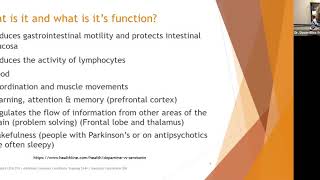
This episode was pre recorded as part of a live continuing education webinar on demand. CEUs are still available for this presentation through all CEUs. Register@allceus.com Counselortoolbox you I'd like to welcome everybody to today's presentation on dopamine. It's more than just a pleasure chemical. I'm Dr. Donnelly Snipes and I will be facilitating this discussion. We're going to talk about dopamine today and identify what it is and its function, how it interacts with serotonin, norepinephrine and gaba. You're going to get so tired of hearing all those. What are the symptoms of excess dopamine and how you can decrease it and what are the symptoms of insufficiency and how you can increase it? And you'll notice as we get in there are disorders associated with both insufficiency and excess dopamine. Unfortunately, when you start medicating one for something, then you may end up causing psychiatric symptoms, for example, if you start medicating restless leg syndrome. So we're going to try to talk about that as we go through because I know I've had clients who have been on medications for restless leg syndrome that started producing psychiatric side effects. And obviously we know that clients that are on medication, for example any of your atypical antipsychotics or older generation antipsychotics, often have difficulty waking up. They feel lethargic all the time. And that's partly due to low dopamine. So we'll talk more about that. What is dopamine? It is a neurotransmitter and you're like, well, duh. But it's located throughout the body, including the brain, the immune system, the kidneys and the pancreas. Dopamine does not cross the blood brain barrier. So its synthesis and functions in peripheral areas are largely independent of its synthesis and functions in the brain. What does that mean? Well, serotonin can cross everywhere. You know, it's a real floaty little mechanism or neurotransmitter. So it's easier in some ways to increase serotonin. Dopamine is synthesized basically in the areas where it's being used. So dopamine for the immune system is synthesized in areas near the immune system. Dopamine in the kidneys is synthesized down by the kidneys, etc. So dopamine in the brain obviously is synthesized in the brain because it can't get in there. Now it's synthesized from L dopa, which is synthesized from tyrosine which is synthesized from phenylalanine, we'll talk about again, we'll talk about more of that as we get into it. The amino acids, namely tyrosine, can cross the blood brain barrier. So if people have good nutrition, that is one way to give the body the building blocks it needs to to make the dopamine. Doesn't mean that all the little worker bees in the brain are gonna say, oh, I've got the building blocks. I'm gonna make more dopamine. It's up to that person's individual body, brain and set point so they can eat all the tyrosine in the world. But if the little worker bees in their brain are not interested in making more dopamine, it's probably not going to help out a lot. So we do need to figure out what the cause of the dopamine dysfunction is, if it exists and, and if it is able to be remedied. Dopamine we tend to think of as the pleasure chemical. It makes us feel good. Well, yes, it is. However, it's more accurately the motivation chemical. Because humans, and pretty much any living thing, we do things because there's a benefit to us. We do things that are rewarding. We don't do things that are punishing. That's behavior modification 101. With dopamine, when we do something and it's rewarding, guess what? We're going to do it again. You eat a brownie and it tastes really good, guess what? You're going to do it again. You eat Brussels sprouts and you don't like them, you're not going to have that dopamine surge. That's not going to be a reinforced behavior. So you're probably not going to be motivated to do it again. So when we talk about motivation, one of the things we're talking about is increasing dopamine. We've got to increase the brain's recognition that this behavior is positive, beneficial, and contributes to survival in one way, shape or form. Another interesting thing about dopamine is it reduces insulin production. When insulin production goes down, it can cause people to increase their food intake. When you reduce insulin levels, it also impacts serotonin levels. So we can start to see already that changes in dopamine levels may indirectly affect changes in serotonin levels. Serotonin we talked about in the last class is our kind of our calming chemical in some ways. But too much of it can cause anxiety. Too little of it can cause problems in the GI tract, inflammation, and a variety of other symptoms. So Serotonin is kind of interesting. All of these neurochemicals, there's a particular amount that you want to have and that varies from person to person. And they're not really sure what that amount is. It's not like they can measure it because dopamine's throughout the body. And PET scans and those sorts of things don't tell you how much of a chemical is in there. They can do a brain scan and tell you what parts of the brain are lighting up more, but they can't tell you exactly what's going on. So we're relying on extrapolating data from rats and mice. Poor, poor little critters. But I digress. We are starting to see though that all of these neurotran transmitters are interconnected. And if somebody is born, for example, with lower levels of dopamine or higher levels of dopamine receptors in their amygdala, which will going to get to, then they are going to react differently than people who have lower levels of dopamine receptors in their amygdala. Now, those receptors are there genetically. It may have been due to the in utero environment and that's how the brain formed. It may be due to, you know, actual RNA DNA genetics that are passed down. It depends on the person. It could be due to brain damage. However, there are different levels of these neurochemicals that people can produce. Dopamine also reduces gastrointestinal motility and protects intestinal mucosa. Now you should be thinking back to serotonin. Now that's intestinal mucosa. Remember 5ht, the precursor to serotonin is in that intestinal mucosa and it helps keep it strong to prevent leaky gut. Dopamine protects the intestinal mucosa as well and it slows down the gut. So if you have way too much dopamine, you're going to be constipated, remember, with serotonin. Serotonin also affects gut motility. These two neurochemicals overlap and we're not really sure whether they do a handoff or, or whether they work together synergistically. But we do know that altering levels by giving somebody L dopa or something or some of your SSRIs. We do know that by altering levels of these neurochemicals we can alter their gut function. It reduces the activity of lymphocytes. When you have an adequate level of dopamine, your lymphocytes are your white blood cells. They are your immune system. Thinking back again to gut health that was two classes ago. When our gut is unhealthy, we often have inflammatory cytokines that are produced and those inflammatory chemicals can leak out into the bloodstream and cause systemic, low levels of systemic inflammation. If dopamine reduces the activity of lymphocytes, it reduces some of that inflammation. So low levels of dopamine may contribute to increased inflammation. If you want to follow that logic the other way around, remember, inflammation, systemic inflammation, is associated with depression. Does dopamine, lack of dopamine itself cause depression? No, we haven't seen that link necessarily, but we have seen links that indicate that low levels or high levels of dopamine can throw other parts of the system out of kilter, which can lead to depressive symptoms. And I will probably henceforth in this presentation refer to it as depressive symptoms because fatigue, appetite disturbances, sleep disturbances, apathy, all four of those things can be caused by a myriad of things from thyroid disruption to neurotransmitter disruption to whatever. So we don't want to necessarily say it's depression. We want to look at depressive symptoms and be really careful about differentially diagnosing what is the cause of these symptoms. Dopamine is involved in mood, we already talked about that. It can greatly impact our euphoria, but it also can contribute. Low levels can contribute to increased inflammation, which can contribute to depression. Low levels of dopamine also contribute. Remember, it's our reward chemical. When we have our motivation chemical. When we have enough dopamine, we're motivated to do things. We are thinking about it, we are sort of excited about it sometimes. That's kind of what motivation is when we don't have that. What is one of the main symptoms of depression? Apathy and anhedonia. And that in large part they suspect comes especially in people with treatment. Resistant depression may come from a low level of dopamine. Dopamine is involved in coordination and muscle movements. Everything from Parkinson's to restless legs has been attributed to dopamine imbalances. It's involved in learning, attention and memory when we do something, and it's beneficial in some way if we're interested in it. And that's one of the things that I teach when I teach adult learning theory. If people are not interested in something, they are not going to be able to pay attention nearly as well. And it's likely not going to move from short term to long term memory because you have to care about what you're learning. Even when I do psychoeducational groups, it's important to Me to make that information relevant to the people that are in the group so it sticks. If it's not relevant, then they're not going to make room for it. When we're learning something that we are motivated to learn that's interesting, in some way we're going to be able to pay more attention because that interest, if you will, causes dopamine to increase, which helps us pay better attention, learn more effectively. And remember, this occurs from dopamine receptors in the prefrontal cortex. Also remember the prefrontal cortex is not fully developed until about the age of 24. So any type of head injury prior to age 24 may cause more damage to these areas of the brain and to these particular functions than after the brain is fully developed, theoretically. But if you're working with, for example, high school football players paying attention to their mood, if they're experiencing some anhedonia, if they're experiencing some difficulty with learning, attention and memory do pay attention to. If there is organic traumatic brain injury. Dopamine regulates the flow of information from other areas of the brain. It's sitting there and it's this control center and it's saying, okay, we can take this information in now. We can take this information. Hold on, starting to get overwhelmed. We can, okay, we can take more information in now. It's the gatekeeper, which helps us bring in information from prior memories, from our senses, from our cognitions and synthesize it, which helps us with problem solving. This occurs in the frontal lobe and with inadequate dopamine, people have difficulty with problem solving. They get foggy headed, and finally wakefulness. I alluded to this earlier. People with Parkinson's disease or who are on antipsychotics because they've got too much dopamine are often have difficulty staying awake. They often feel sluggish a lot of the time because dopamine has been shown to interact with serotonin and the pineal gland and that whole system that sets our circadian rhythms in order to contribute to wakefulness. Now, there are only two. There are five different types of dopamine receptors. We're really only going to talk about 2 because D1 and D2 are your prominent dopamine receptors. 3, 4 and 5 are much weaker receptors. We could go into a lot of information, but I don't think that is quite as germane to clinical practice for us. You know, that's, that's for the neurophysiologists. So we're going to focus on D1 and D2. D1 is the most abundant. Dopamine receptor in the central nervous system. It regulates neuronal growth. So your D1 receptor encourages neurons to grow and develop and it does mediate some behavioral responses. Your agonists, the drugs that increase D1 are your Parkinson's medications. Another one is tergeride, which is a treatment for hyper, hyperprolactinemia or hypoestrogenism or polycystic ovarian syndrome. Now the first two I had never really heard of before, polycystic ovarian syndrome, I've heard of a lot. There are a lot of women with PCOS or polycystic ovarian syndrome who present because one of the symptoms of PCOS is pretty significant clinical depression. So Turgeride does is prescribed for some women with PCOS and it's also prescribed for the treatment of pulmonary arterial hypertension. Pulmonary arterial hypertension doesn't occur a whole lot. There's less than 200,000 cases per year. Still sounds like a lot to me. But it's not, comparatively speaking, a whole lot. My point is it's not unheard of that you would see this medication. And I know I have seen it before with a couple of PCOS clients. It is a serotonin receptor antagonist. Remember, antagonists reduce the amount of serotonin, reduce the activity of the serotonin receptors. It's a serotonin H2A receptor antagonist which, so it interferes with the heightened state of dopamine activity. 5H2A, remember, keeps us from getting that dopamine high. It interferes with that. So if you antagonize it, if you turn it off, that means you're increasing dopamine's ability to do its job. It may be useful in the treatment of psychosis, alcohol and cocaine dependence. If you're regulating 5H2A. 5H2B antagonists have been previously proposed as treatment for migraine headaches and heart disease. So we may see these in other places. But again, you know, just being aware that this one medication that is a dopamine receptor agonist, it increases dopamine, also has co occurring effects on serotonin receptors. That's the take home message. Your D2 receptors. Schizophrenia can be attributed to an imbalance in the dopaminergic pathways that signal D2 and D1 receptors. Most of your antipsychotics are antagonists for the dopamine D2 receptor. So your antipsychotics turn down the D2 receptor, reduce the amount of dopamine. Parkinson's disease is an extrapyramidal motor disorder characterized by dopaminergic neuronal degeneration, which means people with Parkinson's disease, Parkinson's disease, don't have enough dopamine. So we need to ramp that up because the neurons that normally process the dopamine, they've degenerated for one reason or another. Another place that D2 is involved, rewarding food stimulates dopaminergic transmission, especially to the D2 receptor, suggesting that dopamine deficiency in obese individuals may perpetuate pathological eating as a means to compensate for decreased activation. Which is the long way of saying people with low dopamine, especially low activation of dopamine. Dopamine, D2 receptors may eat order to feel better because those receptors aren't very active until they eat. So that eating is sort of self medicating. Major depressive disorder patients show decreased dopamine in the central and basal nuclei of the amygdala. Amygdala. Remember the amygdala is the ancient part of our brain that process processes our fear responses. They show decreased dopamine in the central and basal nuclei of the amygdala in, in post mortem depressed patients who committed suicide compared to control subjects. So we do see altered levels of dopamine in people with major depressive disorder, especially in the amygdala. Can you have, quote, if you took a urine test and for neurotransmitters and they exist, can you have normal levels for dopamine and still have dopamine related problems? The answer is yes, because remember I said dopamine cannot cross the blood brain barrier. So if you are working with a client whose dopamine other dopamine systems, remember, it' syour dopamine production centers are throughout the body. If the dopamine production centers in the other places are functioning just fine, then their dopamine levels. Everything in medicine is a, is, is a continuum or a threshold. It may be within the appropriate threshold, but they're still having psychiatric symptoms. Again, there is no way to measure brain levels of dopamine. Your dopamine, D1 and D2 receptors, what's the difference? Easiest way to think of it. D1 receptors prepare the set of possible appropriate responses when something happens. And D2 receptors help people shape and select from this initial response set framework. D2 is more involved in the get up and go and D1 says this is a good idea in treatment. We're really just thinking about dopamine. Don't worry too much for the test or whatever. I just thought it was interesting that they do even though D1 and D2 seem to have very similar functions, they are related but not overlapping. Dopamine and depression, this is the stuff we care about. Two thirds of patients who are on antidepressants, the SSRIs, your SNRIs, are not achieving remission in their medication treatment. And this is really frustrating and exhausting and exasperating for people who are clinically depressed. They're like, I just want to feel better, please. And you see all these commercials that if you take this ssri, you'll feel better, yada yada. And then you take it and you don't. One of the things that I tell clients before they go to start talking with their doctor about medications or even if they've already started taking meds, is, remember we talked in the serotonin class, there are multiple different serotonin receptors. So there are multiple different SSRIs that may act differently on the different serotonin receptors. In clinical practice, talking with clients who've been on different medications, for example, Prozac seems to rev people up a little bit more, give them a little bit more energy. Zoloft tends to be a pretty neutral. It doesn't rev you up or slow you down. Paxil, on the other hand, makes a lot of people sleepier knowing that all three of those are SSRIs, but all three of them have different impacts. And people who tend to have some concurrent anxiety often don't feel as well when they're taking something like Prozac as they do when they're taking something else. Those are three of your older antidepressants. Obviously, there are tons more out there. Effexor, Wellbutrin, da, da, da. But being aware that these medications interact differently. Also being aware that doctors refer to a lot of medications as antidepressants that are not necessarily SSRIs. For example, Wellbutrin is an NDRI. We're going to get to that. Is it an antidepressant? Yes, it has been shown to have antidepressant effects, but it affects norepinephrine and dopamine as opposed to serotonin. I got off on a. Got off track here, but let's get back here. Anhedonia contributes to the persistence of major depressive disorder. So if you start taking an SSRI and your serotonin starts going up, your sleep is going a little bit better, you may not be as exhausted and fatigued all the time, but you're just still flat. Nothing seems to do it for you. You feel like Eeyore all day long. It can really feel oppressive to people who are hoping to feel a lot better. They were hoping to feel what was, what's, quote, normal for them. So this anhedonia, if it persists, can really make people start having some disrupted cognitions. I'm never going to get any better if this is all that there is. I don't know if I really like it. Treatment's not working. I'm never going to feel better. Whatever. There are a lot of cognitive distortions that can go along with it, but part of that is because they're not educated about the fact that this is part art and part science. And when you take these medications, or if you're taking medications, number one, you can't rely exclusively on the medications, because if you're taking a medication and then you keep doing whatever it is that's causing the imbalance, you're working against yourself. But I digress. Again, if you start taking a medication and it doesn't work, that doesn't mean all hope is lost. There are other medications, other SSRIs, SNRIs and DRIs. There are other things that can be tried. Depression and anhedonia have been shown to be associated with reduced striatal dopamine response to reward. So people who have depression with that anhedonia tend to have less of a dopamine response. We see. We don't see the receptors light up quite as much. Most antidepressant treatments do not directly enhance dopamine, which may contribute to residual symptoms, including impaired motivation, impaired concentration, and lack of pleasure. Well, that's why most people come to counseling. They're like, I'm not motivated. I can't focus, and nothing makes me happy anymore. Fix it. Okay, this is where we need to start using our critical thinking skills. Tricyclic antidepressants and MAOIs. Remember, tricyclics were your older antidepressants. They have a lot of side effects, as do maois. They increase serotonin, norepinephrine, and dopamine. But they do have the significant side effects, which is why doctors typically, we'll start with some of the newer generation stuff. And there are newer generation meds. If medication is the route that you're going, that can help with some of this, where you can combine different medications to increase 1, 2, or all three of these neurotransmitters. The latest generation of antidepressants are your norepinephrine and dopamine reuptake inhibitors. Your NDRI's. The most common One that you'll hear of is bupropion, which is trade name Wellbutrin. That increases norepinephrine, which you're going to learn Thursday, is your get up and go chemical. It increases your energy, increases your drive some, and your dopamine, which is your reward. So you have energy and motivation that are increased here. Now, obviously you can see if you increase energy and motivation and the person has some concurrent anxiety, that may be a problem too. It's all about balance. As we talked about earlier, dopamine can decrease inflammation. And since inflammation, especially systemic inflammation, is associated with depressive symptoms, then if their inflammation is high, we don't know whether serotonin or dopamine is low or not. But one or both of those may be low. And by increasing them, we may decrease inflammation. One thing that I caution people about, and you know, I think this is going to be not surprising to you when I say it, is to try to figure out what where the leak is. Think about if you have a leak in your pipes going from the street up to your house, you have a leak in there and all of a sudden you turn on the shower, there's no water pressure, and you're like, I can't take a shower with this. So you have a couple of options. You can go out to the street and turn up the water pressure temporarily so you can take your shower and get to work. That's the short term fix. But if you keep that water pressure turned up, what's going to happen to that crack or that leak? It's probably going to get bigger. Taking medications in many cases is kind of like turning up the water pressure. You're not fixing the crack, you're not fixing wherever the leak is that's causing you to not have enough water pressure, not have enough neurochemicals to feel good. You're not fixing that problem. You're just artificially inflating the amount of neurotransmitters that are coming through in the short term. Just like I said, if you have to get ready for work, you have to turn up the water pressure so you can shower. That's one thing. In the long term, though, it's really good to encourage people to try to figure out what's causing that leak. Up to 80% of Americans have inadequate levels of neurotransmitters, partly because of our lifestyle. We don't get enough sleep, we don't get enough quality sleep, we don't eat a sufficiently nutritious diet. We eat a lot of processed foods. We're stressed out all the time, so our cortisol stays high. All of those things, any of those things can contribute to neurotransmitter imbalances. Also a lot of the stuff that we use, the lotions and other products and plastics and have something called xenoestrogens in them and bad chemicals basically that can get into your system and disrupt some of your sex hormones, which can also, we know, affect your neurotransmitter levels. Most people are not going to go to this really super ultra healthy, no processed foods diet. That's just not a quality of life that they want. Okay. You know, that doesn't work for everybody. However, encouraging them to take a look at what can you address. Most people can address their sleep and their circadian rhythms. Most people can get enough sunlight so they have enough vitamin D, yada yada. So we do want to encourage them to do natural approaches to try to at least patch that leak as much as they can, even if they can't completely fix it. Some people are going to have organic brain damage or genetically programmed. They're not going to make enough of certain neurochemicals. Those people may need to be on medications indefinitely. But before we start just randomly, let's throw it. Throw a drug at this and try to increase it. Oh, that had some interesting side effects. Let's treat the side effects. I had one client who was on 17 different psychotropic medications because the first one she took caused some side effects. So then they threw medications at the side effects and that medication caused side effects. So they threw medication. You see where I'm going with this? Poor thing. I mean, she couldn't hardly eat because her belly was so full with pills. So we do want to try to encourage people to be smart about this. Back on track. Dopamine may cause dopamine Excess may cause vitamin B6 deficiency. Think back to the serotonin. That infographic that I showed you. B6 is essential to break down tryptophan to make serotonin. So if you don't have enough B6 because your dopamine is too high, then you're not gonna have enough serotonin. Important to know melatonin. Remember, melatonin is made from serotonin, so it's going to impact sleep. If you have too much dopamine, you're probably not gonna get enough sleep. Melatonin is regulated by norepinephrine. Dopamine inhibits the effects of norepinephrine, which means a decrease in the production and release of Melatonin. Now figuring, seeing all, how all those things weave together. The take home message here is that dopamine impacts vitamin levels and other systems that impact the availability of serotonin, melatonin and norepinephrine. All of these are essential to have imbalance for people to feel happy and healthy. Both dopamine D1 and D2 receptor mechanisms are important in mediating anxiety. Dopamine antagonists, things that turn down your dopamine have been reported to be associated with social anxiety disorder. Interesting here. So too much serotonin is associated with generalized anxiety. Too much, I'm sorry, not enough dopamine is associated with social anxiety. So when people are taking dopamine antagonists for something else, they actually like schizophrenia, they can actually start to develop social anxiety. Patients with social anxiety are commonly treated with serotonin antidepressants. However, the interplay with the dopamine systems is understood to occur and the clinical effects of these agents may be mediated by processes such as D2 receptor sensitization. That's the explanation for why people may experience social anxiety when their dopamine is being turned down or antagonized. The most convincing evidence for reduced dopamine function in humans with social anxiety disorder has been shown in SPECT neuroimaging studies. So they can do some neuroimaging to see which areas are firing more brightly, if you will. Genetic differences. When we're talking about dopamine and addiction, this is where a lot of the research has really been done because we think addiction is actively seeking out some sort of pleasure based activity. And that's true. Genetic differences that alter the expression of dopamine receptors in the brain can predict whether a person will find a stimulus appealing or aversive. I know some people who've tried crack cocaine and it hasn't done a thing for them. I know other people who've tried crack cocaine and one hit and they were addicted. Their genetic differences regulated their dopamine response. For the people who were addicted, after the first time, or even the first few times, they are obviously more responsive to that particular stimulus. So they have a different dopamine neural network, if you will, than the people who don't find it rewarding. Consumption of stimulants produces increases in brain dopamine levels that last from minutes to hours, depending on the stimulant that you're taking. Some of your psychostimulants can take effect in 30 minutes or an hour and have a half life of eight hours. Some of your illicit drugs may on the Other hand, take effect within seconds and be gone within 30 seconds. So it's really important to be aware of that. Different stimulants have different half lives. But the take home message is when your brain is regularly flooded with dopamine, it's going to remodel. It triggers structural changes in the brain in order to protect itself. The brain says, I can't be this happy this much. I'm getting overstimulated. So the brain starts shutting off certain receptors, if you will, which means when the person's not taking the stimulants, then they don't have that normal level of normal for them, level of happiness and motivation and energy. They feel much flatter and much more exhausted because now not enough dopamine is getting through. So what do they do when they feel that way? They take another hit in order to get those dopamine levels back up again. So dopamine is intimately involved in addiction, especially addiction that involves the use of stimulants. How does dopamine interact? It plays a role in depression along with serotonin and norepinephrine. Dopaminergic system is also modulated by several neurotransmitters. Okay, so your dopamine system is this, you know, think of this great big machine, but it's modulated by glutamate and gaba, and it also affects serotonin and norepinephrine. So all five of these, your big five, all five of them are interconnected. And when you monkey with one, it changes everything else just a little bit. Changes in the glutamate or GABA system. And the dopamine system may influence anxiety like, or depressive behavior. Dopamine also inhibits norepinephrine. Now, remember I said some of our new antidepressants are dopamine, norepinephrine reuptake inhibitors. So you're increasing dopamine and you're increasing norepinephrine. But dopamine has been shown to inhibit norepinephrine in some ways. Now, when we talk about dopamine and serotonin, I've talked a lot so far about how they have very similar functions. A lot of the time, dopamine system dysfunction is linked to certain symptoms of depression, such as low motivation, difficulty concentrating. Serotonin, they speculate, is involved in how you process your emotions, which can affect your overall mood. Both dopamine and serotonin are involved in sleep, inflammation regulation, appetite regulation, energy levels. So we've been talking about how dopamine impacts mood and can affect anxiety and depression. Let's look at some basic symptoms of dopamine insufficiency. And I want you to really focus on the fact, you know, we talked about how dopamine and serotonin seem to do a lot of the same things. And one of the things we don't know is whether there's a handoff. Maybe serotonin starts something and dopamine finishes it or vice versa. But we do know that when there's not enough dopamine, people tend to have symptoms that are very similar. As you can see by the things that are bolded on the, on the PowerPoint slide, people tend to have symptoms that are very similar to depression. When you think of dopamine insufficiency, I want you to think of two things. You've got loss of coordination and Parkinson's type syndrome symptoms. Well, three things. Parkinson's type symptoms, symptoms, ADHD type symptoms, and depressive type symptoms. So these are the things that are going to be most associated with dopamine insufficiency. You can see here, muscle cramps, aches and pains, restless legs, adhd, weight changes and then trouble sleeping, low energy, inability to focus, moving or speaking more slowly than usual. When we talk about it in terms of depression, we call this psycho retardation. Feeling demotivated and hopeless, feeling inexplicably sad or tearful, mood swings, hopelessness, suicidal thoughts, and low sex drive. All of those things are very common in the diagnosis of depression. Again, pointing us to focusing on the symptoms and the cause of the symptoms more than whether it's serotonin or dopamine. We don't want to just say, okay, this person has depression, so we need to increase their serotonin. That may not be it. I know I've said that a bunch of times, but I think it's really important to drive that point home. One of the challenges we face, though, is when people start getting treated for dopamine insufficiency because they've got Parkinson's syndromes or they're taking ADHD meds, which we know increase dopamine, or restless leg syndrome. A lot of people have that. They can end up increasing their dopamine too much. So they're having symptoms of dopamine excess, which are a lot of your positive symptoms of schizophrenia and mania. We'll get there in a minute. But again, dopamine insufficiency, we're looking at adhd, restless legs, Parkinson's disease, and depressive symptoms. Those are your main insufficiency symptoms. How do we increase it though. And again, I'm not encouraging you to go out and do these by any means. I'm just telling you these are things that people do do sometimes that increase their dopamine. So if you're working with a client who has a co occurring disorder, it's important for them to understand that cocaine and any type of amphetamine, including caffeine and nicotine, ADHD medications, mdma, which is ecstasy and other psychostimulants, can increase dopamine if they're taking a dopamine increaser for some other issue. If they're taking ADHD meds, for example, and then they decide to use cocaine, they could increase their dopamine too much and start having hallucinations, delusions, paranoia, all that kind of stuff. So it is important to understand what the medications do and what some of these other things that people may just happen to do. Another thing to consider is opioids. Now somebody may go into the dentist and have their wisdom teeth taken out and be prescribed opioid medication. Opioids will increase dopamine. So if they're on medication that increases dopamine and they start taking opioids, there is a greater risk not saying it's going to happen, but there is a greater risk that they could have some paranoia, hallucinations, yada yada. So we do need to educate patients and watch out for that. Remember, I've pointed out before, if you go to drugs.com, it has a drug interaction checker, which I refer clients to because obviously I'm not a prescribing physician. It's important for them to be aware of the medications they're on and what can interact with it. And on the drug interaction checker on drugs.com it also has a lot of supplements listed, including your over the counter medications and some of your over the counter supplements like GABA or Kava or something that people might be taking dopamine reuptake inhibitors will also increase dopamine. Well, that is in the name other ways that you can increase dopamine are having a healthy lifestyle. If you decrease sugar and caffeine, that reduces that dopamine flooding. Yes, caffeine is not going to give you the same rush as cocaine. But if you have this consistent excess level of dopamine in your brain, the brain remodels. It says that's too much dopamine. I need to shut down some of these gateways because we've got too much dopamine going into the system. When you stop flooding the brain with dopamine and bathing it in dopamine all the time, then it will generally return to its normal or preferred state and open those gateways back up again. Which is why when you stop using caffeine, you have that period where you feel a little sluggish and you may feel a little flatter, especially if you've been addicted to caffeine, because the brain has to remodel and open those dopamine receptors, if you will. Again, they found that chromium can help with sugar cravings and depression when people stop using sugar and caffeine or when they're cutting back. Get sufficient quality sleep and set your circadian rhythms. Since we know that dopamine and norepinephrine are involved in setting those circadian rhythms, and we know that serotonin is essential to making melatonin that helps you fall asleep, we know all three of those are involved in our circadian rhythms. So if you do your best to help set your circadian rhythms, then you're going to give your body the best chance to rest and repair and secrete dopamine at the right times and repair during the right times. Exercise also increases hormones that increase dopamine. Like I've said before, it doesn't have to be running a marathon or going to the gym. If people can work better, between 65% and 85% of their target heart rate zone for 20 to 40 minutes, three to four days a week. That is ideal. But that's not going to work for everybody. People need to get cleared by their doctor. And even if they're cleared by their doctor to do it, some people just really hate working out and they ain't going to do it. So any exercise is better than none. Go out and play with the dog in the yard for 30 minutes and decrease stress. We know that stress increases cortisol. We know that cortisol decreases pleasure chemicals, it decreases serotonin, it decreases estrogen, it decreases dopamine. If we can reduce our cortisol, we're going to have a better chance for our body to feel happy. When cortisol is high, we're in the fight or flee stage. When cortisol is lower, we're in the chill and relax and enjoy life stage. That's when dopamine is more present, phenylalanine is present, and you've probably heard about it before. If you looked on some of the things that used to be sweetened with aspartame, and some of them that are still sweetened with aspartame Aspartame is made by joining together the amino acids aspartic acid and phenylalanine. When you combine those two, it creates a whole different animal. So don't think that drinking aspartame is going to help you increase your dopamine. It actually works against you because when the aspartic acid phenylalanine combination is in your brain, it actually inhibits the synthesis and release of dopamine, norepinephrine and serotonin. Which is why they found a high correlation between people who use a lot of aspartame and mood disorders. But phenylalanine itself is found in most foods, so you don't need to go looking for strange things. It is broken down to make tyrosine. Remember we talked earlier that dopamine cannot cross the blood brain barrier, but tyrosine can. Tyrosine is an amino acid. Tyrosine is broken down to form L dopa and then L dopa is broken down to form dopamine. So the best way to naturally increase the building blocks to make dopamine is to improve your diet. When you do it this way, then you're giving your brain the building blocks. And if it wants, if all the little worker bees in your brain want to create dopamine, if they think they need to create dopamine, they will. Otherwise they're probably going to put it on a little shelf somewhere or you're going to pee it out. Either way, no harm, no foul. It's not like a medication that's going to insist on flooding your system with dopamine. You're just giving it the building blocks. And you're saying here, if you need to build great, increase tyrosine, eat bananas, especially riper bananas, the ones that start to have the brown spots on them. The other benefit in this is the riper bananas also have a lot more of the cancer fighting compounds that are prevalent in fruits and vegetables. Almonds, apples, watermelons, cherries, yogurt, beans, eggs and meats all have tyrosine in them. I have yet to find anybody who looks at this list and can say, I don't eat anything on that list. It may happen, but that would be super duper rare. Most everybody can find some food that they're willing to eat that has good levels of tyrosine. Supplements boost levels of vitamin D. Not everybody can get out and get enough vitamin D. Or if you live in Alaska, where there are months where it's dark outside, or you live in somewhere even like Tennessee or Virginia, where it can be really, really dark during the winter for weeks at a time, vitamin D levels can go down. So sometimes people do need to take oral vitamin D. Magnesium and omega 3 essential fatty acids also may help to raise dopamine levels. Now, the interesting thing here is we know that omega 3 essential fatty acids help reduce inflammation. We also know that dopamine helps reduce inflammation. So are omega 3s reducing inflammation by increasing dopamine or are they separate processes? It's not really relevant. It's just one of those questions I ponder. Which things are actually helping reduce the inflammation? Reduce the inflammation and definitely address magnesium and zinc imbalances. The only way you can figure out if you've got a magnesium or zinc imbalance or nutritional imbalance is to go to the doctor, have a blood test done, figure out what your nutritional levels are, and consult with them about what the best course of action is. Other things that increase dopamine, and interestingly enough, all of these also increase serotonin. Green tea. It doesn't take a lot of green tea if you have a couple of glasses of green tea a day. That provides a lot of antioxidants, but also increases dopamine and serotonin. Ginkgo, sami, ginseng, kava, all of these things also increase dopamine and serotonin. One of the things we want to be careful of, that if somebody is thinking that they've got low levels of dopamine for some reason and they're wanting to address it naturally, but they're taking a serotonin selective serotonin reuptake inhibitor, an SSRI or an snri. By taking some of these supplements, they could increase their serotonin too much. It's really important to check those interactions. The other thing that can help increase dopamine is essential oils. Essential oils are really cool because inhalation of them can communicate signals to the olfactory system and stimulate the brain to exert neurotransmitters, including serotonin and dopamine, which can help regulate mood. They're not exactly sure why certain scents trigger the release of certain neurotransmitters, but they have figured out that it does work. Some of the essential oils they found that are helpful and include clary sage, bergamot, lavender, lemon and rosemary. Now, all of these may not work for you or for any particular person. One of the things I do with my rescues, my rescue animals, is I have a tray full of essential oils. And again, with essential oils, you don't need to put them on your person. You can inhale them. That's all you need to do. And putting essential oils straight on your person can be toxic, can irritate your skin. And putting essential oils straight or at all onto animals also can be extremely toxic, especially to cats. So please do not put essential oils on your animals unless you're under veterinary supervision. I digress. I take my tray out to my rescue animals and I let them sniff the different bottles. The ones that don't do anything for them, they show no interest in, but generally they will find one or more that they do show interest in and they'll want to smell it more. When I hold it up for the donkeys, they'll open their lips and they'll really be excited about getting that smell in there. So I found out that way that my donkeys aren't really affected at all by lavender. That doesn't help chill them out at all. But essential oil of valerian actually does help them. So before the farrier comes, we put a little bit of that on their halter and everybody's good. Talking a little bit more about how essential oils work. When the tiny molecules of essential oils are dissolved in the nose, it stimulates your olfactory receptors. That activates cells that carry signals from the essential oil to other areas in the limbic system. System, the primal brain responsible for memory, instinct and mood. The olfactory system is the only sensory mechanism that involves the limbic system and amygdala. Remember, that's our primitive anxiety, fight or flight place in our brain and its primary processing pathway. This also explains why scents are often the strongest triggers for memory. Essential oils can be really awesome. And the take home message is that not every essential oil works the same way for every person. Smell it, see if it does something for you. Sometimes I'll smell something like patchouli and it'll make me kind of cringe because it's too strong to something. Other times I'll smell it and I really like it. The theory is that our senses tell us what we're needing. So if we like something, we're going to tend to be around it more. So if whatever patchouli is triggering, I may need a little bit more of. When patchouli seems to be pleasant for me. Symptoms of excess dopamine, tics, hallucinations, delusions, feeling anxious, hypersexuality, mania, paranoia. Think of all these as sort of positive symptoms. That's adding something that you don't want and constipation, which is a little bit of a slowing down but you don't want Constipation either. Remember when I said when people start getting treated for restless legs, ADHD or Parkinson's syndromes, sometimes they get too much dopamine in their system and start having hallucinations and delusions. Then they end up medicating that with an antipsychotic to try to balance it out. In any event, be aware of the fact that we need a basic level. There's a happy level of dopamine in everybody's brain. And figuring out what that level is for any individual person is going to be a little bit art and a little bit science to decrease dopamine. Remember that most antipsychotic drugs are dopamine antagonists. So if people are on an antipsychotic, that's decreasing their dopamine. Now, if they're on an antipsychotic and they start having restless legs, then they may be decreasing their dopamine too much. Remember also that dopamine is responsible for wakefulness. So if they're on an antipsychotic and they just can't wake up, that antipsychotic might be a little bit too powerful. It may be what they have to be on to control their symptoms. So you may have to treat the side effects of the antipsychotic, but that is something to consider in looking at. Is this the right dose for this person? Encourage your clients to keep a diary so they can share it with their psychiatrist or their physician in order to make sure that they get their medications at the most adequate levels. Anti nausea drugs, including Reglan, can also decrease dopamine. Anti nausea drugs are given to people who are on chemotherapy. So if they're on chemotherapy and they're getting nauseous and they get these drugs, it can decrease their dopamine and prompt symptoms of depression. Reglan is one of those drugs that's also given to people, women who are breastfeeding, who are not producing enough milk, which unfortunately can also set them up for being at higher risk of postpartum depression. Because in order to get that additional milk, when they take the Reglan, they're also decreasing their dopamine, which can contribute to the onset of depressive symptoms. Tricyclic antidepressants increase serotonin and reduce dopamine. And Reglan, as Melissa points out, is also sometimes used postpartum to increase breast milk production with a warning that it may cause severe depression. Yeah, I forgot that that was another use for it, especially in. And this is a challenge because a lot. A lot of times when you have a baby that's in the NICU and you're having to pump you, you're not having that, you're not being able to hold the baby as much, which causes a reduction in oxytocin, which causes a reduction in prolactin and breast milk production. So they give you Regalin to try to increase it and it can increase postpartum depression as well. So that's a good point, Melissa, that something that we take to help one area again can negatively impact another. So dopamine's main function that we think about pleasure and motivation, but it's also involved in memory, movement, learning, inflammation. It's involved in a lot. It interacts with serotonin, norepinephrine and GABA interchangeably, bidirectionally. So when one of those gets wonky, it's going to affect dopamine and if dopamine gets wonky, it's going to affect the other ones. Symptoms of excess are psychosis and tics. You typically decrease it with antipsychotics. Symptoms of insufficiency include Parkinson's disease, depression, remember that anhedonia aspect anxiety and difficulty problem solving. Because remember the dopamine is the gatekeeper and it regulates that flow of information. And if it's not keeping the gate, you may just feel all jumbled in your brain. How do you increase dopamine? Diet, eat foods that are high in tyrosine, obviously with a doctor's clearance. Exercise can also help increase hormones that increase dopamine, regulate your circadian rhythms, get good quality sleep, some essential oils are very helpful and norepinephrine, dopamine reuptake inhibitors. Are there any questions? Now you'll notice in the presentation that too much or too little can actually cause some overlapping symptoms. And you know that that happens. My guess is partly because we really don't understand all the things that are in effect right now. But the biggest things to consider is if you're working with a client who is on antipsychotics, that is going to decrease their dopamine levels. If you are on a working with a client that has restless leg syndrome or adhd, they may have low dopamine levels. Those are the things that we're more more often going to see in our clinical practices. I don't know about how CBD oil would affect dopamine. I know it's been shown potentially to be helpful with serotonin regulation, so I will look that up. I don't know the answer to that. I will put it in your classroom if I find any research on it. Alright. Everybody have a great day and I'll see you on Thursday when we go over norepinephrine. And I will check out marijuana as well to see the impact of marijuana on the dopamine system. If this podcast helps you help your clients or yourself, please support us by purchasing your ceus@allce.com or getting your agency to sponsor an episode. A direct link to the on demand CEUs for this podcast is@allce.com podcastceus that's allceus.com podcastceus to sponsor an episode of Counselor Toolbox and reach over 50,000 clinicians per week, go to allce.com sponsor thank you.










