Dramatically Reduce Stress & Anxiety by Addressing Emotional Triggers
Dr. Dawn-Elise Snipes teaches how to reduce stress and anxiety by identifying emotional triggers and building skills like distress tolerance and mindfulness. The webinar covers assessment, sleep and nutrition, social support, and cognitive checking to separate facts from emotional reasoning.
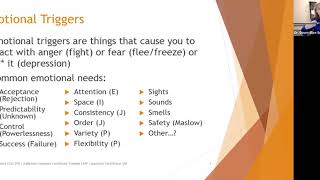
Chapters
This episode was pre recorded as part of a live continuing education webinar on demand. CEUs are still available for this presentation through all CEUs. Register@allceus.com Counselortoolbox you I'd like to welcome everybody to today's presentation on addressing emotional triggers. I am Dr. Donnelly Snipes. We're going to review common needs people have because when we're not getting our needs met, we tend to be more stressed and more distressed. We'll identify ways to prevent and mitigate emotional upset. We're going to talk a lot about primary prevention. Why? Because if we help people recharge and feel like they are on their A game, if you will, then it's easier for them a lot of times to deal with life on life's terms. So they're not triggered by as many things necessarily. And a lot of times their triggers, when they are triggered, it's less intense. They can deal with things. Think about if you're having a bad day and you get a flat tire, it just feels like, oh my gosh, one more thing, I just can't take it. If you're having a good day and you get a flat tire, yes, it's unfortunate, but it often doesn't feel quite as overwhelming. We really want to help clients mitigate those vulnerabilities as well as learn some tools to deal with distress when it occurs. This presentation focuses more on the hows than the what's. There are a lot of things that can trigger emotional upset. What we're going to talk about is how how to help clients best prepare themselves so they are less vulnerable to emotional upset and how to deal with emotional upset when it happens. So emotional triggers are things that cause you to react with anger or that fight reaction or fear which some people, they want to flee. Other people are sort of stuck in terror and they freeze and they feel overwhelmed. They're like, I just don't know what to do. Or the forget about it reaction, which often happens when people have just been overstressed, dysregulated for too long and they have that sense of hopelessness and helplessness, just throw up their hands. They're like, I can't do it. I can't deal with one more thing. I'm going back to bed. What triggers the people's emotions? There are a lot of obviously different things. Like I said, if you've got somebody with a trauma history, there are sites, smells, sounds, times a day, whatever, that can trigger emotional distress in them. There are other things that are more ubiquitous. People in general, we want to feel accepted. We don't like feeling rejected. So when people feel rejected, it can trigger an emotional response. It can trigger that threat response. In some people more than others, predictability is important. They like to be able to know what's coming next as opposed to just kind of winging it, depending on your temperament. And we'll get to that in a minute. That's more or less of a trigger. Not everybody needs to have a ton of predictability. When people feel powerless, it tends to be an emotional trigger. When they feel like they're stuck and powerless over a situation, they can feel distress. And one of the things that I encourage people, I'm kind of jumping ahead when they feel powerless, when they identify one of their triggers as powerlessness, to really reflect on what things in that situation they do have control over. Because yeah, in just about every situation there are things that we do have control over and things that we don't. And instead of focusing on the things you don't have control over, focusing on what you do and success. Most of us want to have success. Now how we define success varies between people, but we want to feel successful, we want to feel like we can accomplish something in life or when we do things, when we feel like we failed in some way, then that can trigger emotional upset, rejection, unknown, powerless and failure. All of those are common emotional triggers, irrespective of any trauma history. Now we'll move over in the second column. We're going to talk a little bit about temperament. And people who are extroverts tend to draw their energy from being around other people and they think while they're talking and they problem solve while they're talking. They're good talkers when they are in an environment where they are not getting enough interaction and maybe I should have said interaction that can be extremely stressful because they don't feel like they can get stuff off their chest, so to speak. So that can cause a vulnerability. People who are introverts on the other hand, 10 tend to need that downtime, that quiet time each day to sit with their thoughts and just get regrounded. When they have a problem, they think about it, decide what to do or what have you and then they go talk to somebody. The extrovert talks while they're thinking. If the introvert is in an environment that is overstimulating, then it can cause extra stress and make them more vulnerable to distress. People who are judgers, if we're going with the MBTI QC format, tend to like consistency. They like Structure. They like predictability, and when that's not there, it can cause them a lot of stress. I'm pegged out on the J scale. So when things happen, you know, unplanned events happen, you know, it kind of throws me for a little bit of a tailspin. Gotten better since I've had kids. I've had to. But understanding that I know that I like predictability and consistency, and that helps me feel more relaxed, more at ease, which keeps my HPA axis kind of tampered down. And I like order. You couldn't tell by my office right now, but I like order. I like things to have a particular place and flat surfaces to be clear of clutter that makes me happy. When I'm in an environment where there's just clutter and stuff everywhere, I find it very stressful, which is a vulnerability. Now, people on the other end of the spectrum who are perceivers really like flexibility and variety in things. They like to learn more. They like to kind of fly by the seat of their pants. They don't like to be hemmed in by deadlines and times and constrictions. So they're in an environment like that, then they can be start to feel very frustrated and hemmed in, if you will. Those are just some of your general, you know, let's think about the different things that might make somebody more irritable, if you will, more prone to emotional distress. Other things that can trigger emotional distance distress. Sights, things that make you unhappy can trigger emotional distress. And that obviously is different for every person. Sounds, smells. Again, based on your prior learning experience and your prior schema development, certain sights, sounds, and smells will trigger happy memories or distressful memories or maybe be completely neutral. It's important for people to be aware of the fact that our senses are extremely potent. Emotional triggers you can walk into. You know, I think I've shared this before. When I go. If I go into the hospital, and it's like, all hospitals must use the same cleaning solution. Or maybe it's just this one hospital chain or whatever. But when I go in there and, you know, go into the bathroom, that cleaner that they use triggers the memory of when my son was in the nicu and I pretty much lived at the hospital for about three months. And it reminds me of that time and when he was such a little, tiny peanut. And, you know, I have, you know, bittersweet memories of that. But it's a strong trigger when you smell, you know, your grandmother's chocolate cookies, you know, that may trigger memories. Anything that makes People feel unsafe physically or emotionally can be an emotional trigger. And there are other things that can be emotional triggers. You know, anything that triggers a priority, upsetting memory. So if you've got acute stress disorder or ptsd, that can be it. If somebody is grieving and we've all had losses in our life. So when something reminds you of a loss, it can be an emotional trigger, helping people become more aware of those things. My stepfather called me the other day and I still have that number, that phone number in my phone labeled as mom. And that's a trigger for me because, you know, it hasn't been that long since she passed away. Knowing that I need to change it. It's one of those things that I can do in my environment to reduce the triggers. Encouraging clients to just be mindful. And we're going to talk about that in a few minutes. Becoming more mindful of how they feel because then they'll start to realize, oh, you know, maybe I'm feeling a little bit irritable because this reminds me of. And then they can start addressing it. Primary prevention. There's primary, secondary and tertiary. Primary prevention identifies modifiable risk and protective factors. We think about this all the time with physical health. We wash our hands to prevent getting sick. We don't want it to ever happen. When we use primary prevention with mental health, we're giving them tools and helping them structure their life, so to speak, in order to give them the best possible chance to deal with life on life's terms and minimize vulnerabilities. We want them to have a game days almost every day. Nobody's going to have one every day. But we do want to help them figure out how to minimize vulnerabilities. When people feel healthy, safe, loved, supported and have a sense of self efficacy, wouldn't you love it if we could make that happen? Then things that might otherwise seem overwhelming may feel more manageable. If I'm having an a game day and you know, I'm healthy, I'm well rested, I feel safe and supported and in my job I feel like my boss has got my back and whatever, and I feel like I have the ability to affect change, then I'm going to be going well. I don't have this stressor over here and that stressor over there that's pulling my energy out of me. So I'm focused and there's lots of positivity. Then if something unpleasant happens, you know, okay, I'm not already pulled in six different distressful directions. I'm feeling pretty good and solid Interventions starts with the assessment. One of the things that is a pet peeve of mine, if you will, is a lot of times a lot of agencies, and my agency used to do this. A lot of agencies do an assessment and it's like, come in, tell me your whole life story and then I'm going to make an appointment for you to come back back in a week and then you can start working on stuff. No, no, no, no, no, no, no, no, no. Primary prevention can start in that assessment. Let's start helping the person identify areas of life that are going well. If you remember Kobasa and I think it was from 78, the theory of hardiness, where people need to have a sense of commitment, control and challenge. And what does that mean? That means they need to identify that there are multiple aspects of their life that they're committ and one aspect may be going kind of crappy right now or even two, but there are other aspects of their life that are important to them that are going well. For example, if work's not going well, but your kids are healthy, your bills are paid and you just ran a half marathon and completed it or whatever, those are three areas of your life that are going well. And okay, works over here, it's not going so well, we can deal with that. But when people can have a sense of commitment and they can see that bigger picture, life is not just about the job, then they can feel like they've got a little bit more happiness in their life. Control is the next part, focusing on the aspects of that unpleasant area in their life that they're committed to. It's just not going so well right now, or what parts of that can they control? And viewing it as a challenge, instead of viewing it as a barrier which you know you just can't move, viewing it as an obstacle, something that you can climb over, you can go around. You just need to figure out how to do it. Ask the person what things in your life are going well right now. A lot of times they don't think about that when they come into an assessment. We generally want to hear about all the things that are going wrong when, well, I also want to know about what's going right. Ask them about their strengths. What strengths do you have? And sometimes this is not as overt as just asking them about their strengths because a lot of times you ask them that question and they look at you like you're crazy. We can pull those things out as we're talking to the person. Hearing about their courage, hearing about their creativity, Hearing about this, and we can highlight that in discussion with them. Ask them about their risk factors or their triggers for whatever this issue is that they're presenting with. Let's say it's depression, emotional triggers. We want to help them try to figure out what triggers them to feel scared, angry, happy, you know, all those things. But let's talk about the dysphoric ones. What triggers those things. And they may have a list of a bunch of things that they know right away. Or they may go, I don't know, I just. I don't feel happy. Okay, we can start working on that. And that can be an assignment for them between the assessment and the first session to start identifying their emotional, mental, physical, and environmental triggers. Mentally, what are your mental triggers? What are the thoughts that you have that trigger this dysphoric emotion? And a lot of that goes back to cognitive distortions. Clients aren't going to call it that. They're going to say, you know, I tell myself that I'm useless, or I feel guilty for this, that and the other. Okay, starting to identify those automatic thoughts. What are your physical triggers for your depression? Maybe they've got chronic pain and they feel frustrated and helpless because they feel like the pain will never end. Maybe when they don't sleep enough, they know that it really significantly impacts their mood. Let's just take a look. Maybe when they take antihistamines. Not antihistamines, decongestants, it wires them up too much and it causes them to have panic attacks. You know, let's just look at some of these physical triggers environmentally. Have them look around and identify people, pictures, sounds and smells that may trigger their unpleasant feelings. There are some commercials on. I watch a particular channel I won't mention in the evening. And there are commercials that come on that are triggering for me, and I choose to change the channel. When those commercials come on, being aware of things and even if it's in the background, if I'm playing on my phone and that commercial comes on, I will turn it off, I will change the channel. Things like pictures. You know, I have a picture of my mother on the mantle right now. That's okay. That doesn't make me sad. It's little melancholy, but it's not a huge, major trigger, but encouraging people to look around. And it can be pictures of people. It can be just even the color of a room. If you are surrounded by this, you know, putrid green institutional color, it may not do things for your mood because it reminds you of institutionalization. We are definitely working to help people identify their triggers, but also, again, we want to help them identify things that are going well and their strengths, because we are going to build on these. We are going to build on these. But a lot of times when clients come in, they have gotten this tunnel vision and what they see is, life sucks and I'm unhappy and I'm depressed and I just, nothing's going right that all or nothing thinking. So we want to help widen their horizons a little bit, identify their strengths, because we're going to build on those. It's a whole lot easier than reinventing the wheel. What do you do or what have you done in similar situations that helped? We're going to get there. And self efficacy. We want to enhance people's self efficacy by developing an early intervention plan during the assessment that they can start doing, even if it's just getting baseline logs or asking them after the assessment. After you go through all these things. Okay, what are three things you can address this week in order to start moving toward your goal of feeling better? And let's see if I can pull up that sheet. Where'd it go? All right. I must have closed it. Anyhow, that's in the worksheet that I gave you. Physical health. You know, we're still in the assessment. We're still figuring out what's going on. And. And Pat raises a good point. Let me go back to environmental triggers. We do want people to look and figure out what kinds of people pictures, sounds, and smells that they can put in their environment that would make them happy, too. Not just what triggers unpleasantness, but what makes you happy. I adjust the cleaners and the essential oils that I use in my house based on the season. You know, I have springtime essential oils and I have holiday essential oils. It makes me happy. I don't know. I am weird that way. Pictures. What things do you want to look at? What things give you hope and happiness? And it can be your pets. It can be. You know, my husband printed out a picture of a Jersey cow and taped it to my door the other day. And it was just awesome to walk in and see this cute little cow looking at me. You know, whatever. It doesn't take much to humor me. But we do want to make sure that people take all this information that they are giving us and identify three things they can do between the assessment and the first appointment to start feeling better. These small successes can help them increase their sense of self efficacy. They can increase the feeling that, oh, when I'm feeling bad, I do have tools to handle it. I can handle some things. So back to physical health. Give them handouts and I say have the handouts ready ahead of time. It doesn't have to be fancy. Have a handout for sleep. Why it's important Remember, when we don't get enough sleep, our body doesn't have a chance to rebalance. Our neurotransmitters don't have a chance to rebalance. It puts our circadian rhythms out of whack, which can cause a whole host of other problems. Help them understand why sleep good quality sleep is important and have them do a sleep routine worksheet. Help them learn about sleep hygiene. That caffeine stays in your system for 12 hours. That's just the half life, so it can still be impacting you when you're going to sleep. If you had caffeine at 4 in the afternoon, help them understand that you need to cool cool down in order to go to sleep, not warm up. So taking a hot shower right before bed may not for everybody be the best technique. I have other videos about all of these physical health things on the All CEU's YouTube channel, so I'm not going to go into huge detail about them today. Nutrition again, we want to have a handout that just briefly gives the facts about why it's important. If your body ain't got the building blocks to make the neurotransmitters it needs to help you be happy and healthy, then you're not going to be happy and healthy. So you need to get decent nutrition. We are not nutritionists. We cannot prescribe food plans or anything like that, but we can have them keep an online food diary. Spark People is a really easy one to use and there are other, other ones out there. That's the one I happen to use and it will give you a tally at the end of the day of all the vitamins and minerals you had. So you can see, am I eating a relatively balanced diet? If they have questions about nutrition, obviously refer them to their nutritionist or or their physician in order to get more input about that. We want to educate them about pain. Pain keeps us from sleeping well. Pain can make us cranky. Pain can make us feel hopeless and helpless sometimes. So managing pain is really important and that includes the intermittent pain that you may get. I know for me I tend to sit like this and mouse. So by the end of the day my neck and back is all knotted up and everything and I have more difficulty concentrating, I have more difficulty relaxing, yada yada. Encouraging people to understand how pain impacts them. Pay attention to their ergonomics at their desk, when they're sleeping, when they're driving and when they're just sitting on the couch. Those are the four biggies. And provide them information about suggestions for non drug pain management, which we're actually going to be talking about on Thursday. But that can include hot and cold therapy, hot tubs, massage, stretching, yoga. There's a lot of things out there and we want to ask them about their general health. Why? Because some general health conditions can mimic or exacerbate mood conditions. Diabetes, for example. People who have blood sugar issues can have anxiety and depression or depressive symptoms that are related to their blood sugar spikes and valleys. People with thyroid problems. Hyperthyroid can contribute to anxiety problems. Hypothyroid often has a lot of symptoms in line with depression. Plus the person doesn't have energy, which can lead to, you know, negative cognitions and all that kind of stuff, heart problems. And you know, you don't want to just throw out there, do you have any heart problems. But if somebody does not have good circulation, then their blood is oxygenated, blood is not getting around. If they are not getting enough oxygenated blood, they can feel depressed, fatigued, foggy headed, anxious, which can all contribute to vulnerabilities. And then autoimmune. Asking them about that is important because autoimmune conditions often are associated with some pain symptoms. So it's really important to be aware of any autoimmune conditions the person has going on. If they have Crohn's disease, for example, and obviously there are certain dietary guidelines that that person has to follow in order to help prevent some flare ups. We want to help people recognize that it's body and mind are connected. Social support, you know, this is, we're still in the primary prevention assessment thing. Who are three supportive people that are in your life right now? And sometimes people don't have three, and that's okay. Tell me, do you have one who might be supportive and what can you do to start nurturing these relationships? I want them to start thinking about how can I build my support system. Help people learn why support is so important. It's one of our greatest buffers against stress. The challenge is finding people who are supportive and nurturing those relationships. But also identify three people who are in your life who can be destructive. In what way are they destructive and how can you deal with them in the short term. If you have a colleague at work who tends to be critical or angry or whatever, and tends to be destructive or triggering in some way where you don't feel accepted, you feel rejected, you feel, feel judged, whatever. Okay, well, you're probably not going to be able to transfer. You're probably not going to be able to get that person fired and probably wouldn't want to. How can you deal with that in order to prevent it from draining your energy? How can you prevent that person from draining your energy? That is a stressor that's just kind of going to be there. So how are you going to mitigate the impact of that problem? We want to help teach people assertiveness skills because a lot of people are not good at, number one, knowing what they want and need, and number two, asking for it. We want to help people develop economic security. And yes, this is not our job to, to be financial counselors, but if they're having a hard time making ends meet, paying their car bill, paying their electric bill, have a handout again of resources that are available in your community and your local United Way Information and Referral is a great place where you can go and put together a resource sheet for people if they're having difficulty or just give them the number to United Way Information and Referral and depending on the client, maybe help them make the call if they need the extra assistance. When people don't know where their next meal is coming from or if they're going to get evicted, that adds a lot of stress, which means that anything else that comes along, they don't have the energy or as much energy to deal with it. And work satisfaction. We want to ask people, what is it that they like about their job? What is it that they get out of their job? What do they want out of their job? What would make them happy at their job? And, you know, if they're unhappy at work, they spend a significant portion of time getting ready to go to work, getting to work at work, going home and trying to decompress. That's a lot of their waking hours. If they're not happy at work, then that is going to make them a whole lot more vulnerable to be irritable and to be emotionally dysregulated. If they're unhappy at work, you know, they get to work, they're like, oh, this place sucks. I really hate my job. Grumble, grumble, grumble. Then when something happens, guess what? They're probably going to be more likely to respond in a stronger, more dysregulated fashion. Let's help them figure out, you know, maybe you don't love your job. Let's embrace those dialectics here and figure out what is the job currently providing and that. That you need and that you want. What are the problems and how can we mitigate those? Making an emotionally and physically safe environment is also important. Ask people what is stressful in your current environment and how can you address that? I remember when we lived in an apartment complex, we could hear our neighbors. Their television set, their living room shared a wall with our bedroom. And we could hear our neighbors and they weren't overly noisy, but there was just no insulation. And that was stressful. All night getting awakened by bumps and noises and those sorts of things. Or the car alarms that would go off. Oh my gosh, constantly. That could be a little stressful if you're not. If it's keeping you from getting enough sleep or. In our current house, you know, we have three dogs and sometimes they can be a little bit chatty. And if I'm sitting there studying or reading something and it's dead quiet and then all of a sudden all three dogs lose their ever loving mind because the postman drove down the road, I jump out of my skin. I know that tends to be more stressful. So one of the things that we did was put a curtain in front of the transom next to the front door so they can't see the postman when he goes down the street. And that helps. Ask people what they could do to make their space more relaxing and trigger happy memories and feelings again. We're trying to shore up their resources. We're trying to keep them from wasting energy on stuff that they could potentially mitigate. We want to try to reduce their overall stress level so when a trigger does happen, they're charged and they're ready to handle it. What pictures can they put up? You guys were talking about dogs earlier. Certainly put pictures up. What colors make you happy? If you don't want to paint the room, that's fine. Get throw pillows, get blankets, get pictures that are particular colors. Aromatherapy. And it doesn't have to be essential oils. It can be anything like cleaners. I put a little bit of fabric softener in a big old spray bottle of water. You don't need much. And. And I periodically mist my comforter with it because I've got three dogs that sleep on it all day long and it smells wonderful and it's more relaxing for me. It just helps me feel that way. Organization, if that's important to the person, what can they do to organize their space? And they may be living with other people, so they may not be able to control the whole house. But what about their space, their. Their sanctuary, if you will? White noise can be useful if you've got a lot. Like, you know, if you're living in an apartment complex, having one of those white noise machines on can help block out some of the noise. When, if I'm trying to sleep in or something in the morning, our rooster starts crowing at, you know, oh, dark 30. So if I have white noise on, I don't hear him as much and I can generally sleep through it. But even during the day, white noise helps drown out some of the miscellaneous stuff that can just be annoying. And encouraging them to use curtains and blinds. People tend to, if you ascribe to a feng shui perspective, people tend to be more stressed out if they can't see out. But people can see in like at night. So if you have blinds, you can close them. If you need to keep the dogs from seeing outside, you can put blinds up. And those things are definitely things people can do when they walk out of the assessment. They can think, what can I do to make a sanctuary for myself? Then we want to move on to psychological flexibility. This is our ultimate goal. What does a rich and meaningful look life look like to that person? And what things can I do to start working towards that? Just get their brain moving. When they start getting their brain moving, when they have the right questions to ask themselves, then they can start feeling empowered and excited about the changes that are going to take place. What things do I need to stop doing? Order to work towards a rich and meaningful life. If there is something that you do that you know is not helpful for your stress levels, then figuring out how to mitigate it or stop it. What thoughts can I have that will help me have the courage, strength, contentment and motivation to turn off that autopilot and start making conscious choices? Remember when we've talked about acceptance and commitment therapy before? There are thoughts and behaviors and emotions that move you towards your goal. And there are thoughts, behaviors and emotions that drain energy that you could use to move towards your goal and move you backwards sometimes. So what kinds of thoughts? And I have the hint here. Self efficacy, empowerment, compassion, acceptance, tolerance, willingness, patience. You know, we deal with people all the time or anything all the time. When you feel compassionate towards them and compassionate towards yourself, it's a lot less stressful. If you get up and you go, you know, I'm really having an off day today. It's going to be a long one. Be compassionate towards yourself. Don't say, okay, you still got to get everything done that you planned that may not happen. So encouraging people not to set unrealistic goals and to be compassionate with themselves as well as other people. Acceptance, you know, we talked about that. That cranky colleague that you work with, you know, that person may have some stuff going on in their life that you don't know about. Probably does. Developing an air of acceptance of, okay, this is just how this person is going to be. Breathe in, breathe out. It's not necessarily about me, it's more about that person and I need to let them have their stuff. Tolerance of different things. Sometimes it's unpleasant. Sometimes you're sitting in something and it's depressing or makes you angry or whatever, but being able to tolerate those feelings and go, okay, this is unpleasant right now. However, it doesn't mean that I can't have a rich and meaningful life. I can tolerate this distress and move on. Willingness. And that willingness is the willingness to turn off the autopilot. The willingness to consider and enact new choices. If I'm not going to, if I'm having a bad day and my autopilot behavior is to go drink, I decide, you know what, that's not helping me get closer to my family or have a better work life or be healthier. So I'm not going to do that. I have to have a willingness to choose something else. I have to have a willingness to decide that, you know what, I'm not going to do that, I'm going to do this instead. And patience with other people, of course, but also with themselves. They are not going to be 100% dealing with their triggers from jump. They're going to have to learn sometimes they're going to have a stressful day and that autopilot kicks in and they go to the bar, okay, you know, they didn't do it that time. However, it doesn't mean that they can't do it the next time. Encouraging people to be patient as they modify their behavior. The key question I have people, once they define their rich and meaningful life, you know, who's important, what's important, all that stuff, then I want them to hold this question in their head. Are my current thoughts and behaviors getting me closer to or further away what's important to me? If you're having a strong reaction to something that is currently in the news and oh my gosh, my son and my father in law will both do it. They get upset about something and they will just go on this rant, ranting to themselves, you know, and you know, my father in law Will even turn like red in the face. But it's not doing anything. It's not helping anything by just randomly ranting to themselves. So are those behaviors getting them closer to the life that they want? One of being happy and healthy and whatever else. And the answer is no. So what can you do instead? And what parts of this situation do you have control over? You don't necessarily have control over everything that you learn about in the media, but there are generally things that you can do if you don't have control over global warming. You know, China's going to do what China's going to do, the industrial organizations are going to do what they're going to do. What can you do? What can you do to improve your aspect? Because if everybody takes responsibility for their own space, we're still going to be doing a lot better. Empowering people to recognize that they do have an influence, self esteem. And obviously this is a worksheet that we're probably going to process with people. How would your best friend describe you? How would your child describe you? This gives you a really good feeling about how people perceive their impact on others. Whether they think, you know, if they say, well, my child thinks that I'm lazy and, you know, uncaring and this and that and the other. And your. Their best friend describes them as, you know, undependable and forgetful. Okay, these are the things that this person is probably telling themselves in their own head. 24, 7. We're getting an idea of that perspective. If you can have them interview those people, you know, have them ask them describe me to me, ask them how they would describe themselves. And then you can look for disparities between how they think other people perceive them and how they perceive themselves. And finally, describe the person you want to be. And obviously we can start looking at how that fits into their version of a rich and meaningful life. Early intervention prevents things from getting worse. Once somebody is triggered, what can they do? Well, distress tolerance, when somebody's triggered, their HPA axis kicks off. The adrenaline's flowing through. When we have adrenaline flowing through our minds, we are not thinking as clearly, consciously as we are when that adrenaline subsides a little bit. So the first step is to help people start using distress tolerance activities. And again, this is not something that comes easy for a lot of people because they're used to getting upset and then reacting. We're trying to break that. They need to learn how to practice the pause. As soon as they notice they're getting upset, as soon as they notice they're feeling distressed, which may be 20 minutes into it. Okay, let's start right now. Tolerating the distress. And we go back to Linehan's accepts and improve distress tolerance skills. Have them make a list of activities that they can do to help them distract themselves. Sometimes when I'm feeling distressed about something, I will go out and work in the garden. It's just enough mental activity that I can't think about anything else. And especially if I put on my music. When I'm out there, I'm doing something completely different. I'm taking a break and I'll go back to it later. Comparisons comparing themselves this current situation to other things in the past that they've handled before. For example, you can contribute interacting with other people and doing something positive. That's one of those activities. But it can help do something that triggers the opposite emotions. Listen to something funny on YouTube or on Amazon or whatever. You listen to something that will get you in a different mental head space. Push away the thoughts. We've talked about that before. I actually, when I push the thoughts away, I noticed that I actually do use the hand and I'm like not going to think about that right now. Engage in thoughts that are more positive and empowering. Remember we talked about what kinds of thoughts do I need to start developing in myself in order to help me have the courage and determination and motivation to move towards that rich and meaningful life? Have that list of thoughts available, you know, that self talk. And if worse comes to worse sensations, holding ice cubes, any sort of strong sensation, you're focusing on the sensation, not on what's going on in your mind. People can use imagery and I love using imagery because people can envision themselves successfully navigating. Whatever the problem is. They can imagine what life will be like when they're happy. They can imagine if they're feeling powerless. They can imagine having a helper of some sort, a guardian angel helping them out. They can use whatever kind of imagery they want. This is a great thing for art therapy class. If they want to use imagery to create a collage of what their rich and meaningful life will look like, that can help them envision where they're going and why they're doing this. Help them find meaning. Or they can try to find meaning in what's going on and kind of embracing those dialectics. All right, this is really unpleasant right now. However, guess what? I am going to be stronger when I come out the other end. Prayer works for some relaxation techniques. When we relax, we're helping our body get Rid of that adrenaline and ramp up the serotonin and the gaba so we are more relaxed and we're more able to get into that. Wise mind. Focus on one thing at a time. When we are upset, sometimes we start flapping around and flailing like, I gotta make this stop. Take a breath again, one thing at a time. What's the first thing I need to do right now? So people are not feeling as overwhelmed, Encourage them to take a mental vacation. You know, just mentally go somewhere to their happy place. This is another one of those things that I Encourage people to use as many senses as possible and even write down a script that describes all the things that you see, smell, hear, feel in your vacation happy place. Write all that down and then narrate it into a voice recorder so you can listen to it when you start feeling stressed out. It's your own personal guided imagery meditation thing. And get encouragement from yourself. You know, I can do this. I got this, like the little engine that could. I think I can, I think I can, I think I can. But also get encouragement from other people, those social supports. Find people who can pat you on the back and go, okay, I got you. Maybe we can do this together. Encouraging people to do this helps them find a technique or techniques that can help them when they are feeling dysregulated, when they are feeling emotional and can't think as clearly to make conscious choices about the next step. You don't have to do it for long. You know, the majority of your excitatory neurotransmitters, if you start doing these instead of, you know, stoking, that fire will bleed off in two to five minutes. Some people, it may take up to 20 minutes, but that's okay. Encouraging people to just take that time and figure out what they need to do at work. Sometimes people go out. You know, I've done it before. I've just put the stuff down on my desk. I've been like, you know what? I'm going to go walk around the building a couple times and then I'll be back. Magically, you know, you start to feel better once that adrenaline bleeds off. When you're in that fight or flight stage, your heart's racing. Well, when your heart races and you're just sitting still, your body's going to what's going on? You're supposed to be fighting or fleeing. So if you get out and you start walking around, then your heart rate and your body get a little bit more in sync. And as you, as you breathe deeply, it Triggers that relaxation response, mindfulness, once they are, have tolerated the distress for a moment and drained off some of that adrenaline. Encouraging people to think, what are the facts in this situation? Too often we use emotional reasoning, encouraging people to go, okay, this is a really scary situation right now. What are the actual facts? I have a friend of mine right now who is going through some medical stuff and there's a lot of ambiguity. They don't know all the answers right now. Jumping to conclusions prematurely could be really stressful. Keeping coming back to what are the exact facts in this situation, what do we know and what did the doctor say that can kind of go in there as facts. What am I thinking about this situation? And you know, for her, she's terrified right now. She's terrified that it could be something life threatening or whatever. She's recognizing that, but she's also pushing that away and engaging in other activities to distract herself because she can't get the answers any faster right now. She's got to wait for more tests and all that kind of stuff. What am I feeling emotionally? You know, in this particular situation, she has the facts which are incomplete, which, you know, she wants answers and she knows she doesn't have those right now. So she feels stressed out, she feels anxious because she doesn't know what's going on. Her urge is to, you know, okay doc, just give me something to fix it and make it better. But we don't know what that is yet. So, you know, her urges are to go to some of her other less healthy, less helpful distress tolerance techniques or coping techniques. Instead, she's choosing to use positive distress tolerance techniques like occupying herself with activities and how do I feel physically? What do I need right now? Do I feel, you know, for her, for example, because she's so stressed out, she's feeling exhausted because she's not sleeping well, Encouraging her to be aware of that, that she's exhausted right now. So she's already not on her a game. And recognizing that and having compassion for herself is a big one. In act we talk about dirty distress. And that's when you start fighting with emotions and saying, I shouldn't feel this way. And then you get frustrated. When you're feeling tired or depressed or anxious, you feel how you feel. Helping people understand what their thoughts, emotions, urges and physical needs are is really important because then they can make an educated decision. If she's feeling physically, if she's feeling exhausted, maybe that means she needs to go lay down for a while or whatever the case may be, mindfulness part Two, once you kind of got the what's going on? You know, you're in the moment, you're aware of what's going on, start checking it. Am I using emotional reasoning or am I using facts? Okay. Am I confusing high and low probability events? You know, in her particular case, the doctor said it's probably not anything life threatening. That's. There's a voice in the back of her head that's saying, but it might be. And I get that. So is she confusing high and low probability events? Is she focusing on the 1% chance that it could be bad? Yeah, that's kind of a natural reaction. But she's encouraging herself not to think about that because she recognizes that it's a low probability event. What response choices do I have right now that will help me use my energy constructively? Well, she could sit there and worry. She could take it out on other people. She could drink, she could go to bed. There's a lot of things that she could do. None of those are particularly constructive to helping her achieve how she defines a rich and meaningful life. So she's chosen to occupy herself with other activities. Instead of sitting and worrying and just burning that energy, she's using that energy positively. How could I embrace the bad with the good or change my perspective? Well, in this particular case, embracing the bad with the good could mean saying something like, well, even if it is on that off chance it's, you know, cancer, the doctor said that he's able to completely get rid of it and it hasn't metastasized. So, you know, big hug to that dialectics. There are. Yes, it could be bad. However, there are solutions, other things. Remember we talked about some of these triggers. If somebody is having relationship problems and they're feeling rejected, one of the things that they could. One of the ways they could change their perspective, for example, is to say, all right, this is an unpleasant time in our relationship. However, we've had good times and this person is willing to work on our relationship. So it's possible that things could get better. The unknown, you know, like with health problems, sometimes you just don't know. You've got to wait on those test results. How can you embrace the bad with the good? Maybe, at least I found out early, or there are treatments for this loss of control. And politics is a big one for a lot of people where they feel completely disempowered and completely out of control. Taking a breath and saying, okay, you know, I can't change this particular situation right this minute, but what can I do to improve the next moment. You know, I can go out and vote, I can campaign, I can do these other things. Or sometimes people don't want to quit a job. You know, it's an awful job and it's making them miserable and they hate it and it's not meeting some of their other needs, but they feel like if they quit, they're a failure. Addressing that from a different perspective, I'm not a failure as an employee. This is just a bad fit. This job is a bad fit for me in this company. So I'm choosing for my own health and well being to go somewhere else. Encouraging people to look at the dialectics and finally asking them or having them ask themselves, what could I have noticed earlier to prevent this upset or to prevent this degree of upset? And sometimes you can look retrospectively, it's that kind of backward chaining that Linehan talks about. And notice that there were a lot of vulnerabilities leading up to it or noticed that you were triggered and things were building before you even started addressing it. So how could you have been more mindful in order to intervene earlier, before you got, you know, completely dysregulated? Coping and problem solving skills. Have them ask themselves in the past, when this has happened, how have I dealt with it when I've had a depressive episode, how have I dealt with it when this is not happening, When I'm not depressed, what's different when I'm not being triggered, what parts of this situation are in my control? So if somebody's feeling anxious or feeling depressed and something is triggering those feelings, something is triggering the neurotransmitters to go fight, flee or helplessness. What's triggering that and what parts are in your control? Who can I call to get support? I like people to have those four questions handy. So when they're feeling stressed, they can just kind of review them. Sometimes that helps them get out of their emotional mind and start moving towards that making conscious choices. Addressing emotional triggers involves helping people enhance their happiness, their sense of connection, support and self efficacy. If they feel happy, they feel connected and loved, and they feel efficacious. You know, think about Maslow's hierarchy. That's pretty much it. Then they are going to be able to deal with emotional triggers better. We need to help them understand and heal their body to support their mind. Preventing the degree or helping people deal with emotional triggers means making sure that they have the energy to deal with life on life's terms. So then they don't dysregulate as strongly. And when it happens, they've got the energy to deal with it. We want to help them improve their environment so there aren't environmental stressors and triggers out there. And they can be little triggers for people, encouraging them to be aware of those and address them. Encouraging them to improve their environment by putting happiness triggers around. In my other office, I have a little grumpy cat that sits in there. I love grumpy cat. You know, he makes me smile. I don't know why. Learn to practice the pause with the stress tolerance skills and help them develop mindful awareness of their thoughts, feelings, and urges and how what they're doing, thinking, and feeling is helping them move toward or pulling them away from their goal of a rich and meaningful life. How can we help clients become less reactive to triggers over a longer period of time as they become. As they deal with a trigger? You know, maybe hurricanes are triggering for them because they've been through a bad hurricane. So every time a thunderstorm comes around, they start getting stressed out. Okay, that's fine. The first time they deal with it with these new strategies, they're going to have a sense of empowerment. Like, that wasn't as overwhelming this time. And each time when they start asking themselves, what have I done before in a similar situation, they're going to think back to that and go, oh, you know, last week when this happened, used this strategy and it really helped. So they're going to become more confident in their ability to manage their emotional distress. Let's see. And helping people deal with triggers that are opposite of yours. Their triggers are their triggers. And what we're getting to is what makes them feel helpless, hopeless, angry, scared? And how can they regain their sense of personal power and grounding, if you will, Encouraging them to embrace the dialectics. You don't have to agree, for example, with their political points of view, but if they feel strongly that this is the way it should be, okay, what can you do to feel like you're helping make this come to pass with politics? For example, like we talked about having people, if they don't like what's going on in politics, okay, what can you do? Can you campaign? Can you, obviously you can get out and vote. What can you do to change the current situation? When there's a bill that comes before Congress that you don't like, you can sit there and complain about it, or you can start writing your congressman and putting out notification to your social media that, hey, this bill is coming up for a vote, Everybody needs to write their congressman. Those are Empowering, positive ways to use your energy to start affecting the change that you want to see. And remember that worksheet, which I couldn't get to come up during class. I guess I must have closed it. File open. Ha ha. Here it is. It has the emotional, it has the assessment questions on here, what a rich and meaningful life looks like. Really drilling down into that more than we did in the presentation. As a quick little temperament worksheet to have people identify, you know, things that they might may not have thought about in their environment that or in their relationships that are stressful and then their preventions checklist. For example, things I see in my environment that make me sad or cause me stress and how to address or eliminate them. It always breaks my heart when I'm driving to work in the morning and I see an animal that got hit by a car that just makes me sad. Only thing I can really do is say a prayer for it and let it, you know, let it go. I can't change that. But that makes me feel better to say a prayer for them. You know, other things that cause you stress, things I hear in my environment that make me sad or cause me stress. Like I said, sometimes you can be doing something else or laying there with your eyes closed and one of those triggering commercials can come on or you can hear a sound, maybe sirens are triggering for you. Okay, how can you address that? Well, maybe have white noise on or don't watch that particular TV channel and you can go through all these at the bottom. What things can I add to my environment that trigger happy feelings? This is a great or would be a great worksheet. I just made it yesterday to give clients to take home with them after the assessment so they can really start thinking and feeling empowered that, oh, there are things that I can do to start feeling better even right now. And it goes through all those. And then there's a mindfulness worksheet and then the questions for self talk, you know, what are the thoughts that I can start having that will help me move towards my rich and meaningful life? Anyhow, that is in your class. It is in a word version or a PDF version. The word version is that so you can edit it, make it your own, add things, take away things, whatever you want to do. All right, everybody, have an amazing day and I will see you Thursday for our class on non pharmacological interventions for chronic pain. This episode of Counselor Toolbox has been sponsored in part by Foundations events. As the behavioral health industry evolves, the need for collaboration is greater than ever. Join Foundations Events at the Innovations in Behavioral health care conference June 20th and 21st in Nashville. Focused on listening to both the patient and provider, this conference offers two days of sessions that follow the journey from meeting the patient where they are to helping them find recovery. Special pricing for licensed clinicians is available, with the opportunity to earn over 20 CEUs. Visit foundationsevents.com counselortoolbox for more information and to register today. If this podcast helps you help your clients or yourself, please support us by purchasing your ceus@allce.com or getting your agency to sponsor an episode. A direct link to the on demand CEUs for this podcast is@allce.com podcastceus that's allce.com podcastce to sponsor an episode of Counselor Toolbox and reach over 50,000 clinicians per week, go to allce.com sponsor thank you.










