Eating Disorders and Addictions
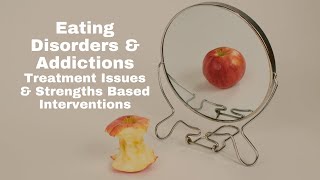
Dr. Dawn-Elise Snipes explains how eating disorders and addictions overlap, with onset typically between ages 12 and 25. She moves past labeling pathology to focus on client strengths, using techniques like the miracle question and scaling to build motivation and practical change.
Chapters
Foreign. I'd like to welcome everybody to today's presentation on therapy with eating disorders and addictions. I'm your host, Dr. Donnelly Snipes. This presentation is based in part on a book called Brief Therapy with Eating disorders by Barbara McFarland. It is one of my go to books. It's one of the ones that I got, I don't know, I think probably 15, 20 years ago now. So it's an older book, but it is still in my library. And then Overcoming Disordered Eating Protocol by the center for Clinical Intervention. And there is a link to that in the PowerPoint where the center for Clinical Intervention actually put together these little booklets that can walk people through different units for. For eating disorder treatment. The center for Clinical Intervention is a lot like R N imh, the analog for I can't remember if it's Australia or New Zealand, but either way. So that gives you kind of an idea about where those things came from. But today we're really going to talk about not so much diagnosing addictions and eating disorders. I'm going to go over eating disorders a little bit, but we're going to talk more about shifting paradigms from one of sickness to one of resourcefulness. How did these behaviors develop as a means to help the person cope or survive until they could get other tools? And we're going to talk about identifying key interviewing questions to develop a Strengths based alliance. 20% of women struggle with disordered eating and 10 to 15% of people with eating disorders are male. Now I would venture to say it's probably even higher than that. However, the official statistics are still, you know, lower. 40% of male football players were found to engage in disordered eating. Now that's one that surprised me when I found that statistic. I think of wrestlers as engaging in disordered eating. I was a athletic trainer all through high school and our wrestlers used to engage in some pretty drastic behaviors to make weight, but you didn't really think of it for football players. So it is important not to let our biases influence our expectations. Muscle dysmorphia and body fat pre. Preoccupation is seen in a majority of bodybuilders and wrestlers. So this we do expect. Bodybuilders especially are very concerned about the size of their muscles, the proportion of their muscles like their deltoids to their triceps and stuff. You know, they want to chisel that perfect looking figure. But they also are physique, I'm sorry, but they also want to have really low body fat. So all of those muscles can show through. And that really low body fat is like 1 to 2% when they're competing. And that's just in most cases, not healthy. Our body needs fat for a lot of reasons. To produce certain gonadal hormones to help us stay warm. There's a lot of reasons we need a certain amount of fat. 90% of people with eating disorders became symptomatic between between 12 and 25. Now that's a really interesting phase of life there. Think about it. 12 to 25, they move into formal operational thought. They are going through the ericksonian stages of developing their individuality. So they're trying to figure out who they are. But up until 25, we remember that the prefront, prefrontal cortex is not fully developed yet. Their impulse control, their executive thinking, their organization, their decision making, all of that stuff is still not fully developed. So they are at higher risk at that point in time of potentially getting involved with behaviors that could be more detrimental. So let's talk about some risk factors for the development of addictions as well as addiction. I'm sorry, Eating disorders as well as addictions, Especially behavioral addictions. Low self worth and low self esteem or feelings of inadequacy. A lot of times people who develop mental health or addictive issues, you know, don't feel good about themselves, or they may feel good about themselves until something happens, and then they start engaging in an unhealthy behavior that becomes problematic, and then their self esteem goes down either way, by the time they come to treatment. People with eating disorders and addictions Typically have low self esteem and feelings of inadequacy. Feelings, feelings of disempowerment and low self efficacy that we're going to need to address, which is why the strengths based approach is so helpful. They may also have obsessive behaviors regarding food and diets and may often display obsessive compulsive personality traits in other parts of their life. It's important to recognize that there is a lot of overlap between chemical addictions and behavioral addictions. There is a lot of overlap between bulimia and alcoholism. So we do want to be aware, especially if you're working with people who present primarily or initially for substance use disorders, that the development or upsurgence of eating disordered behavior Is not uncommon in the recovery period. Because I've always referred to it as switching addictions. But a lot of times they're switching what they are controlling or what they're doing in order to numb or try to cope with the pain to something Else they can't access cocaine, they can't access, access alcohol. Well, they can self soothe with food or exercise or controlling if they feel their life is out of control in early recovery, when which it often does feel like for a lot of people in substance abuse recovery, one of the things that they may try to do is start controlling their food intake and controlling their body shape and weight. It gives them something else to focus on besides the pain and the trauma that they may have to process that's going on inside them. A lot of people with eating disorders have a strong or even extreme drive for perfectionism. We don't see this as commonly. It's not so much of a trademark in addictions. It can be there, no doubt. But people who end up developing eating disorder symptomatology also tend to do tend to have this drive for perfectionism. They may have unrealistic expectations of themselves and others. Now going back to childhood when this develops, the ages of 12 or even younger to 24. This is when we're developing our identity and we may perceive others expectations on us as being higher than they are, and we may set expectations for ourselves that are unrealistic. And if we don't have responsive caregivers out there that are telling us that we are lovable for who we are and you know, helping us set more realistic expectations, then it can quickly become a problem. In spite of their many achievements, people with eating disorders may feel inadequate and they often still see the world dichotomously. And that's interesting because theoretically when people move into that formal operational thought, they are able to see more shades, more nuances in things. But people with eating disorders often still see things very dichotomously in, in addictions. We do tend to see this some too. A lot of all or none. Thinking now. You know, one of the. Another interesting side side note, I guess is that there is often a lot of borderline esque type symptomatology in people with eating disorders and addictions. So they may go from loving to hating really quickly. They may have very extremes in their emotions and then they may experience a lot of emotional dysregulation. So we do want to explore, you know, how does the person see the world and what is it that triggers a shift from one to the other? And maybe how can we help them explore the nuances, explore the bigger picture. Instead of seeing something as either all good or all bad. People with eating disorders and addictions often have negative affect. Well, go figure. When you are engaging in those behaviors, you are altering the neurochemicals in the brain, the dopamine, the norepinephrine, the serotonin, the endogenous opioids. So when they are not engaging in that behavior, then they tend to feel quote, depleted in those, in, in some of those neurochemicals because their body has become resistant to average levels of those neurochemicals. Um, and, and that's, we've talked about that with tolerance before. So it is not uncommon to have to help people in the early stages of recovery figure out, understand, number one, understand where these negative affects are coming from. Cognitions, biochemical things, lifestyle factors, whatever, and probably all of the above. But it's also important that we help them figure out how to cope with them without engaging in the target behavior or behaviors. Because you can't expect somebody who is, you know, in early recovery, who is clean, who is, you know, not engaging in the targeted behaviors. But they are clinically depressed, they are, you know, overwhelmingly anxious. You can't expect them to not engage in those self soothing behaviors for very long. If you don't provide them something else to do. You've got to pro. They need relief. Let's just be frank about it. People with addictions and eating disorders have a sense of a lack of control in life and often want to take control and fix things in an unhappy life, but may not really know how. For eating disorders, our culture often communicates that success and happiness is equal thinness and, you know, wealth. So the people may often tackle their body instead of the problems at hand. They can't control some of these other things, but they may figure if they can provide that perfect looking facade that everybody, not everybody, that a lot of people promote on Instagram and YouTube and Facebook and, you know, list goes on tik tok, if they can promote that facade, then maybe people will like them and maybe they will feel happier. Interpersonally troubled relationships, difficulty expressing emotions, a history of being teased or ridiculed based on their size or weight, and a history of physical or sexual abuse can all be risk factors. And a lot of these also need to be triggers or targets for treatment. If they have difficulty in their interpersonal relationships, we need to look at the attachment style. We need to help them really examine the characteristics of their relationships, whether they are consistent, responsive, attentive, validating, encouraging and supportive. We want to make sure or help them evaluate whether they are able to set boundaries. A lot of times people who develop addictions or eating disorders grew up in families where there were very poor boundaries either because their caregivers had Addictions or eating disorders or mood disorders or for some other reason. So we want to evaluate attachment quality, we want to evaluate boundary setting and we want to help them identify what does a healthy relationship look like to you? And anything that may be preventing them from acquiring that, such as shyness or poor interpersonal communication skills. They, if they can't identify their own thoughts, wants, needs and feelings, they may have difficulty identifying it in others or, or they may over identify with others, which kind of goes back to that whole boundary thing. The difficulty in expressing, expressing emotions and feelings is really prominent in eating disorders especially, but also in addictions. In addictions I find that a lot of people that I work with that have, have substance abuse issues have a small range of emo emotional vocabulary. You know, people with eating disorders often use words like I feel fat. Well, fat's not a feeling. We need to explore what does that, what does that mean to you? What feeling is associated? What emotion is associated with that? If somebody has a history of being teased or ridiculed based on size or weight, you know that they acquit, start to equate weight with acceptance or rejection. And they may have internalized those messages from whomever it was, even if it was meant all in jest. And they may still have that negative internal voice. So we may need to help them explore that inner voice at a certain point in time and then obviously dealing with any trauma that may be contributing. Some people with eating disorders, it's been hypothesized, use behaviors to avoid sexuality. In anorexia, for example, there is a theory that people with anorexia may intentionally work to prevent their bodies from developing secondary sex characteristics in order to appear less appealing to someone who may be interested in them sexually. Others use eating disordered behaviors to try to take control of themselves and their lives by creating and winning power struggles inside. They may not be able to win their power struggles with their parents or with their principal, or even with you, but they may be able to win the power struggle with the hunger. They may be able to win the power struggle and feel empowered by being able to control their, as Freud would say, ID based impulses inside. People with eating disorders and addictions often feel weak, powerless, victimized, defeated and resentful. So these are all things that eventually will have to come out once you've established that alliance, once you've established that rapport. People with eating disorders often lack a sense of identity and try to define themselves by manufacturing an admired exterior. Now people with addictions, especially people who've had addictions for a long time also often lack a sense of identity. I've worked with clients, you know, for two decades. That, and it is not uncommon for somebody in treatment to not know what they enjoy, not really know what they stand for, because they haven't thought about it for so long. They've just been immersed in their addiction. So helping them define their identity is important. But people with eating disorders often try to manufacture that admired exterior by being the literal, picture perfect person. And we want to reflect on with people eventually the strengths that they have inside their character strengths, what makes them lovable as human beings versus their physical appearance or what they do on the outside. Sometimes it's not as much physical appearance, but they will be perfectionistic. Everything they do has got to be perfect. And they are ones who will over volunteer and over extend themselves because they want to be seen desperately as helpful. And they may be also inadvertently or subconsciously trying to create a situation where they're needed. So it's less likely that they're going to be rejected. But they often, since they think dichotomously, they often set up this paradigm where if I'm not perfect at everything all the time, then I'm a failure. So we want to slowly encourage them to challenge that. But that is not probably going to be very effective until they feel empowered. Remember, a lot of eating disorder behavior revolves around a power struggle. And it's important to help the person find their place of safety, to feel like they can trust you, that you are not going to strip them of their power, that you're not going to make them do things and create that alliance that is based on trust and everything else. People with eating disorders often desperately want healthy connections to others, but they fear criticism and rejection. They often are so. And, and this is true of addictions and a lot of other issues. But what people say to themselves is often so hateful and so critical and so extreme that they regularly reject themselves. So they are fearful that others see them the way they see themselves and therefore will reject them. So that kind of goes along with that self esteem building that we're going to work on. Family risk factors for eating disorders include a family history of an eating disorder, you know, partly nature, partly nurture, But a lot of times, if there is a family member with an eating disorder, Certain beliefs about food behavior, perfectionism may get passed along. Familial attitudes toward weight, dieting and eating, including overvaluing of appearance or making jokes about appearance, can also be a trigger, especially in younger children who are still thinking concretely they're still thinking dichotomously. This is kind of before the age 12 thing. And when somebody criticizes them, even if it's in a joke, even if it's in jest, they may hear it and internalize it and think that okay, I'm not perfect in this way or this person is making fun of me, so they're rejecting me, so I must be a bad person. You know, children can, because they think dichotomously, can go through some real mental gymnastics sometimes. In order to categorize things as all good or all bad. Families often have deficits in emotional support and secure attachment. Again, craves. A lot of these families, when you look at their relationships, they are not consistent, they are not responsive, they don't give each other attention proactively, they're not validating of one another's feelings. In fact, they're often invalidating, they're often not encouraging. When somebody fails or falters, it's, there's, it's not a warm, safe place to come back to and, you know, get comfort. A lot of times they're met with criticism and why didn't you do better? And then support. A lot of times there is support in these families for things that the caregivers want them to do. A lot of. Oftentimes in families there's a sense, there's a degree of enmeshment in which the caregiver is trying to relive vicariously through their child. On the other extreme, there is detachment where the caregiver is so involved with their own stuff that they can't be physically sometimes, but definitely emotionally present for the child, so the child's not getting that consistency. Responsiveness, attention, support, you know, you, you know where we're going. So it's important to recognize that overly and messed or detached family dynamics can leave children feeling either smothered or unsafe, overprotected, that anything they do may be scary or abandoned, misunderstood and alone. Families that tend to be overprotective and rigid often are also ineffective at resolving conflict. It's my way or the highway. And, and obviously that's more in the enmeshed families. In the detached families, it's tends to be overly permissive. There is a theory that in the detached families, children's behaviors, the acting out or the unhealthy, the choice of unhealthy behaviors may be one way that they are desperately trying to get somebody to set boundaries and limits and structure. And when the grown ups aren't stepping in to do it, they try to do it themselves. The therapeutic relationship determines clients willingness to openly discuss and explore behavior patterns. If a client feels like you are going to minimize their fear of fat, their fear of eating, their, you know, how they perceive the world, then they are probably not going to be sharing a lot. If they fear that you going to be critical of how much or how little they ate, then they are probably not going to share. So this is really important that we are very open with clients and very accepting of meeting them where they are on any given day and then trying to work together to problem solve and say, okay, you know, maybe they backslid a little bit. Alrighty, it is what it is. So here's where we are right now. What can we do to get back on track? And I find it is really helpful with clients to, to be very matter of fact, but also sometimes because they are so perfectionistic, that can be an issue. And commiserating with their frustration that they weren't perfect, but also helping them identify things that they did do well, it is really important. So we want to highlight the exceptions to what's going on. We want that the therapeutic relationship determines clients willingness to consider altering their behaviors whether it's eating or drug use. But if they don't feel understood, if they don't think you get it and then, and if you don't get it, there is no way you can help them identify or what their needs are and meet those needs. It always frustrates me when people go into a treatment program and it's sort of this one size fits all. You know, you're going to come in, we're going to plug you into this predetermined curriculum and it's going to work for you. And it just doesn't. It's important to explore behavior in terms of communication and in terms of resilience. In what way did this behavior, whether it was drinking or smoking or eating disordered behavior, in what ways did that help you survive? In what ways was that beneficial to you up until now? You know, obviously they're in treatment now, so there's something that's pushing them to change that behavior. And like I said, the therapeutic relationship will determine clients willingness to disclose accurate information. Working with people with eating disorders, sometimes part of that is a weigh in. And I've worked with clients with anorexia who will, you know, gulp down 2 gallons of water before the weigh in in order to get their weight up. I've worked with, you know, people who have used substances who just adamantly deny that they've used substances. So it's important that we consider when we're setting up our programs the necessity for and frequency of any sort of monitoring that we do with people with eating disorders. Example, monitoring their blood pressure can be helpful. Monitoring, you know, some of those other things can be helpful in a medically managed program, whereas weighing themselves can be extraordinarily triggering. So people have different opinions on whether there should be a regular weigh in or not. So let's talk about motivation. Motivation is determined by the sense of safety and alliance with the therapist. Safety. How safe does the person feel that you are not going to do something that is threatening? And that includes forcing them to eat or forcing them to not eat. But a lot of times people with eating disorders have a huge fear of food. And if you start setting these unrealistic expectations that you need to eat 1500 calories a day, they may or more, they may get very anxious and to the point where they can't focus on what you're saying. Now, thankfully, a lot of times in ED programs, the dietary issues are handled by other members of the team, which allows therapists to really focus on that alliance and help the person deal with their thoughts about what the rest of the team is needing them to do and their feelings about those things. So we can really start helping them focus on the emotional and the cognitive. We want to make sure they have a sense of self efficacy and empowerment. Asking them what is it? And we're going to talk about some of those goals, how to set some of those goals in a minute when we talk about the ripple effect. But we really want to ask them, what, what is it that you want to get out of treatment? And how can I help you get there? Not what can I do to make it better. How can I help you achieve the goal that you want? And maybe that goal is just to get mom or dad off your back or to stay out of the hospital. Okay, you know, so let's figure out how to do that. And then we can work on identifying more granular goals. Motivation is also determined by you and the client having similar goals for treatment. If you want somebody to do something and they have no desire to do it, you're probably going to mishmash because they're going to feel forced or manipulated in some way. So again, we want to structure our goals so they are mutually agreeable. We have the same ultimate goal, but we may have different ways of getting there. The cost benefit of the current behaviors. We also need to consider the fear of fat versus the desire to be healthy in People with eating disorders, we do need to recognize that the anxiety that they feel when their belly feels full or when they think they've eaten too many calories can be overwhelming. And they may want to be healthy, but coping with the way they feel after they've eaten or even when they're, when they think they've eaten too much may override that. They may feel like they're going to crawl out of their own skin if they don't purge. So, so we do want to recognize the severe anxiety that that does accompany it. And there are a lot of different approaches that can be used to help them deal with that anxiety. There are some pharmacological interventions that actually have been shown to be very helpful with people with bulimia to reduce the frequency of binging. And there are other ways like hypnosis and acupuncture and that have also shown great promise. The other cost benefit that we want to consider are the social pressures versus the desire to change. So they may want to change, but the pressure that comes from their sorority or the team that they're on in the sports team or whatever that they're on may be too great. And it could be their fraternity too. I'm sorry because again, we don't want to minimize the fact that eating disorders impact both biological genders. Just they do. And, and we need to stop minimizing that. I, I'm seeing it more and more unfortunately in young men motivational dimensions that so helping them not to feel forced to answer your question. We're going to talk about strengths based questions in a few minutes, so I'll table that for right now. And the implication is that EDS start typically start in younger populations. Yes, they do typically start between the ages of 12 and 25. However they can go on for a lifetime. So it, we don't want, even if we're seeing somebody who's 60 years old, we don't want to discount the fact that that person could have an eating disorder. They can start later in life just like anything can. But typically they start in that older adolescence window. And no, the, the theories about why it's tends to be more prevalent in women revolve a lot around social pressures and cultural pressures to be thin and what we used to see back in the 70s and 80s and some now there's a lot more body positivity now which is really helpful. But it is important to recognize the influence of media and of all of the, you know, photoshopping and everything that, and how that impacts young children when they're seeing these things, they can't rationalize that, oh well, that person probably looks totally different and that's just all airbrushed. That's not how a 10 year old thinks. A 10 year old is looking in the magazines and 12 year old, 14 year old is looking in the magazines and seeing these people that look picture perfect and then comparing themselves to that and that can create a very unhealthy dynamic. And I do not know about whether there's been an uptick in eating disorders since COVID started. If I had to guess, I do know there has been a lot more drinking. There hasn't been an uptick in drinking, which would lead me to believe there's also probably been an uptick uptick in binge eating. Ergo, I would expect that we could see an increase to, to a certain extent an increase in eating disorders, especially bulimia, increases in binge eating for comfort. When you're home, you're stuck inside all day and then you can't exercise, which may lead to unhealthy compensatory behaviors. Intermittent fasting is another tool in the arsenal. And remind me about once we get down to some of the interventions and, and we will talk a little bit more about how that might be a usable tool for some of our clients. Oops, sorry. Going back here, our motivational dimensions. Just really quick. I've gone over this in other presentations. When we're working on motivation physically, how is what the person wants to do going to help them feel better physically and make them healthier and have more energy? You know, what are the physical benefits affectively, how's it going to make them happier cognitively? How, how does what they're planning on doing and the way they're planning on doing it, how does it make sense? And how does it make sense that if they achieve their goal, they will be happier and healthier environmentally? What can they do in their environment to increase triggers? Reminders for the new positive behaviors, for the behavior change, increased reminders for high self esteem and personal empowerment. And interpersonally, who do they have that is supportive of them and of their friends, of the people in their social circle and even in, in their culture, you know, what is the motivation for getting better? What is the motivation for altering their, their disordered behaviors? And we do want to look in each one of these dimensions. There's probably motivations. Well, we know that there's motivations for the eating disorder, for the addiction. We also want to help them highlight the motivations for the new behaviors. So strengths based Treatment history questions. What type, kind and type of therapy did you have in treating your eating disorder or your addiction in the past? What parts of it were helpful, if any, and what interventions were helpful and under what circumstances. So I kind of usually lump those all together and tell people, you know, help me understand. If you've had treatment before, tell me about what it was like, what was helpful so we can build on that. Because things that have worked before, we can see about trying to figure out how to make them work better now and what didn't work, because there's no sense continuing to try to do something that's not going to work. So I'm giving them the power to tell me what works for them instead of telling them, this is what you're going to do. I'm saying help me understand you help me understand what works for you as a person and under what circumstances. What works for you as a person in, you know, one circumstance may not work in another. What works for you, you know, on a day to day basis. I had one client that I worked with who was fine as long as her husband was coming home in the evenings. And when he. But when he would go on trips, she found it almost impossible to control her urges to binge and purge when he wasn't in the house. So those were two different circumstances, what she did to cope with those triggers when he was there versus what she did when he was on vacation. So we had, you know, we had to brainstorm ways that she could better handle when he wasn't around. Do you believe that you have any other issues such as depression or anxiety? You know, throwing those out there is really important. Helping people, I like to give them a checklist of symptoms and then we talk about what those symptoms may mean and what may be causing them. People with eating disorders, because of their tenuous state of nourishment, may have some neurotransmitter imbalances because they are not getting adequate nutrition, whether it's because they're not eating or because they're purging. Purging can also, well, and anorexia, both of them, as well as alcohol. So addictive behaviors can also throw out of balance some of your electrolytes and your vitamins and minerals, which can inhibit your body's ability to produce the neurotransmitters and to transmit the signals throughout your body. Remember, a lot of our neurotransmitters are passed along through calcium channels. So if calcium levels get mucked up, that's going to have a huge impact on the person. So a checklist can be important as well in order to help them identify what may be going on and what may be causing it. Making sure they get a referral for a physical when they're ready. And you know, the doctor that works with them has to have sort of a similar tableside manner, desk side manner in being accepting of, of what's going on and meeting the client, where they're at and asking, asking them again, what interventions or strategies that were helpful in the past might be helpful now. You know, brainstorming. You tell me what you think might work. Let's start just making a list of things and then that'll give us a toolbox that gives us or a shopping list, whatever you want to call it, from which to draw from when we're trying to figure out ways to help you cope with life on life terms. Use the miracle question. Thinking about tomorrow, not way in the future. If you woke up tomorrow morning and your problem was magically solved overnight, what would be the first thing that you notice is different when you wake up? And then take me through the rest of your day and describe what else is different? How do you feel? What do you see? What do you do? Really start creating this multi sensory, three dimensional image of what recovery looks like to that person that gives you something that, that's the ultimate goal. Then you can start working backwards from there and saying, okay, what do we need to do to help you achieve that? We want to explore exceptions. You know, when you are not binging what has worked and why. And you know, with the client that I suggest, talked about a minute ago, you know, one of the things that works is when she has company because she doesn't, she wouldn't eat in front of company. I'm sorry, my nose itches today for some reason. And so having her identify all the things that she does, you know, when she's not binging, what is she doing? You know, is it taking a bath, is it cleaning the house, is it walking, is it exercising? You know, I do the same thing with clients with substance addictions. When you're not using, what are you doing? Let's make a list of all those things and let's start doing those things more, you know, and exploring why each one of those things worked. I had a client who said, you know, when I'm around my kids, I don't smoke. So, you know, and it was because he didn't want them to be around the smoke. So it was, that was sort of a easy connection there. So how can you spend more time with your kids so you won't be as tempted to smoke. Under what conditions has each activity produced an exception and failed to produce the exception? So for the client that generally would not binge in front of people, would not eat in front of people, when that didn't work, you know, when she had an occasion where she was with people and she ended up binging, why didn't it work? Then? What was different? And, you know, in order to understand and tune up those skills to help them work and be more flexible, use scaling questions to help the client stop viewing things in terms of dichotomies. I love scaling questions on. I usually use a scale of one to four because when you use an odd number, people very regularly pick that middle number that three. So one to four with anchors. So one being the worst ever, two being pretty bad bad, three being it was okay, and four being it was perfect. You know, that those are pretty definable, if you will, numbers. You can also use, you know, less than 10% of the time, 11 to 25% of the time. You can divide it up however you want to, but it's important to give them anchors. So you get, you know, question re. Question reliability. But it's also helpful to encourage them to recognize that there's more than just a one and a four. How does. How does it make. How anxious does it make you to think about eating a hamburger or going an entire day without exercising? Any of those things that come up as triggers for that person or triggers for anxiety? You know, have them rated on a scale of 1 to 5. What we're going to do is try to walk it back down and talk about, okay, you know, if it makes you feel when you think about eating a hamburger. If that is a 4 on your anxiety scale, what would it take to make it a 3? What would make you feel a little less anxious about it? And okay, what would it take to make it a two? And then a one and a one would be, you know, for eating a hamburger, might be, I could eat it. I wouldn't necessarily love it, but I could eat it. You know, ideally we get down to the point where it doesn't make them anxious at all and they actually look forward to eating. But, you know, let's just start where. Start where we are and talk about working it down so they are not feeling panicked every time they eat. How accepted do you feel by your caregiver, your spouse, your best friend, the. The universe? And again, scaling that on one to five. And. And why. Why is it that you feel really accepted. You know, it's a four with your best friend, but it's a two with your caregiver. So what's the difference there? What makes one feel more accepting than the other? How helpful was therapy or particular interventions in the past? How often have you been able to. Have you been successful at going a whole day without binging or going a whole day and eating? If you're talking with somebody who has anorexia, going a whole day and sticking to your meal plan. Scaling can help us, as therapists, highlight ignored exceptions and positives. So when we're talking with them initially about eating a hamburger and it's a 4 on the anxiety scale, and then a couple weeks later, we're talking about that dagum hamburger again, and we're down to a, okay, we're not at a one yet, but we've moved downwards. They're able to talk about it without automatically starting to feel that rush of anxiety. We want to highlight positive actions or events. Too often in eating disorder treatment, the focus of treatment is so directed toward eating and toward food behaviors. When eating and food behaviors are often just a symptom of the larger issue. The difficulty communicating, the feelings of empowerment, the lack of a sense of safety. So we want to try to figure out how to help people start getting those needs met. And when we talk to them, you know, they come in, they sit down, you know, I want to know, how are you doing today? And a lot of times when I work with clients who have eating disorders, they start out by telling me what their eating's been like, and, okay, that's cool. So I will hear. You know, I listen to that. But then I also want to know, tell me about you, though. How are you doing? You know, you are different from your behavior. You are different from your eating. So how are you doing and what did you do this week? What are some successes that you had? What are. And I usually don't use the word successes. I usually say, what are the three best things that happened to you since we met last time? In order to help identify some of those positive actions, when we talk with them about their goals, we want to restate it in a way that, you know, helps underscore the mutual agreement that we have. And it's important to make sure with all addictions and eating disorders, you know, this is a 247 program, unfortunately, and it's important that they have skills assignments. I try to avoid the word homework when I'm working with clients, but skills assignments that they can do in between sessions in order to help them move forward. 1 One of these activities is a coin toss. Have them keep a quarter by their bed and toss it each morning. If it's heads, they pretend it's their miracle day. If it's tails, it's just a regular day. Ask them to pay attention to how they feel different and what others notice as different. On the miracle days, you know, how does that change your energy levels? How does it change what you pay attention to your mood? How does what do other people notice differently about you? And then remembering that clients may be resistant to pretending it's their miracle day because that means they wouldn't have this disordered eating. They would be eating quote, normally. And I don't like the word normal, but even thinking about doing that can be scary as all get out for clients. So it's important to remember that they may have a lot of difficulty on those heads days, pretending it's their miracle day. Remembering as therapists, remembering that resistance communicates that the client is afraid they don't have the skills to do what we're asking them to do or the other option is far more rewarding. And when clients have difficulty with those heads days, we need to explore which one or ones of those things are going on so we can help them address their resistance, so we can help them become more motivated to move forward towards their goal. In the first session, we want to attend to the present and future with little attention paid to the past. You know, we're going to ask about prior treatment interventions and things, but we're not going to spend a whole lot of time on their past eating behaviors. What I want to do is create this vision. Where are we going? We want to explore problem free future, enhance exceptions and previous solution patterns. That's when you go and you ask, you know, when you weren't having problems, when you weren't depressed, when you weren't drinking, when you weren't binging, what was different and how did that work for you? And can we start doing that some more? What was different during those times that you were problem free, even if it was 10 minutes, but a lot of times it's longer than that? We're not talking about only looking at periods where they were problem free for a week or more. I'm talking about problem free for an hour. You know, what helped you not binge in that hour or not drink in that hour? Provide feedback and therapeutic compliments, reminding them or educating them. Whatever word you want to use. I'm not finding the right word about how strong they are, how they have endured a lot, and how much courage it takes to be willing to, you know, engage in this big life change. And then, of course, assign them some sort of homework. And that's where the booklets that I am getting ready to get to are really helpful. In the second session and beyond, Separate the person from the problem. Again, when you do your. Hey, how you doing? Intro to the session. Making sure that if they start immediately talking about the issue, the eating disorder, we want to also turn their attention to the person and help them separate mistakes in behavior from being a failure as a person. Try to stay focused on the client's strengths and resources. Try to avoid taking a position regarding the client's situation, whether they should gain weight or they shouldn't gain weight or whatever. What we're doing is we're helping you stay out of the hospital or we're helping you, you know, whatever. They, however they define their goal, constantly check in to see if the client's specific goals have changed. For example, if the client says, I want to be happy, but have realized that losing weight won't. Won't make me happy, okay, so what is it that's going to make you happy? If you've recognized that for you, that's not going to make you happy. And then continually evaluate the client's readiness of change. And that goes back to Prochaska and DiClemente's pre. Contemplation. There's not a problem at all. Contemplation, a little bit of a problem, but I got it. Preparation. I see there's a problem, and I might consider what my options are. And then action. I'm ready to do it. And when things get difficult, when things get uncomfortable or painful or terrifying, people will often regress in their readiness for change. It's like, oh, okay, maybe it wasn't that bad. So, yeah, I'm going to put off the change for a little while. So we do want to use those motivational interviewing techniques to, you know, help keep people moving in that action phase of change as much as possible. Explain the necessity to focus on small goals one at a time. Highlight the necessity of setting realistic small goals and the necessity to tolerate behavioral and attitudinal slips or relapses, helping them start recognizing that nobody's perfect. And, you know, I do a lot of activities helping people recognize, you know, do you expect your best friend to be perfect? Do you expect your child to be perfect? Think about a idol that you have. Whoever that is, are they perfect? And thankfully, so far nobody's come up with somebody who is actually perfect. So that gives me a little bit of wiggle room to say, okay, well, you know, if this person that you idolize is not perfect, then, you know, do you think you might be able to cut yourself some slack? Food planning must be concrete and practical and presented as a way to create an exception related to the client's identified goal. So if the client's identified goal is to get healthy or to stay out of the hospital, then eating is one way to do that. How many calories? Well, that's going to be determined by the dietitian. But we do want to explore clients willingness to increase calories a little bit and their feelings around when they are supposed to increase their calories. A lot of times they are very rigid about what foods they are willing to eat or how often they eat. And a lot of treatment centers will set the food Plan template at 50, 25, 25, 50% carbohydrates, 25 fat, 25% protein, which is terrifying to a lot of clients. So we do want to recognize the anxiety surrounding this. In terms of intermittent fasting. I have found that for many clients that may be an intermediary step between unrestricted eating and completely restricted eating. If they say, okay, well I can eat from 8am until 4pm or you know, 9 to 5 or whatever it is, that's my eating window. And then they place their meals in there. Sometimes that helps them feel like, okay, I've got a set cut off, so I won't be tempted to be, you know, going hog wild, so to speak. So intermittent fasting, I have found, can be helpful, but it can be abused because you can't have people continually shrink that window to the point where they're pretty much fasting, Fasting. Instead of intermittently eating self monitoring journals, have them create a table that asks them that nutrition journal. What time was it? What did you eat? How much did you eat? Were you hungry? If not, what prompted your eating? Were you craving sweet, salty, spicy or a specific, specific food? This helps us identify some nutrition deficiencies as well as potentially some triggers. Potentially moods trigger particular cravings. How did you feel after you ate? Did you purge? If yes, how did you feel afterwards and what could you do differently the next time? If no, how did you feel afterwards and what did you do to prevent the purge? What information can you get, can you glean from this type of table, you know, encouraging them to look at that and really get the information about what triggers their eating, what helps them conform to their new behaviors, etc. Addressing seemingly unrelated concerns can have a positive or negative effect on eating behaviors. So we want to pay attention to how what we're talking about in therapy is impacting their eating behaviors. Part of brief therapy means meeting clients where they are and developing mutually agreeable goals. So for a client who doesn't want to gain weight and is still adamant about eliminating whole food groups, you may need to try to find a mutual goal such as they don't want to see you anymore and their parents are going to make them see you until, you know, X, Y, Z goals are met or they want to stay out of the hospital or, you know, I had one woman I worked with, she wanted to get pregnant and so that was in order to get pregnant. Let's talk about, you know, what needs to happen nutritionally to help support that help support that goal. The Overcoming Disordered Treatment Eating Disorder Treatment Protocol has all of these different booklets in it. Am I ready to change how eating disorders are maintained? Self monitoring, yada yada, you can look those up. That link will take you to the website that has these booklets on it. Developing Mutually Agreeable Goals Focusing on what the client hopes to achieve is one of the foundations of strengths based therapy. Use the miracle question to help clients identify their goals and support their successes and avoid reinforcing undesired behaviors. Focus on the good, bolster that, and kind of ignore the undesired behaviors as much as possible. Explore the use of journals and the handouts to help clients process between sessions and develop a relapse prevention plan early in treatment to help clients address the main presenting symptoms.










