Emotion Regulation Part 4
Dr. Dawn-Elise Snipes teaches dialectical behavior therapy skills for managing emotions. Learn why emotion regulation matters, what blocks it (brain chemistry, trauma, sleep deprivation, stressful environments), and concrete practices like self-kindness prompts, positive self-statements for each threat type, and mapping your stressors and buffers.
Chapters
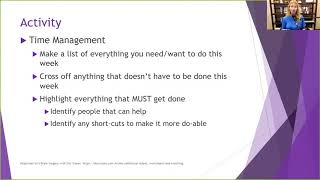
Welcome back to Happiness Isn't Brain Surgery with Doc Snipes practical tools to improve your mood and quality of life? This is the fourth module on dialectical behavior therapy and emotion regulation. In this module we're going to continue to identify why emotion regulation is important and how it can help you. Emotion regulation is useful for anyone, even if you don't have emotion dysregulation like we talked about in module three, emotion regulation can help you increase your present focused emotion awareness so you're aware how you feel in the present moment, so you can take action instead of waiting until you are just exhausted. You can start taking action when you're feeling tired. Instead of waiting until you're clinically depressed, you can start taking action when you're feeling blue. It increases your cognitive flexibility and encourages you to look at different options. Not just what your heart wants, not just what your emotional mind wants, but also what your logical mind or your brain wants and synthesizes the two. It identifies and prevents patterns of emotion avoidance. So instead of when you feel a feeling, immediately you want to numb it, which generally doesn't address whatever caused the feeling in the first place. And it also prevents patterns of emotion driven behaviors where again, you want to either numb out a feeling or lash out or react in a way that gives you power over that feeling or whatever caused you to feel that threat. It increases awareness and tolerance of emotion related physical sensations. So when you get angry or when you get scared, you have a physiological reaction, your hands get sweaty, your heart starts to pound, you start increasing your breathing. That's okay, you don't have to act on that. Understanding what's going on and being able to say, okay, I'm angry or I'm scared right now without having to freak out about it or immediately act on your urges is part of emotion regulation. And emotion regulation uses emotion focused exposure procedures. So in emotion regulation, you're going to remember things that got you angry, you're going to remember times when you got angry and you're going to work through that anger instead of having to nurture it and dwell on it. You're going to say, okay, this happened, it made me angry. So in that situation, how could I have improved the next moment? Each time you do that, you're going to learn that there are things you can do so you don't have to continue to feel that way, which will give you a sense of personal power. Sometimes there are some obstacles to changing your emotions though. If you were born with and the term brain abnormalities is kind of broad and Kind of negative. But if you don't make enough of certain neurochemicals, or if your brain is a little bit different than someone else's, it may make it more difficult to change your emotions. Not impossible, but more difficult. The same is true for trauma induced brain damage. There are certain things that happen when someone experiences either chronic stress or a trauma that can cause you to become more emotionally reactive. And we call that emotional dysregulation. Again, it doesn't mean that you have to stay in a state where you're always going to be emotionally dysregulated, where you're always going to have to feel angry or unhappy. But it's important to understand that it may take you a little while longer and that your brain is going to have to find workarounds and you're going to have to learn new skills and tools in order for your brain to get the message that there's no threat. It's okay. Other things that can cause obstacles to changing emotions include chronic stress. If you are stressed out all the time, it's going to be hard to feel happy because you have all your emotion, all your energy devoted over here to stress. So you don't have any energy left for happy. Chronic stress also is exhausting, which keeps you from sleeping well, and it can contribute to anxiety and depression. All of those work directly against being happy. So in order to change your emotions, you also have to start addressing chronic stress. You have to address addiction issues. If you are using stimulants, then you're essentially making your body run hot. Be stimulated all the time, which is a sign of stress. When you are angry or anxious, you're running hot. When you get really excited, you're running hot. But you can only do that for so long before your brain starts to turn on special safety mechanisms so you don't overload. So addictive behaviors are important to address. A, because in and of themselves, they can cause unpleasant dysphoric emotions. But B, because addictions are there to numb pain, they're there to numb or help you avoid or escape unpleasant feelings. So we talked about that emotion avoidance on the last slide. If you don't address whatever it is that's causing that anger or anxiety, it's going to stay there and it's probably going to get worse. So it's going to be hard to change your emotions if you've still got this festering wound in your psyche. Sleep deprivation. Your body needs time to sleep now. Quality and quantity are two different things. Even if you're getting 12 or 15 hours of sleep a day, you may wake up and not feel rested because you're not getting quality sleep. What's more important is making sure you're getting quality sleep and nutritional problems. If you don't give your body the building blocks to make the brain chemicals that help you feel happy, that help you feel excited, then it can't. I mean, if it can't make the chemicals, if it can't have the tools that it needs, then it can't help you feel happy. So you need to make sure that you're getting adequate, reasonably healthy nutrition. And I always say don't go overboard with it, especially not at first. But try to eat colorfully, try to get a few fruits and vegetables in there. Even if it's only fruits, it's better than nothing. One of the first activities you can do is, I call it mitigation. Some days you just aren't going to be 100%. So think about what you can do to be kind to yourself so you have the resources to deal with the must do's. If you wake up and you're sick, you know, you had this whole list of stuff you planned on doing today, but you know what? You don't feel like doing it. So how can you be kind to yourself? And what can you change in order to free up the energy so you can get get done the things that absolutely have to get done? Finish the sentence. When I'm having an off day to be good to myself, I will fill in the blank. And sometimes that means going to work and leaving when you're supposed to leave and then not answering emails or anything afterwards. What does it mean to you? When you're having a low energy day and you have those things that have to get done, how can you be good to yourself? Being kind to myself. By being kind to myself, I am preventing emotional distress which. So sometimes people feel guilty for giving themselves some slack and saying, you know what, I'm not on my A game today. But think about it. If you don't, if you keep pushing through when you don't have the energy or the attitude to do, causes emotional distress, it causes you frustration and irritability. How does that impact everyone and everything around you? And if you have negative impacts on other people and other situations, how does that impact you? Generally, if I am having a bad day and I'm trying to push through and I get snappy with somebody, then I feel bad afterwards. That just makes me feel even worse than I did to begin with. So again, complete that sentence by Being kind to myself. I'm preventing emotional distress, which. What are the consequences of when you're emotionally distressed? Another activity that can help you reduce some of your stress is to make a list of everything you need or want to do. And, and it can be today or this week. Then go through and cross off anything that doesn't have to be done this week. So if it can wait till next week, cross it off the list, you know, because you need to conserve your energy. So let's just focus on the must dos, whatever's left, highlight everything that must get done and identify people they can help. Maybe your kids can make dinner or vacuum the house or whatever it is that needs to be done and identify any shortcuts you can take to make it more doable. So instead of feeling like you've got to go home and cook dinner after you've worked for nine hours, maybe you can pick up takeout on the way home or stop by the grocery store and get one of those family meals, which is a little cheaper. What can you do in order to cut yourself a little bit of slack? How can you make it easier? And you know, when you're thinking about those things that have to get done? You know, I do laundry every Sunday. That's my laundry day. That's when it gets done. But sometimes every once in a while, I've just had so much going on leading up to that, I don't have the energy to do it. So when I think about whether it must get done, what I'm talking about is, are the kids going to run out of underwear? You know, that's a must get done. If I don't pay this bill, am I going to have my lights turned off or my water turned off? Those are the must dos. If my kids aren't going to run out of underwear, then it doesn't have to be done this week. I can wait till next weekend. I'm going to have a lot of laundry to do that next weekend. But it's all about prioritizing and realizing I only have a certain amount of energy and I've got to figure out how I'm going to use it right now. Obstacles to changing emotions also include cognitive responses such as unhelpful thoughts and pessimism. So if you're constantly telling yourself you're not good enough or you can't do something, that's not going to help you feel better. You know, if you want to feel better, you need to address thoughts that are going to make you feel out of control or rejected. Or isolated or like a failure. So we want to counter those thoughts with something positive. Pessimism is another cognitive response. If you're constantly seeing the negative in everything, how does that help you change your emotions? How does that help you feel better? Because my assumption is one of your overall goals is to be happy. So if you want to be happy, if you want to move towards that goal, what do you have to do when you start feeling pessimistic? And behavioral responses such as an inability to tolerate distress or delay acting on urges? And this is a hard one, sometimes when you feel angry, you just, you want to act right, then you want to make it stop. You want to get even, you want to however it is that you respond, learning how to tolerate that distress. And there's a whole module on distress tolerance activities that are really helpful. But it's going to be important to not immediately act on urges, because generally when we act on our urges, we make things worse. Or at the very least, we don't make them better, but we spend a whole lot of energy doing it. So. So think about how you're spending your energy. Is this a wise way? Does it make sense to use my energy to fight this battle or act this way? Is that going to help me reach my ultimate goal of happiness? Is whatever this problem is really worth my energy and effort? Sometimes things are going to happen that are irritating, but they're just not worth your effort. It's not worth it to get all that fired upset about. I was behind a driver this morning who was either drunk or really, really tired when I was going to the gym. And he was driving a moving truck. And I watched him drive off the road three times, not just into the shoulder, but actually into the grass, off the shoulder, and then come back on and weaving. Couldn't maintain his lane to save his life. And my first thought was, well, I could call law enforcement and tell them that they need to come take a look at this. And then my next thought was, if I call the likelihood of them getting to this, finding this vehicle is slim to none. And then so it's a whole bunch of energy trying to get something handled that's probably going to go nowhere. So it's not worth me getting all fired upset about. I just need to get the heck out of the way. So what are your behavioral responses? And is that energy getting you closer to your goals? So another activity is to identify two positive things you can tell yourself for each of the following types of stressful situations. Remember, in the last module, we talked about basic Threats being loss of control in the unknown, failure and rejection and safety threats. So when something happens where you feel a loss of control or you don't know what's going to happen, what tooth positive things can you tell yourself? Another example I'll give you, I don't like driving into somewhere I've never been before and I really don't like driving in the city. I'm a country girl and I prefer, you know, being places I know because it's known to me. I don't like the unknown, I don't like surprises and I don't like feel like I don't have 100% control of a situation. I'm a control freak like that. However, life is not that way. So when a situation happens where I'm not in 100% control or I have to face something that I don't know, have to face an unknown situation, I have things that I can tell myself I look back on. Other times I've handled similar situations and come out just fine. I tell myself, you know, you plan for this trip and you know where you're going and worst case scenario, that's one of my fallback things that I tell myself is worst case scenario, this will happen. What can you tell yourself when you encounter a situation where you're not in control? Maybe you have to go interview for a job and with an employer you know you've never met before. So that's the unknown little bit out of control. You don't know what they're going to ask you. So it's a little anxiety provoking. What can you tell yourself ahead of time so you don't feel anxious or as anxious? When something happens where you feel like you failed or you've been rejected, what can you tell yourself? And I'll give you a hint, a lot of them go back to self esteem. If you're relying on others to tell you you're okay, then you're always going to feel anxious because you can't count on them to do that. So if you fail, you know, you can think of it as a learning opportunity or progress, not perfection. Or if you feel rejected, you can remind yourself about all your good qualities. Those are my suggestions. But what works for you is going to work for you. So when you feel a situation coming up where you feel threatened, you feel anxious or angry because you feel like you've either failed or been rejected. What can you tell yourself to improve the next moment so you don't dwell on that? And if there's a safety threat, what can you tell yourself, you know, if you feel like something is actually making the situation unsafe? When I'm at home at night, I hate it when it's dark outside and I see my own reflection and I know everybody can see in and I can't see out. Stresses me out. So one of the things I remind myself that I'm in a safe situation. I've got four dogs in the house and one of them is an 80 pound bulldog. That helps me feel a little bit better. But I also take action and I close the windows. I'm like, well, if people can't see in, then they won't know I'm here by myself. So I close the lines. So there are things you can do and positive things that you can tell yourself. The final obstacles to changing emotions are environmental factors, people, places and things. And sometimes people are just, you know, challenging. And no matter how you try to approach it or how optimistic you try to be, they're in a state of mind. Their reality is one of pessimism. So it's going to be important to understand how to handle situations with people where they're being pessimistic or you feel like they are being rejecting of you, because sometimes you're going to have to deal with those people. So how do you handle it? An obstacle that you can either go over, around or under, you know, obstacles are things that get in your way but don't completely stop you. They're not barriers. So how do you handle the obstacle of people who keep you from feeling happy? The same thing is true of places. Whether it's a chaotic work environment or, you know, maybe your home environment isn't all that pleasant right now. Whatever the case may be, some places you go may be really, really stressful and they serve as obstacles to you being happy. Now sometimes you can just leave those places or know that you're going to leave them soon. But what else can you do in situations where you're in a place that keeps you from being happy? Maybe when people would come to the residential facility I used to work at and we would have 84 people in there at any one time. And they had very little space and, you know, very little space. So it was a stressful environment. But one of the things they were all allowed to do was put up pictures and things to personalize their own space. So instead of being a institutional, feeling overcrowded, whatever unpleasant word you want to use, they were able to kind of make a little island that was their own personal, happy space. So what can you do in your space. The same thing is true at your house even. No matter how hard you try, if you share a house with other people, it's going to be hard to keep it comfortable and relaxing and happy all the time. But if you have your own little place that you can go. I have a reading corner that I keep just so. And that's where I go, where I can relax. Where there's. There's stuff is not stacked three feet high on every flat surface, but it's a corner. I'm not expecting the whole house to stay perfect. So figure out ways that you can make your environments work for you. And things. And things kind of go with situations. But understanding that certain things are going to make life seem a little bit more challenging, and it's going to keep you. Some things may keep you from being happy, like news that you've got cancer or you get a bill and you find out that your water bill is like three times what you expected it to be. Things will happen that will cause you to feel anxious or angry. How are you going to deal with those things? And what resources can you call upon to help you deal with those things? Because you don't have to deal with them by yourself. So another activity for identifying and overcoming obstacles to changing emotions. Do one page for each of these things. So the first page, identify all of the people who cause stress in your life, and how can you deal with that? For each person, how can you deal with them? There's one person in my life that I deal with who has always got to say something negative. If she gives a positive compliment, it's always followed by some sort of but statement, you know, at least you're not doing that anymore or whatever. And it always undermines anything nice she tries to say. So how do I deal with that? Well, I expect it now. And I've come to understand or believe that it's more about her stuff than my stuff. Does it make it pleasant to go through? No. When she says things like that, does it smart for a second? Yes. But I've also realized not to devote tons of energy to worrying about it and feeling disappointed and rejected and frustrated and all those unpleasant emotions. I just accept that that's how it's going to be. So that's one of the first things that you want to do, is identify those people that cause stress in your life, Especially the ones that are going to be in your life. Not people that you can say, you know what, I'm just not going to hang out with you anymore. But people like Family or co workers or supervisors that you've got to see on a regular basis. The next thing to do is identify all of the people who buffer stress in your life. Who are the people who you really look forward to seeing, who you look forward to chatting with? And these can be people you see face to face. They can even be people who are online, they are social networking friends, but people who add value to your life. And how can you nurture those relationships? So you're going to free up a bunch of energy if you quit spending a whole lot of time dwelling on and feeling bad about what the negative people in your life do. So take that energy and devote it to nurturing the positive relationships. And then identify common stressful situations, things and places and how can you make them less stressful? So I put situations and things together because they often go hand in hand. Driving by your dealer's house. If you happen to be in recovery from a drug addiction, that's a thing, but also a situation. Getting a overdue notice about your electric bill in the mail. The bill is a thing, but it's also a situation. So identify common stressors in your life and figure out how you can make them less stressful. Emotion regulation helps people become more aware of their emotional states throughout the day. Obstacles to changing emotions to be happy include biological obstacles such as being under chronic stress or having differences in brain chemistry, cognitive and behavioral skills, and certain environmental factors that just may kind of precipitate negativity that need to be addressed. All obstacles can be traversed. First thing to do is prevent as many as possible. If there are situations you can avoid, by all means avoid them. But the ones that you have to focus and deal with, figure out to work with or around those in order to help you be as happy and relaxed as possible.










