Emotion Regulation Part 5
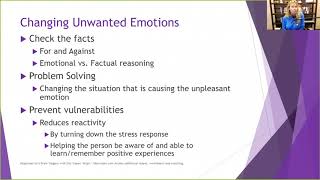
Dr. Dawn-Elise Snipes teaches DBT emotion-regulation tools: mindfulness, labeling what you feel, checking facts against emotional reasoning, and reducing vulnerability through sleep and movement. She covers problem-solving, building mastery, and changing the next moment.
Chapters
Welcome to Happiness Isn't Brain Surgery with Doc Snipes. Each week we record the podcast during a Facebook Live broadcast in which Doc Snipes presents information and tools to help you start living happier. Our website, Docsnipes.com has even more resources, videos, handouts and workbooks to help you apply what we talk about. After each podcast, the accompanying video, text and worksheets will be published for members on Docsnipes.com Additionally, each week we have a members only educational group followed by a question and answer session with Doc Snipes to help you apply the tools to yourself and start living happier faster. The Doc Snipes podcast will be providing listeners and members the same tools and information Dr. Snipes gives her clients. Go to docsnipes.com to learn more. Welcome back to Happiness Isn't Brain Surgery with Doc Snipes Practical tools to improve your mood and quality of life this is the fifth module in Dialectical Behavior Therapy exploring emotion regulation. In this last module, we're going to explore emotion regulation techniques including mindfulness, identifying and labeling emotions and changing emotions and improving the next moment. So let's start with mindfulness. What is it? Mindfulness is really just non judgmental observation and description of your current emotions and physical state. Understanding how you feel, being aware, awareness and mindfulness can often be used hand in hand. It's important to remember that your primary emotions, as we've talked about in the other modules, are often adaptive and appropriate. That means your initial emotion, your initial emotional reaction based on the knowledge you have and the situation at that time, often makes total sense. And it's designed to help protect you or keep you doing things that are positive for yourself. So understanding that they're good now, what you do with them can be harmful or unhelpful. A lot of your emotional distress is a result of your secondary responses to your primary emotion. So if you get angry, that may be very normal, probably is because you perceived some sort of a threat. But then if you start feeling shame over getting angry or anxiety about being wrong, maybe I shouldn't feel angry about this or rage due to feeling judged for it. So if you get angry and you feel like other people are judging you, and you get angry at other people for getting angry at you for being angry. Wow, that's a lot of stuff to deal with. In reality, accepting that you felt angry, identifying what the threat was, and then figuring out how to improve the next moment to make that threat go away, or decide that the threat's not worth your effort makes a Whole lot more sense. Mindfulness can serve as an exposure technique because. Because it helps you realize ahead of time how you feel and become aware of feelings like anger. All too often in our society we feel feelings and we don't even know we feel them. So we just kind of go on through our day and feelings build up. Mindfulness encourages you to tune in and be aware and say, oh, I'm feeling angry or I'm feeling stressed and then do something about it. So it's an exposure technique to get you used to feeling feelings and recognize that feelings in and of themselves are not dangerous, they're not uncontrollable, they just are. Exposure to intense emotions without negative consequences extinguishes the secondary emotional response. So that's a whole bunch of garbledygook. Basically what it's saying is if when you get angry, you should accept, you know what, I'm angry. You figure out what's causing the anger and you deal with it. That's like over here in scenario two where you have an unpleasant experience, you have an unpleasant emotional reaction and you just deal with that emotional reaction and that experience right there. So it's a one on one fight you against that threat. In the other scenario, you have an unpleasant experience which results in an unpleasant emotion like anger. Then you start feeling guilt and shame or anger about the anger. So you have this avalanche of secondary emotions. So instead of just having that one threat to deal with, now you've got four or five threats and it's kind of like Bruce Lee trying to fight off six people at once. It's a lot harder to deal with that than to just deal with the initial unpleasant emotion and, you know, be done with it so you don't have to feel guilt, shame, anger and all that secondary stuff that just complicates it. So to be mindful, the first thing you do is identify the event prompting the emotion. You notice your thoughts, your physical sensations and your urges. So something happened. You got a call from your boss and all of a sudden you felt terrified because you were summoned to his office. So what are the thoughts that are going through your head that are making you feel terrified? What are your physical sensations that tell you you're terrified? You know, your heart beating faster, your hands start shaking, you're breathing faster. What are your urges? What do you want to do? Do you want to run away? Do you want to run to it and just get it over with? Do you want to have a drink? Do you want to go smoke a cigarette? What is it that Your urges are doesn't mean you have to act on them. Just means being aware of what your thoughts, sensations and urges are. And what are your expressive behaviors associated with that emotion? Did you slam the phone down or do you start walking around and pacing in your office trying to wonder what's going to happen? What do you do when you feel that kind of an emotion? What are your interpretations of that event? So are you expecting it to be negative? Probably, or you wouldn't be having the emotional upset. And what is your history prior to the event that increased vulnerability to the emotional dysregulation? And again, that's a long sentence that says, what is it that was going on ahead of time that was using up your energy? Are you sleep deprived? Are you not getting enough to eat? Are you dealing with six other different stressors? So this was just one more the straw that broke the camel's back, so to speak. What else was going on or is going on that might be making you more vulnerable to make a mountain out of a molehill? And you can also think about the after effects of the emotion on other types of functioning. You know, think about, when I get this upset, how does it affect me for the rest of the day, how does it affect my relationships? How does it affect me getting stuff done and concentrating? So once you've identified what's prompting your emotion and you've kind of gone through that checklist, part of going through the checklist, all those things that we just talked about, are to help you get out of that adrenaline rush when you feel a threat. The first 60 to 90 seconds, you are not going to think clearly because you've got the threat response system has flooded your system with adrenaline. And you are not designed to think clearly during that period. You're designed to fight or flee. We want to let that kind of drain off so you can think a little bit more clearly. So you go through that checklist, identifying how you feel, the prompting situation, yada, yada. Now you're a little bit calmer. So check the facts for and against those thoughts that are telling you that this is a threat. What evidence, objective, logical evidence do you have supporting the fact that this is probably going to be a bad thing? And what objective evidence do you have that says, no, there's nothing bad that can possibly happen? There's probably going to be some on both sides because you don't know what your boss has got in store for you. You also want to look at emotional versus factual reasoning because if something happens and you automatically get stressed out about it. Your emotional reasoning is probably going to tell you, I feel stressed out. Therefore you, there must be something threatening coming up. Whereas the facts may not support that. You know, maybe you've been doing your job, you've been on time, you've been gotten all your paperwork in, everything's just all in a row. So when you look at the factual reasoning, thinking, oh, I'm going to get fired for sure, I'm going to get written up, are there any facts to support that? Or are you just trying to figure out why you're afraid? Another thing you can do is problem solve, change the situation that's causing the unpleasant emotion. Now, when you're dealing with your boss and he calls you up and he says, I want to see you tomorrow at 2, you have between now and tomorrow at 2 to fret and freak out as much as you possibly want. Or you can change the situation. You may not be able to go meet with him until 2 tomorrow, but what can you do? And we're going to talk about some skills that include improving the moment. Sometimes you need to take a break from it after you've checked the facts and said, you know what, there's probably nothing here. Or even if there is, you know, maybe you have been late and you weren't getting your paperwork in. Well, there's nothing you can do about that now except improve the next moment, start doing the next right thing, but also take a step back because whatever he has to talk to you about is already set in motion and you're not going to change it with anything you do today. And prevent vulnerabilities in order to reduce your reactivity. So in order to prevent getting upset when your boss calls, one of the things you can do is make sure that you're taking care of your mind and your body and you're keeping healthy and well rested. This will help turn down the stress response. If you're rested, your body's going, you know what? I've got energy to take on whatever comes my way. Hungry lion comes, I got it. When you are well nourished, same thing. If your brain knows that you've got the energy to fight off the hungry lion, it's going to be less stressed out all the time, which is going to save you some energy. And reducing vulnerability helps you be aware of and able to learn and remember positive experiences. So we talked about, I think it was in module three, that when you are constantly under stress, you're going to be looking for threats. You're not going to be looking for the Happy things or the exceptions or the people that are there to help you out, you're looking for what's the next shoe that's going to drop. So as you prevent your vulnerabilities, as you get more energy, as you reduce your chronic stress, you're going to start becoming more aware of the good things that are in your life and feel a little bit more balanced. You can also build mastery activities that build self efficacy, which means you're using you feel like you can actually conquer something, you feel competent, self control and a sense of competence to handle your stressors include goal setting, small steps and mental rehearsal. So when something comes up that stresses you out, set a goal. How do I want this to turn out? Take small steps. What's the first thing I need to do to make sure that it turns out this way? And mental rehearsal. And you can do this even with short term things like if your boss has a meeting with you tomorrow at 2, your goal is to be able to go into that meeting, handle it and not get completely flummoxed when you're in there and hopefully not be a complete basket case between now and then. So small steps. What is the first thing you need to do in order to make sure that you can get through it? Not be stuck in unpleasant feelings between between now and 2pm tomorrow? One of those things might be improving the moment and just taking a break or focusing on the positive things. Sometimes you just can't change the situation and you can't anticipate what he or she has to say. Say another small step you can take is like we talked about earlier of checking the facts. You know, if you want to make sure this meeting goes off okay, you don't want to be unhappy between now and then. Let's check the facts. What is the logical reasoning that supports that something bad could happen? And if there is none, then that can help you start feeling a little bit better and more relaxed. Figure out which steps you need to take. But then you can also mentally rehearse. So when you're going into that meeting, you know, imagine going into that meeting with your boss and going through the meeting, hearing whatever he or she has to say, taking it in the meeting, going well and you walking out of there just fine. Whether you expect it to be good or bad. Imagine coming out of the meeting just fine and figure out what a positive resolution could be. Physical, mind and body care are also important. So deal with pain and illness so you're not cranky and irritable and uncomfortable. Laugh. And this is Something we haven't talked about yet. But laughter is so important. It releases endorphins. It helps you feel happy. You cannot be angry at the world and laughing at the same time. In that very moment, it may not last for long, but in that very moment that you were laughing, especially if it's a good old belly laugh, you weren't angry. So add some laughter to your day and try to find that little kid inside. Get a Knock Knock joke app. Find some videos on YouTube that make you laugh. Find some comedians that you really, really like. Have them at your disposal and use them every day. You need to laugh every day. Eat to support mental health and physical health. So don't overdo it on caffeine or simple sugars. Try to eat somewhat colorfully. And you know, when you're looking at your plate, if it's all white, probably not getting all the vitamins and minerals you need. So try to have some colors in there. That's all I'm going to say for right now. Anything more specific is between your doctor and you or you and your nutritionist. But you need to make sure your body has the building blocks to make the brain chemicals that will help you feel happy. Avoid addictive behaviors or mood altering substances behaviors too. Yes, we talk about addictions and alcohol and stuff, stimulants and opiates, and we know that those alter brain chemistry. But addictive behaviors do too. When you're engaged in compulsive sexual behavior, compulsive eating behavior, anything that produces a rush or helps you avoid dealing with certain feelings, anything that helps you numb is altering your brain chemistry a little bit. It's helping you feel better, but you're doing that artificially. And if you do that too long too often, it can cause an imbalance in your brain chemicals. So be aware that addictive behaviors like gambling, sex addiction, pornography addiction, Internet gaming, and even food addiction will also alter your brain chemistry. So you need to try to figure out ways to not drain or cause imbalances in your brain chemistry. Sleep. Get good quality sleep. Enough said on that. Exercise. And when I say exercise, I don't mean you have to go to the gym and work in your target heart rate range for 40 minutes, three times a week or more. What I mean is, get off the couch, move. Whether that's dancing around your house like a crazy person, mopping the floor, playing with your dog, playing with your little kid. Heck, playing with the neighbor's little kid if it's okay with their parents. Anything that gets you moving and active and Increases your oxygen intake is going to help you feel a little bit better. So exercise is what works for you, but movement is going to help you feel better, especially if it's outside, but it'll help you feel better. So in order to create mastery, one activity you can do is think of a situation that often gets you upset or stressed out. Identify the thoughts that are causing your distress. So if there's a particular situation. I know when I taught at the university of Florida, and it wasn't just me, it was pretty much everybody I worked with, whenever it was time to get our student evals in, we would all just get completely stressed out. So we would have to identify the thoughts causing our distress. What is it we expect to be in there? What is it we expect the consequences of those evaluations to be? Check the facts. How reasonable is it? Identify how you want to react. Set a goal. So if you're. If our evaluations were negative, how do you want to react? I mean, you could melt down, or you could change your teaching style, or you could learn from it. What do you want to do? Identify the steps in making that happen. And part of those steps are eliminating vulnerabilities and caring for your mind and body in the process. So while you're waiting to get the evals back, or even after you get them back, you still need to try to make sure that you're taking care of yourself so you have the energy and resources to deal with the stressors and then rehearse it in your mind. See yourself successfully handling the situation in the case of the evals, see yourself getting the evaluations, reading them, assessing them, and taking them at face value for what they are, taking what you need from it, and leaving the rest. What situation stresses you out is going to be different than what stresses me out and different from what stresses your neighbor out. But think of something that happens often, because once you go through this process, then whenever that situation comes up, you can go through this in your head and start mastering that situation so it doesn't cause you as much stress anymore. Will your automatic reaction maybe be one of anxiety? Maybe. But each time you experience it and each time you come through it successfully, the next time you encounter that situation, your emotional response is going to be less strong. So instead of being terrified, you might be only mildly worried. Emotional dysregulation is common in many disorders and issues, whether it's anxiety or depression or addiction. So it's not something unheard of, and it's not something weird. It's not a weakness. It Just means that you either don't have the tools to deal with the emotions as they come and or when you experience life, you are more sensitive to other things and you are more reactive. Does that mean you're wrong? No, it just means that's how you react to life. So accepting that and embracing that as who you are as being someone who's more sensitive is the first step. People with dysregulated emotions have a stronger and longer lasting response to stimuli. So if you get emotionally dysregulated, which means you get really, really angry or really really upset, it'll take you longer to calm down. It is what it is. Understanding that that's how you work and it takes you longer to cool down is important to helping manage your stress and interacting with others. Over time, you may reduce some of your reactivity, but right now just accept the fact that it may take you a little bit longer and you may react to something with a 10 instead of a 2. But that's okay. That's how you reacted. So let's change the next moment instead of focusing on beating yourself up for reacting too strongly or overreacting or whatever someone else might call it. Emotional dysregulation is often punished or invalidated with, which increases hopelessness and isolation. So don't invalidate yourself. Accept your feelings as they are. If you don't want to feel that way to that intensity anymore, then you can figure out how to start changing what is prompting that feeling and start developing mastery. But right now, in your current reality, you feel how you feel. Accepting that and embracing it instead of fighting it is a much better way to use your energy. Emotional regulation means using mindfulness to be aware of and reduce vulnerabilities and identify the function and reinforcers for current emotions. So when you get angry, ask yourself, what is my body trying to tell me to do? What is the threat? And work on it. Because your body isn't designed to just stay angry. You don't want to just stay angry. That's your mind telling you you need to do something. So figure out what the function of that anger is, what your brain's trying to get you to address, and address it. Once you figure out what the stressor is, check for the facts and then problem solve. And that's the addressing it part. Emotion regulation is one of your first skills of many skills in dealing with un unpleasant and intense emotions. In the next few podcasts, we're also going to talk about distress tolerance and the matrix, which will help you figure out how to choose or how to react behaviorally when you have certain feelings in ways that are going to help you ultimately achieve your goal of being happy.










