Empowering Success by Recognizing Different Learning Styles
Dr. Dawn-Elise Snipes explains how recognizing different learning styles makes treatment more effective. She covers cognitive, emotional, and social components of learning, then walks through practical strategies: multimodal presentation, small-group work, reflection breaks, and task-oriented activities that work in both group and individual settings.
Chapters
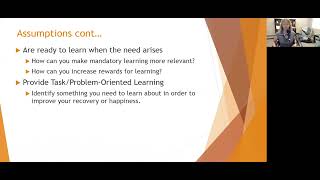
This episode was pre recorded as part of a live continuing education webinar on demand. CEUs are still available for this presentation through all CEUs. Register@allceus.com Counselortoolbox you I'd like to welcome everybody to today's presentation. This is the continuation of the Journey to Recovery series. Improving effectiveness with different Learning Styles in Group and Individual work. So one of the things that I talk about with my clients is the fact that not everybody learns the same. And I want you to think while we get started about the classes that you've enjoyed as well as classes that you know you haven't enjoyed so much. Not necessarily just my classes, but classes that you've been in in school. You know, workshops that you've been in. And we're going to think about what was similar and what was different because we learn every day. And one of the ways that clients improve and develop new coping skills and all that kind of stuff is by learning. And in order to do that, we want them to learn effect so they're not frustrated and it doesn't take too long. Okay, so we're going to learn why it's important to understand learning style and identify the three components of learning. We're going to talk a lot about adult learning theory today. We'll explore the multiple facets of learning and synthesize the components and facets to understand how people most effectively learn. So why do you care? People learn every day. We learn by reading or watching the news, developing a new skill or hobby, watching people and just life. I learn from my kids, I learn from my neighbors. I learn from a lot of different things I get online and I learn. I love to read, I love to learn. And what we want is we want people to love to learn. In order to change behavior, people need to learn the function of the old behavior. So there's the learning. You know, why were they doing it? Why was that behavior more poignant to them and more rewarding to them than other people? We want to learn why the old behavior is not meeting their needs now. So if somebody's old behavior, let's take smoking for example, the function of the old behavior was to help them calm down, but the old behavior is now not meeting their needs. Maybe it still helps them calm down a little bit, but it's also working against some of the things that they have in a rich and meaningful life. Now we're going to learn about alternate behaviors and help clients identify what else could I do instead? So if this person used smoking in order to de Stress. And if this person decides that, you know, smoking is not what I want to do in order to de stress, then we need to help them figure out a new way to de stress. Otherwise they're going to be going, well, I'm still stressed, and I'm not smoking, and that's making me even more stressed. So we need to take all that and knead it together and help people develop that knowledge into skills so they can figure out, all right, what do I need to do next? And this is the biggest step in helping clients start to become their own problem solvers. So we want to use a client partnership model when we're working with people and clients and coaches or counselors need to identify. Identify learning goals and methods. We don't set the learning goals for people. We help people identify their own learning goals. And we sit there and we go, okay, what is it that you want to do? If you woke up tomorrow and this problem was gone, what would be different? Or what are the five things that give you a rich and meaningful life? And help people work to develop goals that will move them in that direction? New information is linked to prior learning. So we help them figure out, all right, you know, what have you done in the past that's helped you deal with stress or deal with depression? Okay, we can link new information to that. We can build on that. Information is given over time when people are learning. Just like if you walked into a, you know, university class, you wouldn't want the professor to dump everything on you that first day and go, okay, good luck. We'll be learning about that this, this semester. But that's what you need to know. It would be really overwhelming. And information is tailored to the needs of the individual. So, you know, if you're helping somebody stop smoking, and like I said, they were smoking because of stress or something, all right, some people will want to explore using some medications that can help them with the nicotine withdrawal. Other people will not. Some people will be really concerned about weight gain that is common when stopping smoking. Some people will not. So we're going to tailor the intervention and information we provide to the client based on their needs. And we need to remember, and we're going to talk about this more in a minute, that learning is affective, emotional, cognitive. You know, we've got to think about it to learn it. Social. Our peers reinforce what we learn, and we learn through observation. And learning is behavioral. A lot of times things we learn are things that we want to do. So assumptions that we make about learners. Learners want to Know why they should learn it. If they walk into your group, we want to present them with a global statement. Remember we were talking about this with temperament on Tuesday. Present them with a global statement of why is this important to you? You can even go around and introduce a concept like self esteem or cognitive behavioral and tell them about what it does and then ask them how, how do you think this could be helpful to you in the future? People are active, responsible, self directed learners. So we want them again to identify what they might be able to get out of this. Both at the beginning of class speculating and then at the end of class. It's great to wrap up by saying what is one thing that you got out of this group today? And that can be a therapy group or it can be an interpersonal group and ask them how they can apply the material. I use a lot of workbooks when I do groups with clients and we'll do activities out of a workbook and we will talk about what did you learn? What was the take home message you got from the activity that we did today? And you'd be surprised. It's not the same for everybody. And then ask them how they can apply the material. So how can it benefit you? How do you think it will benefit you now that you've learned it? And how can you apply this material next week? Think back to something that happened last week. Maybe you were learning the ABCs of cognitive therapy. Think back to a situation that upset you last week. How could you have applied that and how might it have helped you last week? Let's walk through it. Hindsight, retrospect, whatever you want to say now, next week there's probably going to be something that irritates you, upsets you, whatever. How can you remember to use this tool and how do you think it will work for you or help you feel better next week? So we want people to speculate and anticipate using it in the future. And we also want them to practice applying it to stuff that already happened so they get used to using it and then they've got prompts to use it in the Future. With the ABCs, I always encourage people to carry around a note card. Learners bring experience to learning. Most of the time, people have some experience with what's going on. If you're doing a parenting class, you know, everybody in there had parents. Some of them have even already been parents. So they're bringing their knowledge, they're bringing their cultural knowledge, their personal knowledge. So we want to make sure that we ask them, what do you know about this instead of just assuming everybody knows nothing or everybody knows whatever. So we want to say, what is it that you already know about what causes depression? Or what is it that you already know about what causes addiction? And then we can start working from there and build on what people know, correct any misconceptions and address those. And people also bring biases to learning as well on the primary and related topics. So they may have their own biases in a parenting class, for example, about how child who is misbehaving should be handled. They may have their own biases about or against certain types of therapies or interventions. And that's okay. We need to understand those and know them because we all have our own worldview that we're working from. So we want to understand as much as we can, everybody's worldview. Learners are ready to learn when the need arises. So we need to make it a need. When people walk into your, into your group, we need to help them see how this meets a need that they have. How is it helping them work on their treatment plan? So how can we make this mandatory learning more relevant? If they're in group on post acute withdrawal syndrome, you know, some people are going to be sitting there going, oh, I don't want to sit through this. Okay, you know, how can you use it? And this is why it's really important in group. And you know, I like to do it in. When I do workshops and things, I really frequently stop and say, all right, how is this relevant to your life? How could you use this information? Or what do you think about this? What is your experience with this? And we need to increase rewards for learning. So we need to make them have that aha moment, see that it's meaningful and kind of get excited about it. It's important when we're working with a lot of learners to provide task or problem oriented learning. Most people aren't in a group or especially group therapy just to feel better. They're there to learn something so they can feel better. But feeling better is the end. We've got to provide them the means to the end. So we need to help people identify something they need to learn about order to improve their recovery or happiness. So we're looking at their treatment plan. When you go through their treatment plan with them and write their treatment plan with them, you're writing down the main objective. You know, what is it if the problem is depression? Okay, that's kind of broad. What is your goal? You know, when your depression is alleviated, how will you know, so, you know, happiness or whatever they want to call it as evidenced by. And then they will have those descriptions. Okay, so now we know what our goal is and then we move down to our objectives. And I was always taught the knowledge, skills and abilities or KSA progression. Clients need to understand and get knowledge about the issue in general, about self esteem in general, and then their own self esteem. So we're going to provide a meta concept and then we're going to help them apply it to themselves. So knowledge about the concept in general, knowledge about the concept as it relates to them, and then you move down to now what are you going to do about it? You know, how can you apply this and, and make it so it helps you move towards those objectives that you identified in the context of learning. We need to create a positive learning climate. Whether it's in group therapy or the psychoeducational groups, it's important to make sure you create a positive learning climate. And that differs for different people. Some people like to have a lot of quiet time where they can read. Other people love lecture. Some people like watching movies. You know, we need to figure out what clients like and try to compromise. Especially when you're doing a group with eight or 10 people, it's going to be hard to make it the ideal setting for everybody. So think about some negative learning climates that you've been in. You know, environments that just made it really hard to learn. You know, I can tell you, when I was in graduate school, our courses, all of our classes were in classrooms in the basement of the hospital. And I guess because heat rises or something, I don't know, but the basement was always the polar opposite of the outside temperature. So if it was 90 degrees outside, it would be subarctic in our classrooms. And that made it really hard for us to learn and vice versa. During the, during the winter when the heat was on, you'd be walking in there and just pulling off layers as quickly as you could. So it's important to recognize the learning climate can be, you know, environmental. It can also be the way the teacher creates a scenario. And again, in grad school, so, you know, I'm wanting you to think about experiences you've had. I had one professor in grad school that was very direct, we'll say, and she would call you out for anything that she saw as unhelpful, inappropriate, not, you know, if you said something that she didn't agree with, she would read you the riot act in front of everybody. So it made you not want to Talk. It made you not want to be there, but it definitely made you not want to talk. So it was really important for me when I started teaching to create an environment where people could feel free to ask questions even if I didn't agree with them. And I had that experience when I was teaching Intro to Alcohol and Drugs, which was an undergraduate class, and we did the unit on marijuana. So, you know, I had differing opinions than a lot of people that were in the class. And they made it very clear and that was okay. You know, I would rather them speak up and share their opinions and their knowledge and even enlighten me some. You know, if they know something I don't know, that's cool. So it's important to have this positive learning climate where students feel, clients feel like they have something to contribute. And if they contribute, they will be taken seriously. And if they ask a question, they're not going to be shamed, ridiculed, whatever. Another thing that affects the personal context of learning is personal characteristics. So self efficacy is one of those. When a person doesn't have a lot of self efficacy, they don't think they can do it. They're going to need more hands on, they're going to need more attention, they're going to need it broken down a little bit smaller like me and, you know, statistics. I'm not one of those that can just read a stats book and go, oh, okay, a multivariate anova. I got that. It takes a minute. And when I was learning it, I really needed it broken down and I needed the professor to go through it step by step by step and check in and make sure I was getting it as we went through. And obviously. Well, not obviously, but my professor didn't. He was a good professor. But not everybody in the class needed that level of simplicity, we'll say. So it was incumbent upon me when I got out of class to go through it step by step, because that was my personal characteristic with that was I needed a little bit more confidence and ability in that area. Our expectations also affect the context of learning. Both my expectations of my students or my clients and their expectations of me when I was teaching as a graduate assistant. You know, there are certain preconceptions about graduate assistants. So students would come in and they'd kind of roll their eyes and be like, okay, we don't have a real professor this time. It's kind of like having a substitute teacher forever. And, you know, those are the expectations. And my expectations were that they were going to come in and participate and Stay conscious, at least during class. So I would state my expectations. But what we expect out of clients and what they expect out of us affects the context of learning. If they expect you to be an expert and to shut them down and to ridicule them, they're probably not going to say much. If they expect that you are going to hear them out and it's going to be a fun group, well, then that's probably going to go differently and vulnerabilities and confounding issues for each one of your clients. If you're doing a depression group, you're going to have some people that are asymptomatic at that point, but they're, you know, still learning the skills and tools. They've just managed to get to a place where they're not experiencing significant issues. You're also going to have other people maybe who just started the group or who are having an exacerbation of symptoms for some reason that aren't going to be feeling as well. They're going to have more difficulty concentrating and all the stuff that goes along with being depressed. So you've got to take into consideration when you're doing that group the fact that you've got people that are at different levels of ability to pay attention and focus and interest in the topic. I mean, if somebody's clinically depressed, they're probably not really excited to be going to any kind of group, but they're there, and I am so happy that, that they're there. And that's my goal, is to help them see that there was a benefit to them actually coming. Peers are also part of the context and the stage of readiness for change of the peers. If you're in a group of pre contemplators and who are just, they're not saying that there's a problem, they're not interested in being in the group, you know, yada yada. I've done a couple of groups with adolescents that were kind of like this. They were helping adolescents who had anxiety issues and they just didn't want to be there because, you know, they were adolescents and they didn't like being in groups because they felt sort of outed and they were nervous and that sort of thing. So, you know, their. And their readiness for change was minimal at best. They're like, you know, this isn't a problem. I need to go to therapy for, I can handle it, or whatever. So, you know, that's okay. But then you have the occasional person in the group who's like, I need to Be here. My life is intolerable right now. So we want to make the activities that you do in a group as amenable as possible. If you can have different groups for different stages of readiness for change, that's even better. It's better to have people who have low levels of motivation in one group because they're probably being forced to be there, and then people who have moderate to higher levels of motivation in another group so they can work on what they want to. Another thing I did find though, when I had a relatively mixed group was the people who were more in pre contemplation. I got them involved in doing things, you know, helping me out, facilitating the small group breakouts and things. So they were actively involved. They may not feel like they needed to be there, but they were helping me. And through that I was able to get them engaged. Peers, co occurring issues can also affect the context of learning. If you've got a peer, and this happens in substance abuse treatment, sometimes you'll have people in there who just got their meds changed or whatever and they're sleepy and dozing off in group. Well, dozing off in group for a lot of people who are recovering from opiate abuse is a trigger. They see somebody who's just kind of nodding off and that triggers their desire to use. So it's important to be aware of those things. And culture, Culture obviously impacts the learning environment. If you've got a very diverse group, the community affects the context of learning. The stigma and attitudes about what's okay to go to group for, what's okay to go to counseling, for, what's okay to learn about. If the community says, you know, only unsuccessful people go to parenting classes or something, if there's a negative attitude in the community about parenting classes, then people are less likely to go. So we want to get rid of stigma, improve attitudes, provide the availability, make sure there's an availability of peer support in groups as well as outside of groups. And significant other expectations can also impact learning. When significant others are involved, you know, a lot of times they see that identified patient and they're like, I want you to fix him, make him better and we're good. And if they're wanting to see this, like complete 180 in two weeks, you know, it probably is not going to happen. So it's important to help that person learn about what the expectations are. But if John is in therapy for depression and he's going home and his wife isn't seeing the changes that she expects to see, she may be More critical of the process or whatever, which may hamper additional compliance or learning. So motivating the adult learner. Six factors that motivate adult learning Social relationships. If you can join a group, whether it's a grief support group or depression recovery group, or you know, learning to crochet group, whatever it is, to make new friends and socialize, people will enjoy this or to improve current relationships with friends and family. Sometimes people will go to groups because they recognize they've got a problem that's impairing their relationships with friends and family, so they're going to try to address that. So social relationships are one motivator, external expectations are another. Whether you're doing it for, for your job or school to enhance your learning and earning potential, or your job or school has mandated you to counseling for something. So remember, learning can be academic or it can be mental health. We're kind of covering both here. Other places that may pose external expectations can be doctors who may say, you've got to go to counseling before I will prescribe or if I'm going to continue to prescribe X medication, Probation officers, the courts. There are a lot of different places that can potentially force a person into some sort of a group or learning situation and social welfare to improve the ability to serve the community and to improve the community. So sometimes people get involved and they want to learn how to become recovery support specialists or something because they see it as a way to enhance their community. Personal improvement. You know, we see a lot of people in counseling groups for personal improvement, to enhance their health and well being and start feeling better, deal with their depression or their anxiety or self esteem, social issues, whatever. Some people may do it for professional advancement or to stay ahead of competitors. Obviously that's more academic learning, but that's why we go to conferences, isn't it? Some people go to learn in order to relieve boredom or change their routine. I know a lot of clients who will go to 12 step meetings if they're bored because they know that boredom is, you know, a dangerous place for them to be. So they will go to some sort of a meeting. They will go to try to learn something. And cognitive interest, just learning for the sake of learning. So there are a lot of different ways that we can motivate the adult who's coming to our psycho educational groups. Escape and stimulation, probably not so much, but we can try to make it as enjoyable as possible. So people, you know, look forward to coming to group. So learning components, cognition, how you acquire the knowledge. Are you the person when you Get a new computer. Do you take out the manual and read it? That's not me. Do you have somebody tell you how to do it? And that's the hearing part. Are you somebody who prefers to read when you learn or do you prefer to go to a lecture or doing? Are you somebody who has to be able to walk through it as you're learning? And most people are a combination of at least two of these. I'm more seeing and doing. So when I learn a new computer program, I need to read what I'm trying to learn, but also do it step by step. Conceptualization is how people process information. Do they put it into these abstract pathways or specific ones? Now think back to the temperament that you're sensing versus intuitive. Abstract pathways are going to take information and put it in recovery bins. Specific memory pathways. People may take information and put it in cognitive behavioral techniques for recovery. So they have a lot more files in their storage bins and that's okay. We just need to make sure that we're providing enough specific information for the sensing people to categorize it and enough abstract information that the intuitive people don't get too bored and effective. So you can acquire the information, you can get it into your brain, you can conceptualize it and figure out what it means so it makes sense. But then if you're going to actually make room in your filing cabinet for that information, you have to care about it, you have to want to make room for it. People's motivation and decision making, styles, values and emotional preferences are all going to impact whether they think something is important enough to remember and you're going to commit it to long term memory. So we have to be able to answer or the person has to be able to answer. How much does this information matter to me at this point in time? Now it may matter to me 10 years from now, but it's not 10 years from now. So we want to make sure that it matters to them in the present moment. Active, reflective. So when do you process information? Active learners are oftentimes extroverts because they process as they go. Not always, but active learners are the ones who will talk it out, you know, and they're just, they're in class and they're following along and just processing as you go. Reflective learners. We take the information and we get it together and we think about it and then we have this aha moment where we're like, oh, that makes total sense. I get it now. So knowing how people process information, active learners will process as you go through group, reflective learners need you to take breaks periodically. Again, like I've said before, just a minute and a half, two minutes for them to jot down some notes and kind of get it in their head in order to reflect upon it. Have that little mini aha moment, you know, turn on an LED bulb and continue with class action without reflection. So those people who think and process as they go, that can lead into trouble because we really need to reflect on some things and reflection without action leads to inaction. So, you know, your reflective learners can sit there and ponder for a long time. We need to make sure that they are willing to take the information they're learning and, and use it. So. Tips for the active or reflective learner Reflective learners like to think it through first and often prefer working alone because if they're working in a group, they're having to talk it out as they go and that can be unnerving to them. So if you've got reflective learners, you may choose to encourage them to take some time. You know, take five minutes, think about it, which is a great thing. Before you do some sort of an activity. You do the 20 minute psycho educational part where you're providing the information. Give them a five minute break to go to the bathroom, whatever that allows the reflective learners time to process. Then come back and do your small group activities so the active learners can finish their processing. Active learners have difficulty sitting quietly through lectures. So ask questions, not rhetorical ones. Give them things to say to think about because they want to stay stimulated. They love group work and they need discussion and problem solving activities. You're going to have both types of people in group, so it's important to educate them about, you know, help them learn what kind of learners they are and help them figure out how they learn best. Auditory, visual or kinesthetic learners. So hearing. Auditory learners prefer lecture, obviously, because they can hear it. Discussion, because they're not only manipulating the information, but they're hearing other people talk about it and hearing themselves talk about it. They like podcasts and sometimes they'll just talk to themselves in order to get the information to sink in. Visual learners, we love reading. You know, give us a book and we're happy. We like seeing displays and pictures and graphs and taking notes. So in group work, if you're doing, you know, you're probably going to do a part that's a lecture. Encourage your visual learners to take notes. You know, just bring paper and take notes so they can see what they're learning. Now, kinesthetic learners need to Manipulate the information. It doesn't mean they have to like actually physically work with it, but they need to manipulate it in their mind. So let them do it. You know, if you're doing an ABC worksheet or you're teaching the chat how to use the challenging questions worksheet, have kinesthetic learners actually do it, apply it to a problem, do some scenarios. You can role play. You can also have people paraphrase whatever's going on. When I was studying for classes in college, a lot of times I would create my own multiple choice tests because I would have to paraphrase what I was reading to get it into a question. And then I would have to create certain, you know the answer and then the distractors. And by the time I did all that, I'd gotten that memory pathway pretty strong. So there are a lot of different options, but the best group is going to use all of these. You're going to have a little lecture, you're going to have handouts for people. You're going to apply it in some way, either asking people individually to apply it or role play or whatever to meet different learning needs, present material visually using notes and graphs, verbally talk about it manipulatively, use questions or group activities, and give examples throughout class that people can relate to. So sometimes, you know, when I ask you a question on the fly, like, you know, how do you think this would apply to your clients? Or what would you do in this situation? You might be sitting there going, well, let me think about that for a second. And then, you know, class moves on. So it's important to give examples people can relate to during class. So then they can hear it and go, oh, yeah, you know, I had a situation like that. And it triggers their memory pathway and take frequent processing breaks for the reflective learner. So like I said, some of these things kind of resemble the temperaments that we talked about before. Sensing people need details. They're the ones who are going to want the outline, the bullet points, the references, the journal articles, whatever. Intuitive people are more concerned with the big picture and they just kind of want to know, how does this apply to me? And, you know, what are the next steps? We want to provide both. So start out your groups. Ideally, when you're working with adults, you start out with a introduction about what you're going to talk about. And then obviously you're going to ask them how they think that could benefit them. You're going to provide your psychoeducational component by talking about what's going on but you're also going to give some sort of handouts or write it on the whiteboard. I know we never had good budgets for copying, so we did a lot of whiteboard stuff. But if you write it on the whiteboard, then clients can write it down if they feel like they want to take notes. So you're providing it visually, you're providing some details, and then do some sort of group activity. Global learners need an overview to prepare for how they're going to conceptualize the information, which is why you give that overview at the beginning. It's kind of like, remember we talked about Tuesday, when you get a puzzle out, putting the frame together first, that's the global learners. We need to have that frame. I can't even go to a movie without looking it up on IMDb or something and finding out what the movie's about. If I just go into a movie sight unseen, drives me a little batty. I'm kind of rigid that way anyway. And specific learners, they just want to start learning and see where it takes them. They're not as concerned with that global aspect. So sensing versus intuitive. Your sensors are going to see the big picture and they may miss the details or I'm sorry, your intuitive people see the big picture and may miss the details. Your sensing people are going to be more detail oriented. So we need to find that balance. A lot of times you want to try to avoid getting too far into the weeds. And clients will tell you when they need more explanation on something. Global versus sequential, bottom up or top down. So if you are a global learner, and this is a question that I ask clients, because again, part of what we're doing is helping them understand how they learn. When you do a puzzle, do you look at the box to see the picture to figure out where stuff goes or not? My grandmother used to say that was cheating. I can't do it without looking at the box. I need to know where the pretty pictures go. Present a general overview, provide an outline or agenda for direction that helps the sensing people feel a little bit more grounded. And continue to make sure you're answering the question or the clients are able to answer the question. Why do I care? You know, why do your clients care about this topic attitudinal or emotional? Some people remember our thinkers and our feelers from, from Tuesday. Some people use a true false lens. So if they want facts about why this is important, they want percentages. They want, you know, hard evidence that this is going to work. Okay, you know, you might want to have Some of that available. A lot of times you can have that available in a handout. And then the good, bad lens is, how is this going to help people? How is this going to be influenced relationships? So we want to have a balance between the two when we're presenting our argument, if you will, or our opening statements about why this is important. People who tend to learn attitudinally tend to prefer facts and compelling objective arguments. People who tend to learn emotionally prefer to learn what will make them feel the best. So we have to present both in group, because you're going to have both kinds of people. But when you're helping them, answer the question, why do I care? You know, that's what's going to motivate them. The thinker is going to be more concerned with how can this help me improve what's going on so I can get out of treatment, you know, so I don't have to keep coming here. Tips for learning success Provide enough information. Not too much, but do provide enough information. Too often I see people doing groups, teaching classes, whatever, and they've taught it so many times that they skim over some of the stuff. They make assumptions that the people in their group know more than they really do. So make sure to provide enough information. Work collectively. So instead of just being there, doing your group and being the facilitator, ask questions, emphasize the immediate benefits. Because learning is often not its own reward. You know, so why are you here? What are you going to get out of this? When I do groups, even when I do an assessment with a client, and in assessments, clients learn a lot about themselves. Same thing with treatment planning. But every time I contact a client, every time we have a session, whether it's group or individual, whatever, I want them to walk away with some useful piece of information that's going to help them move closer to their goals. That's the immediate benefit. So that's why we ask, or I ask at the end of class, how could this have helped you last week? And how do you see it being useful to you next week? So they see that, oh, I've got something that I can use now. Small group activities provide learners an opportunity to share, reflect, and generalize their learning experiences. And it also just breaks up the monotony. We do want to promote autonomy and innovation. So when people are in groups, you know, ask them, what else would you do? Or a solution focused approach. When you've been depressed before, what's helped you feel better? Encourage people to come up with their own suggestions and ideas instead of just telling them all the time, well, you could use this or you could do this. I want to know what you've done. I want to know what's worked for you. Stress order through consistency, fairness, and respect in your group. So don't let the same person talk all the time. Be fair, you know, goes without saying. Promote involvement in group governance through shared values, needs, and goals. Remember From Group Counseling 101, you have your forming, storming, and norming phases where people start a group and they're kind of getting to know each other, and then they have to work out the power dynamics and figure out how everybody works together before they actually start working as a cohesive group. So we do want to bring that to psychoeducational groups, to, you know, any learning experiences we're doing to outreach that we're doing. Even if you've only met the people once, if you're doing an outreach presentation at a community center, all right, we're going to have group governance here at least for the three hours or whatever you're doing this presentation for. So they're shared values. They're all there for the same reason. You know, they're hoping to improve something in their community or prevent substance use or whatever it is. And then we're going to identify shared needs. You know, what do we all need here today, and what are the overarching goals? What do you want to get out of today's presentation? Bringing all that together helps people see that, okay, we're all on the same page, give or take. It's important to differentiate between the behavior and the person and remembering that clients are going to be at different stages of readiness for change and different stages of wellness, if you will, when they're in your group on any given day. So, like I said, if John comes in and he is, you know, pretty symptomatic for his depression, I am just thrilled that he came. And I want to make sure that I reflect the fact to him that it's important to me that he's there and it's about him being there and that we care. We want to regularly assess attribution statements, making sure that we're not making global attributions. Model positive attitudes, empathy, and acceptance. You know, reinforce the inherent worth of all participants, even if they disagree with you or disagree with the premise of the group. You know, we do want to reinforce their worth as people and then maybe provide constructive feedback about behaviors if they're being disruptive or something. Develop collaborative and cooperative learning activities. And I keep bringing These up because they're so important, I found. And, you know, I really like when I'm doing in person workshops and stuff, because we do take breaks, like every. I try to take a break every 10 to 15 minutes to do some type of activity. That way people can work through what we've just talked about and really solidify it. They can talk among one another, seize opportunities to teach conflict resolution and stress management, teach how to accept and learn from mistakes, demonstrate how to build on strengths, help others view patients and family members positively to encourage future learning. So we want to make sure that the community views whatever we're doing as important and worthwhile and okay. We don't want a stigma associated with it. We want patients and family members to learn to view each other positively. So they're all involved in this learning process and they're changing positively together. Change, even if it's positive, is going to upset the apple cart a little bit. So it's important to let them know that, you know, we're disrupting homeostasis, we're disrupting the balance in the family because people are doing new things and reacting in new ways. So it's going to be a little challenging at first, and that's okay. And it's important to keep encouraging people through the learning process. Just like when you learn to do a new skill. You know, if you were in gymnastics or football or whatever, you probably weren't the best the first day you went out there. But through encouragement and peer support, you were able to hone those skills. So adult learners are more likely to retain relevant information. If you're going through your curriculum and you find something that you're just like, okay, this is one of those things I've got to teach. I don't know how. I'll give you an example. We used to have to teach pharmacology in our substance abuse treatment program. And I didn't really see the point. You know, there's the overview of stuff. But if the people that are in treatment were theoretically working towards abstinence, why do we need to go through each drug? And in my mind, that was more triggering for them than it was helpful. But it was really hard to make that information exciting. I mean, how exciting can you make marijuana without triggering somebody or methamphetamine or whatever else? So it's important to look at stuff and go, is this relevant? And if not, if it's not something that people are going to walk away going, wow, I'm so glad I learned that. Is there another way you can communicate the information. And what we did in my program was the pharmacology. We started giving them handouts, you know, little brochures that informed them about the different types of drugs because a lot of them already knew a lot about multiple different drugs. So find the relevant information that's going to help them. You can actually directly connect it to their treatment plan goals. Learning is an emotional, cognitive and situational process. So you want to make them care about it, you want to make them think about it and have it make sense to them. And you want to have all this happen in an environment that is conducive to learning, but also that supports and encourages learning. So there's peer support out there. Information should be presented, beginning with an overview. Oh, using as many senses as possible. We didn't talk about this too much, but we did a little bit. You want to let them see it, you want to let them hear it, you want to let them talk about it. And if they can actually do something with it, then all the better. Provide fact and feeling relationship focused reasons for the information so self esteem. Why is it important for you to learn? Okay, you know, what are the facts? What is the information that we know about why people need to develop self esteem? From a relational point of view, how is self esteem going to improve your relationship with the people that are important to you and help you feel better? Give them both. Take periodic breaks to apply the information, continue to regularly highlight why it matters throughout the group, and end by having clients do a personal application of the material. So, you know, like I said two or three times, have them apply the information to something that already happened and then have them extrapolate how it might be applicable next week or even this evening. How can you use this and how can you remember to use it? If you enjoy this podcast, please like and subscribe either in your podcast player or on YouTube. If you want to attend and participate in our live webinars with Dr. Snipes, you can subscribe atoolbox. This episode has been brought to you in part by allce.com, providing 24. 7 multimedia continuing education and pre certification training to counselors, therapists and nurses since 2006. You can use coupon code counselortoolbox to get 20% off of your current order. If you are a podcast listener, especially on an Apple device, it would be extremely helpful if you would review Counselor Toolbox. To do this on your Apple device, go to the Podcast app, search for Counselor Toolbox, select the icon for the podcast, tap the Reviews tab in the middle. You should then see an option to click write a review. We love to see five star reviews. So if there's anything we can do to make this podcast even better for you, please email us at support at allce. Com.










