Expert Tips to Deal with Depression
Dr. Dawn-Elise Snipes shares ten strategies to reduce depression risk and severity, covering sleep, exercise, sunlight, diet, and hydration alongside cognitive techniques like silencing your internal critic and scheduling activities you enjoy.
Chapters
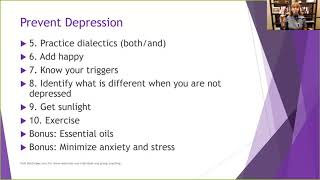
Welcome to Happiness Isn't Brain Surgery with Doc Snipes. This podcast was created to provide you the information and tools Doc Snipes gives her clients so that you too can start living happier. Our website, Docsnipes.com has even more resources, videos and handouts, and even interactive sessions with Doc Snipes to help you apply what you learn. Go to Docsnipes.com to learn more. Welcome back to Happiness Isn't Brain Surgery with Doc Snipes practical tools to improve your mood and quality of life Today we're going to talk about 10 ways to prevent depression. Now, you can't always completely prevent it, but you can keep it from becoming as bad as it could have. And that you know what that means depends on how bad it could have gotten for you. But there are a lot of things that you can do to intervene early. Just like when you start feeling like you're getting a cold, there are things you can do to prevent getting a really bad cold or the flu. Same thing with depression. There are a lot of interventions you can do when you start feeling it coming on, but there are also a lot of things that you can do to help keep yourself from getting depressed. Just like you try to help keep yourself from getting sick. Get enough sleep Getting enough sleep helps keep you from getting sick, but it also helps your body rest and rebalance and keep you from getting depressed. Depression can result from neurochemical imbalances for a variety of reasons. One of them is being too stressed out, being worn down. Depression is your body going I am completely out of gas. I can't go anymore. If you're not getting quality sleep, and that's not just any old sleep, it's quality sleep, then you may find that you start feeling more depressed. Get regular physicals There are a lot of hormone changes that can cause depression. Like symptoms. Hypothyroid is one of them. Imbalances in estrogen, testosterone or progesterone can also cause depressive like symptoms as well as other issues like chronic fatigue syndrome, fibromyalgia, and even anemia or lack of enough vitamin D. So there are a lot of things that are really easy to treat, some that are a little more difficult to treat, that are physical in nature that can cause symptoms of depression. If your symptoms are being caused by something physical, then no amount of mental health counseling and talking that you do is going to give you complete resolution of your symptoms. You have to figure out what's causing that neurotransmitter imbalance. The third thing you can do is eat a healthy diet. Those chemicals in your brain are made from proteins. So you need to have enough good quality proteins. And that's a healthy diet. You don't need to get crazy about it. You need complex carbohydrates, you know, your grains and vegetables and things like that. Because a lot of the vitamins that your body needs in order to turn the proteins into neurotransmitters are in complex carbohydrates and vegetables. So it's important to have proteins and vegetables at least and grains if you can tolerate them. Water. If you don't have enough water, you can actually start feeling confused, foggy headed, tired and even depressed. If you're too dehydrated, you can have symptoms of depression. Too much sugar and caffeine. Like I said, if the body is too revved up for too long, it may, quote, run out of gas. And that's just sort of an image that I want you to get. So make sure you minimize your sugar and caffeine. Caffeine takes about 12 hours to get out of your body. So what you drink at 12 noon is still impacting your sleep quality at 11 o' clock at night. So try to cut back on your caffeine after 12 o' clock in the afternoon. A less physical thing that you can do is silence your internal critic. Keep a journal or a log of how often you do something and you're mean to yourself about it. Or you tell yourself you could never succeed at that, or of course you screwed that up, or you're such an idiot. Just keep a tally. You don't even have to write it down, but keep a tally of every time you tell yourself something ugly or negative, I think you'll be surprised at how awful you are to yourself. And you tell yourself things you would never tell anybody else, let alone your children. So silence that internal critic. There is no need for it, there is no purpose for it. Whenever you hear yourself say something ugly, say something back first. No, I'm not. And counter it with something positive. If you say, if you tell yourself I am such an idiot, counter that by saying, no, I'm not an idiot, I just didn't do that well. But I'm good at a lot of things. You don't have to say it out loud, but remind yourself that you are not all those negative things. Because if you keep pounding yourself and bombarding yourself with negativity, you're going to basically beat yourself down into depression. You're going to feel helpless and hopeless. So instead of telling yourself that you can't do it right and you'll never win. And dah, dah, dah, dah. Silence that critic. Focus on the things that you can change and the things that you are good at. Because you know what? Nobody's good at everything. And nobody's perfect all the time. And nobody does anything right 100% of the time. I wish I could say that was not true, but it is. Even the things you do really well, you're going to screw up once in a while, but that's okay. You're human. Everybody does it. So be realistic. Practice dialectics. This is the both. And, you know, bad things can happen and sometimes you can't change them. However, it doesn't mean you can't have a rich and meaningful life. You know, I lost my job, for example. Well, that really sucks. And I have an opportunity to explore whatever the next door is that's going to open or. And I have an opportunity to spend more time with my kids until I find another job or whatever. Both. And it's finding the silver lining in what's going on. Yes, it can be bad, but it can be good at the same time. When we're depressed, we feel hopeless and helpless. We feel like it's all going to be bad all of the time. So by practicing dialectics, we're forcing ourselves to look for that glimmer of hope. Add some happy. Whether you're preventing depression or you're already starting to feel a little bit depressed, schedule happiness into your day every day. Whether it's looking at silly memes on the Internet or watching funny videos or listening to a comedian. Whatever it is that makes you smile and makes you happy, do that for at least 15 minutes every day. Anybody can find 15 minutes. I'm not asking too much. That helps get your body number one out of the negativity cycle, but it also releases endorphins and happy hormones. If you can get a good belly laugh out of it, you're going to get even more benefit. Know your depression triggers. We all have them. You know, if I have a bunch of consecutive rainy, gloomy, cold, wet, nasty days outside, I'm going to start feeling kind of depressed. I know that's a trigger for my depression. So what do I do? I make sure that I have plenty of bright lights around me, that I take advantage of the sun when it's out there, that I make good use of the time when it's gloomy, so when it's sunny, I can be outside. You know, I try to look at the Both and. And I try to appreciate the fact that it's raining so I don't have to water my crops or it's, you know, getting the garden ready for spring or whatever it is. Other triggers could be people. So if you know that somebody tends to trigger your depression or your anger or make you feel bad whenever they're around, know what it is about them that triggers you and figure out how to deal with it. I have one family member who is always critical. She always has something that she's got to say that's contrary. And I've learned that that's just the way it's going to be. That's just the way she is. So I breathe and I exhale and I greet her, and I know that it's going to come, but as soon as it comes, I can say, all right, you did it. It's kind of like getting a shot, you know, you knew it was coming, it happened, we're done with it, and I just let it go. But that's how I deal with that. So know what things trigger your depression? If there are holidays, if there are times a year, if, you know, Valentine's Day is a horrible holiday for a lot of people, do something on Valentine's Day. We have, at my house, we have an anti Valentine's Day. We do everything in black that day, just because I don't want my kids to get hooked into that notion that you should be in a relationship. And, you know, all the Disney sort of fancifulness on that day. You know, we have fun with it, though, and we really enjoy the anti Valentine's Day and even enjoy the day after more because it's 50% off chocolate. So that's another way of both. And, you know, we have fun that day, kind of making fun of the holiday, and then we get chocolate the next day. Bonus. Identify what's different when you're not depressed. So think about a time when you weren't depressed. What were you doing differently? Were you exercising? Were you working less? Were you getting better sleep? Were you drinking less? Were you spending time with different people? What was different? And how can you make that happen now? How can you alter what's going on now to make it more like the times when you're not depressed or. Because there are certain things that make us happy. And sometimes, you know, and I'll do it myself. I'll get caught up in doing stuff at work, and, you know, four or five weeks straight I'll be working and I'll kind of forget to put my Head up and take a breath, and I start getting cranky, and I look back and I go, you know what? No, this is not it. This is not how I want to live my life. This is not what makes me happy. I need to set some boundaries so I can spend time with my family and on the farm and with the animals. Because when I'm not depressed, when I'm not stressed out, that's what's different. Get sunlight. We know that lack of adequate sunlight leads people to develop seasonal affective disorder. Sunlight helps us make vitamin D, and there are tons of vitamin D receptors in those areas in the brain that are responsible for our mood. They don't exactly know how vitamin D plays in there, but they know it does. So get sunlight. If you're in one of those places where it rains six months out of the year or where it's dark six months out of the year, talk with your doctor about light therapy. Regular overhead lights are not bright enough, and they're not the right spectrum to give you the benefits that sunlight would. So if you really do experience a lot of seasonal affective disorder, look into light therapy. Exercise. I know you're like, really? When I'm depressed, that's the last thing I want to do. I don't mean you've got to go to the gym and run five miles. I mean get your body moving. Exercise releases serotonin. Serotonin improves mood and helps you relax. So if you can exercise, even if it's walking around the block, or for me, occasionally if I'm having a depressive episode, I'll go outside and I'll try to weed. And, you know, I get caught up out in my garden weeding. And it's not a whole lot of exercise, but it's enough. I'm moving my body around. I'm not sitting on the couch in the dark watching Netflix all day long. And it helps keep your circadian rhythms in alignment so your body knows when it's supposed to sleep, and it's when it's supposed to be awake. It gets oxygen throughout your body, which helps you feel more energetic, and it helps release. If you exercise for long enough, it helps release serotonin. So exercise is a really good thing. Play with a dog. Play with your kids. You don't have to do something where you're working at 65% of your target heart rate. Two additional bonuses for preventing depression. Essential oils. The molecules in essential oils enter through your nasal passages and actually do affect emotional states. And they've done a lot of actual actual Research on this in birthing centers and trauma centers, and they found that there are certain essential oils that help calm people down. Valerian, catnip and lavender are three of the best for calming people down. But you need to figure out what works for you. So go to your local health food store. A lot of times they have sample essential oils. Give them the sniff test. If it's something that you need, something that's going to work for you, you're going to sniff it and you're going to go, oh, that helps me feel relaxed. Or I really like that smell. And if it's not something you need, you're going to smell it and you're going to be turned off by it. That's how we use essential oils with animals. Since they can't tell us what they like, we let them sniff it. And the ones they linger on are the ones that they probably are going to benefit from. But I digress. Things that help you feel a little bit more energized can include clary sage, peppermint and rosemary. I'm not as big on peppermint as I am on rosemary. I would much prefer the smell of rosemary. So again, it depends on your personal preferences and your own body makeup and all that kind of stuff. Which essential oils will work for you? And you don't have to put them on. Just the act of inhaling them, the molecules get in your nose will trigger the effect that you're looking for. So you don't have to worry about toxicity or anything. You can diffuse them in air diffusers, or you can just have a little bottle and take a whiff periodically if that makes you happy. The other bonus is to minimize anxiety and stress. When people are depressed, they often have an anxiety component ahead of time, and they go hand in hand. People get depressed and they get stressed that they're never going to feel any better. Or maybe they were stressed to begin with and they just were stressed for so long that eventually they ran out of gas and they became depressed. But they still have all these stressors going on. If you are constantly basically sitting in your car in the driveway with your foot on the gas pedal, revving the engine, which is what you're doing when you're anxious and depressed at the same time, you're going to crack your own engine block. You're not going to get any better. So in order to allow your body time to cool down and recharge so you don't feel depressed anymore, you need to get really rid of those drains on your energy. Figure out what you can do to eliminate or minimize the anxiety and stress in your life. And that's a whole different podcast. But make a list of things that cause you anxiety and stress, even little things, and see how many of them you could eliminate for one week. I'm not even saying forever. How many of them can you eliminate for one week? So you can just do what you need to do to get by for a week and let yourself rest and rejuvenate and see if it helps. If you like this podcast, you can subscribe on your favorite podcast app. Join our facebook group@docsnipes.com Facebook or join our community and access additional resources@docsnipes.com. Thanks for tuning in to Happiness Isn't Brain Surgery with Doc Snipes. Our mission is to make practical tools for living the happiest life affordable and accessible to everyone. We record the podcast during a Facebook Live broadcast each week. Join us free@docsnipes.com Facebook or subscribe to the podcast on your favorite podcast player. And remember, Docsnipes.com has even more resources members only videos, handouts and workbooks to help you apply what you learn. If you like this podcast and want to support the work we are doing for as little as $3.99 per month, you can become a supporter@docsnipes.com join again. Thank you for joining us and let us know how we can help you.










