Exploring Mind & Body: A Deep Dive into Neurotransmitters & Emotion
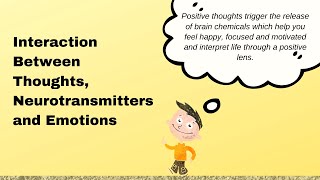
Dr. Dawn-Elise Snipes explains how neurotransmitters like dopamine, serotonin, and GABA create what we call emotions, and how stress, poor sleep, and early trauma can throw them out of balance. Imbalances show up as depression, anxiety, and low motivation. She covers practical fixes: sleep, nutrition, relaxation, and rethinking your thoughts.
Questions this video answers
March 1, 2017
Dopamine, norepinephrine, glutamate, serotonin, GABA
Chapters
This episode was pre recorded as part of a live continuing education webinar on demand. CEUs are still available for this presentation through all CEUs. Register@Allce.com Counselortoolbox. So I'd like to welcome everybody to today's presentation on the mind body connection. Today we're going to talk about how neurotransmitters interact to help us have moods, if you will. We're going to learn about the central control center of the brain, what it does in relation to producing emotions, what thoughts have to do with everything, and how the brain actually causes physical reactions and sensations. We'll talk about how things can go wrong which lead to feelings of depression, anxiety, anger, insomnia, all kinds of other stuff and some ways to fix those things. Obviously, in an hour we can't talk about all the ways to fix those things, but I always like to leave people with some tips, tools and tricks that they can start doing or looking at doing today in order to start feeling better. It keeps the momentum going if people are interested in a topic or they're thinking that, well, this might help me keeping them going, giving them something to look at and start learning about. So we're going to start out with the brain, your central control center. And if you are a cartoon junkie like I am, you will recognize our little buddy over here. But anyhow, I digress. Your brain takes in information, compares it to what it already knows or thinks it knows from prior experiences, and makes a decision about what to do. So we use this model of a computer CPU generally when we're talking about the brain, and it's not exactly accurate, but it gives you an understanding on a more global perspective of what's going on in the brain. There's been a lot of research lately that says, you know, your brain doesn't store memories per se, but we know that there are certain actions and reactions that are happening. So we're going to proceed with this metaphor throughout this training and just understand it's neurochemically not exactly 100% correct. So based on the decision that your brain makes, it activates action centers which excrete neurotransmitters in order to produce the desired reaction. So you put your hand on a hot stove and your peripheral nervous system registers, that's hot, that hurts. Your brain says, that's painful. Pull your hand away because we don't want to burn our skin up. So you pull your hand away. And that's kind of what we're talking about with a lot of our other decisions. That result in emotional pain, not just physical pain. Chemical messengers, or our neurotransmitters take orders to and from the brain through the nervous system. So it's this give and take feedback loop going on. And the things we're going to talk about today are really what I call the big five. And there are all kinds of hormones and neurotransmitters and stuff that we're not covering today. But the big ones I really want you to understand are your excitatory and your inhibitory neurotransmitters. So the ones that get you revved up and motivated and want to get off the couch, and the ones that say, you know what? Let's binge on Netflix for the weekend. So your excitatory neurotransmitters, dopamine. Dopamine is your reward. It's kind of like your cookie. At the end of doing something good, it says, let's do that again. I want to remember that. That was really awesome. Along with dopamine, you have norepinephrine and glutamate. These are your get up and go neurotransmitters. Now, depending on what other neurotransmitters they're paired with their buddies with, they can say, get up and go, yay, Ra. Yahoo. Let's go on the roller coaster again. Or it can be, get the heck out of here. This is a really dangerous situation. But it's get up and go. It's telling you you need to do something. It's stimulating. When we think excitement, we tend to think happy. But excitement in terms of neurotransmitters just means it stimulates your body. It revs everything up. It makes your heart rate increase. It makes your breathing increase. Sometimes if you're really excited, it might make your speech increase. No, just kidding. But things are getting really revved, and that prepares you for the fight or flight reaction or just some rush of endorphins from pleasure, as in the case of the roller coaster, which I never understood. And then you have your inhibitory neurochemicals, and they're the ones that come in when the stress or the threat is gone. And they say, let's relax, let's chill out. It's all okay. You know, everybody can stand down. There's no threat anymore. And then serotonin doesn't really relax you, but it's your calming and contentment neurochemical. If you want to kind of pare it down to two words, it does so much stuff. But in terms of excitation or inhibition, it's more of an inhibitory, calming chemical. Now, there's always a balance. It's like making a hot bath. You turn on the water and you try to get it right, but you feel it and it might be a little too hot. So then you put in some cold and you feel it a little while longer and you're like too much cold and you've got a monkey with it a little bit. This is kind of what's happening when you have an extreme stress response. You dump a whole lot of hot into the system. And then in order to balance it out, you need to kind of take, pull back the hot some and add a little bit of cold. And the cold in this particular metaphor would be your inhibitory neurotransmitters. But there's always a balance. You don't ever have one without the other. And that's what's really important to understand with neurotransmitters, is that if you have too much of something, it can also cause depression and anxiety, just as if you didn't have enough of it. We'll look at that a little bit more in the next few slides. So what do neurotransmitters do? It's a big word, but what does it do? Emotional. Your neurotransmitters are responsible for the physiological reactions that we've come to label as happiness, sadness, anger and fear. When a baby's born, you know, they don't have these words to use. They have physiological reactions. And as they grow up, we, you know, a child gets startled, we say, you know, you don't need to be scared. And we help them learn how to calm down. And they associate that physiological reaction with fear. When they have a temper tantrum, we associate, we say, you know, you're angry right now, and we help them associate that physiological, that feeling, whatever it is for them, as anger. And then sadness and happiness are obviously pretty self explanatory. So these emotions we have are really words that we've placed on physiological states. You know, is your heart rate calm? Is it racing? Is your breathing slow and deliberate, or is it rapid and shallow? Mentally, neurotransmitters also help us with concentration, learning and decision making. So you'll see kind of where I'm going with this in a minute. Physically, neurotransmitters help with sleep behavior. You're gonna learn. Two presentations from now when we talk about sleep, how serotonin is essential in order to produce melatonin. So if you don't have enough serotonin, then your Melatonin is going to be deficient. It regulates eating behavior, libido, gastrointestinal functioning and motility and pain perception. And you're like, okay, so why do I care? Well, let's think about the symptoms for depression. Depression is a general lack of pleasure in most things, most days for at least two weeks. Okay, fine. So you have this feeling of sadness that somebody you've learned to label as sadness or apathy. Concentration. A lot of times people who are depressed have a hard time with concentration and decision making. They have problems with sleeping. They're either sleeping too much or they can't sleep at all. They're having problems with eating. They may be eating to self soothe. They may be eating because they can't tell if they're hungry or not. There's a lot of different reasons. They may be eating, but there's often eating disturbances. Libido tends to go down. Gastrointestinal functioning and motility. When people get upset, their bellies get upset. And pain perception. They found that when serotonin goes down, that we have greater pain perception. But when you're thinking about the symptoms of depression and anxiety, you can see where they're really represented in actions that are tied to neurotransmitters. So this is why neurotransmitters are so important. Even if you only focus on the five or six big ones, it's important to understand that imbalances in this system can cause some of or exacerbate some of the unhappiness and dysphoria that our patients are experiencing. So think about it. What is your body's response? You know, not generally what is it? But when you are afraid, what happens to your body, your respiration rate? Do you start to sweat? Does your heart start to race? Do you have ringing in your ears? Do you have tunnel vision? What's going on? How do you label, what is it that you label as fear? The same thing is true. Think about, what is it? What are you feeling when you label things and say, I'm angry? What physiological cues did you have to go, yeah, this, Something's not right. And then depressed and depressed is again, like any of these others, it's going to be a little bit different for everybody. But if you wake up and you say, you know, I'm really depressed today, how are you feeling physiologically? What have you associated this label with? So mood disorders are an imbalance in neurotransmitters that cause emotional, mental and or physical distress. But what causes the imbalances is kind of what we're talking about, this mind body thing going on, because too often we say, well, cognitive behavioral therapy is the key to fixing depression. Well, it probably will help a lot, but there may be other things going on likewise. We can't just necessarily treat everything with a pill. So what is it that causes these mood disorders and neurotransmitter imbalances? And basically, we have two things. Either a reduced flow of something the body has slowed down the excitatory neurotransmitters that says we can't run this hot right now, or there's an insufficiency because so much is run for so long that there's not enough left. Now, generally, the insufficiencies we see in people who've abused drugs and, or people who have some sort of biological or physiological brain damage that causes problems producing certain neurotransmitters, most of the time, it's reduced flow. The awesome thing is reduced flow, as you'll see in a minute, can be fixed. It can go backwards, or it can rebalance itself. Too much stress for too long. Think about. And most of us have gone through periods where we've been really stressed for a really long time, and then we've gotten. Gotten it in check. Even if it's, you know, think about finals week when you were in graduate school, or maybe you were studying for your comps exams, and that's even bigger than finals week. You started studying three months ahead of time. And some people, they were great with it. You know, it was just. They were confident they were going to pass. And we're not talking about them, we're talking about us. Persistent worrywarts that wonder if we know everything and we need to know everything that's going to be on the exam. So we stress about it for a long period of time. Eventually your brain goes, yeah, I need a break. I can't do this. All hands on deck 24 7, 365 for an extended period. So we need to pull back some of those excitatory neurotransmitters. Addictive behaviors, like I said, tend to flood the body with dopamine and excitatory neurotransmitters, medications, opiates, and some other medications that may be prescribed, and they may be taken as prescribed, may affect the balance of neurotransmitters. For example, SSRIs typically mainly increase the amount of serotonin, but what does that do to the amount of norepinephrine that's in the body? And norepinephrine Remembers your motivation chemical. So if you're feeling good, but you don't have any motivation, there's still this sense kind of of depression. So understanding the balance between them, it's not just increasing one or decreasing one, is helping the brain find balance and insufficient sleep. Sleep is the time that your brain rests and kind of gets rebalanced and all that kind of stuff. And they found that one of the first things to go during sleep deprivation is cognitive functioning. We lose the ability to concentrate, make decisions, and our ability to learn in our short memory is significantly impaired. So let's think about the analogy of Black Friday and addiction. So on a normal day, and we can say addiction or extreme extended stress. And some people have this, you know, for days. Not just days, but months, years on end. They are wigged out, stressed to just the brink. And so we want them to understand kind of what's going on. But in this particular scenario, we'll talk more about addiction because it's more immediate. So think about. On a normal day, a place like Target has a capacity of, say, 750 people. You know, that's what the fire marshal says they can handle. The store needs a constant 500 people going through during the day to stay open. Okay, so that's fine. So they have eight doors in order to allow for people to enter and easily enter and exit easily without getting bunched. So when you go to Target, you know, there's always, like, a bunch of doors, and you're like, well, what. What are all these doors needed for? There's only, like, four of us. But it's in order to allow for easy flow of people in and out, and it works well. And this is how things are. When your neuroscience neurotransmitter system is working well. When you get stressed, you have an influx of people, and then, you know, they leave, and you have the balance out with the. With the calming chemicals. But there's never a flood. There's never an overabundance. Except for on Black Friday. Black Friday. Everybody's waiting. They've camped out. And 1500 people push through the door as soon as it opens. And what happens? Thankfully, I've never been to a Black Friday because I really hate shopping. But, you know, I've seen pictures on tv, and people are stomping on each other, and they're pushing through the doors. The shelves are just ripped bare with stuff. People are all over each other. The store is basically destroyed. I mean, not forever, but stuff is just everywhere. The staff is exhausted. They're looking at you Kind of shell shocked. And it's going to be a little while before the store can restock itself. So what do they do? Do they keep the doors open so more people can keep flowing in and keep overwhelming the store? No. Theoretically, if it were legal, management would close all but two of the doors and they would put security guards there and go, okay, five people can go in. And then they'd wait for five people to go out, and they'd normalize it until staff had time to restock the shelves and get everything back under control again. That's kind of what your brain does. Your brain serves as management and goes, whoa, that was way too much happy or that was way too much stress. I need a break so I can restock all the shelves and get ready for the next round of whatever it is. If you understand, if you look at it that way, you realize that even if people have been using cocaine or methamphetamine for years, you know, that's been a long Black Friday. But when they stop and allow their brain to rest and rebalance, it usually is able to do that almost back to normal. They found with. But it takes time. You know, if you have been using methamphetamine for 15 years, 15 days is not going to get you rebalanced. It takes time for your brain to repair itself because it's been injured, but it does. So where does all this information that we keep talking about come from? Your brain's making decisions based on information. And, you know, it's not just from these anonymous sources. It's from your peripheral nervous system. But it's not very smart either. These are your nerves that say, something's hot, something's dangerous, or your eyes that say, I've seen this before. It triggers a memory that says, yeah, this is really bad mojo here. We need to get out. But your eyes, your sense of smell, what you touch, it's all providing information to your brain that's saying it's all clear or there might be a threat. All hands on deck. When the all hands on deck comes out, what does your brain do? It excretes norepinephrine with noradrenaline. And your body goes, you know, red alert, red alert, red alert. Fight or flight reaction. Because in order to survive, I either need to fight this threat or get away from it. And then when it calms down, you know, it does. It's not just that that disappears. All that noradrenaline disappears. But then GABA and serotonin tend to come in and go, all right, threats passed you made it. Congratulations. Good job. But how does the brain know what's threatening? Because, okay, something's hot. What does that mean? How do we know that's threatening? One of our cats, who's not the brightest kitty in the world, jumped up on the counter one time and walked, put his paw right on a hot griddle. He didn't remove it until he smelled the. Well, maybe it's. Eventually he felt it, but he didn't remove it until he had done a fair amount of damage, blistering his poor little paw. And so his response system didn't really kick in right away and go, oh, that's. That's something that's probably hot. Ought not touch it. He remembers that now. Poor little guy. When you were born, there were very few things that were meaningful. I mean, we're thinking infant. Everything is new to an infant. They're just like, ha. You've assigned meaning to things through observation and experience over time. You know, when you were a little kid, you learned that one of the favorite games of a lot of toddlers is they learned that if they throw their fork on the ground, mommy will pick it up, put the fork back on, toddler throws it on the ground again, and he goes, uh oh. And of course you pick it up again. And they've learned through this experience that if something falls on the ground, well, initially mommy will pick it up, but eventually it becomes incumbent upon them to pick it up. So when something happens, you compare it to prior experiences and decide what to do. So think about dogs, and dogs get a bad rap. I love dogs, don't get me wrong. But if a dog comes rushing down a fence line, barking and charging and bearing all its teeth, and I'm not talking about a Chihuahua, I'm talking about a Rottweiler just charging at you. Depending on your prior experiences, you're either going to look at it and go, oh, isn't the doggy all excited, sweet little doggie? Or you're going to about wet yourself and try to get as far away from that dog as you can, depending on what your prior experiences are. And, you know, I'm something akin to Elmira, so I usually walk up to it and start talking baby talk and telling it it doesn't need to worry, which the dog continues to bark. So I haven't learned from that. But this is how we understand why different people react differently to different situations, because it's based on their schema. If you think back to Piaget, who said that schema are basically shortcuts. They're basically brief descriptions of prior similar experiences. And we say, okay, when we go to a restaurant, this is how we're supposed to behave because this is restaurant behavior. And we have a restaurant schema, we have a school schema, we have a scary dog schema. And we compare things. So when our senses say, you know, they see something or smell something that reminds us of something from the past, that schema is activated and it either says, yeah, that was a bad, bad situation or that was an okay situation. And then your brain either sends out the all hands on deck signal or the don't worry about it signal. Unfortunately, until about age 7, children's interpretation of behavior is centric, which means it's based on one thing at a time. So if somebody comes in and they start yelling, they're going to be focused on one thing. And usually it's the yelling person who appears to be very scary, probably. So they may start thinking that that person is scary. It's concrete. There's no hypothesizing about, I wonder what could have made this person so angry that they came in and they started yelling. It's you came in and started yelling. That was scary. So you are scary. It's all or nothing. It's either terrifying or it's not. There's no middle ground. There's no middle of the road explanation. If you think dialectical behavior therapy, there's no middle path here. Children are very all or nothing and it's egocentric. What I perceive must be the truth. So if I perceive it to be scary, then it's terrifying. And if it's terrifying to me, then it's terrifying to everybody. Which for a little kid can be really threatening because they're relying on adult people to protect them. And if they think they're scared, so everybody's scared, then you know who's going to save them. So anyway, so kids get these schemas and we start building schemas from the time we're knee high to a grasshopper. And that's just the way we do it. But those schemas are not 100% accurate. They're based on the experiences the child has had up to that point. And a four year old hasn't had many experiences, so they may not be 100% accurate. One thing we need to do as counselors or even as people if we find that we have a lot of stress, is look at some of our schemas and say, are these accurate in present day? Am I considering the totality of the situation or am I Only looking at one piece. Am I looking at all the possibilities or just what I can see right here? Am I considering it all or nothing or am I willing to look at, you know, yes, that person came in and was screaming and that was scary but there could be a lot of other reasons for it and it may not have been me. So you know, it was scary for a minute looking at sort of a middle, accepting what is and that it may not be all about us. The other thing we need to look at is even if it was accurate, even if we formed a very thorough schema whenever we formed that idea and think about older children, 16, 17, 18, they're forming really accurate schemas at this point. They still don't have the same knowledge that a 47 year old does, but they have a lot more and they have much more formalized ways of thinking and abstract ways of thinking. So they're probably a lot more accurate. But something that was threatening or troublesome to a 16 year old in high school may not be threatening or troublesome when they're 26 or 36 or 46 because they've grown up, they've developed stronger coping skills, they've developed other needs and they've also, their priorities have changed. What was devastating to a 16 year old, you know, maybe not being liked or not being included in the in group or you know, one of those issues that a lot of high schoolers deal with when you get to be older. Yeah, you still like to be included. Don't get me wrong. However, you've also learned through experience but not everybody's going to like you and hopefully you've learned how to be okay with that. So it's no longer applicable to say that this is a huge threat if somebody doesn't like me. And I could also argue that that's not applicable in high school, but that's the self esteem presentation. So we're gonna go with it. Interpretations are only as good as the information coming in. So if you have faulty information then you may make a faulty interpretation. So if you think you see something that you didn't really see, you might not make the right interpretation. Somebody comes in and they've got a bump in the back of their pants under their jacket. Now you think that means they have a gun. What if it means they have a tens unit on which is something else or they have their cell phone back there or they tuck their shirt in weird. There could be some other explanation for it, but the information you have is person bump in the back of their Jacket. Prior experience may say danger. So prior experience may say time for that anxiety, stress reaction to kick in. And prior knowledge. You know, maybe you've experienced situations like this in the past, you've realized that they're usually not a big deal. So prior knowledge can take that information and go, you know what, there have been bad situations before, but this is probably not one of them. Think about if you have a boss who usually only calls you into his office when you're in trouble for something, it's bad news. So when he calls you into your office, or when he calls you into his office, what's your first reaction? Oh, crap, something bad's gonna happen. No news is good news. Don't want to be here. So the prior knowledge combined with the information coming in, prior experiences combined with that information provides an interpretation. Now it may not be the right one. We don't know yet until we get the actual information and we hear what our boss has to say. Things that are learned in early childhood need to be re examined as we grow to see if it's still accurate. I've worked in co occurring disorders for many, many years and dealing with families a lot of times there are children who are growing up in addicted families who learn that it's not safe to talk, to trust or to feel. You know, those are the family rules of the addicted family. And they grow up into adults who are afraid to assert their opinions or ideas, to trust anyone, or to feel anything because if they do, they might get hurt. And we end up seeing a lot of those people in counseling. The challenge here is when you feel something or when people feel something that make them feel upset, to look back and go, why am I feeling this way? And is this accurate in present day? When you were six and you were living in that family, it may have been very accurate. That was the safe thing to do. Now that you are 36 and not living in that household, is that the safest and most productive thing for you to do? Once you were in middle school, you could be taught to start considering multiple aspects of a situation and using abstract reasoning. So you'll find that schemas that were formed in middle school and high school tend to be more accurate than those that were formed when you were, you know, 4, 5, 4, 5 and 6. So that's good. And as teachers, as clinicians, as parents, we can help children look at the what they need to do and look at the alternatives. And the question comes in, do hormones affect the ability to be taught? And having two teenagers at home, my Gut reaction is to say yes. However, we know that hormones greatly affect people's ability to get quality sleep. And lack of estrogen or insufficient estrogen can contribute to poor quality sleep. Low testosterone can also contribute to poor quality sleep, as can high testosterone. So if we go with follow the theory that when we don't get good quality sleep, it's difficult for people to learn and to concentrate and to focus on the bigger picture, then I would say yes, hormones have an indirect effect on the ability to learn in the environment because we're just kind of not as with it when hormones are out of whack. There's always a balance between estrogen, progesterone and testosterone. But. So that's yes, a good question. There are a lot of things that affect how we learn. We know that when hormones are high that people tend to be more reactive. Testosterone and estrogen, people tend to be more reactive and more emotional, which could translate possibly to labeling something as an unpleasant experience when it was more of a neutral experience. So we want to look at all of the vulnerabilities that contributed to the ultimate decision or the ultimate upset. Not just necessarily what someone said or what the situation was, but what personal factors did you bring to the interpretation of the situation? So in an example, a child brings home a report card. The child hears negative messages from their parent. Why did you get a C? I know you're not that stupid. Or why can't you do anything right? Which I know parents say the child interprets in their all or nothing mindset. I can't do anything to make my parent proud. And because of this, I'm not lovable because it's about me and I don't feel lovable right now because I can't do anything right. Future behaviors could potentially be desperately seeking external validation and approval and fears of abandonment because they never felt like they could do anything right to earn somebody else's love. So, you know, we've got conditions of worth and all kinds of stuff going on here. Alternate example, because kids get bad grades, child brings home a report card and hears neutral or positive messages from the parent. We're still talking about a C. Why did you get a C in math? It seems like you might need some help in that subject. And I know we're not supposed to ask why questions, but we do. You're really smart and a good student. I'm wondering what's causing you difficulty in math. So it's specific, it's not global. It's not you're stupid, it's you Seem to be struggling in math. There's some positive stuff in there that says, you know, you got the tools to do this? What's causing the problem? The child, in this case generally would interpret all or nothing needs to be refocused to specifics. They'll learn that it's not I'm bad at school or I'm a bad student. They learn I'm not so good at math, but they focus on the things they're good at. And they hear that their egocentric and single focused interpretation needs to be broadened to the big picture. I am a good student. More global. What am I and what is this situation? Future behaviors. Eventually, as an adult, this person will learn to examine specific behaviors instead of globalizing everything. And they'll be able to identify their strengths and weaknesses and say, you know what? Really smart. I'm a really good student, but I'm not so good at this. Or I'm a really good, you know, clinician, but I'm not so good at psychoeducation groups or whatever. You know your strengths and weaknesses because we all have them. But it's okay. And that's what we want our children to hear, or at least learn to hear. Example number two, the parent. A parent abandons the family. The child interprets all or nothing. My parent has to love me. What? Child grows up thinking, yeah, my parent doesn't have to love me. Kid thinks my parent has to love me and they left, so they must hate me, which means I'm unlovable. This is a pretty elementary level progression of thought. Future behaviors. If this is left unchecked, the person feels inadequate. My parent didn't even love me enough to stay around. Fears of abandonment. My parent abandoned me. And if anybody was supposed to stick around, it was my parent. And seeking external validation that was not received from the parent. So trying to basically redo that relationship to resolve their mommy or daddy issues, whoever it was who left. But parents separate. Can this ever be resolved healthfully? Well, one example. If the parents separate but they're both actively involved in the child's life, then the parent, the child still believes, well, my parent has to love me, but the child sees my parent is doing whatever's in their power to stay in my life and will always be there for me. So there's a different reaction when the parent is still there because children cognitively can't understand what. When parents just disappear, that's mind boggling to them. So as a result, the adult feels adequate and able to provide internal validation. I'm Good enough. You know, people are going to love me. And they learn that in relationships, people may go away, they may move away, they may break up, but it doesn't mean that they won't be back or that it's about you. It may mean it's more about them. Example 3. A child witnesses domestic violence. The child sees mom get hurt and make daddy drink and make daddy hit her because she makes him mad. And yes, I'm using quotes very deliberately here because we know that we don't make anybody do anything. But the child that's forming the schema, this is what they're remembering. So when they grow up, what are they going to remember? The child hears the father criticizing the mother and telling her how useless she is. So the child interprets, if I don't do absolutely everything right, I will be unlovable and useless. This is the takeaway message that the child gets from witnessing this emotional and or physical violence. So the future behaviors this child may grow up have behaviors that are shrouded in fear of failure, causing them to either refuse to try. It's like, why try? I know I can't do anything right, so screw it. Or to be a perfectionist and just hold on for dear life, to control of everything in order to try to be worthy of someone else's love. They will fear abandonment a lot of times. And again, this is not true across the board for every DV situation. This is just an example I'm kind of pulling out from my clinical experiences. There's a need for external validation because, you know, they saw that mom was never good enough for dad and brought on all this bad stuff. And nobody could ever seem to make daddy happy and child couldn't make dad happy. And so now they're trying to figure out, well, if I am going to be lovable, I've got to make people happy. And I don't know how to do that. So I need you to tell me I'm okay. The child learns that he or she is responsible for other people's feelings and behaviors, and that's what gets filed back away. We call it negative, internal voice, internal critic, the heckling gallery, whatever you want to call it. These are the schemas and the negative cognitions that a lot of times we end up addressing in counseling because they haven't been questioned yet and they haven't been reevaluated from adult or a third party point of view. So what's the point? Much of your anxiety and distress may come from faulty interpretations of prior experiences, creating faulty Interpretations of present experiences. So thinking back to situations in your past when you thought maybe somebody was, they walked down the hall and they had a horrible expression on their face and you're like, you know, what did I do to make this person mad? Or you know, whatever your interpretation was. And then every time you see that person and they have a scowl on their face, you assume it's something you did that made them mad. May not be the case. So there's faulty interpretations. Go back to the guy that walks in and has a bulge in the back of their, in the back of their jacket. Or the brain may use outdated experiences. What was threatening and overwhelming to a four or a six year old who couldn't feed themselves, cook food, go to the grocery store, that kind of stuff. Who couldn't fend for themselves versus a 26 year old who is very capable of fending for themselves. There's very different threats for those people. So the four or six year old, if mom or dad is all but incapacitated on drugs or alcohol or depression or whatever it is and they can't function, that's very threatening to a child because they're scared that their caregiver won't be there for them. Once you're an adult, yes, it would be traumatic if your caregiver wasn't there for you. Prior caregiver, parent, whatever you want to call them wasn't there. But as a 26 year old, you can take care of yourself. You can pay your bills, you can feed yourself, you can go to the store. So it's not as literally life threatening. And you know, four and six year olds aren't going well. I could go into foster care and somebody else will take care of me. That's, that's not how a four year old thinks. That's way too abstract. So negative messages equal threat. There's, there's some sort of threat I need to fight or flee, which produces a stress reaction. Your brain dumps norepinephrine and glutamate. It says we need to get the heck out of here or we need to fight this off in order to survive. So we're dumping in the hot into the bath. And you know, that's great in the short term because it helps us survive. But when you do that for too long, eventually the water heater runs out of hot water or you've got to reel it back a little bit in order to balance out the temperature of the bath. When you constantly bombard yourself with negative messages, your body constantly perceives a threat. You're on high alert all the time. So you're not even sleeping well. You've got cortisol coursing through your system. There's low levels of norepinephrine even when you're trying to sleep. So you're not getting good restful sleep, which means you wake up, you're groggy, you have difficulty concentrating and you start experiencing those symptom that we have come to label as depression. And when you feel this way day after day after day, at a certain point you may start feeling a little hopeless and helpless. It's like, I am so tired of feeling this way. What happens? You know, we talked about the store earlier and shutting down all but two of the doors in your brain. Your brain is basically turning down the sensitivity of the threat response system. It's saying, yeah, there's a lot of threats out there, but we've got to conserve energy right now. So we're only going to get excited or energized about a very narrow range of really threatening things. You know, fire, tornado, those sorts of things. The average day to day stuff, we don't have enough get up and go left in us to worry about it. But that also means not only are you not going to get stressed about some things, but you're also not going to feel happy about some things. So that apathy, it's like whatever kind of pervades everything and there's a sense of lack of pleasure and motivation. But that's not all. I feel like one of those commercials on tv. But that's not all. Just order now. No, simply reducing your stress won't fix it. Changing your cognitions is a good start. You know, we need to start countering some of those memories and sorting through those schemas and going, that one's accurate, that one's accurate, that one's not so much. So we don't feel like the world is a scary, uncontrollable place all the time. That will help, you know, take down our stress levels some. But we also need good sleep, we need good nutrition, we need to get rid of any pain when you're stressed. And I'm asking you to think about yourself when you get stressed. Do you have physical aches and pains? I know I do. I carry my stress in my neck and in my upper back. And I can tell when I've had a really stressful day because I kind of walk like this. It's hard for me to even touch my head to my knees when I'm sitting down. So it's more difficult and there's more tension, which uses energy in and of itself to keep those muscles knotted up. But pain keeps you from sleeping. Pain keeps you from enjoying life when you're in chronic pain. My son just had his wisdom teeth out. He is a grump and a half right now. And when we're in pain, we tend to not be our jolly little selves. So all of this contributes to how we perceive things, how we remember things, and generally how we're feeling. So to rebalance itself, the body needs to have times when it's not on high alert, times when you're relaxing. Sometimes people have to learn to schedule in those times. I can be very type A and I can get to the point where I'm scheduling a lot of things back to back to back to back, where there's no downtime. And I know that when I do that, eventually I'm going to hit the wall and run out of gas. And it's not pretty. So remembering that when you're working towards health and work, life balance and all that stuff that we encourage people to do, we need to remember to schedule in rest and relaxation time. You know, coming home from work doesn't mean it's time to necessarily start working on a home improvement project. Maybe it's time to sit on the couch and watch something besides the news. We need sufficient quality sleep. And hours in bed does not connote to quality sleep. There are sleep phases. There are four of them, five depending on which model you use. And you need a certain amount of deep sleep every night. And alcohol, nicotine, caffeine, and just some of our habits prevent us from getting quality sleep. And we need decent nutrition to fuel the system. Those neurotransmitters got to come from somewhere. They're made from the building blocks that we take in. And I say decent nutrition whenever I do these presentations because I know that most people aren't going to all of a sudden start eating this miraculously healthy diet. They're not feeling very happy right now. So starting to eat a whole bunch of rabbit food probably is not high on their list. And rabbit food's good, don't get me wrong. But that may not be where people's mind is at that point in time. And as clinicians, unless you happen to be a registered dietitian, we can't make nutritional prescriptions. We need to refer to their doctor or a dietitian. But as clinicians, we can educate them about the importance of good nutrition in recovery. And one of the tips that a nutritionist friend told me was trying to have three colors on every, on your plate at every meal. And breakfast is a little dicey sometimes, but lunch and dinner, it's really easy to get three different colors on your plate. So that's not counting calories, carbs, macros, micros, any of that. It's counting to three. And most people can handle that as their first step towards better nutrition. And they'll find that they start feeling a lot better when they're giving their body the a variety of nutrients that it needs to build the neurotransmitters. So the brain is your control center. Neurotransmitters are sent out, dumped, excreted, whatever word you want to use to produce a reaction to help you either survive a threat or remind you to repeat a reward. So it's either fight, flee, or oh yeah, let's do that again. Through observation and experience, your brain learns what is okay and what is threatening. So when you do things and there's a positive experience, you're going to remember that. You're going to have a memory about it. You're going to go okay. And when the good memories outweigh the bad memories, then that becomes more of a positive experience. Things that were threatening or misinterpreted in the past may now need to be re examined. If, well, there's a whole bunch of cognitive stuff but we want to look at in the present. Is this a threat to us and what are our automatic beliefs, if you want to go with CBT here that are telling us that this is a threatening situation and can we dispute those at all? Too much stress or excitement for too long means the brain is sending out far too many excitatory neurotransmitters, which changes the balance. That's like turning that hot water all the way up and you've only got a trickle of cold water so the bath is going to be too hot, it's going to hurt to get in. After a hard day, a lot of us want to just relax and veg for a few minutes. I need quiet time. I don't know what anybody else calls it. This is your brain generally sending out the all clear message and inhibitory or common chemicals coming in to balance out the stress of the day. It's the okay, everybody can relax now, but we need that period of time. We don't want to ignore it and go, no, I can't relax, I need to fill in the blank. There's always going to be need to do's. However, if we want to be able to do them. We need to give ourselves time to relax and rebalance. When the brain does not get the all clear, it recognizes that it needs to conserve the excitatory chemicals for a true emergency. So it turns down the sensitivity of the threat response system. Basically, it's saying, if you won't conserve your energy, I'll force you to, which is, you know, depression. Basically, your body is conserving that last little bit of noradrenaline, norepinephrine that it has for when there's a true honest to goodness emergency. And nothing else is really going to get you all that excited. By addressing old, unhelpful thoughts and interpretations, you can reduce physical and mental stress and anxiety. Remember I said we have mental stress. We get cognitively stressed, but a lot of times we carry that in our muscles. And I have TMJ and I grind my teeth, so I know I carry it in my jaw as well. So when I reduce my mental stress, I also reduce my physical stress, which helps me sleep better so I can concentrate more and everybody is happy. Recovery involves not only helping your mind and thoughts become healthy, but also your body. Because if you don't have the building blocks to make the neurotransmitters, or if the neurotransmitters are dumping at the wrong rate, you're not going to feel that physiological state that you label as contentment or happiness or relaxation. Final note, In March, on March 1st, we're going to be starting to do Happiness Isn't Brain Surgery podcast, which is going to be designed to target just kind of the general population, people who are struggling with depression or anxiety issues or who just want to learn how to be happier and healthier. So stay tuned for that. March 1st of 2017. So that's like, what, six weeks from now? There's obviously, since it's targeted at the general population, it's not going to be a CEU thing, but it will be a information for you thing, so to speak. So anyhow, are there any questions on today's presentation? Anything that wasn't clear? Anything you want to add? Let's see. Okay, now I can hear you. If you want to unmute yourself, I can still see what you're typing. But if you want to unmute yourself so you don't have to type, I can actually hear you and so can everybody else. And if you have any questions, if not, have an amazing day and see it is Thursday. This time on Tuesday. I kept saying, have a great weekend. And yeah, so oriented to time and place. I'm not always. Okay. It doesn't look like anybody has any pressing questions or anything they want to add. I have learned a lot doing the presentation on sleep. It's not next, it's next Thursday, but it will also be released in the Counselor Toolbox Podcast. If you don't need any more CEUS or you've got something else going on, it will be on our YouTube channel and in the Counselor Toolbox Podcast at the beginning of March. If you enjoy this podcast, please like and subscribe either in your podcast player or on YouTube. You can attend and participate in our live webinars with Dr. Snipes by subscribing at allceus.com counselortoolbox this episode has been brought to you in part by allce.com providing 24.7 multimedia continuing education and pre certification training to counselors, therapists and nurses since 2006. Use coupon code counselortoolbox to get a 20% discount off your order this month.










