Forgiveness | 10 Weeks to Love and Abundance Chapter 4
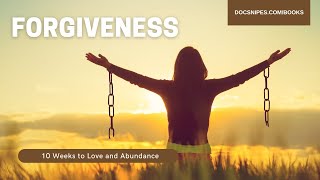
Dr. Dawn-Elise Snipes teaches forgiveness as a choice to stop wasting energy on guilt and resentment, and redirect it toward growth. She breaks down the Four Rs: responsibility, remorse, rectifying, and releasing, plus offers a Guilt Bill of Rights to challenge unhelpful shoulds.
Chapters
Hi, everybody, and welcome to chapter four of Ten Weeks to Love and Abundance. I'm your host and the author, Dr. Donnelly Snipes. In this chapter, you learn about forgiveness. And I know I've done other videos on forgiveness on the YouTube channel, but forgiveness is such a vital quality. Guilt, anger, and resentment are the opposite of forgiveness. Now remember, anger, guilt, those dysphoric feelings, I don't call them negative feelings because they have a purpose, but those dysphoric feelings are there to prompt you to do something. They're there to prompt you to check and see. Did you do something wrong? Is there a threat? If so, you got to do something about it. If not, then, you know, consider what your next step should be. Guilt is anger at yourself for something you think you should have done, but you didn't, or something you think you shouldn't have done, but you did. And a lot of us carry a lot of guilt. Our life is kind of ruled by shoulds, and that can be exhausting. Guilt keeps us from being able to enjoy the moment. Anger and resentment often occur when people do something that makes you feel unsafe or. Or rejected. Forgiveness involves accepting that nobody's perfect. It doesn't mean that you agree with or condone the situation, but it's a power play. You are choosing. You are saying, I choose to stop using my energy to beat myself up or dwell on resentments, and instead I choose to use my energy on the people, things and experiences that are important to me, the things that are going to make a difference in my life. In your forgiveness self assessment, you're asked questions like or prompted to think about things. Include. Make a list of all of the things you feel guilty about or regret. And that can be a long old list. Make a list of all your resentments. What were you taught about guilt and forgiveness when you were growing up? What parts of those lessons were right? You know, when we feel guilty, sometimes it's for a good reason. Sometimes we did something that was wrong and we need to atone for it, we need to fix it, we need to make amends for it, or at the very least, we need to learn from it so we don't do it again. So guilt is a functional feeling in a certain context, so that part might be right. You know, there are some times that we should feel guilt. That's part of empathy. But a lot of times that message is over generalized. And sometimes we're taught to feel guilty for things that are out of our control or feel guilty for being compassionate with ourself. So it's important to look at what the messages you got about guilt and forgiveness were and why. Some people were taught messages about forgiveness, that forgiveness was the thing you needed to do. Well, okay, great. But other people were taught that forgiveness was a sign of weakness. And if you forgive people, they're going to come back and hurt you. Well, there's a middle ground there with forgiveness. Holding on to it is going to continue to drain your energy, continue to keep your stress up and continue to hurt you. So holding on to anger is going to continue to hurt you. Forgiveness means accepting what happened can't change the past. Learning from it and, and that may mean learning that this is a not safe person to have in my life, learning from it and then moving on. If that person is not a safe person to have in your life, it means figuring out how to set boundaries so you're not using your energy on that person. You're not subjecting yourself or making yourself vulnerable to that person, but you're not continuing to give energy to thinking about and being angry at that person. What were you taught about resentment, anger and forgiveness when you were growing up? Again, what parts of those lessons were right and why and what parts were wrong and why? What are you afraid might happen if you forgive yourself? Sometimes people are afraid that if they forgive their self, they're going to make the same mistake again. Well, those are two different things. One's forgiveness and one's learning. When you forgive yourself, you're choosing not to continue to beat yourself up for something that happened in the past. You're choosing to use that energy to learn from that mistake and grow. So you're reinvesting that energy in growth and productivity instead of just staying stuck and lashing yourself. What are you afraid might happen if you forgive other people? And we talked about that a minute ago. A lot of times people are afraid that if you forgive somebody that they're going to do the exact same dagum thing again. Well, hopefully if they did something wrong, they feel guilty about it, they learn from the mistake, and they don't do it again. You know, it is possible for people to make mistakes and to learn from them and not to hurt you again. But it's important to, in each situation, in each context, with each person to figure out what does. What does safety look like? To me, forgiveness is simply about choosing how you're spending your energy. Am I going to continue to choose to use my energy remaining angry and nurturing that anger, or am I going to use it for something positive? I threatened one time that the next foster cat that I adopted, I was going to name Grudge. That way I could always use my energy to nurture a grudge. But anyway, I ended up naming him Mojo. So I always have good mojo to give me. But poor cat. But it is important you know, if you're going to nurture a grudge. If you're going to nurture resentment, then it should be something positive. And resentments themselves are not positive. But a kitty cat is. Forgiveness strategies. I know I got off on a tangent here. Four Rs of forgiveness, responsibility, remorse, rectifying it and releasing the hurt and anger. Forgiveness means taking responsibility for what you did, forgiving yourself for. If you're going to forgive yourself for something, experiencing remorse, you feel bad if you made a mistake, rectifying it, you make amends, you learn from it. And then the final R is the big R. Releasing that hurt and anger and saying, okay, I'm not going to. You keep my energy tied up in this anymore. I'm going to use it to move forward. The next activity is learning from it to enhance safety. The third activity is, was it really about you? You know, maybe your significant other came home and gave you an attitude or your officemate bit your head off and you get angry at them. Okay, Natural automatic reaction when somebody is aggressive to you to feel anger for a second, but then stepping back from it for a minute and checking it out and going, you know what? You know, number one, is there really a threat? And number two, is this really about me? You know, maybe they are just having a really bad day. Their car broke down, they got yelled at by their boss. Something else. Um, now, did you deserve to have your head bitten off? Well, no. And that's something you can address. But forgiveness involves saying, okay, I'm not going to stay angry at this person for this. I'm not going to tie up a bunch of energy in it. Um, I am going to, you know, choose to use that energy. Maybe to take a breath, to take a moment, and then to empathize and re approach them and go, what's going on? Use that energy to work it out. The next activity is recognizing that people do the best they can with the tools they have. You may have not had the ideal childhood. You may be angry that you didn't have the ideal childhood. You know what? You can't redo that. There are no do oversight. Staying angry about that is only draining your energy and preventing you from feeling the fullness of the happiness that you can experience right now. Having that anger dragging you down is taking away from your present happiness. Recognizing that people did the best they can or do the best they can with the tools they have means we're all going to screw up. You're going to screw up, I'm going to screw up. It happens. Forgiveness means acknowledging that we're all human, we're all fallible. And holding on to resentment and anger doesn't help anybody. So sometimes that helps people come to a place where they can accept what happened. You know, they can accept that their parents, you know, they weren't Warden June Cleaver or whatever you envision the best parents being. However, you know, they can accept that their parents did the best they could with the tools they had at that point in time. And that's that, you know, they're like I said, there's no do overs. That was often a big issue with people that I worked with, especially in residential treatment because they had had such tumultuous childhoods. And the last activity is the Guilt Bill of Rights. And I love this one because so often we feel guilty for things that do not require guilt. Notice I avoid using the word should. For example, feeling guilty for relaxing, feeling guilty for being compassionate with yourself, feeling guilty for taking time off. There's a lot of things that are really essential for health and mental health and self care that somewhere along the way we were told we were supposed to feel guilty for. Yet we encourage other people to do it. We encourage other people to take care of themselves, but we feel guilty when we do it ourselves. How does that work? So the Guilt Bill of Rights encourages you to look at all of those shoulds or shouldn'ts that keep you feeling guilty and develop alternate strategies or alternate self statements when you start feeling guilty. So if you want to take Sunday morning and just lay around the house in your PJs, what can you say to yourself to counteract the guilt that you might feel? Obviously that's one of my issues. You know, I have. I was raised in a family where you weren't supposed to lay around all day long. There was always stuff to be done. So I have a hard time relaxing. I feel guilty if I just lounge around the house all day long. So it's. That's one of those things that I struggle with. And I still to this day have to remind myself that, you know what, I worked my butt off all week long. I deserve to have a slow morning. And that can mean just sitting and lounging. It doesn't mean that I can sit and lounge while the laundry is running. It means just sit and lounge. Oh my gosh. How awesome would that be? As always, this book contains discussion, writing, and meditation prompts and activities for each of these strategies to help you incorporate them into your life a little bit more. And I encourage you to use these not only yourself, but to enhance the relationships you have with your team at work. If you're a supervisor or with your family, guilt, anger, and resentment can suck up a lot of energy. These emotions are designed to tell you to check that something might be wrong, and if there is, do something about it. Don't just sit there and nurture the negativity. In the next chapter, you will learn yet another strategy that will help you enhance your love and abundance.










