Happiness Habits Part 1 PACER Integrative Behavioral Health
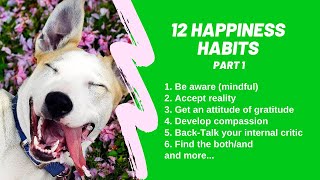
Dr. Dawn-Elise Snipes explains how happiness affects your HPA axis, inflammation, hormones, sleep, and pain. She teaches micro-habits like daily gratitude, singing, and mindful breathing, plus how to define a rich life and act on it.
Chapters
You. I'd like to welcome everybody to today's presentation of integrative behavioral health. I AM your host, Dr. Donnelly Snipes. And today we are talking about happiness habits. Now, I went a little hog wild on this presentation, so I had to break it into two parts. So today is part one, and next Tuesday, we'll do part two. Foreign. As always, we talk about why do we care? Why do we want to be happy? Except for the fact that, you know, generally most people want to be happy. But what's the benefit of happiness? It's not just improving our mood physically. Happiness helps us. And I learned so much, oh, my gosh, in a presentation that I did yesterday that will be showing up as a video on a YouTube channel later this week on mental health and cancer. But there is a ton of research out there that shows that distress can cause a whole lot of problems when it causes continual or frequent activation of the HPA axis from chronic stress, whether that's physical or emotional or interpersonal stress, whatever kind of stress, when that stress is chronic, it leads to dysregulation of the HPA axis, your threat response system, and inflammation, which causes oxidative stress. And, you know, you've probably heard something about oxidative stress and that oxidative stress contributes to the development of cancer, a variety of illnesses, as well as increased speed of aging. And a lot of us really don't want to, you know, necessarily look our age, especially me, because I don't act my age. So that's kind of a good thing. So what's the physical impact of happiness? Well, it reduces your risk of diabetes. It reduces autoimmune issues and cardiovascular disease. It also reduces the risk of anxiety and depression. There's a reduced activation of the HPA axis and subsequent inflammation, improved hormone balance because that HPA axis, when it's regulated, when it's, you know, acting like it's supposed to, you have adequate hormone balance. When that HPA axis is activated, it starts suppressing a lot of our gonadal hormones and our thyroid hormones. So we have hormone imbalance. So we want happiness to keep our hormones in balance. It improves your sleep. When that HPA axis is activated, it keeps us a little bit aware, kind of like a soldier sleeping in a foxhole. We may doze off, but we're not getting quality sleep. In addition, when that HPA axis is activated, it increases inflammation, increases pain, which also contributes to poor sleep. So happiness can also help reduce pain, not only by down regulating the HPA axis, but also by promoting the Release of serotonin, dopamine, and endorphins. It can help slow the aging process. It provides more energy, and as I just said, it helps release endorphins. So there's a lot of physical benefits to happiness. It may seem elusive, but we're going to talk about some things that you can try doing every day and in order to increase your happiness Affectively and cognitively. Happiness helps us feel better. It helps us be happy. It helps us be open to feelings like awe and wonder and curiosity. When we are angry and feeling threatened, we're in that fight or flight zone. We've got kind of tunnel vision. So it's hard for us to notice the things that might make us angry, happy. So when we're happy, we actually are more likely to notice happy stimuli in the environment. It's difficult to be simultaneously happy and unhappy. That doesn't mean that we want to avoid our dysphoric feelings. They're there for a reason. They're there to tell us something. However, we can compartmentalize them and recognize, okay, I'm unhappy about this over here, and I'm going to put this on a shelf right now, and I'm going to be happy about whatever. Maybe you don't like your job and however, you love your family and it's your daughter's birthday, so you can choose at that point in time to recognize, okay, I hate my job. I can. I'm unhappy about that. Noted. I can be unhappy about that and happy about other things in my life. I don't have to hold on to that unhappiness. I can put it on a shelf for a little while. When we're happy, as I said, it tends to change the lens through which the world is viewed. When we are in fight orf flight mode, we're going to notice the threatening stimuli. When we're in happy mode, we're going to notice the more pleasant stimuli, or we're going to be more open to noticing it. And it also increases our cognitive flexibility. When we're in fight or flight mode, we tend to be relatively cognitively inflexible. We. We want to make it go away. We have difficulty thinking creatively and getting outside of the box because we're in that stress zone right there. When we're happy, when we're not feeling threatened, when we're not feeling unsafe or disempowered, then it allows us the freedom to be more creative. Environmentally. Being happy creates positive energy and improves your feelings of safety and personal power. When you're happy, you notice the things that you have, you start developing this attitude of abundance. And we're going to talk more about that later today and tomorrow. When you're happy, it also attracts positive energy. Happy people tend to attract other happy people. So that can be a benefit. If you are one of those really positive people, others probably gravitate towards you because they kind of want to be around that positivity. And when you're happy, it helps others feel relaxed and happy. There is an old saying of when mama ain't happy, ain't nobody happy. Well, it's not just mama. When we're unhappy, when we are in distress, when we are irritable, even if we're not meaning to, we often permeate the environment with an attitude of stress or negativity or irritability, which makes other people feel like they are at the very least walking on eggshells because they don't want to make you feel worse. And if they've got poor boundaries, then it may make them feel bad as well. I notice around our house with our dogs and our. My cat Mojo, I've told you about him, when one of us is in a bad mood, they tend to act very differently than when we're in a good mood. And that kind of shows you how much as humans we tend to put on a false face to a certain extent. My dog does not care what other people think. If one of us is stressed, he will jump around. He, you know, he has all these mannerisms that he does when he thinks somebody is stressed and you know, he doesn't try to hide it at all. So he's a great barometer. When he starts acting funky, we start looking around going, all right, who's permit oozing stress around here? My cat can be kind of the same way. So it's important to recognize, you know, like I said, animals tend to be much more leading indicators, if you will, of distress. So they're a good barometer. Small children are also a good barometer. There was one day I came home from work and my son was about 18 months old. He was still relatively pre verbal and I thought I was doing a great job hiding my stress because I had had a God awful day. And I came in and I put my stuff down and I was getting ready to make dinner and he comes in the kitchen and he just starts shaking his hands over his head and go, na na na na na na na na na na na. He didn't speak at that point. So Nana was a good word for him. But clearly Expressing some level of distress. And, you know, we were like, well, where's this coming from? And my husband was like, I think he's picking up that you may have had a bad day. And, you know, sure enough, as soon as I sat down and, you know, started talking to him and what have you, you know, he. He seemed to calm down a little bit. But children are extremely aware of. Of our moods and how we're feeling, and they perceive it. They may not be able to label it, they may not know what to do with it, but when they feel it, it can really cause them to feel irritable. And, you know, especially right now, where a lot of people are stressed about a lot of different things, it's important to recognize our impact on others, which takes us down to social impacts. Not to say that you should ignore your emotions. Your emotions are there for a reason. They're there to tell you, you know, fight or flee. They're there to tell you that there might be a threat or happiness. You know, happiness says, let's do that again. But it's important to recognize how your emotions impact everyone around you. It's important to recognize how your emotions impact your energy and ability to devote energy to your relationships. And when your relationships are improved, it also tends to increase happiness. So it's a, you know, mutually beneficial sort of thing. So recognizing that happiness can be a choice. And we're going to talk about that more in a minute. And I want you to, you know, before you start going, you know, that's not always a choice. Well, not always bad things happen. That's true. Distress is a natural, normal feeling. That's true. Staying stuck in it, nurturing it, holding on to it for days, weeks, months on end, that may not be helpful. So let's start out with what do we do? Well, the first thing you need to do is increase your awareness and your authenticity in order to get your wants and needs met. You need to be aware of what they are thinking about. What is the impact of happiness on your physical health when you're happy? What's your energy like? How's your sleep? Do you sleep better when you're happy, or do you sleep better when you're angry and miserable and not more, but better? A lot of people when they're miserable, they sleep a lot, but it's really poor quality sleep. So do you sleep better or worse when you're happy? What happens to your weight when you're happy? You know, do you tend to gain more weight when you're happy, or do you Tend to gain more weight when you're miserable and have no energy and just, you know, trying to barely trudge along like. Like you're walking through. Walking through mud. When you're happy, do you feel or notice your pain as much? Some of us have chronic pain. You may have arthritis, you may have, you know, aches and pains and this and that. But when you're happy, do you notice your pain as much? And how does it affect your immune system? You know, in general, when people are happy, their HPA axis is downregulated, which mean there means their immune system is higher. So they get sick less when they are in a place where they're going through a phase where they are miserable. Maybe during grief or during finals week or, you know, there are a lot of things that can prompt unhappiness, but when we feel unhappy, our immune system is suppressed. Recognizing the impact. Becoming aware of the impact of happiness on every area of our life is first, because that helps us realize why we may want to pay attention to this. Then practice mindfulness. What do you, as a person. And it's going to differ between every person. But what do you, as a person need to do to be moderately happy? Notice I said moderately. You may not be elated, but what do you need to do to be moderately happy right now? Do you need to get another cup of coffee? Do you need to go to the bathroom? Do you need to stand up and stretch? What can help you feel moderately happy right now? What do you have right now, you know, in your. In your life at this point in time, what do you have that makes you happy? Too often we're focused on the. The. Sorry, the future, and thinking, well, when I have this, then I'll be happy. Well, that may be true, but what do you have right now that helps you be happy? Focusing on that and taking that gratitude. Gratitude inventory every single morning can be helpful. Also, along with mindfulness, we recognize the good, but we also want to recognize the vulnerabilities. And vulnerabilities are things that are going on with you that make you more likely to respond with distress to something. So if you didn't sleep very well last night, for example, that may be a vulnerability for you. Maybe you know, that you tend to be more impatient and irritable and, you know, have more difficulty with cognitive flexibility when you're tired. Okay, so you're tired. It is what it is right now. You can't change it at the moment because you probably can't go back to bed. So how can you mitigate that how can you prevent that fatigue from negatively impacting your day any more than it already has? You know, what alterations do you need to make in order to accommodate the fact that you're tired today? How can you prevent being tired in the future? Or, you know, whatever this vulnerability is, we'll stick with tired for right now. So maybe I know that I didn't put on the sleep timer on the TV last night, and it kept waking me up when the loud commercials would come on and I still didn't turn it off. That would be one of those things that I know well in the future. I know I need to put on the sleep timer in order to get better quality sleep. I know what I need to do so I can get better quality sleep. And the third question, why is it important to prevent these vulnerabilities? Just helps you increase your motivation so you realize, yeah, you know, it really is important to take that extra 15 seconds before I go to sleep and set the sleep timer on my TV or whatever it is your vulnerability is. Noticing those things and taking proactive steps can be awesome towards improving your happiness. When you wake up and you feel like you're starting the day happy, energized, enthusiastic, that is a whole lot better than waking up and going, oh, crap, another day, you know, let's just face it. So what can you do to start your day off right? So you wake up with that positive attitude. And if you wake up and you don't have that positive attitude, how can you make the best of your day? What do you need to do to be compassionate with yourself? The next step is beginning with the end in mind. And RML stands for Rich and meaningful life. In order to live authentically, that means knowing what you need and actually stating that trying to get those needs met instead of trying to do what everybody else says you should do. Living authentically also means living in a way that will help you have a rich and meaningful life as you define it. What is the definition of a rich and meaningful life for me may be very different than what it looks like for you. I mean, there's probably some overlaps, some similarities, but what is important to me may not be the same things in in totality as what's important to you. So knowing, thinking, you know, as Kavy would say, begin with the end in mind. What people, places, events and things are important for your happiness? For a rich and meaningful life, what will your thoughts and outlook be? A rich and meaningful life. How do you want to think in a rich and meaningful life when you're happy, who do you see in your support system and what will your relationships be like? You know, you're envisioning this, this, you know, happy life, this is where you want to be. So what will your support system and relationships be like? What will be the same and different in your day to day life, hobbies and activities, when you're happy? And it's important to recognize after you do this, go back through what you've defined as your rich and meaningful life and mark off the things that you've already got because chances are you've got some of them in your life already. So you can start checking those things off and go, you know what, I'm, you know, working my way towards that, towards that end goal. And then for the things that you don't already have in your life, how can you start making these things happen? And I call this the principle of reciprocity. When you start doing positive things in your life, other positive things will happen. So when you start doing things to make your life rich and meaningful, your mood will improve, your energy may improve, then you're going to have more energy to spend on your relationships. When your relationships improve, it may help your mood, which increases your energy some more. So it all feeds in on itself. But positive changes beget positive outcomes. Negative changes often beget negative outcomes. The next tip is purposeful action and long term goals. Once you know what you need for a rich and meaningful life, you know what you want it to look like. This is your long term goal. The next step is to figure out, okay, when I make decisions, I only have so much energy. So every time I make a decision, is it moving me closer to my long term goals? Is it moving me closer to happiness? Or is it, you know, moving me backwards? Each step towards a rich and meaningful life can make you feel happier. Purposeful action means using your energy for a purpose to help you achieve your goals and focusing on things you can control. Using your energy to stew and dwell on things that you can't control. That's not real purposeful, that's just burning your energy. It's kind of like spinning your tires in the mud. You're just going to dig deeper and deeper. Think about three small changes you can make today. Yes, I said today. Three changes you can make today to move closer to your rich and meaningful life. They don't have to be big things, you know, small things like drinking more water, call, starting to call or text your two best friends at least three times a week. And taking time out for mindfulness and meditation three times a day. You know, I'm just kind of spitballing here, but those are three easy changes. They're not going to rock your world. They're not going to take a whole ton of time, but. But they can significantly contribute to helping you build your resources and start moving towards that rich and meaningful life. Be proactive, not reactive. And this goes along with purposeful action. Too often when we experience distress, we feel unpleasant thoughts. We feel anger, depression, fear. And the first thing we do is, is we react. We just want to make it go away. And that is not always the best choice. Same thing is true sometimes when we have cravings or urges. It's like, I really want to do this. I can't tolerate not doing it right now. And we use these distress intolerant thoughts and we act on autopilot. We act reactively instead of thinking, all right, this is unpleasant in the moment. However, what are my options? How can I deal with this? It's important to remember that fighting against things that are unchangeable or not realistically changeable by you wastes a ton of energy. And there are a lot of things in life that you have no direct ability to change. So figuring out how you can radically accept the situation, whatever it is that's going on that you don't like, and you may hate this phrase, you can find your own phrase. This is mine. It is what it is. I don't like it. But this is what reality is right now. It is what it is. Okay, what are the facts for and against my feelings, my fear, my anger, my depression? At this time and in this context, if I'm rebelling against something, if I'm feeling like I'm going to dig in and go, no, you can't make me do that, or I don't feel like doing that, or I'm angry about that. Okay, well, those feelings come from a place of threat. So it's important to figure out why. Why am I feeling threatened? What am I afraid of? Or what do I feel powerless over? All right, once you figure that out, then you say, what are the facts for and against that? Is that really, truly a threat? And at this time and in this context, you know, maybe 20 years down the road, it'll be a big deal. Maybe 20 years ago, it was a big deal. But at this time, in this context, is this actually a threat to me? In what ways am I powerless, and in what ways do I have power in this situation, which takes me to what parts do I have control over? Sometimes you can change part of the situation to make it more tolerable. You may not be able to change the whole situation, but figure out what parts of it you can change. I know for a long time a lot of people were rebelling against wearing masks, and maybe they still are. Okay, if they don't want to wear a mask, what parts of the situation can they control? Well, that means they can't go into public. You know, a lot of, you know, right now, to go into public buildings, you have to wear a mask. So if you're not willing to do that, if you don't want to wear it, then that means you can make the choice to not go shopping, to not go into public buildings. You do have control over that. You can change your reaction to the situation. And, and that may mean figuring out that, okay, I feel angry, I feel threatened right now, but in reality, there's really no imminent threat to me, so I can choose to let it go. When somebody starts trolling you on Facebook or Twitter or wherever you go to social network, they can start to try to poke the bear and you can choose to continue to get angry. You know, remember, angel, the initial feeling of anger, that's a natural feeling. That's a natural feeling to threat to someone being antagonistic, making you feel unsafe or out of control. Got it. However, is somebody trolling you on Facebook really a threat to you? If so, what parts of the situation do you have control over? Well, you can block them. How can you change your reaction to the situation? Does getting angry over it, is that a good use of your energy to move you towards your rich and meaningful life? Or is it better just to let it go? Didn't say easy, I said better. And what's the probability that this will be significant three months from now? So if somebody's trolling you on online, you know, you block them. If you still feel upset, asking yourself, what is the probability that what they said is going to have any impact on my life three months from now? You know, it's really important to kind of get perspective in the moment. It may feel really bad, but once you get out of that moment, you know, what's the probability that, you know, the worst case scenario is going to happen or that this will even still matter? And finally, abundance mentality, remember, this is just part one of two parts because we didn't have time to go through, through everything today. But the abundance mentality is a great attitude. It kind of goes along with that attitude of gratitude and everything we've been talking about. But believing that there's plenty to go around significantly reduces stress. It may not mean that you get everything that you want exactly the way you want it all the time, but nobody does. It's just life. When you're not feeling like you have to compete for every resource, it can help you to be happy for people's successes instead of feeling jealous or envious and angry. It can help you feel less distress when you don't get something, because then you realize, okay, well, I didn't get it this time, but it'll still be around. I can try again. Or maybe there's something else out there. It helps you focus on all the things that you have and all the potential opportunities. You know, an abundance mentality helps you look around with gratitude and go, wow, you know, I'm really blessed in a lot of ways. Maybe not financially or, you know, but you've got to be willing to open your eyes and recognize what you do have. You also need to or can focus on all the potential opportunities. I remember when I was in college and I initially started out going to medical pre med. I thought I was going to go to medical school, and that didn't work out so good. Calculus and I didn't get along very well. So, you know, that was kind of distressful for a moment. But then I took a step back and I said, you know what, all right, if I'm not going to go to this one thing, let's look at all the other options that are available to me. And I went through the same thing when I was helping my kids kind of figure out which direction they were going to choose to start with in college. Not to say that they're not going to change their major six times, but they had to start somewhere. And helping them look around and recognize all the potential opportunities that are out there was exciting and energizing and thrilling to them. Some of the sayings that kind of go along with this, when one door closes, another door opens, or something better must be coming my way if I didn't get this this time. You know, there are a lot of trite sayings out there, but if you can find one that's meaningful to you, it can kind of help. People with an abundance mentality often crave learning and experience because abundance doesn't just drop in your lap. You don't just sit on your couch watching Netflix and have abundance just heap on you. Most of the time, maybe somebody does somewhere, but most of the time, abundance means that there's plenty out there for you to go and get. If you want it. Just like a farmer has to actually plant the seeds, you know, he can have an abundant harvest, but if he doesn't plant the seeds and, and take care of the plants, he ain't going to get much. Abundance mentality is the same way with the abundance mentality. It also encourages. Encourages us to crave learning. We see that there is so much out there and things we didn't even consider before. So thinking about what options might be out there that you could learn about to improve your life. Abundance mentality also encourages people to embrace change as a movement towards prosperity. When we are thinking abundantly, we think about all the options, all the possibilities that are out there. So it encourages us to be willing to get outside the box, to embrace change, to recognize that, okay, you know, I can continue doing what I've been doing and stay in this rut, and I'm probably going to continue getting what I've been getting, or I can embrace change in order to make myself open to possibilities and abundance. And people who have an abundance mentality also have a survivor mentality. Instead of feeling like they are victim to life, victim to circumstance, victim to whatever, they see themselves as survivors. Yes, I went through this. Yes, it was unpleasant. However, let me look at what I might have learned from it, how it made me stronger, what I can gain from it. So even taking bad things and going, all right, I really don't want to go through that again. However, I did and I made it so, you know, good for me. Now how can I use that strength and that new knowledge in order to propel me forward into that world of abundance? So the abundance mentality can be very liberating because we aren't competing with others and feeling like everything's scarce and we have to, you know, hoard things. We're going, yeah, I'd like that over there. There's plenty to go around. And. And that releases us from feeling like we have to struggle all of the time, and it releases us from feeling obligated for things and makes us more open to possibilities. Now, I've already talked a little bit about it, but we're going to talk a lot tomorrow in detail about abundance mentality, exactly what it looks like and steps you can take in order to start developing an abundance mentality and get out of that attitude of scarcity. So that may help you change your perspective away from one of feeling, you know, completely threatened to one of feeling empowered. I see a lot of you are sharing your happiness habits, and I love this, watching things that make you laugh oh, that's one of my favorites. I spend way too much time probably on YouTube, but when I do, it does make me laugh. And a lot of times I end up finding happy videos, you know, funny videos that I like that I can share with my significant others, which brings happiness to their day. So it's, you know, a double benefit there. Singing and listening to music can be really inspiring, really awesome. And I've shared with you guys before that I. I have multiple playlists on my, on my device for when I go to the gym. I have my, you know, happy playlist that when I'm in just a real good mood and I'm beep up and around, I have my, what I call my power playlist, one that's encouraging and tells me that, you know, I've got this and I can power through. And then I have. I do have an angry playlist that I listen to sometimes that feels very cathartic and I kind of get my. Get my stuff out while I'm exercising. So there are a lot of different things in there. And singing can be great on top of just listening to music because when we sing, especially if you sing loudly, even if you sing off key, it increases your breathing, increases your oxygenation, and we know that that is good for mood, energy and health. Singing to a younger version of yourself, that is really an awesome suggestion. I never really thought of it that way, but singing to a younger version of yourself, songs that are nurturing and caring, that. That's really awesome. Dancing and singing can also be wonderful to do. Just like with singing, it increases your breathing. Dancing, even if you're dancing with your mop by yourself with the blinds closed, it can increase your oxygenation, it can increase your energy levels and, and decrease some of your pain because you're moving around, which they've found that low intensity exercise actually can help reduce inflammation. I know a lot of people think exercise equals pain. Well, that's when you really push it. Low intensity exercise helps keep your joints lubricated and actually helps move some of those toxins out of your body, which can help reduce inflammation and reduce pain. So those are some suggestions for helping to improve your happiness. And I will say it one more time. I know I sound like a broken record, but I'm not encouraging you to ignore your distress. I'm encouraging you to do what we talk about in acceptance and commitment therapy as living in the. And recognizing that I can be unhappy about certain things in my life and still also have a rich and meaningful life that brings me happiness. That brings me joy. They don't have to be mutually exclusive. It's important to acknowledge your feelings, but then to figure out the best way to use your energy to deal with those feelings and improve the next moment. So tomorrow we will talk about the abundance mentality. And then Thursday, getting my days all mixed up this week. Thursday, we'll talk about some type of environmental interventions for happiness. We may talk about light therapy. I'm not quite sure yet. So I am grateful for all of you who are here today. I think this is the biggest group we have ever had. So that makes me feel happy. And I encourage you in the comments to this or in the chat room to provide suggestions for different topics that you want me to cover. I would be happy to do that. And I will see you tomorrow.










