Happiness Isn't Brain Surgery: Interpersonal Effectiveness- Boundaries and Needs
Dr. Dawn-Elise Snipes covers DBT interpersonal effectiveness skills and why people struggle to ask for what they need. She walks through emotion regulation, distress tolerance, and using your wise mind to balance feeling and logic so you don't sacrifice long-term goals for short-term wants.
Chapters
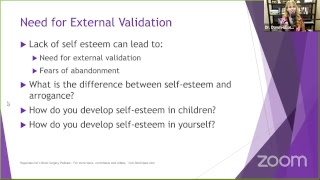
Welcome back, everybody, to Happiness Isn't Brain Surgery with Doc Snipes practical tools to improve your mood and quality of life. We're continuing to review dialectical behavior therapy skills, specifically interpersonal effectiveness. We're going to continue addressing barriers to interpersonal effectiveness in this segment. So we've talked about reasons why you might say yes, reasons why you might say no, ways to effectively set boundaries and be assertive. But there are other things that get in the way of being assertive, stating what you want and getting your needs met. More than just stating what you want, you have to be able to get the other person to agree. If you are in a relationship or in a discussion and you're in your emotional mind, you, you're in the fight or flight state. So if something happens and you get really teed off, that is not the best time to have a discussion because your adrenaline is just pulsing. You're in your emotional mind. You want to either fight, dominate the situation, or flight, get away from the situation, but you want it to go away. Emotion Regulation Skills can help you mitigate your emotional dysregulation by preventing vulnerabilities. So what does all that mean? Basically, Emotion Regulation Skills is a whole different podcast that we've done, but they help you keep as much energy as possible by preventing problems. It's kind of like taking the car in for regular maintenance. Don't want to wait until you have no oil and the get gas light is on and hey, let's go with tire pressure is also down. You know, might as well have everything all messed up before you take it into the mechanic. You want to take it in for regular checkup. So you're getting your best gas mileage. Same thing for yourself. You only have a certain amount of energy, so it's really, really important that you use that energy wisely. By mitigating emotional dysregulation, that is preventing yourself from being in a situation where you're more likely to be a big old cranky pants. You're going to have more energy for other stuff. Think about a time you got sick, if you were sick. If you're like me, at least when I get sick, I am not the most patient, pleasant person to be around. Especially if it is a head cold. I hate head colds, so I am typically grumpy and if something happens, I'm already dealing with being tired and not being able to focus and being frustrated that I'm sick. Something else happens and it's like the straw that broke the camel's back. If I were not sick, whatever that was that happened probably wouldn't be a big deal. So vulnerabilities are those things that make you more likely to react strongly to something that on any other day would. Wouldn't be nearly as big of a deal. What are some of the easy ones to prevent or deal with? Nutrition. Hydration. Your brain needs building blocks in order to make the neurochemicals that help you be focused, help you concentrate, help you be happy, clear headed, all that stuff. So eat a decent diet. I'm not saying go crazy. Eat a decent diet. Try to have three colors at each meal. A little aside, my daughter made dinner last night and you know, bless her heart, she's 13 and she is an amazing cook. And I went home and she said, there's noodles and sausage in the fridge. And I said, okay. And I went about eating something else because I wanted vegetables. And my husband came home and he got some of the noodles and sausage and I noticed that there was broccoli in there. And I'm like, hey, you didn't say there was broccoli in there. And she looked at me and kind of rolled her eyes and she said, you say there has to be three colors in every meal. So what did you expect? I was like, touche, little girl. However, I digress. Nutrition is important. Try to keep things relatively healthy. That doesn't mean you can't splurge. Think about how many colors are on pizza. You know I'm all about pizza. But hydration is also important. Your brain's 80% water. 1% dehydration reduces your ability to concentrate and to focus by 5 to 10%. 1% dehydration. When you are thirsty, you know you are feeling like you are dehydrated. You are more like 5 or 10% dehydrated. So it is important to keep hydration coming in. And caffeinated beverages are diuretics, so they are going to work against your hydration. So every time you drink caffeine, you have to drink that much more water in addition to your normal 64 ounces in order to stay well hydrated and focused. Sleep. Not any old sleep, but good quality sleep. If you wake up in the morning and you feel like you got hit by a Mack truck, you probably did not get good quality sleep. And again, there are entire podcasts on how to get quality sleep and what to look at if you don't feel like you're getting quality sleep. Research techniques for improving your sleep quality. There's all kinds of articles and there are counselor Toolbox videos on our YouTube channel, YouTube.comallceducation that you can find information on how to improve your sleep. Pain. Most of us tend to be a little crankier when we're in pain. I have scoliosis and I have a bad shoulder and I tend to have bad posture anyway. I can control the bad posture, but I'm bad about doing that. So when I spend eight or ten hours hunched over my desk, I may get a neck ache, which means I'm having more difficulty focusing. Tend to get more cranky again, tend to be a little bit more irritable. So do what you can to mitigate pain. Try to prevent it. Look at using ice and heat. Talk with your doctor about pharmacological ways to address any pain you're having. Physical therapy. There's all kinds of things you can do, but the less pain you're in, the better your mood's gonna be. Stress. That's an easy one. Just get rid of it if we could. But there are things you can get rid of. So if you look over, make a list. I keep a little whiteboard, you know, just a little $2 whiteboard from Walmart on my desk and everything that comes up that I think, oh, I have to do this, I write down on my whiteboard. And obviously I haven't done any of that today. But you can go back through and you can cross off things. When you start feeling overwhelmed, look over that list and go, you know what? Half of this stuff really doesn't have to get done today or maybe even this week. So reduce any unnecessary stressors because you need to make sure you've got enough available energy to get through the day and deal with any curveballs that come your way. That keeps you prepared, that gets you in the best place to handle those curveballs. But they're going to happen. We all get them. So when you get a curveball, another way to help regulate your emotions is to practice distress tolerance skills. And they help you distract, not react, is kind of the little saying that we have. If you react, you're acting on your urges. In your emotional mind, you are acting to make that problem go away. Now, without regard to what's the best way to handle this, you're just trying to make it go away. It's kind of like if a bee lands on you. Now, I love bumblebees, so. But if you don't like them and they land on your arm, your first reaction may be to start shooing it away. Well, we know in our wise mind that if you start trying to shoo away a bee, it's probably going to sting you, but your immediate thought is to get the bee off of you. So Destruct, not react are techniques that help you take a step back when something upsets you before you act, so you can think about what's the best course of action. And there are two acronyms we're not going to go over in this video. You can Google them. Accept and improve and Improve the moment. And both of these basically are techniques and things you can do to help distract yourself until that adrenaline rush bleeds off a little bit. You can focus on doing something that you enjoy. You can take a mental vacation. You can volunteer, do something that makes you feel good when you're feeling bad, because you can't feel good and bad at the same time. So there are a lot of things you can do in the interim that might help you wait so you can think a little bit more clearly about what is the best course of action. All of this helps you take a break until you can get into what you call your wise mind. Your emotional mind is that knee jerk reaction that you have when something happens. You're filled with emotions. If you're happy, you want to do it again. If you are not happy, you want to make that unpleasantness go away. Your rational mind is the one that really has no feelings. It's more like and Android. And it tells you what you should do or you shouldn't do and the best course of action, but it doesn't take into account what would make you happy. Your wise mind synthesizes the two and helps you choose the best course of action that's going to help you meet your goals and help you be happy at the same time. Another thing that gets in the way of us being interpersonally effective is sacrificing long term goals for short term urges. Sometimes we tell people, no, I can't do that because this is my long term goal. But then we end up doing it anyway because it sounds like fun and we want to make that person happy. So it's important to know and be clear with yourself what are your long term goals? And this is a really useful technique. So if you latch onto anything in this particular module, this would be it. What are your long term goals in terms of happiness? What does that look like to you? What is important to you in terms of health? How much sleep, how much exercise? What is it that you need to do to feel healthy? Which relationships are important to you and what do those relationships look like? Just Knowing that your relationship with your spouse is important is great, but how are you going to sustain that and what does that look like? What are your long term goals in terms of work and personal growth? So you know what you want life to look like in six months or six years. Great. Those are your long term goals you all want to think about. What are your values? Because to reach those goals you are going to have to choose courses of action. But you want to choose things that are in concert with your values. Maybe part of your work goals are to be really successful and be a CEO of a company. That's great. If one of your values is to behave with integrity and honesty, then there are going to be choices that are presented to you that may help you become a CEO faster but may go against your values of honesty and integrity. So you have to know both what are your goals and what are your values that are going to guide your behaviors to getting you there? Sit down, Write it out. Take some time, like an hour, trying to really think about what this is going to look like. When you are thinking about your values, narrow it down to the top three or five. You know, what do you want to be known for when you are not here? Or if somebody was describing you to their best friend, what five adjectives would you want them to use? Once you have that picture, then anytime you are faced with a choice, ask yourself this simple question. Will this action, whatever I am thinking about doing, help me get closer to my goals or is this a waste of my energy? It is one or the other. If it's going to help you get closer to your goals, then it's going to use your energy in a positive way. It's a waste of energy. It is. And then you can make a choice whether you're choosing to waste your energy or not. Now there are going to be things like recreation and going out with friends that don't directly necessarily help you become a CEO. But recreation and hanging out with friends helps you relax so you can be happy and healthy, which will keep you energized so you can become a CEO if that's what your goal is. So don't get too caught up, but think about it. For example, is fighting with somebody on social media going to get you closer to your ultimate goals? Or is this just an activity that's going to waste a whole bunch of energy? The choice is yours. Other people, and I am a cartoon junkie, I admit it. Other people can get in the way of you being interpersonally effective because they try to convince you to do what they want you to do without concern for what your goals are. They may try to convince you, or they may ask you to do something and you do it even without much cajoling, because you so desperately want their approval. Either way, you're not necessarily being true to your values and you're caving. You're saying, you know what? I set this boundary. This is what needs to happen. And they say, are you sure? And you're like, yeah, no, never mind. I'll do whatever you want me to do. Think about how can you help yourself not be Captain Caveman? How can you help yourself not cave and give in to your. Give in your boundaries every time somebody wants you to do something? And think about reasons that you do that. Why is it? If you go against your values or if you compromise your boundaries, what was motivating you? Why was it more rewarding to do that than to take care of yourself and be true to yourself? Another way other people can get in the way of you being effective is they're more powerful than you. And it happens. That's just life. There are going to be people more powerful. A cop on a traffic stop, he pulls you over and he's like, Ms. Snipes, you know, do you know how fast you were going? Or whatever? And, you know, I could potentially argue with him, but is it going to do me any good? No. Because in this particular situation, he's got the power. Now, if I don't feel I did anything wrong, I can wait, bide my time and go to court and. And defend myself there. In a situation where theoretically the power is more equal, if you're in a meeting with your boss and your boss is saying, this new project for your department and you have serious reservations in the meeting may not be the time to try to argue or put forth your point of view with your boss, A, because he or she is more powerful than you, and B, because it's probably just not an appropriate venue. But considering the power dynamic and being respectful of that and thinking to yourself, okay, there's a problem here. And in order for me to get my needs met or to be true to myself and my department, I need to get this resolved. So maybe it is important to wait until you can talk to your boss in private, you still may not win. So then it's up to you to figure out what to do, whether it's important to change the situation or how you can modify the situation to be meaningful. And if you've ever been in middle management, you've faced this quandary before. If you're a parent with the car keys, you are the one that's powerful. And if Junior wants the car keys, you may not want to give them to Junior. So Junior may not get his own way. Junior may turn around and say, what do I need to do to earn the car keys? So there may be some negotiation. But if there is someone in that situation who's more powerful than you, you need to know what their wants and needs are. And you need to be respectful of the fact that in this particular dynamic situation, you may not ever win and figure out how you feel about that. If you don't feel okay about that, then you need to figure out how to change the situation. How do you win a losing battle? Sometimes it's just a matter of being patient. Sometimes it's a matter of accepting that you're going to lose that battle. But you've got to look more towards the war and the war being dealing with life on life's terms and coming out and being happy, respecting yourself and having relationships that are meaningful to you. Sometimes we just get in our own way because we need other people to like us, mainly because we don't like ourselves. A lack of self esteem can lead to a need for external validation. If you feel like you don't know if you're okay and your entire existence is predicated on people telling you you're okay, you're awesome, and you're like, okay, all right, you think I'm awesome, then I am worthy of breathing air for this very minute. That's not a way to live. It sets you up for fears of abandonment. Because then if people aren't there to tell you you're okay and you're not telling yourself you're okay, then you must not be okay. So working on self esteem will help you be much more interpersonally effective. It allows you to have more confidence and feel okay if people tell you no. Because when people tell you no, that's a form of rejection. They may be rejecting your idea or rejecting your request. It may not be a personal thing, it may be practical. But if your self esteem is very fragile or non existent, then anytime somebody tells you no, it's going to hurt and you're going to feel devastated. Which uses a whole bunch of energy that you probably don't have. A lot of people have difficulty developing self esteem because they can't differentiate between self esteem and arrogance though. So it's important for you to think for yourself. In my mind, what's the difference between Somebody who has a good healthy self esteem and feels good about themselves versus somebody who's just arrogant. Watch people that you work with and try to differentiate between the two. Watch sitcoms, watch movies, Try to differentiate and figure out those people that strike you as arrogant. In what way are they different than those people that strike you as just happy and confident? And how can you be more like the people who are happy and confident? Another way to think about this would be to think about how do you develop self esteem in children? You know, most of us want children who grow up being happy and healthy and having a good self esteem and feeling good about themselves but not being arrogant and self righteous. How do you develop that in children? And where's that boundary? Take that and translate it and do the same thing for yourself. If you would develop self esteem in your child by making sure to tell them they did a good job when they did a good job instead of only noticing when they made mistakes, well, let's do that for yourself. Too often the only time we ever talk to ourselves is when we notice we made a mistake and we're like, oh, that was a bonehead thing to do. So give yourself credit where credit is due and the belief that you don't deserve it. Well, if you don't deserve it, what do you deserve? That's the first thing you've got to be able to answer for yourself, do you deserve to be happy? Do you deserve to be treated well, what do you deserve? And when you ask for something, what do you deserve? What looks fair? What feels? What do you deserve in this particular situation? And then ask yourself, what do you have or what do you want that you think you don't deserve and why? So if you want something but you think you don't deserve it, then really argue that point and tell me why you don't deserve it. When you're finished telling me all the reasons why you don't deserve to be happy or you don't deserve whatever, then I'm going to ask you to play devil's advocate and tell me all the reasons that you do deserve to be happy or to get your kids back or to have the promotion. And then you need to figure out what the middle ground is. There may be some reasons that are very legitimate that you feel like you don't deserve something right now, but the likelihood is there's a greater number of reasons why you do deserve it. So putting those together and figuring out what is it that I really deserve because none of this is perfect to be effective in problem solving emotion regulation or interpersonal situations, you need to be able to get into your wise mind, so you need to mitigate those vulnerabilities. Start out with as much energy as possible. Emotion regulation skills can help you prevent and diffuse the adrenaline rush caused by adversity. So once you prevent as much stuff as possible, you make sure you have as much energy as possible when life throws you a curveball. Distress tolerance and emotion regulation tools can help you sort of weather the storm of adrenaline and until it bleeds off and you can get into your wise mind. Once you're in your wise mind, it's important to believe that you deserve to be happy and respected, which starts by believing that you're okay and not relying on others to tell you that you're okay.










