Happiness Isn't Brain Surgery: Psychological Flexibility
This content was created by Dr. Dawn-Elise Snipes. This content was uploaded by Dr. Dawn-Elise Snipes. This is a YouTube video titled "Happiness Isn't Brain Surgery: Psychological Flexibility" created on September 2, 2018, discussing the concept of psychological flexibility. The content type suggests it is likely a talk or presentation.
Chapters
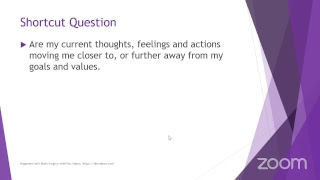
Hey, everybody, and welcome to Happiness Isn't Brain Surgery with Doc Snipes practical tools to improve your mood and quality of life. Today we're going to be talking about psychological flexibility. Hey, everybody, and welcome to today's presentation of Happiness Isn't Brain Surgery with Doc Snipes practical tools to improve your mood and quality of life. Today we're going to be talking about psychological flexibility. First, we're going to define it, and then we're going to explore how to apply it to help you live happier. And finally, we're going to end with identifying the shortcut question. Yeah, you've got to go through all the rigmarole before you get to the shortcut question, but that'll really help you understand what you're trying to think of when you get to that shortcut question. So let's start at the beginning. What is psychological flexibility? Well, it's the willingness to accept things as they are in the moment. All right, that's the first part. So it is what it is. And you're going to hear me say that over and over again. And I know for some people that cliche just kind of makes their skin crawl, but bear with me. So your willingness to accept things as they are in the moment and make a conscious choice to act with effective purpose. So that means not just reacting and mindlessly doing whatever you want to, but stopping and going, okay, what is the best choice I can make in this moment? And choosing behaviors, thoughts, and feelings that move you toward a rich and meaningful life. So the first thing we're going to talk about is really thinking about what creates a rich and meaningful life for you. In order to make that meaningful choice, you've got to know what's important to you, how you want to use the limited energy and time that you have. So start out by thinking about who's important to you, which people in your life, and what do you want those relationships to be like? You know, I can say, my kids are important to me, and that's, you know, wonderful. But I need to understand in my own mind what I want those relationships to be like. So I'm not looking back five years from now, ten years from now going, well, I really wish I would have. So what is it that would help me create a rich and meaningful life that includes a good relationship with my children? So what does that look like? So then when I choose reactions and actions and behaviors henceforth and forevermore, I can ask myself, is this something that is going to take away energy from having that good relationship with my children? Or is this something that is going to somehow help me improve my relationship or continue to have a good relationship with my children? So we need to know who's most important to you and what you want those relationships to be like. We also need to know what events and things and experiences are meaningful to you. Work is not necessarily meaningful to everybody. For some people, work is a means to an end. So what is that end? Why do you work? For other people, work is something they do because they love it, and going to work is important to them, and having a meaningful career is important to them. For some people, their health is important to them. For other people, not so much. You know, some of us are going to the gym five, six, seven days a week, trying to eat healthfully, do that kind of thing, because our physical health and our energy is really important to us. For other people, that is not as important to them. And personal growth, you know, that is something else we want to look at. And that is a really broad topic. But what things? When you see a rich and meaningful life, when you see you living in this state of perpetual happiness, what kinds of things are you doing? You're probably not stagnant. For me, I love gardening, so gardening is important to me. Animal husbandry, taking care of my farm animals is really important to me. You know, there are a lot of different things that are important in my life. So when I see me in the future, these are the things I see myself doing. The second part, if you will, of clarifying what a rich and meaningful life looks like to you is identifying the values that describe you and describe what you do. And I tell people, you know, think about five adjectives that you want people to think of when they think of you. If they're going to introduce you, if they're going to do your eulogy, whatever you want to look, whichever way you want to think about it. But what five values do you want to embody? And I gave you a list of several here, from achievement, altruism, assertiveness, commitment, compassion, loyalty, discipline, effectiveness. You know, there's tons of them. You can Google values or virtues, and you can find lists, you know, the 50 top virtues or the hundred top virtues. And you can go through and pick out the five. And it's hard to narrow it down to five that are most important. So then when you're getting ready to make a decision about what to do or how to think about something or whatever, you can say, does this support the five values that are most important to me? So if loyalty is one of Those values, you can always ask yourself, if I do this, is it helping me be more loyal to myself and others? Okay, so those are the foundation things we are going to talk about. Psychological flexibility really encourages you to identify that destination happiness. So in the middle here, we have noticing and choosing, and that is the present moment, the here and now. And we are going to talk about mindfulness in a few minutes. So you notice how you're feeling and what's going on. It is what it is. You don't get upset about it, you just notice if you're angry, you notice that you're angry, if you're happy, you notice that you're happy, etc. And then you choose what to do next. And one of the things we say a lot in dialectical behavior therapy is how can I improve the next moment? So noticing and choosing how, how I am right now, it is what it is. I can't change it, but I can improve the next moment or I can make the next moment worse. So I can either move towards distress and diversion or I can move towards my goals and values. It is my choice. So once I notice and choose, then I can decide which behaviors are most helpful to me. The best way to use my limited energy. You don't have unlimited time or unlimited energy. Do you want to waste your time fighting with somebody on Facebook or standing around on hold with the cable company, or do you want to choose something else? So define your destination, goals and values. For me, a happy, healthy family and values such as being dependable, loyal, compassionate and successful. Those are things that are important to me. So when I choose my behaviors, when I choose my reactions, I ask myself, will this help me move more towards what's important to me? Activities that I can choose that divert me and just waste energy are getting caught up in other people's drama. I've learned the saying, not my circus, not my monkeys, and I say it regularly. Or trying to change things I can't change. And this one's not so much me. I see it a lot in my son. He gets really upset about politics or he gets really upset about what other people do. When it seems illogical to him, he gets frustrated about laws. Now, for me, bad Internet does tend to stress me out. But I notice that I'm getting irritated about the bad Internet at our house. And I say, you know what? Getting upset about it ain't going to improve the Internet. It's just going to drain my energy. So what can I do that will move me towards what's important to me? So sometimes that means just turning off the Internet and making the children come down and have family time. My point is, we all have things that we do that waste our energy. And it's important for us to recognize those and try to minimize them. We're not probably going to eliminate them, but try to minimize them. So most of our energy is devoted towards moving us toward our final destination. So we've talked about the left and the right, the distraction versus the positive action. Now, the top and the bottom of this quadrant that we're thinking about. On the top is the behaviors, Everything that's observable, things that you do, and you have things that you do that move you toward what's important to you and things that you do that move you away from those things that are important to you. On the bottom two quadrants, you have internal events, which I call autopilot. And these are your thoughts and feelings, things that go on in your own mind that are either moving you toward what's important or away from what's important. Now, one thing to recognize about our thoughts and feelings, especially if we're on autopilot, is that our brain programmed with something called the negativity bias. And it's programmed that way to protect us so it automatically gives heavier weight to negative events, to unpleasant events. So we remember those more strongly. So it's important to balance those out. For every negative experience, we want five positive experiences. So let's look at the autopilot or negativity bias. When things, something happens and you notice that you're getting upset, you notice that you're really angry. Well, one thing that you could do, behaviors you could do that would move you away from your goals lightly would be eating or drinking to make yourself feel better or attacking back at the person. A lot of times, attacking back is a futile effort. Thoughts and feelings you can have that move you away towards what's important, that drain your energy so you don't have it to use to move towards what's important. Include thoughts like, people are awful. I feel attacked. I am angry, and I'm going to be angry. How dare him. I'm going to get even. I'm going to set him straight or her or whatever. Remember, feelings are normal. Feelings are our body's way of going, hey, you might want to check this out. Happy feelings. Say, you want to do that again. Unpleasant feelings are your body's way of saying, hey, there might be a problem. It doesn't mean there always is. So you notice when you have those feelings, you say, thank you Mr. Amygdala for alerting me that there might be a problem. And then you choose. It's when people get stuck in those emotions, when they hold on to those emotions, when they nurture those emotions, that it just sucks their energy dry. So psychological flexibility summary, and we're going to apply this, so don't, you know, get all stressed out because we haven't gone through the nitty gritty yet. The first thing you want to look at are the right side. And those are things, behaviors, thoughts and feelings that move you towards your goals and values, behaviors that increase positive feelings, and thoughts and feelings that motivate your positive behaviors. And we are going to identify those in a minute. On the left side are behaviors that move you away from things that are important to you or drain your energy so you don't have energy to do the things that would move you towards what's important to you. If I use all my energy up getting angry and punching a wall, then I'm not going to have that energy to spend making dinner and spending it with my family or something. So we do want to be aware of all four of these quadrants. All of us have things in all four quadrants. It doesn't mean they're bad, it just means there are different ways of responding and you have the ability to choose. So step one, it is what it is. Become mindful. So pretend you're a fly on the wall or you're a scientist, or if you're a Star Trek Next Generation buff, you're Data, the Android. You're curious, you're objective and you're non judgmental. It is what it is. You're not saying I shouldn't feel this way or I should feel this way. You feel how you feel. This is why so curious, objective and non judgmental. As soon as you start trying to judge your feelings or judge yourself, that's when you start getting stuck. So just accept it. Bring full awareness to your here and now experience regularly by asking yourself, how do I feel? What are my thoughts, wants and urges at this moment? What physical sensations am I experiencing? I suggest people do that multiple times a day, especially like at each meal. It's easy to remember to do right before a meal, but when you start getting upset or when you start feeling stressed, you can do it. My dog Brewster, is extremely sensitive to human emotions. So when I start talking in what my kids call, quote, angry voice or stressed voice, he loses his mind and I can hardly notice the difference in tone or speed of my voice or whatever it is he picks up on, but he notices. So whenever Booboo starts to act out, I generally, that's a cue to me to check in with myself and go, how do I feel? What am I doing? What am I experiencing? And is this the best choice to make to help me move towards my goals? So Brewster's like my biofeedback mechanism. Once you've asked those things, then it's time to get into your rational or reasonable mind. And when we're upset, you know, you check in with yourself, you're angry about something, it is what it is, okay? But sometimes it takes a few minutes to get out of that emotional mind to de escalate yourself. And it takes longer for some than others. So during this period before you react, use distress tolerance skills in order to get back into that wise mind. And that's the objective, non judgmental mind that we were talking about earlier. One of the ways you can do this is by just stopping and describing the environment, the smell, the temperatures, the colors, the objects you see, people, sounds, et cetera. You can say I see blank and it reminds me of blank. So you're getting into the moment, you're getting regrounded. You can find one object and focus exclusively on it. You can distract yourself by doing something that brings out the opposite emotion. There are a lot of different distress tolerance skills that you can use. The key is to give yourself anywhere from one minute to five minutes to let that adrenaline kind of bleed off so you don't have that tunnel vision. Once you've gotten full awareness to your here and now, you've kind of calmed down a little bit. Identify alternate thoughts, feelings and actions that you could use to address the issue that would get you closer to your goals. So you get online and, you know, you read some news story that just gets under your skin and you're so triggered and so frustrated. All right, well does getting triggered and frustrated and starting to flame in different posts and stuff, does that do any good? Most likely not. Most likely it's not going to change anything. Most likely the only thing it's going to do is use a whole lot of your time and energy. So what are other things you could do to address that issue? If that story, whatever it was, was sufficiently important to be corrected or whatever, you might consider writing a letter to the editor or addressing the reporter or whomever wrote that story that might change it. Or you could write an alternate piece in response. But just getting into flaming wars doesn't usually do any good. And just getting angry about it and ranting most Certainly doesn't do any good. So once you're mindful, the next step is acceptance. You're aware of what's going on. You're aware of how you feel, what your urges are. You know that you're angry and you want to put your fist through the wall, or you want to rant about something or whatever it is. All right. Step two is acceptance. You make room for these unpleasant experiences, feelings, and urges, recognizing that it's temporary. They're going to come and they're going to go. You don't need to give them undue attention. You don't need to focus on them. You just accept what it is, what it is. And if you can see the PowerPoint, you can see my little Yoda. He says, talk to the hand. You must. So acceptance is just saying it is what it is. I'm not going to get stuck in it, and I'm going to let it play out. Step three is unhooking your thoughts and your behaviors. A lot of times, when we are hooked, if you will, you get stuck having a thought that tells you, I have to. And unhooking means stepping back and recognizing that thoughts are just temporary, automatic events. Perceiving thoughts, images and memories as bits of language and pictures, as opposed to edicts of something you have to do or objective truths can help you deal with them. Thoughts and feelings don't always have to lead to action. And this is one of those things that I do every single night, because I watch TV at night when I'm starting to wind down, and for whatever reason, and I think I know the reason, because a lot of people don't unhook in the evening. It seems like every other commercial is either for pizza or some sort of really yummy food. And I'm sitting there, I've already eaten dinner, I've already brushed my teeth, I'm in my jammies. And one of those commercials comes on and I'm like, oh, I want pizza now. Well, I want it now. That's a hooked thought. If I say I'm having the thought that I want pizza now, well, I know that thought's going to come and go. Think of a behavior that you automatically do when you get stressed or angry. Some people drink or use drugs. Some people withdraw, Some people lash out, some people eat. What is it that you do? How can you take a pause between when you get stressed or angry in order to become mindful and make informed, committed decision to choose behaviors that will move you towards your ultimate goals? One of the things I Do, for example, with food is when I get stressed, I tend to eat for self soothing, which is not a good reason to eat. One of the things that I do is I force myself to write in my nutrition diary. You know, I force myself to log everything I eat. That makes me pause and that makes me pause to go, am I really wanting to eat bad enough to get my mobile device and log into the app and try to log all that? No, I'm too lazy, you know. So that thought and that urge passed as soon as I took the time to think about whether I really wanted to go through all the effort. So do you want to pause? My grandmother used to brush her teeth right after she would eat dinner or eat any meal. And then before she would eat or drink anything else, you know, the thought occurred to her, do I really want to have to go brush my teeth again or am I fine? So there are things that you can do and situations that you can create that force you to pause between having a thought, to do something and actually doing it. When you pause, it gives you a time to really evaluate. Is this how I really want to use my energy? Is it worth the effort? So back to pizza again. Think of a negative behavior like sitting in bed at 9 o' clock and thinking, I need to have pizza right now. I need that. I need a snack. Think about it, believe it as much as you can and notice how it affects you. When I focus on that at night, when I start thinking about how it tastes and how it smells and how good it would be, it's really hard for me not to get up and make pizza. But if I say I'm having the thought that I need to have pizza, then I recognize it's just a thought. It's just a thought that was triggered by that commercial. And just like I wasn't thinking about pizza before the commercial came on, in a few minutes I won't be thinking about it anymore anyway. So when I say I'm having the thought that it reminds me that I don't need to do anything. My thoughts do not have to lead to action. Another example of unhooking is our negative self judgments. Think of a negative self statement that you tell yourself regularly, such as I'm stupid or I'm fat or I'm lazy or I'm whatever. Think about it, believe it, notice how it affects you. It's probably pretty awful. Now insert the phrase, I'm having the thought that I'm stupid, I'm ugly, I'm whatever. If you're having the thought that something bad about yourself, that you're stupid. We'll stay with that one. Notice what happens, you know, if my child says I'm stupid, what is my first reaction? Why do you think you're stupid? That's separating who she is from her thoughts. Why are you having the thought that you're stupid right now? And that focuses it on what's going on right now in the moment, and it gives you a little bit more control over what's going on. And also recognizing that thoughts are often not 100% true, thoughts are often skewed or lack the reliability and validity because we're not considering the whole picture, we're not considering the alternatives. We're just having this one polar thought. So once you have observed what's going on, accepted that it is what it is, unhooked from those feelings, and put in that phrase, I'm having the thought that then you're more able to start sorting through your thoughts and feelings and starting to see options. So now we're into psychological flexibility and we're going to talk about this quadrant, or matrix, whatever you want to call it. So in the upper right corner, these are behaviors that move you toward your goals and values. So ask yourself, what things do I do or could I do that would help me feel happier, energized, motivated, and move toward those goals that are important to me, even if just a little bit. It may not get you all the way there, but every baby step is a baby step forward. So what things can you do? One of the first things that I encourage people to do is in this quadrant, put. Put in several activities for what I call vulnerability prevention. These are things you do every day that help you move towards those goals and values. Like, if you want to be in the Olympics, what are you going to do? One of the things you are going to do every day is get up and go to practice. You are going to eat a healthy diet. You are going to get plenty of sleep. So those are three things that you do every day. It is not necessarily just in the face of distress. This is something that you do all the time to make sure you're using your energy to keep moving forward. So what things can you do to make yourself as happy and healthy as possible? Assertive communication, goal setting, getting your work done, spending time with your family, taking care of your body, getting adequate sleep, avoiding unnecessary distress. And yes, there is such a thing as unnecessary distress. If there are people in your life that just. It's like dragging fingernails down the blackboard to Spend time with them. Figure out how you can avoid spending as much time with them. If traffic drives you crazy, well, then don't drive during rush hour. If crowded stores drive you crazy, then find one of those stores that's open 24 hours. Lots of grocery stores are now, and go shopping at 6:30 in the morning. That's what I do. So there are different things that you can do in order to avoid unnecessary stress. These are things you want to add to your daily to do list. They're not emergency actions, they are daily actions. The next thing you want to add is becoming aware of thoughts and feelings that move you towards your goals and values, motivate you and help you feel happier. So these thoughts and feelings are going to motivate you to get out of bed and do those behaviors that you just identified that will help you move towards your goals and values. So what thoughts and feelings do you have that help you keep moving forward and be optimistic and happy? Courage for one. If you are courageous, you are getting outside of your comfort zone. You are stretching a little bit. Dedication, just about any goal is going to require some element of dedication and concentration. Optimism and enthusiasm can help a lot of people move towards their goals and values. Patience with yourself as well as with other people and you know, with life in general can generally help you not get all tied up in knots over something and save that energy to move towards your goals and values. Compassion with self and others and just a willingness to let stuff go. It takes energy to hold on to stuff. Takes energy to be resentful and angry. So if you are willing to let stuff go and be compassionate and patient, how much energy would you free up that you could use to move towards your goals and values? You know, think about driving a vehicle and we live on a farm, so when we hook up a trailer to the back of the vehicle to go get straw, it uses a whole lot more gas than it does when we're driving without the trailer. Well, all the negative internal events, those thoughts and feelings, the anger, the resentment that all that stuff, if you hold on to that, if you hold on to stuff, if you are critical of others instead of compassionate and impatient, it's like driving around with that big old trailer hooked to the back of your car, it's going to drain your energy. Instead of having gas to continue to go on your journey where you want to go, you are going to run out of gas sooner. Ok, so we have talked about what to do in order to give yourself the best shot to use your energy on a daily basis to move towards your goals and values. Now let's talk about what we do that moves us backwards. That trailer, so to speak. So you notice and choose and you notice that you are feeling upset. So we are going to identify some behaviors that you do that move you away from your goals and values, or use your energy in ways that do not help you move towards your goals and values. Make a list of things that you do when you get stressed, angry, lonely, depressed. You know any of those unpleasant feelings that keep you from moving forward. Some people sleep, some people drink, some people do drugs, some people yell, some people create drama, whatever it is that you do. Some people just get on Facebook for hours on end. What is it that you do? And then identify other behaviors in your life that you regularly do that prevent you from moving toward your rich and meaningful life. Like poor time management, lack of sleep, poor nutrition, disorganization. Any of these things that cause you to use energy inefficiently or unnecessarily are away behaviors. And if you try to start eliminating some of those, you're going to free up a bunch of energy to move toward where you want to go. So those behaviors that can move us away. Sleeping too much when you sleep too much, it throws your circadian rhythms out of whack. It makes you actually feel more tired and you're losing a lot of time just to sleep. Avoiding life by being a couch potato. I did this last night. You know, I had a stressful day and I ended up getting sucked into a series on Netflix. And before I knew it, it was midnight. I go to bed at 8 o' clock and it was midnight and I was still watching this television series. I'm like, okay, I got to turn the TV off. So you know, that was not a lot of energy, but that was a lot of time that I spent that I could have used elsewhere. Self soothing with food, lashing out, being impatient, irritable, or self handicapping. And this is something that we do in order to avoid criticism. For example, when you have a project due, if you put it off to the last moment, that's self handicapping because you're giving yourself an excuse. If it doesn't go right, then you have an excuse for why it didn't go right. So you're preventing rejection in some kind of weird sort of way. So let's take an example of using this not for just general day to day health and happiness, but to deal with a problem. So imagine you've got a chronic illness like Crohn's disease or some sort of chronic pain. And you wake up in the morning and you notice that you are in pain and you just, you don't feel well. So what behaviors could you do? You could stay in bed, you could drink, you could use pain pills excessively, you could lash out at others for not understanding how bad the pain is. You could get angry because you are in pain. You know, there are a lot of things you could do, but do those help you move towards those things that are important to you? Probably not. It actually probably pushes a lot of those even further away. So what could you do instead? You wake up, you're having a bad day, you can feel it, you can make sure that you maintain good sleep habits that day even though you're feeling off. You can eat healthfully, you can do your physical therapy exercises, you can focus your attention on things you can control. Get support from helpful friends, Set small achievable goals. Some days when you're in pain, you're not going to get everything done. It's not an a day, but it doesn't mean you can't get anything done. So set small achievable goals. Use distress tolerance activities. You know, some days I'll have really bad back pain and it's frustrating. But one of the things that I found is if I don't dwell on that, if I distract myself, it can help me get focused on something else and not focus on that pain. And you can add happy triggers. And what I mean by that is putting up pictures, creating, putting smells, whether you use the little wax tarts or sprays or whatever in your environment that make it comfortable, that make it pleasant, that remind you of happy times, does it make the pain go away? Not completely, no. But they found, researchers have found that when our serotonin is higher or at a more adequate level, our pain level, or our pain perception is much more blunted, or our pain tolerance is much higher. That's a better way to say it. So when our serotonin is up, our pain tolerance is up. When our serotonin is down, we tend to be more depressed and our pain tolerance is down. So if this person is dealing with chronic pain, then doing things to make sure that they're regulating their serotonin and not getting themselves upset and stressed out, where they're tensing muscles can improve their overall status and help them have energy to move towards what's important to them. The fourth quadrant, the bottom left, are your thoughts and feelings that move you away from your goals and values. And these are those unpleasant Thoughts and feelings that we've talked about a lot. In my book Journey to Recovery, as well as 101 practical tools to Defeat Depression, we talk about them as unhelpful thoughts or cognitive distortions. It's important to remember, like I said earlier, all feelings are normal. And I'm going to say that for a fourth time, all feelings are normal. It's what you do with them that can be harmful. So think of an emotion like the smell of dog poop. And my dog Brewster, he's going to be the star today, graced me with this this morning. So I'm sitting there and I'm drinking my coffee this morning, and I all of a sudden smell dog poop. Now, that doesn't always mean that he went to the bathroom in the house, he was sitting right next to me, and God love him, he has the stinkiest farts that I've ever smelled from any dog. So it could just be a dog fart, I don't know. But I smell it and it tells me, you know what? I need to get up and check it out. If I find dog poop, I don't just get angry and leave it there and go, ugh, I do something about it because I don't want the whole house to stink. So negative emotions are kind of like the dog poop of the soul. If you don't address them, they're going to permeate your whole being and kind of repel others. It would be like carrying around a bag of dog poop with you. Everywhere you went, people would be like, oh, yeah, I don't want to hang out with her. She stinks. Feelings are normal. They tell you to check something out. Just like a smell tells you to check something out, but it doesn't mean you have to get upset about it. So what thoughts do you regularly have that keep you from being happy? Make a list, keep a journal, whatever you need to do so you can start addressing them and include the commentary of your inner critic. That person that says, you're never going to be good enough or you're such an idiot. You know, and sometimes a lot, some of us, our internal critic actually speaks out loud. So I'll be doing something on the computer and I'll make a mistake and I'll be like, such an idiot. And then I hear that and I'm like, why am I saying those awful things to myself? I wouldn't say that to my employee. Why am I saying them to myself? When you get angry, what thoughts do you have that keep you stuck in the quicksand of anger. Remember that resentment, jealousy, envy and guilt are all forms of anger. Resentment obviously is at someone else. Jealousy is anger over. And envy or anger over things that other people have that you want or you think you deserve. And guilt is anger at yourself for something you think you should have done or shouldn't have done. It's all anger. So when you get angry, what thoughts do you have that keep you stuck and stewing or lashing yourself with a wet noodle when you're sad or grieving, what thoughts do you have that keep you stuck? When you're anxious or afraid, what thoughts do you have that keep you stuck? And when you're lonely, what thoughts do you have that keep you stuck? Those are different categories of emotions. And a lot of times there are different feelings that go along with them. But that helps you identify some of these tapes that you have in your head that keep you stuck, that keep you stewing, that keep you holding on to this unpleasantness. So again, let's apply this so you notice and choose you're having that bad day you notice and that you're telling yourself, I can't do this. People suck. I'm helpless to change anything. What's the point? Rule breakers always win. And of course, my favorite no good deed, good goes unpunished. Well, we can hold on to that if we want to, but does it do us any good? Does it help move us towards what's important? Is it true that some people get away with some things? Is it true that we are helpless to change some things? Is it true that sometimes you'll do something good and you'll still get bit in the butt? Yes, all those things are true. However, their opposite is also true. There are people who don't suck. There are things that you have the ability to change. There are times when rule breakers actually get caught and karma comes around for you. So noticing and choosing which one are you going to focus on? The times that the bad guys win or the times or the times that or the times that the good guys win? You can choose. What other thoughts could you have? When you are having a bad moment? When you are angry, what other thoughts could you have besides the ones that I talked about or the ones that you usually have that would help you focus on the times when the good guys win or the times when life is not unfair? And what other feelings could you focus on most of the time when we have something going wrong in our life or something happens that makes us angry, that thing, that event, that time that Something is making us angry. We notice it, we accept it, it is what it is. But if we step back from it, we can also see that there are lots of other things in our life that are going well that we can focus on. You know, I work for myself, so there are days where, you know, work and business and administration and everything else is just really frustrating. And I'm like, oh, I don't want to do it anymore. And okay, so I notice and I choose. I can either focus on all the stuff that went wrong that day or I can focus on all the things in my life that are going well and all the things that I'm able to do. Because I'm self employed, I have two options. Guess which one I usually choose. Okay, so to summarize, when you're looking at the quadrants, and for those of you who are listening to this as a podcast, I'll describe them. The top, left are behaviors that move you away from your goals and values. Imagine your left hand just pushing things away. Top, right are behaviors that move you toward your goals and values. Imagine your right hand pointing you in the right direction. Bottom, left, thoughts and feelings that move you away from your goals and values. So again, imagine that left hand pushing you down on your bottom right. Imagine that right hand pointing towards thoughts and feelings that move you towards your goals and values. And, you know, top and bottom doesn't really matter. What matters is left and right and recognizing that there are behaviors that we have as well as thoughts and feelings that we have that can either move us away or move us toward what's important to us. So putting it together, and we've talked about the chronic illness intervention, but we're going to just put it all together now. So you wake up in the morning, you've got rheumatoid arthritis. You wake up, you notice you can't hardly even close your hands. You're in agony. It's going to be a bad day. Well, you could get angry about it and frustrated. And we know that when you do that, that's probably going to lower your serotonin and increase your stress chemicals, which is going to lower your pain threshold. So that's not going to help. But I digress. You notice and you say, okay, it is what it is. I have choices. I can call in sick, stay in bed, get drunk, take some pain pills. Please don't ever do that. It's dangerous. But we're hypothesizing and I can just lash out at everybody else this morning because they're wanting things from me and they just don't understand how much pain I'm in. Okay, you could do that. You can have feelings and thoughts that you're helpless, you're hopeless, this pain is never going to go away. You can be resentful at people who are healthy, angry at yourself for being weak or lazy, or angry that you will lose people or stress that you're going to lose people and things that are important to you because you're in pain and you can't do all the things that maybe you used to do. And you may even feel guilty because you can't do all the things that you used to do. Well, that's a really unpleasant place to be. Does tying up your energy in all those thoughts, feelings and behaviors help you do anything that moves you towards your goals and values? So on the other side you can say, all right, what can I do that will help me improve the next moment? Free up some energy so I can do positive things. So unhook from those feelings instead of saying, I have no control. I cannot ever feel any better saying, I'm having the thought that I'm always going to be in pain. Identify the things that you do have control over. Practice happiness, which is the opposite emotion. You know, do something that makes you happy for 10 minutes and then when that 10 minutes is up, you know, revisit whatever is going on and figure out what to do. Sometimes if I wake up in the morning and I am particularly in pain or something, I will just get my coffee and I will go sit out on the, on the porch and I will drink that and I will watch the sunrise and that helps me kind of get back into that wise mind. Then I can say, all right, what do I need to do to improve the next moment? What's the next step? Other thoughts that you could have include gratitude for what's going well, determination to achieve your goals despite what's going on, and self compassion. Instead of beating yourself up with shoulds or feeling guilty, being compassionate with yourself that you're doing the best that you can, what behaviors can you do when you wake up and you're having one of those pain days? Continue to have good sleep habits. Don't stay in bed all day because that will throw your circadian rhythms out of whack, which will throw your serotonin out of whack. Eat healthfully. Eat those anti inflammatory foods. Make sure to drink plenty of water. Do your therapy exercises. Focus your attention on things you can control. Get support from friends. Set achievable goals, and remember Those happy triggers in the environment. So both sides of this quadrant of this diagram are probably going to use similar amounts of energy. Which one is a more effective use of energy to help you start moving towards a happy life? So a final example. You do something embarrassing. And I've shared this one with y' all before. I had just come back from maternity leave, which is irrelevant, but the bathroom where I used to work for the staff, we didn't have a staff bathroom. We had to use. The bathroom up front was in the lobby. And so I went into the lobby and I used the bathroom and I came out. Well, lo and behold, I tucked my dress into the back of my stockings. So I was walking around showing everybody my tuchus. Well, that's not such a happy thing. I was mortified. So I noticed what was going on and I felt mortified. I noticed that I was having the feeling that I was mortified. What could I do? Well, my knee jerk reaction. I wanted to leave work, hide in my office, go get something to eat, and get defensive. Anybody who dared mention it. That's what I wanted to do. That was my automatic knee jerk reaction, my automatic thoughts. I was embarrassed, I felt stupid, and I felt like I wanted to hide. Yeah, that's not uncommon. But I thought to myself, does this do any good? No, it really doesn't. So my alternative behaviors, I could continue with my day and serve my clients and do what I was being paid to do and just laugh about it. If it comes up, you know, I can't take it back. But I also don't know how much, how many people actually noticed. And sometimes we just have to laugh at ourselves. It is easier than getting angry at everybody else. Laugh at yourself. Remember that other people do embarrassing things. It could have been worse. And I looked at it as a humbler or a compassion grower to remind me that we all do things that we are mortified about every once in a while. And that just happened to be one of mine that has stuck with me for, let's see, my son is 18 now, so 18 years. As I promised you, the shortcut question, you don't have to go through that full quadrant every single time you get stressed out. You want to go through that quadrant and focus, fill in the blanks. In order to make the best plan for how to handle distress when it comes up. In order to make the best plan for how to use your energy on the day to day basis to most efficiently use it to move towards what's important in your rich and meaningful life. Yes, you want to do that. But on a day to day basis, when things come up and stress you out or get you angry or whatever, just ask yourself, are my current thoughts, feelings and actions moving me closer to those things that are important to me or further away from them? My. Well, she's 14 now, but even when she was 11, my daughter had the hang of this and you know, sometimes she would call me out and I'd get stressed out over something like, you know, the gas bill or something and she'd be like, mother. And she always calls me mother. Mother. Is getting stressed out about this moving you closer to or further away the things that are important to you? Is there any point in getting stressed out about this right now? Now when your 11 year old says that to you, it's kind of a humbling moment too and you're like, you're right. Okay, my point is psychological flexibility is not that difficult. Don't make it hard. Don't make it harder than it is. Remember important points. You feel how you feel in the moment. It is what it is. And you have the ability at that point to choose your reaction. You can choose to do things that are going to maybe make you feel better in the short term, but waste a lot of energy that you could have used, excuse me, that you could have used towards moving to move towards your goals. Or you can choose from jump the behaviors that are going to help you move towards your goals and let go of the stuff that's just really irrelevant. So putting it together one more time, those four quadrants behaviors that move you away can be oversleeping or not sleeping enough, overeating, stress eating, drinking alcohol, acting out, aggression, seeking revenge, withdrawal, blaming, smoking, emotions and thoughts include nurturing, anger, resentment, anxiety, stress, powerlessness or distrust. So nurturing any of those unhelpful unpleasant emotions. Now notice I said nurturing, not having, having is normal. Nurturing not helpful. Constantly feeling powerless, taking everything personally. Everything is directed at you or an affront to you or having all or nothing thinking. Those are all things that move you away. Things that move you toward your goals are making sure that you're taking care of your body through proper sleep, nutrition and exercise, effectively communicating your wants and needs. Don't expect mind reading, but be assertive, not aggressive. Use distraction and distress tolerance techniques when unpleasant things happen, because they do. But just like thoughts will pass, feelings will pass. So tolerating them until you can kind of bleed off that adrenaline and get into your wise mind. Develop coping tools that are effective for you. What works for you to help you feel better. Enhance your problem solving skills, try journaling or even just keeping a log and take personal responsibility for your behaviors and your actions instead of blaming others. You made me. You almost always have the choice. You know, there are a couple exceptions where you may not, but generally you have the choice about what you're going to do and you need to take the personal responsibility for that. That will empower you to take responsibility to choose to improve the next moment instead of taking the easy way out and blaming people. When you choose something that moves you away from your goals and attitudes and thoughts. Acceptance A can do attitude Willingness to let stuff go and to try and to be open to new ideas Gratitude, Hope, faith in yourself and others. Honesty and compassion. Again, for yourself and others. Every event is an opportunity to choose thoughts and behaviors that will help you use your energy to move towards your goals and values. Acceptance means accepting without judgment how you feel and the situation as it is instead of fighting against it. You're stuck in quicksand. It is what it is. We know if you fight in quicksand, you're gonna drown. So stop fighting, accept it is what it is and figure out, okay, what is the next step I need to do to improve the next moment. Commitment and purposeful action mean that you choose to use your energy on thoughts and behaviors that will move you closer to your goals or free up energy so you can move closer to your goals. If you like this podcast, please subscribe on your favorite podcast app. Join our facebook group@docsnipes.com Facebook or join our community and access additional resources@docsnipes.com.










