Hoarding Clutter and Mental Health: PACER Integrative Behavioral Health
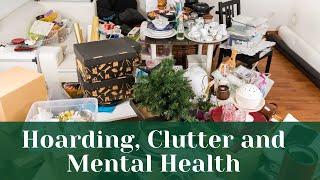
A recorded presentation by Dr. Dawn-Elise Snipes (PACER Integrative Behavioral Health) on how hoarding and clutter affect physical and mental health, common causes (trauma, poverty, grief, interpersonal violence, ADHD/PTSD), epidemiology, and practical management strategies. The talk describes health/safety risks (allergens, pests, falls, structural strain), psychological impacts (anxiety, depression, stigma, isolation), evidence-backed prevalence estimates, and clinician-oriented interventions including distress-tolerance training, supported exposure, a five-bin decluttering method, digitization of keepsakes, and a note that SNRIs showed ~70% positive response in treated patients.
Questions this video answers
December 19, 2020.
Up to 3.7% of children, 7.5% of college students, and 25% of older adults.
Generally has onset before the age of 40 years and increases in severity after middle age.
About 70% of people treated with selective norepinephrine reuptake inhibitors had a positive response.
Yes — the speaker states hoarding disorder is included in the Diagnostic and Statistical Manual (DSM).
Chapters
Foreign I'd like to welcome everybody to today's presentation of Integrative Behavioral Health. I'm your host, Dr. Donnelly Snipes. And today we're talking about hoarding, clutter and mental health. As always, we'll start out by talking about what's the impact of hoarding and clutter on our mental health. Well, hoarding especially, but even clutter can increase allergens because of an increase in dust, mold and mildew. It's harder the more stuff you have, the harder it is to actually effectively dust and clean. And when people become hoarders, a lot of times they have stacks upon stacks upon stacks of stuff that over time just start to to grow things. As it becomes humid in, in the house, it may get humid enough to actually spawn some mold and mildew. There's an increase in pests that carry disease like mice, roaches and silverfish love paper. I and I know that other kinds of critters, moths and what have you like clothing. So when you have stacks and stacks of it, you're actually attracting them to come in because you're saying, hey, I've got all kinds of nesting material here. Effectively, hoarding and clutter can both increase and decrease anxiety. When people fear rejection, they may want to stick stay at home with all of their stuff and all of their stuff that reminds them of better times. But it can also create a anxiety about rejection and unsafeness because a lot of people when they hoard, recognize that what they're doing is probably not mainstream and may fear rejection because a lot of people have already probably told them that they need to start clearing the clutter out. And they can experience depression from stigma. When people start calling it what it is, calling it hoarding or being critical of them, they may feel depressed because they may not feel like they are able to let go of that stuff. Research has shown that people who have a lot of clutter around them tend to have more difficulty concentrating and clutter and disorganization make it difficult to move around or find things and can just be a blind safety hazard. It can make you more susceptible, more vulnerable to fires. It can make you more vulnerable to tripping and falling. And if hoarding gets bad enough, especially if you have a multi story dwelling, it actually can get to the point where it's causing stress on some of the, the structural integrity. Now that has to get pretty daggone bad. But I have seen especially in buildings that haven't been taken care of as well or ones, you know, when there's enough hoarding you may not realize you've got a termite problem. You can see where it can be a problem. It also may actually cause a person who thinks they're trying to be frugal to spend more money, because in all that clutter that's not organized, a lot of times, they may not realize that they already have something and they go out and buy it again. And they may have more difficulty leaving home and going to work because it is becomes their safe place. And as I said, stigma can contribute to depression as well as a loss of relationships. People may not want to come over to their house anymore. For example, in general, people with hoarding disorder, and this is actually a disorder in the DSM now in our Diagnostic and Statistical Manual, people with hoarding disorder find it difficult to discard possessions, regardless of their actual value. Consequently, things tend to overflow into the living space and may hinder living function. And I know that. I've been around people who have. I mean, they do have a lot of clutter. And it may border on hoarding. When you walk in and every single place is filled with stuff. The dining room table, you can't even sit at it because it has stuff on it. The chairs around the table have stuff on it. The corners have stuff stacked up. So hoarding can very quickly kind of spiral out of control. Generally, it has an onset before the age of 40 years and increases in severity after middle age, especially if it's linked with social isolation, depression, anxiety, adhd, and PTSD in children. Interestingly, hoarding behaviors may be inadvertently reinforced because they found that inattentiveness can contribute to hoarding behaviors. But hoarding behaviors actually reduce opposite oppositionality. So parents, caregivers, may inadvertently reward the hoarding behavior because they're like, okay, fine, just. Just keep it. Just take it. Hoarding behaviors may present in up to 3.7% of children, 7.5% of college students, and 25% of older adults. So let's break that down into statistics, into actual numbers instead of percentages. Roughly four out of every ten children. Roughly seven and a half. Eight, if you want to round up. Out of every. I'm sorry, out of every hundred. Four out of every hundred children. Four out of. Gosh, eight out of every hundred college students, and 25 out of every hundred older adults. So if you're going to a senior center and there's 100 older adults there, 25 of them very likely have some level of hoarding disorder. So four out of seven children is still. Or, gosh, I can't talk today. Four out of 100 children is still a big number. When you think about children. We need to think of hoarding behavior in terms of being a form of communication though. What is this behavior saying? And hoarding means different things to different people. People with hoarding disorder often perceive themselves to be significantly more impaired with respect to their ability to tolerate emotions, pay attention and remember things that, and remember things. But in actuality they're actually not that impaired. And the study that I linked to went over what the person perceived as their ability to tolerate emotions, pay attention and remember things, and what they were actually able to do. So one of the interventions we do want to help people with is help them look at these things factually. Instead of going from an emotion based place, have them factually evaluate, you know, what is my distress tolerance? How, how much am I able to pay attention and remember things. Interestingly, feeling fearful and being in a cluttered room were both associated with a decreased number of discarded items in people with low self efficacy and low distress tolerance. So what that means is people who don't feel capable of handling life on life's terms and people who don't feel like they're able to deal with their emotions tend to not try to discard anything if they're already feeling fearful. When they're already feeling fearful, they can't add to that. That's just too overwhelming. But for people who had high self efficacy and good distress tolerance, they felt like they had some level of over their life and they had some distress tolerance skills. Then feeling anxious and going into a cluttered room actually prompted them to discard more stuff. They wanted to clear it out so they could feel less oppressed and, and more relieved, I guess. But I thought it was interesting that anxiety in people with high self efficacy and high distress tolerance is often caused by clutter and, and hoarding. But with people with low self efficacy and low distress tolerance, being in that cluttered room, it may not be calming, but thinking about getting rid of the stuff is even more anxiety provoking. What causes hoarding? Well, a variety of things. Traumatic life events have been associated with hoard hoarding. When people experience trauma, they feel experience unsafeness and a loss of personal power. So those traumatic life events may cause them to want to hoard. Let's think about traumatic life events Covid for a lot of people and I expect, unfortunately I expect to see some hoarding behaviors increase in percentages over the next couple of years because this has been a time where we have seen people that have been hoarding and stocking up and having that scarcity mentality. So they may develop this behavior that I've got to make sure that I've got plenty. If I don't have enough, I may not be able to get any more. So I need to have, you know, an entire pantry full of toilet paper. So those traumatic life events can impact hoarding. They also found that being a victim of interpersonal violence also increases the likelihood of hoarding. When people are in domestically violent relationships or interpersonally violent relationships, a lot of times the abuser controls finances and controls access. So a person who has been a victim of that, they didn't have control over what they needed to survive. When they get out of that situation now, they want to hold on to that. They want to make sure that they've got plenty. And grief can also contribute to hoarding. A lot of people, when they are grieving or experience losses, want to hold on to reminders of that person or of that good time. So they may end up with loads and loads of stuff from every experience that they had. That way they feel like they're hanging on to it in some way. A history of poverty also contributes to hoarding. When we are unable to get our basic needs met, when we're struggling to get our basic needs met, then when we have the ability to get the things to meet our basic needs, we may overdo it. That way we make sure that, okay, well, I've got this now, so in six months or six years from now, if I need it and I don't have the money to buy it, then, well, I'll still have it in reserve. So as soon as I get the ability to buy it, I'm going to get it and I'm going to store it, which goes along with that scarcity mentality we talked about yesterday. But you can understand where this can come from. Children who grow up in poverty may tend to hoard more than children who don't for that very reason because they saw their caregivers struggling. But people who experience poverty in adulthood can also develop hoarding behaviors. People who are depressed often try to fill a void with stuff they can. And especially with online shopping now, it is really easy to start filling a void with stuff because you're focused on what you're buying and how much that's going to make you happy kind of at the moment. Filling that void with stuff may be a self medication for depression, because when they get it, it produces a sense of joy. It causes dopamine, serotonin to be released. So the person and endorphins. Even so, the person has a momentary feeling of happiness. And they may also hold on to stuff because they have a desire to hang on to or relive the past. You know, people who are holding on to stuff from high school and they're 50 years old now, 60 years old now, occasional, you know, a trophy here or there, that's one thing. But if they're still holding on to, you know, all of their awards, all of the term papers they wrote, all of the stuff from their childhood, then that could be an indication that they want to. They feel a need to hang on to that past because that was a good time. And maybe they're not so happy right now. Scrupulosity. This is a word I learned putting together this presentation is an exaggerated sense of duty or moral ethical responsibility for the care and disposition of possessions or animals to prevent them from being wasted, harmed, or harming the environment. Animal hoarding is a little bit different than stuff hoarding, but they do have some significant overlap. Let's talk about stuff first. A lot of us have been raised in a. In an environment that is egocentric, let's call it. And so we don't want to cause excess waste. We want to reduce, reuse, recycle. We get into this belief that we have the moral imperative to not throw anything away. We have to figure out a way to reduce, reuse, or recycle. And so you can end up with shelves and shelves of things that you think, well, maybe one day I'll need it. And I'm guilty of this. I will share with with y'. All. The instant coffee I get comes in a glass jar. And glass is not recyclable. Recyclable in my area. So what do I do? I save it. And I figure it'll be great to store stuff in later. And lo and behold, before I realized that, I had about 40 of those jars sitting in my garage and nothing to do with them. They were just taking up space and collecting dust. And, you know, I asked around, I looked for people who wanted to use them for arts and crafts or something, and there was nobody who was really interested in having that many glass jars. So it was at a certain point I had to let go and go, you know what? I am not going to use this. And it is just taking up space and causing clutter and causing stress because I'm one of those people. In my house, we call it flat surface. Itis. I don't like to have bunches of stuff on every flat surface. It drives Me a little crazy. So I took the step of getting rid of a lot of those glass jars and I did the same thing with 2 liter soda bottles, because a lot of recycling places don't actually recycle the material. They say they're going to, but they don't. So I kept thinking, well, I will find a use for this. You know, I can build a 2 liter soda bottle greenhouse or something. And then it boiled down to the fact that in reality, I knew I was never going to do that. You know, I was just not handy enough or whatever you want to say to go ahead and do that. I had looked at all the videos on YouTube. I knew it was possible, but I also knew it wasn't something I was ever going to get to. So I broke down and recycled those. But we do come from that perspective and it's important to think about that before you buy stuff. You know, am I buying something that has the least amount of packaging possible in order to protect the environment? So instead of bringing it home and then having to figure out what to do with it, don't get it in the first place. If you can avoid it and then figure out things that you can do. Like all the cardboard we have I put out in my garden and in my compost pile so it can be, you know, returned to the earth. I know it's being recycled then and, and being taken care of. So when we talk about possessions, you know, it's important to recognize things that we have and that we may not want to get rid of just because we feel guilty about adding to the waste. When it comes to animals, people may feel a moral and ethical responsibility to care for animals that we as a species have domesticated and bred and caused contributed to the overpopulation problem with animals. And I get that, you know, y' all know I do a lot of animal rescue. However, it's also important to recognize that if you start getting too many animals, you know, getting into that hoarding area, that their quality of life is actually not any better than what you had hoped to spare them from. And it's important to recognize what you can do. You know, you may not be able to take in every dog from the shelter, but you can, for example, get involved in public service announcements that encourage people to adopt instead of buy animals, that encourage people to get their animals spayed and neutered. So there aren't, you know, there isn't as much of an overpopulation process. Get involved with local rescues that do a lot of public out outreach to help People, so you don't have to take on any other animals, but you can help people from having to get rid of their animals because they can't afford it, for example. And I know I've gone off on a tangent here, people, a lot of people are having difficulty feeding their animals. A lot of people who are in poverty always have difficulty. But we have a lot more people in poverty right now because of all of the shutdowns and lockdowns and what, whatever. So they're having difficulty fe themselves as well as their animals. Well, a lot of places like petsmart and you know those places that sell dog food and cat food, when you return an open bag, they can't put it back on the shelf. So a lot of times they will donate those open bags to rescues and to animal shelters. The animal shelters and rescues may actually get more food than they can deal with in the amount of time that it's going to stay fresh. So a lot of times they have extra that are, that's available to people who can't afford food. That's the long version of contact your local animal shelter and your local pet stores to see if they have food that they're willing to donate that can be disseminated to people who can't afford to feed their animals right now. Okay. Oh, and also some of the Meals on Wheels programs in different areas, the programs that go around and bring food to people who are homebound have actually started also doing Meals on Wheels for Pets. So if they're going around and bringing, you know, Susie Jones a meal, and Susie Jones also has a cat, they, they often will also bring cat food to make sure that Susie Jones can keep her best friend healthy as well. So that's kind of cool. Anyhow, another issue that contributes to hoarding is deficits in decision making, inattentiveness, and lack of inhibition. So let's go through each one of those real quick independently. Deficits in decision making. They have difficulty making the decision about what needs to stay and what needs to go. They have difficulty making that call and deciding, you know, what they can bear to part with. Inattentiveness. They may not pay attention to what they have, so they just go out and buy more stuff. Or they may not pay attention to what they need that day. You know, maybe they go to the gym and they forget to bring their. Their socks. So then they stop at the store on the way home and, or on the way to work and they pick up a 10 pack of socks. Now they've got 10 more pairs of socks. Than they actually really needed. But they add that to their, to their collection, so to speak. So inattentiveness can lead to having too much stuff, but then once they have it, they are afraid to get rid of it, or they think, well, I've got it now, so I might as well keep it. And lack of inhibition contributes to people just, they see something and they buy it. They don't think ahead of time. Do I have space for this? Do I have time for this? Do I have the ability to, you know, deal with this? They, they see it, they want it, they buy it. So what do we do about it? Well, hoarding itself is a mental health issue. So I am not advocating for necessarily self treatment, but educating you about what options are out there are really important. And for people who just tend to have a little bit more clutter, they're not horrible hoarders. They just tend to have a lot of stuff and disarray. You know, we can talk about some things to do. The first thing to do is develop distress tolerance skills. Remember, a lot of times hoarding comes from a place of or evolves out of a history of trauma or stress of some sort. For some reason, the person felt unsafe or unloved or they felt that moral obligation to do something and like, they would be a bad person and be rejected if they didn't do something. So helping them develop distress tolerance skills is important because when they get to the point of clearing the clutter, it's going to be stressful. When they get to the point of recognizing they can't save every dog or they can't keep every single knickknack and letter and everything that they've collected over the past 60 years, it can be extremely stressful for them. So make sure they have the skills ahead of time. Don't just throw them in and hope they learn how to swim. You know, you want to make sure that they have the ability to deal with what you're asking them to do before you start it. The next step is to identify and address triggers for acquiring new things. Why is it that you acquire these things now? Some things can happen, like after someone dies, they may get a bunch of stuff from that person and that has emotional and sentimental connection to it. So they don't want to get rid of any of it. So they have 17 boxes from, you know, so and so's house. Okay, that's, that's one thing. But a lot of times people who are hoarders also have triggers for acquiring new things because of that inattentiveness and lack of impulse control. They see it, they want it. It may be because they're not feeling happy and they think, well, if I get this thing, it'll make me happy. Or they may see a commercial, one of those awful, I mean, they're very well done for pulling your heartstrings. But ASPCA commercials where they show all of the little animals that are suffering and it just makes you want to go out and adopt every one of them, well, that is not, that's not actually going to be in their best interest. So we do need to identify what triggers them to acquire the things that they are acquiring. What are they and then what are they afraid of? Well, we'll get there in a second. The next thing, and for a lot of people who are, who are clients, you know, a clinician will go in and sit with them or a coach will go in and sit with them. I recommend a clinician because it is a mental health issue and it can get very overwhelming very quickly. The person can decompensate really quickly and start having panic attacks. So the first thing that, that I do with clients is I say, let's develop those distress tolerance skills, figure out why you're acquiring new things to see if we can stop the influx. And then we'll start going through the stuff that you have. And for a lot of people, we start and it's one box at a time. You know, do one box on one day. All right, that's all we can do. You know, I don't want people to get completely overwhelmed. But as you go through each box, taking something out of it and assessing your beliefs about what would happen if I let this go, if I got rid of this, what am I afraid is going to happen? So the person needs to identify what their fear based thoughts are and then find the facts for and against this. So if I get rid of this textbook right now that I've had since junior high school, you know, what is the chance that at 60 years old I am going to need that again? Probably pretty small. So what are the facts supporting the notion that you're going to need that again and you need to hold on to it? What are the facts supporting your fear that if you don't have it, bad things will happen, you won't be able to find it ever again. And with the Internet, you can look up just about anything and libraries and there are a variety of other ways to find that information. So we want to encourage people to go through each thing, each item, identify why it is that they are afraid to get rid of it, what they think is going to happen if they get rid of it, or why it hurts to get rid of it. And sentimental things, it may hurt, they may think it's going to hurt to get rid of, you know, if somebody's spouse just passed away, you know, two years ago and they still have all their clothes in the closet, you know, getting rid of those clothes makes that loss real, real, er, it's not a word, but whatever. So we do want to help them address that hurt. You know, for them, it's not really necessarily a fear fear. It's more dealing with the grief of the loss, that if they get rid of that stuff, then they feel like they're losing that person all over again. So we need to figure out why, you know, what is that behavior communicating? Why is that person holding on to that thing and what is the probability that bad things are going to happen. And during this, you may have to do some grief work, not only for the sentimental things, but just grieving, getting rid of some of the stuff, some of the stuff that represented security to them. People need to learn through this, which is why it's recommended to start out with just little 15 minute, 30 minute segments. They learn that they can endure the distress of the situation. When they go through it, it doesn't feel nice, it hurts, it scary. And we want to validate that. But it's also important to help them recognize after they get through it that they did it. And there are other steps that you can take. And, and we'll talk about that in a minute. Pharmacologically, now, drugs don't work for everybody. And in terms of things like anxiety and clinical depression, drugs don't seem to have a very good rate of success at all. But they have found in hoarding disorder that about 70% of people who were treated with selective norepinephrine reuptake inhibitors did have a positive response to those medications in terms of their desire and compulsion to hoard. Now, I will say, you know, when you go into the literature, if you go into the literature, hoarding is not the same as a obsessive compulsive disorder. Obsessive compulsive disorder can have some hoarding characteristics to it, but hoarding is actually a distinct issue. Whe, whether you're talking about helping somebody or working with somebody who's hoarding, or just working with somebody who clutters a lot, there are some things that you can do. In our house I recommend every year, you know, during that Spring cleaning, doing what I call a five bin roundup. Five bins. One is to donate, one is to recycle, one is to trash, one is to keep, and the last one is a maybe. And you can use these same bins when you're doing the supported exposure sessions. And supported exposure means the person's doing it, but they've got a support person there with them. They're not all by themselves where they feel unsafe. But when you're going through those boxes, let's take the person who lost their spouse three years ago. You know, they have those clothes still in the closet. Well, what. Once you process what that means to get rid of them, then you can also talk about donating them. And what would your spouse would. What would your spouse have wanted you to do with these clothes? How can your spouse continue to help people and bring joy to people with their clothes? So that can help make it easier to donate. If you do a little bit of cognitive restructuring. Recycling is also important. Some things we have, you know, maybe you have lots of stuff in, you know, boxes, and as you start to get rid of the stuff that's in the boxes, you got to do something with the boxes. So recycling can be helpful. You know, books, notes, you know, paper. Things that can be recycled are also, you know, sometimes you realize that it's better to recycle them. One of the things that I do with paper, things like cards and books and that sort of thing, I take pictures of what I want, I digitize it. You can scan it in, whatever. Receipts are the same way, bills are the same way. Digitize them, and then you can recycle the paper so you don't build up the paper. All you're doing is increasing the size of the hard drive that you need to store the pictures. And with, when you digitize them, you can always go back and look at them. You can always go back and see what you need. So if you need a, a receipt from six years ago because you're getting audited, okay, well, it's digitized, it's there. It's probably easier to find trash. Obviously, things that are not of adequate quality to be donated and that can't be recycled may need to go to trash. Some things, like old tattered clothes. If there is a sewing circle in your community and you can reach out, a lot of times they're at senior centers, but you can also reach out to craft stores to see if there's a sewing circle or a quilting circle. A lot of people who do quilting actually will use will cut quilting squares out of old clothing. So if you really, really, really just don't want to throw away these clothes that your kids were wearing and, you know, got holes in the knees, you may want to consider reaching out to one of those organizations to see if they would take it so they can use it in their, in their quilting. And you know, well, so reach out to craft stores and, and senior centers for that. Then obviously there's going to be a box or an area for the keep stuff. And everything that you keep, you need to be are able to articulate a reason why is it is important to keep. And it's more important to keep it than to donate it or do something else with it. And then usually there's going to be another box that's maybe it's something that somebody really doesn't want to get rid of, but they know it's probably not something that they really need to have. So that maybe box can be put there. And a lot of times in a maybe box, what we do with it is you put that, the stuff that's you aren't quite sure about in that maybe box and you keep it for a year. If you still haven't needed it after the next year when it comes around, it's time to figure out whether you need to donate it or recycle it or whatever. So donate trash, recycle, keep. And maybe the same sort of thing you can do with hangers in your closet. And this is really helpful at the beginning of every year, turn all of your hangers wrong way so they're the opening is kind of facing you. As you wear your clothes, you're going to take those hangers down. You know, you're going to wash your clothes and you're going to hang them back up right way. So the hanger is facing, you know, towards the wall. At the end of the season, any clothes that are still, you know, facing wrong way, those are ones you can probably donate because you're not wearing them. Either you don't fit into them or you're not wearing them for some other reason. And you can look at donating, donating those to nonprofits, to domestic violence shelters, wherever. You can also donate blankets to animal shelters because a lot of times they are in need of having blankets to help keep the keep the critters warm. And as I said earlier, digitize. My grandfather, bless his heart, made some gorgeous, gorgeous miniature furniture. And it was very dainty miniature furniture. He made it out of balsa wood and stained it and it was gorgeous, gorgeous stuff. But when he passed away, he had literally two rooms full of it. And it was more than any of us could ever hope to use. And we took what was useful for my daughter because she was, you know, at the age she was playing with that. But then when my. When my mom passed away, I found that she had a whole lot more of that stuff, and I knew that we would never use it. I also knew that other children might, or even adults might enjoy having it to go in their collections. So I took pictures of it, and I have pictures of it to remind me of the beautiful work that he did. But I also was able to, you know, give it away so other people could experience the joy from it. Digitizing is just such a great thing now that we can store memories that way. When I was younger, much younger, we used to have a saying, when somebody was staring at you in school, we would say, take a picture. It lasts longer. Well, it's kind of true. You can hold on to pictures for a long time and they can still bring a smile to your face. Are there any questions? I will put links to some of these articles in the notes for the video when I publish it on the YouTube channel. That way, if you want to go and read more about best practices for addressing hoarding, you can remember hoarding is a mental illness, and it's not just as easy as deciding to clear it out. There is a lot of anxiety that goes along with clearing the clutter for people who hoard. So being compassionate with them, recognizing their behavior, is a method of coping with something, and it's trying to communicate something, and we need to be responsive to that. In terms of your question, Joel, I'm not sure about the tendency of people who hoard to be codependent. I would have to look that up in the literature. It may make sense because people who are codependent are all often coming from a place of fear, fear of rejection. So I could see where that would be. The biggest correlations that I found in the literature were between hoarding and. And ADHD and ptsd. Remember, hoarding is not the same as obsessive compulsive disorder, although there is some overlap in symptomatology. So it's important to make sure that if somebody is struggling with hoarding type behaviors, that they are evaluated to differentiate what's going on with them. Alrighty, everybody. Thank you for being with me. I will see you tomorrow. Same time, same station. Stay warm and stay safe.










