How the Subconscious Impacts Decision Making
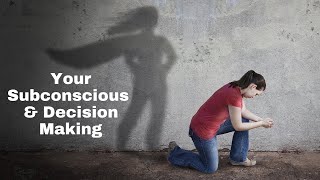
Dr. Dawn-Elise Snipes explains how subconscious memories shape emotional reactions and decisions. Most learning is observational, and we often react on autopilot through emotional reasoning instead of checking present facts. She uses examples like trauma-triggered assumptions and personal anxiety to show how naming feelings and comparing present situations to past patterns can change your responses.
Chapters
Foreign, Everybody. And welcome back to our live chats. Today we are talking about how the subconscious impacts decision making. And I AM your host, Dr. Donnelly Snipes. The subconscious is filled with memories based on our past experiences and what psychologists often call observational learning. We don't necessarily have to do something or experience something ourself in order to learn it. We learn things by watching things happen to others. And it can be in real life or it can be in the media or from messages from school or from our church or wherever you get your messages from in your community. There are a lot of ways that, that we learn. And all of that learning is filed away. If you want to think of it, your brain like a big filing cabinet, all of that information is filed away in, in our brain so we can consult it later. Sometimes they're. It's called schema that we form and those are expectations of what is going to happen based on our prior experiences. Many times what we think is our subconscious is actually in our conscious mind, but we are not aware of it because in our culture, we tend to live very mindlessly. And what I mean by that is we live on autopilot. We don't actually take time to stop and think about how we feel, what we need, what we want, what's going on. We just feel a feeling and react and feel a feeling and react. The memories that we have in our brain serve to tell us what we should expect. And that triggers emotions. If we are in a situation that. Let's just stay on the positive for today. If we're in a situation in which we see somebody that reminds us of our best friend from grade school, or our friend, favorite teacher, or our first love, you know, we can experience that as positive and we may project on them positive feelings and feel very safe, even if that doesn't necessarily mean that we are safe right now. And that is kind of an interesting little thing. We often react based on emotional reasoning, whatever our brain tells us based on prior experiences. You know, it says, okay, this is similar to a situation we've been through before in the past. It was awesome, so this one must be awesome. And we don't take time to stop and check that out. Obviously, the same thing can be be true for trauma and other unpleasant emotions. We can have experiences in our past, not necessarily just our childhood, but in our past that have been similar to this. And because there are similarities, our brain says, okay, well, based on similar experiences, you should be afraid or you should expect this to happen. And it's really important that we check those schema, we check those assumptions because they're not always true. If somebody was in a relationship and, you know, five years ago with a person and their significant other started acting withdrawn and then suddenly abandoned them, you know, that is intensely traumatic for, for a lot of people when they get into another relationship. If that person, if the new significant other starts acting withdrawn, they may assume that it means that that person is unhappy and getting ready to abandon them. When in reality, we don't know why that person is acting withdrawn. It could be that they've got a lot of stress going on at work, or they don't feel well, or, you know, we can hypothesize for quite a while about what's going on. My point is we need to get away from emotional reasoning. Our subconscious is great, our memories are great because it gives us a template to work with. But that template is not always accurate in the present moment. Since we react based on emotional reasoning, we don't stop, observe the situation and make decisions based on facts, whether the feelings are actually appropriate in this situation. We've talked before about how when our brain experiences something, whatever the experience, it calls on prior memories to decide whether or not to trigger that fight or flee response. And if it decides that, you know, based on similar experiences, yeah, I need to trigger that fight or flee response, then you start feeling anxious. And it's important to check and say, okay, in this situation, is this the exact same as back then? If not, what are the similarities and differences? And I've shared with you guys before, we've had a couple of bad experiences with storms here. And I know that may seem trivial, but I worry about my creatures, I worry about my donkey and, and our. We live on a farm, obviously. So when the storm came through, and we've had it happen a couple of times where it's taken out significant sections of our fence, which means that the animals were more vulnerable. And, you know, it's also expensive to repair. And I hate parting with money. So that between the two of those things, when storms come, it. It can be very stressful for me. And it's important for me to recognize and challenge my own thoughts when something like that happens. A storm is coming in, I need to ask myself, okay, how likely is it in this particular situation that this storm at this time is going to take out my fence? And, you know, we've made alterations to the fence. We've improved it. We have, you know, you know, made it so it was much less likely to blow down. So now I can Check those schema. And when the storm starts coming through, when the wind starts picking up, I still have to remind myself in the present moment that, you know what, chances of the fence blowing down right now are pretty small. So there is no need to continue to worry. Anxiety, anger, any of our feelings are based on prior experiences. Because we can't anticipate the very next moment, all we can do is say, well, you know, based on similar things, this is what I expect to happen, which is why mindfulness is so important. When you have a feeling that's great, notice it. Say, okay, I feel anxious, I feel happy, I feel however you feel. And then, you know, especially if it's an unpleasant emotion. Check the facts. Am I in danger at this moment? Is this actually a threat to me right now? It may have been when I was 8, but is it now that I'm 50? You know, do I. When I was 8, I didn't have the same skills and tools and ability to protect myself that I do now. Transference is a common example, and I used that a little bit earlier when we were talking about how people may have pleasant feelings and positive feelings towards somebody because they're projecting on them experiences from the past. And this can be with the same person or with different people. I'll give you an example with the same person. Maybe when you first started going out or being friends, it was great. You had a wonderful relationship relationship. And then something changed. And when you see this person now, you keep projecting on them that relationship that used to be that relationship, that new relationship energy, and you keep hoping it will come back. So you still are clinging on to that thought instead of looking at the facts in the current situation and saying, you know what? Something needs to change. We can if it's with a different person. Obviously, like the example I gave before, we don't want to hold current relationships, current people in our life hostage for something that somebody else did a long time ago. Now, they may have similar behaviors, but we don't know why. And it's important then to start communicating and find out, you know, are there any facts to support my anxiety or my anger in this situation? Are there questions about the subconscious and decision making? This was a request that I had from earlier in the week. So I diverged a little bit from the things that I was planning on talking about. But it's a really interesting topic and it's really important if you come from a psychodynamic perspective as a therapist, to explore what we've learned in the past. Psychodynamics says that, you know, our past experiences shape or filter how we experience life now, how we interpret things now. And it doesn't necessarily mean that our interpretations are always a hundred percent accurate. A lot of people that I work with need to examine, you know, their reactions in the present and explore the things in the past and maybe deal with some of those things. Recognizing that, okay, that was a really unpleasant situation. That was a really bad situation that I was in back then. However, I'm safe now and recognize their power and their safety in the present moment. I think people are getting really exhausted lately. I noticed in the gym today it was about half the normal people that were there. And, you know, we have a relatively low number of people here today. I think with all the stuff that's going on in the world, people are just kind of over it. And, and I get that. And to that end, I would encourage you to think about what is your subconscious telling you? What thoughts are you having right now about what's going on and how you, quote, should react? What is it that you can do to improve the next moment? Do you need to talk back to some of those negative thoughts or do you need to take positive steps to increase the happiness in your world? If you want to think about it that way. All righty, everybody, thank you for being with me today. I appreciate you coming. I hope this was helpful. Helpful as always. If there are topics that you want to know about, please feel free to let me know in the chat or in the comments and I will do my best to segue that in for, you know, to, to meet the needs and. And wants of my listeners, viewers, whatever you, y' all are called. And, and yes, mindfulness is so important and it can be a great time right now because there is so much stuff going on. It can be a great time to start trying to practice mindfulness and you know, since we're diverging a little bit and hardiness, take some time every day to focus on all of the things in your life that make it rich and meaningful. Focus on all of the things in your life that are important to you and recognize which parts of those things you have control of. And recognize which parts of the things that are stressing you out that you have control of and which parts you don't. Alrighty everybody, have a wonderful day and I will see you tomorrow at 9:30. It.










