Improving Cultural Competence 3 | Counselor Toolbox Episode 144
Dr. Dawn-Elise Snipes examines what happens when clients leave addiction or eating-disorder subcultures for recovery cultures. She maps the shift from harmful groups that provide acceptance and belonging to recovery communities like 12-step programs, and shows how counselors can address the identity loss and family strain that comes with that move.
Chapters
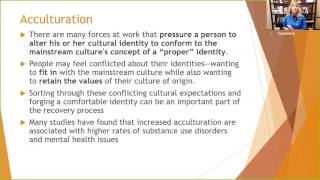
This episode was pre recorded as part of a live continuing education webinar on demand. CEUs are still available for this presentation through all CEUs. Register@Allce.com Counselortoolbox. I'd like to welcome everybody to improving cultural competence. SAMHSA Tip 59 and this is part three of three parts. This one is going to be a little bit interesting because we're going to be talking about the recovery versus the mental illness culture and the addiction culture. But one of the things that find kind of conceptually challenging is up to now, we've been talking about how to avoid enculture, avoid acculturation. And we've been trying to talk about how to be more culturally sensitive. When we talk about the cultures that we're going to talk about today, we are actually talking about trying to get people to change their culture. Now theoretically, if they're coming to treatment, they've identified that, yes, I'm looking for a change, but it is kind of an interesting shift in paradigms since we know that changing culture adds a lot of extra stress. So, you know, we're just going to kind of look at it and take it as it comes. We're going to review elements that constitute a culture. Going to go through some of that stuff real quickly just to hit the highlights for the people who weren't here for the first two. We will define and explore, and I use this term loosely, the addiction culture. We will also define and explore the recovery culture for addictions as well as mental health stuff. We will define and explore the culture of mental health recovery. And for that I selected only dbt. There are a lot of different cultures that we could have looked at, but in an hour I can only just kind of give you some examples. We'll theorize about the struggles clients experience when becoming acculturated into the recovery culture, whether it's mental health or substance abuse, and hypothesize interventions and methods which can help clients embrace the recovery culture. Remembering From Behavior Modification 101 People do living things, do what is most beneficial. So we need to look at what are the benefits to this culture that they are in right now, to the behaviors that they are engaging in, and how can we help them meet those needs if they want to, and we're assuming they do because they're in treatment. If they want to embrace a recovery culture, we want to look at what types of things need to be there, what types of needs were they getting met over here that we need to make sure get met in the new culture. So again Culture can be seen as a frame through which one looks at the world. A repertoire of beliefs and practices that can be used as needed. A narrative or story explaining who people are and why they do what they do. A set of instructions defining different aspects of values and traditions, and a series of boundaries that use values and traditions to delineate one group of people from another. And we're going to talk about a couple different groups of people here, and we're using this term culture in this presentation pretty loosely. But I do want you to theorize or at least kind of open your mind to the fact that there are certain groups of people that we may work with that do have their own sort of culture. And we need to understand that in order to be able to help them the best. So let's look at continuum of cultural competence in terms of recovery at stage one, culturally destructive, the clinician and the organization. We negate the relevance of culture and in the delivery of behavioral health. So we're saying we don't care what you want, we don't care what you think is going to work for you. This is what the guidelines say. And we run into that a lot in recovery. When we talk about abstinence versus harm reduction. Two very different camps, most programs are centered around abstinence. So if the person comes from a culture, especially when we're talking about opiate based drug use, harm reduction may be a culturally accepted intervention. So we don't necessarily want to look at that. When we look at some other addictive behaviors, if you will, sex addiction and eating disorders, for example, those things aren't necessarily things you can abstain from. So and you know, we want to look at how does that fit with that person's view of what recovery looks like? Okay, so that's addiction, but then what about mental health? Well, in mental health treatment, an organization can be culturally destructive. If they determine what happiness is, you are going to work towards these goals. Recovery, lack of depression, lack of anxiety. Happiness looks like this. This is the picture that everybody wants. Well, that's not necessarily true. So we want to understand from the client's perspective, from their culture, what does happiness look like to them. Cultural incapacity expects clients to conform to generalized services such as going to therapy groups, 12 step based treatment. So we're still not necessarily embracing the nuances between the people and the different cultural groups that are out there. And it's going to be a little bit easier to understand the culture once we get into it. Cultural blindness. We're still trying to uphold the belief that there are no essential differences among individuals across cultural groups. So you take somebody with sex addiction, with eating disorders, with alcohol addiction and drug addiction, they've all got addictions, so we're going to put them in the same room. Well, that doesn't work. There are some things, psychoeducational things we can do that are going to probably have cross cutting issues. And people with depression and anxiety may benefit if we're talking about coping skills. But there are also unique things that are, that each culture may have to deal with. For example, people with sex addiction have different triggers and issues, some different triggers and issues than somebody with a gambling addiction or alcohol addiction. And we're going to look at some of those cultural pre confidence. We start to understand that people are different. You can't say an addiction is an addiction is an addiction or depression is depression is depression because it is somewhat different. Or you can't put all mental health people in the same groups. There are differences. And as mental health clinicians, the way most of us were originally trained, you know, we recognize that there's a difference between somebody with major depressive disorder and generalized anxiety. And we understand that they may have different triggers and different needs. So it's important to expand that and look at the nuances among the clients and organizational cultural competence. We're really starting to recognize that people need different interventions. People who are trying to stop smoking, I mean tobacco addiction, nicotine addiction is an addiction and we don't want to necessarily downplay it, but it has its own separate set of needs and approaches than opiates, than alcohol and some of your behavioral addictions. Likewise, we want to look at the mental health issues and how do we treat it, what is the best course of treatment for each thing and what works for that client from their culture and how they define recovery. So there are many forces at work that pressure a person to alter his or her cultural identity to conform to the mainstream culture's concept of a proper identity. So when we're talking about recovery, it's like, well, what are you talking about here? We're going to start out in most of these examples with addiction because that gives you the more stark comparison. But the culture of recovery has a certain set of values, behaviors, you know, taking care of yourself, getting plenty of sleep, prioritizing responsibility, yada yada that the addicted culture or the, or the culture of addiction may not have. When we talk about shooting galleries where people who use injectable drugs go, there is a whole culture around that if people use illicit drugs, there's a whole culture around how to obtain illicit drugs, how to use illicit drugs, how to make their own illicit drugs. The 420 culture, for example, that is a culture that is involved with, centered around the use of marijuana. And some people are very 420 friendly and other people are not, but they have their own lingo. When somebody chooses to go into recovery, that's a whole different identity. You're not using, you're not going to the same places, you're not engaging in the same activities, may not be hanging with the same people. You may, but you may not. So we want to look at what changes for people and what stress does that put on them. When I started working in substance abuse, it was common for people to come in and for us to tell them, okay, you know, you've got to change people, places and things, kind of like changing your underwear. And we expected it would be that easy. You just got to cut those people off and start new. That's not sensitive, let alone culturally sensitive. So understanding what in this current culture, what in this addicted culture or depressive culture or whatever you want to, however the person identifies what is important to him or her in that culture, because those are the things that are going to be hardest to give up. So, and we may not necessarily say you have to give them all up. We may encourage somebody to modify. So for example, if they are, the person you're working with is an alcoholic and they have a lot of friends and family who drink wine or drink beer at games or whatever the case may be, it may not be culturally appropriate to say, well, you can't hang out with your friends or family at any sort of gatherings anymore because they drink. And it may not be culturally or socially appropriate for them to tell their family, well, you can't drink around me. So we have to figure out a way to help that person bridge the gap between the things that are important to them in, you know, one of their important to one of their cultural identities as well as important to them in their recovery, which is going to become a new identity. A lot of times we encourage people, or encourage is probably the wrong word, but we use terms like I am depressed, I am an addict, I am a bulimic, I am this, I am that. So it becomes part of them, which makes them internalize an identity. So if they give up the depression, if they give up the eating disorder, if they give up the addiction, who are they? If they're not an addict anymore, or if they're not depressed anymore, they've always said I am depressed. Well, if you're not depressed, what are you? So it's something they have to come to a new definition of and a new understanding of for them. People may feel conflicted about their identities, wanting to fit in with the mainstream culture or the new culture of recovery, while also wanting to retain the values or certain aspects and culture of origin in this case would be the unhelpful or unhealthy culture that they're coming from. And I have a hard time finding a word to describe that. The addicted, the depressed culture, we're going to call it the unhealthy culture, for lack of a better term at this point. Because as people come to us for treatment, they've decided that that's not where they want to be. Sorting through these conflicting cultural expectations and forging a comfortable identity can be an important part of the recovery process. I've worked with a lot of people in addiction, have said, I will not get up at those meetings and say that I'm an addict every day. I will not call myself an addict. I will call myself a person in recovery. They may not accept the disease model. They may, but it's important for them to be able to examine how they feel about it. Because for example, if they go into a 12 step recovery program, they are going to be expected to conform to that idea that once an addict, always an addict. So you are an addict, you never are completely recovered, you're in remission, and that may not be a comfortable place for them to be. So we'll talk about some more of that as we get into it. Many studies have found that increased enculturation is associated with higher rates of substance use disorders and mental health issues. Wait a minute. So we're trying to acculturate them to this new culture, but it can cause higher rates of substance use and mental health issues. Partly, when we're looking at that research, we're looking at people who are struggling to define that identity and it can become extremely stressful for them. So culturally responsive practice. Culturally responsive practice reminds us that a client's worldview shapes his or her perspectives, beliefs, behaviors, beliefs about illness and health, help seeking behaviors, counseling expectations, and communication. Let's go through a couple examples. If we're working with somebody with alcoholism, their perspective, how things should be and what goals to strive for. A lot of times people who are defining themselves as alcoholics or have an alcohol addiction will strive for the goal of abstinence and you know that that's fine. Their beliefs about why things happen, you know, they may believe that a lot of things in their life happened as a result of their use, which can be true behavior surrounding their addictive behaviors. So what sorts of behaviors do they do surrounding their alcohol? Are they hiding their alcohol? Are they, you know, as it becomes a problem, there becomes more ritualized stuff. Their beliefs about illness and health may or may not be present as much. But it's important to understand from a, you know, meta concept standpoint, the person that's in front of you, what's their belief about illness and health? If we're talking about something that is potentially an addiction, how do they define addiction and how do they conceptualize recovery? Help seeking is going to be different. So people with alcoholism are often sort of automatically, if you will refer to 12 STEP programs, which may not be culturally sensitive for a lot of people. So we want to talk to them about what feels comfortable for you as an individual, with all of your other worldviews stuff taken into account. Counseling expectations. Some people who are in early recovery or who have addictions have very little expectation of counseling. Some people have very strong expectations, but we want to talk to them about what it is. There are a lot of people in certain recovery programs who don't believe that counseling is necessary. And if you work that recovery program, you will be just fine. So depending on what culture they're going into, counseling may be more or less important. And how do they communicate? Now let's jump down to bulimia, which is obviously an eating disorder, not necessarily fitting nicely into addiction, not necessarily fitting nicely into mental health. So it's kind of out there on its own. So their perspective of what goals to strive for in their use when they are actively engaging in bulimic behaviors. Goals often surround success, perfection, Weight oriented goals, how things should be, tend to revolve around those things as well. The person who succeeds is the person who meets these certain goals. And a lot of it has to do with appearance related goals. Their beliefs about why things happen and what needs to happen for recovery may be different. Their beliefs about illness and health can change somewhat as they get into the recovery process, recognizing that food isn't necessarily their nemesis. So we want to kind of help them. They're going from this place where food is a really scary thing because food equates to getting fat. Whereas not saying that that's necessarily how it happens, but culturally we're going to talk about that in recovery you need to eat. And one of the scariest things for somebody with an eating disorder is to eat. So let's move on to depression. Somebody with depression may have different goals to strive for in terms of recovery that differ from people who are in active depression, who have major depressive disorder, who aren't trying to seek recovery at this point, They've kind of given up. People who are wanting to seek out recovery Are probably going to look for different tools and methods to use. It's important, especially when talking about addictions, but to a certain extent, mental health, to understand the importance of people in this person's life. Let's take depression first. Sometimes you'll work with people who come from very dysfunctional environments and very dysfunctional families. So we want to be careful not to say, well, recovery involves getting away from those people because they're making you sick. We want to help them figure out the importance of particular family ties, how to work with that, how much their family should be involved, how hierarchical the family is, and who should be involved and really define the roles and behaviors in addictions. You may have heard that addiction is a family disease. You know, if you believe it's disease model or whatever. It's a common phrase that you hear when someone is an active addiction, A lot of times their family adjusts their behavior. In order to accommodate the behaviors of the person with the addiction. So when the person with the addiction is in recovery, the whole family has to shift. There's a whole cultural shift, not only from the person, but. But from the whole family. They have to learn to interpret behaviors differently. They have to learn to set different expectations of how things should be and what's going to happen. So it's a very stressful kind of situation for the entire family. It's not just an identified patient over here. In some cultural groups, Family is limited to the nuclear family, Whereas in other groups, the idea of family typically includes many other people. We need to ask our clients Whether you're dealing with someone who has clinical depression, Generalized anxiety addiction, who do they consider family? It may not be blood relatives. It may be the people that they've been living with, or the people that they hang out with, or the people who are in their particular social group, Remember that family dynamics are going to change. As the result of internal or external forces Such as acculturation. So when you have a family and, you know, I don't describe systems approach really well, But I'll try. Think of it like a rubber band. And normally everything is stretched out, and it's a nice perfect circle. But then when one of those people in the family starts to change, that rubber band gets stretched out, and everybody Else has to accommodate to get that nice circle back. When someone develops addiction, when somebody develops clinical depression, the family adjusts to accommodate and try to support that person the best they can, generally. But when they find recovery or when they get into recovery, the family also has to adjust. It's not just like the family's there operating independently of the person. Think about in your household and when somebody gets sick. In my household, I have a teenage son, and bless his heart, when he gets sick, you would think the world was coming to an end. I love the little guy, but if he gets a cold, two weeks go by and he still hasn't left that easy chair. So we have to adjust as a family to take up for his chores that need to be done to make sure he's getting his homework done. I usually cook different meals, at least initially. By the end of the first week, I'm usually trying to prod him back into the original circle. But it's important to understand and even look at it in terms of something as simple as somebody getting sick or having surgery or having a baby, how things change and how the dynamics of the entire family changes. The same thing is true when somebody has major depressive disorder or addiction. People accommodate to try to support that person and maintain the functioning of the family despite the fact that this person has changed. So it's like, okay, we've got to reallocate who does what and when. So the drug and recovery culture have certain shared values, beliefs, customs, and traditions, and often have their own rituals and behaviors that evolve over time. Members often share similar ways of dressing, more or less. When we're talking about addiction and recovery, this isn't quite as important, but socialization patterns, language and style of communication, very much so. We're going to talk about that. They may have a social hierarchy that gives different status to different members of the culture Based on their roles within that culture, and it can be localized to some extent. Now, some of these may not apply to every culture. For example, Celebrate Recovery may be very similar all across the world. All across the nation. AA is probably pretty similar all across the world. All across the nation. But how things actually manifest may not be. And you also may have different regional issues that come up. So let's talk about alcohol first. And I want to start by saying alcohol culture does not equal alcoholic. Alcohol addiction is when these behaviors start causing clinically significant distress and the person continues to use them. But there is a whole culture around alcohol. When you use it, what you do, Shared values, beliefs, customs, and traditions. There are a Lot of people who. It's kind of an automatic. You sit down to dinner, you have a glass of wine, you get together after work, you have a drink, you go to a sporting event or sit around and watch a sporting event, you drink beer. These are common sort of societal expectations, if you will, that kind of revolve around alcohol. So if a person's starting to decide that they have a problem with alcohol and they don't want to drink alcohol anymore, well, how does that work? Because they certainly want to still. Still be able to watch football games, and they want to be able to have dinner with friends and go out after work. So how does this change? And how can they stay safe? How can they embrace this recovery lifestyle while not rejecting the parts of that culture that are important to them, namely the people and the activities? If problems arise, a lot of times you'll hear something such as, I'm an alcoholic, not an addict, or at least I'm an alcoholic and not one of those addicts. So there's definite differentiation from people who use illicit drugs, unless they're polysubstance abusers, but that's a whole different ballgame. There's a bar culture. I don't know how old some of you are, but if you remember back to a show that was popular in the 80s called Cheers, when you went into this bar, everybody knew your name. I mean, it was just the same group of people that came in and they hung out and they kind of shared each other's lives and ups and downs and stuff. Typically, people will have the same places that they go and drink, partly because it's like on their way home from work or the most common place or the best place in their. In their neighborhood where people like them hang out. So there's a certain culture around the bar, and it depends on the bar exactly what that culture is. Alcohol in some societies and some cultures can be used as a reward, stress reduction, or just an appropriate part of social interactions. When you go to a party, you bring the host a bottle of wine, or when you go to this place, you expect that there's going to be alcohol available. So understanding that there is an alcohol culture, the recovery culture can still have fun. It doesn't mean that they have to divorce themselves completely from the alcohol culture, but they have to know and understand how to make that meld. There may not be similar ways of dressing in the alcohol culture. Often there's not a social hierarchy. There can be different localized differences between alcohol usage and how you use it. I'm a big Fan of the Beverly Hillbillies. And I kind of laugh because granny uses her moonshine for everything. You know, it's good for seasoning, it's good for curing headaches, it's good for curing the flu, it can help insomnia. But there are different expectations surrounding, you know, certain alcohol related activities. Gambling is another thing that we may see in our practice. I mean, a lot of people out there gamble and it may not be a problem for some people, they may not be a gambling addict, but most gamblers, whether it's a problem or not, have superstitious rituals and may use faulty reasoning when placing bets and gambling. They definitely have their own language. Talking about betting and odds and spreads and this and that goes way over my head. You know, I'm a slot machine girl. If I'm gonna gamble at all, it's probably gonna be on the nickel slots. So I understand that, but I don't understand how to play blackjack or poker or any of those things that they have their own whole language around. And it can be. And when we talk about localized, you know, online gambling is going to have different language and concepts than maybe betting on the ponies or the dogs, or going to casinos or sports bars or even doing something as simple as playing the lottery. And some of you may be going, well, the lottery, how can that be a problem? It isn't necessarily a problem. There's millions of people that play the lottery every day. But there are also some people who their gambling is playing the lottery and they spend 100, 200, $300 a day buying different scratch off tickets and different lottery tickets, hoping to hit the jackpot. And you know, through superstitious reinforcement or random reinforcement, especially with scratch off tickets, they may think that they're going to be more successful than they are. So eating disorders, eating disorder culture, let me start out by saying, is not the same as the food culture. So we're not saying that they're just not even the same. People with eating disorders and people with anorexia differ from people with bulimia, differ from people with binge eating disorder in their cultures. They're all subcultures, but they do talk about what's okay to eat, what to do after eating. And there's a huge focus on what they consider an acceptable appearance and what fat means. A lot of times when I work with people with eating disorders, you know, one of the things, how you feeling today? Fat. That's not a feeling. So we talk about what does fat mean to you when you see fat if you feel, feel fat, what does that equate to. To you in terms of what other words could you use in place of that so we can get an understanding of what that means? People with eating disorders often have more in common with the fitness culture. They want to talk about exercise and weight loss and reducing body fat percentages and all that stuff. And it can become obsessive. Most of the time now there are exceptions to the rule, but most of the time, people with eating disorders are not going to fit in or even go even be treatment compliant with going to Overeaters Anonymous, because Overeaters Anonymous is different. It deals with something completely different than what a person with an eating disorder is often dealing with, which is the fear of fat and the need for control versus binge eating and overeating. So, you know, be very sensitive if you're working with a client who happens to have an eating disorder, even if it's a subclinical one, to understand where their focus is. Is it on appearance and fear of fat and need for acceptance, or is it on stress eating and managing that or something completely different? Is there a social hierarchy? Often with eating disorders there is, and it centers around appearance and body weight, and it's extremely competitive. So one of the things that drives me crazy when I hear stories about people with eating disorders or recovery, when they start talking about, well, this person had a really bad eating disorder, they got down to XYZ pounds, but now they've recovered and they're up to XYZ pounds. Well, it's not about pounds, but as soon as someone with an active eating disorder hears that somebody else got down to a certain weight, they're going to want to get down to that weight or lower just to prove that they're better at doing it than this other person was. I know it doesn't make any logical sense to some people, but it is an extremely competitive culture. Activities and behaviors may differ by locale, socioeconomic status and age. So people and I know this is going to break your heart. People who start dieting or develop eating disorders in elementary and middle school are going to have different compensatory behaviors and probably different behaviors and concepts in general than someone who's in college versus someone who's 40 or 50 years old. And eating disorders cross the spectrum. And it's not just women, it's men too. So you want to be kind of cognizant of the variations within the culture. 12 step recovery. So we've talked about that, kind of giving you an idea about the Alcohol culture, alcoholism as sort of its own little subculture that has arisen out of people who develop a problem with it. We've talked about eating disorders a little and some about depression. So we're seeing how there are certain ways of being with all of our clients. They come to us and they have been living a certain way, whether they've been enjoying it or not. They've been living a certain way for a while and it has shaped their worldview to a certain extent. So now we say, okay, let's try something new. And you would think that they'd be all about it, but it's scary. It is scary as crap because they know what to expect from their current way of being. Their current culture. And their current culture or way of being is in some ways meeting a need of some sort. Probably not meeting their needs well, or they wouldn't be in our office. So let's talk about 12 step recovery real quick. They have a lot of culture, they have a lot of history. Centering rituals, reading recovery literature, including daily meditations, receiving chips, taking regular personal inventories. These are all things that are really important in the 12 step culture and set you up to be able to have a conversation with somebody about, you know, well, how many 30 day chips do you have? Or do you have your one year medallion yet? Yada yada. Acts of personal responsibility, including being honest, becoming time conscious and punctual, creating new rituals of daily living, and improving interpersonal skills as they work the steps. This is kind of where they're going, which is why they're encouraged to work with a sponsor who can help mentor them through the steps. Remembering in 12 steps that the sponsor and the membership is completely lay. Membership. There's nobody that's trained in there, so, you know, just kind of bearing that in mind. Acts of service, they carry the message of their spiritual awakening or their recovery to others by encourage them, encouraging them to practice 12 steps. The acts of service usually recognize that people in recovery have something of value to offer. People who are still struggling with addictions and they want you, they say, walk in my footsteps. So in 12 step recovery, if somebody's willing to embrace the culture, there are a lot of things that it can offer in terms of recovery. Taking care of oneself, being responsible, being honest, letting go and letting God as they say. A lot of that is there. So it can work really well for some people. Attending meetings, telling their story, speaking regularly by phone and using slogans like keep it simple, pass it on, it works if you work it. Those are all things that make people who are friends of Bill feel very at home and feel very comfortable and feel very supported. Now there is a social hierarchy in 12 step recovery that includes sponsors, meeting chairs and old timers who are thought to have more wisdom about recovery than people who have less than a year. It's hard to find meetings in a lot of places, especially lately it seems that have a lot of old timers in them. So that's something to encourage people to look for for if they're going to embrace 12 step recovery is a meeting that fits for them. And there are a lot of different 12 step meetings based that embrace different cultures. There are some that are geared around college age students. There are some that we'll see in a little while that are geared around law enforcement that are geared around here in Nashville. There's one that is centered around musicians and it's, you know, one of those really super secret groups because you know, the high profile musicians don't want to necessarily be outed. It's important to understand that there are subcultures within the 12 steps. So like I said, there are certain types of groups that cater to certain cultures within the 12 steps. But there are also sections, if you will, within the 12 steps. Some groups believe that you can't use any mind altering substances at all, including medication. They're just not, they don't want to hear about it. In some groups there's no alcohol obviously because it's aa, but recreational drugs are okay. So you know, some of them are smoking marijuana or smoking nicotine. Now in NA the tables turned and I've seen groups that say you can't use any illicit drugs, but alcohol is fine, that's, that's legal. We want to encourage people to sort of feel out some of the groups and find a group that fits for them. Because each individual 12 step group is run with the same overarching principles. But it's going to have its own unique flavor and, and value system. And the fourth one would say no alcohol or recreational drugs. But methadone maintenance and medication assisted therapy are okay. If you've got a client on methadone, it's important to help them find a, somewhere some kind of support that's accepting of their medication assisted therapy. Alright, so this is one of my favorite clips and I hope it plays for me. Well, if you can't hear it, let me know from Criminal Minds. That really exemplifies the 12 step structure.
Add a mix of your own fresh ingredients and enjoy. Sorry, I'm, I'm late. Profile. You Know who I am? Of course I do, sir. I just. I didn't expect to see a man. Your position here. Here, there's no service. I'm just trying. And this is not something you talk about at the office, especially our office. Sorry, I really have to go. Yeah. Here, take this. That's my one year. I'm a die for at least six years together for the past 13 years, I've never left home about it because I know if I forget that I'll lose my gun. I forget. Hold on. I only have 10 months. It's your most prized possession. It is. You're just giving it to me? No. Couple months. When you get your ear, he give it back to me. I really don't understand. It was.
So that is a kind of an introduction, if you will, to 12 step culture. He said he. Nope. Sorry about that. Let's see, where'd it go? There we go. He got his one year medallion, but it took him six years to get it in, which basically means he kept getting somewhere up to almost a year. But then he'd relapse, so it took him a long time. But it's also an example of how cultural boundaries that exist in, you know, outside of the 12 steps kind of disappear. Inside of the 12 steps, there is not a. There's not a hierarchy based on your power at work. If you understand and, and you've worked with clients who've been in the 12 steps, you'll kind of see how that can be a comforting place to be. Now, not everybody is good with the 12 steps. They may want something that's a little bit more religious based. Celebrate Recovery is another approach and it works for all of your quote, hurts and hang ups. Not just addictions, but addictions, depression, anxiety. It is very Christian based, so obviously not going to work for some of your clients. The requirement is a belief in Jesus, similar ways of dressing, socialization and language. A lot of what they talk about is based in scriptural belief. So there's going to be a lot of quoting of scripture in order to help people deal with their hurts and hang ups. In Celebrate Recovery though, as opposed to 12 steps, you do have trained group facilitators like the 12 steps. They both have their own concept of a higher power and then moving on to dbt. So just to pull in a mental health culture, if you will. And a lot of times you don't think of mental health recovery as having its own culture, but there is a greater emphasis as opposed to mainstream culture which may not emphasize health related behaviors. And mindfulness, and a lot of those sorts of things the recovery culture does. We've realized that, you know, the way we were doing it wasn't working. So we're going to try focusing on the things that we need to do to maintain recovery and happiness. As we define it. DBT is unique, which is why I chose it, because it has its own sort of language. It if you talk to somebody about emotional dysregulation, dialectics, or distress tolerance, they may look at you and be interested, but it doesn't have a whole lot of meaning until it's explained. People who've gone through a DBT training program understand what each of those mean. They understand what vulnerabilities are. So, you know, if I have a client come in and I ask them, you know, what have been your three biggest vulnerabilities over the past week? We don't have to go through this long explanation about what I'm talking about. They'll know exactly what I'm talking about and be able to articulate, you know, they weren't getting enough sleep or they weren't paying attention to their nutrition or, you know, what, they weren't being mindful. Another thing that's unique in DBT is when we talk about the three minds, the emotional mind, the rational mind, and the wise mind. It has certain definitions in a lot of different, for a lot of different people. But for dbt, they are varied, well defined concepts. So people who've gone through a DBT program have their own sort of language now, localized. It can be, if you've gone through a DBT program, your methods for improving the moment and accepting or accepting, referring to ways to radically accept something that's going on without having to act on. It may be different in New York City than it is in Hawaii or than it is in rural Nashville. So there may be different techniques that people use, but the language is the same. So you can talk about it from that perspective. When you talk about people who are vegetarian or vegan, again, that's a culture. So they are talking about certain things. They're embracing a certain lifestyle that may not mesh a hundred percent with mainstream lifestyle. You know, eating fast food and lots of gluten and all that kind of stuff. So we're not necessarily talking about something super big here, but we're talking about aspect of a person's life that is extremely meaningful to them that may not mesh 100% with mainstream culture. And they've got to figure out how to weave that together to find some balance and feel and reduce any sort of internal conflict. When people with addictions or eating disorders are marginalized, they tend not to seek access to mainstream institutions. So if they go to treatment, they want help. And the first thing they're told is you've got to start going to 12 step meetings. But that's not a good fit for them. They may not go back. Or if they are told, you know, when people go in for eating disorder treatment, some well meaning clinicians may start out with telling them, well, let's talk about what you can, how many calories you have to eat each day and how much weight you've got to put on. A person with an eating disorder is going to run out of that office so fast, usually, if that's where it starts. So being sensitive to the culture and understanding what's important to them and not ripping that away from them the moment they walk in your door. When they feel misunderstood by mainstream institutions, they may bond even more strongly with the harmful original culture. They may be like, okay, you don't understand me. They get me over here, I'm just going to stay here and try to figure out my own sort of way. A marginalized person's behavior is seen as abnormal, even if he or she attempts to act differently, thus further reducing the chances of any attempt to change behavior. For someone with alcoholism, if they're trying to drink socially, they're often going to be judged not only by the people who don't have addictions going, well, John's at it again. But also by the people who may be in full recovery and not embracing harm reduction. John's at it again. So this person feels like they're in a lose, lose sort of situation. So we want to understand that as they're trying to segue culture, there may be a sense in them that they're being kind of judged by both of them. They're leaving one culture and they're not accepted yet by the other one. The original or harmful culture, whatever you want to call it, enables its members to view their issues as normal or even as status symbols. Now with depression, that's not such the case with alcoholism. You know, people will brag about how much they can drink before they pass out or how many blackouts they've survived. So there can be some status and competition in it, and it may be seen as a badge, if you will, that provides them acceptance. People may celebrate their, their original or harmful culture related identity with other members of the culture. So celebrating, you know, seeing how much they can drink and whoever drinks the most and Stays standing is the winner or whatever. There is a social stigma that also aids in the formation of oppositional values and beliefs that can promote unity among members of the original or harmful culture, if you will. So if they feel like the world is judging them because they drink alcohol or they smoke marijuana or they use opiates or, you know, they're bulimic so they binge and purge, then it may encourage them to further reject mainstream society and bond with their culture of origin. One of the things that was highlighted in the text was the illicit drug culture. So I'm going to go through that real quick. Now this, obviously we're talking about your street drugs, antisocial viewpoint. Members of this culture share a viewpoint that sees all people as basically dishonest and egocentric rejection of middle class values, denigrating values such as the need for hard work, security and honesty. And I would encourage you to look at it in terms of somebody who's been in this addicted culture for a long time and ask, what are they getting out of this viewpoint? How does this viewpoint make sense to them? Because there's going to be, if they want to move into recovery, we're going to have to kind of switch on some of this stuff and help them not distrust everybody and help them see the need and benefit of hard work, security and honesty. But up until this point, a lot of times it has probably seemed for a lot of them like the world has kind of been against them. Excitement and hedonism. Members value immediate gratification and the intense pursuit of pleasure over more stable and lasting values. Well, if they're using illicit drugs, their neurochemicals are all out of whack. So maybe the only time they feel any sort of happiness is through this hypothesizing here. Importance of outward appearances. They strongly believe in conspicuous consumption and the importance of owning things that give an image of prosperity to sort of thumb their nose at mainstream society and say, you know, I can do all this over here and have all this, so why should I want to be one of you? The valence of street addict subcultures value the continued participation of others in the culture and even to the point of expecting individuals who have stopped using to continue to participate. I encourage my clients when they're in recovery to block phone numbers of their dealers because their dealers will encourage them to get back into the lifestyle and emotional detachment. People involved in this drug culture value emotional aloofness and see emotional involvement with others as weakness. So again, as a clinician, I go, well, where would that come from how would that be beneficial to this person? Because they're choosing this how hurt what happened that caused them so much hurt that they don't even want to connect with anyone else. That's how I approach it. But it helps me kind of try to understand this person's view and understand how dark it may be in their head. Recovery has its own culture, characterized by honesty, mindfulness, and a variety of different tools unique to each recovery method. 12 step celebrate recovery DBT to name three of many. There are many struggles clients experience when becoming acculturated to the recovery culture, especially if they have to change people, places, and things. Like I said, when I have somebody in treatment and I tell them, you know what, I think you need to block your dealer. I mean, ideally, I'd love for you to just change your phone number altogether, but, you know, we'll take small steps. You know, that could be really hard if that dealer was maybe one of their boyfriends or girlfriends or was somebody who seemed to be there for them when their entire other family had abandoned them. I mean, there's a lot of significance to people from the unhelpful or unhealthy culture. So we want to be sensitive to that before we tell them, well, you need to just leave them in the dust, because that's probably not going to happen right away. People may feel conflicted about their identities, wanting to fit in with this new mainstream recovery culture, while also wanting to retain some of the values or safety nets or important points of their culture of origin. Likewise, they may want to fit in with the recovery culture without losing the rituals, friends, and security of the culture of addiction. The original culture enables its members to view their addiction or mental health issues as normal or even status symbols. With people who have eating disorders, they may group together and they may believe that what they're doing, they can minimize how harmful it can be and see it more as normative than others. Same thing with alcohol, you know, they can minimize, justify, rationalize, and deny better than anybody. Intervention and methods which can help clients embrace the recovery culture are those in which the recovery culture meets the same needs as the original or harmful culture. So acceptance, a sense of positive self worth, a sense of achievement, all those things that most of us want, we need to look and say, what was this? What is hanging out in this culture? Or what does this culture provide to you that we need to make sure you're getting met so you don't want to go back to that. And a lot of times, I would say 99% of the time. It is about way more than just the drugs. A lot of people think that the people who they used to use with are their friends or the people they used to, you know, if they were depressed and they would go to the bar and they would have a few drinks, the people that would commiserate with them were their friends. And it could be true. Who am I to say it depends on every situation is different. But it's also important to help them recognize what was it you were getting out of that and how can we do that in a more healthy way? Now, If you enjoy this podcast, please like and subscribe either in your podcast player or on YouTube. You can attend and participate in our live webinars with Dr. Snipes by subscribing@Allce.com Counselortoolbox this episode has been brought to you in part by allce.com providing 24.7 multimedia continuing education and pre certification training to counselors, therapists and nurses since 2006. Use coupon code counselortoolbox to get a 20% discount off your order this month.










