Live Chat with Dr. Dawn-Elise Snipes
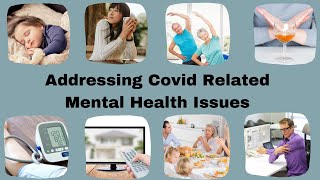
Dr. Dawn-Elise Snipes discusses pandemic mental health, citing a study showing over half of people report sleep problems, appetite changes, or increased substance use. She recommends sleep hygiene, daily sunlight, limiting news exposure, exercise, and focusing on controllable actions like handwashing and masks.
Questions this video answers
36% sleep problems; 32% difficulty with appetite; 18% difficulty with temper control (and headaches/stomach aches); 12% increased alcohol or drug use or worsening of current conditions; >52% reporting any of the above.
The first Saturday of every month.
She stated depression diagnoses are up almost 350% (as reported during the talk).
Chapters
You. Hey there everybody. Welcome to today's presentation. This is our monthly live interactive chat. So I really encourage you, you know, if you're here and you're awake and all that kind of stuff, please feel free to reach out and, you know, text with me, send me some of your questions. What I really want to talk about today is addressing Covid related mental health issues. And y. Like you, I am tired of hearing about COVID but unfortunately, studies are coming out and there was one. Let me see if I can pull it up real quick. Yes, this one came out yesterday that indicated that 36% of people are having sleep problems, 32% are having difficulty with their appetite, 18% are having difficulty with temper control, headaches and stomach aches, 12% have increased alcohol or drug use and or a worsening of current conditions. And you know, 50% or actually more than 52% say that they're experiencing all of the above or any of the above. That is really troubling for me. And what I want you to recognize is that there are steps we can take. We can't make Covid go away, but there are steps we can take to start addressing some of these things. Because what I've seen in my colleagues, in my patients, as well as just in my friends and family is that we are engaging in lifestyle factors that are working against us in terms of. In terms of our mental health. So what does that mean? And I'm going to take this little study out of the way. When we are not getting enough sleep, when we're not getting adequate sleep, that stresses our body, it triggers that HPA axis and causes a cascade of all kinds of effects, not the least of which are worsening of autoimmune disorders potentially, as well as increases in depression, anxiety and foggy headedness. When you sleep, your brain is able to clear out something called adenosine, which is what contributes to you being sleepy, but it also contributes to that foggy headed sensation, difficulty concentrating. Sleep is important, but you can't just do whatever. Unfortunately, like, you know, maybe you could when you were a kid and expect to lay down and get good quality sleep every night. It is really important to pay attention to sleep hygiene. And on the YouTube channel, there are several videos on sleep hygiene. But just to kind of hit the highlights, sleep is controlled in part by our circadian rhythms. It is important to try to go to sleep about the same time every night. Try not to stay up until 3am Binging on Netflix or playing video games or whatever. Try to turn off that blue light on your mobile devices as well as your television and, and other things. About two hours before bed and dim your light. So you are telling your brain that, hey, it's time to start getting ready to go to sleep. That will help trigger your brain to start creating melatonin and getting sleepy. It is also vitally important. Now, a lot of people do things like that already, but what they miss and what I've seen so much, and it just, you know, it's like dragging fingernails down a blackboard to me is they're staying inside in the dark all day long or they're staying inside and having the blinds drawn. And the brain is not getting the message that, hey, we're awake. It's time to secrete all those awake chemicals. So when they get to bedtime, their brain is not really sure, you know, if it's time to go to sleep because there's no. Doesn't seem to be any change or much change in light levels. Your brain really needs that sort of shock of daylight. Open the blinds. You know, please. If nothing else, if you're not leaving your house, open the blinds. It's going to help. Excuse me. Set your circadian rhythms. If you can get outside a little bit every day, even if it's just walking out on your porch for 15 minutes, you know, get outside each day a little bit and, you know, try to make sure that you are getting enough sunlight. One another thing that we're seeing a lot of right now is vitamin D deficiencies, because guess what? People aren't going outside. They are staying holed up in their houses. Normally, in order to get enough vitamin D, we need, you know, 10 to 15 minutes of daylight every day. Well, guess what? Most people were getting that when they were going to their cars to go to work. They were going, you know, walking from their car to work, walking from their car to the store. Well, we're not doing that anymore. So we're not getting that incidental sunlight that we used to get that used to help us keep our vitamin D levels up. Now, I'm not saying start taking a bunch of vitamin D supplements. That's generally not a good idea unless your doctor recommends it. But it is important. If you're starting to feel sluggish, if you're starting to feel depressed to get your vitamin D levels tested, or at the very least, you know, try to get outside for 10 minutes a day. It's not that hard. And you don't have to do it during the high sunshine hours when it's, you know, the, the risk of skin cancer is higher in the morning. 8:00am, get outside 10 minutes, that's, you know, it'll make a big difference, trust me. So sleeping is important. I really, really. If you're not going to do anything else, look at the video on sleep hygiene because it can make a world of difference in your attitude, your stress levels, your energy, your overall apathy. The next thing I'm just going to kind of jump around here. Kind of going along with sleep is doing things to keep our blood pressure in control, which means, you know, reducing some of those things like alcohol and sodium that can increase blood pressure. But also turn off the news. Please turn it off. Nothing is going to change that much between 7am today and 7am tomorrow. If you feel like you need to get your daily dose of news, I get it, you know, I do. But set some parameters on it because our 247 news, all they do now is say the same thing over and over and over again. And unfortunately right now you can't put on the news for the most part and hear anything positive because positive isn't getting ratings. So, you know, I'm really suggesting to a lot of people, limit your exposure. And when I say news, it's not just, you know, the TV news. When I go to, you know, online, when I go to a search engine, a lot of times they are serving me information. And a lot of that information is, you know, stuff that can make me feel powerless, helpless, hopeless, overwhelmed. You know, all of those dysphoric feelings. It's really important to pay attention. Maybe just unplug from the Internet, your social media, mainstream media, all of it, except for if you feel you've got to maybe one hour or two a day. You know, I know some people just, they feel like they're, you know, missing something. There's a lot of FOMO if you're not online. But really think about it, if you watch the news all day long, you know, pay attention to how much new information you get after that initial 30 minute bout the news. And constantly hearing about stuff that we have no control over is contributing to people's feelings of hopelessness and helplessness. What does that mean? That means our HPA axis, our threat response system is going full bore. It's going haywire because we feel a threat when we feel hopeless and helpless. A lot of times we want to fight or flee. And guess what? We see that. We see increased domestic violence, we see increased irritability, we see increases in frustration and people acting out in grocery stores and you know, other stores when they're told to put a mask on. They are feeling so disempowered that they are kind of at that breaking point. The next thing you know, I'm just kind of going to jump up here. There are some things that we have no control over right now, and. And that sucks. You know, I am one of those people. I'm a control freak. I will admit it. And this has been a really challenging time for me. But it's important to embrace the dialectics. Focus on the things that you do have control over. Right now. If you don't want to wear a mask, okay, well, you don't have to. You have that choice. It may mean you can't go into restaurants or, you know, into certain stores, but you have that choice. And focusing and remembering the fact that you do have options. If you don't want to wear a mask, well, then you may have to order your groceries to be delivered. But recognizing that, yes, there are some things that you have no control over right now, and stomping your foot and throwing a hissy fit about it is not going to change it. It's just going to exhaust your energy. So focusing on what can I control as far as staying Covid free? You know, I can wash my hands, I can wear a mask, I can social distance, I can stay healthy and do things to keep my immune system healthy. So if I do get exposed to the flu or anything else, I'm not going to get sick. All of those things are possible, you know, what else can you control? Make a list of that today. Identify the things in your life that you know, maybe the things in your life that are making you unhappy or making you feel powerless right now. And for each one of those things, identify what parts of that you have control or what part options you have. Because there are always options. You may not like them, but there's always options. The next thing is to exercise. Exercise releases serotonin. It releases endorphins. You don't have to do a whole bunch of stuff, but just increasing your breathing is really important. To increase oxygenation, it'll increase your energy levels, but it also increases some of those happy rest and digest neurochemicals. You can exercise. It can be yoga, tai chi, walking, running, calisthenics, cleaning the house. For that matter, whatever it is that makes you happy that gets you breathing a little harder is probably going to be beneficial. Say no to alcohol. It's really important to recognize that alcohol not only increases your. Increases your blood pressure, but alcohol also has a negative effect on the Immune system. So when you're drinking, you know, when you reduce that. When you reduce your immune system, you are making yourself more at risk to things like the flu and Covid and other things that are out there. So it's really important to. To recognize what you can do. And as I've said multiple times in this presentation, you know, Covid is something that we're dealing with right now. So, no, no, at no time, Asiatic God, did I ever say that Covid was not a threat. What I said was, you need to focus on which parts of it you can control and which parts are out of your control. It's in existence. I can't make the virus go away, but I can protect myself. I can do things to protect my family. I can choose what behaviors that I find acceptable. And like I was saying, if I, for some reason, am adamantly opposed to masks, and I know some people are, well, okay, if my choice is to not wear a mask, then that also means my choice is to not go places where you can't go without a mask. And that's what people are having to decide for themselves right now. Would they rather not go to restaurants or put on a mask? They have choices. Eating is really important, but too many people are eating for stress, for boredom, or just because it's there and it looks good and there's not a whole lot of other pleasurable things right now. Focus on your eating. Be mindful with your eating, and make sure that you are sitting down. You know, some of the things that I work with my clients on is don't eat out of a bag. Don't eat while you're walking through the house or eating, eating television, watching television. Sit down at the table and be mindful while you're eating. If you're going to eat, you know, put it on a plate, sit at the table, Be aware. It doesn't mean that you're necessarily always going to be eating for hunger. You know, I can tell you I will sit at the table and sometimes eat just because it looks good, you know, that piece of cake or whatever. You know, I am not a perfect eater, but it is important to be more mindful of what we're eating and when we're eating. When we work, when we leave and we go to school or we leave and we go to work, we are away from the kitchen. So there's at least eight, ten hours a day where we don't have ready access most of the time to food. A lot of people, when they started lockdown with COVID and When they started working from home, all of a sudden food is there 24, 7, 365, and they don't recognize how much they're grazing throughout the day because, you know, the situation has changed. Sitting at the table, putting it on a plate, being mindful, and clean off the countertops. They found that people tend to snack more if food is out and visible. So put it in the cabinets, put it in the refrigerator. And finally, ergonomics pain is causing a lot of people to have difficulty sleeping and to be irritable and to not have energy to work out because our home offices are not ergonomically sound. And we're spending a lot more time on the couch, you know, maybe with your laptop on your. On your lap and those sorts of things. And that encourages us to have really poor posture. Poor posture contributes to pain. Pain contributes to irritability, increased HPA axis, increased cortisol, and decreased quality sleep. Pay attention to your ergonomics now. One of the only times that I sit in this chair is when I'm doing these presentations. Most of the time, I am sitting on a great big exercise ball because that does help you or force you to maintain a little bit more proper in the. In the way of proper posture. I stretch periodically. My fitness tracker tells me every hour that I'm supposed to move, and I don't move enough to clear it a lot of times. But it does remind me to check my posture and if I have, you know, gotten down to this slumpy thing to sit up, pull my. Pull my shoulders back. And like the dude in the. In the picture is showing you to stretch. It is important to stretch, not only stretch your arms, but also stretch your chest and stretch your neck from side to side. Now, the vertebra in your neck are very small, so it is recommended that you do not put your neck all the way back because that puts a lot of strain on those vertebra. That's what I've always been taught. You know, ask your doctor if you feel like you need to do full head circles. That. That's up to you. But it is definitely helpful to stretch. Roll your shoulders a little bit, get that blood moving, even. Oh, my gosh, breathe. When I'm working on my. On my computer, I'm not thinking about deep breathing. I'm not thinking about belly breathing. So I tend to be breathing more shallowly. Oxygen helps wake you up, and it actually does help improve your mood. So what questions? You know that there, there's a lot of stuff on the YouTube channel. There are A lot of shorter videos Even on the YouTube channel about dealing with stress, dealing with COVID related stress, healthy eating and sleep hygiene. So, you know, you can look at some of those videos. But what questions do you have right now that I can answer about things that you might be able to do to be happier during this really stressful time? It's stressful for everybody. I haven't talked to anybody yet who has said, oh yeah, this, I'm having a, I'm having a ball right now. You know, youth are feeling it, adults are feeling it, elders are feeling it. You know, it doesn't matter who you are, people are stressed the heck out right now. And it's really important to me to encourage people to be mindful. And in the morning when you get up, you know, do a check in on yourself and think, what is it that I can do today to make it a good day? Instead of oh gosh, what is, you know, what's going to happen or I'm stuck here or this, that or the other. Just start your day out by asking yourself, what is it that I can do today to make it a good day? All right, if you don't have any questions then I am going to go ahead and log off. But thank you for tuning in today. And you know, as always, the first Saturday of every month I do this, I'm here. I am, you know, eager to, to chat with you, answer any questions that I can. If there's any, if there are any studies that come out in the news about mental health related stuff that you have questions about, you know, please share those with me. I am more than happy to, you know, go into research. Y' all know I love research. One other thing, you know, before I sign off, let me go back to this. Always remember, you can just Google pubmed and the rest of it will come up because it's a really long URL. But you can always find research and information from peer reviewed journals on PubMed and you will find information you know from all ends of the spectrum. Most of the time you'll find conflicting information, but it will give you stuff if you want to say it straight from the horse's mouth about anything. For example, Covid. Obviously nothing came out about COVID until 2020, but you can do free full text and you can see anything you want to learn about COVID If you want to learn about COVID and depression, prevalence of depression and its factors among female adolescents in China, you know, you can narrow it with your own search terms. I don't know what you want to know about, but you can find a lot of information. This one talks about mental health responses during COVID in Australia. A lot of times you get everything you need from the abstract. You can even jump down to where it says results so you don't have to read through, you know, exactly what they did and how. But if you want some information that hasn't been, you know, filtered and cherry picked, this is one of those places that you can go, Max, I am so sorry to hear about that. And I, unfortunately, I'm not surprised that so many people have died from suicide right now. Suicide is unfortunately a. Effect. I don't want to say a side effect because that minimizes it. It is an effect of everything that's been going on and people's sense of hopelessness and helplessness and, and that's one of the reasons I chose to talk about this and, and addressing mental health issues related to Covid because, gosh, I mean, suicides are up dramatically. Mental depression diagnosis diagnoses are up almost 350%. The prescriptions for antidepressants have skyrocketed over the past three months. Depression can be related to people's financial situation. I mean, if you're having difficulty making ends meet, that is extremely stressful and you can feel extremely powerless. For some people, it's related to being stuck, trapped in a home environment, you know, in lockdown, where with people that they don't get along with or with a bunch of other people who are also stressed out. You know, there's a lot of reasons for clinical depression, significant depression right now. And if any of you are feeling, you know, like you've got clinical depression, like it is really significantly impacting your life, I strongly suggest, you know, reaching out to your local emergency room if it's a crisis, or your physician as soon as possible because you don't have to feel quite that bad. Along with that is going to be trying to figure out ways to help yourself feel more empowered and, and, and address, in order to address some of that powerlessness. And sometimes there are no answers. But if, obviously, if you are feeling suicidal, please right now, reach out to one of the suicide hotlines or call 91 1. All right, everybody, I will see you next month.










