Live Interactive Webinar
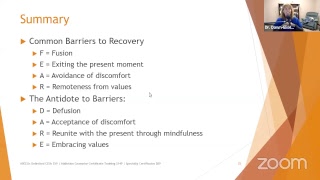
Dr. Dawn-Elise Snipes explains how Acceptance and Commitment Therapy helps people with trauma and PTSD by increasing psychological flexibility instead of trying to eliminate painful thoughts. The six core processes include values, mindfulness, willingness, and committed action, with practical exercises like the card sort and diffusion work to reconnect clients with meaningful activity.
Chapters
I'd like to welcome everybody to today's presentation on ACT or Acceptance Commitment Therapy for Trauma. So if you have a foundation of acceptance and commitment therapy, this class will be easy peasy. If you, you don't want to jump in and just assume that by looking at this presentation you have the tools to actually implement acceptance and Commitment Therapy for trauma. What I'm really hoping is to provide a couple of tools that give you some creative ways to think about trauma. If you have the ACT background, then provide a framework that you can start thinking about using ACT for Trauma. This is one of those classes that was requested and I, in creating the presentation, realized I clearly did not give it enough time. This probably should be like a three part series, but it's not. So we're going to hit the highlights today. At the beginning, before class started, I showed you a couple of different manuals and protocols that will expand on this if you want to learn more. So we're going to briefly define the components of ACT or act and I'm going to call it ACT from here on out. Explore how ACT differs from other approaches to trauma treatment. And I found this really informative to really put it into perspective and we'll learn some techniques that can help people live a rich and meaningful life. Now, many of these techniques can be used in addition to other protocols. They can be used as standalone techniques. That doesn't mean that you're employing the ACT philosophy. It just means you happen to be using an ACT technique. Just like if you're using distress tolerance skills, that's more associated with a DBT technique. It doesn't necessarily meaning mean you're doing dbt. So why Acceptance and Commitment Therapy? One of the primary activities of this protocol is to begin to facilitate in vivo exposure to avoided activities to increase psychological flexibility in the presence of painful and anxious internal experiences so that engagement is in, engagement in valued activities can be reestablished. So people are living in the and and we're going to talk about living in the and a lot. So what does that mean? That's, that's kind of the quote that we're going to be going from, is to help people start being able to go out there and expose themselves to those situations that may be a little bit anxiety provoking so that they can have a rich and meaningful life. So they're not imprisoned by their fears, so they're not constricted in what they do and where they go by their fears. So they're living in the and, and we're going to talk about this More. But it basically means they're saying, I'm. Instead of saying, I'm scared, but I can't do this, or I'm scared, so I can't do this. They're starting to say, I'm scared, and. And I can still do this. From an act perspective, the goal of exposure is not to experience necessarily anxiety reduction. It's to be with that emotion and go, okay, this is here, however, and I can live a rich and meaningful life anyway. Think about somebody who has a chronic pain issue. They may not be able to get that chronic pain to go away. Does that mean they can't have a rich and meaningful life? No, it means that they've got that chronic pain and they're going to figure out how to live in their mind, a rich and meaningful life with that new reality of having that pain with them. All approaches offer the opportunity for people to develop a more helpful relationship with thoughts, feelings, sensations, and behaviors related to trauma. So we're not knocking any approach. Different approaches will work for different clients, will work for different therapists. So that's cool. But let's talk about some of the main differences that we're looking at. Cognitive behavioral therapy, the one we're usually most familiar with, helps us help clients challenge thoughts to impact their feelings and behaviors. So we talk about evidence for and against their thought. We talk about whether they're using factual or emotional reasoning. We talk about whether they're confusing high probability with low probability. There's a lot of other things that we talk about to help them address those unhelpful or irrational thoughts. Exposure therapy, desensitization, stress inoculation. I'm just kind of going to glump it together. Helps people decondition stimuli, so when they're exposed to it, it doesn't bring out that fear reaction as much. The classic exposure, when you think of spiders, you know, people who are afraid of spiders now, you can have full exposure therapy where they just go in and they're surrounded by spiders crawling on the wall. But most people use more of a systematic desensitization approach, where they learn to think about a spider and develop coping skills to calm their physiological reactions. And then they move on to being in a room with a spider in a terrarium that's perfectly closed and develop the skills so they can be in the presence of that spider in a closed terrarium and not have an anxiety reaction. You see how this works? Same thing with PTSD when we're talking about symptoms of anxiety. Maybe somebody has anxiety about going into a crowded Place for somebody who has ptsd, for example, going to the fair. Going to the fair can be stressful for a lot of people because there's lots of noises and screaming and, you know, happy screaming, hopefully, but screaming and flashing lights and it's dark a lot of times. So it can be really terrifying to somebody with a trauma history if that is something that is important to them and they want to experience that with their kids, they want to be able to go to the fair with their kids. One technique would be desensitization. You could also use cognitive behavioral. You can use any of these techniques. They just have a different method of helping people cope with their reactions. Psychodynamic approaches make the unconscious material from trauma conscious so it can be dealt with. It gets people thinking about, okay, this stresses me out. Why is it stressing me out? Where is this reaction coming from? That whenever I hear a car backfire, I jump three feet out of my chair and act. Finally, it doesn't try to change thoughts like cognitive, behavioral. It doesn't try to change feelings or physiological reactions like exposure therapy. It just encourages people to alter the function of those things. So instead of those feelings, quote, making them go, do something, run away, escape, avoid their relationship with those feelings is one of, okay, that's going to make me be a little bit more conscious of what's going on, more mindful of how I'm feeling, and I'm going to continue to do what I wanted to do, which is where the life affirming choices comes in. So I know there's a lot of text here and I'm sorry, but I thought all of this was important. I worked really hard to try to pare it down, believe it or not. So goals of ACT for trauma. The first one is recognizing that trying to escape from emotional pain will never work. In act we call this creative hopelessness. Because when we tell somebody, well, that's never going to work, you're not going to escape from it, guess what? They feel a little hopeless and helpless. But we call this creative hopelessness because we say, all right, now what do you do with that? If you can't escape from it, what do you do with that? How can you make room for this experience that you have or you have had, Acknowledge your negative internal feelings, you know, the anxiety or whatever, and pursue a meaningful life despite its presence. You know, how can you do this? Have some fear, have some whatever, and continue to move forward towards what's important to you. And this is very meta concept, if you will, for a lot of clients So I don't usually when I approach them, if I'm using an act approach, I don't go too much into the details of the meta concepts. We talk about the practical, which we'll get to in a minute. But this is more for you understanding that problems come not from the emotional pain itself, but from attempts to control and avoid it. We all have pain. You stub your toe, it hurts. Now what you do about it afterwards is what could cause suffering or allow you to move on. You know, I know I've stubbed my toe before and just continue to go on. When I'm out running and I get a blister, you know, I'm too stubborn to stop running. So I keep running despite the blister. And it usually makes it a lot worse. But that's my choice of how to deal with that pain. I'm not trying to necessarily control it, I'm just being with it and going, well, I guess I got a blister. Besides potentially making the pain worse by trying to control it, people may spend so much time and energy trying to avoid it that they have no energy left for pursuing positive things in life. And think about our clients that we work with with trauma, whether it's combat trauma or sexual trauma or any kind of trauma that they've experienced, we can go to the adverse childhood. If they are running and trying to escape from the fear and the trauma of abandonment issues, then that is often their focus in life. They're trying to run from this boogeyman, if you will. So they're constantly looking over their shoulder instead of looking forward toward what they could be doing for a rich and meaningful life. We want to help clients view themselves as separate from their thoughts and feelings. Although the thoughts may be true, they're only thoughts and not a reflection of what is really actually true at that point in time. So you may feel scared. You know, when thoughts feel true, we need to check them and say, is this actually what's going on right now? If you have a client who's struggling with history of abandonment issues, abandonment, trauma, and they continue to recapitulate that trauma in their relationships, we want to help them start looking at those patterns. So when they start feeling like they're going to be abandoned, they start thinking that they're going to be abandoned. Those thoughts feel very real at that point in time. And this is kind of the psycho psychodynamic thing, but we want to help them see that in this moment, if they recognize what's going on, that that's not Necessarily the truth about what's happening in this situation right now. So we help them learn to take a step back from their thoughts and not buy into them as truth. Take a step back, we're going to talk about the observing self later, stepping back and acting like a fly on the wall or a completely objective scientific observer. They're going to step back like they're watching it on a television screen. So instead of being immersed in it, if you were watching it on tv, what would you see is going on right now in this moment? Not, you know, six months ago in that last relationship, but what is going on right now in this moment? When people start viewing themselves as separate from their thoughts and feelings, they can also start differentiating or breaking away from emotional reasoning. Where they say, I feel, therefore it must be. I feel terrified that if I go to sleep I am going to be vulnerable, therefore I must be in a dangerous place. I must be vulnerable. So we can help them start moving towards that more fact based reasoning, sometimes. Stopping the struggle with thoughts and feelings. We want to help them quit playing in that quicksand, if you will, and practice being open and willing to experience thoughts and feelings for what they are. Emotions are like quicksand. You step into it and if you start to struggle, you're going to continue to sink deeper and deeper and be more immersed and more paralyzed by that quicksand, which is kind of one of the problems. One of the best ways to get out of quicksand is evidently to relax and try to float to the top and then roll out. Who knew? So we want to help people stop the struggle and we want to encourage them. And this is my favorite part, encourage them to commit to action towards a rich and meaningful life, whatever that means for them. Recognizing that avoiding emotional pain requires a huge amount of energy for people with PTSD because it's there. So avoiding it, it's like trying to walk through a crowded room and you're a celebrity and trying not to talk to anybody or get seen. You're just like running through and pushing people away. It's exhausting. It can consume people's lives, keeping them from spending much time or energy on living a meaningful and rewarding life. So the six core processes of act and we're getting ready to get into the techniques pretty soon. The more fun stuff, less theoretical values. It's important that clients clarify what is important to them in order for them to have a rich and meaningful life. What is important to them? That's one of the first things that I do when I Work with people. Mindfulness. Encourage them to bring their awareness to the here and now with openness. And if they feel scared, acknowledge. I feel scared. It doesn't have to control me. Really cool activity to deal with that in a minute. Willingness. People need to be willing to make room for feelings, sensations and urges. And this is not in any particular order here, because willingness usually comes before anything else, because people have to be willing to make room for these feelings, be willing to experience these feelings in order to deal with them. So even coming into counseling shows a level of willingness. Diffusion. And yes, I realize this is not the traditional American spelling of diffusion, but diffusion means recognizing that thoughts, images and memories are what they are. They're not necessarily the actual truth. They may be a representative of something from the past, but recognizing that we are separate from them. Committed action, taking action and making goals that are in line with your values, no matter how many times you might get off track or struggle to succeed. So committed action, it doesn't mean perfection, it means progress. Some days people are going to have more difficulty dealing with their PTSD symptoms, and they will feel like they are going backwards. And that is ok. If that is where they are, that's where they are. And resting with that, instead of judging that feeling, resting with that feeling and saying, okay, you know, let me take a deep breath and figure out what I need to do to start moving forward. And the observing self, remembering that there is a you across time. There's a you that experienced that trauma in the past, there's a you that experienced whatever you experienced yesterday, and there's a you that is experiencing this moment right now. So the first thing we want to do is help people describe what they value and what they want in a rich and meaningful life. And we'll get to diffusion in a few minutes. When people come in, you can say something like, I hear you saying that in your attempts to get rid of all this pain, you've started to feel numb and distant from your family. Is your family something that's important to you? Obviously, if they haven't already said that, because that would be redundant. So we want to help people identify however you do it. Now, I don't typically do it this way. I typically talk with people about what's important to them, and then we start making a list of, you know, the things that they've identified. It's very common for people to be overwhelmed with their PTSD symptoms and some of the things that matter most to them because of this being entangled with PTSD symptoms, some of the things that matter most start drifting away. You start forgetting about them or not having time for them, or you just can't do them, and you start feeling more and more distant and detached. Helping people live out their values is a big part of what acceptance and commitment therapy is about, and it can be used in conjunction with other approaches. But it Acceptance and commitment therapy is about living in the and recognizing that just because I'm scared about this, just because I have some anxiety, doesn't mean I can't do it. I can feel the anxiety and do it anyway. Goals. The difference between values and goals can be a little confusing. And this can get even more confusing if you're used to writing treatment plans. So don't confuse the two. But here we are talking about goals as things that can be achieved in specific time frames. Whereas values are ongoing ideals and shape what goals you set for yourself. For example, if I value my health, then I may set the goal of quitting smoking, running a 5K, or eating a certain number of fruits and vegetables. So I value my health. That is that overarching, not smart, specific, measurable, achievable, realistic and time limited thing. It's just an overarching direction. I want to go, but what's my goal? So we start talking about that. Going on vacation. You know, maybe I want to go on vacation for the holidays. Well, that's great if that's something I value. But that's not a goal. My goal would be to identify a place that I'm going so I have a destination. Values can change over time. For instance, someone who valued achievement above all else and had a very successful career may begin to value service and philanthropy in retirement. I've seen this happen so many times. So encouraging people to recognize that they are not stuck with their values that they had 20 years ago. It's okay for values to change because they generally do as we get older. So card sort and eliminate. This is one of those things to help people because they start thinking about all these values that they have and it can get overwhelming then because then they're like, well, I have so many goals and I've gotten so far behind and yada yada yada. Okay, let's take a break and let's pare it down a little bit so people, things and experiences is what we're going to talk about. So everybody gets a stack of index cards or post it notes or something. You can also do this on a check sheet. But I like the card method myself. The overall goal is to begin creating a Greater emotional connection to the values that people select. So have them list all the things that are important to them and then have them pare it down to the top 10. And, you know, that'll take a while. And they're looking at the top 10. And you can even have them talk about why they chose those 10. You'll be in group for a while. If you do that, then you have them pare it down again to five. And I usually stop at five, because five is a manageable number. Once you have them pare it down from however many to 10 to 5, then have them talk about, why did you select this value? Why is that particular thing important to you, whether it's good relationships with their family or what have you. What would it be like if there were no barriers to living out this value? So if you were able to just have this awesome relationship with your family, what would that be like? And I want them to sit in that for a minute. I want them to experience that in their mind, to go, oh, my gosh, that would be so amazing. And we would do whatever we would do. This is what it would look like. This helps them start getting motivation. They start getting that emotional connection. The next step, once we've identified their values and things they want. These are the overarching concepts. You know, we haven't broken them down into goals. So maybe good health, a secure place to live, good relationships with their family, and, well, we'll stop with those three. Those are the three values they have. So they can start seeing this out in the distance. They see this aura of a rich and meaningful life. It's not clearly defined yet what that means to them, but they see this aura out there and they're like, that's where I want to go. Okay, that's great. So that's what we're working towards. And I want you to remember what that would feel like. Principles of pain. Everybody suffers, everybody has pain. So we want to help people recognize that this is going to give them new tools to relate to their PTSD pain so it doesn't control their lives and they're able to fully engage with what matters in their life. The goal isn't to get rid of the pain completely, but to help people relate to it in a new way, to recognize it and go, okay, this is a painful day, or recognize that it's feeling a little bit better that day. Two types of pain. The pain of presence, also called clean pain or inevitable pain. This is the pain that happens in response to losses, anxiety, traumatic memories, and just different specific problems. This is your brain's initial response, like we've talked about that HPA axis and the fight or flight response. This is your brain's initial response to there is a threat or there is a problem here, and it's sending off those warning bells. That is clean pain. And you can just like smoke alarm, you know, that would be kind of your body's clean pain or your body's smoke alarm saying there might be a problem or maybe even there is a problem, and then you decide what you do about it. Dirty pain is defined as the happiness people miss out on because they're focused on and struggling with the pain of presence. So they're struggling with this memory that they're having telling themselves they shouldn't have it or it shouldn't hurt anymore. They're trying to make it go away and it keeps coming back, damn it. And it's just so frustrating because they want to be able to sleep. So they're struggling with it and they're fighting with it. This can lead to experiential avoidance. They're like, okay, well if I'm not reminded of it, then maybe I won't have that feeling anymore. Well, then you start avoiding more and more things and people become more and more constricted and imprisoned. One example I use to explain the difference between clean pain and dirty pain is when my kids clean their room, they don't want to clean their room. That causes them a little tiny bit of distress. So a lot of times, at least when they were younger, they would not do it well. And they would just try to shove stuff under the bed and shove stuff in the closet and hope that mom wouldn't notice they were trying to make it disappear, make the mess disappear without doing what they needed to do. And I'd come in and I'd be like, yeah, and I check under the bed and in the closet and there's all the stuff and I pull it back out again, put it in a pile in the middle of the room. So instead of being able to go out at 2 o' clock and play with their friends, they didn't get to go out until 3 o' clock or 3:30 to play with their friends because not only did they, quote, clean their room once, but then, you know, since they didn't do it right, they lost a lot of time doing stuff they wanted to because they had to do it again. So they were struggling with it and that mess just kept coming back. Experiential avoidance is what a lot of people do and we just talked about that a little bit. And is a normal human tendency to. Because we don't want to put ourselves in pain, we don't go, oh, yeah, let's see how much we can make this hurt. We don't want to. However, experiential avoidance can be problematic because it doesn't get rid of the unwanted thought or experience. So, you know, if I say, well, if I watch shows where I see, you know, sexual assault, you know, like Law and Order, SVU or something, it triggers anxious memories for me. So I'm not going to watch that. Okay, well, I'm not watching that now. But then I have this other show that comes on here or this other commercial that comes on here or whatever that also depicts something that's related to sexual trauma that triggers me. So I'm starting to have to shut more and more stuff off. So it's not getting rid of the unwanted thought. It's just preventing that one trigger. And that doesn't really solve the problem. Failed attempts to avoid painful internal experiences can result in an increased sense of failure and perceived brokenness. If it feels like everywhere you look you're being triggered, then people can feel helpless and hopeless and powerless. Efforts to remove pain take tremendous amounts of energy that interfere with pursuing valued activities and relationships. If you're constantly having to check and go, okay, well, I can go to this event as long as these six conditions are met, well, that makes it hard to live that rich and meaningful life if you're constantly checking for those triggers and making sure that you won't be exposed. As valued activities decrease, people's daily life and sense of identity become increasingly defined by their trauma. This is why we don't want people to necessarily avoid their trauma. When we talk about PTSD pain, we're referring not to the specific situation, not to that clean pain, you know, that happened, and that's the body's response to it. But experiences of having a memory or image of a past painful experience and sensations or urges to do something that has caused problems in the past. So everything that happens after the trauma that we're struggling with or we're fighting with ptsd, pain can come from avoiding places, angry outbursts. You know, there's a lot of things that can happen when we are trying to avoid pain, but those. You know, that pain can be memories that people have. It can be images that they see in on tv. TV is a big one. It can be something they see on the Internet. It can be something they hear on the news. You know, I know sometimes I'll watch the news in the morning. And it's really depressing around here because there's almost always a shooting somewhere. And I'm like, that's really not a happy place for me to be mentally, first thing in the morning. So there are a lot of different things that can trigger. And we're not just talking about visual, we're talking about sounds, we're talking about smells, we're talking about times of day, different places. There are so many different things that can trigger memories and those feelings, and that's that pain. Every time people have a unpleasant reaction to something as a result of the PTSD experience, we can call that PTSD pain. So when you have people list the sources of their PTSD pain, you know, this can be pretty lengthy list. So you want to limit them to 5, 10 minutes. Take 5 minutes and jot down the top sources of your PTSD pain at first, because I don't want them getting overwhelmed. I want, but I do want them to see how the pain is influencing or the pain is present in their lives. And then have people list the ways they've tried to deal with their pain. And this is one of those that you can do on a checklist. If you've got a group that's a little shyer, so they can check off for themselves which of the top 30 ways of dealing with PTSD pain, they do, and that's fine. Or you can do it on a whiteboard if you've got a more engaged group, a more willing group to participate. And it can be anything. Distraction, you know, distraction is a big one. You know, one of those meta concepts. But what do you do to distract yourself? Do you stay busy? Do you go shopping? Do you drink? Do you watch tv? Do you, you know, view porn? What is it that you do? Do you withdraw or give up? Some people will just turn off their phone, they'll disconnect and withdraw into. I have some friends that withdraw into video game world. They just, that is where they're going to be. And they are in their bubble thinking about it, ruminating, dwelling on, fantasizing, blaming, trying to replay it, any of those things. And that usually doesn't get rid of the pain. But sometimes people think if they ruminate on it, they can come up with a different outcome or something about it will make them feel better. Avoidance of these situations, not going to particular places. Now, hyper vigilant behaviors can actually be considered partly avoidance because if you're hyper vigilant, then guess what? You're more aware of all of these things, so you can avoid them a whole lot easier. If you're not hyper vigilant, then something can trigger your ptsd pain because you weren't paying attention. So hypervigilance is a way that people try to deal with their ptsd pain by avoiding having it triggered. So what's the main goal of these behaviors after you go through this and check in with people as you're doing it? If they start getting overwhelmed, talk about the main goal of these behaviors is to avoid the pain and anxiety. Well, cool. I mean, we don't normally want to hurt, so that makes perfect sense. If people want to survive, if people want to thrive, they try to do things with whatever tools they have to survive the moment. So they're doing the best they can with the tools they have at that point in time. And they may not know any other way to approach this ptsd pain. Most people don't. So they're doing the best they can. But that tells me they want to live. That tells me they want to have a rich and meaningful life. They just need some help figuring out how to deal with this roadblock. Have people list. And this one can get kind of heavy. Have people list what they miss out on or ways their strategies for coping with their ptsd pain have kept them from what's meaningful in their lives. So, for example, avoidance. Maybe they don't like being in crowds, so they just can't bring themselves to go to their kid's soccer game or their kid's basketball game or. I had one friend who was traumatized after a particularly bad car wreck he responded to. And he had a lot of difficulty immediately after driving, just even getting in the car, especially being on the interstate. So he would take circuitous routes from point A to point B to avoid the interstate in order to try to avoid that pain which caused him problems. And he wasn't able to go back to work until he. He was a cop. He wasn't able to go back to work until he could, you know, get from one place to the other, or at least not get back on the road. So starting to look at which ones cause problems and then go back to that list of values that we already created, those top five values, and go, which of these strategies that have used that you have used have kept you from moving towards or being involved with those things that are important in your life? So if your relationships with your family are important and your pts strategies keep you withdrawn and isolated, that's probably keeping you from having a rich and meaningful life in that area, looking at strategies that they've used, which ones are ineffective, and we all have ineffective strategies. We use it just, you know, sometimes you don't know what else to do at the moment. We want to validate difficult emotions that arise when looking at the pain of absence and reinforce willingness to have them. So when they start looking at all the things they've missed out on, all the things that they regret because they've been dealing with their PTSD pain, that's painful, and that can make them angry at themselves, that can make them angry at the world. Lots of feelings can come up. So we do want to validate these emotions and actually ask people before the group's over, what is it like for you to look at these things, to realize the stuff that you've missed out on, or however you want to put it, because you've been struggling so much to survive with this pain? So people can start seeing that it increases motivation because it helps them see how their strategies aren't working and it's keeping them from living the life they want. And if we've done a good job of inspiring hope at this point, then it can also help them say, okay, I really want to stay in this program because I want to break the cycle. I don't want to have that pain of absence anymore. I'd rather have that momentary, momentary memory, that momentary jog of pain, and be able to push through it or work with it as opposed to being held captive by it. So you can have people write down ways PTSD has impacted their life. And you can do this on a beach ball or a chart. If you do it on a beach ball, you can write down on different places on the ball, the world, the goodness of people, your children, your spouse, your higher power, the importance of money, what makes you happy, your effectiveness, your goodness, your usefulness, your lovability, and what it means when someone does something. And you can write that you want to get one of those big beach balls, because there's obviously a lot to write and pass it around. We've talked about this one before. Whenever people get it, they look at it and they go, okay, so I've got to answer the question, how is my PTSD impacted how I think about the world or how I think about the goodness of people? So since the ball is just being tossed around, people kind of get involved. You don't necessarily have to call on them and make them feel like they're being singled out, but it helps them start recognizing the impact that it's had on them. And and again, so they can start realizing where they don't want to be anymore. I love this metaphor, and it did come from that first protocol that I showed you. Joe the annoying Uncle. Imagine that you've decided to have a party and invite all the neighbors over. The sign says everybody's welcome, and this includes your annoying Uncle Joe. He's smelly, dirty, loud, rude, and just generally obnoxious. You could decide that even though you said everybody was welcome, in reality, Joe's really not. But as soon as you do that, your focus changes. You have to be at the front door, guarding the house and keeping Joe out. In the meantime at the party, life goes on, and you're spending all your time guarding the house, trying to make sure that Joe doesn't get in. Or you could welcome Joe to the party. You don't have to like him. You don't even have to like the way he makes you feel. But the result of not being willing to have him there will mean that you cannot be with your friends and family doing the things that you enjoy. The more unwilling you are for Joe to be there, the more time you spend trying to keep him out. The problem is that Joe, like your distressing thoughts and feelings, is really good at finding a way back in. He knows about the back door, and he knows how to get in through the cellar. So you're guarding the front door. But he could surprise you very quickly. This party can become less and less about doing what matters to you. Spending time with your friends and family, and more and more about fighting a losing battle and keeping Joe away. So encourage people, after talking about that, encourage them to try hard to imagine what it would be like to think, I don't want Joe here. But in the interest of making this party about what's important to me, I'm going to give up the fight against him and live my life in a way that matters to me, with Joe in plain sight. So I'm going to let him come over and I'm going to have fun anyway. The goal of this activity is to help people see that by choosing the stance of willingness, they can have a more meaningful life, that they don't have to get rid of the pain to have a rich and meaningful life. They can have an Uncle Joe in the room, have people talk about how PTSD is like Uncle Joe and this situation, and then you can have a discussion about, can people have pain and have what they want in life? And sometimes it's helpful to start out talking about physical pain. Can you have physical pain? Can you have a migraine and still have what you want in life. Can you have momentary pain, if you will, and still have what you want in life when you have not a traumatic event, but something that makes you unhappy for the moment, what would that look like? And then move on to the PTSD pain. Can you have this PTSD pain? Can you have Uncle Joe in your life still do the things that are really meaningful? We keep with the willingness thought right here and move on to talk about how willingness isn't just experiencing pain to experience it. It's being willing to have whatever pain or anxiety is present so that you can pursue what matters to you, like going to your kid's soccer game or driving to the park or for some people, going hunting. There are a lot of different activities that people may have cherished before their traumatic event that they're now not able to do. And, you know, in Tennessee, hunting is a big one. But guns are often involved in a lot of PTSD events that we talk with people about. So if that's important to them, you know, how could they experience, how could they pursue hunting again if that's something they wanted? Willingness is not about making life easier or avoiding pain. It's about choosing how that pain impacts your life. And I usually say that, and I let people sit with that for a few minutes. It's about choosing how that pain impacts your life. Does it take over and pull you away from what matters, or do you live a full life even in its presence? Encourage people. And this is where we start talking about living in the and to start focusing on the and and stop being stuck in the buts. And you can obviously make very funny little images if your group is not too sensitive to demonstrate the ands and the buts. Instead of saying, I want to stay at my kids eventually, but I'm scared, say, I want to stay at my kids event and I'm scared. The fear doesn't go away, but the fear doesn't limit your behavior. The fear doesn't say, okay, well, I can't, because when we. When we use the word but, it usually invalidates whatever came before it. So if I say, I want to stay at my kids event but I'm scared, that means, you know, there's a part of me that may want to stay, but I'm not going to do it because I'm scared. Encourage people to remember times that they've been in situations where they felt scared for their life, where they felt terrified and still moved forward because it was important to them. They didn't say I need to do this, but I'm too scared. Help them see how they've shown the ability to live in the and whether it's bungee jumping or a deployment for a military person or going out for their first solo tour of duty as a cop or whatever it is that they did, they're living in the in the and they've shown the ability to say, okay, this is scary as anything and I can do it. Ask group members for ways or other examples of when they were scared, but move forward anyway. Encourage them to think about when they did that. What was it like? How were they able to move forward anyway? How were they able to not just be paralyzed and how did they feel about themselves when they were able to do that? Now remember, part of the stress reaction is fighting, flee, freeze or forget, but fight, flee or freeze. So some people do freeze and that may need to be processed when we're going through this. Some people may flee as well, but generally almost everybody. I've never encountered anybody yet who doesn't have at least one example of when they've been scared of something or terrified to do something, but they or and they did it anyway. So the get off your butts activity and yes, there's only one T in it. Have people take a note card and write down on that note card something that they value, something that's important to them, that they are going to start working on in the upcoming week. Maybe it's going to their kids ball game. That's just an easy one to keep using. Okay, that's what they want to do. That's their valued activity. Have them flip it over and on the back write but and then all the things that they might say after that sentence. I want to go to my kids ball game but the noise causes me too much stress. I want to go to my kids ball game but there will be huge crowds there. You know, you can see where we're going with this. And then when they're finished, they go through and they cross out that but every single but that. They wrote and replace that but with and so it becomes I want to go to my kids ball game and it's going to be really noisy. I want to go to my kids ball game and there are going to be a lot of people there. So they start seeing how they can work towards the and now we move on to mindfulness. When people try to get rid of ptsd, pain and anxiety, they aren't acknowledging and experiencing the present moment. They're having their focus pulled to what might happen. You know, if it's this big crowd, then something bad might happen or it's pulling their thoughts back to the past. There's going to be a big crowd. And the last time I was in a big crowd, this bad thing happened. So PTSD typically keeps us from being in the moment. The goal of mindfulness is to become aware of your present environment, thoughts, feelings and emotions and physical sensations rather than thinking about what happened in the past or worrying about the future. This will help people get better at noticing positive experiences. They'll start noticing, you know what, I feel pretty okay with this. They'll be aware of what's going on with them. Sort of a systems check, if you will. Because if they're not aware of what's going on, their thoughts they're having, their feelings they're having, then they can't get distance from it or do something healthy with it. They're just, they're either going to suppress it or try to run from it, or it's there, but they may not know it's there. So mindfulness helps people become aware of what's going on and make a directed choice about what to do with. Also can help people learn to be non judgmental of their thoughts, leading to shoulding or emotional reasoning. So I shouldn't be scared because of the crowd? Well, that's how you feel right now. That's how you are. So let's accept how you're feeling in the moment. Five minute awareness. I love this activity. Pre awareness. I have people come in, you know, they're sitting down, they're getting ready for group or whatever, the pre awareness activity. I walk in and I go, okay, everybody disperse. So everybody's supposed to go throughout their places in the office that they can go where they can't see each other and they're not in the group room when they disperse, they write down as much as they can remember. So this is one of those things to help them see how mindful they were being. After five minutes, I have everybody come back in and we talk about awareness. Everybody goes into the room and starts looking around again. Five minutes. So this can be a long activity, but it's worthwhile in my opinion. They go back in the room and start looking around and going, you know what? When I was writing stuff down, I didn't even notice that there was a new light or whatever. A lot of times I'll put up unique things that day just to see if people even notice. Host awareness. So after they've had five minutes to really know that they're supposed to be paying attention and being aware of what's going on. I have them identify what they noticed and spend two or three minutes writing down. And then I have them group it by the five senses. I say, okay, now that you've had a chance to really look around the room and be present in the moment, what did everybody smell? What are the things people are smelling? What are the things people are seeing, hearing, what have you? And we discuss people's experiences with that. If people start saying they felt like they didn't do it right, then we observe that that's a label. They're judging themselves for what they think they did or didn't do. We validate that some people may not want to do this because it's really hard to sit still and just be mindful and aware of what's going on because that's when other thoughts start coming in. That monkey mind really jumps up. And we can validate any comments about awkwardness or trouble staying focused on what was going on. Survivors of trauma often cope in two different ways, both of which are counter to mindfulness dissociation or numbing, and hypervigilance. Now, I do want to point out that hyper vigilance is not the same as mindfulness. Hyper vigilance is being over aware of what's going on and having that stress response, having that HPA axis activated, waiting for something bad to happen. Mindfulness is just being aware and there's a significant difference. But asking people when they do these things, because most everybody in your room will have done one or both of them. When you are dissociating or being hyper vigilant, how does it affect your ability to engage in the important parts of your life? So if you go to your kid's ball game and it's really stressful and it's really noisy and you start to dissociate or become hyper vigilant, how does that affect your ability to pay attention to what your kid's doing on the court? Has hyper vigilance ever prevented you from enjoying good moments? And what do you think life might be like if you didn't do these things? And most people will talk about a great sense of relief and the ability to really enjoy life again, which they haven't done in months or years. The mindfulness scan. There are a lot of different mindfulness tools. Not every tool will work for every person. So presenting a lot of different mindfulness tools is really helpful. So in a mindfulness scan, people take a moment and scan themselves for their physical feelings and sensations, their emotions and emotional feelings and their thoughts. So what am I feeling feeling, what am I emotionally feeling and what am I thinking right now? That helps people get more in touch with what's going on in them. And that's that system check. Because then they can start saying, you know what? My heart's kind of beating a little fast. I must be stressed about something. Some of us don't even recognize when we're starting to have our blood pressure go up. So this increases a lot of self awareness. Biofeedback is great too. And this can be very difficult at first, but it's important for people to try different activities. Love this activity. Mindfulness. As you stroll down the road or through a garden, and I will tell you, I guess really briefly, I'm a gardener, and when I see weeds, my husband jokes because he says they mock me and I cannot. Sometimes I can choose to walk past them, but it really just. It catches my attention and I have to refocus myself. Even when we're walking around the office complex, if there are weeds that the landscapers haven't gotten, I have to fight myself a little bit not to start pulling the weeds as we're walking around, because they're just mocking me. So I can understand the pull that people have sometimes when their attention gets caught by something. A stroll down the road. So I walk people through this. Imagine you're walking down the road. You're in Chicago or wherever. You're just cruising. You notice there's a $20 bill on the ground. What do you do? Most people say, I'm going to pick it up. Okay, you notice there's a flower. What do you do? How does it make you feel? They may pick it, they may not. A lot of people say it makes them happy. Okay, cool. You continue to walk down the road. You see a puppy. What do you do? How does it make you feel? And then you can say a pile of trash, empty beer bottles, whatever it is. But you come to something that's unpleasant that they see. What do you do and how does it make you feel? The point is that some of the things that we see and experience and feel and think trigger happiness. And some trigger anger, disgust, pain. Other things we can choose which things we pick up and carry with us. Just like those weeds. When I'm out walking, I can choose to just notice that there's a weed there and go, oh, well, somebody missed something. Or I can let it bug me. I can choose what I do with that emotion. I can choose to experience the momentary distress or repulsion or whatever you want to call it and let it go, or I can get stuck in it. So you can choose what things you carry with you. Think of your painful thoughts, memories or experiences, like those empty beer bottles or that pile of trash. You don't have to pick them up and carry them with you. You can observe them, note your feeling about it and move on. So encouraging people to really think about this and have them think of a painful, trauma related thought, emotion or memory. What does it look like? How big is it? What color is it? How powerful is it? Do you have to pick it up? So a memory that they had and you know, or something that triggers a memory, do they have to do something about it? If you're talking with a survivor of sexual trauma and I'll stick with Law and Order svu, if they are walking through the living room and somebody's got Law and Order SVU on or Criminal Minds or something, and there's a particularly graphic scene, it's probably going to trigger a feeling that's okay, they can recognize it, they can note it, then they can move on. They don't have to start struggling with it. They can choose to leave that on the side of the road and not take it with them. So decision points. When people are experiencing distress, they can eat. They often, when they first start this process, they feel the distress, they judge themselves. They say, this sucks, I shouldn't have this, I hate having this. They start having unwillingness to feel that emotion. They want to make it go away. So then they try to do things to avoid it so they don't have to feel that anymore. They either leave where they're at, they start refusing to go to places that might trigger it. The consequences are they become more and more imprisoned in their own PTSD pain or they can notice what they're feeling, the anxiety, the stress, whatever they're feeling, they can be willing to sit with that feeling for a moment and go, you know what, this is unpleasant. And I'm going to continue doing what I had planned to do in the first place. So they make a committed choice towards that valued action which theoretically leads to enhanced happiness and quality of life. So encourage people in group, when we start talking about these decision points, imagine an exposure goal for the week so they're thinking about something that they're going to do that can trigger anxiety or PTSD pain in them. So imagine this. What physical sensations come up. Can you observe and make the choice to have them and keep moving forward? Are you Noticing any emotions? Can you make the choice to have them? They're not good, they're not bad, they just are. Can you make the choice to have them and keep moving forward? Are you noticing any urges? Can you make the choice to have the urge and still move forward? Are difficult thoughts coming up such as I can't handle this or something bad is going to happen? Can you diffuse from those thoughts and keep moving forward by saying, noticing that I'm having the thought that. And this is where we start talking about diffusion. And I will warn you before we get into this diffusion exercise, it's really pretty gross. So if you've got a weak stomach or you're eating lunch, you might want to put it down for a second. But it is very poignant. Imagine that I've given you the strange homework assignment of saving up your saliva in a bottle for the next week. You bring it in and I tell you to drink it. You will notice the warm, thick saliva as it enters your mouth and slides down the back of your throat. And you know, that's. I actually cleaned that up a bit. It was much more graphic before. But most of us are going, ew, that's just so nasty. None of us actually had to drink the saliva, but we were able to produce that disgust and terrible physical sensation because even though all we did was use words and images, our mind gave them an element of realness. The fact that we were able to envision it without seeing it is fusion. When we become one with our thoughts, when we experience it physiologically, not just as thoughts. Imagine what happens when fusion occurs with a less simple or more painful thought such as I'm a failure. Just like the description of the saliva, those can conjure up intense emotions and reactions even though in reality they're just words. If we take them seriously, they can have a huge impact on us. One of my friends is going in for a job interview right now and he's feeling pretty defeated at the moment. And you know, when we start feeling defeated, when we start feeling like we're a failure, then we can sort of create a self fulfilling prophecy. We can become one with those words. So we can feel like we've become a failure. And then we start to project that if we start projecting or becoming one with things will never get better, then what are we going to notice in our environment? We're going to notice the confirming evidence that things are never going to get better and we're probably not going to notice anything that disconfirms that notion. Encourage people to use well get some cheap glasses at the dollar store or something. Use permanent marker to draw lines on those inexpensive glasses. And obviously you keep these for multiple groups, so it's a little expensive, but it's worth it. The people are looking through these glasses that are all marked up. Discuss how much it limits them when they have those glasses on. How much would they miss out on if they had to walk around with those glasses on all day long? How does it reduce their ability to respond to the world around them? The glasses are like people's PTSD pain and it limits them. If they are holding on to these thoughts and becoming one with these thoughts, then they're trying to see through the gaps in those thoughts and it keeps them from being aware of so much more. So with diffusion, encourage people when they start having these thoughts to say I'm having the thought that nothing will get better. Instead of saying nothing will get better. There's a difference because thoughts come and go. We all have walked into the kitchen before, intending to do something and forgotten by the time we got from the living room to the kitchen. Thoughts come and go. Thoughts don't have to stick with us. We can have a thought, we can have an unpleasant thought, we can have a stressful thought, but it doesn't mean it's true and it doesn't have to stick with us. So that's one way to step back and not be consumed or not have to become that thought. Doesn't mean the thought is wrong, doesn't mean the thought is right. It just means it's a thought. You can use silly voices if people are having unpleasant or unhelpful thoughts. And I have Porky Pig here and I cannot do Porky Pig, but use a Porky Pig voice to say things are never going to get better. Hard to take Porky Pig seriously. You can name your story when you're having unpleasant thoughts, when you're having self defeating thoughts, when you're having ptsd, pain thoughts, whatever it is, you can name it and you can be like, oh, here we go, here comes the screw up anthology again. Or where whatever you name your story, so you're taking it with a grain of salt. Because a book, a story, you can move away, you can, you can give it back to the library or you can imagine. And I have Kronk here because I couldn't find the one with Bugs Bunny, an angel and a devil on your shoulders to represent the voices that you're telling, the things that you're telling yourself. And those unpleasant thoughts are going to be the Devil voices and the more balanced, pleasant thoughts may be the angel voices, but you want to try to hear both and recognize that they're outside of your body. You know, you can swat one off your shoulder. The observing self is that like we talked about, that fly on the wall and helps people see things more objectively. So when people are diffusing, they're actually stepping out into that observing self and going, what's going on here? So I am not part of that thought. I am looking at that thought going, is that working for me? So common barriers to recovery. Fusion, becoming one with the thought, exiting the present moment, running from it instead of figuring out how to deal with it or how to live with it. And avoidance of discomfort and remoteness from values. The anti and remoteness from values means because people are so caught up dealing with their dirty discomfort that they can't experience life. They can't experience the things that are important to them. They may not even remember what they are anymore. They're just so caught up trying to be safe right now. The antidote to barriers, diffusion, getting some space between those thoughts and not giving them as much power. Acceptance of discomfort because it's a reality. Reuniting with the present through mindfulness. Being aware of what's going on in the here and now. Not being pulled to the past with your PTSD thoughts or to the future, worrying that it'll happen again, and embracing those values, really working towards them. So this has been a really, really quick overview of different ways that you can use acceptance and commitment therapy towards trauma. Like I said in the beginning, this doesn't. Wasn't intended to prepare you to be able to walk out and say, okay, let's go do an act trauma group. It was intended to give you some insight into what can be used if you are wanting to explore the use of ACT in therapy and some resources to start moving from there. What questions do you have. And to respond to what Rebecca said? Yes, we often don't give enough credence to how much energy we spend trying to avoid pain and trying to not deal with it or trying to make it go away instead of just sitting with it and going, this is unpleasant, but I can get through it. I can tolerate it. All right, everybody, have an amazing weekend and I will see you next Tuesday.










