Live Interactive Webinar
Dr. Dawn-Elise Snipes explores how abandonment fears fuel codependency, tracing the pattern from attachment theory through fight-or-flight responses to the savior role and poor boundaries. She covers maladaptive beliefs like 'all people leave' and 'I am defective', then walks through cognitive restructuring and mindfulness work to rebuild self-worth.
Chapters
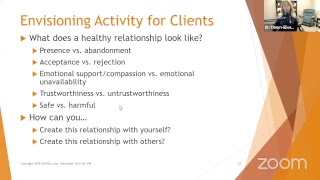
It. Alrighty, let's go ahead and get started. I'd like to welcome everybody to today's presentation on addressing codependency and abandonment fears. And you may think that those are two completely different topics, but they're really not. Codependency for a lot of people is an expression or a reaction to their abandonment fears, and we're going to look at how that might actually be occurring. We'll review attachment theory really briefly, define codependency, learn about core abandonment fears, identify ways that codependent behaviors might be ways to cope with abandonment trauma, and explore tools and activities to help clients recognize their fear related and codependent behaviors and take effective action. If you need to look at the PowerPoint, you can log into the class@allce.com, download the PowerPoint, and then you'll have it forever and always. Okay, so what is attachment theory? Attachment behaviors? You know, think back to Bowlby and he started talking about how we form this initial attachment relationship with a primary caregiver. Now, a lot of times that's the mother, but that's not always the case. But a primary caregiver is important and attachment figure. So when an infant is separated from their primary caregiver, attachment behavior such as crying, calling, and searching may happen in order to help them find their primary caregiver because they're helpless. They're saying, you know what? To survive, I need you to come here and help me be warm. Help me get fed, help me feel safe. Maintaining proximity to an attachment figure through attachment behaviors increases the chances for survival. It makes sense. From our initial attachment relationship, we learn how scary or safe the world is. Think about Erickson's psychosocial stages of development when our needs are not met. When we don't have that initial attachment relationship, trust versus mistrust we when the child is cold and cries and doesn't get those needs met, the child starts thinking, this is a very unpleasant place to be. When the child is scared and does not get his or her needs met, the child may start thinking this is not a good place to be. Through this relationship, children, people learn how trustworthy other people are because the child trusts the the primary caregiver to respond to their needs or hopes that they will. And if the primary caregiver repeatedly does not attend to their needs or sporadically, maybe even worse, responds to their needs, then the child starts learning that others can't be trusted to meet their basic needs. We learn from our primary attachment relationship if we can trust our own feelings. Because if every time we cry or the baby cries, and the primary attachment figure puts a pacifier in its mouth or feeds it. Then the child is going to go, well, hungry. Wasn't exactly it. Now, of course, they don't have those words to put to it, but they don't know what they eat, and it still doesn't make them feel any better. So they don't know what's going on. Think in an infant's mind. They don't have a lot of words to put to it, but they know something's not right. And from this initial attachment relationship, we learn what it's like to be loved, to be cared for, to be nurtured. And if that doesn't happen, then that's what we expect in future relationships. The attachment system essentially asks the following fundamental question. Is the attachment figure nearby, accessible and attentive? Oh, now that last one is a big kick in the butt, because the attachment figure often is nearby. But in a lot of cases, the attachment figure may be emotionally unavailable, emotionally inaccessible, and or inattentive. The attachment figure may be, you know, too caught up in their own stuff, attending to themselves to attend to the. Attend to the small child. So if the answer is yes, the attachment figure is nearby, accessible and attentive. The person feels loved, secure, confident, and behaviorally is likely to explore his or her environment and interact with others. Now, think about when you watch kids on the playground. They go out, and a lot of times it's like, okay, where's mom and dad? I mean, I'm talking about real young children. Where's mom and dad? Okay, is it safe? I'm going to go out and explore. If they fall down and bump their knee or somebody's mean to them, what usually happens? The child starts crying or, and, or runs back to the parent, runs back to that safe home base, because that's the safe place. We all need this safe home home base. Whether we are six months or 26 years old, we need this safe place that we can return to. If the answer is no, the attachment figure is either not nearby, not accessible emotionally, or physically or not attentive, not wanting to be there, not able to attend to the child's needs, then the person experiences anxiety, is likely to exhibit attachment behaviors ranging from simple visual searching. If the person, if the attachment figure can't be seen, to active following and vocal signaling to the other person, which can be anything from following you around, pulling on your dress, going, mommy, mommy, mommy, mommy, mommy. To crying, to yelling, to throwing a temper tantrum, something to get that parental attention and when children act out, my first question to the parent is what was the child trying to accomplish? Now? It could have been to get candy, but a lot of times when the child acts out, there's more to it than that. They wanted some sort of attention, they needed some boundaries set, their blood sugar was low, so they were needing to be fed. What was the function of that behavior? These searching behaviors, these attachment behaviors continue until either the person's able to reestablish a desirable level of physical or psychological proximity to the attachment figure. That's important. We need to focus on this to a certain extent. Physical proximity is great, but if we're in physical proximity and that person is not emotionally accessible or attentive, it doesn't do a lot of good. However, we can get psychological proximity without physical proximity. So you may have someone who is a soldier, who's deployed and they're able to talk to their children and get that psychological proximity to the attachment figure. And that soldier, when they're talking to the child on Internet chat or whatever it is, is accessible and attentive to that child at that point in time. So there is that connection. So just because people are separated by miles doesn't necessarily mean it's going to obliterate the attachment relationship. Even infants, they can hear their parents voice on the other end of the line. It's not quite the same, but when you can establish that connection, when the infant can hear the parent soothing voice, it helps. Okay, so they either need to reestablish a desirable level of physical or psychological proximity, or they just wear down. And that's the learned helplessness. They learn that no matter how much they scream, cry, pitch, a fit, search, that person's not coming back. And you get that learned helplessness, which we know depression is associated with helplessness and hopelessness. And if the person was seeking an attachment figure that was for comfort because of a sense of anxiety about something that they perceived a threat, they needed a need to get met. So they've got anxiety going on because they still didn't get that need met and hopelessness. So you know, they're in a bad place. So triggers for attachment. There are certain kinds of events that trigger a desire for closeness and comfort from caregivers. And I want you to think about not just children, but I want you to think about adolescents, I want you to think about adults. We all need attachment. We are wired for it. That's why we have oxytocin. We're wired to be connected to one another. There are three main sets of triggers, conditions of the person, if they are tired, hungry, sick, in pain, cold. In addictions treatment, we use the acronym hungry, angry, lonely or tired. But I want you to think about that and think about yourself. When you have some of these things, do you desire to have someone there to take care of you, to help you out? I know when I'm sick, I tend to like to be coddled a little bit. I'll admit it. When I'm tired, I tend to want to be left alone. But we do need to look at the triggers here. Once we get older, we can feed ourselves. So when we're hungry, that generally doesn't trigger an attachment feeling, but there are a lot of other internal things that can trigger that need for, for care and closeness conditions involving the caregiver or the attachment relationship. So in adults, it's more the significant other, the attachment relationship more than the caregiver in terms of parent. But conditions of the caregiver. If the caregiver is absent, especially for a long time, then it can trigger feelings of abandonment, trigger feelings of need to connect with that person. If the caregiver is getting ready to depart, whether it's for a work trip or for a weekend away, or maybe even just you're dropping your kid off at preschool for the first day and that triggers that anxiety because they're not sure if you're going to come back. They've never been in this situation before. So we do want to remember that if the caregiver departs, it may trigger some attachment behaviors. That's not bad. That's good. If the child cries when you drop them off the first time, that's not a bad thing. If they're inconsolable, then we might want to look at that. But we do want to recognize the fact that children want to make sure that that secure home base is accessible to them. If the caregiver is discouraging of proximity, which that's, you know, I don't know, overly convoluted way of saying if the caregiver doesn't want to be bothered. If the caregiver says, go away, you know, not right now. You bother me. Go play, you know, and is constantly pushing the child away emotionally and or physically, that can trigger a need for attachment because the child's going, okay, I can't get, I can't get close to my home base. I can't get that reassurance. I can't get those hugs. I can't get all of those neurochemical reactions that happen when I get nurturance and if the caregiver is giving attention to another, and we see this a lot when there's a new baby in the household, or if the parents get divorced and the primary caregiver starts dating someone else, the child can regress in their attachment behaviors and be more needy of more constant attachment for a period of time. And conditions in the environment, alarming events, criticism or rejection by others, things that happen that make you feel bad generally makes you want to go back to somebody who loves you, somebody who nurtures you, and get reassurance, get comfort from them. It doesn't matter how old you are. When things go south, it's hard to deal with it exclusively on your own. So we do want to consider these triggers. And when clients start having a relapse, if you will, into attachment seeking, and especially unhealthy attachment seeking, we want to look at what's going on that is triggering that recapitulation of the attachment relationship. What's going on that is triggering that need for comfort. Like I said, we all need it. Social relationships are one of the biggest buffers against stress so that this need for attachment doesn't go away. But we do want to look at what's going on and the quality of the attachment relationship that the person is experiencing, whether it be a child or adult. Is it secure? They know that person's going to come back. They know they can rely on that person. Is it insecure where they're not sure if the person's going to be there, which elicits a whole lot more fear. Fear and anxiety related behaviors. When Patricia asked a question about what about a child who has a good attachment figure but still demonstrates the qualities of not feeling attached, they're fearful, they're clinging. So I would probably look at it from two aspects. Number one, I would try to get into the child's shoes, if you will. Some children are what we call high needs children. And what a good attachment figure looks like for one child may not be enough for another child. So I'd want to look and see, is that child really getting all their needs met? Are they emotionally dysregulating and is the parent unable to respond to that? And I would look at what might be reinforcing these behaviors. If they're fearful and clinging, what triggers it? And you can have a behaviorist come in and consult what's triggering these sorts of behaviors? Are they in specific environments or are they in global environments? And what's reinforcing these behaviors if the child does cling to what kind of reinforcement is going on. Because if there wasn't a reward of some sort, if there wasn't some sort of reinforcement, the child wouldn't continue to do it. They would do something else. So those are the two aspects I would look at is again, is the parent meeting the specific needs of this child? Some children are just really intense. And are there certain things that are triggering and or maintaining this behavior, Certain rewards, certain characteristics, certain behaviors that are maintaining this behavior that can be interrupted. So the impact of attachment, how loved or unloved we feel as children, deeply affects the formation of our self esteem. If we feel accepted. Think about again, Erickson. Trust versus mistrust, Initiative versus guilt. We're starting to develop our ability to separate from our attachment figure. But we know when we go out there, industry versus inferiority. We go out there, we try, we push beyond our limits, and we're going to fail at things. But if we have a good attachment relationship, we go back to that safe home base and the attachment figure says, you know, you're good, I love you, you're a wonderful person. Okay, so maybe football's not your thing, or maybe science is not your thing. What else do you have that's good and you are a good person despite what skills you may or may not have. And that helps people develop their self esteem and start saying, you know what? I'm good at certain things, not so good at other things, but that's okay because I'm a good person. Early attachment relationships shape how we seek love and whether we feel part of life or more like an outsider. If the child constantly experiences being pushed away and feels isolated, then they're going to feel more like an outsider. If they seek love and they get love in return, then they're more likely in their adult relationships to seek out what they need because they know is likely they'll get it in return as we individuate. So when children go through that identity formation in middle school, high school, college, they again start seeking approval from their peer groups, from their significant others. This attachment thing changes a little bit as we become more independent and able to meet our basic needs. But we always need that connection, that social approval, if you will, that unconditional positive regard. So consequences of abandonment, if those attachment needs aren't met, the child may feel emotionally or physically abandoned. When biological and safety needs are met, it can trigger anxiety at any age, not just in an infant. If biological needs are not met being met, if you've got a person who is 26 years old, old and homeless, then that may trigger anxiety. Some people choose that lifestyle, but in a lot of people, that would trigger anxiety. Fear of abandonment is a natural survival response. When a person feels unlovable, ineffective, and helpless, we tend to fear being abandoned because we don't think anybody's going to want to stick around. So if the person feels unlovable, ineffective, and helpless, then they're going to fear abandonment. When people feel like they're not getting their own needs met, and notice the italics and the bold here. When they feel like they're not getting their own needs met, even if it looks objectively like they're getting their needs met, if they don't feel like it, then they're going to exhibit abandonment. Abandonment behaviors, they're going to exhibit more anxiety. So it's important to help people take a look and objectively assess using cognitive processing therapy or cognitive behavioral to identify. And obviously this isn't for small children. This is for older people who are able to use those interventions. But help them objectively look and see if they are getting their needs met, because sometimes they may be minimizing the good stuff and just focusing on the bad stuff. So. So we do want to help them take a look at that. But when they feel like they're not getting their own needs met, they have difficulty effectively meeting the needs of others. So if they're constantly struggling to try to get love, they may be manipulating others in order to get love from others. Every stressful situation becomes a crisis because they're already in threat mode. So if they fear abandonment, if they fear unloved, feel like they're unlovable. And yes, if their significant other leaves for some reason, whether it's through divorce or he just never comes back from the store or he dies or whatever, it can trigger abandonment fears. And we see this in some older people. Well, I shouldn't even say older people. We see this in some couples that have been together for a long time, or when one half of that couple dies, then the other person may feel very vulnerable and insecure about anything that's going on because that other person. And my grandparents were a perfect example. My grandfather always took care of paying the bills and doing the, as my grandmother put it, man stuff around the house. And they had very traditional gender roles. And when he passed away, anytime something would break in the house, anytime she had to pay bills or anything, her anxiety would go through the roof and she would need to call my uncle. And thankfully, he lived really close and he was able to come help out and bridge that gap. But yes, we do see abandonment behaviors and high levels of anxiety. When people, when people's relationships end, especially unexpectedly now, does it mean they feel unlovable? Well, if the partner dies, not necessarily. But if the partner leaves because of a divorce, then yes. Some people that can impact their self esteem, which leaves them feeling not only ineffective and helpless, but also unlovable, which can heighten those abandonment fears. When people are in a situation when they're fearing abandonment, what types of things trigger fear of abandonment or trigger fears, rejection and isolation? When people fear abandonment, they're fearing anybody is going to reject them. So they're going to be hypersensitive to cues of rejection and isolation. They're going to seek comfort and solace in anything they can. They may seek, they may fear loss of control and the unknown because all of a sudden they can't control their lives. Or in an infant's case, they've never been able to control their lives. So this is a constant fear that's brewing in their hearts. And they may feel fear failure because if they don't have that secure home base to go to, then if they go out there and they fail, then basically think of it like falling flat on your face on the concrete. It hurts a lot. And there's nobody there to pick them up. So all of these things become heightened when there isn't a secure base. To go back to signs of abandonment issues. Now I want you to think, in what ways do these behaviors protect the person from abandonment? And it seems kind of counterintuitive, abandonment issues producing these behaviors. But attaching too quickly can protect people from abandonment. Because if they are out there on their own and they fear abandonment, they find somebody and they just latch onto them. It's like, okay, finally I found my safe thing, I found my security, I found my life rope. So I'm going to attach and I'm going to attach hard. And we see this in a lot of people. I won't just say clients who meet somebody and all of a sudden, 24 hours later, they're head over heels love. They move on too quickly. That's kind of the opposite. But it can happen in the same person. They can attach really quickly and then if the relationship ends, they're like, fine, whatever. And then they move on to the next person and they find that next life life rope that they can hold on to. They may be a partner pleaser, doing things that they normally wouldn't do because they're afraid of abandonment. So they're going to acquiesce and not live Authentically, they may settle for bad relationships because bad relationship is better than no relationship in their minds. Constantly looking for flaws. Now how does this protect a person from abandonment? Well, if you're constantly looking for flaws in the other person, then you start seeing the other person is imperfect. If the other person is imperfect, well, and you think you're imperfect, then they're less likely to leave you. And if you see the other person is really imperfect, then nobody else would love them but you. So it's safer to assume that they're not going to abandon you. It's this kind of loopy logic here, but you can see how it makes sense from a certain point of view. If a person is reluctant to fully invest in a relationship, if they've got abandonment issues, they may have walled off their heart and they have this fortress around it because they don't want to get hurt again. So they don't want to put it all out there. Makes sense to me. If they have difficulty trusting, same thing that got that wall around their heart, they don't want to be hurt. They're afraid to trust because that trust has been betrayed before. They avoid emotional intimacy. They feel unworthy of love. Unworthy of love. How is that protective? Well, if you don't feel worthy of love, then you don't expect love. If you don't expect love, then you're not let down when you don't get love or when you're abandoned. So again, you gotta look at it from a certain point of view. They're jealous of virtually everyone. Now you could say everyone, but virtually everyone. Jealousy is anger. Jealousy is fear that you're going to lose somebody. Jealousy is anger at somebody for having a better relationship than you do. So jealousy is this feeling that pushes people away to keep them away from either from hurting you or from that attachment figure. If you're in a relationship and the person is really jealous, then you're not able to connect with others outside of that relationship. So that theoretically might prevent abandonment if you can't connect with anybody else. Now, you see the problems with that logic, but you can also see how jealousy can be a reaction to abandonment and a way to try to protect themselves from abandonment, hyper vigilance and over analysis. Well, if you're constantly afraid of abandonment, you're going to be on the lookout for those signs of rejection, for those signs that you might not be able to control the other person, for those signs that you know you might be failing at something and disappointing the other person. So the person who's afraid of Abandonment is hyper vigilant and will overanalyze just about any situation in order to try to make sure that they're not going to be abandoned. The problem is the harder you look for something, the more likely it is you're going to find it from a certain point of view. So if somebody expects to be abandoned, then they're going to be hyper vigilant to those cues and they're going to see them. Even if they're innocuous, they're probably going to interpret them as abandonment cues. Repressed anger. If you hold that anger in, if you're afraid that somebody's going to abandon you, and if you're hyper vigilant and you're overanalyzing everything and you see them as being rejecting and uncaring, yeah, you may reject, repress that anger because you're feeling those feelings, but you'd rather be in a bad relationship than no relationship at all. People who are afraid of abandonment can be overly controlling because if they can be the puppeteer controlling the marionette, then they know exactly what's going to happen. And Pinocchio ain't just going to get up and walk away. Self sabotage and blaming yourself for breakups. If people are afraid of abandonment, when people experience abandonment, then they look at what did I do? Because going back to those initial abandonment issues, people with abandonment issues generally feel unlovable, helpless and insecure. So of course, if they're unlovable and helpless, then they're going to look at why did this person leave me? It must be me. Which makes them feel even less lovable and more afraid of abandonment and never being loved. So you might be saying, why are some of these bolded? Well, the bolded areas, attaching too quickly, settling for bad relationships, hyper vigilant, repressing anger and overly controlling, those are also characteristics of codependency. There are more reactions to fears of abandonment. When people fear abandonment, they may go into fight mode. So I want you to think about how these may prevent abandonment, what maintains these behaviors and what are the long term consequences. And these are things we'll discuss in group. I will go through these one at a time. I don't put them all up there at once because it's overwhelming. But we start talking about when you start fearing abandonment. What happens in your relationships? How does the quality of your relationship change? So if you go into fight mode, maybe you become aggressive, hostile, and start blaming and criticizing. So how does that prevent abandonment? How does that keep the person from leaving you? And I encourage them to really reflect on the fact that they're trying to dominate, they're trying to control the person, they're trying to make the person feel bad about themselves so they won't feel lovable and they won't leave. Dominance or trying to control others. Recognition, seeking to get attention, validation and approval and you might be going, well, how is this in the fight area? Well, it's an active thing, a proactive thing, if you will, kind of reactive. But in order to get attention, in order to maintain the relationship. So I'm going to do my dance and do whatever I need to do to get recognition, validation and approval so my partner remembers how awesome I am and that they shouldn't abandon me. Manipulation and exploitation, such as seduction, people can become very seductive, borderline histrionic in their behaviors. If they're fearing abandonment, they might try to connect with that person in any way, shape or form that will keep them around. They can lie, they can justify just about anything in order to try to keep that relationship. They may cling and chase. And again, this is in the fighting aspect because instead of running away, they're running towards the person going, you can't leave, I need you to stay. That clinging can be and chasing can be in the form of, you know, 24 text messages in half an hour. It can be showing up on your doorstep, it can be pleading, it can even come out in, in the form of certain self harming behaviors and shame, which is self anger about feeling needy. So when people start to feel needy, they may get really angry at themselves and start engaging in numbing or self injury behaviors in reaction to the fear of abandonment. Because instead of asking for help or feeling worthy of love and nurturance, they feel like they should cease to exist and flight. Shorter list here. When people flee from abandonment, they may withdraw. If they fear that somebody is getting ready to abandon them, they may withdraw. They may withdraw physically, quit showing up, quit going on dates, whatever. They may withdraw emotionally so they're starting to wall their heart off, they're not going to get hurt. They may withdraw through addiction by just numbing everything out. It's like, I don't care, you know, I don't feel anything. And they may distract themselves, engage in anything else so they don't have to think about the relationship. Now how do these supposedly prevent abandonment? Well, they don't, but they prevent abandonment pain. So when they withdraw, they are still in control. They're the dumper. Yeah, they're the dumper if you will. Instead of the dumpy, they are withdrawing. They're the one that's choosing to not invest themselves anymore so the other person doesn't have the upper hand. Long term consequences of both fight or flee. You know, when you talk about any of these behaviors, encouraging clients to really look at how do these affect your relationship over time? Yeah, in the short term, you may get your way, that person may come and rescue you, that person may give in, that person may submit. But in the long term, does it create a healthy, long lasting relationship or just does it just prolong the time until the person eventually abandons the relationship? Okay, so then we move on to codependency, because like I said, codependency is one reaction to abandonment fears. Codependency describes a type of relationship in which one partner defines his or her worth or goodness based on someone else. If I can save this person, it means I'm good. So you get into this relationship and you know you're going to be the savior. That means if you save that person, then they will be indebted to you and they will be there. So less chance of abandonment. And if this person loves me, then it means I'm lovable. So it's important to be in that relationship and to make sure that the person recognizes the codependent. Person often chooses relationships in which the other person needs to be rescued, thereby making him or herself indispensable. So thinking about why you would get into a relationship initially with someone who needs to be rescued, why would you initially get into this relationship and how might this result from low self esteem and fear of abandonment when you're in a relationship with someone who needs to be rescued? When you're doing things to rescue someone, you tend to feel better about yourself and they can bolster themselves up. And like I said, once the person has put themselves in that position of being the, quote, savior, then they feel much more indispensable, which makes those fears of abandonment go away because they're like, well, this person needs me, they can't live without me. So again, in what ways do these behaviors prevent abandonment and what maintains them? Avoidance of confrontation or poor communication. How does this prevent abandonment? We typically talk about good relationships having open communication. So why would you avoid it? Well, confrontation often means arguing, and arguing in the person's past may have led to abandonment. So they don't want to even risk it, so they're not going to go there. So there's poor communication because the person who's codependent is often just biting their tongue. Inability to identify feelings, except for chronic anger and feelings of happiness, feelings of love, the difference between love and pity, very confusing for the person who's codependent. So how does this prevent abandonment? Well, if they're having difficulty naming feelings, then it's harder for those feelings to get hurt. Maybe neglecting your needs and intent, attending to the other person's first. Well, that makes sense if you want to prevent abandonment. If you're catering to somebody, then you think, well, that'll keep them from leaving. And if the person to whom you're catering falls into that trap, then it does keep that relationship going. But it's a give, give, give, not a give and take relationship. And it gets exhausting accepting verbal or physical abuse by others. In a lot of codependent relationships, there is a fair amount of verbal abuse, if not physical abuse. And it can go both ways. And it's important to look at what you're willing to accept and why you're staying in a relationship that is harmful, why you're staying in a relationship that's abusive. Is it a recapitulation of the past? Is it just fear of being alone? What is it taking responsibility for the actions of others, especially the one you're in a relationship for or relationship with? In a codependent relationship, this is one of the hallmarks of a codependent relationship. The codependent person is going to cover up for, take the blame for, do anything they can to enable the person with the problem, whatever the problem is. And it can be addiction, but it can be a host of other things. In codependency, there's a need to control others. There's a need to have this perfect facade. There's a need to control things because if the codependent is in control of everything and everyone, then things won't go bad. If the codependent is not controlling the other people, then they might be abandoned. Then the other people might get into trouble because the codependent takes on this role of ultimate protector, if you will, but to the. To the expense, to the extreme. And they start doing things for everybody else that those people should be doing for themselves. And the codependent feels shame when other people make mistakes. Now, how does that prevent abandonment? Well, if the codependent is responsible or deems him or self responsible for making everything right, controlling everything and keeping, you know, being the puppeteer, then if another makes another person in that relationship makes a mistake, then it reflects on them in their mind. So they feel bad. They do more than their share at work or at home. Well, in a codependent relationship, this person is trying to get approval, they are trying to get validation. They're trying to get other people to go, you know, I couldn't do this without you. That makes them feel safe for the moment. They may refuse to ask for help because if they ask for help, it shows weakness. And weakness could lead to rejection, which could lead to abandonment. They need others validation to feel good about themselves or to not get their feelings hurt. So when they do things, people with codependency often have a high need for recognition of what they've done. They need people to go, oh my gosh, I couldn't do that. You're so strong. Or, you know, thank you so much for doing that. I couldn't do it without you. They need to have that bolstering. They think everyone's feelings are more important than their own. So they're always trying to make everyone else happy. They don't feel, feel, go back to that, have difficulty identifying feelings. Well, they don't feel because they're so worried about making sure that everybody else is happy and keeping the lid on things that they're not attending to their own feelings. They may feel trapped in the relationship, but stay to avoid feelings of abandonment. They're often enmeshed and have poor boundaries. Well, if you're trying to control everybody and you're invading and trying to make, make sure that you make everyone else happy, then yeah, that's enmeshment. That's really bad emotional boundaries there. But when you're enmeshed, then, you know, think about getting caught up in a net. You can't get out of it and the net can't go away from you either. So again, it may prevent abandonment and over commitment and feeling overwhelmed. Well, if you're doing everything for everybody else and you're refusing to ask for help and you're not taking care of yourself, yes, they may feel indebted to you, but you're also going to feel like you've got the weight of the world on your shoulders and feel overwhelmed. So that's not uncommon either. Any of these things. And all of these things are products of trying to avoid abandonment, that enmeshment. You know, if I stay tangled up with other people, then they're not going to be able to leave. They're going to have to have me nearby. So core abandonment beliefs that come up in people who are codependent and even who aren't codependent. All people leave, mistrust people will hurt, reject, take advantage of me, or just not be there when I need Them Emotional deprivation. I don't get the love I need. Nobody understands me, cares about me, or even tries to meet my needs. Now if you're working with an adult who has abandonment issues, you may see really enmeshed relationships with their children because their children can't leave. Their children are basically captive. Their children are there to provide or not there to provide. Their children are there and often do step into that role because that's what they think they're supposed to do. They step into that role of providing love to the parent. Defectiveness. If people knew me, they would reject me. Well, this is feelings based reasoning and failure. I don't measure up and I'm not able to succeed. Now notice all of the all or nothing language in these schemas. All people leave. All people will hurt, reject or take advantage of me, ostensibly all the time. So these are things that we want to look at because yes, people are going to leave. People are going to die. It's going to happen. Some people are going to hurt or reject or take advantage of you. You get the point. So we do want to moderate some of these, some of these beliefs. Cognitive behavioral therapy or cognitive processing therapy are both very effective at helping people address these. So let's look at some of these core beliefs. When I work with clients, and usually I do this in an individual, not so much in group, we look at the core belief of all people leave. So what does it look like if somebody is emotionally or physically available and they don't abandon you, how do you know? And a lot of people haven't thought about that. They're just so afraid that people are going to leave. They just expect them to leave. And they're, like I said, they're hyper vigilant and focusing on those cues that the person's going to leave. So I want them to really turn their mind and look at if you had somebody who was available, what would that look like to you? And if they have difficulty coming up with that, I say, okay, do you abandon people? And a lot of times they'll be like, no, of course I don't. Okay, so what does it look like to other people when you're in a relationship, what does it look like? So they know that you're not going to abandon them. And we start developing a list of behaviors and attitudes that are common in relationships. If somebody is going to be available but still have healthy boundaries, you know they're not going to be holding your hand 24 hours a day. Who in your past left you or was unavailable emotionally what did they do to make you feel rejected or abandoned? And so we start there. Who was it that left you or was unavailable, and what exactly was it that they did? Did they just ignore you when you were at home? They never had time for you. They were never home because they were always traveling. What happened? And this can even be. They died. You know, some. Especially when a death happens, when a child is young. What are alternate explanations for why they may have done this? You know, maybe the attachment figure wasn't home a lot because they were working in order to pay the bills, and that was the only way to make ends meet. Maybe the attachment figure was in. In rehab and unfortunately, repeatedly, and they were trying to do the best they could in order to be present. You know, we need to look at this retrospectively from an adult's frame of mind. They did what they did, and you felt abandoned. You know, I'm not taking that from you. What are some other explanations? Did they intend to abandon, or what are some other explanations that might have more to do with them than with you? Who in your past has been available, you know, switching that back again, we're looking at the positives. Has been available to you emotionally. And they can look back. And generally, people have a best friend or somebody who is available and who in your present is available to you emotionally. So we start talking about that, making a list of safe people, making a list of characteristics of the relationships that look and feel safe. And then we start talking about what do you do in your current relationships that causes people to leave. And depending on the client, you may have to change the wording a little bit because you don't want to send them on a guilt trip. But I want people to really start looking at the dynamics in their relationship. And a relationship, it takes two to tango. So that person is always. That other person always has some part in it. But what is it that you do in your relationships that may be dysfunctional? If you push them away, how do you do it? And what are some alternatives to that behavior? And maybe why do you push them away? If they look back over their relationships and they see a pattern, you might start looking at why is it? Or what happens that suddenly you start pushing people away after six months or whatever it is. If you become clingy and obsessive and jealous, what triggers that? What behaviors do you do that characterize you as clingy? And what are some alternatives that you can do? Mistrust is the next belief, core belief. People will reject, hurt, or take advantage of me or Just not be there when I need them. So, again, going through these questions, what does it look like when somebody is trustworthy and safe? How do you know you're not just going to walk up onto them on the street and go, hey, you look safe and trustworthy. Let me just pour my heart out to you. Least I hope not. So how do you know when somebody is trustworthy and safe? And we talk about the process of give and take and developing trust. Who in your past was untrustworthy or unsafe? What did they do that taught you that people were untrustworthy or dangerous? And again, what are some alternate exploration explanations for why they might have done what they did? Sometimes that's not an appropriate question. You know, if a person has been a survivor of abuse, we're not going to look for alternate explanations. Um, but if we're going with untrustworthy and they've, you know, the parent just went out to the store and never came home, and of course they felt abandoned, was it about them? Did the parent intentionally abandon them? And. And looking at those sorts of explanations, who in your past has been trustworthy and safe? Who in your present is trustworthy? And hopefully that aligns with who in your present is available emotionally? What do you do to yourself that is unsafe or dishonest? And this is one they got to think about for a while. But I want them to start getting mindful and living authentically. So they need to know what they do that's unsafe. Do they put themselves in unsafe relationships? Do they take unhealthy risks? What is it that they do? What do they do that's dishonest and inauthentic? How does your distrust impact your current relationships? And what could you do differently? Emotional deprivation, core belief. I don't get the love I need, and nobody understands me, cares about me, or even tries to meet my needs. Now, again, those are some pretty extreme words. So we want to look at the logic of it. We want to look at what are the facts for and against the this. What does it look like when someone understands you and meets your needs? So if you're saying nobody does, how are you going to know when somebody does? How do you communicate your needs? A lot of times we find out in clients that they expect other people to read their minds. So by asking, how do you communicate your needs? It could say, kick off a discussion about, well, I really don't. They should know. Well, how should they know? So we want to help clients understand that people can't meet your needs if you don't tell Them what they are. Who in the past failed to meet your needs emotionally, and how can you deal with that now? Who in the past has understood you? Who in your present cares about you and wants to understand? They're saying, nobody understands me. So, okay, who in your life cares about you and wants to understand so we can help them understand? How can you start better understanding yourself, being mindful, being authentic, and taking care of you? And what can you do to start getting your needs met? So again, each one of these core beliefs is probably an individual session in and of itself and then making an action plan to start addressing that core belief. Defectiveness. If people knew me, they would reject me. Is this based on facts or feelings? How do you know that they would reject you if they knew you? How will you know when you're accepted or acceptable? Who in your past made you feel defective? Are there alternate explanations for that? You know, sometimes people don't give kudos, don't give reinforcement when they probably should because they're too caught up in their own stuff. Sometimes people don't give positive feedback. They just. The only time they speak up is when there's a problem, you know, and that could be that person's poor communication skills. So we do want to look at who made them feel defective. How did they make them feel defective? And is there any other possible explanation, again, that looks more at the actor instead of your client? And how can you silence those old tapes? When people make us feel defective or made us feel defective, a lot of times we internalize that tape. And then every time something happens, we hear that person saying, you're not good enough. You're not smart enough. Nobody's going to like you. So how can we silence those old tapes? How can we silence the inner critic? Who in your past has been accepting and supportive? Who in your present is accepting and supportive? And how can you start accepting yourself? Failure. I don't measure up. I'm not able to succeed. So to what or whose standards do you not measure up? You know, I don't measure up to what? That's what I want to know first. Because a lot of times clients hold themselves to a standard that's far higher than they hold anybody else to. So I want to know what these standards are that you supposedly don't measure up to. What does it look like to be successful? And, you know, maybe clients have had difficulty achieving their goals because they don't know how to effectively set goals. So we can help them here. What in your past made you feel like a failure and are There alternate explanations or ways of viewing it, such as, you learned one way not to do it. What have you succeeded at in the past? What are you good at in the present? And I always pay attention to minimization here because a lot of times clients focus on their faults, but they do all these other things really well, but they minimize it. They're like, oh, anybody could do it. No, anybody. That's not necessarily true. What does being successful mean in terms of your relationships? Who are three successful people, you know, and what makes them successful? So really having them start looking at the difference between success and failure and start identifying qualities in themselves that they already have that ident that they identify as successful. Does success equal happiness? And this is one of those things that you can talk about for a while. You know, does success in business, does being a CEO or does having a million dollars or whatever it is make you happy? And if not, what is it that makes you happy? And a final question, if they're having difficulty with this is what do your kids need to do to be successful in your eyes? Because a lot of times, you know, we have visions of what we want for our children, but we also have a vision of, you know, what they need to do to be successful. And that's probably far different than some of the hopes and things we have. Behavioral triggers, abandonment and mistrust. So if somebody starts fearing abandonment or mistrust, it may come when they experience a change in someone's behavior, if they're not getting constant reassurance, if the other person's relationships feel threatening, like they're going out with the boys all the time, and your client's going, does he not want to spend time with me? And if the person is hyper vigilant to rejection and disconnection, any of those four things can trigger abandonment issues. So we want to ask clients with each of those, how has this threatened you in the past? So if somebody's behavior has changed in the past and it led to abandonment, you know, that makes sense that if they're seeing the same pattern, they might expect the same result. What are alternate explanations and what would be a helpful reaction to these behaviors right now? Because what happened in the past is unfortunate, but it doesn't necessarily mean it's going to play out the same in the present. So we want clients to really look at what's going on in context, and what's the most helpful reaction? Now, people may feel defective and like failures when they experience criticism. If there's unexplained time apart, they may Feel like they're being rejected, if they're getting absent or inconsistent reassurance or if they actually fail at something. So again, asking them how it's threatened them in the past, you know, when this has happened in the past, how has it gone bad? And then looking at the present in context and going, okay, what are the similarities and differences in these situations? Envisioning activities. What does a healthy relationship look like? And we talk in our group about presence versus abandonment. You know, and there's healthy, healthy boundaries. Acceptance versus rejection. You know, my partner can accept me as a person but reject some of my ideas. We may not agree on everything. That doesn't mean that I'm being rejected. It means that my partner may not agree. Emotional support and compassion versus emotional unavailability. So we want to look at, you know, the two extremes. People are not going to necessarily be completely gushing of emotions all the time. So we do want to look at what does your client expect in a healthy relationship? What level of emotional support do they need? What does trustworthiness versus untrustworthiness look like? And what does safe people versus harmful people look like? So we talk about all these things, and then I ask them all right now, how can you create this relationship with yourself? How can you be present with yourself versus abandoning your feelings and your thoughts and your hopes and everything else? How can you accept yourself versus reject? How can you be compassionate with yourself versus emotionally unavailable? How can you learn to trust yourself? And how can you make your own mind a safe place to be? We talk about that for quite a while, and then we talk about how to create that relationship with others. Mindfulness questions. What am I feeling? What's triggering it? Am I safe emotionally and physically right now? And if not, what do I need to do? Is this situation bringing up something from the past? How is this present situation different than the past? How am I different than in the past? Maybe, hopefully I'm stronger. I'm more independent. I'm, you know, all these things. And how can I silence my inner critic? And finally, what would be a helpful reaction that moves me more towards my goals and more toward a positive emotional experience? So when abandonment issues are triggered, this is a core set of questions that clients can ask themselves to compare and contrast and develop an action plan. Core beliefs about self, others, and relationships are formed in early life. Identifying and being mindful of abandonment triggers in the present can help people choose alternate, more helpful ways of responding. Codependents often do not feel worthy or lovable, and they seek somebody else to validate them. Recovery involves developing a sense of self worth, addressing the depression and anxiety, and learning about and creating a network of healthy relationships. Alrighty. Thank you all for being here. I see there are a couple of questions. I'll attend to those, but the class portion is done if you want to log in and take your quiz. Otherwise, I'm going to answer some of your questions right now. Yes, abandonment issues can make the person feel sort of borderline. And again, I'm not saying they're borderline, but on one hand they're being. They may feel clingy and desperate and then on the other hand they can turn and just be like, fine, I don't need you. So it can look sort of borderline esque because of their fear of abandonment. People with abandonment issues that seem to do everything possible to self sabotage, a lot of times they don't realize what they're doing and they don't see how their behaviors are impacting the relationship. Many times, and I'm not saying all the time, but many times when people self sabotage, it's again, in order to either make the other person look like the bad guy for leaving, it's a power play. Let's just shorten it to that. It's a power play. Somehow that person is either pushing the other person away first so they're the dumper, not the dumpy, or they're doing things to sabotage the relationship so they can blame the breakup on the other person. Not always the case, but a lot of times. Oops. Nope. Let's see. You wanted to see from current slide. Well, stinky poos, mindfulness questions. I think that's what you want. There you go. And remember, you have the PDF of this in your classroom. Alrighty everybody, have an amazing day and I will see you on Thursday.










