Living in a Borderline or Toxic Environment | Borderline Personality BPD Part 2
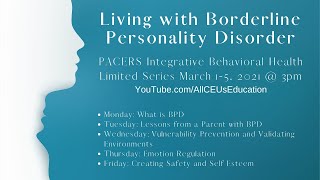
Dr. Dawn-Elise Snipes explains how borderline personality traits develop from trauma and invalidation, and how they affect both people with BPD and those around them. The core effects include feeling unsafe, powerless, and struggling with emotions and relationships. Recovery is possible with skills like DBT.
Chapters
Foreign. Hey there everybody, and welcome to Today's presentation of PACER Integrative Behavior Behavioral Health. I'm your host, Dr. Donnelly Snipes. Please remember to click the subscribe button and share this video if it's helpful with you. The more people that watch, the more videos that I can actually do. So let's continue with our series on living with borderline personality disorder characteristics. And I will continue to throw that word characteristics in there. Yesterday we talked about the symptoms of borderline personality disorder or the characteristics of borderline personality. And it's important to recognize that those behaviors, those feelings, those symptoms developed as a way of trying to help the person survive and stay safe in a chaotic, unpredictable, disempowering environment. So one of the things that people with borderline personality characteristics need to identify is what is it that makes me feel unsafe and how can I help myself feel safe and how can I help myself feel empowered to be safe? And we're going to talk a lot more in depth about that. But today let's really start exploring what are some of the effects of living with or living around someone with borderline personality characteristics. And that can basically be summed up into unsafeness and disempowerment. Because of those symptoms, the person, because the person vacillates between extremes of valuation and devaluation. They have very libel label moods. And that that means that their moods change a lot. They change quickly. A lot of mood instability, a lot of anger, a lot of agitation. Well, this can lead a person who is living with that to feel inadequate or unlovable despite their best efforts to appease the person, which can lead to feelings of abandonment. So let's look at it from both perspectives. If you are the person living with borderline characteristics and the world feels completely overwhelming and you vacillate between loving yourself and hating yourself, between understanding what's going on and feeling inadequate because of it, between trying to cope with life on life's terms, but then falling short and disregulating sometimes despite your best efforts to, you know, handle your emotions and deal with life. It takes a huge toll on your self esteem. It takes a huge toll on your perception of lovability. When you are living with someone else who has the borderline personality characteristics, they communicate the same thing. They have these moods that are all over the place. They are often invalidating, they are often angry and irritable and they may, you know, have a very unstable sense of self. So for the person that is exposed to that, they also feel inadequate and unlovable. And one of the things that is important to pay attention to is. And, and this isn't just with people with borderline personality characteristics. This is in general, when we feel a certain way, a lot of times we may project, Whoops, sorry, project that onto other. So if I am angry at somebody, I may project that onto them and assume that they're angry with me too. If I am bored, I may project that onto other people. One of the things that we learn in counseling is if you are, as a counselor, are sitting in a room with someone and you're going over a details of something that happened to them and you are feeling frustrated or you are feeling disempowered, that is probably pretty close to how they may be feeling either right then or during that moment. So that is a good sense of empathy. But it is, it can also be detrimental when the person that you're living with is feeling unsafe in their own skin. They're feeling disempowered, they're feeling overwhelmed, and they project that, that onto you. Then you start feeling like the world is a very unsafe place. So regardless of whether you are the person with borderline characteristics or you are living with someone with borderline characteristics, you are probably going to have periods, if not persistent episodes of feeling inadequate, unlovable, unable, just unable to do the right thing. I mean, it's just like everything I try fails. And you may struggle a lot with fear of abandonment because you don't feel lovable enough or you don't feel adequate. There's also a lack of emotional boundaries and the ability to regulate your own emotions. And this can come from feeling responsible for the happiness of other people. And people with borderline characteristics often grew up in an environment where the only way it was safe was if they ensured that their caregivers or the people around them were happy, so they grew up. That was a survival mechanism. Feeling responsible for other people's happiness. When you are living with someone with borderline characteristics, you. You also often feel responsible for that person's happiness. The person with borderline personality characteristics often tells you that you're responsible for their happiness. So it's important to recognize that again, whether you're living with it or you are the person that has it, the either person in that relationship starts to have a lack of boundaries. And in order to prevent catastrophe, in order to prevent rejection, or in order to prevent an anger explosion, people start feeling responsible for everyone else's happiness, which is where the phrase walking on eggshells comes from, or one of the places it comes From Because a lot of times in households where one or more people has borderline characteristics, everybody's trying to keep everybody else happy just to keep a lid on what's going on and prevent explosions or rejection. In this environment, people can have guilt for personal happiness. If you are the person with bpd, or we'll call it bpc, borderline personality characteristics. If you are the person with bpc, you may feel guilty when you are happy because you feel guilty for things that you've done when you weren't happy. You know, you had an ex, an emotional dysregulation event or a meltdown, whatever you want to call it. And then, you know, eventually you get to the point where you're in your wise mind, you are re regulated and you may feel guilty for feeling happy then because of the distress that you recognize that you've caused. This is definitely more of a symptom though, for someone who is living with a person who has bpc. Because a person with BPC will often tell everybody else in their life, it's your responsibility to make sure I'm happy. If I'm unhappy, it's your responsibility. Possibility. Where does that come from? Well, a lot of times the person with BPC grew up in an environment where they don't never learned how to make themselves happy. They never learned how to control their own feelings. And they grew up in an environment where they were probably being blamed for other people's feelings. So they grew up being told, you're responsible for my feelings. So what do they do when they get older? They grow up and tell people, you're responsible for my feelings. In people who have borderline characteristics bpc, there is an invalidation of feelings. A lot of times people who develop BPC grow up in environments where their caregivers tell them what they feel is wrong, they're overreacting, they just need to get over it. And the person with BPC can't. A lot of times they've found in research that people with BPC are often more emotionally aroused. When they get upset, they get more intensely anger angry and it takes them longer to go back to baseline. So telling them just to quote, get over it doesn't help. That's very invalidating. And a lot of times the person with BPC grew up in an environment where this invalidation started when they were knee high to a grasshopper, before they even had any coping skills. And their caregivers did not recognize that they were more sensitive than others. And that could be because of the way they're Just genetically wired or because of a history of trauma. There's a lot of reasons but, but their caregivers were insensitive to that and never provided them the tools to cope with their feelings, especially their overwhelming feelings, their surge of anger or fear when, when their threat response system gets activated. Living with somebody who has regularly had their feelings invalidated their feelings, People with BPC may, may not so much invalidate the feelings of those around them, but they may ignore them because they are so for clumped with their own distress they cannot attend to other people's emotions. It's like I, I, I can't, I'm having difficulty dealing with the moment myself so I can't deal with you little five year old person. And there's a lack of opportunity to develop coping skills and distress tolerance skills in an environment where someone or someones have bpc. Partly because they don't have the coping skills and distress tolerance skills themselves unless it is controlled. People with BPC or BPD can learn coping and distress tolerance skills and all kinds of stuff. Recovery is possible thanks to Linehan we have and, and dialectical behavior therapy. We have some really awesome techniques that are super helpful for a lot of people. So I don't want you to think that it's a, you know, hopeless sort of situation, far from it. But it is important to recognize where these behaviors came from, where your reactions came from, what your reactions are saying and identify alternate ways to meet those needs. So when we become emotionally dysregulated, when we feel overwhelmed by our emotions, we need to have coping and distress tolerance skills in order to help us get out of that emotional mind and into a place where we can think more clearly. But a person who grew up in an environment where they weren't taught that they, they don't just mag magically develop those skills. Growing up in an environment where there are BPC issues, people often have difficulty trusting anyone else and they have unstable and intense relationships due to alterations in the relationships with their caregivers, the people that are closest to them, their love map, so to speak. Alterations from those people feeling appreciated and condemned, loved and hated and experiencing regular boundary violations. And this isn't, you know, necessarily physical boundary violations. A lot of times it's emotional and cognitive where the person with BPC tells the child that their thoughts are wrong, their feelings are wrong, their wants and needs are wrong. So the child has difficulty figuring out what is right. If everything I do is wrong, then what is right? And. But then there are some days where the person with BPC says, oh, you are the best. Everything you do is the best. And the child's left scratching their head going, what? You know, when, when is it right, when is it wrong? And it's a very confusing dilemma for adults, let alone children, which leads to a lot of anxiety and hypervigilance because the environment and the people are unpredictable. Remember, this applies to how you perceive the world. If you have borderline characteristics because your relationship with yourself is chaotic, your experience of the world is chaotic and it can feel disempowering. Sometimes it can feel like your own brain is out, out to get you if you want, not out to get you, out to get you, but feel like it is working against you because of the emotional dysregulation. If you are living with someone with borderline characteristics, the same thing as pot, the same thing is true. Instead of feeling like it's coming from within and you have this constant battle raging on within yourself, you have a strained relationship with that person. So borderline personality characteristics and environments, borderline environments actually can create borderline personality characteristics in the people living in that environment. And I want you to reflect on that a little bit. Because we are a product part, part nature, part nurture. We are a product and part of our environment. And that doesn't mean that it is something that can't be changed. But it's important to recognize, for example, if I have low self esteem and I feel inadequate and unlovable, where's that coming from? You know, who is that critical internal voice telling me that I am inadequate and unlovable and do I believe it? So there's a lot of stuff we have to process. There's also often, if you grew up in a, in a household with borderline characteristics, there's often a lot of anger at the people from that household and at not being the warden, June Cleaver or you know, Father Knows Best or I don't know what a modern day equivalent would be. But it is important to identify anger, resentment, guilt and grief that comes from, or that came from growing up in that environment and process it so you can free yourself up to, to be less anxious, so you can free yourself up to feel more empowered, to choose the direction that you want to go, remembering that when we're stressed out, stress is kind of like a pressure cooker. And if you are chronically stressed out, that's kind of like having moderate heat on a pressure cooker all the time. So it doesn't take much to get that pressure cooker to, you know, blow it Stop off in. So it's important to address that anger and resentment and stuff that you have in the back of your head or in the back of your heart. So you're not maintaining that moderate level of heat because it's more difficult to deal with life on life's terms when you're already amped up, so to speak. Are there questions about borderline personality environments or borderline personality disorder in general? Obviously, if you are experiencing a mental health crisis or if you feel like you have borderline personality disorder, it's definitely important to get screened by your medical professional or a counselor and seek treatment. Starting tomorrow, I believe we're going to start talking about what can we do about these things. We've identified what it looks like, what, what the characteristics of borderline personality look like, and we've identified some of the effects of living with borderline personality. So starting tomorrow, we're going to talk about what to do about it. And again, this isn't treatment. These are suggestions for tools that you can start to implement. What do you mean by the relationship gap, Jeremy, In people with borderline personality? The. It is important or if you grew up in an environment where a caregiver had borderline personality, you probably did not develop secure attachments. So it's going to be really important to address those issues and heal that attachment relationship and, and develop a sense of secure attachment with self as well as with others in your current life that are worthy of secure attachment. They are consistent, responsive, attentive, validating, encouraging, and supportive. And in response to Jensen, yes, people can recover from borderline personality disorder symptoms. And that again, is something that Marsha Linehan really did the world such a service with coming up with dialectical behavior therapy. That is not the only approach. There are other approaches that work for. For borderline personality disorder, but Marsha Linehan provided a ton of tools that can be effective even if you don't use the formal dialectical behavior therapy approach. Another issue that comes up with a lot of people with borderline personality characteristics is that they have a history of trauma, and it's important to address those issues. Trauma contributes to feeling unsafe and disempowered, and how you deal with that trauma is going to be very individualized. Whether you use EMDR or cognitive processing or what it is, what steps you use that me are meaningful to you to deal with that trauma. But it's going to be important to develop a sense of self, develop a sense of. Of empowerment and safety. It's going to be important to become mindful of your thoughts, wants and needs and start learning how to set and maintain boundaries without guilt and in order to engage in healthy relationships. One thing that I found interesting, which is one of the reasons that I am so opposed to to using the term Borderline Personality Disorder freely, is because a lot of people, I would say the majority of people that I worked with when they came into residential treatment or intensive outpatient treatment for addictions, often as a result of their histories of trauma, had a lot of these characteristics. But as they worked through treatment and as they got sober, they developed skills that helped them deal with their addiction but also deal with their emotional dysregulation. So, you know, I really don't feel that the majority of them qualified for a borderline personality disorder diagnosis, but there were certainly some characteristics in there. Alrighty everybody, have a wonderful day and I will see you tomorrow, same time, same station. Please remember to hit the like button. Subscribe and share this video if it has been helpful for you.










