Medical Error Prevention and Serotonin Syndrome for Clinicians | Counselor Toolbox Episode 147
A recorded continuing-education webinar by Dr. Dawn-Elise Snipes teaching mental-health clinicians about serotonin syndrome: what it is, biological mechanisms that raise serotonin, common prescription/OTC/illicit drugs and supplements that can precipitate it, the characteristic "C-A-N" symptom clusters (Cognitive, Autonomic, Neuromuscular), risk factors, and practical guidance on when to refer patients for medical evaluation and emergency care. Emphasizes clinician advocacy, patient education (handouts/checklists), and that serotonin syndrome can appear after a single dose; includes the specific statistic that ~60% of patients present within 1–6 hours of exposure.
Questions this video answers
About 60% present within 1–6 hours after initial administration.
Chapters
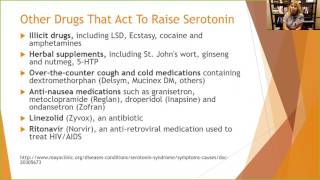
This episode was pre recorded as part of a live continuing education webinar on demand. CEUs are still available for this presentation through all CEUs. Register@Allce.com Counselortoolbox you. I'd like to welcome everybody to today's presentation on medical error prevention. Understanding Serotonin Syndrome we're going to start out by defining serotonin syndrome. A lot of us are a little bit familiar. We may know a little bit about it but not enough to really understand how to identify it, what to do about it or why we as non prescribing clinicians would really care. So we, so we're going to talk about that. We'll explore the drug interactions that often cause serotonin syndrome and we'll look at some of the different ways that we may not have thought about how serotonin is actually increased in the brain. We'll explore risk factors for serotonin syndrome, discuss why mental health clinicians need to know about it and learn about treatment for serotonin syndrome. We're obviously not going to treat it, but it's good to know. So if we're referring a client to their primary care or sending them to the emergency room, we can give them some sort of reassurance about kind of what's going on so they they're not as stressed out because serotonin syndrome can be extremely scary. So understanding some of the serotonin receptors and there's if I remember, 17 the ones we're really going to be looking at today and not in huge depth because this is more about serotonin syndrome, not the pharmacokinetics. 5HT1A is one of the ones that a lot of our typical antidepressants work on. 1D is involved with locomotion and muscle tone 2A neuronal excitation, learning peripheral vasoconstriction 2B stomach contraction 3 nausea, vomiting and anxiety and 4 is gastroenter gastrointestinal motility. And you're thinking to yourself yes, so why do I care? Because when we're looking at serotonin syndrome and we look at the symptoms, these are the symptoms we're talking about. We're seeing an increase in serotonin causing extreme gastrointestinal motility I.e. diarrhea, nausea, vomiting, anxiety, stomach cramps, really high fevers. So we know or think hypothesize that the increase in serotonin is affecting these different receptors. Ways serotonin is increased, we increase serotonin synthesis that is the body making serotonin well, serotonin can only be made by, from tryptophan, which is an amino acid. If people start taking amino acid supplements, which can be dangerous. When you start taking supplements and they're not in the ratio that nature has presented them to us, sometimes that can prompt too much serotonin to be created. Now that also assumes that the body's gonna take that extra tryptophan and go, hey, we've got excess building blocks, let's make more serotonin. But that is one way to increase serotonin, reduction in serotonin breakdown. So you have serotonin and it's put into the space in the synapse and instead of breaking down as quickly, these drugs, typically your MAOIs. And we can all think about when MAOIs were used, you know, back before tricyclics. But the MAOIs prevent serotonin from being broken down. So if you've already got it, you may have enough of it, but it's getting broken down too quickly. All right, that's fine. The third way is an increase in serotonin release. And this is caused by a lot of different things. But primarily we're looking at amphetamines, including ADH medication, ADHD medications and mdma. So legal, prescription, illicit, you know, anything that's going to be a extreme stimulant, your anorectics, your appetite suppressants, which generally are also amphetamine based like Dexedrine and anti migraine medications such as tegretol and valporic acid. So it's important to understand some of these things because if you've got a patient who's on SSRIs and they're also taking some of these other medications, they may not have told their psychiatrist that they're taking their migraine medicine. They may not have thought to do that, that they, they weren't necessarily be trying to be snarky or trying to be manipulative. It may have just slipped their mind because it's something they take. Prn. The fourth way we increase serotonin is through stimulation of postsynaptic receptors. So you've got serotonin, it's released into the synaptic cleft and then these receptors are out there. Now going Back to neurobiology, 101 receptors are kind of like lock and key sort of things. Well, stimulation of the postsynaptic receptors mean we're stimulating, we're activating more of these locks. Buspirone, lithium and opioid based pain medications can all stimulate postsynaptic receptors. They've actually Kind of a little side note here. Started looking at the use of opioids for people with major depressive disorder that are not responding to your common SSRIs. So we know from some of those studies that serotonin is stimulated and involved when opiates are used. So that's a whole different presentation and discussion on using opiates for depression. But being aware that some people will, maybe they go to the doctor, they're on SSRIs, and they go to the doctor and they have a root canal. Well, when my son had his root canal or not root canal, but has his wisdom teeth out two months ago, the doctor gave him like 30 percocets. You know, I thankfully he used half of one. But someone who was on SSRIs taking pain medication after an outpatient or a minor surgery may not realized that the two of them could be additive and cause serotonin syndrome. Which is why, again, it's important to inform the physician who is doing the outpatient surgery. Some of those physicians, dentists, whatever title they have, may also not be overly educated on serotonin syndrome and how opiates interact with SSRIs. Hopefully they are by now, but it's something to consider as clinicians. We're going to have clients coming in and telling us that they're getting ready to go in, possibly getting ready to go in to have their wisdom teeth out and they're stressed about it or something. If we know that they're on SSRIs, we can tell them ahead of time to make sure that they inform their oral surgeon about the fact that they're on antidepressants and inform them about the interaction between antidepressants and opiates. Is it a problem for everybody? No. Can it be a problem? Yes. So it's good to just be aware. Ways serotonin is increased. We use serotonin reuptake inhibitors in a lot of different ways. We have our SSRIs, our Paxil, our Prozac, our Zoloft, typically the ones that we think of. So people can be taking those. Ultram, which is actually a pain medication, also stimulates the Mu receptor, which is one of your opiate receptors, which is why not only does it inhibit the uptake of serotonin, it also binds with your pain receptors. So is it typically used as an antidepressant? No, it's typically used as a pain medication, but we do know that it prevents the reuptake of serotonin. So if somebody's already taking an SSRI and they take Ultram. Basically they're kind of doubling up on their SSRIs. Trazodone is a serotonin agonist and reuptake inhibitor. So it increases the serotonin and it prevents its reuptake, so it keeps more of it available. Try. Typically you wouldn't see trazodone prescribed with an ssri, but every once in a while you do your tricyclic antidepressants like Elavil, Trofanil and Pamelor. Probably not going to see those with SSRIs, but you may see those with opiates or something else. And we're going to talk about some over the counter medications. The reason I'm going through these is I know for me, I get familiar with the medications that the docs around where I'm at prescribe. And generally like when I worked in community mental health, our psychiatrist prescribed pretty much the same thing, you know, pretty much the same five or ten drugs. So I was really familiar with them. And then when we have somebody come in who wasn't already in our system, so to speak, they may or may not have a unique medication that I'd have to look up, but I became familiar with some of the ones and I would recognize the names and go, okay, that's an antidepressant or that's an anti anxiety medication or whatever. Being aware of that, knowing just the general category can help you identify when you're taking their assessment history or when you're doing just counseling sessions and they start talking about new medications they're on or procedures they're going to have, you'll be more aware and more able to educate them about what serotonin syndrome is and what to be on the lookout for. Some people, and, you know, I don't do it as a matter of course. I don't want to scare my patients. But some clinicians have taken it upon themselves when they know that a client is taking an ssri. They give them handouts or point them in the direction of education about serotonin syndrome so they're more aware of any potential drug interactions and they can better protect themselves. I'm hoping the psychiatrist, the doctor, the pharmacist has already done this. Obviously we all get that list, that huge 16 page microtype font of all the different side effects you could have and warnings when you pick up medication at the pharmacy. Honestly, I don't think anybody reads it. So it is incumbent upon us potentially to inform our clients about potential side effects and things they need to Be aware of. Another one we want to look at is your smoking cessation medication. Wellbutrin and Zyban for example, are used to help people with smoking cessation. If they are taking that and they start taking some of these other drugs that increase serotonin, they could be setting themselves up for problems. Other drugs that act to raise serotonin, lsd, ecstasy, cocaine, amphetamines. If you work in a mental health clinic, you may not ever hear about these from your clients. If you work in substance abuse or co occurring disorders, you may. If you're working in mental health and you're working with younger clients who may still go to raves or whatever they're called now, they may also talk to you about how they did some X or experimented with lsd. So it's important again to be aware that that will raise serotonin so we can help them understand it's probably kind of risky. I had a client one time and this doesn't really relate to serotonin, but to give you an idea of how some of our clients think, he was on antipsychotic medications, had schizophrenia and he was abusing cocaine. And I said to him, you know, John, I'm really worried about you. If you're taking your medication and you're also using cocaine, that could be really dangerous. He said, oh, don't worry Dr. Snipes, I made sure not to take my medication for two days before I used to started using the cocaine. Okay. I appreciate his will to live and I appreciate his concern and understanding of the potential drug interactions which led us to another conversation about medication compliance and, you know, etc. But just talking to our clients and making sure when we do our session by session mental status exam and we do our kind of check ins, how's your medication going? Anything new that we listen for? Some of these sorts of things, herbal supplements people may take, they're touted on the Internet, they're touted on Facebook, they're touted on, you know, some of the popular health magazines like Prevention or Self. You'll find articles occasionally that are touting certain herbs like St. John's wort, wart, ginseng, nutmeg or 5 HTP. All of these raise serotonin levels and some do it really dramatically and really quickly like 5 HTP. So not only can a client overdose or create serotonin syndrome just from taking any of these independently in an amount that's too much for their brain to handle, but if they're taking it in combination with other things. It can also cause a problem over the counter cough and cold medicines containing dextromethorphan, Deltium or Mucinex dm Deltium is one we use. It's one of those long acting cough syrups which is really nice if you want to help your kid, not cough all night long or yourself for that matter when they've got a cold. However, the trend recently has been for some people to abuse dextromethorphan, especially using rectal suppositories. Doing that gives them the high, gives them the feeling that they're looking for. But it can also increase serotonin levels in the brain to just dangerously high levels. So you can get it over the counter, you can go to Walmart and you can actually get something or wherever and get something over the counter that can cause serotonin syndrome. Anti nausea medications such as Reglan and Zofran can impact you. So think about this. You're getting ready to go on a trip, you're going on vacation and you're somebody who's already on SSRIs or maybe you're taking St. John's Wort or 5 HTP for anxiety or depression and you know you're feeling pretty good, you're getting ready to go on vacation, but you know you're getting ready to go on a cruise or you get car sick, so you go to your doctor and you get motion sickness medications, well that could be a problem. Having those on could increase the serotonin levels high enough to be dangerous. Zyvox, which is an antibiotic, I mean we're not even talking about mood altering drugs right now. We're talking about an antibiotic has been linked to increasing serotonin levels. And Norvir, which is an antiretroviral medication, can do that. So if you've got a client who is, who has HIV or AIDS and is taking an antiretroviral viral program, it's important for them to understand that that raises serotonin. So if they also happen to be on SSRIs or if they get a cold and start taking dextrim with Orphan to suppress their cough, they need to be aware of what the symptoms of serotonin syndrome are. So what are those symptoms? I keep talking about them, but we haven't talked about them. C stands for cognitive changes, including agitation, confusion, euphoria. Think about increasing those serotonin levels in somebody's brain. Insomnia, hypomania and hallucinations. Now I also want you to think while I'm going Through these things, these symptoms, if you had a patient and you didn't know anything about them and they presented with some of these symptoms, what else might you suspect is going on? Because a lot of times our mind doesn't immediately go to serotonin syndrome. It goes to, or at least mine does, it goes to intoxication or psychotic episode or something else. So we want to pay attention to what these symptoms are and be aware what our clients are taking. It's not up to us to diagnose. Unless you happen to be a medical doctor, it's not up to us to diagnose serotonin syndrome. But if we suspect that that might be going on, since it can be life threatening, it is up to us to advocate for our client and ensure they get to a place where they can get the care and differential diagnosis that they need. So the agitation, hypomania, hallucinations, cognitive changes, difficulty thinking, then you have a, which stands for autonomic changes, including tachycardia, fast heartbeat, fever. And this can be one of the most life threatening symptoms of serotonin syndrome. Arrhythmias, irregular heart rate. So it may not be too, it may not always be really, really high sweating and dilated pupils. Now again, when those pupils start to dilate, people start thinking more in terms of intoxication, often not serotonin syndrome. Could you argue that it's a form of intoxication? Well, yeah, but this is probably one that they didn't bargain for. N stands for neuromuscular changes, including tremor, rigidity, incoordination and seizures. Obviously, if our patients are having a seizure, we're going to be calling 911. But if we notice that somebody's uncoordinated, they may have a tremor. Do we want to assume that they are intoxicated? No, we want to do our best to try to figure out what's going on and not just go, well, come back to group when you're sober. That doesn't work. So can cognitive, autonomic and neuromuscular changes. These are the things that we need to be on the lookout for and help our clients understand other symptoms. Confusion, agitation or restlessness. Dilated pupils we already talked about. Headache is another one that can be present and that goes along with some of the other changes that our clients may be experiencing. So if a client starts taking a new medication, an ssri, or they start taking some herbs or something like that, and they start getting a wicked headache, this could be a sign the serotonin levels are getting too high. It could also be a sign of a hundred other things, but it's not something that we want to summarily dismiss. When I had surgery about two years ago, and I am a real lightweight when it comes to pain medications. I take like a quarter dose of what you can take and I'm feeling good. I'm basically non functional at that point, so I don't need a whole lot. And they were giving me the regular adult dose when I was in the hospital. And I couldn't think straight. I could barely see, my head was killing me. And I didn't really realize what was going on until I started looking at this presentation going, you know what? I think I probably had too much medication in my system. Changes in blood pressure or temperature. If somebody is feeling hypertensive, they're probably going to get a headache with it. High fever, like I said, is a dangerous sign. If they feel nauseous or are vomiting, we don't want to just wait till they're puking. If they're starting to feel nauseous, remember those serotonin receptors? One of them is responsible. Nausea. This could be an early sign. We don't want to wait until it's life threatening before we go. Hmm, might be a problem. Diarrhea, rapid heart rate, tremor, loss of muscle coordination or twitching muscles, shivering and goosebumps. If you've worked in substance abuse treatment, you may be familiar with people who pick at their skin or itch a little bit, which can be kind of mistaken for shivering and goose flesh. Noting it. Could they have the flu? Certainly. Could they have something more troublesome? Possibly. So we're going to talk in a minute about how to kind of differentiate. When does somebody need to be referred to the er? In severe cases of serotonin syndrome, it can be life threatening. So if your client is experiencing high fever, seizures, irregular heartbeat or unconsciousness, go figure, you need to immediately call 911 and get them to the hospital. Now, if they're experiencing a few of the other symptoms and you start talking with them and you find out that they've either, well, that's on the next slide. They've either recently started taking or increased the dose of a medication known to increase serotonin levels, take more than one drug known to increase serotonin levels, take herbal supplements that increase serotonin, or use an illicit drug known to increase serotonin. Which is one of the reasons I really encourage mental health counselors, in addition to substance abuse counselors, to be open to talking with their patients about illicit drugs. They may be Taking in as non judgmental of a way as possible. If somebody is using cocaine, okay, I would rather have them tell me that. So I know and I can help advocate for them and help them get information they need to protect themselves than them to hold back because they're fearful that I am going to report them to Department of Children and Families or I'm going to send them immediately to residential substance abuse treatment. So I try to keep it as open as possible in my sessions. That's how I handle it. But I've been working with co occurring disorders most of my career. So we want people to be able to tell us has something changed in terms of anything that they're taking. And it's helpful if you have a checklist that you can go through with them that goes through. Let's see, back to these medications. Illicit drugs, herbal supplements, over the counter cough and cold medicines and anti nausea and then the antibiotic and antiretroviral in addition to the opiate pain medications. Because they may not be thinking about these things and they may not realize that certain medications they're taking are increasing serotonin. Most people only think about antidepressants as affecting serotonin and some of those herbs that are touted as antidepressant alternatives. But there are so many more things that will do this. So from a clinical perspective it's important for us to help clients understand that serotonin syndrome can appear after just one dose. So you know, ecstasy or if they're taking any of the amphetamines, if they're taking diet pills. In addition our anorectics, even over the counter anorectics that have stimulants in them. And one thing I didn't mention, if you work with people who happen to be into working out and they take a lot of supplements, especially pre workout supplements. Pre workout supplements are notoriously loaded with high levels of caffeine guarana and a bunch of other things that are stimulants which are going to act as an amphetamine, possibly increasing serotonin, causing tachycardia and some other things. But if you combine that with some of those other drugs that we've been talking about, they could harm themselves. The reason I keep bringing this up is this is not just a substance abuse issue. This is a anybody who takes anything that messes around with serotonin, from cough and cold to anti nausea medications. Think about for yourself. You know, even if you don't take antidepressants, think about for yourself if you've ever Taken any of the drugs that we talked about. Go back to them. Herbal supplements. I think all of us have taken cough and cold medicines at one time or another. Anti nausea medications. So maybe you took those at the same time because you were on vacation. Painkillers. People often take painkillers in combination with a lot of other things. If you've got a client who has chronic pain, you may be seeing them for depression related to their chronic pain or disability that is caused by their chronic pain. So they may be taking opiate based medications in addition to antidepressants or they may not want to see a psychiatrist for antidepressants. So they may, but may be trying to treat that on their own, which can be dangerous. Let's see, 60% of patients present within one to six hours after the initial administration of the drug or combination of drugs that are causing serotonin syndrome. So if they take something, 60% of patients are going to have a clinically significant response within one to six hours and they're going to go to the emergency room. The scary part is 40% of them won't and they wait and they continue taking that combination and continue to raise the levels of serotonin in their brain. Which is why it's important in terms of from an advocacy standpoint for us to help them advocate for themselves and not be turned away until it's a life threatening crisis where they can go to their doctor, where they can go to the walk in clinic and go, hey, I just started taking this stuff. I'm feeling really lousy. Yes, it's not life threatening yet, but there's a potential. Something's a little bit hinky here and I need a physician to help me out. I've heard on many, many, many occasions unfortunately of people being turned away because they present with kind of flu like symptoms. Nothing that presents as extremely life threatening. So they're turned away and they continue to take that combination of medications because their prescribing physician can't get them in for three more weeks. So they continue to take that to be med compliant and they end up exacerbating their condition until they get to the point where they're presenting again in the emergency room, but this time with a life threatening problem. And it's not, that's just not good on so many levels, not only for the patient because that freaks them out and they may not want to take any medications, but it's also not good for us from a liability standpoint and not good for the community because if a patient presents and they say there's a problem. And we go, oh no, there's not. Bye bye. And then it ends up turning into a problem. And they're like, see, I told you so. They feel less confidence in us. And I use us in terms of the medical community at large, not us necessarily as counselors, but they feel less confident in the people who are supposed to be in the know. One thing you might try doing, if you have ever encountered this, or if you know, you're hearing some of this and you're going, you know what? I think I want to be prepared for that. There are links in your classroom that will take you to different sites on serotonin syndrome, Mayo Clinic, some of the real common layperson sites where you can print out the symptoms of what's going on. You can also add to that a checklist of the different medications the person's taking and the different subgroups so they can take it if they go to the walk in clinic and go, these are the medications I'm on. And when I started taking those, these are the symptoms that started which seems to be related to serotonin syndrome. So I need your medical opinion that gives them a little bit more information in case the doctor they're seeing has not had their training on serotonin syndrome or in case their doctor they're seeing has not been, is not one to look at pre clinical or pre diagnostic levels. So many of our clients are on medications for depression, anxiety, pain, migraines, smoking cessation. Some of our clients may be on medications for every single one of these, which just, you know, scares me half to death. So it's important in my mind to educate clients as much as possible. And we don't have to necessarily do a group on it. You don't even have to take precious time during your assessment. I know, and I don't mean that sarcastically. I worked in community mental health where we had 78 pages that needed to be completed in an hour and a half. And that was just the way it was. And we had back to back intake so we couldn't spend a lot of time doing psychoed. You can have it in a handout in your lobby. It's amazing how much clients will read if it's in handouts in your lobby while they're waiting to come in for their appointments because they're bored. I mean, they can flip through magazines or they can start reading some informational pamphlets. So that's one thing that you can do is put this information out there. You can provide information to if you want to go deep into advocacy, you can provide informational handouts to the pharmacists that are in your community so they can potentially educate clients as they come in. Not all pharmacists are going to be open to it, but some will appreciate having the heads up or the ability to have something to educate clients. Some will require that you take all of your branding off of it and just have it be a generic handout. That's fine. So talk with them about what they're willing to hand out. If you're doing it as a, as an advocacy activity and not as a promotional activity, it's important for clinicians to inform clients about the risks of serotonin syndrome. I think I covered that. We as clinicians should be able to identify the CAN criteria, cognitive, autonomic and neurological for serotonin syndrome and refer to a physician immediately. If it seems like the person may have started taking a combination or they just recently started taking an SSRI or an herb like five HTP or St. John's wort and they're starting to have some of these symptoms, we don't want it to build up in their system. So we should make that referral now. Probably, unless they have the life threatening criteria, probably not worth calling 911 and having an ambulance come get them. But document in your clinical notes any symptoms that they presented with. If you have suspicions, make a note that you made the referral to what doctor and then in the next session or even call the next day, depending on how concerned you are, follow up and document that in your notes as well. That way you can show that you are doing due diligence to help the client protect themselves against some of the side effects of serotonin syndrome. Another one we didn't talk about in here is alcohol. Alcohol does affect serotonin levels. And if you have. There are a lot of clients out there who are on serotonin reuptake inhibitors or serotonin and norepinephrine reuptake inhibitors. So our antidepressants, we'll just kind of lump them all together who are also drinking alcohol or they're taking pain medication and drinking alcohol, which usually are warned about, but they do it anyway. Alcohol, since it increases serotonin levels, can also trigger a serotonin. Serotonin crisis, if you will. Educating clients, if they're telling you that, you know they're on some antidepressant and they're telling you they're drinking a couple drinks before they go to bed at night, not you know or drinking excessively. But if they're drinking anything, we do want to point out how dangerous that can be. They're going to make their own decisions, especially if they're in outpatient, they're going to be making their own decisions about whether they continue to drink or not. But we can identify that they said that and identify that we notified them of the problems. Now, potentially depending on what your attorney says, what your policy is, you may also need to tell their prescribing physician. When I worked in community mental health, we were all part of the same group, the psychiatrists. You know, it was a comprehensive treatment center. So the psychiatrist would read in my notes that they had this going on, or if somebody told me that they were taking drinking alcohol while they were on taking SSRIs, I would let them know that they need to tell their psychiatrist. And I would also let them know. I think it's important that you get an appointment now. And I'm going to have to put this in the notes just so they're aware that the psychiatrist knows and the psychiatrist is aware. Because a lot of times the psychiatrist, they're not going to tell the psychiatrist, oh, yeah, by the way, you told me not to drink, but I've been drinking anyway. A lot of that comes down to agency policy and what, what and who you have assigned release for. And then looking at your own ethics of whether that is do no harm if you go and tell the psychiatrist or you tell the doctor who's prescribing the antidepressant or opiate meds that the person is taking other stuff and not letting them know, does that protect the patient? Yes. Does that corrupt your relationship with the patient? Possibly. So it's one of those tricky ethical things that you're going to need to take a look at. Definitely run it up the flagpole with your attorneys, with your supervisor to see what the thought is at that point in time. Part of it's also going to depend probably on the degree to which the clients are using additional substances and or willing to talk to the prescribing physician about what they're doing. Even if a patient isn't on an antidepressant, he or she may be at risk for serotonin syndrome by combining over the counter medications like cold medications and illicit drugs, or combining multiple different cold medications and weight loss medications. The abuse of DXM or dextremethorphan is becoming increasingly popular among youth, which can put them at risk of serotonin syndrome. Remember, it only takes one time. It doesn't have to be a buildup effect. Some patients also fail to tell their doctors about herbs, illicit drugs, or drugs prescribed by other providers they are taking, which again puts them at increased risk. Alcohol does increase serotonin, so someone who's on the brink of serotonin syndrome, you know, they've already got a pretty high level, they're functioning, they're not having, they're not symptomatic. But then they drink alcohol. It may be too much for their system to handle, so it can precipitate a serotonin crisis. References There's a bunch of stuff if you really want to get down into the weeds about serotonin syndrome and how it happens and what it looks like. You can go and read all of these. I did put the one in here about how they're using opiates with In Looking at Treating Intractable Major Depressive Disorder because it is really informative article. Scary, in my opinion, but informative. So you may want to take a look at that because you may see that in some of your patients who have persistent major depressive or recurrent major depression. If you enjoy this podcast, please like and subscribe either in your podcast player or on YouTube. You can attend and participate in our live webinars with Dr. Snipes by subscribing@Allce.com Counselortoolbox this episode has been brought to you in part by allce.com, providing 24. 7 multimedia continuing education and pre certification training to counselors, therapists and nurses since 2006. Use coupon code counselortoolbox to get a 20% discount off your order this month.










