Norepinephrine Your Get Up and Go
Dr. Dawn-Elise Snipes explains norepinephrine, the neurotransmitter that drives alertness, attention, and motivation. It rises with stress and wakefulness, and too much causes anxiety and palpitations while too little brings fatigue and ADHD-like symptoms. The talk covers which drugs raise or lower it and why sleep, diet, and stress matter as much as medication.
Chapters
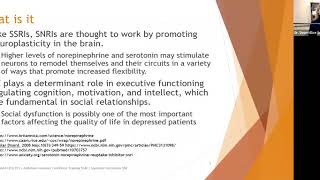
This episode was pre recorded as part of a live continuing education webinar on demand. CEUs are still available for this presentation through all CEUs register@allceus.com counselortoolbox I'd like to welcome everybody to today's presentation. Today we're talking about norepinephrine, your get up and go neurotransmitter. I'm Dr. Donnelly Snipes and I will be facilitating you through this next hour. Like the other presentations, we're going to talk about what norepinephrine is, what its function is, how it interacts with the other neurotransmitters, particularly serotonin and dopamine. Remember, you've got your big five. You've got serotonin, dopamine, norepinephrine, GABA and glutamate. Those are your big five that we want to talk about. It doesn't mean that there are no others. You've also got acetylcholine and all kinds of other stuff and your cannabinoids receptors in there. But we're just focusing on sort of the big five. For this series, we'll look at the symptoms of excess norepinephrine and how to decrease it and symptoms of insufficiency and how to increase it. Some of this stuff is going to seem repetitive or redundant based on what you've already learned in serotonin and dopamine. So I'm trying not to regurgitate a bunch of stuff that you've already learned. If you have questions that I may not be answering about serotonin and dopamine, those videos will be on our YouTube channel and the podcasts will be out next week. So you can review those if you need a little bit more information about those two neurotransmitters. So let's talk about our buddy norepinephrine. Norepinephrine mobilizes your brain and body for action. It is your get up and go neurotransmitter. It is secreted. When that HPA axis is activated, it releases lowest during sleep. Hopefully you are not trying to get up and go during sleep. It rises during wakefulness, reaches a much higher level during situations of stress or danger. So a lot of times norepinephrine kind of goes hand in hand with cortisol because cortisol does the same thing. It's lowest during sleep and it rises first thing in the morning, which is what helps you get up and go. Norepinephrine functions mainly as a neurotransmitter with some function of as a hormone because it's released into the bloodstream from the adrenal glands. I grabbed my back because your adrenal glands are located beside your kidneys. Norepinephrine affects the behaviors of individuals, including modulation of vigilance. When you have a lot of norepinephrine, that indicates that your HPA axis is activated, which indicates you're going to be more hypervigilant. Arousal, attention, motivation, reward, and also learning and memory when you're trying to learn something about it. If you've been in a class, even if it's something you've really cared about, and that's dopamine right there, Dopamine is saying this is reinforcing, this is rewarding, this is good stuff here. I want to learn it. So that encourages you to pay attention and make room for it in your long term memory. Norepinephrine helps you stay awake through the lecture so you can pay attention to what's being learned. Norepinephrine and dopamine really work hand in hand here with learning and memory. If you remember, serotonin plays a part in that too. We haven't been able to extricate specifically what functions each one of those things, each one of those neurotransmitters performs. We are speculating and hypothesizing. We do know though, that if there is somebody who has low levels of serotonin, they may have difficulty with the things like learning and memory. And given an ssri, they may respond better and have more effective learning and memory. But we also know that only about 30% of people with depression or problems with learning and memory have serotonin imbalances. So then we go to dopamine, then we go to norepinephrine. So we need to start, this is the part science, part art is listening to what the patient tells us about what's going on with their symptoms. And most of us are not prescribers. And I encourage clients when we're talking to really identify what their symptoms are, what makes it worse, what makes it better. Because that gives their psychiatrist hopefully a better handle on where to start. If they're looking at it and the person has anhedonia and lack of motivation and just is blah all the time. But they tend to be a little bit anxious. Then that doctor might look at starting with some sort of a dopamine reuptake inhibitor. The key is to provide the prescribing clinicians enough information. And most clients don't understand what that is. They Think they go in and they say, doc, I'm depressed. Give me something. Well, if you do that, you're probably going to get an ssri. But depression looks so, so many different ways it can look. There are up to 128 different permutations of depression based on the symptoms in the DSM 5. So that tells us that we've got a lot of different things that we need to look at. Norepinephrine enhances processing of sensory input, attention, and formation and retrieval of long term and working memory. And this is one of those things that we're going to talk about with Alzheimer's that when there are some memory problems, sometimes it's a norepinephrine issue. Now, I thought this part was really interesting. Norepinephrine is involved in the clinical features of cerebral aging. Cognitive slowing and loss of behavioral adjustment. As we get older, we tend to slow down. It takes us a little longer to process information. That's just the way our brains work. And when people are more active and doing anything from puzzles to physical activity, they tend to experience less cognitive slowing. The cognitive slowing, though, is sort of a part of aging. And you can mitigate it, but you can't completely prevent it. And part of this is because of loss of norepinephrine. And then as we see people get older, we see that they tend to get often a little bit more stuck in their routines. They get a little bit more rigid, if you will. They have more difficulty adapting or adjusting to change. That's partly because of lower norepinephrine they found. So it's an interesting little thing that we can pay attention to with our clients. And if they're. One of their features is extreme distress at any sort of change. We might want to look at, you know, what's their norepinephrine? What are their norepinephrine symptoms looking like? Does it seem like they have an excess or an insufficiency? Not that that's necessarily it. We're going to. This next thing addresses that both norepinephrine and 5ht. Remember, this is the precursor to serotonin, norepinephrine and 5ht activity is lower in bipolar disorder. Neither 5ht nor norepinephrine depletion induced clinical depression in healthy subjects or worsened depression in unmedicated symptomatic patients with major depression. So they had people who were healthy and they monkeyed with their serotonin and their norepinephrine and, and it didn't produce depressive symptoms. They had people who were unmedicated and symptomatic with depression, and they made their serotonin or their norepinephrine go even lower, and it didn't worsen their situation. So what does that mean? We don't really know. We do know, or we're extrapolating from that, that the cause of depression is more complex than just an alteration of the levels of serotonin and. Or norepinephrine. It may be more directly caused by dysfunction in the brain areas or systems modulated by neurotransmitters. When you were in intro to Neuropharmacology, you probably heard the analogy that neurotransmitters act on receptors in the brain, sort of like a key in a lock. Okay, so what they're saying here is it may not be that lacking enough keys. It may be that the locks have glue in them. The locks are stuck, and the key's right and it fits in the lock, but the system's not working. The treatment for that may be a little bit different, and it's up to us to figure out how that works. It's also interesting to hypothesize that, okay, in this particular study, the only two that they monkeyed with were serotonin and norepinephrine. What if it was dopamine for those people? Now, likely across the board, you wouldn't have found an entire sample that was only feeling depressed because of a dopamine imbalance. What if it was a dysfunction in the cannabinoid system? Okay, well, that's possible, too, but again, likely, at least some of them would have responded to a. To the reduction in serotonin or norepinephrine, which causes sheds a lot of question into the theory that depression is caused by too little or too much of any particular neurotransmitter. I know. That just makes it even more confusing. The good news is, or I try to, you know, find that silver lining because of this, I can say and believe in my heart when I talk to patients who aren't responding to their SSRIs or their SNRIs, that, okay, that may not be it for you. Let's talk about what else might be going on. And this is where we really need to look at that transtheoretical trans diagnostic approach to see just. Do they have Crohn's disease? Maybe they have some leaky gut going on that's causing inflammation. Maybe their thyroid is not functioning. If they haven't had a physical with a full blood panel, including thyroid and sex hormones, they need to have it done. Because those things can be so instrumental in improving mood. Because your thyroid and your sex hormones and stuff are also involved in making neurotransmitters like serotonin and norepinephrine available. So when estrogen goes down, the availability of serotonin goes down. You know, we talked about that in serotonin. It's important get the docs involved like SSRIs. SNRIs are thought to work by promoting neuroplasticity in the brain. This is a cool thing. So we take these drugs and it makes our brain kind of go back to that earlier stage when we were younger, when there was more neuron formation and more plasticity. We could kind of mold and shape the channels, if you would. Higher levels of norepinephrine and serotonin may stimulate neurons to remodel themselves and their circuits in a variety of ways that promote increased flexibility. This is why they hypothesize that people who are on antidepressants and concurrently going to counseling have better outcomes than than people who do SSRIs or counseling alone. Because the counseling teaches new tools and is trying to remodel those circuits. But if the circuits aren't pliable, then it's going to be harder to make that change. You could also say that the SSRIs help people feel more motivated, quote, unquote. So they are more apt to learn what we're teaching in counseling. However you want to look at it. Norepinephrine plays a determinant role in executive functioning, regulating cognition, motivation, and intellect, which are fundamental in social relationships. Social dysfunction is possibly one of the most important factors affecting the quality of life in depressed patients. Oh, boy, here we go again. So if we have a patient who feeling depressed, you know, the serotonin, they're having difficulty modulating their emotions. They've got some emotional dysregulation with dopamine. They've got anhedonia and apathy with norepinephrine. They may have difficulty thinking, being motivated, and conversing with other people. They may have foggy brain all the time. Any of these three, if you look at the symptoms of depression, you can sort of divide it by the different neurotransmitters. So the theory is that in certain patients, the lack or a low level of norepinephrine could be contributing to the treatment resistantness of their depression. Now, you remember when we talked about serotonin and dopamine, Too much can promote social anxiety. So we don't want to do that either. We need to figure out and not just start throwing, throwing stuff at people because we don't want to make their symptoms worse by increasing their anxiety. Back to the whole breakdown thing we talked about with dopamine, that dopamine is synthesized from phenylalanine, which is broken down to tyrosine, which is broken down in the brain to L dopa or which is broken down to dopamine. Well, guess what? Dopamine is then broken down into epinephrine and then norepinephrine. So if you don't have enough dopamine, you're not going to have enough norepinephrine. Norepinephrine is synthesized from dopamine, which is synthesized from tyrosine. Remember that's found in proteins such as meat, nuts, eggs and dairy products. The amino acid tyrosine, just as a little side, not really important, just a little quick fact. Amino acid tyrosine is named for tyros, the Greek word for cheese. That may make it a little easier to remember where you can find it. Norepinephrine also modulates your immune response. Oh my gosh. So another one. Serotonin, dopamine, norepinephrine, all modulate the immune response and can suppress inflammation. So again, if depression is caused by theoretically low levels of systemic inflammation, we still can't say, well, oh, that means that this neurotransmitter is low. No, you know, all three of them are involved in suppressing inflammation. Norepinephrine is specifically responsible for reducing neuroinflammation or brain inflammation. Up to 70% of norepinephrine projecting cells are lost in Alzheimer's disease. So they're thinking that the inflammation that's caused in the brain by the degeneration of the norepinephrine projecting cells may contribute to the buildup of the plaques that lead to Alzheimer's disease. It's not known yet, but that is one hypothesis. Norepinephrine increases the force of skeletal muscle contraction and the rate and force of the contraction of the heart. Now we're getting ready to go into a litany of fight or flight symptoms, which are also a litany of panic attack and anxiety symptoms that some people may experience if their norepinephrine is too high. So it increases heart rate, blood pressure, and levels of glucose and fat in the blood. Why glucose and fat? Glucose is your short term energy source. It's the sprint. Fat is your endurance energy source. So you get glucose for that initial sprint and then fat Takes you through the rest of it. Theoretically, in the eyes, there's an increase in the production of tears, making the eyes moister and pupils dilate. When our pupils dilate, we theoretically see more in brown adipose tissue, an increase in calories burned to generate body heat. So when you're cold, it can actually lead to an increase in norepinephrine. When you're cold and you can't warm up, that may indicate a low level of norepinephrine in the kidneys, a release of renin and retention of sodium in the bloodstream. We see this more often in people with low norepinephrine levels who have a lot of postural hypotension. That is, when they stand up, they get really lightheaded. A reduction of sodium may indicate not enough norepinephrine in the liver, an increase in the production of glucose. Because you've got that fight or flight thing going on. Your liver has ramped up, up the production of energy. It's like, okay, I gotta keep you fueled. In skeletal muscles, there's an increase in glucose uptake. So the glucose goes into your bloodstream, Then the skeletal muscles take it and use it. They're drinking it up to help you do what you need to do. In fat cells, there's an increase in fat burning and in the stomach and intestines, a reduction in digestive activity and decreases in gastrointestinal mobility. When you are fighting or fleeing, it is not the time to have to go to the bathroom. Which is why people, you know, generally don't have to go to the bathroom when they're really, really stressed or right at the beginning. It's, you know, there's a problem, and then things kind of slow out after that or another reason. Think about when you're at a picnic on, well, at a picnic and decide to go swimming. You don't want to go swimming right after you eat, because when you start exercising, it increases the norepinephrine levels in your body. It makes the blood go into the extremities, and the blood really wants to stay in the belly to help digest right now, which is why people can sometimes get cramps, norepinephrine deficiency, and prolonged stress. Now, this may sound familiar if you're familiar with adrenal fatigue or hypocortisolism. In the early stages of prolonged or severe stress, the stress response system is overactive. And norepinephrine and other adrenal stress hormones like cortisol are typically way elevated. This increases arousal, amplifies the emotional reaction and can manifest as insomnia, anxiety, depression, irritability or emotional instability. You have a lot of emotional ability here. Prolonged stress, and this isn't just prolonged like two hours, this is prolonged stress over weeks or months or really intense stress over several days. May lead to under activity of the stress response system resulting in a norepinephrine deficiency along with cortisol and epinephrine depletion. This is referred to hypocortisolism, especially in the trauma and PTSD literature. This lowers arousal and can result in low energy, daytime fatigue, concentration and focus issues, and general apathy, that is depressive symptoms. So what are the symptoms of insufficiency? Okay, well ADD is and ADHD is here again. And we talked about this with dopamine as well. When you don't have enough norepinephrine is hard to focus. So ADHD symptoms may come up. Parkinson's disease, you heard about this in dopamine, you're hearing about it again. Parkinson's disease and diabetes cause degeneration of norepinephrine neurons leading to bradycardia and hypotension. So norepinephrine keeps our heart beating at the rate it's supposed to be. When those norepinephrine neurons start to degenerate, then the heartbeat can slow down. Bradycardia is typically in non athletes, defined as any resting heart rate below like 50 beats a minute. Hypotension is the opposite of hypertension and it means really low blood pressure. As norepinephrine gets too low, heart rate and blood pressure get too low. When your blood pressure is too low or your heart. Well, let's talk about your heart rate first. When your heart rate is too low, it's not getting as much oxygenated blood to your brain as it needs to, which contributes to fatigue and confusion when you are hypotensive. When your blood pressure is too low, it does the same thing. Low levels of epinephrine and norepinephrine can contribute to a variety of physical and mental conditions, including depression. You don't have any get up and go, it's probably going to feel sort of depression, like, if not like full out major depression. It's also been found to contribute to fibromyalgia, hypoglycemia. Now let's think about that. Norepinephrine causes the body to produce more, more blood glucose for that fight or flight. So if norepinephrine is too low, you're not producing enough blood glucose, which can lead to hypoglycemia. If you, if you've known clients who have hypoglycemia when their blood sugar gets too low, they can typically get foggy headed, confused, irritable, sometimes downright mean. My husband has hypoglycemia and when he was a law enforcement officer for almost 20 years and the only times he ever drew a complaint were when his blood sugar was low. If he went back and he looked, he could tell that he hadn't eaten in 8, 10, 12 hours, something like that. And he gets really cranky when his blood sugar gets really, really low. So that's something to pay attention to. If a client reports that they have a lot of irritability, encourage them. It should also be measured in that blood panel. Encourage them to make sure to get their blood sugar levels checked and keep a food diary. They may not be pre diabetic or diabetic, but if they are the type of person, and I know I do it sometimes and it's not good, I will come to work and I will get immersed in something or it'll be crisis after crisis after crisis. And I've eaten at 4am and before I know it it's three in the afternoon and I still haven't eaten or drank anything and I'm getting a little cranky. Does that mean I've got some physical syndrome? No, it just means I'm not taking care of myself, which is where mindfulness comes in. But hypoglycemia is one of those things that's easily manageable and it's not necessarily because of norepinephrine insufficiency organically. It could be that you're not eating frequently enough. Migraine headaches There are a lot of different causes of migraine headaches, but this could certainly be one of them. Restless leg syndrome. Remember we talked with when we talked about dopamine. Dopamine imbalances can cause restless leg syndrome. Well, so can norepinephrine. Sleep disorders. Remember when we talked about dopamine, we talked about norepinephrine communicating with the pineal gland in order to regulate the circadian rhythms. And if norepinephrine is not doing its job, then your circadian rhythms may not get set correctly, which can contribute to sleep problems because your body doesn't know when it's supposed to secrete melatonin and rest and digest versus when it's supposed to be awake. I said it before, I'll say it again. I'm not encouraging you to do these Things to increase norepinephrine. I do want you to be aware of things that do increase norepinephrine. Any kind of stimulant is going to increase norepinephrine. Cocaine, amphetamines, methamphetamine, tricyclic antidepressants also increase norepinephrine. Steroids also increase norepinephrine. People who have Addison's disease, which is where the adrenals are just not producing adrenaline anymore, often are prescribed a lifetime course of steroids in order to increase norepinephrine levels. We do know that steroids also have a lot of other side effects that may need to be medicated as well. So being aware of what clients are on and your ADHD medications, your psychostimulants, not only increase norepinephrine, but they also increase dopamine. Exercise increases norepinephrine. Go figure. When you're fighting or fleeing, your body is, your heart's pumping and you're sweating and you're doing all that kind of stuff. When you're exercising, you're doing the same thing. You may not be running from a tiger, you may just be running on the treadmill. But in order to get your body to do that and the muscles to fire like they're supposed to, it has to have the signals that it's supposed to be awake and going. Stress will increase norepinephrine. Remember, norepinephrine is one of those initial chemicals secreted when the HPA axis is triggered. So cortisol and norepinephrine are secreted in order to cause that cascade effect. Phenylalanine increases norepinephrine, but not aspartame. Remember, when you have aspartame, when you have aspartic acid combined to phenylalanine, it actually lowers the amount of norepinephrine, serotonin, and dopamine. But phenylalanine, the amino acid that occurs in food, definitely need it. Tyrosine, the amino acid that occurs in food, definitely need it. Now, you can, theoretically, because some people can't have phenylalanine because of a certain genetic disorder, but they can have tyrosine. And if you remember, in the lined in the chemical reaction, phenylalanine is broken down to make tyrosine. So as long as you get the tyrosine in there, if you don't have the phenylalanine, it ain't the big deal. Carnitine is another amino acid that can help increase norepinephrine Interestingly, levels of dopamine, norepinephrine and serotonin all increase with nicotine use, not recommending it as a treatment. However, it does help us understand why nicotine is so addictive, so hard for people to quit, why they get so stinking cranky when they are not using. It's not just a psychological withdrawal. Three of their big five neurotransmitters are decreasing below the level that is quote, normal for them. Because remember, when you're, when your brain is bathed, if you will, in neurotransmitters above what it's supposed to have, it starts shutting some of those doors because it says too much neurotransmitters going through. We need to regulate that to preserve the body. It's a self protective mechanism. Your body is self correcting. However, when you first stop bathing your brain in those excess levels of neurotransmitters, those doors are still locked because your brain's like, okay, when's the next flood coming? It takes a little while before your brain starts going, okay, maybe we're safe. Maybe there's not going to be another flood. So let me open a couple of doors and then a couple more. Which is why it generally takes anywhere from three months to a year for people's brains to really get back in the swing of things and get healthy again. Symptoms of excess norepinephrine. People have aches and pains when you are stressed. A lot of times you tense your muscles. When you are getting ready for fight or flight, guess what? You are tensing up those muscles, getting ready for that explosive fight or flee. Additionally, when, when that HPA axis is kicked off, cortisol, norepinephrine, they're secreted. They tell your body, you know what, now is not the time for procreation. So let's not secrete sex hormones right now because we're not worried about that. We know that lower levels of sex hormones may make serotonin less available. It's also not time to rest and relax. We need to focus on addressing this threat. So let's turn down the serotonin right now because we don't need that Low serotonin, low pain threshold, which can contribute to aches and pains, rapid heartbeat, elevated blood pressure, anxiety, excessive sweating, heart palpitations and headaches are also all symptoms of excess norepinephrine. Now when you look at this, you're like, yeah, I feel like that when I drink too much coffee too. Well, because coffee increases norepinephrine, we do need to be aware of what's going on. And sometimes clients are better able to kind of wrap their heads and hearts around changing the way they think. You know, from a cognitive, behavioral standpoint, if they recognize when they're stressed out, it triggers their brain to dump norepinephrine, which is what causes all of these symptoms. So it's important for them to be able to change their thought patterns instead of thinking in extreme terms. And catastrophically, sometimes that can help in helping them wrap their head around kind of the function of neurotransmitters, because what we feel and our biological reactions are always the result of, of the input from our hormones and neurotransmitters. So the question is, what's going on that's triggering that particular neurotransmitter hormone cocktail, if you will, that's making you feel so bad? What is causing that to be created, and how can we help you create a different cocktail, if you will? Drugs that increase norepinephrine. Your norepinephrine reuptake inhibitors are used to treat major depressive disorder, anxiety, panic disorder, narcolepsy, and adhd. One of the more common ones is atomoxetine or Strattera. Theoretically, this only increases norepinephrine. But when we look at what happens in the brain of mice, at least, we see that it often, at least moderately or minimally, affects dopamine and serotonin. All of these drugs all kind of affect one another because when one becomes more or less available, it affects the availability of the others. It may not directly act on those receptors, but it may affect the availability. Norepinephrine, Dopamine reuptake inhibitors, or your NDRIs are used for clinical depression, ADHD, and narcolepsy. Dexmethylphenidate is an ADHD medication that falls into this category, as well as Wellbutrin, which is bupropion. A lot of people use bupropion to help them quit smoking. So when they're trying to quit smoking, this is helping increase the norepinephrine and the dopamine levels. Now, remember that nicotine also increases serotonin levels. So Wellbutrin may not be the be all end all for everybody, but it's likely to help SSRIs, which we're all real familiar with, treat major depression disorder, major depressive disorder, and anxiety disorders. Zoloft, Prozac, Paxil, Luvox, Effexor, all those, hmm, serotonin, norepinephrine reuptake inhibitors. You see how there's all kinds of combinations here can be used to treat bipolar depression. Now there's a caveat here. If you're, if you work with clients who have bipolar disorder, you know that if they're on any sort of medication that increases their serotonin, any sort of SSRI or snri, it can actually contribute to the cycling of their mood and can contribute to a hypomanic or manic episode. So a lot of times doctors will steer away from any sort of antidepressant medication that increases serotonin. Now there was one that I did read about recently that is a serotonin norepinephrine reuptake inhibitor, but it also has, in the same pill, has an antipsychotic in it in order to stabilize the moods as well as help people feel a little bit better. I'm very not familiar with that drug. But they are making progress partly for patient convenience because patients start getting overwhelmed if they've got eight different drugs they've got to take anyway. Snris are used to treat major depressive disorder, adhd, generalized anxiety, obsessive compulsive disorder, chronic nerve pain and fibromyalgia. Cymbalta or Duloxetine is one of the more common ones. And I'm not even going to try to pronounce the generic name of this, but Savella is a SNRI that is well known for treating fibromyalgia pain. If you've got clients with fibromyalgia and if you're working with clients who are depressed and, or have anxiety, you probably have a lot of clients who also have co occurring fibromyalgia or, or chronic pain, neurological pain of some sort. This may be something to look at some of the other drugs that are out there for pain. I know I had a client who had fibromyalgia who was on gabapentin for a long time and she said, oh my gosh, it just makes me so tired I can't function. I had another patient who had had a mastectomy and she was having a lot of nerve, nerve pain from that and she said the same thing about the gabapentin. It helped with the pain, but she couldn't function. Would this drug maybe have worked for, for either one of them? I don't know. However, it's important for us if a client has co occurring conditions to encourage them to do some research about alternate medications that are out there. Because doctors just like us, there are so many different drugs and things that come out Doctors can't possibly stay up on everything all the time, so patients need to advocate for themselves. Now, the big one, serotonin, norepinephrine, dopamine reuptake inhibitors, or SNDRIs, were developed to treat depression, but can also be used to treat adhd, chronic pain, and obesity. Effexor, Ventolfaxine or Sir Zone, which is Nafazadone, are both in the SNDRI category. Each one of these medications obviously acts on a different set of neurotransmitters and neurotransmitter receptors. Remember, you've got some of your SSRIs that have a greater affinity for certain HT receptors, certain serotonin receptors, and other SSRIs that have an affinity for other serotonin receptors. And that's where the part art comes into it, figuring out where to start. The part science is keeping track of. Does this help? Does this hurt? What's. What is it increasing? You know, when the person takes this drug, what is it increasing? If they're taking Prozac, for example, and it increases their anxiety. Okay, let's think about why that might be. Maybe their serotonin was already high enough, because we know that high serotonin contributes to anxiety and their depressive symptoms were being caused by something else. So that's where we need to use our good logical reasoning to reduce Norepinephrine. Beta blockers are frequently used to treat glaucoma, migraine, and a range of cardiovascular problems. If you've got a client who has glaucoma and is on a beta blocker and starts feeling depressed and lethargic and blah, guess what? It could be a side effect of the medication. Which is why it's so important that we know what medications clients are on so we can help them figure out what the side effects may be. This is why it's so important for their doctors to know what medications they're on. And a lot of times patients don't take into account herbs, supplements, essential oils, anything that's over the counter that they might be taking. And these can all interact with prescription drugs. If you've got clients who have migraine disorders and depression, again, be aware of the fact that what's being used to treat their glaucoma or their migraine or their restless legs or whatever may be having an impact on their mood. Alpha blockers are used to treat cardiovascular conditions, generalized anxiety, panic disorder, and ptsd. However, they may have significant side effects, including a drop in blood pressure, Alpha2 Agonists often have a sedating effect and are commonly used in the treatment of drug and alcohol dependence. If you've ever worked in a detox, you're familiar with clonidine. When people are detoxing from alcohol, you know alcohol is a depressant. At least that's what people think. Well, it's actually biphasic, depending on the level of alcohol in your system. When you first drink alcohol, it's actually a stimulant, and then at larger doses, it's a depressant. So then when it starts going out of your system, it becomes a stimulant again, which is why people who are detoxing from alcohol can get hypertensive, can have a stroke. There are a lot of very scary things that can happen when detoxing from alcohol, which is why they need to be medically monitored. But clonidine is one of those medications that you will see the detox nurses often administering to help keep people's blood pressure low and help them get through that detox phase. Many other important psychiatric drugs exert strong effects on noradrenaline systems in the brain, resulting in side effects that may be helpful or harmful. Amphetamines, and it's not necessarily a psychiatric drug, the amphetamines, but amphetamines are often prescribed to people for weight loss or if they have some other disorder that they're needing to stimulate their metabolism. That's going to increase your norepinephrine. Your psychostimulants are going to increase your norepinephrine, which can also increase anxiety if it gets to be too much or if they're combining it with other things. Maois, NDRI and SNRIs can also affect the noradrenaline system. The really short take home message is we are one body, and what we ingest, what we do, how much sleep we get, everything we do affects our neurotransmitter system and our neurotransmitter system affects everything we do. So, for example, if something's going on and you are not getting enough sleep, you're really stressed out for some reason, norepinephrine's high and you're not getting enough sleep. You're having really fitful, restless nights. Guess what? When you start to get exhausted, your brain goes, ooh, you're vulnerable. That means you are possibly in a position where you could be under a threat. So what am I going to do? I'm going to turn on the HPA axis, I'm going to turn on the threat response system to help you have more energy and keep you alert so you don't get ambushed. Well, you know, back when we were cavemen, that was great. Now when we're sitting in our house at 9 o' clock at night and we can't sleep, that doesn't feel so good. When your HPA axis is activated, it reduces serotonin. When you reduce serotonin, you impair sleep. When you impair sleep, you keep the HPA axis activated and norepinephrine up. That's just a simple example of just something we do in American culture because we tend to burn the candle at both ends, which results in a lot of us living, if you will, on caffeine. I used to half joke that I mainlined this stuff. I would literally go through two pots of coffee in a day. And that's not good. That's not good at all. That's just flooding the brain with dopamine and norepinephrine all day long, which causes remodeling, which is why you get headaches. If you try to quit drinking caffeine too quickly. The brain's going, wait a minute, wait, wait, wait, wait, wait. No, I'm supposed to have that good stuff. So where's it at? Bring it up. We need to recognize this. Our reliance on stimulants to stay awake and our refusal to take care of ourselves and get a good enough good sleep and our propensity to not necessarily use the best mindfulness and let things get out of hand until it's a crisis. So we create a lot of cognitive distress. Also, all of those things contribute to imbalances in neurotransmitters. What can we do when we're working with clients? Encourage them to practice mindfulness. And you know, Linehan talks a lot in DBT about vulnerability prevention. One of the ways you can help Click Clients the most without being a prescribing practitioner at all. One of the ways we can help clients the most is to help them become mindful and help them pay more attention to how they're feeling and what they're needing at any particular moment in time so they can address it before it becomes a crisis. We can encourage them to take good care of themselves, helping them understand that when they're exhausted, they don't have the energy to deal with life on life's terms. So things are going to seem more difficult and cause them more stress. Well, one of the easy fixes to that is to try to help them figure out how to get good quality sleep. They will stay healthier. They Will tend to have less emotional ability. Have them look at other things in vulnerability prevention. Eating a proper diet so the body has the building blocks to make the neurotransmitters that it needs. If you can turn down your stress response, if you can turn down your stress. Easier said than done for a lot of people. Turn down your stress so your brain is not constantly being bathed in cortisol and norepinephrine. If you can give your body the building blocks it needs to make the neurotransmitters that it needs. And if you can practice good self care. Give your brain think. Think of your brain as a, I don't know, a fish in a, in a fish tank. You know, if your brain is that fish, you want to give it the healthiest environment as possible. You're going to give it a little bubbler to increase the oxygen in the water. You're going to give it food. You're going to give it what it needs to survive. Do the same thing for your brain and your br will do the same thing for you. Vulnerability prevention clients are usually amazed when they start looking at how much their physical behaviors, physical health behaviors, impact their mood and how changing just certain thought patterns to help reduce the frequency that they are stressed throughout the day can also contribute to an improvement in mood. We want to help them start to identify and prevent those vulnerabilities. In my practice, I use a combination of dialectical behavior therapy and acceptance and commitment therapy. We use that psychological flexibility matrix to help clients figure out what to get upset about. And mindfulness, just real briefly. With acceptance and commitment therapy, Mindfulness is the center of the matrix. That means you are accepting the moment radically as it is. It is what it is. Right now you have a choice, though. Life is what it is right now. You have a choice to do things and think in ways that help you get closer to those things, people and activities that are important to you. Or you can use your energy to do things and think in ways that drain your energy and move you further away from your goals. So with whatever's going on right now, is it worth your energy? Is doing something about whatever's bothering you right now, Is that going to move you closer to your goals, or is it going to drain energy you could be using to work towards your goals? I draw that out and I have clients keep it with them, Especially in the first couple months of therapy and regularly just ask themselves, is this getting me closer to or further away from my goals? Is this a good use of my energy to get upset about this right now. A lot of times people haven't ever questioned their emotional reactions. So when they start doing that, they're like, oh, you know what? I was getting all fired up over something I had no control over, okay? And they notice and are start able to start attenuating the their stressors which reduces their norepinephrine to only the times when they need it. Norepinephrine is synthesized from dopamine. If you don't have enough tyrosine or your person is taking antipsychotics, they may not have enough dopamine. So let's make sure we know what's going on there. Norepinephrine is one of the main fight or flight chemicals. Prolonged stress though will lead to norepinephrine reduction. The body actually kind of develops this learned helplessness thing and it's like, you know what, I can't win. This is not a fight I can win. So I'm going to conserve energy until something comes along that I can respond to. Which is why we see people go from being really, really anxious to almost clinically depressed or sometimes clinically depressed and then bounce back and forth. Generally when people have hypocortisolism or inadequate norepinephrine, they tend to be flat a lot of the time. But then when something happens, instead of reacting to it moderately, they go from 0 to 240. It's just like, you know, all out stress response. There is no middle ground with a lot of times with people with hypocortisolism. So we see a lot of emotional dysregulation. Thinking back to trauma, recognizing that a lot of people have a history of trauma which may cause them to be more hyper vigilant, which is a symptom of high norepinephrine levels, then we can understand why people may be feeling somewhat depressed and flat and have more emotional dysregulation. If you embrace the hypocortisolism hypothesis, Norepinephrine is also involved in depression, Alzheimer's, migraines, restless leg syndrome and fibromyalgia. These are not uncommon co occurring issues with clinical depression or anxiety. If this podcast helps you help your clients or yourself, please support us by purchasing your ceus@allce.com or getting your agency to sponsor an episode. A direct link to the on demand ceus for this podcast is@allce.com podcastceus that's allceus.com podcast ceus to sponsor an episode of Counselor Toolbox and reach over 50,000 clinicians per week, go to allce.com sponsor. Thank you.










