Nurturing children's mental health
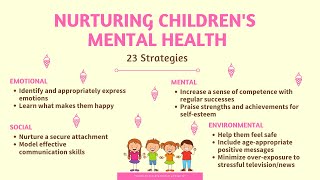
Dr. Dawn-Elise Snipes presents 25 evidence-informed strategies for children's mental health, covering sleep, sunlight, nutrition, physical activity, mindfulness, and communication skills. The talk builds on four core needs: emotional and physical safety, competence, belonging, and self-esteem.
Questions this video answers
10–12 hours per day.
8–10 hours per day.
One in 59 children.
Depression: 3% of children; Anxiety: 8% of children under 18; PTSD: 4% of children under 18.
4.6%.
Chapters
This episode was pre recorded as part of a live continuing education webinar on demand. CEUs are still available for this presentation through all CEUs register@allceus.com counselortoolbox. You. Welcome everybody. I'm Dr. Donnelly Snipes and today we're talking about 20 ways to nurture children's mental health. It's actually 25 ways. I told you, I got a little overzealous. But hey, we're going to identify what children need for good mental health and 25 Ways to Nurture that. What do kids need? Well, it's really not brain surgery. They need to feel safe both emotionally and physically and anymore. It can be hard for children to feel safe emotionally or physically with bullying, with cyberbullying, with what they see on the news all the time. Remember, for children, especially younger children, what they see on TV seems like it is right outside their front door. It's hard for them to feel physically safe because they're not conceptualizing that something that happened in California may be, you know, 800 miles away from where they're at. So making sure we recognize that children need to feel competent. They need to have a sense of self efficacy. They need to feel like they're able to succeed in school. And it is up to us as the village, if you will, to intervene. It breaks my heart. I work with people who have low levels of literacy and they're adults now and their learning disabilities were never caught when they were younger. It's not that they didn't go to school, that their learning disabilities were just never caught. We want to make sure that they can succeed in school. Not everybody learns the way the American school system teaches the standard lecture format. We need to help children. They need to feel like they're able to succeed at managing their emotions. Little kids, they don't have distress tolerance and coping skills. Hopefully we help them learn those along the way. When they get to be teenagers, they have much more reactive HPA axis, their threat response system, and they also have much more reactive neurotransmitter systems, dopamine and hormones and everything else. So for kids, for teenagers, think about it as a period of natural emotional dysregulation. This is a time where things are going to seem overwhelming sometimes and they need to feel like they're able to succeed at things that are important to them. And I have the there because that is different for each individual person. My daughter is very artistic and she needs to feel like she's able to succeed at art. She needs to feel like she's able to succeed at helping. She helps me with rescuing animals. We foster cats and dogs and bunny rabbits and things. She needs to feel like she's successful at those sorts of things. She doesn't care whether she can hit a baseball or whatever. It just depends on the child. But the things that are important to that child, we need to help them as much as possible be able to succeed at. And children need to have self esteem. They need to have a sense of confidence that they are lovable for who they are and that they love themselves for who they are. They can look at themselves and go, I'm pretty good. Yes, I'm not perfect, but nobody's perfect. I am pretty darn good. And accept that people or believe that people love them for who they are, not who who they could be or who they should be, but for who they are. And they need to feel like they belong. So I want you to think about as we're going through the presentation today, how not feeling safe, competent or confident can contribute to mental health issues. Children, for example, Alaskan Native children. A lot of culturally, they found that a lot of Alaskan Native children, their issues with mental health tend to go up exponentially when they get into middle and high school. And their school success tends to go down exponentially when they get in middle and high school for some of those children because culturally they do not tend to learn in the same way that the schools teach. And that was in the SAMSA tip on multicultural issues. But we do need to be aware of differences in learning styles first thing. And again, when we're going through this presentation, think to yourself as I'm talking, how can this intervention or how can this thing that we're talking about help youth feel safe, confident and competent in school relationships, work and or activities? So sleep and sunlight help your child set their circadian rhythms because sleep and sunlight set circadian rhythms. When we wake up in the morning and that bright light comes in, our brain registers it. It says, oh, it's time to be awake and secretes cortisol and norepinephrine. That gives us the motivation, hopefully to get out of bed in the morning. When the sun goes down, the body starts releasing melatonin and helps us get ready for sleep. We want to help children set those circadian rhythms. Circadian rhythms regulate feeding, sleeping and stress hormones. So when your circadian rhythms are out of whack, think about how sluggish. I know I have a really hard time when the time changes. It's just an hour, but it's still an hour. When your circadian rhythms are out of whack, you don't necessarily know when you're hungry or when you're sleepy. And you can feel more stressed out and more easily irritated. So we need to help children regulate those. Lack of sleep leads to fatigue. Go figure. Irritability. When people are fatigued, then life seems more difficult. It's more difficult to concentrate, which tends to make them more irritable, often. Low distress tolerance. Think about yourself when you're sleeping. You don't even have to think about kids and poor concentration. Do we really want to send kids to school in a state where we know that they're already tired, irritable, have low distress tolerance and can't concentrate? No, that doesn't make any sense. We need to help them get enough sleep. Sunlight, in addition to setting circadian rhythms, also helps the body produce far more bioavailable vitamin D than any of the oral supplements that you're going to take. It takes like 15 minutes of sunlight a day. It's not like you have to go out and bask in the sunshine. It helps set your circadian rhythms. And they found a lot of vitamin D receptors in those areas of the brain that are responsible for emotion and specifically depression. Another reason that people tend to experience more seasonal affective disorder during the winter months, or if it's been really rainy, they're not getting enough sunlight, so their vitamin D levels are going down. Two easy things we can help kids with. How much sleep do kids need from 3 to 6 years old, 10 to 12 hours a day, 12 to 18 years old, 8 to 10 hours per day. Most kids, if they're in daycare or preschool or whatever, they have to be up at 6am because mom and dad have to be to work. So they have to be up, get dressed and be ready to be taken to preschool or daycare or whatever. Most kids, regardless of their age, have to be up at 6am in order to accommodate that. The 3 to 6 year old probably needs to be in bed by 8. The 7 to 12 year old probably needs to be in bed by 9 and we're hoping asleep by this time. And the high schooler would benefit from being asleep by 10pm so if your child goes to bed and has two hours of wind down to do, then when they go to bed doesn't count. We're talking about sleep time here. They really need that good solid sleep time, which is difficult, but it is helpful if we model it ourselves. If we are modeling three hours of sleep and lots of Coffee. Then our teenagers especially are going to go. You know, I learn more from what you do than what you say. Help children create a sleep routine. And you can go to allce.com sleep and watch the video that I did on sleep hygiene. Help them create a sleep routine. The same roughly three things that they do every night with little kids. And they eat dinner, they take a bath, they read a story, they go to bed. That cues their body to start priming the melatonin to get ready for sleep. Whatever your kids want to do, within reason, Try to help them develop a routine with roughly the same three things. You know, they eat dinner and then what do they do? Eliminate caffeine. And oh, I know there are some teenagers out there that are would look at me with darts coming out of their eyes. Caffeine stimulates your HPA axis, your threat response system, which leads to a perpetual state of stress. Caffeine has a half life of five to eight hours. Half life. So if you drink caffeine, let's just go on the five side, you know, let's be real liberal here. If you drink caffeine at noon, half of it out of your system by dinner time and it doesn't fully get out of your system until 10 or 11 o' clock at night, when caffeine's in your system, your HPA axis is revved, which means you're not going to get quality sleep. Chronic caffeine intake has been shown to increase serotonin and acetylcholine, which we know too much. Serotonin can actually lead to anxiety and inhibits the release of gaba, which is our natural volume. So we've got increasing something that increases anxiety and decreasing something that decreases anxiety. So we're setting people up for higher anxiety or more alertness, whatever you want to call it, it reduces the number of active receptors. Your brain becomes tolerant to caffeine. When you're regularly flooding it with caffeine and increasing the amount of serotonin, it's going to shut down some of those receptors so the system doesn't overload. In addiction, we call this tolerance. So when you stop drinking caffeine, and any of us who've tried to quit caffeine know what those first few days are like, you feel sluggish, you know, lethargic, sometimes apathetic. You have headaches, it's, it's, your body has become used to having the caffeine. Once the body realizes you're not going to be flooding it with caffeine anymore, then it'll Start opening up those receptors again or turning them back on. But until that point, the person may feel flat and sluggish. What do we usually do? If you're a chronic caffeine drinker or eater, then when we feel this way, a lot of times we just go have another cup of coffee. So we're keeping this perpetual cycle going on a lot of times keeping that caffeine in our system until the wee hours of the morning, which impacts our sleep. Chronic caffeine also reduces cofactors necessary for neurotransmitter synthesis and inhibits the absorption of iron and B vitamins involved with the synthesis, involved with making serotonin, dopamine, and gaba. Those are all things that are important for us to feel happy and calm and energized and focused and all that stuff. If kids are drinking caffeine, not only is their sense system more responsive to chemicals like caffeine, but we're setting them up so their body is not able to maintain the neurotransmitter balance it needs for calmness. And people often use caffeine to compensate for inadequate sleep. So instead of getting more sleep, they just drink more caffeine, which, again, makes the situation even worse. To help youth stop caffeine, you know, have them gradually wean off of it and find alternatives to drink. Nutrition. In addition to cutting out caffeine, what people eat provides the building blocks to make the neurotransmitters responsible for mood, motivation, libido, concentration, and energy. Most of these we want our kids to have. It maintains a healthy gut microbiome, which is where 80% of the neurotransmitters are actually produced. And it can help prevent leaky gut, which is also associated with depression. And you can watch the video on gut health for that one. But recognizing that it's important for youth to have enough fuel in their tank to keep them going, and that will help them feel happier. But if they're getting the proper nutrition, then their body can make the serotonin and the dopamine that they need to feel happier, to feel content. The body will take those building blocks and synthesize with what it needs, Deficits of specific nutrients, specifically vitamin A, B6, B12, C, folate, iron, zinc, and calcium Associated with lower grades, lower mood, poor concentration. It's not super hard for them to eat a healthy diet. Involve youth in creating a weekly menu. You know, get them involved in thinking about making sure they're getting three colors at every meal. Encourage them to maintain an online food diary, not to Be obsessive about calories, but to know what sort of nutrients they're getting so they can see, and you can see if there is a nutritional deficit somewhere in there. If they're eating all white foods, for example, and they're not getting enough vitamin C, you know, you can see that really easily. Encourage them to eat colorfully with three colors on their plate at every. Yellow, red, green, blue, purple, black. I kind of lump all those together. And brown, obviously brown goes in there. Start a hydroponic or a regular garden. Kids like doing this, and if you have things available for them to munch on, they're going to munch on them. You know, it's just human nature. If the hydroponic garden is on your counter, then the fresh vegetables are right there. Or you can obviously start a regular garden and keep fruits and chopped vegetables easily accessible. Have them on that shelf that meet your face as soon as you open the refrigerator door. Have them already washed and chopped and available with a little dish of dip or something. To make it a little bit more enticing to children who might be looking for something that is more highly processed. You can go online and you can find posters that help children figure out what foods go in what color group, if you will, so they can figure out, am I getting food from the rainbow every single day? Exercise has been found in hundreds of studies to improve mental health. Exercise releases serotonin. Exercise can release endorphins. Higher physical activity and physical fitness levels are associated with improved concentration and memory. Time spent in recess, and this is one of my soapboxes, I'll warn you, has been shown to positively affect students attention, concentration, and classroom behaviors when children misbehave. A lot of times, teachers first reaction, or at least in the school that my children went to, was to take away recess. And ultimately that ended up backfiring because the reason the children were acting out was because they had too much anxiety or too much energy or too much something else going on. And recess actually helps people kind of bleed off some of that energy. Encourage people to consider the motivation of different behaviors. Why is Johnny not sitting still in his seat? You know, maybe he has to pee. Maybe he's hungry. Maybe he's bored. You know, let's look at this instead of punishing the whole class. Brief classroom physical activity breaks, even for high schoolers are associated with improved attention, concentration on task behavior, and educational outcomes. Same thing's true for us as employees. If you get up and stretch periodically, go walk around the office complex or something, it energizes you, it gets oxygen into your system, you tend to breathe deeper and it gets your blood pumping again. So how much exercise? People aren't getting this right now, so just it's something to shoot for. Children and adolescents ages 6 through 17 should do one hour of moderate to vigorous physical activity every single day. That means getting their heart rate between 50 and 85% of their max heart rate. With a physician's clearance, of course. That is pretty intense exercise. You know you're feeling it and you know most adults don't get that every day, let alone children. Encourage children to get physical activity by bike riding, including a stationary bike you might have at home. Maybe you can put that in front of the tv. Basketball is something. You can also put a basketball hoop on the back of a door in your house. We used to play softball when it was time to do laundry. We would pair up the socks and we would try to make a basket into whatever drawer it needed to go into. I need a drawer. I can't hit a basket. Walking inside, you can play balloon toss. If you've ever done that, you know you can get out of breath. Kids can play tag dancing. Just turn on the music and dance like a crazy person. You can make obstacle courses inside the house or outside the house obviously for younger children and a mini trampoline. Having it inside the house is another thing kids can do that can help them get out some energy, think about things that get their blood moving. There is Another website that familyfundtwin cities.com has that you can go look at later. They have tons of awesome suggestions for ways to increase kids physical activities. Even on days when they can't go outside because of weather. Youth need to relax and recreate and you think, well, they're kids, that's all they do. A lot of times they don't. It's not just sitting down and being still. Relaxation is the state of being free from psychological and muscle tension. How many of us can say that we know that our kids are free from psychological tension for any notable period during the day. Many youth get up, go to school, come home, do homework until 8 or 9 o' clock, and then go to bed with little time for true relaxation? We need to help kids figure out that this is important and help them figure out how to manage their time so they can fit in some relaxation and recreation things. You can do guided imagery and with little kids, this can be a really fun activity because you're providing guided imagery to a place they want to go. Maybe they want to go to Mars. Or fly a spaceship or whatever it is. Okay? It doesn't have to be somewhere where they can actually go, but encourage them. Use all of the senses and help them, you know, use mindfulness, if you will. Doing the guided imagery. Tell me about five things that you see up here in space and tell me about what does it smell like. Encourage them to walk through that and focus on that. When they're doing that, they're not focused on other stuff. They don't have monkey mind going on and they are able to, their body is able to calm down a little bit. Yoga and tai chi, they have videos online, they have books that you can find and classes. Yoga and Tai chi for kids is excellent. It helps them calm themselves and learn to be more controlled and encourage both of these. Encourage deep breathing, which trigger the relaxation response and progressive muscular relaxation. It's something they can do in bed, but it's also something that they can do even in school if they start getting stressed out. Noticing the difference and they go from head to toe or toe to head if they're going to do the full body thing. But noticing the difference between tense and relaxed, tensing and relaxing a muscle group, I usually do it three times and just noticing that and then regularly scanning the body to notice if they're feeling muscle tension. Once you start noticing the difference between tense and relaxed, you'll start noticing, you know, even in us adults, I know I can notice periodically when I do my body scan, I'll be like, oh, I've got some muscle tension in my neck. I need to roll my shoulders and sit up more straighter. Help children learn these techniques early on so they can give their body and that HPA axis that break, which will help them feel less anxious, more energetic, less depressed. Screen for autism. One in 59 children, according to the CDC, has autism. When we screen for some of these things that we're going to talk about, we help children become more effective in daily living as well as in school, which contributes to their sense of effectiveness and competence and it contributes to their sense of self esteem because they feel good about who they are and are able to feel like they belong. We want to screen for developmental delays, cognitive, social, emotional, speech and language and fine and gross motor. And some of the developmental delays overlap or are symptomatic, if you will, of other issues we're going to talk about, like adhd. A lot of kids with ADHD have very poor fine motor skills. We want to kind of take a look at that and that may need to be addressed. Some learning disabilities impact up to 10% of children. So when you're looking at a classroom, there's at least one or two kids in there, if not more, who have a learning disability in every single classroom. Learning disabilities prevent children from feeling successful in school if they go undiagnosed and unaddressed. ADHD makes it difficult for children to focus in school and sometimes makes it difficult for them to sit still, which can contribute to behavior problems. I'm not going to go down this road right now, but I will tell you one of the best movies or lectures I ever watched. And I hate lectures, I hate podcasts. I'm not an auditory learner. So for me to say this one is awesome, trust me, it rocks. It's called Asperger's disorder and other common misdiagnoses and dual diagnoses of gifted children. Strongly recommend if you work with kids or you have kids or you work with parents, that you spend the 56 minutes to watch this video. It's entertaining. It is eye opening in so many different ways. And it was done by the University of Wisconsin Medical school. Mood disorders. 3% of children have depression. 8% of children under 18 experience anxiety, and 4% of children under the age of 18 have diagnosable PTSD. Well, if they've got it, it doesn't mean they have to keep it. You know, we can help them learn to deal with it. We can help them recover from it. So it's important for mental health to address things as early on as possible. If you can't prevent it completely, early intervention is the next best thing. And thyroid disorders 4.6 of the US population age 12 and older has hypothyroidism. Hypothyroidism is one of the most common causes of intellectual disability. Who knew? I didn't until I found that statistic. It's important if a child seems sluggish, if a child seems like they're not gaining weight, if a child seems like they're tired all the time or having difficulty concentrating, you know, encourage parents to talk with their pediatrician if they're thinking, if they think there might be a thyroid issue. Thyroid issues are also a lot of the symptoms of hypothyroid look like clinical depression. That's another thing that we want to look at because number one, SSRIs are not cool for kids under the age of 18. They have that black box warning. But also if a child's depressive symptoms are caused by hypothyroid, then antidepressants wouldn't work anyway. And thyroid Medication would. Environmentally, what can we do? We can help children learn to identify how they learn best. Do they learn best visually, auditorily, or kinesthetically? And teach them how to modify their learning environment. Like I said, not everybody learns by listening. Some people like me in college, I hated lecture classes because I learned by reading. I would take notes, I would highlight my book, but I would know that that hour in class was probably not going to be where I was going to do most of my learning. People who learn auditorily, on the other hand, when they're reading a lot of books, it's hard for them to get that information. But if they make notes and then they record those notes and listen to them, then they can start learning. We want to help children learn how to take what they're given and manipulate it so it is in their preferred learning format. And reflective and active learners. We don't talk about that a lot. Reflective learners don't have that aha moment right away. They take in all the information and then they'll have this light bulb moment. Active learners are processing things as they go along. I always make the analogy of math class. When I was in math class, I am very much a reflective learner. And the teacher would be writing things on the board and going, okay, you do this and then you do this, and of course you do this. And I'm sitting there going, oh, yeah, of course I have no idea what's going on, but I'd be taking in the information. I would have to go home or back to my dorm and work it out. And then all the pieces would come together and I'd be like, oh, I get it now. Reflective learners are not going to be the ones that are always raising their hand in class because they're taking the information in and processing it. They'll have questions at the end. Active learners are constantly asking questions and having input. Either way is okay. But letting students know, or letting children know that, you know, it's okay if you have difficulty processing on the fly. Apply what they learn to things that are important or useful to them. Children feel more successful when learning is not hard and whether they feel successful in school, help them apply it to things that are important or useful. Newton's laws. I remember when I taught my son Newton's laws, we learned about friction. We had wood floors in our house and we put on socks. We went down the hallway with our socks on and we were slip sliding and having all kinds of fun. And then I was like, okay, now let's take our socks off and we went down the hall and neither one of us stayed vertical for too long. And then we talked about friction. Biology. When we were going through early biology, he got excited about it because instead of just, here's a chapter on a cell and here's a chapter on amoebas and da da da da. We got our neighborhood certified as a wildlife habitat by the National Wildlife Federation. So he had to take everything we were learning and apply it to that which, you know, for a second grader, needed a little bit of help. But it was a fun project. Hand washing and staying healthy. You know, sometimes kids don't want to wash their hands. Well, let's help them see how it can benefit. Just like adults want to know why do I care? Kids want to know why is it so important that I remember this stuff? So help them figure out why it's important. That will generally take away some of the frustration and maybe prompt a little curiosity. Children need structure and limits. Let them know you care. Help them learn to self regulate. Create consistency and predictability in a sometimes chaotic world. If they know that when they come home, these are the expectations. It's like, okay, I may not like it, but I know what the expectations are. One of the ways we can do this is have a poster for younger kids and a rules chart for older kids of house rules, or if you're a teacher, class rules. Children know these are the rules of the house. This is what's supposed to happen. And we go by the rules and everything's fine. When you go on vacation or you go to grandma's house, the rules change a little bit, or maybe they don't. But having a rule set so the child knows ahead of time what's expected can be really helpful. Review rules regularly before getting out, like at the park or at grandma's house. When you go to the park, maybe review and say, you know what, we're getting ready to go out to the park. Now tell me, when we're on the playground and you have to go to the bathroom, what do you need to remember to do? And the answer in our house was tell you mommy, so you can walk me to the bathroom. Exactly. Whatever the rules are, go over them briefly. Don't make too many, you know, don't want to over control kids, but that gives them structure and limits so they know the expectations and there's no ambiguity. Ambiguity creates anxiety. Reduce exposure to adverse childhood experiences which include direct or indirect physical, verbal or sexual abuse or neglect, family members with addictions or mental health issues, and caregiver loss now some things we can't prevent. If you've got a family member that has depression, you know, you're not going to say, oh, we can't go see that family member. No, goodness no. But we do want to in that case regularly discuss children's feelings and thoughts about what's going on. If you know that family member, maybe it's mom has postpartum depression or something. We want to regularly talk with the child and make sure the child's not personalizing it and understands as best as they can for whatever their age is what's going on. We want to encourage parents to practice self care because if mama's happy, people are happier, but when our, when our parents are happy, they're able to more effectively attend to children emotionally and physically. Encourage parents to or caregivers to connect with children daily, even if from a distance. If when parents get divorced, the non residential parent may call every single evening to talk to the child and that helps the child feel less of an abandonment issue. If a parent is in the military and gets deployed for six months, it may not be practical to call every single day. Sometimes they can write letters ahead of time and the stateside partner can give the letters to the children, you know, once a week or probably not going to have one for every day. But they get a letter from the deployed parent periodically and frequently so they know that that parent is still thinking about them even if they can't have a live chat. Emotional and physical safety. We want to keep environments free from threats to their physical safety. Obviously, there's only so much we can do when they're not within our household, but we do want to work with the schools to prevent as much bullying as possible. We also want to encourage them to have an environment that's rich with images that help them feel safe, special and included. One of my favorite books is Dr. Seuss, oh, the Places yous'll Go. And it is such an empowering book for a lot of people to read. It starts out you've got brains in your head and feet in your shoes. You can go anywhere that you choose. Great little book for people to read. You can get as a poster for children's rooms. And yeah, I use it even with adults because it is awesome for music. Examples can be the Middle by Jimmy Eat World or Confident by Demi Lovato. Encourage them to listen because sometimes kids start listening to things that are very angry and depressing. We want to encourage them to listen to some uplifting stuff too and help them watch inclusive television shows. If they feel different in some way. Helping them find a television show that validates that they're awesome. However they are, adults in the environments need to be responsive to the needs of children as well. And again, that means just paying attention and being, being there for them. In order to create that secure attachment, children need safety from that internal critic. Teach children about negative self talk, that internal critic that tells them that they're stupid or whatever. Don't model negative self talk or use global criticism like saying, I'm an idiot. I do it occasionally, I still do it occasionally, but I always check myself and step back from that and go, that was a silly thing to do. Because when children hear us using that global talk, they start using that global talk and then they program that internal critic. Teach children to separate fact and feeling based reasoning. For example, a lot of times if a child does something and they feel stupid, then they say, I am stupid. And that's not true at all. You feel foolish for this act that you did. Okay? That's a feeling. You may not have the information you need, you know, or you may be ignorant about this particular thing. It doesn't mean you are stupid. Differentiating that from an early age so that pattern of thinking doesn't become ingrained can help them feel much more empowered, have higher self esteem and feel happier. Teach them to focus on objective facts instead of feelings. What are the facts supporting your belief? Help them identify and address things over which they have control. And when they're real little, you may have to help explain things you know, you don't have control over what Sally does. You have control over how you react to what Sally does and help them develop skills to accept that which they have no control over. You don't have control over Sally. And if she's just in a mood today and you know, maybe she didn't take her nap, then she may be cranky on the playground. So what else can you do if you can't control that situation? How can you control your reaction interpersonally? Children need attention and unconditional positive regard for who they are as people, not what they do, who they are. They are loving, creative, you know, smart, awesome little people. We want to make sure that we are regularly providing, as teachers, school counselors, parents, whatever, authentic praise and genuine interest. Kids can tell if you're faking it. Be authentic with your praise. If you're excited about something, tell them. And remember to put in the praise. Too often we are quick to criticize, but we take for granted the things our kids do well. If they get an A or they clean their room well or whatever. We need to make sure to tell them, provide that authentic praise. And when they talk about something, show genuine interest. If it's not something you have genuine interest in, then talk about something that you do have genuine interest in. Communication skills we want to teach children assertiveness from the beginning. If they're able to communicate their wants, needs and feelings, they're going to be much happier all the time. Start out by role playing. This is easy, easier. And insist throughout the day, not just during the role play, that when children get upset, they use the phrase I feel because. And to use objective language. Instead of saying I feel angry because Susie's stupid. Not a good example, but whatever, that's not helpful. Or because Susie's lazy. We can say, I feel angry because Susie didn't want to come over and play today. That's different. That's objective. Lazy. I don't know what you consider lazy. Another example, I feel angry because you won't let me stay out after midnight. A lot of us have heard that, and as parents we can respond with, I hear you're frustrated, and I realize it seems unfair. However, I believe that it's important that you get adequate sleep and you can see your friends tomorrow. So I feel, or I think followed by objective reasoning, encourage children from knee high to a grasshopper to listen and listen effectively to paraphrase. Don't just ask, okay, do you understand what mommy wants? Or do you understand what I said? Have them repeat it back so you know that they heard and understand. And especially with little kids, insist on eye contact because that helps them stay more focused. Help them develop healthy boundaries. Healthy boundaries are critical for healthy relationships. Increasing self esteem, reducing stress, anxiety and depression. Boundaries, especially emotional boundaries, set a clear line between what is you and what is not you. And having healthy boundaries helps people not get drained by always giving, being unable to say no, or constantly seeking approval from others. So we want to teach kids from the beginning to not take responsibility for other people's feelings and problems. In our house, we say, not my circus, not my monkeys. We need to encourage them to not let other people's feelings dictate their own. If my kids come home and I've had a crappy day and I'm in just a sour mood, I don't expect them to get all grumpy and walk around on eggshells. If they're happy, you know, more power to them. If I want to continue to nurture my anger, that's on me. Sacrificing your own needs to please. We want to make sure that children don't feel like they need to sacrifice their needs to make others happy, like letting everybody in the class copy off of their test. And we want to teach children to not blame others for their problems. So not only are we not taking on other people's problems, but we're also not blaming others for our problems. We're accepting what's ours and accept leaving with them what's theirs. Encouraging kids to ask for help, social support, I've said it a million times, is one of the greatest buffers against stress. Help can come in the form of encouragement. Sometimes you don't need somebody to do it for you. You just need somebody to go, you got this? It can come in the form of empathy. Yeah, this is a really stressful time. You know, I can't imagine what you're going through. Or it can come in the form of assistance. I need help moving this box or I need help with doing this math. Asking for help does not represent weakness. We need to make sure that kids understand this. Nobody knows everything about everything. It's just that's not how the world works. Encourage children to ask for help when needed. Now, we don't want them to ask for help all the time because there are things that they can do. We want to empower them to do what they can do on their own. But when they reach that stopping point, when they get that stuck point, be willing to ask for help. And then we can use scaffolding to help them learn the skills and tools they need to do it on their own next time, if possible. Some things they're just never going to be able to do on their own. You know, when I move big bales of hay, you know, those big rolls of hay, one person is not moving that. There is no way. I'm with no amount of scaffolding am I ever going to be able to move that myself. So I'm going to need assistance doing that or I'm going to get hurt. And we want to help children learn how to find appropriate assistance. And this is something I've struggled with with my kids, especially my son, because he will hit a problem and then he will just sit there and stare at the computer screen. And I'm like, okay, well, you've been staring at the computer screen for two hours. How could you have solved this problem? Where could you have looked for help? And, you know, you could have asked me, you could have gone on YouTube, and usually it was with his math. And there were a bunch of good YouTube videos we found for math. And we would just brainstorm where he could have gone or how he could have gone about solving the problem instead of sitting there and looking at the computer screen for two hours and getting nowhere. We want to encourage children to appreciate individual differences, Help them synergize. This helps them revel in the strengths of other people so they don't feel jealous or envious or inadequate when they don't have somebody else's strengths. But it also helps them revel in their own strengths and go, okay, I bring this to the table. Extrovert versus introvert refers to the people in the environments. Extroverts love being around lots of people, and they can talk like nobody's business. And that's great if you're in sales or whatever. And that is wonderful. Also for. If you do group projects at school, the person who has to talk about what the group did and then the introverts may not want to be, you know, in the center of attention all the time. They may want to be in smaller groups, and that's okay. Recognizing what they bring to the table. Sensing versus intuitive represents how people conceptualize things. Sensors tend to look at details. And intuitive people, they're the big dreamers. When we write grants, I would write, I would have the big thoughts. You know, I was the intuitive dreamer. I was like, okay, we have $250,000. This is how we can spend it. And then I have other people who were more sensing oriented go back through and identify places where I had made some leaps in logic and not explained my thought process. The same thing's true with kids at school when they're doing group projects or whatever. Thinking versus feeling. This goes to motivation. Thinkers are motivated by right and wrong and justice and feeling. People want everybody to get along. That's okay. You know, we need both types of people in this world, and that balances each other out. And then judgers and perceivers, time management, judgers. We are structured. We like our timetables. Perceivers are very spontaneous. Perceivers keep a little bit of fun and spontaneity in life. And as judgers, we keep them reined in a little bit so they don't go too far afield. Recognizing how the different temperaments can synergize in the classroom, with friends, in relationships, or even in your house. If you've got multiple people living there, you probably have multiple different temperaments. And that helps reduce arguments and frustrations and helps people understand the behaviors of one another easier. We also want to help them appreciate Individual differences of other people, their talents, like public speaking. Some people are great at it, some people not so much, but that's okay. Sports, science and math, art, the list goes on. We all have our own unique talents. And encouraging youth to revel in their unique talents, find them and nurture them, and not worry about the fact that, you know, they may not have this other talent over here that the kid down the street does emotionally. Mindfulness and emotion identification. Children who can identify their vulnerabilities. They can, you know, say from the jump, you know, I'm feeling a little off today. And they can identify their emotions, can intervene before they enter the red zone, that zone where they are completely emotionally dysregulated already. If they start feeling these urges, you know, that you get that feeling in the pit of your stomach or, you know, whatever physical sensations you get before you get angry or anxious, they feel that coming on, then they can intervene early before it becomes a crisis. Mindfulness activities we can do with our kids. Model emotional vocabulary with the phrase I'm feeling because to help children not personalize and use and begin to learn to use feeling words, once they start using them and get comfortable with them, then they will use them more and start developing that vocabulary. I remember when my son was about three, maybe a little bit older, we were at my office, and I don't remember what it was that made him, got him upset, but we were walking down the hallway of the residential unit, and all of a sudden, out of nowhere, he clenches his fists and he goes, mommy, I am so angry, okay? And so we stopped right there and we had a discussion about whatever it was that was making him angry. But he noticed that he was angry before he got to the point where he had a complete meltdown. And we were able to start talking about it. Prompt mindfulness in children. You get up in the morning, and I do this with my teenagers sometimes still be like, you know, it seems like you're. You're not very happy today, or it seems like you're flat today. What's going on? And encourage them to respond with the I'm feeling because phrase so we understand what's going on. So they can. Instead of feeling blah or flat, they start putting more descriptive words to it, which help us figure out what the problem is, which can help us figure out what the solution might be. Teach children to body scan. Even from a young age, they can start body scanning for their energy, sleep, appetite, pain, discomfort, and their urges. Many children will somaticize their emotions. When Shawn was going to first grade, it was a really bad fit. And I won't go into that now, but he told me one morning that, you know, he was having a hard time eating. He wouldn't eat breakfast before school. I'm like, you've got to eat before you go to school so you can focus during the day. He's like, mommy, I got carnotaurus in my tummy. And for those of you who haven't had little children, carnotaurus are a type of dinosaur. And he would get so stressed out before school every day that he could not eat. Or if he did eat, he would end up getting sick, which was a problem. So we started investigating and trying to make accommodations to help him reduce his stress level. But being able to articulate that, let me know, okay, here's the problem. Have them scan for their energy. If you say, how was your energy today? And they say, not good, you know, even a seven or eight year old can identify that. How did you sleep? Are you hungry? You know, all of those are pretty common questions. If we start encouraging them to check in on these things a couple of times a day, then there's going to start be on their way, well on their way to mindfulness as a lifestyle. Encourage them to make a collage of things that make me happy. You know, that whole raindrops on roses song. Encourage them to do something that they can see pictorially, that they can look at that reminds them of all the things that make them happy in their life. Distress tolerance. You know, kids have stress in their life and they have to live in the end too. They go, they have tests, they go to the doctor, they break up with significant others. They may not get asked to a dance or just somebody being mean on the playground. Even little kids help children learn, learn to wait to act until they're in their wise mind. Instead of reacting, somebody does something and they turn around and bite them. In the case of little kids, okay, that's not really helpful. So helping them learn to wait to act in their wise mind. We have a stop sign poster that says distract. Don't react when you're upset. Distract yourself for a few minutes until you start calming down and you can think about how to handle the situation. Make a list of or a poster for younger kids of distraction options like activities. What can you do? What helps you when you're stressed out or when you're upset? Feel better. Coloring Watching fish is great for kids if they can sit down. When kids are angry or anxious, sometimes making them sit down is the worst thing in the World. They have that energy that's building up and they got to do something with it. So something more active like tearing paper or helping shred bills, you know that not bills, but junk mail and stuff can be really helpful. Use of their nervous energy and help them calm down. Have them do something that makes them happy. For that opposite emotions. Encourage them to push it away. One of the ways kids can do this is write it down. Or you write it down for them and have them put it away in a box. And when it starts coming up again, remind them, you, you already put that, you put that in the box over there. We're going to tend to it later, but right now let's focus on this. They can also throw a bunch of balls as a cathartic way of pushing something away. If you get them a basket of tennis balls and they have a really bad day and they just need to throw that thought away, have them throw different balls. You don't want to have them throwing the same ball because you don't want it coming back to them, so to speak. But have them throw 10 or 15 balls and just kind of get it out of their system. Sensations. Catharsis. Ice wall sits. We've talked about those. You can do those in the bathroom stall at school, you know, sliding down so your legs are parallel to the ground and hold that for 15, 30 seconds. You're not thinking about much of anything else. Or just splash cold water on your face. Problem solving. Children who can solve their own problems feel much more empowered, which can reduce anxiety, increase efficacy, and reduce depression. Use scaffolding to help them solve these real world dilemmas. Ask them, you know, what's the problem? For example, Janie and I got into a fight. Okay, what are the possible solutions? Let's just brainstorm here. You could stop being friends. You could continue to be friends, or you could become frenemies, a new word that I learned in the past few years. Which one do you want? What's your ideal outcome? And then what are possible interventions to help you achieve that outcome? Another example. What's the problem? Kid says, I do poorly on my tests because I get so nervous when I have to take them. Okay, what are some possible solutions? Well, you could drop out of school, which we know isn't an option. Learn to manage my anxiety or get accommodations. And it could be some combination in here. We may need to talk to the teacher and, you know, get, get an evaluation for learning disabilities or something. Talk to the teacher about test anxiety and get some accommodations in addition to other things. The child can do to manage anxiety. Self efficacy is important because it helps children experience success. So we want to teach them how to set smart goals. Remember, smart goals are specific, measurable, achievable, relevant, and time limited. So the overall goal may be to be class valedictorian. A specific goal to help the child achieve that would be to get an A in chemistry. Is this measurable? Yeah. You're either going to get an A or you're not. Is it achievable? Yes. But in this case, the child will need to set aside an hour a night to study and get after school assistance from his teacher. Is this goal relevant to your overall goal? Is getting an A in chemistry relevant to what you're getting ready to what you're wanting to do? Yes. Is it time limited? Yes. We know it's just one semester while we're working on chemistry. Encourage kids to write things down so they can see the step by step process, just like you write down a recipe. Psychological flexibility. Encourage kids to figure out what kind of person am I? And you can download all kinds of values worksheets offline so they can get different adjectives. And then ask them, you know, maybe they choose three. Compassionate, loyal and creative. That's the kind of person they are. Okay, so what does that mean to you? What does it look like to be compassionate? What does it look like to be loyal and all right, for the next week, why don't you practice doing one thing each day that's compassionate or one thing each day that shows your loyalty. Encourage children to really nurture the type of person they want to be. Help them identify who and what is important to them. Who in their family is important? If reputation and popularity is important, okay, what about their friends? Which friends are most important to them? What is important to them about work or school? Is their GPA important? It may be, it may not be, you know, and are there activities that are important? If, for example, football is important to somebody and their GPA is not really and they start getting poor grades, you know, we want to help them look at the fact that in order to play football, they need to maintain at least whatever point zero gpa so they can see how working on their GPA and doing their schoolwork is important to helping them achieve some things that are really important to them, like being on the football team. We want to encourage them to know how they feel at any particular point in time. How do I feel right now and why? Maybe I feel angry because I don't want to study and how could I Solve this problem in a way that will help me get closer to what's important to me. Well, I could continue being angry, but that's not going to help me pass the test and stay on the football team. So what can I do? Cognitive distortions. Help kids learn how to address these. The all or nothing thinking. Have them find exceptions to when this doesn't happen. It doesn't happen all the time. What's different when it's not happening? Or if it does happen all the time, help them find solutions to it. You know, every relationship I get into with somebody ends up badly. Okay, well if we look and see that that's true, what are some of the solutions to that fallacy of fairness? Kids have this one a lot. I tell my kids, you know what? You may not have caused it, but you're gonna have to fix it. You may not have caused this problem, but you're gonna have to do something to address it. Encourage them to use that psychological flexibility to address the effectiveness of staying angry. Does staying angry helped me achieve my goals? Probably not. What else could I use that energy for? Magnification kids making mountains from molehills about bad things. Have them evaluate the facts to see is it really that bad? Encourage them to not minimize the positive so they can remember the positive things and when it comes to personalization, reflect on what parts were their responsibility. Encourage kids to practice learned optimism. We are wired to pay more attention to the negative for survival reasons, which can lead to a negative outlook, which can prompt us to be more aware of negative thoughts and interpret life through a negative filter. Interventions for this Encourage them to do positive journaling or discussion. 10 minutes. Tell me about all the good things that happened today. We can talk about the rest of the stuff later, but I want you to focus on the good stuff this 10 minutes. Teach them about embracing dialectics. Teach them about living in the and remember that means we can have a rich and meaningful and awesome life and also experience pain at the same time. Potentially create a gratitude wall somewhere where they can regularly post little post it notes of things that they were grateful for that happened that day. Help children develop self esteem through radical acceptance of their strengths and weaknesses and again, that whole appreciation for synergy. Help children prevent vulnerabilities. Enhance mental health by helping them address cognitive and emotional issues, ensuring they have a safe environment and teaching them healthy interpersonal skills so they can get support when needed and prevent getting burned out. Children need to feel like they are loved, they belong and they are capable at home, school and in relationships. If we can help them do that. We will help them prevent a whole lot of mental health issues. Thank you for being with me today. Are there any questions? Nutrition's influence on cognitive function? Referring back to a statement from Michael earlier on, you can go and there's a if you go to allceus.com YouTube There is a video on Gut Health that talks a lot about it. There's also a video on Nutrition for Mental Health that talks about the impact of nutrition or nutritional deficits on the body's ability to maintain balanced neurotransmitter levels. One thing you can do with the Grateful Wall if you're a school counselor, for example, or even a teacher, is have kids again, write on that, post it, note something each day and just make a wall collage out of it so they can come in and see what's good in their school. It's not just their gratitude, but it's everybody in the in the school's gratitude or everybody in the class's gratitude. All right, everybody, have an awesome weekend and I'll see you on Tuesday. If this podcast helps you help your clients or yourself, please support us by purchasing your ceus@allce.com or getting your agency to sponsor an episode. A direct link to the on demand CEUs for this podcast is@allce.com podcastceus that's allceus.com podcastceus to sponsor an episode of Counselor Toolbox and reach over 50,000 clinicians per week, go to allce.com sponsor thank you.










