Overview Integrative Behavioral Health
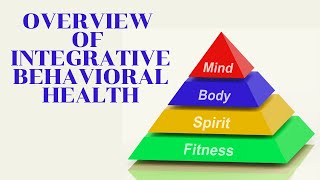
Dr. Dawn-Elise Snipes explains integrative behavioral health through the PACER framework: Physical, Affective, Cognitive, Environment, and Relationships. She shows how the HPA axis, gut-brain connection, sleep, nutrition, and inflammation shape mood and thinking, and how these systems work both ways with your environment and relationships.
Chapters
Hey there, everybody, and welcome to this introduction to integrative behavioral health. I'm your host, Dr. Donnellice Snipes. In this presentation, we're going to define integrative behavioral health and explore how physical health and behaviors affect cognitions, environments and relationships reciprocally interact. Now, I'm regularly going to use those, those phrases and they add up, if you will, to the acronym PACER. That will help you remember all of the different dynamics that we need to consider in our assessment of people who present. No matter what occupation you're in, if you're a nutritionist or a nurse or a counselor, we really want to be able to assess the person holistically. So what is integrative behavioral health? Well, as I just said, it recognizes that our physical health affect cognition and memories, environment and relationships all interact reciprocally with one another. So for example, when I am sick, I tend to be grumpier. I don't tend to be in the best mood when I am sick. When I am sick and grumpy, you know, irritability, anxiety, frustration, that actually lowers the immune response, so that impacts my immunity. So that's negatively impacting my health. When we are in a distressful mood, then we tend to notice the negative stuff in the environment more so than we do the positive stuff. So our cognitions tend to be more, more focused on the negative things in the environment, which intensifies our negative affect and intensifies our threat response to what's going on our HPA axis. And that again increases inflammation and stimulation and, and other things, our environment when we're sick. You know, a lot of times when you're sick, you don't feel like getting up and cleaning your environment, and you may be sitting in your, in your bedroom or whatever, and you're looking around and it's a mess. That can contribute to distress and, and relationships. When I'm sick and I don't feel well and I'm in a bad mood and I've got a negative attitude, I tend to not want to be around other people. I withdraw from them or I tend to be kind of grumpy and they withdraw from me. So you can see how something as simple as being sick can influence all aspects of your life and how they kind of feed in on one another. So let's talk first about physical health. And I am going to be putting out an entire series of videos in the certification track that will go in depth into each of these things. But I just want to give you a high level overview right now. Physical health, when we're looking at some of these things. We want to look at people's behaviors, what are they doing, but we also want to look at their brain development. If they are exposed to toxins when they're in the womb, if there are problems during fe fetal development, the brain can be impacted, which contributes to difficulty cognitive concentrating, attention deficit hyperactivity, hyper responsiveness to stress, and a variety of other things. During childhood and adolescence, the brain is still developing all the way up until age 24. And that means the brain is more malleable at that point. That's good because that means during that period, if there are any problems, the brain is finds it easier to do workarounds. That's bad to the extent that the brain is more sensitive to any insults that happen because of trauma, stress, toxins, et cetera. So we do want to recognize that childhood and adolescence, all the way up through age 24 is a time of great brain development and as, as well as brain sensitivity. Your hpa, HPG and your gut brain axes are the three main axes we're going to talk about throughout the certification track. Now, there are lots of other systems in the body, however, in terms of integrative behavioral health, these are the three that tend to be most important. Your HPA axis or your hypothalamic pituitary adrenal axis is responsible for your fight or flight responses. It's responsible for helping keep you safe. Okay, we definitely want that. When the HPA axis is activated, we tend to feel feelings of fear, anxiety, or anger. We want to fight or flee. Makes sense. Your HPG axis is your hypothalamic pituitary gonadal axis. Now, obviously, you have the hypothalamus and the pituitary gland are involved. So, you know, there's some overlap here with the HPA axis. But the HPG axis also incorporates the hormones, your estrogen, testosterone, progesterone, vas, vastopressin, and oxytocin. We want to recognize the influence because those gonadal hormones influence the availability of neurotransmitters that are released by the HPA axis, so they interact with one another. And the gut brain axis is just what it sounds like. A lot of your neurotransmitters and hormones are made in your gut and other organs, other glands throughout the body. But your gut is a place where it makes a lot of your neurotransmitters. And if your gut is unhealthy, you know, think of it like a factory. If your gut is unhealthy, it's like a factory that's in disrepair. It is not going to be efficient at making those products if you're not in the gut is where your body also breaks down the food you eat in order to make those chemicals. So if it can't break it down because the gut is unhealthy, that's going to be a problem. Additionally, if you're not eating sufficient nutrition, then the factory doesn't have the raw materials to work with and the gut brain axis can get thrown out of whack. Now think about your gut. You know, think about how sensitive your gut is when you take antibiotics, when, when you get stressed, when you eat something that's a little bit off, it can upset your gut. Well, when your gut is upset, that upsets everything else that's going on, including the production of those neurotransmitters. So we do want to be sensitive to people's guts, people who have Crohn's disease, who have other, you know, irritable bowel syndrome. They not only have those physical issues, but those physical issues contribute to problems in the creation, regulation and maintenance of some of the neurotransmitters. And it's important to recognize that levels of other neurotransmitters and hormones, like your gonadal hormones and your thyroid hormones, all of those things work together. And the best analogy I can make that I think people will get in, in today's day and age, is a, like a photo editor. If you get one of those really advanced photo editors where you can alter the gamma and the contrast and the tint and the warmth and all those things, think of each one of those things as a different neurotransmitter or a different hormone. When you alter one, it impacts the other things. And, you know, if you put one too far to the, to one side, it can affect the, the contrast or the sharpness of your picture. The same sort of thing with our hormones and our neurotransmitters. If something like norepinephrine goes way high, it's going to affect other neurotransmitters like GABA and hormones like estrogen and testosterone. So we do want to pay attention and, and understand that even if the system's working well, if it doesn't have the building blocks to make those neurotransmitters and hormones, then we might end up with a funky looking picture. Brain health is also important, and that's a little bit different than brain development. When we are stressed for too long, it can actually create what they Call a neurotoxic environment. Too much glutamate in the brain because of extended chronic stress or extreme stress. But this more with extended chronic stress or PTSD can create an environment that is what they call neurotoxic. Too much glutamate actually starts killing brain cells and shrinking the density of certain parts of your brain. Injury from a car accident or from a football injury or just a fall can also cause problems to the brain. We know that our executive functioning, like our higher order reasoning and our ATT and, and things like that are controlled in the frontal cortex. Think about that. When you get whiplash, what happens? You go like this. Your brain bounces back and forth, back and forth, back and forth and assaults the back of your brain as well as the front of your brain. When people are, you know, playing football and they get into a, and they have a problem, or when people fall, if they fall and bang the front part of their head, you know, that is likely going to injure bruise at best the frontal cortex, which, you know, for a lot, a lot of people you have fluid in, in your, in your head. You've got things that are meant to be there to cushion the brain from any sort of damage. But if it is significant enough, it actually can cause injury and potentially death in certain areas. Now that is really the extreme there. But we are starting to see some of that in brain injuries and, and long standing cognitive problems in people who played football and boxers. Oops, sorry. Genetics also affect your physical health and affect how you respond to things. Genetics affect your brain development. Genetics affect whether you make enough and you have an efficient neurotransmitter and hormone system. So genetics can play a big role in brain health. Circadian rhythms are also part of physical health that impact our mood and our cognitions and everything else. When we are sleep deprived, when our sleep, weight, sleep, wake cycle is off, that disrupts the balance and the regulation of hormones like cortisol and some of our hunger and satiation hormones. And it contributes to the activation of the HPA axis, the threat response system. Because your body, when it feels like it is sleep deprived, it says, you know what, that's not safe. I need to be awake and alert to protect myself from danger. So sleep deprivation in and of itself actually does increase stress. When we're under increased stress again, we tend to be more hypervigilant for of the negative things in our environment, which tends to put us in a more negative mood state, which tends to cause us more physical stress. You know, muscular tension, tummy aches, things like that tends to make us less patient in our relationships, which, you know, when they're going well, can be great buffers against stress. But when we push people away, we can start to feel isolated. So again, you're seeing how all this feeds in on itself. Sunlight is another aspect that helps regulate our circadian rhythm. So when these days get shorter like they are now, it can be harder to regulate your circadian rhythms because your brain, it's dark when you get up, it's dark at 4 o' clock in the afternoon. And as soon as it gets dark, your brain starts thinking, hey, it's time to go to sleep. So sunlight can contribute, or lack thereof, can contribute to circadian rhythm problems and related mood issues, which is why we have seasonal affective disorder, for example. But lack of sunlight also contributes in many cases to vitamin D deficiency, which contributes to increased inflammation, contributes to depression, contributes to problems with calcium metabolism, and, you know, other mood issues. So there are a lot of, there's a lot of overlap in things that are as simple as getting enough sunlight so you have enough vitamin D. Inflammation is increased when there is chronic stress at the end of a fight orf flight cycle. You know, if you're doing something and you get startled and that HPA axis goes off and you go into fight or flee, then when all that's over and you downregulate again, you start calming down. The brain sends out these inflammatory cytokines to search the body to see if there was any damage during the fight or flee process. Makes sense, totally great system. You know, after the threat's gone, it tries to repair itself. However, when the threat is chronic because of, you know, ongoing chronic stress and, or, you know, post traumatic stress, the inflammation there, the, the HPA axis never completely downregulates, so eventually it just sends out those inflammatory cytokines. Stress increases inflammation. That's the short version. That's the takeaway version. When stress increases inflammation, it increases the HPA axis activation because, you know, pain causes us more stress, tends to impact our mood when we're in pain, when, and a lot of times when we're in pain, we don't sleep well. So when we're in pain and not sleeping well and in a bad mood, it makes it harder to concentrate, harder to think clearly, harder to make decisions. Again, probably not the most jolly person to be around in relationships. You're tired, you may not have energy for relationships, so you're losing your social supports. And you know, when you have a lot of pain and your inflammation the environment itself may kind of start dissipating because you don't have the energy or the desire to work on cleaning. Now, certain things in the environment can also contribute to inflammation, but we'll get there when we get down to environment illness, just like inflammation has that reciprocal effect. And we already talked about how, you know, when I get sick, I tend to be exhausted, not sleep well, be cranky, not want to spend a lot of time with people. When I'm sick, I also tend to not eat well. So I'm not giving my body the building blocks it needs to make the neurotransmitters and the hormones to help me feel happy and potentially help me get better. So there's a lot of stuff that happens when you're sick that can impact not only your physical health and how you feel physically, but also your cognitions, your mood, and all of those things impact your environment and your relationships. Nutrition and hydration I've already talked about, to some extent, your body gets the building blocks to make the hormones and neurotransmitters that you need to function from the foods you eat. And all of this takes place in a fluid environment. So when you're dehydrated, the system doesn't work well. It's trying to like trying to drive a car without having oil in it. Not a good thing. So it's important to help people evaluate their nutrition and hydration. And it doesn't need to be, like, super strict. You know, we're trying to aim for, like, three colors on your plate at every meal and 64 ounces of water. You know, we're not asking for major life changes for most people, and medications can impact our physical health. Unfortunately. If you've ever read the side effects on a lot of your medications, sometimes the side effects sound worse than the problem itself. But we do need to recognize that steroids and antibiotics will affect the gut microbiome and affect our body's ability to, again, make those neurotransmitters and hormones. They will also affect hormone levels, especially steroids may affect hormone levels, testosterone, argonautal, hormones. So we do want to pay attention to that. Other medications like statins, can contribute to symptoms or can cause symptoms that mimic depression. So we want to make sure that we know everything that people are putting into their body, whether it's a prescribed medication or an herb or a food or a drink or something they're inhaling. We want to know what's going into their body so we can assess how it might be interacting. And we can assist them in connecting with professionals that might be able to help them out. Obviously, you know, if you're not a registered dietitian, you can't make nutritional prescriptions. So if somebody needs help with their nutrition, they're going to have to be referred out. If somebody is having, you know, depressive symptoms that may be a side effect of their medications, I'm assuming that none of you watching this are physicians. So, you know, we're going to have to refer the person back to their prescribing physician to evaluate those side effects and see if, you know, if it's necessary, if there are other medications that can be used instead, or if there are other medications the person can take to address the side effects of the first medication. It can get really complicated, but it is important to pay attention. And while I'm on this, when people are older and when people are very young, you know, under 13 and you know, typically we say over 65, or if they have liver or kidney problems, they will not metabolize medicines in the same way at the, or at the same rate as the other people. As you know, younger adults age 14, 15, up to age 65, or as you know, as well as people that have healthy livers and kidneys, when people are young, their organs, you know, process things differently and when people are older, their organs are starting to wear out. You know, let's just be frank. And so it takes longer for them to clear a lot of medications and that's important to be aware of. Things like benzodiazepines, your anti anxiety medications, and even some of your opioids take a lot longer to clear in someone who has liver problems or who is over the age of 65. Affect emotions. How you feel are regulated by your HPA axis, your HPG axis and the gut brain axis. Your neurotransmitter levels alter e alter each other like colors in a picture. And I gave you that analogy already. Your affective state, how you feel emotionally alters what your brain pays attention to. If you are feeling threatened, you are in that fight or flee state. That HPA and HPG axis are totally activated and ramped up. You're in fight or flee. You may be feeling feelings like rage, irritation, guilt, jealousy, fear, anxiety, worry, stress or suspiciousness. Those are all kind of synonyms for various levels of anger or anxiety. But when you're in those states, you're going to tend to pay attention to the threats or to the unpleasant things in your environment. And that is going to affect your cognitions. You may Start thinking that, you know, it's just a horrible thing and, and the world is horrible and your life is horrible because all you're noticing are the horrible things. So it's important when we work with people who have negative aff to help them force themselves to also, not to negate how they feel or the things that are bothering them, but to also pay attention and make a concerted effort to notice some of the good things. When we're depressed, that is characterized by hopelessness and helplessness. So guess what? You're viewing the world or people are viewing the world through a hopeless, helpless lens when they're depressed. So whatever happens, it feels overwhelming, it feels oppressive, it feels out of control, and it contributes and compounds their feelings and thoughts that they are hopeless and helpless. When we are grieving, you know, part of grief they characterize as denial, anger, bargaining, depression and acceptance. So anger and depression are both in that grief process. When we're grieving. Sometimes, you know, there are a lot of things in the environment that can trigger those feelings of depression or anxiety or anger about the situation. And it's important to help people recognize that and recognize when they're feeling these feelings. That means that certain neurotransmitters like norepinephrine and amazingly enough, dopamine, which helps us focus and concentrate and keep on keeping on, tend to be a little bit higher. But let's also talk about happiness and contentment. We don't want to always just talk about the negative. When people are feeling happy and content and they're seeing the world, that they tend to see the world through more rose colored glasses. They tend to notice the birds and the clouds and the cool breeze and the other stuff that they wouldn't notice when they are in a foul mood. Now our br. Our brain's interesting because it doesn't want us to be caught unawares. So even when we're happy, we do tend to notice potential threats, but we're not as hyper vigilant to them. Cognition is basically what, how we think and what we think and our thoughts can be intentional, things that we are actively trying to think about or automatic. And our automatic thoughts are prompted by memories, things people said to us, things we learned, things we saw, things we heard. But all of those work together. And when we talk about, for example, cognitive therapy, we talk about the ABCs. And Ellis pointed out that when we have an activating event like getting cut off in traffic, we have almost an immediate consequence of a feeling or of an emotion. I get cut off in traffic, I Get upset. But in that split second between what happened and how, what my brain, how my brain responded to trigger a, an emotional reaction, there were some automatic beliefs. Our brain scanned the situation and said, okay, is this a threat? And if so, why? And, you know, how should we respond? So the brain goes back and it looks and it says, in prior circumstances that have been like this, was it a problem? Was it a threat? And if the brain says yes, then you tend to get upset. So it's important to recognize that our memories, our schema, as they call them, can impact how we interpret events in the present. Our past can impact how we interpret the present. And that's not necessarily accurate. And one of the things we're going to talk about in the session sections on cognition are the fact that we have all these memories and they have served us well, they have protected us up until now. But we need to constantly ask ourselves, what's going on in this context? Is this situation a threat or dangerous? To me, in this context at this time, what was threatening when you were six may not be a big deal. Like, you know, being in a store all by yourself when you were 6. That could be really scary and really dangerous when you're 26, you know, not a big deal. So it's important to evaluate the context and assess and maybe rewrite some of those scripts that we have in our head that tell us this is dangerous based on something that happened, you know, months or years ago. If that is not accurate in the present context, our thoughts do alter our neurotransmitter balance by either activating or down regulating, calming down the HPA and HPG axes, which, you know, affect our physiological reactions. When we have a thought, stressful thought, it triggers the HPA and HPG axis. They dump all those excitatory neurochemicals and hormones to get us ready to prepare to fight or flee. So we, our heart rate goes up, our breathing goes up, our blood pressure goes up. You know, we have a lot of things that are activated. So there are physical reactions that happen when we have a stressful thought. When we, and we put a label on those physiological reactions by calling them certain emotions. You know, I feel angry. When I feel angry. These are my physiological signs. You know, my, my blood pressure goes up when I'm, or when I'm fearful, my palms start sweating and I start breathing faster and my heart starts racing. You know, I call that anxiety. And it's important to, to recognize what that looks like for people. Interestingly enough, we have the same reaction. You know, that increased heart rate, increased respiration, when we experience exhilaration. So sometimes it's important to help people differentiate between fear and excitement. A lot of times we can use our cognitions, we can use our thoughts to. To shape or to impact what we call it. So if we're feeling. Getting ready to get on a roller coaster, and we've had good experiences with it before, and, you know, we're getting excited and our heart rate goes up and we start breathing faster because we just can't wait. You know, since we've had good experiences before, our brain is automatically going to label that excitement. If we've had bad experiences before, then our brain might label that terror. That would be me. Environmentally, yes. Your environment can even impact your mood and the way you think. Think about a time that you've been in a place that's been dark and dingy and maybe noisy and smelly. How did it that impact your mood? What were you thinking in that sort of situation? I mean, if I'm in a dark, dingy, smelly, stinky, noisy place, I might feel kind of unsafe, and I might feel kind of fearful. So our environment can impact our mood. Now think about another time that you've been somewhere, you know, maybe on the beach where you hear the gulls calling and you hear the. The waves flapping in, and you feel the warmth of the sun and you can smell the salt air. How does that environment make you feel emotionally? What are your thoughts when you're in that kind of environment? You know, what are your. What do you tend to think about more or focus on? So the environment can trigger a sense of safety or distress based on memories or expectations. I remember one place that I used to work, the walls were this kind of dingy, blue, gray, institutional color. And it reminded me of kind of in a. I used to work in the jails, too. Reminded me of being in a jail. And it smelled institutional. And I can't tell you where I got that association with the smell, but I did. And so when I would walk in there, you know, I had this feeling of being in an environment that was very oppressive. So my memories and expectations based on the sights and smells affected how I interpreted anything that happened and my mood when I walked in there. Other times, when I buy a new house, you know, one of the first things I've done, every house that we've ever bought, is to repaint all the walls. Butter yellow, my favorite color, the most calming color in my mind for me is that color. And when I walk into a room that has lots of white and butter yellow. It feels. Feels cheerful to me and it makes me feel emotionally. It triggers happy emotions and endorphins to be released. The environment can also trigger a sense of safety or distress based upon disruption of ability to get basic needs met. So if you're in an environment that is not safe, you know, safety is one of those basic needs. If you're in an environment that is loud or too bright so you can't get quality sleep, then that those may trigger stress and distress. Because you're not able to get your basic needs met in the environment. You really want to consider all of the aspects. Safety, physical safety in the environment. Does the person feel safe from harm and can they relax the energy of the environment? Does it feel like people around you are angry? Is it a spooky energy? Is it a. An excited energy? What's the energy? The light in the environment. And we'll talk a lot more about this in other videos. But bright light can tend to help cheer people up. Dim light tends to be calming. Flickering light for just about anybody increases stress. With the exception of, you know, like strobe lights in a club that you might enjoy that, but like a flickering fluorescent light tends to increase stress and increase migraines in a lot of people. Colors, as we already talked about, can really impact a person's mood. And what colors impact your mood are going to be very dependent on you. Same thing for our clients. So we don't want to assume, like, for me, I don't know what it looks like on your screen, but this sweater is periwinkle, my favorite color in the whole world. And so periwinkle makes me happy. And. But that may not be true for somebody else. So we want to have. Have people pay attention to colors in their environment and which colors help them feel relaxed and happy and calm. Images, pictures, things you see. It can be billboards, it can be pictures on your wall. It can be things that you see on your television can make people feel safe, make people feel happy, you know, like YouTube videos. Or it can trigger bad memories for people and make them feel unsafe. And, you know, certain TV shows may do that. Certain billboards may trigger people who have addictions. There are a lot of things that we need to pay att attention to in the environment to figure out which things reduce stress and add calm and happiness and which things trigger stressful reactions. Noise. Some people love background ambient noise. I know I do, but I don't like hearing trains. I don't like hearing the dogs barking. You Know, especially sudden noises. So knowing again, which noises people like to hear and what helps them feel calm and which noises are toxic or distressful to people, it's really important. When we are hearing what I'll call noxious noises too much, it contributes, it increases our stress level, it increases our blood pressure, it decreases our mood and tends to again start wreaking havoc on our ability to concentrate because we're in a funky mood and our ability to nurture and maintain healthy relationships. Smells are the greatest trigger of memories. And we're going to talk about different smells in addition to aromatherapy when we get to that unit. But those are also important to help people figure out, you know, what smells make them happy, what smells help them relax, and what smells trigger bad memories that they may need to address. And finally, temperature in the environment. And there are other things in the environment, but like, touch. I'll get to that in a minute. But temperature, when people are too cold or too hot, that HPA axis activates to try to regulate the system. It increases stress on the body when the body is not the correct temperature, and that can contribute to irritability, anxiety. I know when I get too cold, I get very, very sleepy, and when I get too hot, I get very, very cranky. So I know that temperature does have an effect on me. And finally, I don't have it on the slide. But touch. This not in addition to being my favorite color sweater, is some. Some sort of rabbit angora blend sweater. It is super, super soft, super, super warm, but it's like one of those fuzzy sweaters that you just want. You wish you had a whole blanket of. And it makes me happy, you know, I feel it. It contributes to positive sensations for me. And finally, relationships. Relationships are one of the greatest buffers against stress when they're healthy, or they can be one of the greatest causes of stress when they're unhealthy or when you're in a disagreement. Even in a healthy relationship, you may have disagreements with people, and it can cause anxiety, frustration, anger. So relationships are not always a panacea of help and wonderment, but they are necessary. They our relationships. Connection with others impacts our hpg, our hypothalamic pituitary, gonadal access, because, you know, when we are in connection with others, when we are feeling connected, oxytocin goes up, and it also impacts our estrogen and testosterone levels and progesterone levels. Connection with others impacts our HPA axis because we're not meant to be living in isolation. We are a communal type of organism. So being around others can help us feel calmer and more supported and safer in the right environment. And then consequently, when the HPG axis and the HPA axis are, will say happy and functional and not out of whack, then the gut brain axis tends to function a lot better. But when our relationships are stressful, it can contribute to anxiety and distress and, you know, frustration, negative thinking, thinking and negative thought patterns. That activates the HPG and HPA axis, contributes to distress, speeds up everything and irritates the gut. Basically because we know that when most of us get upset, we either get a stomach ache or, you know, have other digestive issues. And that tells you that that gut brain axis factory that we were talking about is not working efficiently. Our early relationships, our attachments that we develop with our primary caregivers help people develop trust in themselves and others that they can get their basic needs met. Motivation skills for emotional regulation and distress tolerance and self confidence. So if people don't have healthy early relationships, that healthy primary attachment, they may have a lot of difficulty with trust. So they may never feel safe or rarely feel safe, which contributes to anxiety. They may have difficulty with motivation and emotion regulation and distress tolerance. So if their emotions are regularly dysphoric and especially if they are, you know, extreme, you know, they get enraged, when they get upset, then that's going to put a lot of stress on the body as well as contribute to problems in future relationships. And, and same thing with self confidence. When people don't have self confidence, when they don't have good self esteem, then they are often fearful. And that fear keeps people paying more attention to the negative stimuli. That fear can contribute to the development of unhealthy relationships later in life. That fear can contribute to, you know, difficulty sleeping and increased inflammation. So there's a lot of things that can happen as a result of inadequate early attachments. When we get older, we don't outgrow the need for attachment. We still need attachments, but when we get older, we don't rely on one person to provide everything. When we're an infant, we rely on that primary caregiver to keep us safe, fed, warm, all that stuff. When we are older, we often have multiple attachments that we turn to for different things. And, but it's still important when we're older to make sure that we're developing healthy attachments that aren't characterized by insecurity or fear of abandonment. So mental health and neurocognitive issues are rarely caused by just thoughts or behaviors. People's physical health affect, cognitions, environment, and relationships all reciprocally impact each other. Integrative behavioral health approaches recognize that effective treatment requires a holistic, multidisciplinary approach, which must address and assess issues in physical, affective, cognitive, environmental, and and relational health.










