Pharmacology of Opioids: Counselor Toolbox Episode 133
Recorded continuing-education webinar (approx. 45 minutes) by Dr. Dawn‑Elise Snipes covering opioid/opiate pharmacology for counselors. The presentation reviews types of opiates, routes of administration, mechanisms of action (endogenous opioids, GABA, dopamine, serotonin), short- and long-term physiological and psychological effects, intoxication and withdrawal timelines/symptoms, complications from adulterants and polydrug use (e.g., fentanyl, benzodiazepines, antihistamines), and recommended treatments including methadone, buprenorphine/Suboxone and harm-reduction/therapy integration.
Chapters
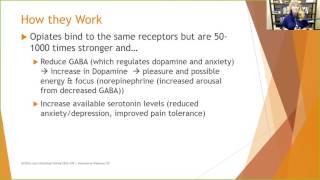
This episode was pre recorded as part of a live continuing education webinar on demand. CEUs are still available for this presentation through all CEUs register@allce.com counselortoolbox I'd like to welcome you all today to today's presentation on the pharmacology of opiates. Over the next 45 minutes or so, we'll examine the types of drugs that are considered opiates, which, you know, should be a pretty quick review. We'll look at the short and long term effects of opiates on the person, look at briefly symptoms of intoxication and withdrawal, detoxification issues, the current state of abuse, how much of a problem is this? And if you've been tuned into the news at all, all you can kind of answer that one for yourself. But we're going to go over it and we'll look at some recommended treatments. Now, really, we're going to focus more on the short and long term effects than anything else in terms of this particular class because I think that's more useful than a lot of the other stuff. As a side note, the method of administration greatly affects the intensity and duration of onset for various drugs, not just opiates. So oral is the slowest and least effective because by the time they take it in, you know, ingest it, however they ingest it, it gets to their stomach and it's digested and processed. Really only about, you know, anywhere from 25 to 60% of it, depending on the drug, is even available. So if somebody is taking a certain amount of a drug orally and they decide to take that, that same amount of a drug and inject it, they're likely going to od. So they need to be cognizant of that. The same thing is true. An injection tends to be the fastest route. Inhalation by snorting is one of the other really fast routes of getting directly into the brain. Inhalation through smoking, not as quick, but still there. Rectal suppository is out there now. So just be aware that there are lots of ways to get substances into the body. And skin patches, we've all heard about therapeutic opiate skin patches, fentanyl patches that people have worn that give a sustained release of the medication. So keeping that in the back of your mind when you're doing any education about it or when your clients are talking about it, educating clients who may be using opiates about these things is important at least to prevent harm. So what are opiates? Opiates are not actually depressants they're classified all by themselves. They are system depressants, but they're kind of in another category. So yes, they suppress heart rate and respiration and they can have a lot, they have a lot of other effects on the body, but they also have the analgesic effects, which is why. And they act on different receptors, which is why they're not classified in there with the depressants, the benzodiazepines and the barbiturates. So do remember it is a CNS depressant. Why is that important? Because when you combine it with other drugs that are similar in nature, you can have a combination effect. So we'll get to that in a minute. Natural opiates, opium, morphine and codeine. Synthetic are your methadone and fentanyl. These are the ones that are manufactured completely from chemicals. Your semi synthetic Demerol, heroin, dilaudid, oxycodone and hydrocodone. Being aware that with many of the over the counter, not over the counter sorry, prescription medications that you can get, the oral medications that you get after surgery, etc. A lot of them have Tylenol in them in order to prevent abuse because the Tylenol theoretically serves as a deterrent to people since it can cause liver failure. How do they work? Well, the body naturally produces opiate like substances called endogenous opioids. This is what we think of when we think of the runner's high. When somebody has pain, the body naturally sends out painkillers. Now they're not near as strong, nowhere near as strong as the synthetic or even the natural opiates that occur like from opium. So it's important to remember that no matter whether you're taking something that's natural or synthetic, it is hundreds of times stronger than what your body would naturally produce. Endogenous opioids do help regulate pain perception, hunger and mood though. So they're involved in a lot of the same things that serotonin is involved in. That'll become important later. Opiates bind to the same receptors, but are 50 to 1,000 times stronger than endogenous opioids. So how do they work? They reduce gaba. So we know GABA is our anti anxiety chemical. And you're like, well if they reduce gaba, then why do people think it's such a great thing to take? Well, when GABA is reduced, it encourages the brain to increase dopamine. And we know dopamine is our reward chemical. So we may be a little bit more stressed out, but we're experiencing A lot more pleasure. So you've got some anxiety going on potentially in somebody. There's an increase in dopamine. Dopamine can be broken down to form norepinephrine. So in theory, the people feel more energized because lower GABA increases anxiety. So the body kicks off that fight or flight reaction, the cortisol, HPA axis, all that stuff we've talked about, and starts producing norepinephrine. Because we know that under stress the body releases cortisol, which triggers the release of norepinephrine for the fight or flight reaction. So now you have someone who's feeling really good because they've got way more dopamine than they ever expected to have. But they're also breaking down some of it to form norepinephrine. So they're more goal driven and they're more energized, which is one of the reasons they speculate that some people feel their uber selves when they're on opiates. Now, I don't know about you, but whenever I take opiates, I kind of, I turn into a zombie. I'm just like a blithering idiot. So that's not how it works for me. And it's likely not how it works in therapeutic doses. If somebody is taking the amount that's prescribed by their doctor, you're probably not going to have this kind of intense effect. The opiates also increase the variable available serotonin levels. Okay, so we're back to endogenous opioids. And opioids regulate mood, pain perception and hunger. Serotonin is also involved in the regulation of mood, pain perception and hunger. So when we start thinking about it, we start. The differentiation starts getting fuzzy about which neurochemicals are being triggered. For that particular person, that's helping them feel a lot better. It's important to understand that that happens though, because they're starting to examine opiates in terms of potential treatments for antidepressant resistant depression. And some of you. I know I did. When I first read that, I was just like, oh my gosh, no harm reduction philosophy. I'm not sure how I feel about it yet. However, it is out there and they are looking at it. So remember that dopamine is your pleasure chemical and it helps with energy, focus and motivation primarily by its byproduct, which is norepinephrine. Reduced GABA may cause increased anxiety because GABA is our anxiety reducer, which produces HPA axis or your threat axis activation, which can cause some of the dopamine to be broken down to produce increased energy. Now you've got so much dopamine out there when people are abusing opiates that it's likely that you're being flooded with both of them. So you're focused, you're energetic, and you're euphoric all at the same time. The other thing we want to pay attention to is that when people quit using or when the substances start to leave their system, the body doesn't just react automatically and kick in with the GABA again to address the anxiety. So GABA has been suppressed for quite a while. And so the person will start to feel a little bit anxious, which often triggers them using again. Think about it as warming a cold bath. You know, you've got a cold bath, you're sitting in there, you're like, yeah, I really need to warm this up. You turn on the hot water and it starts running, but it's a while before there's an appreciable difference for the hot water that's running in there to actually warm up your whole bath, you may feel it on your pinky toe, but it's going to be a while before the bath is actually warm again. And the same thing is kind of true for our bodies. There's not an automatic immediate reaction that just takes over as soon as the drugs of abuse are out of our system. Tolerance to opiates, and I know I've said this before, but it's so important, develops in five to seven days. Five to seven days. So people who are given a two week prescription, you can see where it could be dangerous. Tolerance reversal also starts in only a few days. So when they quit taking that medication, even if they were taking it as prescribed, but regardless, that tolerance that they've developed quickly goes back to baseline within only a few days. So if you have someone who is taking, let's say four times the prescribed dose of opiates in order to get their normal high, because they've developed such a tolerance to it, when they quit taking the opiates, they detox after only about a week. If they go back and take that four times the recommended dose, they're probably going to die. So we want to make sure that people understand it is vital in recovery that you don't, when you relapse, if you relapse, that you don't take the dose that you're taking when you left off. And do I like telling people that? No. Do I want to give them an excuse to relapse? Heck no. Do I want them to die? Absolutely not. So it's important in my mind, ethically for me to educate them and make sure they understand that this is really scary business. And a lot of our people who are in mental health counseling for depression and anxiety, a lot of my clients that have had opiate addictions have been duly diagnosed with one or both of those mood disorders. And you may end up seeing someone who has a mood disorder in a mental health clinic who is self medicating kind of on the side. And you know, I want you to be aware of it. If you're a mental health counselor, you don't usually see addictions that way. You can kind of start educating and intervening and maybe reflect. Maybe you don't feel comfortable dealing with it. You know, that's totally cool. But understanding that a lot of people are discharged from the hospital with two weeks worth of opiates, so in two weeks they can start developing a tolerance, which means when they stop, it's potentially not going to feel very good and they could also develop more of an addictive reaction. The other thing to remember is that if you take it for a while, take prescribed opiates for a while, then the body quits producing endogenous opioids. So when you stop taking it, you're going to hurt more because your body is not producing those natural painkillers. It's not giving you your baseline. It's kind of like thinking about maybe endogenous opioids like Tylenol. Your body normally takes over the stuff that, that Tylenol would take care of, if you will, but it's not doing that right now. So you're achier. You may have some stomach upsets and flu like symptoms depending on the dose you were taking and how long you were taking it for. Short term impact of opiates up to five hours. Depends on the dose, the route of administration and previous exposure. If tolerance develops in five to seven days, then 325mg may not be much of anything to somebody who's been taking it for a month, whereas somebody who's only been taking it for a day or two, they may take that and turn it into complete zombies. Psychological impact can be euphoria, feeling of well being, relaxation, drowsiness, sedation, disconnectedness and delirium. The last half is me, you know, I'm drowsy. I'm just basically drooling on myself sitting there. And that's on half of an adult dose. I don't tolerate opiates very well, but for other people with different brain chemistry, they may have a much different reaction. And that reaction can be one. If they've been depressed for a while especially they feel like that and they're like, oh, I want to stay feeling like that again. One of my clients called opiates his, and I'm going to paraphrase his screw it chemical. He would take that and he just didn't care. He didn't care about anything. Which made it easier for him to deal with day to day life. Physiological what happens analgesia. That's going to happen with any of your opiates. Depressed heart rate and respiration. So you know you're going to slow way down. When I'm in, I naturally have a low heart rate. And when I'm in the hospital, I had surgery two years ago and they were giving me opiate medication right after surgery. And I could lay there and get my heart rate to go down to 38 if I was just calm and I breathed slowly enough. Now my heart rate's not normally that low. It's usually in the 50s. So understanding that people's heart rate really is affected by this, and I was taking prescribed dose, imagine street dose or heaven forbid, fentanyl. You can also have constipation and that constipation can show up days later. So it's important to be aware of that slowing of a lot of different systems. If you've got a client who has clinical depression, who has to be on opiates, make sure they understand the side effects of opiates and a lot of the things that they may experience which are side effects of opiates. So they don't attribute it and think their depression is getting worse. Flushing of the skin, sweating, fixed pupils, pinpoint pupils. If you see somebody with pinpoint pupils, especially if they're itching a lot, you can pretty much guess that they've gotten some opiates in their system. Not everybody gets the opiate itch. I think this research said that about 30% of people get an itchy feeling when they take opiate medication. Let's see. And diminished reflexes because, I mean, when everything slows down, you're not going to be as alert and attentive and reflexive as normal. So this lasts for up to five hours. And you think dosing for opiates is zero to four hours, or I'm sorry, four to six hours. Complications. Medical complications arise primarily from adulterants, meaning somebody put something in there like comet or you know, something really nasty just to extend the amount of the drug they had or they put in something cheaper to produce like fentanyl. So you may have really high quality heroin cut with really cheap fentanyl. And fentanyl is 50 times stronger than heroin. So if somebody uses their normal heroin dose and they're taking fentanyl and don't realize it, again, overdose. Non sterile injecting practices are also a huge problem because they can cause skin, lung and brain abscesses, collapsed veins, endocarditis, hepatitis, hiv, aids, and obviously if the adulterant is wicked enough, regardless of the method of administration, it can cause death. Alcohol or depressants such as benzos, hypnotics, antihistamines. Antihistamines. People who take opiates, 30% of them get itchy. What do you think they're going to do? Take antihistamines. I've read on blogs and different articles where people are recommending and even some doctors co prescribing antihistamines with opiates. Now if a doctor is going to do it, that's their judgment. However, antihistamines and opiates have a enhancing effect. So it's like one plus one equals five. You don't want to take them together unless you're under medical supervision. It causes sedation and drowsiness, decreased motor skills, respiratory depression and hypotension, which is the opposite of high blood pressure. It's low blood pressure. If you've ever stood up really fast and gotten really dizzy, that's called postural hypertension hypotension. So you can kind of understand what people are feeling like when they get high hypotensive. So potentiation is combining two drugs because one intensifies the other. So if you put an antihistamine with the narcotic, it intensifies its effect, cutting down the amount of narcotic needed. Now, theoretically, that's what the physicians are doing is they're saying, well, if you get the itchies, let's reduce the amount of narcotics so you're less bothered by that. But let's also add an antihistamine so you still get the same analgesic effect. Synergism is when two drugs taken together that are similar in action have an effect out of proportion to that drug, such as taking X oxycodone. Not a good combination because they will work together to create a much stronger reaction in the person. Now you don't need to know those two terms. It's just important to know that sometimes one drug will make the other drug a lot More effective, so reduced doses needed, but they can be taken together. Other times the synergistic combination is just explosive and there's not as much of a way to control it. Long term impact, vein collapse, depression, brain changes and damage from monkeying with the neurotransmitters. Now, a lot of times these brain, brain changes can be reversed over time. You know, a lot of people who are addicted to opiates get off of them and their neurotransmitters stabilize and then you can figure out what you're dealing with. And again, it reduces the production of natural painkillers. So when people who are addicted stop taking them, they will be lethargic and probably have diarrhea and a lot of other things because they're not slowed down anymore. So their motility is going, may speed up some. They may be lethargic because they're in more pain and they're not sleeping much. So it's important to just kind of assess where the client's at, what's causing their presenting symptoms. Instead of saying your depression is getting worse, let's look at what symptoms are getting worse, figure out which ones are attributable maybe to the drug, and work with the team to figure out what the best course of action is. Symptoms of intoxication, constricted pupils, sleepiness or extreme relaxation. If you have a client who is abnormally, you know, there are some clients that are just chill no matter what. But if you have a client who's in group who is just abnormally chill that day, especially if they have a history of opiate abuse or benzodiazepine abuse, and they are really relaxed that day, kind of dozing off might be something to talk with them about. They could have been up all night with their kid. You know, there's a lot of different things that can cause drowsiness, but it's important to be aware these are also triggers. If you have anybody else in your group who was addicted to opiates, and if you have somebody in group dozing off, that's the trigger for them. Agitation. Like I said, some people feel their uber selves sometimes. And it's theorized that norepinephrine levels increase. So some people may become agitated on opiates and scratching and picking. Okay, I was wrong. 20 to 25%, not 30% of people get opiate itch. Symptoms of withdrawal begin 6 to 12 hours after somebody stops taking them. You know, so not long, lasts five to 10 days and peak at 48 to 72 hours. Withdrawal from opiates is miserable. But technically, unless the person gets dehydrated to the point that they are in physical jeopardy, the detox from opiates is not medically, not as life threatening as, say, detox from benzos or from alcohol. Yawning, drug craving, irritability and flu like symptoms. Like I said, I've seen people go through this and they are absolutely miserable. But if they can stay hydrated, generally there's really not that big of a medical crisis. For most of them, tolerance decreases rapidly. So during overdose, during relapse is really easy. If somebody gets four days into their detox and they're just like, screw it, I can't take this anymore. And they go back out and use. This is when they're at one of the greatest risks of overlap of overdosing. The biggest focus during opiate withdrawal is to provide palliative care, trying to make sure that they stay hydrated, they can sleep as much as possible, they have access to frequent showers because they will get hot, they will get sweaty. You know how you feel when you've got the flu. Fentanyl is 30 to 50 times stronger than heroin and overdose rates are extremely high. There's a difficulty getting prescription opioids has led to the increase in demand for heroin and fentanyl. So people who initially started out addicted to prescriptions have turned in large part to black market opiates, which are often cut with adulterants, including fentanyl, which can be made in a lab, if you will. And it doesn't have to be a professional lab. Okay, this is not on your test, but I do want to point it out. Nearly 6% of 12th graders report using narcotics other than heroin for recreational purposes. So that's, you know, almost 1 in 10 seniors in high school report using narcotics other than heroin for recreational purposes. So they're getting it out of mom and dad's medicine cabinet or they're getting it from a friend or something else. Recommended treatments. Methadone is the long acting synthetic opiate agonist, which means it does the same thing that heroin and any of your typical opiates do, and it can fully activate all those receptors. So people can get high off of it if they use too much, which is why methadone dosing is tightly controlled. Now, if they take methadone and they also go out and take heroin or something, they can also potentiate that activity, can be life threatening. Buprenorphine has a partial, is a partial agonist and can have a ceiling effect. So you take buprenorphine, but you can only feel so good off of it. And then all of the locks and keys are kind of filled up and you can't get any higher than that. So buprenorphine is used to help people feel moderately chill instead of feeling really really good or completely detoxed. That was used for a while and then they found that people were diverting it too much. So they introduced Suboxone which combines buprenorphine with naloxone. Now suboxone, when taken orally is fine. It gives you the effect of buprenorphine. The naloxone is just passed through. Now if you decide instead to misuse the suboxone specifically inject it, the naloxone kicks in and immediately starts an opiate withdrawal. Now naloxone is the antagonist which they give as an antidote to opiate overdose. With all of these, it's recommended that people also participate in therapy. It's not a substitute one drug for another and just stay on it forever. The recommendations are to provide this to help people stay clean or not use illicit substances while they are developing the skills and tools they need in order to eventually get off of it. Most people are not maintained on methadone or buprenorphine indefinitely. As we learn more about the different types of opiate receptors, we're learning more about why some people are more at risk for the development of addiction via self medication. So we're learning more about how opiates get in there into your brain. They can reduce your anti anxiety neurochemicals, which like I said, don't kick back in right away. So it actually increases anxiety when you detox. But they also are involved somewhat in pain perception, hunger and mood. So they're looking at using trying different opiates for people who have treatment resistant depression. So my question to you, what do you think about using opiates for treatment resistant depression? My concern, and by your comment of yikes, I think you kind of echo my concern is the fact that even people who are on opiates for pain control have, have to increase the dose of opiates they're on over time because they become tolerant. Even if you're taking it as prescribed to achieve the same level of analgesia, you have to increase the dose over time. So if we're dealing with somebody with depression, you have that same issue coming up. If they're planning on using that as the pharmacological intervention. For years we see people who are on medication, SSRIs have to increase their dose over time as well. So it's a little concerning to me. Additionally, with all the additional oversight that the government is imposing upon the prescription of opiates, what happens if we get a bunch of people on prescription opiates for depression and then all of a sudden the government says, you know what? No, you can only prescribe three days worth at a time. Then they're left not knowing and. Exactly. I'm not sure who would be writing the prescriptions. Most psychiatrists are probably not going to, but. And the big caveat is, but if you look at some of the studies that have been done with veterans and ptsd, there are a lot of experimental medications or medications that are used experimentally to treat ptsd, such as ketamine. So could it come to pass? I really believe it could. What is the fallout, you know, if this is the only treatment that works for that person ethically, is this something that we should advocate for or not? And I agree with Elizabeth that someone with depression could go into a downward, downward spiral. If they're taking opiates as a treatment for depression, theoretically, they have the brain chemistry that they're getting, the energy, the focus and the euphoria more so than the depressive symptoms. But it's very. It's a very slippery slope, it seems. I've seen so many people go down that slope too quickly when they've been, you know, recovering from a shoulder surgery or some other sort of surgery. My other question to you is in terms of medication assisted therapy, and my guess is most of you are LMHCs or LPCs, LCSW, mental health practitioners, more so than addictions practitioners. What are your thoughts about methadone and suboxone. While you're typing your responses? I'll share that. When I was in Florida, I wrote the grant that my agency used to open the methadone clinic in our 11 county area. And in terms of what it was supposed to do, it was beautiful and it was highly regulated and clients were supposed to get all this kind of wonderful counseling and yada, yada, yada. But as. You point out, what it looks like on paper and what happens in reality is sometimes a slippery slope. Our psychiatrist was awesome in terms of he drug tested people very frequently and he had a zero tolerance policy. If you tested positive for benzos while you were taking methadone, you were discharged from the program. There was no question, obviously referred over to treatment. He wasn't just going to leave people on their own, but he had a zero tolerance policy for those sorts of things. And the other thing we noticed was the fact that people seemed to figure out how to work the system. I mean, he did drug test a lot, but there were still a lot of people that were using other drugs. It wouldn't be uncommon for us to find a crack pipe in the parking lot after dosing was over on a particular day. So. And like I said, they did a lot of testing. So implementation and what is written is actually more difficult than you might think. Sometimes people can seem off when they're on methadone. Part of it depends on their dose. And we were lucky, I guess. Our psychiatrist was very conservative and I can say our people really didn't seem to be off. But I've seen other people on methadone and Suboxone who kind of seemed like they were stoned half the time. And I can see it's interesting that you point that out. Like I said, a lot of times we would find crack pipes in the parking lot after people would leave. Because opiates do have a sedating effect, some people may start counterbalancing the sedation by abusing uppers. And interestingly, even though they say Suboxone is not abusable, it is if you have somebody who can acquire street level Suboxone and who hasn't developed a tolerance to a certain dose. Remember I said it only partially activates and there's a ceiling effect, but that ceiling is different for everybody. So people can abuse Suboxone and maintain a level where they feel pretty darn good, which is why there is such a black market for Suboxone. And I totally agree that MAT is supposed to be medication assisted treatment. And if you look at the regulations and you know, depending on your state, it may differ somewhat. In Florida you had to get a special waiver if you were going to keep someone on methadone for longer than two years. I'm not sure what it's like in other states, but yes, I mean, we're not intending for people to be on this forever and always. It's in in order to prevent them from relapsing while they're developing the skills and tools. It's supposed to give them a intermedia. And I did not know the clients can smoke Suboxone and not have the effects of the naloxone. So that is news to me. Well, So basically the take home message for you and you know, we're going to wrap up here, is the fact that regardless of the setting in which you work, whether it's a walk in, not a walk in, but individual counseling, mental health situation, or an Alcohol and drug treatment unit. Chances are you're going to interact with someone who has been on opiates at some point. Now, whether they've abused them or not is, you know, nobody's to say. But once people try opiates, if they have that aha experience, it becomes much more dangerous in terms of potentially enticing them to return to that drug for relaxation. Alrighty everybody, this was a quick class today. You do have your quiz that's in the, in the classroom. If you have any other questions, comments. You know, I love seeing that so many of you work in co occurring facilities and have some knowledge of Suboxone, methadone, that kind of stuff. If you have anything that you want to add, would love to hear about it. I know opiates is taking the world by storm right now in terms of what everybody's focusing on. I also don't want us to forget the fact that opiates can be used to help people who have chronic pain. And yes, they will become tolerant to it and their dose will have to be increased. But that's what pain management physicians are there for. A lot of the veterans that I worked with were on pretty much indefinite pain medication because of some of the injuries they sustained. So, you know, helping people dispel the stigma if they have to take them, but also making sure that our clients who are not addicted are aware of the potential for addiction to help them prevent problems. So have a wonderful weekend. It is Thursday and like I said, feel free to email me. If you have anything else that you want to add. Share. I'm always looking for points of interest that you might want to or questions you might want to have answered for future presentations and I would be wonderfully happy to incorporate those. Let's see. I see some sort of a. Okay, so there's a question. What would I recommend as an alternative to someone who abuses opiates but has legitimate allergies since antihistamines interact? That would be a question that I would unquestionably refer to their medical physician. I would educate them strongly about the possible potentiation of the antihistamines and the opiates. Now there are certain antihistamines that are non drowsy and you know, there's probably a combination out there. But in order to be safe is certainly, you know, definitely needed for a medical doctor to be able to talk to them and them to be able to be honest and say, you know, I've got this going on, otherwise they're going to go online and they're going to look and there's some forum somewhere that'll tell them what they can take and it may or may not be right. So hopefully you have some docs in your area or resources in your area where people can go that are open to the notion of harm reduction. If they're abusing opiates and they're willing and they're in treatment, I mean, they're amenable to treatment, that's a whole different ballgame. It's a lot easier to get doc input on that. But yeah, that's not something that I even have a resource to point people to because it's one on one decision for a client and their medical doctor. It. Okay again, have a wonderful weekend and I will see you next Tuesday. If you enjoy this podcast, please like and subscribe either in your podcast player or on YouTube. You can attend and participate in our live webinars with Dr. Snipes by subscribing@Allce.com Counselortoolbox this episode has been brought to you in part by allce.com, providing 24. 7 multimedia continuing education and pre certification training to counselors, therapists and nurses since 2006. Use coupon code counselortoolbox to get a 20% discount off your order this month.










