Positive Parenting and RE Parenting
Dr. Dawn-Elise Snipes explains how parents build children's coping skills and self-esteem by separating the person from the behavior, encouraging perspective-taking and safe risk-taking, and teaching problem-solving through win-win negotiation. She also covers modeling self-care and regularly questioning the core beliefs you pass down.
Chapters
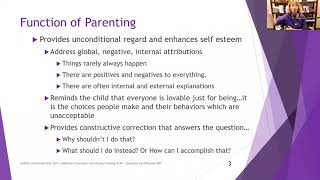
Welcome to Happiness Isn't Brain Surgery with Doc Snipes. This podcast was created to provide you the information and tools Doc Snipes gives her clients so that you too can start living happier. Our website, Docsnipes.com has even more resources, videos and handouts, and even interactive sessions with Doc Snipes to help you apply what you learn. Go to Docsnipes.com to learn more. Hi, everyone, and welcome to Happiness Isn't Brain Surgery with Doc Snipes. Today we're going to be talking about positive parenting and re parenting. And you might be saying to yourself right now, what is re parenting? Well, you know what? Some of us did not have the childhood that we wanted or the best parents in the world, even though they probably did try their hardest. So what we're looking at is what can you do now if you, in order to help yourself, learn coping skills, how to tolerate distress, how to love yourself, all that stuff that hopefully you would have learned in your childhood. So the function of parenting. And we're going to talk about what should happen and then what you can do now in order to improve it or, and. Or what you can do as a parent to help your children along. So the first and foremost is to form a safe and loving place where people can retreat to. And I always liken it to being on a tightrope. And parents are that safety net underneath. We want our children to go out and take risks. We want our children to grow, we want them to become more independent. But when they go out and something doesn't go as planned, we want to be that safety net to catch them so they feel like they're able to go out and try again. It doesn't hurt too bad when they fall. You know, if you fall without a safety net, you're either really badly injured or you're dead. You know, when people go out and experience life and take chances, if they don't have a good safety net, then it hurts a lot more. And we are not born with coping skills. I mean, we have really primitive ones, but we're really not born with the skills to handle life on life's terms as we know it. So our parents help us develop those, but our parents also help us learn to love ourselves. Having a safety net allows people to feel more comfortable taking risks interpersonally. I remember one time we were at the park with my son and he was, golly, three, three and a half, and he was playing on some equipment and stuff. And some other little kids came and I was like, shawn, why don't you go over there and introduce yourself and see if you can play with them? And he did. He toddled over there and introduced himself, and they said, no, he couldn't play with them. Which I felt very sad. You know, he came back and he said, no, mommy, they didn't want me to play with them. Let's go over here. And he was fine with it. He came back because he knew that I loved him and I wanted to play with them even if they didn't. So encouraging children from the very beginning to take small risks, introducing themselves, you know, trying T ball, doing this, doing that, figuring out where their skills are and helping them learn that they're loved for being who they are, it allows them to take more risks cognitively. If we encourage them to think on their own instead of always answering their why questions with some pat answer, if we encourage them to look at it and say, well, why do you think that is? It encourages them to take risks and start thinking outside the box. Now, cognitively, younger children are not able to get very far outside the box. They're still dealing with concrete operations. They need to see it and feel it to understand it. But we do want to encourage them to move forward a little bit. And by proposing those sort of questions, we can help them start thinking more in a more advanced way. And it allows them to take risks physically, such as T ball or running or whatever they want to do so they don't feel like, you know, maybe I'm not good enough. You know, they'll go out and they'll try throwing a football, and if they're great at it, wonderful. And if they're not, they're like, well, you know, that's not one of my skills, and move right along. So we want to provide this nurturing environment where kids can basically, if you want to think of it this way, bounce off. You know, they hit that safety net and they bounce back up and they can try something else. We want to provide unconditional positive regard, which helps enhance self esteem. And unconditional positive regard is this term we use in counseling. And basically it means we. We help people see that and children see that everyone is lovable just for being. It's the choices people make and their behaviors which may be unacceptable. So I want my child to know that, you know, what you did, I disagree with that behavior, or that was a very poor choice. I love you. Don't like the behavior. We want to help them when things happen, address global negative and internal attributions. You know, every time I try something new, I fail at it. That's pretty global. Every time I try anything new, I always fail. That's negative and that's internal. It has to do with me. And that can be really hard on a self esteem. So we want to encourage kids and people to take other perspectives because things rarely always happen. You know, the sun always rises and sets. Well, that's not even true necessarily. If you go into Alaska, you know, it doesn't rise and set every single day where you can see it, but the earth always spins. There are a few things that are kind of constant there, but things rarely always happen. So when a child feels or a person feels like every time I try something, I always fail. When we want to say, let's look at things you've been successful at, because I haven't met anybody yet who has failed at every, absolutely everything they've ever tried. Now, they may have failed at some things that were really important to them and they need to deal with that. But they have been successful at being a friend, at being a parent, at being, you know, let's look at the things you have succeeded at and let's start evaluating, you know, with this person, what is important to them. You know, there were a lot of things I'd like to do. I loved ballet when I was little. I always dreamed of being a ballerina. That wasn't in the cards for me for a whole lot of reasons, partly because I have two left feet, but so that wasn't something that was going to happen. So when I tried, that didn't go so well. When I tried playing the violin, you know, I did it because I had to in school for four years. But it was. I wasn't very good at it. So that was something I wasn't good at. But there are lots of things that I am good at. So I wanted to look at, you know, what things am I good at? And let's focus on those things because too often we focus on the things either we don't have or we can't do instead of focusing on the things that we do have and we can do. We need to remember that there are positives and negatives to everything. And helping children or helping ourselves find meaning in things is going to be important. I remember one time, golly, it's been about a year now, we had a bad storm come through and it took down about 100ft of our fencing, which you don't think is a big problem until you've got chickens and donkeys and ducks and everybody running around and able to escape. So, you know, that was like, oh, my gosh. The good thing that came out of it was that we bonded together as a family, and I saw my kids kind of jump in and do what needed to be done in a way they hadn't done before. So, yeah, it was unfortunate that a significant portion of our fence got pushed down. The positives were we could afford to repair it, and it helped the family bond over something that was important to all of us. And the third thing we need to do when something unpleasant or adversity happens is look for both internal and external explanations. You know, maybe my ballet teachers were really awful, and that's why I wasn't good at ballet. Maybe I wasn't good at ballet because I have no sense of balance. You know, one's external, one's internal, and it could be a combination of factors, but very rarely anything completely internal or completely due to external forces. So we want to have people focus on, you know, what parts were out of their control and or didn't have to do specifically with them, and what parts were within their control or did have to do specifically with them. You know, another situation, you could be at work and maybe your boss bites your head off for some. For something, and you're just like, whoa, where did that come from? You could think to yourself, he is always nitpicking on me, and I'm never going to get ahead in this company, and yada, yada, yada. Or you can look at the times where maybe he's not one that gives a lot of positive feedback. I know I had a boss like that, and if you didn't hear anything from him, it was good news. It meant you were doing a. Okay, so looking at that, you know, recognizing how he interacted, but recognizing that everything I did at work, he wasn't biting my head off for. There just happened to be one thing that particular day, for example, that he, you know, kind of got upset about. And I'm like, okay, you know, let's look at the positives and negatives to that. It's something I can learn from, so I won't do it again. And there are ways to fix it. Okay. Unfortunate that I got him angry, but I can learn something from it. I didn't lose my job. Yada, yada. And looking at internal and external explanations, my boss himself is normally, or was normally a very level, calm guy. He didn't get riled by much of anything. So when he got snippy with me, that was. Whoa, where did that come From So I could take it internally thinking I disappointed him, I am a failure, I am the worst supervisor he's ever had, yada yada yada. And. Or I could say, you know, internally I made a mistake, I didn't think before I did this or whatever the case was. But externally, why did he behave so strongly? Maybe he was having a bad day, or maybe he had just come over from senior management and getting chewed out for this thing and you know, crap rolls downhill and I got the brunt of that before he had a chance to de escalate. So maybe it wasn't all about me. Maybe it was his reaction to being called on the carpet for something that was going wrong in his department. Examining everything that's going on, teaching kids how to sit down and really think about what are the other explanations, what are the other exceptions to this where this doesn't always happen, and what are the positives you can get out of it. And we can do that for ourselves too. When something bad happens, just take a timeout and however you do it, if you walk in a circle and talk to yourself, if you journal, if you talk to your, your dog, however you do it, go through these questions and figure out the exceptions, the positives, and what parts are within and what parts are not within your control. Parents also remind the children, and as if we're reparenting, we regularly remind ourselves that we are lovable and people are lovable. And I really believe this or I couldn't do my job that everyone is lovable just for being. It's the choices they make and their behaviors which are unacceptable. And I know I said that earlier, but this is a huge sticking point for a lot of people because they see somebody's behaviors as a representation of everything that they are. And you know, it's important to separate the person and look at maybe the reason for those behaviors. When somebody is abusing alcohol or drugs, you know, does that make them a bad person? No, not at all. It means that they're a troubled person and they're probably making some choices in self care that are not the best for them. But it also shows me that they don't want to die, they want to survive, and they don't know how to cope with life on life's terms right now for one reason or another. And there's a lot of stuff that goes into that. But trying to understand the behaviors versus the person. Parents also provide constructive correction that answers the question, why shouldn't I do that? What should I do instead? Or how can I accomplish that. So thinking about, you know, your teenager who is, oh, my gosh, they're hitting that period where they think, you know, absolutely nothing as a parent, and they're not wanting to do their homework, they're not wanting to do their chores, and you're just, like, pulling your hair out. And we can get that way, too, as adults. We can get to places where, you know, we're not wanting to go to work and we're not wanting to clean the house and all that stuff that, you know, the chores, everything that we rebelled against when we were 16, we periodically rebel against when we're 36, too. But we want to ask ourselves, why shouldn't I do that? Why shouldn't I let the chores go? Why shouldn't I call in sick to work? There are generally reasons for that. Why shouldn't I, you know, avoid doing my homework or whatever? Generally, we can find reasons for why we shouldn't do that. What should I do instead? So, you know, when it comes to cleaning the house, you're looking at the house going, oh, Lord, you know, I just can't imagine this place is a disaster. That's kind of not motivating. So what can I do instead? Well, maybe I can start by cleaning the living room. You know, I'll do that for right now, and then I'll take a break, and then maybe I'll do the kitchen. So instead of looking at it as a big thing, looking at it in smaller tasks, that will help you accomplish it. Same thing with homework. My son is struggling right now sometimes on getting his homework done and getting his Bible studies done and all that stuff. And so my question to him is, why isn't this happening? And in some cases, it's because he doesn't know how to do it. And this is more with his studies right now. And he's like, well, I don't know how to do this. And I'm at a stopping point. And my response is always, okay, you're at a stopping point. So how do you get past this obstacle? What needs to happen so you can move forward? And usually it's talking to his father to get some assistance. I'm like, well, okay, so let's talk to your father, encourage him to problem solve. You reach this stopping point, you reach this obstacle. How do you traverse the obstacle and help him get going? As far as Bible study is concerned, sometimes he puts it off and puts it off and he forgets about it. So I said, you know, how can you not forget about it? How can you accomplish that and he came to the idea of setting a reminder in his Google calendar to send him a text message to remind him to do it every day. So encouraging people to solve their own problems and answer these questions, to get motivated and overcome obstacles, because it's not always obvious or not always easy, but the answer is there. And if you don't have the answer, and that's what I always tell him, if you can't figure out a way to solve the problem, come ask me or ask your dad or ask your sister, because we may have different perspectives. So it always comes back to that safe safety net where they can go home. Even today, you know, I'm almost 50 years old and things happen, and I'm like, well, my daddy's passed on, so I can't actually call and ask him. But I think to myself, what would my father tell me? And, you know, that provides that sense of comfort and grounding. Parents assist in the development of assumptions about life, self, and others by what we expose our kids to, by what we let them watch on tv, by our opinions, by what activities we expose them to, the types of schooling that they're in, etc. We really shape children's experiences up until their teenage years when they start becoming more independent and choosing their peer groups and taking on things independently. But we really, in that first 16 years, are in charge of forming their assumptions about life. Is it productive? Is it hopeful? Is it scary about themselves? Are they good people who sometimes make bad choices? Are they smart? Are they capable? Are they all this kind of stuff by what we expose them to and how we deal with their adversities when something goes wrong, you know, maybe they get a D on a test and they bring it home, you know, okay, well, we can freak out or we can help them realize that, okay, that's not the kind of grade that I'm okay seeing. But you're good. You're really smart. What happened? Why did you get this D? How can I help you improve your grade? Do we need to get you a tutor? Do we need to, you know, what needs to happen? So how we react when our children fail teaches them how to react when they fail. So as adults, when we fail, we need to think to ourselves how, you know, if my parent were alive and, you know, I was younger, how would I have wanted my parent to react when I did something like this? What would I have wanted them to do? And do that for ourselves and surround yourself with loving people who will do the same? Your partner, your best friend, whomever, where you can call up and go, you know, I really screwed up today. And they listen and they go, all right, let's figure out how to solve that problem. You know, you're a good person. I'll help you through this, whatever. So once we move out of mom and dad's house, hopefully we have a support system that kind of fills that gap. So we have a new safety net. You can still go back to mom and dad as long as they're alive. But, you know, we also want to have our grown up safety net where we can rely on them, our friends, and our family to help us out. We want to regularly question and verify core beliefs. And even when my kids were little, you know, they would tell me things very matter of factly and I would say, oh, really? And I would periodically pose questions to them about, you know, the correctness of certain statements. I remember one time I asked my son, he was 2008, so he was about 8. And I said, you know, son, what happened to the dinosaurs in the Bible? And he looked at me and he just shook his head. He's like, dinosaurs came before the Bible, mommy. There were mammals in the Bible. I said, oh, okay. And, you know, that was very matter of fact for him, that that's the way it was. And so I encouraged him to, you know, think, because a lot of times people, people say that creation of everything began, you know, with, with Genesis. And, you know, if you. There are lots of ways to interpret that. But in any event, he's right. In the Bible, there are no dinosaurs. There are mammals, and mammals and dinosaurs did not coexist, at least not for very long. So it's one of those interesting things to put out there and see if they're thinking independently. But we want to do that. We want to regularly question our core beliefs because things change. When you were little and my son went back to visit his. The house that he grew up in. He's 18 now, and he's like, you know, that house isn't nearly as big as I remember it. It used to be huge. I'm like, yeah, and you used to be like £6. When he was little, the house seemed huge to them, to him, because proportionally it was. And strangers were scary because, you know, when kids are little, we don't want them talking to strangers because there is stranger danger. And, you know, yes, I know the majority of abductions and stuff happen and bad things happen with someone, you know, so it's not exactly true. But we still teach our kids, you don't want to just Go up to some random person and get in the car with them or, or whatever, especially adults. But as we become adults, then strangers become less intimidating and more inviting in some ways. Where we're like, hey, you know, you're at the dog park and there's some stranger sitting there on the, on the bench and they've got a dog playing, and you walk up and you strike up a conversation because now's the time you can start making friends with strangers. So your core beliefs change. Strangers aren't as scary, you know. Yeah, you've got to be careful with everybody you meet. But strangers aren't nearly as scary when you're 24 as when you're 4. And in reality, they're not as dangerous when you're 24 as when you'4. So we want to regularly question is, what are the beliefs that I formed when I was in elementary school still accurate for me today? Try to explore things from the opposite perspective. If you had a really adverse childhood, you may think that the world is an evil and dangerous place. And when you were a kid, that sounds like it was very, very true. However, is it that way now? Try arguing the point that it's a good and safe place, not middle ground. You know, argue the exact opposite. It is not dangerous and it is not evil. Look at all these good things. Look at how safe you are, yada, yada. In reality, neither point of view on the extreme is true. It's a good place, but there are dangerous aspects to it. So it's somewhere in the middle. But if you encourage yourself to play devil's advocate, then you find that your opinions may gravitate more towards the middle. And you're finding those exceptions. You're finding the times when it's not a wildly dangerous place everywhere. Yeah, there are some places that are dangerous we don't want to go to. And there are some things we got to do to take care of, protect ourselves. True. You know, you lock your doors at night, et cetera, but when you're in your house, you're safe. When you're at the office, you're safe. And look at the times and places where you are safe and the people and things that happen that are good, then you can start seeing that the world is not totally evil and dangerous. There are aspects of that, but there are also aspects, hopefully larger ones, that are good and safe. Whenever you have assumptions, and it's not just about the world, you know, I'm talking about any assumptions you make. Like this type of person is always good. You Know, for the longest time, we thought priests were always good. You know, they were the gateway to God. But we found out that some priests make choices that are unacceptable. So we want to look at, you know, they're probably good people, they made bad choices, yada, yada. True. But to expect that every single priest or every single person is safe is not true. The majority of people, safe and kind and good. But there are a proportion or we wouldn't have crime that make poor choices. Parenting provides gradual challenges and exposure to failures and adversity to enhance coping skills. And I shared with you the experience my son had at the playground. I wanted him to go out, I wanted him to learn to introduce himself. I wanted him to learn some, some social skills and get more comfortable being around other people. You know, that particular group of kids didn't want to play with him, that was fine. You know, he took it like a trooper. But if it would have been upsetting to him, we would have talked about how to deal with that. When kids are growing up, they have that built in family that's supposed to serve as that safety net. When they move out of the house, they don't always replace it immediately with an effective safety net. So sometimes they experience challenges and failures and they don't have a safe place to fall back on. We want to make sure that they don't fall far, that they can support themselves with their own coping skills and they can say, you know what, I got this, it's okay, I can just shake it off. People need to experience the unknown failure and adversity to learn how to deal with them. If we protect people and we say everybody's a winner, and I'll make sure that you get this job, you know, you don't have to take any risks here. I will make sure that you win the pageant, you get the job, you do whatever, you get into whatever college you want to, it's just a done deal, then kids aren't going to learn how to handle it if something doesn't go their way. When adversity happens and it doesn't even need to be directly to them, adversity, a war breaks out or there's a tornado in their town or something. If kids haven't learned how to deal with adversity and go, okay, well, that really sucked, what do I do next? How do I get back on target or how does this impact me? Then they're going to have a really hard time coping with life and politics and the news and the weather and everything else. As adults. If we Were sheltered growing up. You know, it's important as adults that we learn to try to take risks. And then when something bad happens, you know, we'll feel it because we'll get upset. We need to learn how to deal with that and remind ourselves that everybody experiences adversity. Everyone fails. It's how you deal with those things that makes the difference. If you hold on to anger and anxiety, which are reactions to a threat, and you just nurture that feeling, you know, think about sitting on your couch and just being angry. Is that doing you any good? Is that solving the problem? The only thing it's doing is taking minutes or hours off your life, and there are hours you ain't going to get back. So when you feel angry or anxious or even depressed, think about how you can handle it. How can you improve the next moment? And you have basically, well, you have four choices. You can continue to stay miserable. I don't even consider that a choice. But you can. You can choose to let it go. Say, you know what, this isn't even worth my time or energy, whatever. You can change how you feel or think about it. So instead of seeing it as disaster, see it as a learning experience or try to find the positives or, you know, if you're angry at your friend for something that they did, instead of thinking that they're a horrible person, thinking what they did was unacceptable. I still love them as a friend. So you can change how you feel or think about it. If you can't change the situation in order to help you come to acceptance of it. Or you can change the situation. You know, if your friend did something that greatly offended you, you can't change the past, but you can talk to them and go, you know what? When you were supposed to meet me for dinner and you didn't show up and you didn't call, it really hurt my feelings. And it would, I would appreciate it if in the future you would at least text me and let me know you weren't coming. So you're addressing the situation to try to keep it from happening again. You can't undo it. But staying angry over it isn't going to do anything. What you can do is take steps to prevent it from happening again and help that person learn from it. Parenting teaches problem solving skills. We want to help children and ourselves. You know, if as adults view obstacles as opportunities in disguise. You know that old adage, when one door shuts, another door opens, but those hallways are a bitch. Yeah. Okay, so that's where we're at, right? Now and a lot of times when we talk with our children after something bad happens, they're in that hallway where it's dark, the other door hasn't opened yet, and they're just going, okay, which way? Viewing obstacles or bad things that happen as. Okay, what can I learn from this? You know, sometimes you don't get a job you want. Alright, what can I learn from that? Maybe that wasn't the direction I was going. Maybe there's something better out there for me. Maybe. You know, when I was going to school for in college, I started out pre med. A lot of people do. Then I realized that I don't do calculus. I don't do math without numbers. I need numbers and calculus is like all letters. But I digress. I realized that that was an obstacle to me getting into medical school. But I recognized that I had other skills. So I explored some of those and I found a place where I truly believe I'm happier now than I would have been if I would have gone to medical school. So that door was shut, kind of slammed in my face. However, I looked around and unfortunately, during this time we also had the student murders at the University of Florida. And. And it was kind of a devastating time. And that's when I began working at the crisis center and handling suicide intervention and crisis calls. And I found out, you know what? I'm pretty good at this. Would I allow, would I wish a mass murder on anybody? No, you know, that was definitely adversity at its best. However, you know, it kind of steered me in a direction. Synergize is another way of solving problems. Recognize that you're not perfect at everything. You're not perfect at, you know, maybe 90% of things. But that's the beauty of the world. Everybody makes the world go round. I have strengths and we homeschool our kids and my strengths are in English and science and, you know, some of those other things. My husband's strengths are definitely math and some of your harder sciences like physics and chemistry. I do biology and psychology. But because of our strengths, you know, our kids know if you've got a math question, you go to dad because that's his strength. You don't want to go to him with an English paper and you go to mom with an English paper. We don't disparage each other. I don't tell my husband he's stupid because he doesn't know as much about psychology as I do. He knows far more about computers and math than I ever will. So look at what your strengths are. And synergize, say, this is what I bring to the table. Let me find somebody else to help solve this problem. That has complementary strengths in business. I am great at doing content and that kind of thing. I am not good at marketing. So I know that if I want to succeed in business, I need to bring in people who have expertise in marketing. So that's where we're talking about problem solving skills. When kids have a problem, you know, maybe they can't figure out how to do their math homework. Alright, instead of sitting there staring at the page and hoping that it's just going to spontaneously come to you, what are your options? And encourage them to think about it. Then if they don't think, come up with it, you know, share with them. You can ask your teacher, you can ask one of your parents, you can go on YouTube and see if you can find a video for it. You can find another textbook, see if it explains it differently. You can call a friend who's in your class and see if they can explain it to you. That's at least five different ways to get the information other than just sitting there looking at the book going, yeah, this makes no sense. So encourage kids to brainstorm. When you hit an obstacle, brainstorm. And one of the ways you can brainstorm is take a piece of paper and just start writing down every idea that comes into your mind about how to deal with it. Some of them are going to be way out there, but that's okay. Write them down. You can cross them off later, but that gets your creative juices flowing and helps you think about different ways to solve the problem. And finally, when you're solving problems with other people, you need to create a win win. If you're constantly telling them how something needs to be done to solve your problem, eventually they're going to think that you're whining or you're demanding or whatever. Create a win win. Why does this matter to them when your kids want to borrow the car to go out on Saturday night? Well, they want to borrow the car so they can go out and go on a date or whatever, but they need to present it to you in a way that's a win win. They'll fill up your tank when they bring it back or something so there's something in it for you. With different people, depending on their temperaments, different things matter. For me, I'm about the worm and fuzzies and making sure everybody gets their needs met and everybody is happy and holding hands and singing Kumbaya and stuff. My Son, on the other hand, is very by the book. What's the right thing to do? What's the not right thing to do? This is the way it goes. So if I'm trying to persuade him to do something, I am going to explain to try to persuade him that it's the right thing to do. If he's trying to persuade me to do something, he's going to help me see how it's going to make everybody happy and increase harmony in the household. And that's creating a win win. It's not being manipulative so much as pointing out the aspects that are important to the person. Parents model healthy coping and self care skills by modeling work life balance. If your parents didn't model it and you realize it's a problem, you need to figure out how to do it. What does work life balance look like for you? If you are a parent, it's important to model it so kids don't feel like they need to be working 17, 18 hours a day or more. Demonstrate self awareness of needs and goals. Help kids see you going through the thinking process of you know what, had a really hard week. I'm tired. So this weekend instead of doing 15 hours a yard work, you know, Saturday I'm just going to chill and watch the football game. And that demonstrates to them that sometimes priorities get rearranged but how important it is to be aware of your own needs in order to keep yourself recharged and rejuvenated. Model relaxation and recreation. They say all work and no play makes Jack a dull boy. Well, you know, if that's all your kids see you doing, then they may not realize how important it is to go out and have fun. Model radical acceptance. You know, the fact that sometimes things are unpleasant, but things are as they are. It is what it is. You know, sometimes it's good and you say it is what it is and sometimes they're bad and you're like, well, it is what it is. And you know, you can even think of things like rainy days in that way. Some people look at it as great because they don't have to water their garden, their lawn. Other people look at it as miserable because they wanted to go out hiking that day. And now not so much it is what it is. So you can dwell on feeling unhappy about it, or you can figure out what to do to improve the next moment. Parents model and teach effective interpersonal skills. They teach children how to listen for understanding. And we do this when we're parenting. You're talking to a small Child, you're like, okay, eyes on me. And you tell them something and you say, okay, now what did I just tell you to do? And the child parrots it back and you're like, yes. Or you're like, no, were you even in the room? And you repeat it until they learn how to listen for understanding and not interrupt. If they start interrupting, you stop them and go, let me finish. They let you finish. And then you ask, what did I say? They parrot it back and then you say, okay, now what were you going to interject? So you help them learn how to paraphrase and listen without forming their own response before you're finished talking. And we also teach them how to speak to be understood. And it's very similar. They need to get people's attention, they need to communicate clearly, they need to check for understanding, and then they need to listen to what the other person has to say. Most of the time in American culture, even as adults, we don't do this, but this is hopefully what we are trying to model and trying to teach our kids when they're growing up. Parents enhance motivation and self efficacy. Self efficacy is that belief that I can do this. So don't do for children what they can do for themselves. Likewise, as an adult, don't have other people do stuff for you that you could do for yourself. If you can do it for yourself, then do it. Instead of going, you know, I don't know if I can or I don't really want to do it that way you can say, you know what, that wasn't so bad. Didn't think I could handle it, but I got it. And help children how to learn to enhance and maintain motivation. Help them learn how to look for the reasons that doing something is important to helping them achieve their goals in life. The main goal of parenting is love. And I'm just going to kind of summarize everything here. We love our children and we want to teach them how to love themselves for who they are, warts and all. And we want them to love other people for who they are, strengths, weaknesses and all. But what is love? Love is patient and kind. Okay, so this is what we started out with. Love is that parent going, alright, you made a mistake, let's figure out what happened. I love you. The way you did that was not the right way. So let's figure out what the next step is. So parents are patient, they teach children, they realize, okay, you need a little bit of guidance here, need a little bit of navigation. And they're kind about doing it Instead of saying, you are such an idiot, they say, all right, you made a mistake, let's see what we can do to fix it. So they're not derogatory in any sort of way. And if your parents weren't that, and you're likely not that yourself now. So when you make a mistake, you are impatient with yourself and you have a negative voice, the back your head every time you make a mistake that goes, I knew you were always a failure or you would never make it or whatever it tells you. Start being patient and kind with yourself. Think about what would you say to your son or your daughter if they did the same thing. Would you be patient with them? Or would you go, I can't believe you did that again and be derogatory? Probably not. So don't be less patient with yourself than you would be with anybody else. Be kind to yourself. However, if your best friend did the same thing, you know, would you, how would you react to them? Would you be kind? Would you be helpful? Would you be supportive? Or would you say hateful, condescending things? Probably the first. Or they wouldn't be your friend. So don't treat yourself any different than you would treat your best friend because you need to be your own best friend. So love is patient and kind. It doesn't envy, boast and is not proud. And this one's hard. You know, it's important for us to recognize what we have instead of focusing on what we do not have. So envy is, you know, anger at somebody else for having something that you want or anger that you don't have something that you want. Instead focus on what you have. Because there's always going to be stuff that you want. It doesn't dishonor others. So again, being kind, we're not going to be mean, derogatory, condescending to other people. We're not going to be that way to our children. We're going to teach them how to love other people and maybe correct unacceptable behaviors, separating the person from the behavior. Love is not self seeking. You know, we don't do, we don't become parents in order to raise our status up somehow. We become parents because we want to love and nurture another living being. So it's important that we encourage people, ourselves, our children to look at, why are we doing this? How is this helping the greater good? How am I helping my child with this? Love is not easily angered. Love takes a step back and says, alright, you know, again, let's check those negative voices. Tell them to be quiet, let's look for all the other explanations why this might have happened. Because things rarely always happen. And let's figure out what the next step is to fix it. Because staying angry isn't going to do any good. Sometimes getting angry is not going to do any good. But sometimes anger is our immediate reaction. Okay, well, if it happens, it happens. But nurturing that anger just takes days and hours off your life. So figure out how to improve the next moment. What do I need to do to fix this situation and eliminate the threat? And remember, it really boils down to either changing the situation or changing how you feel about the situation. Love keeps no record of wrongs. If you kept a list of done me wrongs for everything your child ever did, you know they would feel guilty all of the time. Love is when you say, you know what, you made a mistake, you made a poor choice. I love you. Let's fix the choice, not do it again and move on. Same thing with yourself. If you kept a record of every time you did something wrong, you'd feel horrible about yourself. When something happens, when you do wrong, learn from it and move on. Holding onto that doesn't do you any good. Put it down on the ground and use it as a stepping stone to improve. Love rejoices with the truth. Truth isn't always easy. Sometimes it's hard for a kid to come home and go, you know what, mom, I wrecked the car, I broke somebody's window, or I got suspended from school. But a loving parent is going to say, all right, well, it sounds like that was a poor choice. I love you. Let's figure out what you need to do to fix this situation. And you notice I say what you need to do because a parent, we want to empower them to fix their own situations, but we're going to be there to support them along the way. Love always protects, always trusts, always hopes, and always perseveres. So think about that. When you're trying to feel better about yourself, when you're trying to be a good parent, when something happens that makes you upset or sad or lonely, how can you protect yourself? How can you trust in other people and yourself? What do you have to hope for? What is going well in your life? And what is it going to take to persevere? What do you need? Sometimes we can't do it by ourselves. We need our best friend or our family. That safety net there to go. All right, we got your back. Let's go. So what do you need? And that's what love is all about. If you like this podcast, please subscribe on your favorite podcast app. Join our facebook group@docsnipes.com Facebook or join our community and access additional resources@docsnipes.com. Thanks for tuning in to Happiness Isn't Brain Surgery with Doc Snipes. Our mission is to make practical tools for living the happiest life affordable and accessible to everyone. We record the podcast during a Facebook Live broadcast each week. Join us free@docsnipes.com Facebook or subscribe to the podcast on your favorite podcast player. And remember, Docsnipes.com has even more resources Members only videos, handouts and workbooks to help you apply what you learn. If you like this podcast and want to support the work we are doing for as little as $3.99 per month, you can become a supporter@docsnipes.com join again. Thank you for joining us and let us know how we can help you.










