Preventing Vulnerabilities for More Effective Pain Management
Dr. Dawn-Elise Snipes covers how pain disrupts mood and function, then walks through medical treatments like NSAIDs and gabapentin alongside non-medical approaches: CBT, mindfulness, guided imagery, and pacing. The focus is a full biopsychosocial strategy to help patients manage both the pain and the depression, anxiety, and sleep loss that come with it.
Chapters
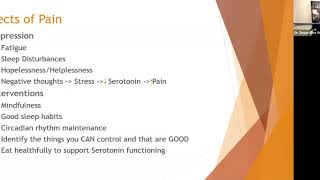
This episode was pre recorded as part of a live continuing education webinar on demand. CEUs are still available for this presentation through all CEUs. Register@allceus.com Counselortoolbox you I'd like to welcome everybody to today's presentation on preventing vulnerabilities, using and addressing pain management and people's moods. I am Dr. Donnelly Snipes. We're going to review the characteristics of pain and we're going to talk about the effects of pain. Why is it important to prevent pain? Why are we even talking about this? I know JCO has it. You know, if you're in a JCO accredited facility, your assessment will contain a section for assessing pain. But what's the big deal about pain? Why do we care as clinicians? It's not like we can prescribe. And we're going to talk about how to help people understand their pain, the exacerbating factors, the mitigating factors, and what they can do to address their pain from a cognitive behavioral standpoint. We'll look at some medical interventions as well as some non medical interventions. Okay, so let's face facts. Everybody has pain. Sometimes. This weekend I worked in the garden most of the weekend and I can tell you, Monday morning I got up and I felt like I'd been hit by a truck. There were muscles that were sore that I clearly hadn't worked a lot over the, over the winter. It hurt, you know, I had a kink in my neck, whatever, but that's just part of it and I knew it would go away, yada yada. There are also times, you know, I have TMJ so I can share with you that pain is kind of a part of life. It's just the degree of pain on any given day and what I can do in order to address that. But everybody has pain. So it's important to help people recognize that expecting to live a life completely pain free, physical pain free or emotional pain free is unrealistic. The cool thing is our bodies are incredibly resilient and they generally bounce back or find workarounds when there is pain. Knowing your pain can help people inform their doctors or physical therapists or whatever about what's going on. And if again, if you're in a JCO accredited facility, you know these questions here. But for those of you who aren't, is the pain acute or chronic? You know, for me, a lot of times I'll have acute pain. Acute pain is something that recently started and is problematic right now. Chronic pain is pain that goes on regularly now, people with Crohn's disease, for example, may have chronic abdominal pain with acute flare ups, or they may have periods where they're pain free. People with spine problems often have chronic pain. A lot of military people that I've worked with and just in general often have chronic pain as a result of a variety of different injuries. In addition to the duration of the pain, we want to look at whether it's stabbing, aching, throbbing or burning. This is more important for the medical professionals in order to differentiate what's going on. Obviously, there's not a lot that we can do in order to remove, you know, burning pain, but we can help. The patient described the pain to their medical practitioner. We want to know if the pain is constant or intermittent. You know, if the pain is. Even if it's acute, it may be intermittent pain. It only hurts when I do this. Well, that's good to know. Is it stationary or radiating? If you have pain that's in your shoulder, for example, it may just be in your shoulder and aching, or does it radiate down? And again, this gives medical professionals clues as to whether it's nerve related, muscle related, or bone related. And is there any numbness? There are a lot of things that can cause numbness. It's not just carpal tunnel syndrome or whatever, encouraging patients to communicate that. Because all of this information helps the medical practitioners come up with a better guess in some cases about what might be causing the pain in order to develop a better treatment plan. And the medical interventions are going to be somewhat different for different types of different types of pain. So the effects of pain, again, we just talked about a lot of the things that a medical provider would need to know. But what can we do as mental health professionals, as social workers, as psychologists? Depression is a common side effect of pain for a lot of reasons. When you're in pain, especially if you've been in pain for a while, it can be really depressing because you feel like you can't do the things that you used to do, what you used to do. It hurts to do and you feel somewhat disempowered by your own body. People can also start to feel depressed because of pain because it's not letting them get adequate sleep. I know when my shoulder is acting up, I will not get adequate sleep at night. I won't get that good restful sleep. So I start feeling very fatigued and I can start getting a little bit moody because I don't do well with lack of sleep. People with chronic pain can feel a sense of Hopelessness and helplessness because it's just like they wake up and the pain is there and they go to sleep and the pain is there. I have a friend who's struggling right now with some pancreatitis and this has been a pretty chronic condition for her. And it's really frustrating because when she eats, it flares up and, you know, so she doesn't want to eat, but then she has to eat so that she's in this constant limbo or fight, I guess, with her own body and she feels very disempowered sometimes. Another effect of pain that affects mood is negative thoughts. When people are in pain, they tend to feel more negative. I mean, when, when you're in pain, you're generally not optimistic and wearing those rose colored glasses, you're just like, this sucks, life sucks. And hopefully you're not like that all the time. But we've all worked with people or been around people who have chronic pain who tend to be, have more negative outlooks on things. When we're in pain, our HPA axis, our, our threat response system is activated. Our body is saying something is wrong. Pain is your signal that something is wrong, which elevates our HPA axis, elevates our cortisol levels, elevates our norepinephrine levels, so our stress is elevated. This reduces serotonin. Because when you're in pain and your HPA axis is elevated and it's not the time to be chilling out, so it reduces serotonin, reduces gaba. What we do know, and still they're not exactly sure how it works, but they do know that as serotonin levels go down, pain perception goes up. So in the midst of all this, your body's trying to say, you need to do something, you need to do something. It's reducing your serotonin, which is increasing pain levels. One of the things we can do with patients is to help them start trying to lower their stress levels in order to increase their body's ability to manage their pain, increase their serotonin levels and increase their body's natural endorphins. Interventions that we can use to address the depression that is a side effect, if you will, of pain. Mindfulness. Help people become more mindful of what they can do, what helps them, and become more aware of their pain. For a lot of us who have miscellaneous issues with chronic pain, you know, as you get older, things start to wear out a little bit, becoming more mindful of when it's starting to hurt or when you're starting to get worn out so you can take a. Instead of pushing through and then ending up in excruciating pain later. Being mindful of what's going on, being mindful of your sleep. Ergonomics, for example, in order to address what you need to address and sleep in a way that's most comfortable for you so you get quality sleep. We want to help people maintain their circadian rhythms. A lot of times when people are in pain, it's hard to get to sleep. So we need to help them figure out what can they do for sleep. Hygiene to help them get to sleep, but also what can they do when they wake up. A lot of times, if you've got chronic pain, especially if it's musculoskeletal pain, when you wake up in the morning, it hurts. You're stiff, you're achy, you're like, oh, my gosh, okay, you know, let's accept it is what it is. And recognize that once those joints get a little bit lubricated, warm them up a little bit, the pain often will subside. Now, obviously, we need to work with the medical professionals here. We don't want to say, okay, get up in the morning and loosen those joints up if that's not medically indicated. But for the most part, you know, those of us who have knees that are getting a little older and wake up and your back is a little bit stiff, a lot of times, once we get moving, things start loosening up. Why do I bring this up? Because a lot of times, sometimes people with chronic pain will wake up, and if they hurt, they'll want to stay in bed and go back to sleep. And sometimes that's the worst thing that you can do. One of the Newton's laws is a body in motion tends to stay in motion, and a body at rest tends to stay at rest. Well, think about it. If you've been sitting for a long time, even if you're not in chronic pain, you know, maybe you're on a flight cross country and you have to sit still for four hours, or you're in a class and you've got to sit still for four hours, and you get up and you're like, oh, my gosh, it feels good to move because you've started to stiffen up. We want to make sure that people recognize the importance of circadian rhythm maintenance. And I'm going to bring this full circle here. We want to make sure that they recognize the importance of getting to sleep at a reasonable hour. You know, so their body knows when it's Supposed to sleep, but also making sure that when they wake up, they get up in order to maintain their circadian rhythms so they can have better sleep. Yes, when they wake up, they may not want to get out of bed, but it's important to get out of bed, not only to get the body moving or do whatever they need to do to start lessening the stiffness and the pain, but also to maintain those circadian rhythms. We want to help people identify the things that they can control and that are good in their life. Some of their pain may not be controllable. You know, there's only a certain amount of control that they can have over certain things. After you have surgery, for example, there's only a certain amount of that pain that you can control. And then there may be breakthrough pain. What can they control? After I had foot surgery, you know, one of the things I could control was how much I walked. You know, obviously you have foot surgery. Walking on it's going to make it worse. So, lo and behold, I figured out that one of the things that would reduce my pain and, you know, help me sleep and feel more comfortable was not walking, Go figure. But also focusing on other things in your life that are good. Okay, this hurts right now, whatever this is. I've got a migraine or whatever. Encouraging people to recognize it is what it is. And I'm going to take this part of my existence, this pain, and I'm going to compartmentalize it right here and just set it on the shelf for a second. And I'm also going to look at the other things in my life that are also good. And I'm going to sort of decorate my image of the present moment with everything in my life, not just this image of my pain. So encourage them to think about. Sometimes I talk with clients and I say, think about your pain like a picture, like a painting. Let's put that painting on the wall. Okay? We're not saying that it doesn't exist. It's there. You know, we can look back at it whenever we need to be reminded that it's there. It's there. But let's also put other pictures on the wall about other. With other things that are important in our life. So that pain is that pain. Painting is not the sole focus. It's part of a collage of things. And sometimes that helps people. Encourage people to eat healthfully, to support serotonin and GABA functioning as well as their natural endorphins. Those are things that are sort of common sense. We cannot prescribe unless You're a registered dietitian. Nutritional interventions, however, we can encourage people to educate themselves and eat healthfully and help them understand that the food they eat is broken down by their body to create building blocks to make the neurotransmitters that they need to make those natural painkillers to make their happy neurochemicals. They are not giving their body the building blocks. Their body can't make the natural drugs that it needs in order to help them manage their pain and mood. People with chronic pain often have a lot of anxiety. They can have anxiety that things won't get better. They can have anxiety that it's getting worse or, you know, most people, when they have chronic pain, their mind at some point or another goes to, this is cancer. It's going to kill me. We want to help them identify what their cognitions are surrounding their pain that may be contributing to anxiety. Another cause of their anxiety can be the consequences of pain. If they were, for example, if they were in a job like law enforcement, where they had to have a lot of mobility and they suddenly lost mobility in some fashion, you know, they may be worried that they're going to lose their job. If they're in relationships, you know, think about your kids or whatever. If you can't go out and play ball with them like you used to, if you can't do things with them like you used to, you may be concerned that that relationship is going to be negatively impacted. If you're into fitness, if you enjoy working out, there can be anxiety if you're not able to do what you used to do. When I was pregnant with my daughter, now, it wasn't a pain condition, but I was on bed rest, and I wasn't allowed to work out for a period of time, and that drove me absolutely bonkers. Exercise was my stress relief. So not being able to exercise was really stressful. And, you know, I knew, you know, once I gave birth, I'd be able to exercise again. But people with chronic pain, they don't have that light at the end of the tunnel. Sometimes they think, you know, I can't do, do this anymore. I used to be able to run, but now I'm developing problems with my spine. So the doctor says I can't run anymore. That's, you know, something I commonly hear from runners is they start developing arthritis or spinal problems, and there's a lot of anxiety around it because that's something that they loved, and they've got to grieve that process or grieve that loss. Interventions for Anxiety. Help people avoid caffeine and nicotine. These are stimulants. They're going to increase anxiety. Caffeine, you've heard me say it a million times, has a half life of eight to 12 hours, depending on the person. Which means caffeine that they are drinking right now is still going to be affecting them at midnight tonight, which is going to impact sleep quality and circadian rhythms. So encourage people to limit their caffeine and nicotine. If nothing else, encourage people to educate themselves about the disorder and the probability that things will get worse. You may have something that is going to be a chronic musculoskeletal problem and it's going to cause chronic flare ups. Okay, you know, let's learn about that. What is the likelihood that it's going to get worse? What is the likelihood that it could become terminal? What is the likelihood, you know, whatever they're concerned about, whatever those cognitions are, the what ifs that keep going through their mind, have them write down their what ifs and then research and find out the probability. How likely is it that this is going to happen? So they have information. Information is power. Have them keep a log of their good and bad days. That way we can start looking at what's different on your good days and what's different different on your bad days. But they can also start seeing the incremental and albeit sometimes small at first, increase in good days. So when they do have a bad day, they don't think, oh, I hurt all the time. They can look at their log and go, all right, I was only hurting two out of the last seven days. You know, that's not wonderful, but it's a whole lot better than seven out of the last seven days. So that's good. And that may give them hope to continue working forward. Encourage them to practice distress tolerance skills. When something hurts, working through the distress. And remember with the dialectical behavior therapy acronyms accept and improves. Encourage them to identify things that when they're feeling physical distress, things that they can do, they can engage in activities they can contribute. Maybe if movement at that point in time hurts, contributing might not be on the table. They can push the thoughts about their pain away, the anxiety about their pain away. They can take a mental vacation, they can use guided imagery, there's a lot of things that they can do. And encourage them to use what I call the Challenging questions worksheet to address anxiety provoking thoughts. And the challenging questions worksheet is really very simple. What thought are you having? What are the facts? For and against the thought, I want to know objective facts. For and against. You know, we're not just looking for the facts against your thought. We want to look at both sides equally. What is the likelihood that your thought, your worst case scenario is going to come true? Are you confusing high probability with low probability events? For example, if you have a pain and the doctor says, well, there's a 0.001% chance that this could turn into cancer. Okay, so if you're worried regularly that this could be becoming cancer, what's the probability? The doctor said it's a pretty slim chance. You know, he's not willing to say absolutely none, but it's a pretty slim chance recognizing that. So you can take a deep breath and get more perspective looking at the facts, looking at the probability that it's actually going to happen, looking at other contributing factors. You know, if your pain is worse today, it can feel really anxiety provoking if you don't know why it's worse. I woke up and suddenly my pain is a lot worse. Okay, that can feel really weird and very scary. If you look bigger perspective and say, okay, what things could have contributed to my pain being worse today? Again, getting those facts, then it might help people feel a little bit more in control because they're like, oh, yeah, I actually I helped somebody move this weekend and that explains why my back's hurting. It's not that my condition is getting worse, it's just that I aggravated it. Guilt is another emotional reaction to pain. Guilt is self anger. I feel guilty for not being able to clean the house like I want to. I have a neighbor who was in a really bad car wreck and struggles with chronic pain on a daily basis. I mean, she was in the hospital for six months, had to learn how to walk again. It was a significant car accident. She's not able to do a lot of the things that she used to because her pain is limiting. So she could feel guilty for not being able to keep the house like she used to, not being able to do things with her kids like she used to. This guilt can cause people to lash out at other people and push them away so they don't disappoint them. Like they're disappointing themselves. They feel guilty and they disappointed themselves for not being able to do what they think they quote, should. And you know how I hate that word. So instead of letting people get close, they know they can't do the things they should, so they push people away. We want to help people evaluate their guilt, help people think about how they would want their child or best friend to feel if the tables were turned. So, you know, if the tables were turned and your kid had been in a bad car accident and had chronic pain, would you want them to feel guilty or for not being able to do all of the same things with you? Have them get rid of the shoulds, because these shoulds just set us up for guilt. Encourage people to use the words I choose not to or I choose to. Instead of saying I should be able to keep a better house, saying I am not presently able to be able to keep the house in the level I want it. Encourage them to just get that word should out of their vocabulary because it helps them start focusing on what they are able and what they are not able to do. Focus on the things that they can do. You know, guilt is about stuff that we cannot do if we focus on the things that we can do instead. Well, that's great. Okay, maybe you can't throw a baseball with your kid like you used to because you had shoulder surgery or something. All right, well, what else can you do with your kid to spend quality time besides throw a baseball? Or how can you support that child in learning baseball techniques if you can't throw? What other things can you do instead? And finally, decide whether it's worth using their energy to be mad at themselves and the world for what's going on. And is this guilt? Is this self anger using energy that could be used to work towards some things that are important to them? Is it worth burning up all this energy being angry at yourself? Grief is yet another emotional effect of pain. Because you know what, when people are in pain, a lot of times they can't do the things that they want to do or, or they used to do, or their body isn't functioning the way it used to. And there's an element of loss associated with pain. Even short term pain. Short term pain can be very frustrating. People with migraines, for example, you know, the migraine doesn't last for months and months and months. It lasts a day, but it can Last a day, 17 days out of the month. And that's a lot of that has a significant impact on the person's life. So they may start grieving how it used to be before they started having migraines. Interventions for this, we just need to help people work through the stages of grief for each of the losses because of the pain. You know, if you lost independence because of the pain that needs to be grieved. If you lost the ability to fulfill a dream that you had because of the pain that needs to be grieved. If you lost the ability to sleep through the night because of the pain, that can be frustrating. And you know, it may need to be grieved. We need to look at those things, other aspects that we want to look at, just physical losses. You know, if people lose some sort of physical function, they're going to recognize that they can't do the things they used to. And that may need to be grieved. They may have a change in self concept because of the pain. If somebody used to be a runner and then they started developing spine problems because of their running, and now that part of them, they defined themselves as a runner, that part of themself no longer exists. So it may be something that needs to be grieved. Who are they if they're not a runner, if they're not going to running events every weekend? Self esteem can be impacted by pain because our self esteem is how we feel about the difference between who we are and who we want to be. And oftentimes pain makes that gap widen a little bit because who we want to be was based on our healthy selves without pain, now pain's in there and we see that ideal self getting further away. So we need to help people close that gap again and evaluate what's good about themselves. Have them make a list of the positive things about themselves. Identify one or two goals that they want to work toward and they still can work toward. Just because they're in pain doesn't mean life stops. Encourage them to celebrate the small things and work on silencing the inner critic. I talked earlier about circadian rhythm disruption. People may not want to get out of bed. They wake up, they hurt, they're just like, ah, screw it, and they pull the covers over their head and go back to sleep. Sounds like an option. Well, it is an option. Not a good option because it encourages the body to get stiffer. And a lot of times when we sleep, we don't sleep in super ergonomically sound positions. People will stay inside in the dark when they're in pain. They just sit on the, on the couch and veg and watch Netflix or whatever because they're in pain and they can't get outside and do the things like they used to do. They're like, well, if I go outside, what am I going to do? I just, everything I do hurts. So they'll end up staying inside, not getting enough light, and their circadian rhythms get out of whack, which makes it More difficult to get quality sleep and sleeping too much. This can be a side effect of medications as well as circadian rhythm disruption. Opiate based medications, especially opioid based medications, tend to make people really sleepy. So does gabapentin, which I know a lot of people are on as an alternative to opioid based medications, which can make them want to sleep more than they actually need to. When you're not getting quality sleep, you wake up and you're exhausted and you still want to go back to sleep. And encouraging people to kind of fight that urge because if you start sleeping during the day, then circadian rhythms get disrupted, then your sleep at night is not going to be quality and you're going to be in that same negative spiral. So have people get out of bed roughly at the same time each morning. If you have to get up for work at 4:30 in the morning, you're probably not going to want to do that on Saturday. So six o', clock, you know, don't sleep until noon is kind of what I'm getting at. One of the things I tell my clients is when they get up, the first thing they need to do is get dressed in their day clothes, you know, get out of their jammies. That helps a lot of people turn lights on and sit in front of a window or get outside to get your day clock started. When I get up in the morning, I get up at about 4 o' clock and it's dark outside. But we have daylight spectrum bulbs, really bright ones in the living room and I will turn that on, those lights on in order to start setting my daytime clock. And yes, the rooster is up at 4 o' clock in the morning even though the sun isn't. If people decide that they just have to take a nap, they cannot make it. They're having a hard time keeping their eyes closed. Encourage them to keep it under 45 minutes to avoid messing up their sleep schedule. Generally, people will not go into a REM cycle in under 45 minutes. So the recommendation from the Sleep foundation is to keep naps short. If you have to take a power nap in the afternoon. Things that can make pain worse, Emotional factors can make pain worse. If you are angry, if you are upset, a lot of times we will carry tension in our muscles. If you've already got pain somewhere, then carrying tension can make it worse. When people are depressed, a lot of times they hunch their shoulders, which can make pain worse in your back and in your shoulders. Mental exacerbating factors, anything that increases stress and negative cognitions pessimism, Those can make pain worse because they increase the HPA axis, they increase that threat response system. The brain starts going, okay, not only do we hurt, but there's also a problem. And you know, it's getting more dangerous by the minute. Which means, remember, as HPA axis goes up, serotonin goes down. So people may start feeling their pain more. Physical exacerbating factors, poor posture is one of them. Not getting proper nutrition so your body can make the neurochemicals it needs for pain management. That's another problem. Opioids, again, it's kind of a double edged sword. They can make you tired. Well, that can make you a little bit more grumpy and notice your pain more. But your body actually acclimates, develops a tolerance to opioids really quickly. And when you quit taking opioid medications, your body doesn't automatically kick back on that endogenous opioid machine. So people, when they're withdrawing or when they're stopping opioid medications often have a brief period where pain feels more intense because their body hasn't quite caught up with the fact that they're not getting the artificial opioids anymore and started producing the endogenous opioids. So it's important to encourage people or educate people that yes, when you stop taking these medications for a brief period, your pain may go up a little bit again. If they've been taking the opioids for a long period of time, it takes the body a longer period to kick back in to making its own endogenous opioids. Which is why a lot of people who've been on opioids for a long time, in addition to avoiding the awful detox from opioids, they will be tapered down. So in addition to avoiding the flu like symptoms, they also don't have the exacerbation of the pain. Environmental factors that can exacerbate pain, poor ergonomics. You know, if you're sitting weird, it can make you'd be surprised at how many different parts of your body can hurt if you have poor posture when you're sitting at work or when you're sleeping. And social factors that exacerbate pain. Well, let's think about it. When stress goes up, pain goes up. So what might increase pain socially? Stress in your relationships, lack of support for your pain, or somebody telling you that it's all in your head, you just need to get over it. And social pressures to push yourself past, push through the pain can also make your pain worse. Mitigating factors, though happiness and contentment and relaxation and all those euphoric emotions will help mitigate pain to a certain extent. Number one, because you're focusing, if you're happy, you're obviously focusing on something besides your pain, so you're distracting yourself. That's step one. But when you're having euphoric feelings, you are also increasing levels of serotonin and potentially gaba, which are also going to help increase the availability of endogenous opioids and increase your pain tolerance. We want to have people add happiness into their life, not just eliminate the stress. We want to have them add happiness. Mental factors that can help mitigate pain. Focusing on the positive, identifying what you do have control over and really looking at and paying attention to cognitions and addressing cognitive distortions. Physical mitigating factors with doctor's approval, of course, and medical supervision, engaging in some sort of movement and exercise, and we're going to talk about some of those in a minute, and making sure that your environment is conducive to being awake when you're supposed to be awake and to sleeping when you're supposed to sleep. And social mitigating factors have a good support system. Medical interventions that can be used. Tylenol and other non steroidal anti inflammatories over the counter stuff can be used. Now if you look at the research out there, these medications are really hard on people's systems. So most of the time doctors will not recommend taking these for extended periods of time. That's between the patient and their medical provider. Opioids provide relief by attaching to opioid receptors. The body stops making the natural or your endogenous opioids. When flooded with prescription opiates. Over time, the body reduces the amount of opiate being let through, being secreted into the body, so to speak. And this happens after only several days. You know, it's not two, three, four months, it's more like a week. When you stop taking prescription opioids, the body takes a few days to start making its natural opioids again. So pain threshold can be markedly decreased. I know I already said that, but it was worth going through again. Other medical interventions. Muscle relaxants for musculosophy, skeletal pain can be helpful. Flexeril, for example, is a muscle relaxant. Soma is another muscle relaxant that I've seen prescribed. These can be abusable, so it's worth paying attention to Gabapentin, which is known by the trade name neurontin is available especially for neurological pain. Selective serotonin reuptake inhibitors or your SSRIs. Antidepressants have been found to be helpful with pain. Well, it makes sense. If we know that low serotonin equals high pain, then higher serotonin probably equals a reduction in pain. There is a sweet spot though, when you get serotonin too high, it can increase anxiety in people, which can also increase pain. So you don't want to just assume that throwing more serotonin at it's to going. Going to necessarily do the job. There are medical nerve blocks that can be done, and acupuncture or acupressure have also been found to be extremely helpful for managing especially musculoskeletal pain and nerve blocks, obviously for managing neurological pain. Guided imagery. Let's talk about some non medical interventions because a lot of people are like, I don't want to risk getting addicted to opioids. I don't want a nerve block, I don't want this. So let's talk about non medical interventions. Guided imagery. Color imagery is one intervention you can use. Encourage people to think of a color that they associate with pain, like red, something that's hot. And picture a painful area of your body as red. And then imagine shrinking, fading or dispersing the red. So you can either imagine it kind of dispersing, pixelating and getting out, or you can imagine that little spot just like a spotlight getting smaller and smaller and smaller. Or you can imagine it fading, you know, fade out. You can go into PowerPoint and play with all the different transitions to get ideas for ways to imagine the red going away. You can use symbol imagery. Think about how the pain feels and does it feel like a knife sticking into their joints? If so, have them imagine that they're pulling the knife out of the joint and throwing it away. If they're having numbness, for example, one of the things I envision, I get numbness down my right arm a lot. And I know it's because of compression of nerves. So, you know, in addition to straightening it out so there's no compression, I imagine, you know, that being separated or pulled apart in order to make room for the blood flow and the nerves to go. Scenic imagery. This is more traditional guided imagery. Have them imagine a place that's calming to them using all of their senses. What does it smell like? What does it look like, what do they hear? What do they feel? Encourage them to, especially because we're dealing with pain. I want them to feel what it's like to be in that place. If they're on the beach, can they feel the breeze? Can they feel the sun beating down? I want them to feel things other places than wherever that doggone pain is. Mindfulness. Encourage them to use alternate focus. Stop thinking about the pain and how to relieve it. What can they focus on instead? Okay, I've got this pain here. Can't do anything about it right now. What else can I think about over here? Encourage them to use deep relaxation breathing through the pain. We do this when we're giving birth. Might as well use it at other times, especially if the pain is stabbing. But even if it's an aching or a throbbing pain. Breathing and exhaling, focusing on your breath, number one, that's an alternate focus. But number two, deep relaxation breathing. Slow. Deep breathing slows the heart rate, which triggers the relaxation and resting response, which increases the release of gaba, which can help people feel more relaxed and less anxious. Distractions are always good, you know, encouraging people to be aware of when their pain is there. But what else can I do to make this moment better? You know, the pain is there. I accept it, can't do anything about it. What can I do to make myself happy? You know, is it getting online and playing Candy Crush? Is it watching a cat video? Is it. What can I do when my pain starts to get intense? And focusing on one moment at a time, Encouraging people to accept that every moment is a new beginning. So this moment right here might be painful, doesn't mean the next moment has to be. So focusing on one moment at a time in what they're doing and encouraging them to figure out, what am I going to do to improve the next moment? Can I sit here and in the next moment, can I focus on my pain and can I be upset about it? Sure. It's a choice. Is it a choice that you really want to make, though? What else could you do to focus and encourage them to pay attention to how that makes a difference in how they feel? And you can do that in session. If they're experiencing pain, for example, encourage them to tell you what their pain is like. And then we can start talking about distractions and start talking about something else. And at the end of a couple of minutes, bring their attention back to the fact that, you know, over the past five minutes we've been talking about these things, or you've been watching this video, what was your pain like when you were watching the video or when we were doing this distracting activity? And. And a lot of times they'll say, oh, you know, I didn't really even notice it that much. Voila that's what I wanted you to say. And, you know, hopefully they're going to say that. But encouraging them to recognize that when they stop focusing on their pain, it doesn't make it go away, but it makes it less present in their mind. Radical acceptance. Encouraging them to remember that life can be worth living even with painful events, physical or emotional. Rejecting reality doesn't change reality. Saying I shouldn't feel pain right now, or I can't be bothered with this kink in my neck right now? Well, you know you're going to be bothered with it because it's there. It doesn't change reality, so accept it. Changing reality requires first accepting it. Pain can't be avoided, and it's nature's way of signaling that something's wrong. Rejecting reality turns pain into suffering. So if you're fighting with it, saying I shouldn't feel this way, that's not going to help. And refusing to accept reality can keep you stuck in unhappiness, bitterness, anger, sadness, shame, or other painful emotions. Thinking about pain, being angry that you're in pain. Refusing to accept the fact that this pain may never go away. You're just sitting there dwelling on it and ruminating on it. All that's going to do is stir it up and keep it going, keep you focused on it. Encouraging people to radically accept and say, okay, it is what it is. Now what? How can I go have a happy life despite the fact that I happen to have knee pain or hip pain or whatever it is? Stretching and balancing exercises are really important for a lot of people. Obviously this is facilitated by a physical therapist or a doctor, but it's important for us to be aware of it a little bit. Think about your body as divided into sections. You know, your spine divides you from right to left. And I have scoliosis, so a lot of times I'll have back pain because I have the muscles on one side of my back are a little stronger than the muscles on the other side of my back in different places. Encouraging people to recognize that they have mirror images of everything on the right and left side. So you want to make sure that what you do on the right, you also do on the left. Those of us who carry purses, you know, we're really bad about this. A lot of times we'll carry our purse on the same shoulder all the time. So then we end up walking around like this, right and left. Guess what? That's going to cause pain. Your spine is not meant to look like a C. Encourage people to balance, you know, what they do on one side, do on the other side, stretch both sides. You also have a front and a back. And this is really important and it's prevalent in the minds of a lot of athletes because if they get their quadriceps really strong, but their hamstrings aren't, then they can rupture their hamstrings with the forceful contraction of their quadriceps or vice versa. It's important to have balance between front and back. When your abdominals are weak, it can cause or your back muscles are too strong. When there's an imbalance there, it can cause sway back, which causes a lot of people low back pain. It's important for people to recognize that there is a balance in everything that we do. So when they exist, even if they're not into working out or lifting weights, they need to recognize that in order to reduce pain, they need to make sure that there is balance between the areas. And yes, massage can be something that people use as well as well. Generally, if you go to a chiropractor or massage therapist, a lot of times they'll start out with heat packs to start warming that area muscles. If you want to think of them like taffy, they don't stretch real well when they're cold, you want to have them warm. Ice is good for eliminating acute pain. And you know, depending on the person, some people may prefer ice. TENS units are really good and you can get them over the counter now, which is really awesome. You can get them off Amazon. They are little battery operated units that have electrodes on them. And you attach the electrodes to your muscles where it hurts and turn it on. Now what a TENS unit does is it puts out electronic nerve stimulation. Little pulses that feel like somebody's tapping on you. I mean, it's not painful. You can turn it up and make your muscles contract, but all you need is to turn it up enough where you feel a little tapping that blocks the nerves from sending the pain signals back to your brain. So it allows those muscles to relax. And it does give people a fair amount of relief. Improve your sleep. If you get better sleep, your body is going to be well, better rested and better balanced. And encourage people to do more things that they enjoy, even with pain. For example, my stepfather started having problems with his back and his knees. I mean, he's 87, and when one of his favorite things in the world is playing golf and he would get up in the morning and yeah, he'd hurt, however, he would still go out and play golf because that brought him joy and that overshadowed or compensated for the discomfort he might be feeling because he wasn't going to let the pain block him from having a rich and meaningful life. Stress causes digestive upset pain. So if you're stressed about your other pain, then you could be causing more pain in other systems. Stress causes back pain, it can cause migraine headaches, and it can cause TMJ and jaw pain. It's important to help people if they've got chronic pain, especially chronic GI related kind of pain or migraines or upper back pain, to pay attention to their stress because that will almost always make it worse. Interventions that can be helpful Meditation and there I have a video on allce.com YouTube on different styles of meditation. They're not all your traditional meditation. There are hundreds of ways to meditate. Encourage people to figure out what works for them. Encourage them to practice distress tolerance skills with distract. Don't react. A lot of times things that we initially get this wave of anger or stress about, if we let that emotional rush pass for, you know, 90 seconds or so, then we can get into our wise mind and go, you know what? Not worth my energy, not worth getting stressed about. Encourage people to identify their most important values and decide whether stressing over whatever is causing them distress at the moment gets them closer to or further away from their goals and values. Is using my energy getting all twisted up about this going to help me, you know, be a better parent, yes or no, you know, and go at it from that perspective? Pain is inevitable. We know this. It impacts your mood. It can make you a great big old cranky pants. It impacts your thoughts. It's hard to concentrate when you're in pain, which can be frustrating because then you feel less productive and yada yada. It can also impact your thoughts and make you more pessimistic and negative. Especially if it's ongoing pain. You wake up and it's like, here's another day and we're gonna, I'm gonna have to endure this for another day. Encourage people to check, address, consider changing the words that they use as they relate to their pain. Instead of, I'm going to have to endure this pain today. It's like, okay, pain's here today. What am I going to do to improve my life? What am I going to do to have a happy day? So taking away that albatross around their neck, that's the pain. And encourage them to sort of befriend it and go, okay, you're here, you're on my shoulder for maybe the rest of my life. Guess we're going to have to get to be buds. Pain impacts people's behaviors. You're going to have good days and bad days. That's just the way life is, encouraging them to recognize that and pay attention and pace themselves. One of the things with chronic pain is pacing yourself. And it's not as much about how much you do, but for how long you do it. So, for example, if you have a bad back and you have chronic back pain and you want to do spring cleaning, don't say, I want to do, I'm going to clean out the garage today and then I'll stop. Because the garage could take 20 minutes or it could take 15 hours. What you want to do is say, I'm going to work on the garage for two hours. Allow yourself to quit after that period of time so you don't overdo it. If you wake up the next day and you still feel good, well, maybe the next day you can do three hours until you find out what your limits are. Pain can impact relationships. And yeah, you know, if you used to go rock climbing with your significant other and you get hurt and you can't do that anymore, you can't do that activity with that person anymore, and you may feel frustrated and left out. It doesn't mean you can't engage in other quality activities with that person. Addressing pain helps reduce related anxiety, depression and anger and irritability in people. Pain management comes in sort of two different flavors. You've got medical pain management and non medical pain management. They work together really well. So encourage patients to explore all of the options that are at their disposal. Pain management requires a comprehensive approach addressing physical causes of pain. Is it muscle imbalance? Is it nerve problems? Is it all of the above? When my grandmother was having back pain and they kept trying to treat muscles and whatever, lo and behold, she had one leg that was almost an inch shorter than the other leg. So her, her pelvis was always tilted, which was always putting pressure on her spine. Once they figured that out, oh, pain went away. Imagine that. So encourage that people to look for physical causes of pain. And if the initial diagnoses don't seem to be touching the pain, maybe encourage them to think outside the box. Evaluate how their mood impacts their pain perception. A lot of people will find that when they're in a better mood, they don't notice their pain as much. Encourage them to develop healthy social supports. And sometimes this means a pain management group. And as I've said multiple times in this presentation, encourage them to figure out how to get good quality support sleep. And Renee, you are exactly right. I was just reading that today in an article that I was writing that EMDR is great for pain because it helps people feel the pain and be able to develop more positive or functional cognitions associated with it and not have the negative emotional reactions. If this podcast helps you help your clients or yourself, please support us by purchasing your ceus@allce.com or getting your agency to sponsor an episode. A direct link to the on demand CEUs for this podcast is@allce.com podcastceus that's allceus.com podcastce to sponsor an episode of Counselor Toolbox and reach over 50,000 clinicians per week, go to allceus.com sponsor. Thank you.










