Problem Solving & Goal Setting
Dr. Dawn-Elise Snipes teaches three ways to handle problems: tolerate them, shift how you feel about them, or change the situation itself. She covers distress-tolerance techniques like IMPROVE and the middle path, plus two decision tools: force-field analysis and a pile method for picking realistic solutions.
Chapters
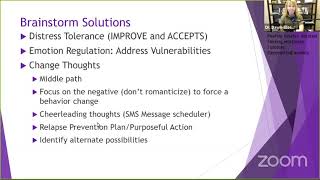
Hi everyone and welcome to Happiness Isn't Brain Surgery with Doc Snipes. Practical tools to improve your mood and quality of life. This is module three of a four module series on problem solving. The first two modules were recorded in our Facebook group Happiness Isn't Brain Surgery. So if you want to be able to access all of the modules, feel free to join that group. In this section we're going to identify your problem solving options and explore methods for for solving those problems. Like we talked about earlier, once you've identified the goal, you have the option to either stay miserable, which is what you it's definitely a viable option. You can tolerate the distress because sometimes things can't be changed. If you're having to ice your hand because you hurt it, it doesn't feel pleasant to ice it, but you can tolerate that distress. Sometimes you may be oh, if you go to the dentist to have your teeth cleaned and you don't like that, which I don't think most of us really love having our teeth cleaned, you do it because it's going to help you achieve your goals of staying healthy and having a good smile and everything. But you tolerate the distress. You can feel better about the situation, change your thoughts and feelings to focus on the positive or focus on the fact that it will end. It's not never ending. Or you could just change the situation completely by solving it. You know, if we want to talk about getting our teeth cleaned, well, you could opt to not get your teeth cleaned. Now. That may not help you achieve your long term goals, but it would definitely provide less distress right now. So basically you've got two options. When you're presented with a situation, you only have so much energy. You're either going to choose the option that helps you move toward your ultimate goals of being happy and healthy and content and all those wonderful things, or you're going to choose something that may solve your distress in the present moment, but it's not going to move your, move you towards your goal. So you're going to feel stuck. And I liken that to thrashing around in quicksand. When you're in quicksand, you may think that the best thing to do is to thrash around and try to get out because you want to survive. That's acting in your emotional mind. You're trying to relieve the immediate problem without stopping to think about, okay, how do I do this? This is really bad situation. What is the next right step to do? So when you're acting in your emotional mind, when you're focusing on making Distress, Emotional, unpleasant. Stop. Sometimes you don't choose the best behaviors that just end up wasting a bunch of energy and keeping you stuck. So you want to start brainstorming solutions. In the first two segments, we talked about describing the situation and really getting out of your own head and stepping back and describing it as an investigator, describing it as somebody who wasn't involved in the situation, who's just an observer. So you can get more perspective, not only on your contributions to the situation, but on everything else that's going on. Once you've described it all, you've got it down on paper. You've identified kind of how you got to this place today. You know, we're not talking about every time, but what happened that got me to this place today. Then you can brainstorm solutions. Distress tolerance is like we talked about, accepting that the situation is unpleasant, but things will change. You don't have to stay miserable now. The acronyms improve and Accept, we've gone through multiple times, basically are ways to help you change the next moment. This is unpleasant right now. So what can you do in the next moment to either kind of change your reality? Maybe you take a mental vacation or you do something that will make you happy. Reading knock knock jokes, finding funny memes, something like that, Volunteering, contributing. There's a lot of different things you can do to, to take your focus off the current situation if it can't be changed. Sometimes you just need to take your focus off of it until you can move on. Emotion regulation. You address your vulnerabilities. Sometimes things seem really, really overwhelming and you realize that one of your vulnerabilities is that you're exhausted. So one way to address that vulnerability is to go to bed, get some good sleep, wake up tomorrow, and reassess the situation then. So if you can address your vulnerabilities, sometimes you can turn down the intensity level of the unpleasant feelings and you can get a clearer head. Sometimes you just need to take a step away. If you've ever tried to solve a problem and you've sat there for 30 minutes or an hour trying to solve a problem or trying to get something done, and you're just stuck. Sometimes if you take a break from it and do something completely different for 10, 15 minutes, maybe an hour, and you come back to it, all of a sudden, you'll see options that you didn't think were there, you can change your thoughts. Walking the middle path means focusing on the positive, not just the negative. So when you have a negative thought about how horrible this is, have the Positive thought that it won't last forever. If there's something that you need to change, you may. For example, if you don't want to go back to using alcohol or you don't want to go back to a relationship that was just unhealthy, sometimes you need to focus on the negative because when you're in your upset period, you're remembering and romanticizing all the good things being because whatever this changes hurts. So you start thinking about how it really wasn't so bad. So sometimes you got to change your thoughts. Don't romanticize something that was really unhealthy or unhelpful and this will help force your behavior change. If you remember the bad stuff, have cheerleading thoughts. Sometimes you can do this by having a SMS message scheduler. You can actually schedule your own SMS messages to yourself, which is, you know, can be kind of cool. You get a message every morning at 8am that's just some positive thought for the day. There are a bunch of free ones for the Android and for the iPhone and it starts your day off well. That's something that you can do to prevent distress, relapse. Prevention and purposeful action means changing your thoughts and really focusing on what can I do to prevent this from getting any worse or having any more negative effects. Sometimes you can't prevent whatever this is, but you can prevent it from being a huge problem. You get a cut on your arm, it's there. You can't just magically will it to go away. You've got a cut. But if you take care of it, you can prevent it from getting infected and becoming septic and all that kind of other nasty stuff. So planning and purposeful action, thinking to yourself, this is the situation right now. This is where I want to go. These are my ultimate goals. How do I get there? What do I need to do to prevent this situation from holding me back and identify alternate possibilities? You can also work on just changing your feelings. Sometimes the situation can't be changed. When my father was diagnosed with cancer, that really was a devastating couple of years, there was nothing I could do to change it. So when I would start thinking about it, I would have to start focusing on things that helped me be happy and having an attitude of gratitude for the fact that he was around to see the birth of our first child and to see that how long I did have him in my life compared to what some other people didn't have. Focusing on things that made me happy and when we were together, focusing on appreciating the moment and how awesome it was instead of the fact that, you know, in six months from now he won't be here. So focus on the positive. Identify and preferably do this ahead of time. Because when you're in a bad mood, it's hard to think about, all right, what's going to make me happy? Identify what makes you happy, if it is. My daughter loves going on YouTube and finding videos of raccoons eating fruit. She just thinks it's so cute to watch them use their little hands and eat their fruit. I have to put it, put it on mute because they make this horrible smacking sound when they eat. But whatever makes you happy. Keep a list of like five or six different things. Keep. If you've got a mobile phone, which most people do anymore, keep a particular album, memes and pictures and other things that make you happy. So if you're having a bad moment, you can go to that and go and remember the good things. Sometimes you need to change the situation because. And you can change the situation. If you're in a job that you really hate and things happen and you seem to be angry all the time, you can change that situation. You can look for a different job or you can change how you feel about the situation, at least for the present time, until you can find another job. Sometimes a job is just that. It's not a career, it's a means to an end. When I was in undergraduate, I knew I wasn't going to be working in retail all my life and it really wasn't my favorite thing to do. However, it was a means to an end so I could, you know, eat while I was going to school. So if you're changing the situation, remove or eliminate whatever's causing your distress. If you can use interpersonal effectiveness skills to address the situation. If it's situation with another person, you may need to be able to assert what your needs are and create a win win. But to create a win win, you have to understand what the other person's needs are as well. Which goes back to module one when we were talking about describing the whole situation and what not only you bring to the situation, but what the other person brings. You know, maybe they have had a God awful morning, they are in an awful mood and they just come in and bite your head off. And you know, you can assert all you want that that's not how I like to be treated, but that's not what they need right now. Right now they are struggling, they are frustrated, they are angry. So creating a win win, you can talk to them, let them know that, yikes. You know, you seem like you're feeling really angry today, you know, noticing how angry that they're feeling and asking if you could help creating a win win situation, reaching out, because that'll bring it to their attention that they're, you know, kind of being a little cranky. But it also offers to help their situation other times or other ways you create a win win is by saying, basically, if you let me know ahead of time that we're going to have to do this, it wouldn't cause me as much stress. And around our house, you know, I'm a structured person. I am kind of rigid. And so it reduces stress for everybody in the house. If mom knows ahead of time that we've got company coming over on Saturday afternoon, so the kids know it's going to be more rewarding for them and much more relaxing and pleasant if they let me know ahead of time. And I find it helps me because I can plan. You can also add something to alter the situation. Sometimes it's not stepping away from the situation, it's bringing something to it. And that can be compassion. That can be, you know, maybe if you're feeling lonely sometimes it's not escaping a situation, but actually adding to it and saying, let me add a friend. Let me figure out something else new to add to this situation so I don't feel isolated anymore. Let me bring somebody into it. One way you can start analyzing your options is called the force field analysis. So for each option you have, you want to look at your enabling and motivating forces to change, and you're constraining or resisting forces to change. So two examples. If you are in an argument with your friend or your friend doesn't respond when you text them or you call them and leave them a message, you can set up a lunch to talk. That's one option. So using the force field analysis, you want to look over what are the motivating forces, the benefits to doing that? Well, emotionally, it may make you feel a little bit more empowered and a little bit more hopeful that you can get something worked out mentally, it will enable you to kind of let it go and not be constantly dwelling on what was it that I said? What did I do? You can maybe table it and say, all right, I'm going to figure all that out when we have lunch. Physically, what are the benefits? Well, if you are not all upset and if you're able to put aside those thoughts so they're not bombarding you all the time, you're probably going to have less physical symptoms of stress and sleep better. Interpersonally, you know, it's probably going to make it easier for you to be in a good mood and want to associate with people. If you feel like you're headed towards some sort of resolution, it may not affect your job and it may not affect your environment. What are constraining forces? Well, emotionally, if you call and you set up a meeting to talk, you also might be scared that you're going to get an answer that you really don't want to hear. Mentally, you may end up playing and rehearsing this lunch over and over in your head until it happens. So you actually get stuck there, which may cause additional physical symptoms of stress and may impact your relationships even further. Ultimately, you don't know why your friend didn't respond, so you're trying to figure that out. The question is, what do you need to do? Not everybody can say, all right, I've got a meeting scheduled with this person, we'll deal with it. Then I'm going to put it on a table, I'm going to put it on the back burner. Until. Until that point. Some people can't let it go that easily. So figuring out what works for you. The other example is when you're feeling lonely and isolated. One solution could be making new friends. So again, going through the motivating forces, emotionally it could be really exciting. The drawback, emotionally, it could be really intimidating. If you have low self esteem or social anxiety. Mentally making new friends, some people would view it as extremely exciting and stimulating to get to know other people and experience that. Other people might find it mentally exhausting because they've already got enough going on. They just want to hang out and all of our stress and all of our thoughts and all that stuff come out physically. One way or another, they either drain our energy or enhance our energy. So you want to look at how is this particular solution to this situation going to impact you? I have a friend right now who is feeling kind of lonely, but he's an introvert, so getting out around large groups of people is extremely stressful to him. So when he thinks about making new friends, it really quickly gets overwhelming. So figuring out ways he can make new friends where it's just two, four people at a time, it's not totally overwhelming and it's for short periods where he doesn't feel like he's kind of stuck is one option, one way to change that solution. So making new friends, yes, that's what we want to do. But how Are you going to do it in a way that is more motivating and enabling you to achieve goals, and takes care of or eliminates any of the constraining forces or the drawbacks? So choose the best option. You're going to go through several, especially if it's a big issue that you're, you're looking at. Choose the best option for you that is effective at helping you move closer to your long term goals. This is not about anybody else. This is about you achieving your long term goals and staying true to your values in a way that's realistic. You know, there are a lot of things I can come up with when I'm brainstorming solutions that are kind of pie in the sky, I guess. So what is realistic for you? You need to be honest with yourself about how much time you have, how much energy you're willing to devote to it, and how motivated you are. The best option usually integrates the logical mind, all of the benefits and drawbacks, and chooses the thing that is most beneficial, but also the emotional mind. So you may have three things that rank up there with highly beneficial, but don't all make you as happy. So you're going to choose the one that is most beneficial and makes you the happiest. A lot of times people get stuck because they know what needs to be done, but don't even know where to start. Sometimes, well, even just with a house, you know, during the week, things get done. But imagine a teenager's room. You walk into the middle of it and you're just like, oh my gosh, I, I don't even know where to start. There's laundry, there's stuff on the floor, it needs to be vacuumed. Nothing can fit in those drawers. You can get overwhelmed really easily. At our house, what we do is we just take everything and we put it in the center of the room and start from there, you know, because then the bed can be made and you can move on from there, but nothing has to be done. Once you put everything in the center of the room, kind of get an idea of all the things that need to be done, just start whittling away at the pile. It's not necessarily something that has to be done in a particular sequential order. If it is, or if you need to have some sort of order, identify the steps you need to take to solve the problem. First I need to start somewhere, then I need to, you know, maybe the first thing you would do is dump out all the drawers, refold the clothes so you can make room to Put away new clothes, whatever it is that you want to do. I find with the pile method, in terms of cleaning and kind of in terms of life, guess you put everything in a pile and you start whittling away at it. Then eventually everything gets done and it's not. You don't waste as much time going, alright, now what makes sense to do next? You just do something and before you know it, the pile is gone, the room is clean, your to do list is empty. Whatever the case may be, once you start the process, it's important to continually evaluate. Though sometimes you're going to have to stop, back, stop, back, stop and drop back and change course a little bit because you realize that what you thought was going to work isn't working as well as you had expected. Okay, so adjust. You don't have to be right, you just want progress. Once you know what the problem is, you can start brainstorming solutions and get outside the box. You know, some people hear my pile story and they're just aghast. They're like, oh my gosh, I can't imagine just putting everything in a pile. It works for us, it may not work for you. So get outside the box and figure out what may work to help you solve this particular situation. With my friend, when we were talking, when I was talking about making new friends, just going to a party or going to a social gathering or something was just way overwhelming. So we started brainstorming, getting outside the box, talking about meetups, talking about going out with some of his roommates in order to meet other people, but be with a small group that he felt comfortable with. And we brainstormed a whole bunch of other opportunities and options like community education classes where he might be able to not be sort of the center of attention, but he's around other people that he can potentially make friends with. So get outside the box. Then consider the alternatives and choose the option that's most effective at helping you achieve your long term goals. What is it that's going to help me feel accomplished? What is it that's going to help me feel nurture the friendships that I have right now or develop new friendships? Whatever your long term goals are, you can subscribe to the podcast on any podcast player. You can join our Facebook group@docsnipes.com Facebook subscribe to our YouTube channel at YouTube.com allceducation or join our community at docsnipes.com.










