Recovery Oriented System of Care in Addiction Recovery
Dr. Dawn-Elise Snipes presents a recorded continuing-education webinar introducing Recovery Oriented Systems of Care (ROSC). The talk defines ROSC, outlines its 17 elements and guiding principles (person-centered, strengths-based, trauma-informed, culturally responsive), explains recovery management phases (pre‑recovery, initiation/stabilization, maintenance), and describes community implementation steps (integrated planning, financing, partners, peer supports and monitoring). Practical implementation barriers (funding, time, service gaps) and concrete strategies (peer recovery coaching, assertive linkages, volunteers, outreach, training) are emphasized.
Chapters
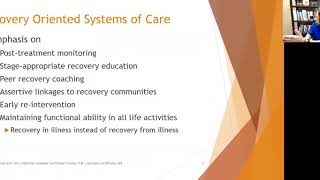
This episode was pre recorded as part of a live continuing education webinar on demand. CEUs are still available for this presentation through all CEUs register@allceus.com counselortoolbox. You welcome everybody to today's presentation on recovery oriented systems of care. I love this topic, so I might be a little bit overzealous with it, but we'll see how we're, how we progress. We're going to define a recovery oriented system of Care, otherwise known as a rosc. And I will probably call it a ROSC through the rest of the presentation so I don't trip over my own tongue. Well, identify the 17 elements of a ROSC and explore the guiding principles of recovery. Now as we go through these, I want you to think about, you know, the way your agency does it right now and the way a ROSC proposes to do it, why a ROSC might be effective and how we might be able to make a ROSC happen in your community. And that's a lot for an hour, but we're going to try to get to the important things. Okay? So a ROSC affirms the real potential for permanent resolution of behavioral health problems. And that includes addiction and mental health. It offers solutions to behavioral health problems on a community and cultural level. So it's not just if you have a behavioral health problem, you need to go to a counselor. You know, sometimes it's a counselor. Sometimes the behavioral health issue is being caused in part by something biological or interpersonal or environmental. So we want to be able to look biopsychosocially at the individual. We shift away from risk management and relapse prevention toward encouraging clients to self define goals and take responsibility for achieving them. So I want you to think about this for a minute because this is really the crucial point. Well, this one and the shift from emergency room and acute care to one of sustained recovery management and including wraparound recovery and support services. So we want clients to define what is it that wellness or happiness looks like for me? What do I want my life to look like? Not just my mood, my thoughts, my relationships, my job, my finances, all that stuff is involved in a recovery oriented system of care. And we want to work from instead of preventing relapse, we want to encourage growth. So instead of trying to take something away, like if you have a child, for example, and you know, Johnny tends to have meltdowns in the store, he just does. And you go into the store instead of trying to prevent him from having a meltdown, maybe a better option would be to Encourage him to identify things that he can do or ways that he can manage his behavior in order to achieve a higher goal. So we're getting away from the problem focus and moving toward a solution focus. And we're also looking at that sustained recovery management. And this is so important because it recognizes something we've known in addictions for a long, long, long, long time, that a lot of times clients come into treatment and they're at a stage of recovery. And this was a mistake that I made as an intern. And I got so frustrated because I would see clients, they would go to detox, they would come in, they, they'd go through their 30, 60, 90 day program, whatever, they'd be doing great. They'd get out, two months later, they'd be back in detox. And so finally I went to my supervisor and I'm like, Mark, what am I doing wrong? All my clients seem to be relapsing now. It probably wasn't all, but just felt like it. And he said, tell me about what you mean. And I said, this person came in and they did great in treatment and then they're back in detox again. And he said, well, how ready were they for change when they came in? I don't know. And then we started learning about Prochaska and D. Clemente stages of change. Pre contemplation, contemplation, preparation, action and maintenance. And turns out, to make a long story kind of short, I was trying to move people from maybe a pre contemplation or preparation area where they weren't really ready to do everything, to maintenance in 60 days. He's like, nobody can do that. Carl Rogers himself could not do that. So what you need to do is try to move them to the next stage of readiness for change. If they come in and they're in the action stage, great, then help them move to maintenance and help them stay there if they are in, you know, preparation even for some of their goals. You know, you want to help them move to the stage where they're ready to do the hard work and then continue the hard work when they get out. But you're not going to move them over multiple stages. So recovery oriented systems of care recognize that and they say, okay. And they really take to heart that whole phrase of client has reached maximal gains at this point in time, at this level of care. So we bring them to where they're, you know, they've reached maximal gains right now, and then we let them apply those things. And if life throws them lemons or, you know, if they reach a higher level of readiness for change, then they can come back. So it's episodic, recognizing that we grow in spurts. You know, it's not going to be this 30 days and miraculous change. Most of the time. There's an emphasis on post treatment monitoring to help people recognize their relapse warning signs. And this is true for addiction and mental health, to help people recognize when they are engaging in non wellness oriented behaviors. So those behaviors that could lead to relapse, such as, you know, not getting enough sleep, poor nutrition, too much stress, not exercising any of those things, those vulnerabilities that can make them more likely to have mood issues, we want to look at that. We want to encourage them to look at who they're hanging out with and their attitudes and all those things. It provides stage appropriate recovery education. And again, this is referring to the stages of readiness for change. If you're not familiar with them, you can go to samhsa, Substance Abuse and Mental Health Services Administration, go to their website, look up tip 35 and that's tip 35, which is like motivational interviewing and something, it has a long title but. And it will really break down the concepts of motivational interviewing and stage appropriate interventions. So we want to provide those. You know, if I am working with somebody, for example, I started out with working for felony probation and parole and I started out trying to do those groups, this was my first job out of grad school, trying to do those groups as if the people who were in there were in the action stage of change and they weren't. They were usually in contemplation at best, but usually in pre contemplation. The only reason they were there was because the judge said they had to be. And they had no intention of changing their behaviors at that point in time. So using the interventions we would use for somebody who is just ready to start making a change fell flat and I had to learn to adjust. So we want to provide appropriate interventions just like we provide developmentally appropriate interventions based on someone's developmental age and cognitive level. We want to do the same thing for people's readiness for change. We want to provide peer recovery coaching. And this is one of the unique aspects of a recovery oriented system of care because it brings in peers who you know, are in many states are certified by the state board and that's cool. They're not trained to the level that clinicians are. But peers are there to help the person translate what they've learned in treatment. Peers are there to provide a little Bit of assistance. Peers. Peers are there because they've walked that road before, the road of recovery. And they're there to help people, you know, kind of find their path. Not everybody takes the same path and not everybody who's in addictions recovery is going to go to aa. Not everybody who's in mental health recovery is going to get on medication. Everybody's recovery path is going to be a little bit different. But peers can say, I know where the resources are. Peer recovery coaches are often really helpful for providing case management. Because in many cases that I've been involved in, like the majority of my career, case management hasn't been available except for the 2% with the most severe and persistent mental illness. The other 98% of my clients, either I did the case management or it didn't get done. So this is where peer recovery coaches can be really helpful. Roscs offer assertive linkages to recovery communities. So we really connect people and we encourage them to go out. We don't say, well, there's a lot of stuff out there. We say, here are your resources. Let's start taking a look at what might work for you. We encourage early reintervention. So we really harp during that post treatment phase. We really harp on maintaining mindfulness and self awareness and identifying those early relapse warning signs. Relapse often starts weeks or months before that actual major depressive episode or before that actual substance relapse. So we want to look and say, you know what happened? You know, you were doing really well, then what changed? And that got us back to this point. And it could be the person was doing all the right things, but then the bottom fell out in some important things in their life and the stress was just overwhelming. Or it could be that they fell back into old habits and quit taking care of themselves and that started causing it. But we want to look and we want to encourage people. When you start feeling like you're not on your A game, pay attention. If it goes on for more than a couple of days, you probably need to do something. Now what you do, you know, depends on the person. Sometimes it's increasing their self help meetings or support groups. Sometimes it's reaching out to clergy or recovery coaches. It may not be coming back to counseling, but we want them to intervene early so they don't end up back to where they were because that is very disheartening for everybody when that happens. And it's important to keep them feeling empowered. And there's also an emphasis on maintaining functional ability in all Life activities, not just can they get up and go to work. You know, yes. Employability is a big thing because it helps people be financially independent. Yada, yada, yada. Okay, great. But work is not necessarily your whole life. So we want to look at their relationships with, we want to look at their physical health, we want to look at their environment, we want to look at everything. The goals in a ROSC are to foster health and resilience activities. Again, we're moving forward. This is a solution focused process. If somebody is getting adequate nutrition, if they're eating well and taking care of their bodies, they're going to be less likely to be using drugs and staying up all night. You know, the two of those are, don't work together. So if we're promoting the positive, there's less room and time for the unhealthy behaviors. We want to increase permanent housing and a sense of home and belonging. Not just house, but we want people to have a home where they walk in and they feel safe and they feel like they belong. We want to ensure gainful employment and access to education to provide a sense of purpose that will differ for every person, what that looks like. And for some people, we want to use this phrase employment kind of broadly because some people's job is being a full time parent. Some people's job is being a, you know, full time caregiver of some sort. And that's okay. We want to encourage them to have a job that gives them a sense of purpose and well being. It may or may not be a paying job. Some people volunteer because they can't or they don't want a paying job. We want to enhance communities by increasing the availability. Well, actually, let me stop here because Jason points out the difference between house and home. And I want you to think about that for a second. You know, you walk into your residence, we'll just use a different word, you move in for the first time. You know, it's this. Whether it's an apartment or an independent dwelling, you move in and it is a house. It is four walls and a roof. How do you make it a home? How do you increase your sense of belonging and nurturance in that? Especially if you live alone? Some people live alone. And so how do you make it somewhere where you are happy to go and you can relax? And those are things that we want to ask clients. You know, when you think about a home, when you think about what it takes to be happy and content in your structure, what does that look like? And encourage clients to kind of Brainstorm and then you can think about ways to help them achieve that. A lot of times it's a matter of putting things, pictures and things on the walls, putting reminders of things that are important to them because your home reflects who you are and it gives people a flavor, if you will, of your personality and your interests and all those things. When people come to treatment, especially long term treatment, we always encourage them to make their bunk their home and put pictures and stuff on the wall and collages, have their space if they had a comforter or duvet they wanted to bring to do that. So when they walked in, there was something that was theirs, it was recognizable and it was comforting to them. And some people even brought like stuffed their kids, stuffed animals to remind them of their children or their own stuffed animals. So definitely making a house, a home. So people want to be there and they don't just walk in and feel like they're rattling around between four empty walls. So we want to enhance communities by increasing the availability of necessary supports from and for peers, family and community. And we forget the four a lot of times. So providing support to people in recovery. There are support groups. There are. And that's a lot of times that's emotional support or cognitive support. We want to make sure there's support for keeping their lights on, support for transportation, support for medical needs and food needs and all those things that can go unsupported. And involving someone from United Way information and referral and involving as many churches as possible in your Roscoe. Really helpful ways to do this. You don't need 20 churches in the same city providing a food bank. You know, it would be helpful maybe if one church provided a food bank, one church provided a clothes closet, or one really big church that had a lot of extra room, did everything, and the other churches came and assisted. We used to have a program in Alachua county called Interfaith Hospitality. And the churches worked together. I think there were about 15 of them. So during the winter, the people that were homeless in Alachua county could come and stay in the church community areas, the church rec rooms or whatever you want to call them. So they would have somewhere safe and warm to sleep. They were able to get a meal, and they were able to access some outreach sort of resources. They would stay at a particular church for a week and then they would move to the next church. That way. No one church was constantly housing people. And we want to reduce barriers to social inclusion. We want to look at what does that look like, you know, what types of Barriers are in your community because every community is different. If you're in a community, for example, like the one I live in now, where there is no bus transportation, people who need to go to support group meetings, you know that they're kind of socially isolated. Once they go home, if they don't have a driver's license or if they don't have a vehicle, they may not be able to get out to support groups. So how can we help them become more included and more integrated? So what are our functions as counselors? We can't do everything. We're already counseling and trying to keep our paperwork up. We want to identify gaps in services. So if you're talking to a client, I worked with one gentleman when I was in Florida and we were in one of the outlying counties and he was an African American gentleman and I was suggesting support groups and he looked at me and he said, no, ma', am, that's not going to happen. And I said, okay, tell me a little bit, are you not embracing of the 12 steps or tell me a little bit about why you don't want to go there. He's like, I would be the only black man there and that's not okay in this community. And I'm like, oh, okay. So that was one area, that was one gap in service because it was a very white, rural sort of area. And he clearly did not feel comfortable. Another gap in services in that same county. Right now there are two sober living areas, sober living houses, one serves veterans and one serves males, but it's like a six bed house for the entire area and that's all. So there's very little in the way of sober living environments for people to move into if they don't want to go back or they can't go back to their home. We want to identify emerging trends and needs and we do this already, you know, some. If we notice that, you know, in this area, all of a sudden opiate abuse is becoming a huge problem, or way back when when people started using K2 and Spice and we saw that becoming an issue, then we needed to figure out ways to educate the public and identify interventions. And we monitor system effectiveness. And the way we do this is by our clients success. If clients are staying, you know, happy and they're staying in recovery as they define it, then the system is effective. If they are hitting obstacles, then we need to figure out what's going on here. And yes, a lot of this does sound more like social work and case management, but unfortunately in most places and in private Practice as well as in community practice. I didn't have the luxury of referring over to somebody and saying, okay, this is a social work thing or this is a case management thing, because there was no reimbursement for those people. The only reimbursement insurance provided or the state provided was for my services. So a lot of times if we wanted it done, we had to do it ourselves. Recovery Ross Guiding principles and I talked about the 17 principles and I've kind of smushed them down here. And no, to answer your question, I was not able to bill extra, so to speak, for, for providing case management services to my clients. I was in a residential facility. It was a daily rate that we got for everything and that was it. And in private practice it's not compensable. So it's one of those things that I try to get volunteers to help with, to identify, to create lists. I really work strongly with information and referral. I make sure I have referral lists available in order to encourage people. The other thing that you can do, and I'm kind of getting ahead of myself, is have a group once a week that clients meet in in order to self case manage. So yes, it's an hour you can't bill for, but you've got 15 people or however many that show up to your group. And we're identifying resources and they're helping one another link with resources. They're building community among themselves. And if you have a recovery coach that is working with or that's willing to work with you, they can even facilitate that group potentially as a coach, not as a clinician, and bill a minor amount for it, like $5 per person. So they are getting contact with clients as well as the clients are getting access to the resources they need. So there are ways around it. We just have to be creative and really think hard about how to climb out of this box. So guiding principles it's person centered, person centered. It supports self efficacy and self direction. We really want to motivate clients. It's nonlinear and occurs along many pathways. So clients, and we've seen this, you know, they're going to go forward four steps and then maybe take a step back and then forward three steps and then take two steps back. So motivation, just like progress, is nonlinear. They're going to be doing the cha cha, so to speak, most times, and that's normal. And we want to let clients know that that's normal and that's totally understandable so they don't feel defeated if they start to notice some relapse warning signs. I tell them, you know, that just tells me we didn't identify everything. And there are some holes in your relapse prevention plan, so let's figure out how to shore that up a little bit. And it occurs along many pathways because cognitively and interpersonally, that's what we do. But the client also may have some hormone issues. I just did a presentation for Men's Health Month for my other podcast about men's mental health. And the symptoms of low testosterone, for example, are very, very similar to the symptoms of depression. So we want to make sure we send clients to get a physical to rule out any physiological causes. We know that our body builds the building blocks for all of our hormones and everything else from the foods we eat. So if they don't eat a nutritious diet, then they may not have optimal levels of health and wellness. So we want to help them recognize that they have to take care of themselves holistically. A ROSC is holistic and incorporates mind, body, spirit and community. And this kind of goes back to what Jason was saying about a home versus a house in a community. We want people to feel like they're welcome. We don't want them to feel like they are the black sheep of the community. I don't like using the term addict, but I'm going to use it for this example where they're saying, oh, I'm an addict. And people are like, oh, we don't want addicts here. Well, people with addictions are people first and foremost. So we want the community to embrace them. We want the community to recognize that Recovery is possible. ROSCs are supported by peers and allies, counselors, caseworkers, clergy, you know, anybody you can get to join the bandwagon. The more different stakeholders you have involved, generally, the tighter that that resource net is. It's supported through relationships and social networks, including family, peers, faith groups and community. It's culturally based and influenced. So a ROSC in Bradford County, Florida is going to look very, very different than a Ross in Davidson County, Tennessee, which is where Nashville is. Bradford county, extraordinarily rural, lots of farming. I think the community, the county itself has like 7,000 residents and Davidson county has over a million. So you can see that there are going to be different needs, different resources available. But culturally, people may be a little bit different and want different things. It is supported by addressing trauma. So we do need to make sure that trauma informed. Everybody in the RUSC is aware of a trauma informed approach and is based on respect of the individual the family and the community and their strengths and responsibilities. We don't want to do things for people that they can do for themselves. But sometimes people don't know. So they need to be educated and pointed in the right direction. And that's what a ROSC does. ROSC believes that involves a person, involves personal recognition of the need for change and transformation. If people aren't on board, if they're not in that at least preparation stage, if not action and maintenance stage, then a ROSC is not going to be very helpful because we're not sitting there forcing them to be in treatment. We're saying, here is a menu. You've got a whole buffet of available services. Let's figure out where you want to go, what do you want life to look like and how you can get there. It involves a process of healing and self redefinition. So instead of being, you know, I am a depressive or I am an addict or I am a whatever, they are a person with an addiction, they are a person with depression. And a person can get rid of depression. If they say they are this, then what happens when they get rid of it? If I am an addict and then I'm in recovery, then what am I? I'm getting rid of part of me. And that's, you know, whole different ballgame. It's semantics, but it's important. It exists along a continuum of improved health and wellness for people who are closer to the severe and persistent mental illness side. Obviously there are a lot more services, a lot more interventions, a lot more ways to get payors to support those things. You know, you've got more support from Medicaid and Medicare and social services for people with significant severe and persistent mental illnesses. As people are healthier, they need fewer services and they have more of an ability to work and to pay for services. So you know, there are different services that may be offered and there are different needs. You know, Jim Bob, who is a middle class person who is overall high functioning but has occasional bouts with clinical depression, needs something very different than Sally, who is 26 years old, paranoid schizophrenic and still is not stabilized on medication adequately. They need very different services. So we need to know what people need at which time it's sort of dose dependent. It involves addressing discrimination and transcending shame and stigma. So we want to encourage people to talk about it and really embrace the fact that that recovery is possible and it's a reality. And people who are in a ROSC are encouraged to rejoin and rebuild a life in the community. So we want to make sure they have employment opportunities even if they've got felony convictions and not, you know, this isn't just clients with substance abuse issues. There are people with mental health issues who have gotten domestic violence charges or some other aggravated assault charge that rose to the level of a felony. Whatever they call it in your locale, once you have a felony, it's harder to get a job. But there is something called the federal bonding program and if you Google it, you can find out about it or go to your local one stop work place and they can provide you information about the federal bonding program. And it's actually designed for people who, who have spotty work histories or have felonies. And the federal government will agree to bond that employee for like six months or something. So it's really helpful to help people get their foot in the door and start reestablishing what they can do in a community. Elements of a ROSC it's person centered. We're going to focus on what do you need, not, not what does your diagnosis need, but what do you need. It's strengths based. So we're going to ask them what's worked for you in the past, what do you think is going to help you now? And let's build on that. When you were symptom free in the past, what helped right now? What's changed? What do you think is keeping you stuck? And what do you think we can do to move back toward that symptom? Free time? It's individualized, providing integrated, comprehensive services across the lifespan. Recognizing that, you know, as people change and go through different life issues like becoming an adult and then having kids and then getting married, there's lots of major transitions in life. So there can be periods where they need a little bit of extra help. It's anchored in the community, it's not anchored in the counselor. So again, you know, I hear a lot of you starting to go, oh my gosh, I can't think of doing one more thing. And yes, that is so true. I'm there with you. Which is why it's so important to have this team together where there is a single point of contact who can do the referrals. Oftentimes that ends up being in communities information and referral or the local health department. But you can work with that client, help them identify a list of needs and then empower them to contact that referral source. It involves partnership, consultant relationships. So we're acting as consultants with other agencies as well. So if you know somebody who in workforce development calls up and says, I have this client that I've been working with and he can't seem to hold a job and he seems to be kind of flat and I'm not sure what's going on. And you might tell the person that he may need to come in for a screening or you might provide, you know, some consultation to that other agency. It's culturally responsive and responsive, responsive to personal belief systems. It's committed to peer recovery, support services for clients and family. Again, deprofessionalizing if you will, the maintenance aspect. Helping clients recognize that they don't have to have a clinician holding their hand the whole time. You know, once they get to a point where they're in maintenance, they're empowered to take it from there and run and then come back if they ever need to. System wide education and training. So everybody in the program, you know, from doctors and nurses to law enforcement and EMTs, they're trained in trauma, sensitive, trauma responsive care and this ROSC philosophy and the services that are out there and how to access services. You know, it's like a four hour training to get the highlights. But it really helps make the transition and the movement through the system a lot easier if everybody's trained. Ongoing monitoring and outreach. So we can say, oh, we noticed that there's an increase in homelessness over on this side of the county. So we go out there and we go, okay, what's going on? Why do we seem to see an increase in problems over here? It's outcomes driven, research based and adequately and flexibly financed. And this is the big gotcha. You really have to have as part of this rosc, your community leaders on board because they have to be willing to foot some of the bill. Donors can be really helpful. Grants can be really helpful. There are a lot of ways to get financing in college towns. You can generally find if you are at a nonprofit facility, and that's a caveat because they've recently changed all the regulations around interns. But nonprofits are still exempted most of the time from having to pay volunteers and interns. But if you have, if you're in a college town and you have access to volunteers, capitalize on that. A lot of people are willing to volunteer four hours a week or something. They just don't know about what's out there to do. So go to the counseling center and go to the registrar and you know, sing it from the rooftops to get as many volunteers as possible. So far, are there any questions? I know I'VE gone through a lot of stuff. Okay. So recovery management spans three pre recovery identification and engagement. In a rosc. We don't want to wait until they come to treatment, which is usually when they are highly symptomatic. We want to try to get out there with outreach, prevention, early intervention so people don't get to this point where they need tens of thousands of dollars of services and their life is completely disrupted. We want to identify where we can make a difference. And there are often grants available for outreach and prevention through samhsa, through the National Institute of Drug Abuse, and through different counties. So, you know, seek out some alternative sources of funding. And if you are not in a nonprofit, get a nonprofit on your recovery oriented team and have them do it, because nonprofits get grants a whole lot easier. The second phase is recovery initiation and stabilization. Once we get people in the door, then regardless of whether they're in prevention, early intervention, treatment, maintenance, we're going to develop that relationship with them and make sure that they are stabilized and then recovery maintenance is helping them stay stabilized. Biopsychosocially three core components of a collaborative decision making and individual empowerment. We're not going to tell them what to do. We're going to say, where is it that you want to go? How do you define recovery? We're going to look at continuity of services and supports. What we called it on a grant that I wrote was no wrong door. No matter where anybody came into the system, whether it was through law enforcement, social services, food stamps, anywhere that they came into the system, their personal physician, those people were educated about the services that were available and, and could refer as appropriate and we could get them in and network them to the places they needed to be. So we did have a single point of contact at every agency. And if I had somebody come in who had significant substance abuse issues and I was in mental health practice, I could call up this other treatment center over here, the identified contact and say, I've got somebody who really needs to get into services. What's available right now. And again, I know it takes a lot of time and this is where volunteers can be really helpful. If you can pass it off and say this person needs to get into substance abuse treatment, can you make the phone calls and then help them connect with that person, the client and the advocate, and then they can start making phone calls and doing that sort of thing. And services are available for as long as needed. It's not. Well, you got 10 sessions and that's it. Services are available for as long as Needed service quality and responsiveness is evidence based, developmentally and culturally appropriate, gender specific, trauma informed, family focused and stage appropriate. So that's a lot of stuff, you know, that's like multiple best practices all wrapped into one. So it does take a fair amount of time to implement this practice in any sort of facility or community. So you want to, you know, take the education slowly. When we work on creating a recovery oriented environment, we want to encourage individuality. We want to encourage them to embrace what makes them unique and embrace their culture and if that's what they want to do. We want to promote accurate and positive portrayals of psychiatric disability and addiction while fighting discrimination. We want to focus on strengths. You know, when somebody comes in, we want to look at them. And a phrase that I used to hear at my facility that I just banned was the phrase retread. And somebody who would relapse and come back through the program multiple times was sometimes referred to as a retread. And I'm like, no, that is not empowering at all. That sounds pretty awful. We want to focus on their strengths. The fact that they had the courage to come back, the fact that they've got a lot to add to the program now because they may know it as well as some of the counselors and they can add a lot of personal experience. Use the language of hope and possibility. You know, you got out, you stayed clean for two months. Well, you know what? Cool. You stayed clean for two months, not you only stayed clean for two months. We want to offer a variety of options for treatment, rehabilitation and support and encourage risk taking, even if failure is a possibility. So encourage them to try to get a job. You know, they may be like, I don't know if I can. I'm ready to work yet. Well, you know, when it's time, you know, when you feel like they are stable enough, it's possible to start encouraging them or encouraging them to start trying to make new friends or trying out support groups. And they may go and it may not go well, and that's okay. And that's something you can process in group with assertiveness and self esteem and all that other stuff. Actively involve service users, family members and other natural supports in the development and implementation of programs and services. So encourage a lot of, Encourage a lot of. People to engage in recovery support of one another, peer recovery support. Encourage user participation in advocacy activities. Develop connections with communities. Help people develop valued social roles, interests and hobbies and other meaningful activities. So the players I keep talking about who we're talking about Individuals, family, peers, community, the community. We want to have transportation available, civic organizations that are willing to pitch in and help out, and start thinking about how each one of these players can form a thread in that safety net that supports all of the people in recovery, community coalitions, housing, child care providers, business, community, the educational system, veterans affairs, criminal justice, physicians, counselors, clergy, financial counselors, and social services, to name a few. I'm sure I missed some here, but if you start looking at this, you can start seeing where there are holes in your current safety net. You can start seeing where there might be issues. So what do ROSCs look like and how can they be made a reality? How are, what are the barriers to implementation? And you already mentioned funding and time, which are two big things. So what are some ways we can creatively cost effectively implement a rosc? And obviously these are your cheat links right here. But I'm going to go back up here. When we're talking about the individual, you know, this is the client themselves and we want to talk about what can they do. We don't want to do things for them that they can do on their own. We want to empower them. A lot of clients can make their own referrals and can do a lot of stuff on their own, but they're uneasy because they've had bad experiences or they're self conscious or something. So calling up and making an appointment or trying to navigate a system that's a little bit cumbersome can be intimidating. So one thing that you can do again is have a person, either a volunteer, have people come in and volunteer in four hour shifts to sit in a room and just assist people in making the phone calls that they need to make, doing the things that they need to do. We want to ask them what they need assistance with. You know, I can't provide solutions if I don't know what the problems are. So what types of things do you need assistance with? The family? You know, what do you need assistance with? And I said before, we often forget about providing services for the family, not just for the clients. Recovery from mental health or substance abuse issues can be really exhausting on the family. If they've got a family member, a loved one who is clinically depressed and often on suicidal, you know, they are often experiencing a lot of stress and angst and wonder and worry. So we need to make sure that they've got support, we need to make sure that they've got respite for when that person is symptomatic. We need to make sure that we provide education for them about what the typical course of this disease is and things that they can do or this condition, if you don't believe in disease, and what they can do to support their loved one and what they can do to care for themselves. Because if they are worn down and worn out, they're not going to be able to be there for their loved ones. So they need to start understanding what types of things that they need to do. And you know, if they've got, if it's a parent, for example, who has clinical depression, I'll just stay with that one. And there are kids in the family, you know, the children may not understand, you know, what's going on with daddy, why isn't he getting out of bed? Did I do something? You know, why is daddy angry all the time right now? And kids tend to take things personally. So providing support not only for adult caregivers, but making sure there's education and support services for children to help them understand and diffuse and have a safe place to talk about things that they may not understand is really important. And we can also help parents have open discussions with their children. If you know, another parent happens to be having an issue. The business community can be there to help provide jobs and volunteer opportunities and to support, you know, walks for NAMI and to come out and let everybody know that hey, we are, we support people who are recovering from mental illness. The educational system encouraging like here in Tennessee, it's been really awesome. The governor signed in a bill a couple years ago that anyone in Tennessee who wants a two year college degree, who has gotten a GED or a high school diploma can get it paid for by the state. And I'm not exactly sure how all the funding works, but it's there. So there are a lot of educational opportunities to help people get some sort of degree that sets them, makes them ready to go out and earn a higher wage, work with Veterans Affairs. We all know that the VA tries their best, but it is a cumbersome system and sometimes people fall through the cracks. So you can work with them to refer people, but you can also work with them and go, hey, what types of services do you need? Where I came from, we had a program that we designed at our facility, the residential facility where we housed veterans with co occurring disorders. We didn't provide their treatment, we just provided basically sober living and structure and supervision and then they would go to the VA during the day for treatment because there weren't enough sober living beds to house these veterans. And we certainly didn't want them living on the street. So those are things. Work with criminal justice. We in our county developed mental health courts, domestic violence courts and, and substance abuse courts, physicians to educate them about signs and about other interventions that are out there for people who have depression or anxiety or whatever. A lot of physicians aren't super educated on all of the different counseling stuff. They may just say go to a counselor, but we want to educate them about what resources are out there, different approaches, educate counselors, educate clergy. A lot of people feel more comfortable going to their pastor than going to a counselor or their doctor. So, you know, educating clergy, who often feel very ill equipped to deal with a lot of severe mental health issues or addiction issues, about, you know, what they can do and what resources are out there to support them so they don't feel like they're out there going, oh, you know, all I got is me and the big guy and I'm not feeling it right now. Financial counselors can be really helpful to get people back on their feet, as can social services, who can help people keep their lights on, get food, medical assistance, etc. So implementing a ROSC Integrated System Planning is essential. So we need to have everybody on board and we need to have representative from every agency there. And then we need to start talking once a month, for example, about, okay, what's the first step that we need to take at all agencies? So maybe the first step is, well, this is probably like the third step, educating on motivational interviewing. Then the next one might be educating on trauma, trauma informed care and modifying our organizations to be more trauma informed and responsive. And then the next one may look at cultural responsiveness. You know, there are steps in the process. Like I said, implementing a ROSC is not overnight. It's probably an 18 month or two year process. But once it's up and running, you'll probably find the research has indicated that people, even if they have access to services for as long as needed, they may stay for as long as needed, but a lot of times we can get them in early. So as long as needed is only six or eight weeks instead of six or eight months. We want to develop consensus on core values and principles based on the input of people in recovery, not what the CEOs of all the companies want. You know, what do the people in recovery say they need and want and what would help them stay in recovery? Establish a conceptual framework based on this vision and have a formal consensus on funding the model. So we need to figure out who's going to apply for what Grants so you're not competing for grants. And who's going to provide what services? How are we going to pay for it? Identify the and prioritize populations and the locus of responsibility for each. So certain populations may feel more comfortable going to their pastors or going to their physicians or wherever. So you know, those may be priority populations that those individuals handle. The pastor and the physician who can refer in. We may identify priority populations such as, such as children for example. So how do we reach the children? What agency is going to take point on that? Development and implement program standards. Have structures for inter system and inter program care coordination so the left hand knows what the right hand's doing and everybody's getting paid. Development or facilitate identification of problems and make sure that facilities are welcoming and accessible. Implement continuous integrated treatment. So integrated means medical, social, cognitive, emotional, all that stuff. Development of basic dual disorder capable competencies for all persons involved. Implement a system wide training plan and develop a plan for a comprehensive program array. So what does your menu look like in your area? Treatment doesn't have to be voluntary, but success does depend on personal engagement. So we've got to get people to buy in and go. This makes sense. Not oh, I don't really want to get involved in another system because they have a bad feeling. A lot of people have a bad feeling about systems. We want them to see this as an opportunity, a safety net, a welcoming community. Full recovery often comes from episodic nonlinear treatment. So let them come in and get tune ups as needed. Previous treatment and relapse is not indicative of poor prognosis. Actually in many cases it's indicative of a better prognosis because they've learned what doesn't work or they've learned, you know, how to prevent themselves from falling back into old habits. They've learned more about themselves. Relapse is viewed as evidence of the severity of the condition rather than a cause for discharge. And this is one that's more specific to substance abuse where a lot of times if clients relapse, they're kicked out of the program. Well, if clients relapse, it kind of indicates that we're missing something here and they're still struggling. So we need to potentially refer them to a higher level of care or reevaluate something in their system that may be triggering the relapse. Recovery management is a time sustained, recovery focused collaboration between consumers service providers with the goal of stabilizing and managing the ebb and flow of co occurring disorders until full recovery is achieved or self management is possible. Some People, for example, people with schizophrenia or bipolar disorder, know that they have a lifelong issue. But we can stabilize it, we can help them keep it in remission as long as possible. We can help them make their episodes less intense. So we want to help them learn how to manage their current situation. Effective treatment characteristics are individualized, available. That means not a six week waiting list, that means culturally appropriate. That means in a place where somebody can walk in and feel welcomed, not, you know, be afraid they're going to be locked up, holistic, continually assessed and modified of sufficient duration. So we're not going, you got 30 days, that's all anybody will pay for. We want to make sure it's of sufficient duration, includes counseling, includes the possibility of medication, addresses co occurring issues and is a long term process which requires multiple episodes of treatment. So recognizing that people may be back or people may seek services elsewhere, they may go to counseling once but then go to self help meetings for a while and then kind of drop out of those and go back to those meetings again later at some point. So a ROSC will help communities provide coordinated services along the continuum from prevention to maintenance. ROSCs are effective at helping the whole person recover, which has multiple benefits for the communities. And they inspire hope and connectedness among the millions of people whose lives are touched by addiction or mental health issues. So somebody asked about the efficacy of the recovery model and let me see if I can pull up the couple of the white papers on it. SAMHSA has a lot of models on it and. Yada, yada, yada. Bear with me a second while I open some of these. So this one is one, it's called Guiding Principles and Elements of Recovery Oriented Systems of Care. What do we know from the research? So that'll give you a lot of the data that you're really kind of looking for. And then. Let me see, let me drag this back down, I can't get it to open out of the email. And then this one is called Provider Approaches to Recovery Oriented Systems of Care for Case Studies. So it gives you an idea. We talk about, let's see, what do they have in here? I'm looking. Oh, that's right. This one didn't have a table of contents, but it gives you some case studies and more obviously with the case studies you're going to have more statistics about that. And then you can go to. This one was put out, it was a resource guide that was put out by Samhsa again in 2010 and goes over the history of ROSC recovery support services, talks about the way it's being implemented in these three states, planning and implementation and additional resources for implementing a rosc. Again, on the SAMHSA website you'll find a lot more information about the process of developing resilience and creating a rosc. And then you have your guiding elements. So that's where you're going to find most of your research based stuff. Oh, the New York State Office of Alcoholism and Substance Abuse Services has a guideline on Recovery Oriented Systems of Care. You can see here and learn a little bit more about it. Recovery Oriented systems of care are becoming more of an expectation in implementing SAMHSA grants. So if your agency is applying for grants, one of the things that was becoming more and more prevalent as I was leaving nonprofit work was when we were writing grants, we had to have partners that were providing the physical health care. We had to have doctors on board, we had to have community leaders on board, we had to have social services on board, we had to have community leaders, physicians, you know, just everybody in that biopsychosocial continuum on board. So we generally had like six or eight partners for every grant that we turned in order to show that we had that safety net. Any other questions? If you enjoy this podcast, please like and subscribe either in your podcast player or on YouTube. If you want to attend and participate in our live webinars with Dr. Snipes, you can subscribe atoolbox. This episode has been brought to you in part by allce.com, providing 24. 7 multimedia continuing education and pre certification training to counselors, therapists and nurses since 2006. You can use coupon code counselortoolbox to get 20% off of your current order. If you're a podcast listener, especially on an Apple device, it would be extremely helpful if you would review Counselor Toolbox. To do this on your Apple device, go to the Podcast app, search for Counselor Toolbox, select the icon for the podcast, tap the Reviews tab in the middle. You should then see an option to click Write a Review. We love to see five star reviews, so if there's anything we can do to make this podcast even better for you, please email us@supportlce.com.










