Relapse Prevention and Accountability in Addiction Recovery
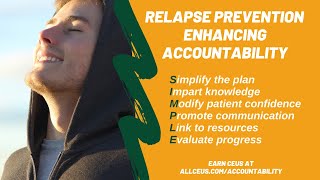
Dr. Dawn-Elise Snipes walks through a six-page relapse-prevention worksheet that starts on day one: identify your why, spot your warning signs, list triggers, name five people to call, define values-based goals, and set SMART goals with twice-daily check-ins. Accountability works best in the first 3-6 months, whether through activity buddies, signed meeting slips, or apps like Stick and Beeminder.
Chapters
This episode was pre recorded as part of a live continuing education webinar on demand. CEUs are still available for this presentation through all CEUs register@allceus.com counselortoolbox hi everybody. This is Dr. Donnelly Snipes. Today we're going to be talking about relapse prevention and developing accountability. So a lot of us, when we think about relapse prevention, you think about addictions, but we're really talking more holistically than that. We're talking about returning to a prior state of being, whether we're dealing with schizophrenia or depression or weight loss or whatever the case may be. So we're going to review a few techniques for writing a relapse prevention plan that emphasizes accountability. First things is to define what is accountability. And that's important for us to think about because writing a plan that holds somebody else accountable means we have to recognize what may or may not make it difficult. So accountability is the ability to demonstrate follow through on a promise or a contract. That's it. If my employees are doing what they're supposed to do, they're being held accountable when I audit their charts. When my children are doing what they're supposed to do, they're being held accountable when I supervise their chores. So holding somebody accountable means basically checking the block that it got done. When I have contractors come and do work, if I have remodeling done or whatever, there's always something called a punch list before a contractor's job is done that holds them accountable for what was supposed to get done to make sure it got done. It's a checklist, it's a contract, it's an agreement. So think about a time that you've made a promise to yourself to do something like get in shape. New Year's resolutions. Perfect example of accountability or lack thereof. How do we hold ourselves accountable for going to the gym if we're going to start getting in shape? Well, we go and it's, you know, really fun at first, and then it hurts and then we start making excuses and there's nobody else to hold us accountable. So if we don't hold ourselves accountable in some way, then it can be harder to follow through on that goal. So accountability is, is a lot more effective if it's A, something we want to do and B, if we've got to hold ourselves accountable to someone else, whether it be a spouse or a workout partner or whomever. You can also theoretically, and we'll talk about some apps, you can actually get accountability apps. Now we'll talk about Some apps that you can get to hold yourself accountable if you don't want to involve another person. So the first thing I do when I start writing a relapse prevention plan with somebody is help them figure out what they need to do in order to return to a prior state of being. They've started treatment that is somewhere that they weren't at yesterday. So we're going to start now. They have made a choice to stop using drugs. They've made a choice to stop watching porn. They've made a choice to get in shape and quit being a couch potato, whatever it is. Okay, that's great. So from day one, how can I help you do that goal? How can I help you achieve that goal? Which is why we do relapse prevention planning from day one. That's the first reason. The second reason we do relapse prevention planning from day one is because you never know if that person is going to come back into your office. So at least you've given them some tools to use to continue to move forward. So page one is sort of the fun one. It's when clients introduce themselves, such as saying, hi, I'm Rose. I'm a loving, loyal, determined mother of three beautiful children. And I'm dedicated to maintaining my recovery for the following reasons. So the person is introducing themselves. It's sort of a autobiography, if you will. And then they go on to state the reasons that they are dedicated, motivated to stay in recovery. When I'm in recovery, I am. However, they feel emotionally happier, more content, whatever. Because when I am in recovery, I am mentally. Because when I am in recovery, I am physically healthier, I have more energy, whatever. Because you see where we are going with this. When I am in recovery, my relationships with my kids is. When I'm in recovery, my relationship with my friends is. When I'm in recovery, my relationships with, you know, and this could go on for a while, but I want them to look at the emotional, mental, physical, social, and potentially environmental impacts of their recovery. How is life different? Better. Awesome. When they are in recovery, when they are not depressed, when they are not anxious, when they are, you know, not in a psychotic episode. And finally, the three most important reasons I am in recovery are. So this is the COVID sheet for their relapse prevention plan. This is to remind them of why they're doing it. And it helps hold them accountable because they read it and they go, yeah, you know, I want to do this for this reason. Now does it do the everything for accountability? No, I already said that. I said it's really hard to hold ourselves accountable for things all the time because we tend to be pretty easy on ourselves sometimes. Page two, you know, I want that to be the COVID page and then the next page we talk about the types of relapse. When people relapse, they relapse emotionally. They start feeling flat, irritated, bored, sad, scared. Any type of dysphoric emotion can start leading people to see negativity in the world and try to escape from it or fall back into negative thinking habits and ways of responding. So making sure people know what does it look like when they're starting to relapse, when they're starting to get depressed, when they're starting to have a resurgence of whatever issue they've got. Emotionally, how do their feelings change? Mentally, how does their thought process change? Do they lose the ability to concentrate? Do they become more negative, more pessimistic, more paranoid? What is it that we see in terms of the way you solve problems and you concentrate and you think about life that indicates you might be headed towards an all out relapse? And behaviorally, what does relapse look like for you? What things do you do when you're headed towards relapse? A lot of times people quit doing the things that help keep them healthy, like getting enough sleep and eating a healthy diet and avoiding mind altering substances, etc. So on page two, people are asked to identify their personal relapse, warning signs and interventions. Emotionally, what feelings indicate that you're falling back into old patterns? And sometimes feelings can happen because of something in the present. You lose your job or your best friend dies or something, you know, that can trigger all kinds of very deep, intense emotions. And does that mean the person's necessarily going to relapse? Not necessarily, but they do need to be cognizant that when they start feeling those dysphoric emotions that they are vulnerable. They are vulnerable to relapse. Mental and attitudinal. What attitudes or thoughts indicate that you're falling back into old patterns? In addiction we call this stinkin thinkin'. In mental health recovery, we don't really have as much of a term for it. Maybe cognitive distortions. Clients aren't gonna use that word. But we do want to say what types of thought patterns indicate that you're headed down towards anxiety or depression or whatever it is. And behaviorally, what do you start doing when your recovery becomes less important? When you're falling back into old patterns? Whether that means into patterns of trying to escape from distress. Maybe you start smoking more Maybe you quit going to the gym. Maybe you withdraw and hold up, hold up and play video games on Friday night instead of going out with people. Whatever it is that you do that indicates that you're starting to struggle to stay in recovery. Those are your relapse warning signs. And every individual has unique relapse warning signs that they need to be aware of so they can go through this periodically. They can look at it and go, nope, not doing any of those. Or, yeah, I'm doing three of those right now, so I need to check my stuff. But it gets it out there. It starts helping people recognize what their warning signs are. And they can share this with their support people, whoever those are, and say, if you start seeing these attitudes or behaviors, maybe we need to talk about it. And here's a way that you can approach the discussion so it doesn't become adversarial. And that's important because a lot of times people who are in recovery feel very attacked. If somebody says, you know what, it seems like you're, you've got a lot of relapse warning signs going on right now. You better check yourself. Well, that's not very kind. So it's important to check in with those things and say, I would love for you to be supportive. And here are some of my relapse warning signs. This is the best way to approach the discussion with me. And that is also a contract between those two people that the person in recovery says, I'm giving you permission to let me know if you see any relapse warning signs. That's like having a co pilot when you're. Back in the day. When I used to fly with my grandfather, we didn't have all the cool instruments that they have today, so he had to have a co pilot looking to see if there was another plane coming right at us because we were flying those little planes and we weren't talking to the towers. So envision somebody as your co pilot. All right. On page three, the person is going to identify triggers and vulnerabilities and methods for prevention and mitigation. Wow. So basically, you want three columns. First column is triggers and vulnerabilities. Second column is methods for prevention. Better to prevent it than deal with it at all. And the third column is for mitigation. Why? Because crap happens. So sometimes you're going to have a bad day, sometimes there's going to be a death, sometimes you're going to be exhausted. Okay, you can't make that go away. But how can you mitigate that? So it doesn't make you more vulnerable to relapse. So emotionally triggers can be, for example, anger. If somebody does something that triggers anger in your client, then your client may want to lash out by going out and getting high to make make the person feel bad. Or they may lash out and hit the person, which, if they're recovering from intermittent explosive disorder, would be a problem. So we want to look at what emotions might trigger a relapse of your condition. We're just going to use the word condition, right? We also want to look at what emotions make you more vulnerable to relapse. So for example, grief. When I'm grieving over something, I am more vulnerable to becoming clinically depressed. It doesn't mean I'm going to be there, but I know that if I am grieving over something, I need to take extra good care of myself and nurture those things that are really important in my life to prevent becoming clinically depressed. Mentally, what types of things trigger your condition and what types of thoughts make you more vulnerable to having a full blown relapse? Physically, what types of things trigger it, actually cause it? You can say, you know, when I get exhausted, then I know I usually go out and try to find some sort of stimulant to take. Or when I get exhausted, I start eating to try to stay awake. Or when I get exhausted, the world seems a lot more difficult to deal with. So I get really, really anxious. Okay. If you know that these are triggers, exhaustion is a trigger, then you need to deal with it. Hunger for some people can trigger really unpleasant outbursts because their blood sugar gets really low. It's not an excuse, it's just a physiological reaction. But if they know that they tend to be more aggressive and irritable when they are hungry, then they need to make a plan for mitigating that. So, well, preventing it when possible, but also keeping snacks on hand in case they can't get a meal when they're supposed to, so they can keep their blood sugar up. Socially identifying people or social situations that trigger you. And there are some people that just push your buttons. You know who they are. So knowing those things ahead of time and how can you deal with them, how can you prevent them triggering you? Can you change the way you react to a situation? So if somebody in your family is coming over for Thanksgiving dinner and you know that, that they are always, always have something critical to say, every time they come over, they have something critical to say. Well, you've got a couple of options. One, you could tell them they're not welcome. Which will probably cause problems in other areas. Two, you can change how you react to it, recognizing that 80% of what they do or say is a reflection of them and not necessarily of you. So, so, and I use 80% because I think we do have some control in certain situations. But a lot of times people's negativity can be a result of their jealousy or insecurities or how they were brought up or whatever. It has nothing to do with you. So recognizing that and going, okay, this person is going to say something critical and nasty and once they get out of it, get it out of their system, we're good. So I'm just going to let it go because it's more about them than it's about me. Any of those things to help you deal with those triggers and environmentally, sight, sound, smells, times of day, places, decorations like during the holidays, anniversaries, Any of those things that might trigger a relapse, trigger a relapse of depression or make you more vulnerable because it puts you in sort of a melancholy mood for some reason can need to be on the list. And we want to talk about again, how can you prevent them altogether? And some things can be prevented altogether, but when you cannot prevent them altogether, how can you deal with them so they don't push you down that relapse slope so you can hold your ground? And that's page three and that generally this page evolves over time quite a bit. On page four, have people identify five people and or organizations who could be a vital part of their recovery. Why, how and when they will contact them. So maybe it's their parents, maybe it's their in laws, maybe it's their doctor, maybe it's their therapist, maybe it's their support group, their church, their neighbor three doors down. Whoever it is, identify five people or organizations who could be a part of their recovery. Again, what function can they serve and when will the person reach out to contact them? Then page five, we're going back to happy stuff. Again. Encourage clients to create a vision of a rich and meaningful life to guide the development of a comprehensive recovery plan. Because relapse prevention is about building a recovery lifestyle. It's not about preventing this and preventing that and avoiding this and avoiding that. It's about moving towards. Yes, you have to be, have a plan in place. If you're going to go on a car trip, if you're going to go on a road trip somewhere, you have this great destination that you want to get to and it's awesome, but you're Driving a car, and we've all driven cars before and know things can go wrong. So you do want to have plans in place. So what can you do to prevent car problems along the way? You take it in for a checkup, make sure to get it tuned and the wheels balanced and all that kind of stuff, all the fluids checked. You can prevent getting lost by making sure that you have a map to get you there. You can prevent getting stuck on the side of the road with a flat tire by having a tire patch kit or a spare tire. So there's lots of things you can do to prevent problems along the way. But when problems happen, you know, maybe you're driving along and the alternator gives out. Well, crap, you didn't plan for that one. So how do you deal with it? And you still see this vacation wherever it is that you're going in the distance, this is where you want to go. But there are a few hiccups along the way that you had to deal with. So it's a matter of planning and recognizing that life is like that road trip. And there are going to be hiccups and detours and equipment malfunctions along the way. It doesn't mean you can't get there. So this recovery lifestyle is getting to that eventual destination. Everything we're doing leading up to it is just helping us along the way to make sure that we get there. So what I do with clients is I use two columns. First column is the values that the person has for a rich and meaningful life. And the second column is goals and activities to make that happen. So I used some of mine for a rich and meaningful life. One of the most important things is a good relationship with my kids. So what are some things that I do in order to make that happen? I make a tradition of spending at least 30 minutes of quality time with them each night after dinner. And I schedule time to do something with them one Saturday per month. Doesn't sound like a lot, but it's something, you know, you don't want to overload the person. Healthy friendships are important to me in a rich and meaningful life. So identify the most influential people in my circle and and connect with them at least once a week. Yes, it may just be on Facebook or through text, but I'm connecting, I'm reaching out and going, hey, how you doing? What's going on? How does your kids chemistry test go? Whatever it is, identify at least one person besides my significant other who is supportive of my recovery and make a plan to contact her daily so my significant other kind of stuck with it. But having somebody else besides that person can be helpful because sometimes you need an objective third party job security. It's important in my world. So make sure that I stay healthy so I can have good concentration and attendance and a good attitude at work. If I'm not healthy, I don't function as well. And then job security gets, you know, could get shaky financial security. Make a financial plan to reduce stress about how to pay all my bills. I'm one of those people, you know, I like structure, I like spread, I love spreadsheets. Oh, I live in Excel. So this is just one of those things I do so I can see what money has to go where and when I have to, you know, don't donate. Put money into my IRA or my 401k or whatever all those other Alphabet numbers are for financial. But I have a plan. I personally need a plan. Improved health. Make a plan to get eight hours of sleep each night, eat a healthy diet and practice stress management skills. You see all of these goals and activities are pretty meta concepty. You know, I can't just say I'm going to make a plan to get eight hours of sleep each night and bada bing, I'm going to do it. We have to fill this out later, but I'm getting an idea of what are the overarching goals that are important in my destination of a rich and meaningful life. So on page six and beyond, you put it together. Setting smart goals and rewards. So I said up here there was a lot of stuff I was going to do. Well, if there's a lot of stuff I'm going to do, then I need a time management plan to make sure it happens. So I need to identify all the things that I need to do and make that time management plan. So when will I sleep and how will I ensure it's quality sleep? How will I ensure that I'm eating a nutritious diet and drinking enough water? You know, when am I going to go shopping? What's my work schedule? How am I going to get household chores done? When is it exactly I'm spending time with the children? When is it exactly I'm going to connect with my inner circle. Now, like you all know, I'm more structured than most. So some people would be like, I am not going to schedule in when I'm going to text my best friend. For me it just helps. I know that from 7 to 7:30 each night is when I do my social texting. But I'm rigid That way, time for recreation. When is it going to happen? Make sure that, you know, I know that I go to the gym every morning at 6am that is one of those things I have scheduled in, have a twice daily mindfulness check in, preferably with an accountability buddy. And this is when we start talking about accountability because the person's putting together their plans and you can't be held accountable to anything until you have that contract or that plan there. So we've started creating this plan plan twice daily. Mindfulness check ins first 6 months or a year are really important and it doesn't have to be long, it just has to be, you know, if I were the client reaching out to my sponsor or my coach or my buddy going, hey, you know, good morning, I'm feeling good, I'm rested and I've got a good attitude for the day, how are you? And they would respond with a similar check in. Bada bing, it's done. It's not a huge big deal, but you've both checked in and ensured that that mindfulness activity got done. Because it takes time, three to six months to really get into the groove of living a recovery lifestyle and figuring out how to manage in recovery related activities, aftercare, support groups, coaching, whatever the person needs in order to continue living a healthy life. You can also have a contract with family and roommates to practice mindfulness. Use red flags and be respectful of triggers. So you have the time management plan, you're figuring out when you're going to do it, but then there are other things that you need to figure out how you're going to do it. So for example, if you say you're going to make sure that you get eight hours of quality sleep, you may need to make a plan for that. We already talked about making a financial plan that was in there. So making a plan to make the financial plan and having a statement in there about the things that you do not do or try not to do during the next 12 months without extensive consultation. And things can include major decisions or purchases, getting into or out of a relationship, changing jobs. Now sometimes these are prudent to do earlier, but a lot of times it's better if the person can get some stability in their recovery and get their land legs, so to speak, before they start rocking the boat. So this actual plan takes a look at what the person's vulnerabilities are and aims to prevent those and takes a look at their destination, what they want, and helps them figure out how can they manage their vulnerabilities as they are working towards going towards their destination. Techniques for accountability. Now, I will say it is more productive to hold people accountable for doing something than for not doing something. So it's more productive to hold somebody accountable for going to meetings, going to support groups and exercising than to hold them accountable for saying, well, did you avoid going to the gym? And punish them when they don't do stuff? It's better to reward positive behaviors than punish less desirable behaviors. The aim is always for progress, not perfection. Because people are human, they're going to slip up. Even if they've got, you know, 12 years of recovery under their belt, they may one day decide that, you know what, I'm just not going to do this, that or the other, and that that's a choice. It's generally more risky if people are slipping a lot in early recovery than later because they're still trying to get their land legs. And it's kind of like every time they, they slip or they, or they're not accountable to their plan, it's kind of like they're let go, letting go of that safety rope. But we don't want to. We want to encourage a feeling of self efficacy and encourage a feeling that they're making progress, moving towards their eventual goal. Make sure whatever incentives the person sets are rewarding to that person. Money is not rewarding to everybody. Going on vacation is not rewarding to everybody. So whatever rewards they set, if they go a month fulfilling their contract, whatever rewards they set have to be rewarding to them. Ask the person what's worked in the past? What kind of rewards have you really stuck through the tough stuff in order to get? And while you're doing this, it's important to walk that fine line between accountability and micromanaging or helicoptering. We want people to feel empowered and able to accomplish their goals. We don't want them to feel like we're constantly hovering and nitpicking and going, well, you didn't do that, you didn't do that, you didn't do that. So we want to celebrate their successes more so than criticize their failures. So specific techniques, activity buddies are great, whether it is for working out, if that's what they're supposed to do, if they're supposed to go to meetings or support groups, having an activity buddy to do that, if they are supposed, even if they're just coming to group at your office, having an accountability buddy that people look out for each other is really important. So finding people who are doing similar goals that you can meet up with and you can hold each other accountable is important. And accountability is more than just accountability to us, the therapists. I want people to develop an accountability network in their social support group because I don't want them to only be accountable to me because eventually they're not going to be seeing me anymore. I want them to start being accountable to other people. Text or email check ins can be done and this can be done in forums for substance abuse. If you go to in the rooms.com there are forums and message boards where people can, can talk and they can make an agreement to meet, meet up at online meetings each day or whatever. So there are ways that people can check in with each other. There are ways that people can check in with each other via text. Now when I say HIPAA caveats, if you're having clients text you once or twice a day for check ins and that's you got to consider boundaries with that. But maybe they call and text your office once a week or I'm sorry, once a day to check in or even once a week if they are a patient, then you do have to make sure it is secure, encrypted and HIPAA compliant. Okay, enough on that soapbox participatory planning and meetings with their support system. Again, I don't want to be the only accountability person. I want everybody in there to be accountable and holding each other accountable. Because remember, recovery is generally a family activity. Whether it's recovery from substances or depression or anything else, there is an element of change in that family system. So people need to talk about, okay, what do we need to do as a family in order to help you, the identified patient in your recovery? And what does the identified patient need from the family? And they have an agreement about what's going to happen and who's going to do what. And then they regularly meet to make sure everything is, everybody's holding up their end of the bargain. Signed meeting slips is something that you can do if you want people to go to support group meetings. You can have the facilitator sign the meeting slip. This gets close to crossing over into that nitpicking helicoptering place. But it's something that works really well if you're working with criminally, just criminal justice involved clients or somewhere else where you've got to demonstrate to the judge that your client has been doing something with regularity, help the client learn how to set contingency contracts. So they're saying if I do this, and it's a smart goal, not just if I stay in recovery for 30 days, but if I go to the gym every single day for the next week, then on Saturday I can go to the movies. If then statements, they work really well, but make sure the goals are specific, measurable and time limited. No more than a week. In order to help the person get momentum and get some successes. Tips are helpful for rewarding different behaviors. And we use this a lot. In 12 step groups, people get a newcomer chip, they get a 30 day chip, they get a 60, 90 day chip. You know, you see where we're going there. That reinforces the fact that they have been continuing to come to meetings and living a recovery lifestyle for a certain period of time. You can have different logging apps that the person keeps track of. For example, maybe you're working with somebody on weight loss and you're having them keep a nutrition diary or you're working with them on an eating disorder and you're having them keep a food diary. Well, you can do that on an app now and that app in the session can be shared with the coach, sponsor, therapist, whomever, and then you can talk about the data that's in there. So that helps hold people accountable for in this particular example, what they've been eating. You can do the same thing with banking, you can do the same thing with Internet records. If they are going online and spending too much time online or when they go online, they go to porn sites. There are a lot of different sources of data. You can pull that log activity that you can use to hold people accountable, forum or chat room daily check in. Again with the HIPAA caveats. If it's, if it's a patient therapist relationship, you do have to be aware of hipaa. If it is a peer support group like in the rooms and there are a lot of other support groups out there, then the HIPAA caveats don't really apply if it's peer to peer support. But the person needs to make sure that they have one person that's looking for them and one person that they're looking for so they hold each other accountable. Now I don't like drug testing or weigh ins or those things because they're often what I call negative accountability. And drug testing basically says I'm rewarding you for not using, but if you're not using, what are you doing instead? Were you doing something pro social awesome or were you doing something equally as bad? So I don't really like rewarding the absence of negative behavior, but it is a technique for accountability that can be, that can be used. So I promised you we would talk about accountability apps and there are several out there. The two that seem to get the best results, although they are financially based, are Stick and Beeminder. And both of these have different methods of assessing accountability. One of them actually has a moderator that looks at your progress and decides whether you achieved your goal or you didn't achieve your goal. You can look at these different apps, see if they sound like they would be a good fit for your clients, have your clients look at the apps, otherwise you might have them devise something else. The nice thing about these is they don't require the person to necessarily have a in real life support system. If they're recovering, for example from porn addiction, they may not want to be sharing that with people that they know. Now obviously these are not HIPAA compliant apps and things, so there is some risk there. But it is an option for people to consider if they don't feel comfortable or they feel too ashamed sharing what they're struggling with with a friend that they have. That's in real life. So relapse prevention planning should begin at admission. When the person has stopped using or made the decision to try to change, they've made that decision. That means they've made that first step. I don't want them to take a step backwards. There is. I don't want to see the cha cha. I will see the cha cha eventually, but not initially. I want to help them keep moving forward. Relapse prevention plans are ineffective if they are not followed. You can write a gorgeous 14 page relapse prevention plan that just addresses everything, but if the person isn't going to follow it, then it doesn't do any good. So we need to help them hold themselves accountable. And that often means having somebody else as an objective third party to help them hold themselves accountable. As I said earlier, it takes at least three to six months to get into the groove of a recovery lifestyle. So people need extra accountability during this period of time. Which is why in substance abuse recovery, the first three months, one of the common interventions is what they call 90 and 90 people are expected to go to 9012 step meetings in 90 days. After that they don't have to necessarily go every single day. But the first 90 days, when they're getting into that recovery lifestyle groove, it is important to have that accountability. Accountability will help people maintain motivation through social, behavioral and or financial reinforcement. Self accountability, although I would love it if it did, rarely works 100% of the time. So it's imperative to involve at least one other person and preferably not just us. The clinician. I mean, we can hold clients accountable to their treatment plan, to their goals, to their relapse prevention plan, yada, yada. But then that means we've got to stick with them henceforth and forevermore. And that's not our goal. Our goal is not to create dependency. Our goal is to empower clients to achieve the life that they want. So we need to help them figure out how in the community can they hold themselves, can they hold themselves accountable? Who can they rely on? Who can they call on to help them stay accountable? And it's not going to be the same person every single time. I have somebody who holds me accountable for going to the gym. I have somebody else who holds me accountable for making sure that the house gets clean. It's my grandmother in the back of my head. But we all have different things that make us accountable. And it's important to help clients figure out where those accountability supports really are. All right, everybody, have an awesome rest of your day and I will talk to you next. If this podcast helps you help your clients or yourself, please support us by purchasing your CEUs@Allce.com or or getting your agency to sponsor an episode. A direct link to the on demand CEUs for this podcast is@allceus.com podcastceus that's allce.com podcastceus to sponsor an episode of Counselor Toolbox and reach over 50,000 clinicians per week, go to allce.com sponsor thank you.










