Relapse Prevention Groups for Addiction and Mental Health Disorders
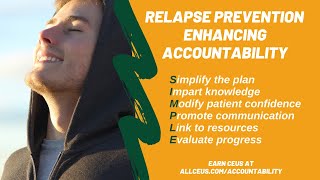
Dr. Dawn-Elise Snipes teaches relapse prevention for people with addiction and mental health disorders. She breaks down four relapse types, identifies warning signs, and walks through concrete tools like PAVES for distress tolerance and DREAM for motivation. The webinar includes games, worksheets, and group activities to build a relapse-prevention toolkit.
Chapters
This episode was pre recorded as part of a live continuing education webinar on demand. CEUs are still available for this presentation through all CEUs. Register@allceus.com Counselortoolbox you I'd like to welcome everybody to today's presentation on relapse prevention groups for addiction and mental health disorders. I am Dr. Donnelly Snipes. Today we're going to identify or define what relapse is, identify triggers and warning signs, review relapse syndrome and possible interventions, explore the acronym dream, identify vulnerabilities and exceptions and develop relapse prevention plan a little bit or we're going to talk about what we can do. So the types of relapse. Emotional relapse is when people start feeling, you know, poorly again and we all have bad days. You know, that's not what I'm talking about in terms of relapse. It's when the person's mood really significantly declines for a notable period of time, more than a couple of days, they may be on an emotional relapse. We know that if somebody has co occurring issues then if they start experiencing symptoms, then mental health symptoms, then they may be at more risk for addiction relapse. So emotional relapse. We really do want to be on the lookout for the acronym hungry, angry, lonely and tired or Holt mentions anger in there. But we also want to look for anxiety, depression, anything like that that might make a person feel dysphoric and want to escape. Mental relapse is when that stinking thinking comes back in those negative thoughts. Pessimism when we're talking about anxiety or depression, any of those cognitive distortions, if they start coming to the forefront and being more prominent again, we all occasionally have a cognitive distortion here or there, but if it starts becoming the prominent thought pattern or the person starts being exceptionally negative, then that might be a relapse warning sign. Physical relapse is when people start feeling poorly again, when they start having more pain, when they start having more aches, when they're fatigued all the time. This is an indication that a mood issue may be coming back along and or that whatever their co occurring, physical issues that may be causing their pain are not being adequately addressed and they're having some breakthrough pain or what have you, which could again prompt a relapse of mood or addictive disorders. And then behavioral relapse is when we start doing things that we know are not in our best interest. We start doing those things that we did before that may have led us to where we were. If we're talking about somebody who was clinically depressed and they were overworking and not getting enough sleep and creating all sorts of vulnerabilities so their body couldn't operate optimally. And behavioral relapse can also be in terms of addiction, just engaging in that behavior. Again, relapse warning signs that we want to think about. And our first activity relates to relapse warning signs, Emotional cues, anger and irritability, anxiety, depression, resentment, mood swings and boredom. And these can be emotional warning signs or cues for our mood disorders as well as addictions. Mental cues, as I mentioned before, negativity, cognitive distortions like all or none thinking, concentration problems, memory problems and rigidity or problem solving difficulties. When people are in the throes of anxiety, depression, or addiction, a lot of times these things go out the window. Physical cues, sleep problems, insomnia or sleeping too much or going to sleep and then waking up at one in the morning and not being able to get back to sleep. Any of those sleep disruptions, appetite problems, we know that these go along with a lot of our mood disorders. Medication non compliance is another physical cue that we may look at. Fatigue, pain, and just general muscle tension can be an indication of a relapse warning sign. I know when I get stressed, I have TMJ or it gets worse and my jaw will actually pop really loudly. And the pain in my jaw is excruciating when I'm really stressed. So that is a physical cue for me that I need to rein in my stress level. And yes, that's even when I'm using a splint, as they so nicely call it. Social cues can include hanging out around unhelpful or negative friends, isolation, not asking for help, keeping secrets, and stopping going to meetings or support groups or counseling. One of the things that we need to do with clients is recognize that a lot of what they do is rewarding in the moment. And we need to talk about how these things are rewarding. So often we talk about how to stop doing these things. Well, let's talk about why you're doing them. Because until we figure out why you're doing them, we can't figure out something better. Then brainstorm the best ways to address those things and this will really open the conversation about relapse warning signs. Then you can move on to a game. Once clients are familiar with relapse warning signs, they know what they are, yada yada, then you can do a game like Family Feud. So for preparation, there are four questions for the first part of the game. So you're Going to have them name their top five emotional relapse warning signs, the top five cognitive relapse warning signs, top five physical, and top five social. This is not brain surgery here. Now, the reason that there's only four questions when you play this game, it can, you know, if you're. If you have a only only 50 minutes for a group session, then this may take pretty much the entire group after you do check in and wrap up and everything else. When you do this, though, to make it a little bit easier for people, you want to write the first letter of each word to give them a hint. So, for example, name the top five emotional relapse warning signs. So you have G, D, R, A, A. And if you go back to that list, you'll see what I'm talking about. But the answers would be guilt, depression, resentment, anger, and anxiety. And you play it just like you play Family Feud. There's another game that I saw on the television at the gym the other day that's a lot like Family Feud that is played sort of the same way. You can go to any store or probably online and order a Family Feud game, or you can probably find the rules for Family Feud and download them in order to guide how you're doing this. But again, when I'm doing this, I try to give enough prompts so it's not frustrating for clients. The next activity that you can do for warning signs and triggers is to have people identify key questions to address each relapse warning sign. So how are you feeling? You know, that's. If we're talking about emotional relapse warning signs, we already answered that question. Depressed. For example, why are you doing this or feeling this way? Why am I feeling depressed? I want the client to start getting more mindful and cognizant about what's going on with them. Who can help you? Who can help you pull out of this? What do you need to, you know, who can assist you? What three things can you do to change the situation or how you feel about this situation, and when will you do it? If you think Back to English 101, these are your W's and your H, your who, what, when, where, why, and how. I want clients to start using this regularly when they start doing their mindfulness exercises and they say, you know, okay, I'm feeling depressed or I'm feeling resentful. Okay, you know, why are you feeling this way? Or I am binging on foods or whatever it is. You know, why am I doing this? What is the function of this behavior? Because until we understand the function, I know I said this earlier. Until we understand the function, we can't find a effective replacement for that behavior. As you discuss each warning sign, have clients fill out a worksheet with solutions for themselves. What works for one person is not going to work for everybody else. So if you're talking about depression as a warning sign, okay, what works for Sally may not work for Jane or Tommy. What I want them to do is during this discussion, start creating a emergency sheet for themselves. Another activity that you can do is I call it recovery signals. And obviously this is not relapse, this is recovery. I want people to pay attention to what they're doing. And ideally, you know, you want this entire board to be green. And you can make These charts on 8 and a half by 11 paper, print them out, and have things like sleep. Are you getting enough sleep? So green would be yes, yellow would be either no or it wasn't restful, and red would be I'm exhausted. Living off caffeine, their appetite, Are they eating well or are they craving foods? Again, defining green, yellow and red. Tolerance for people. You know, some of that, some days, and I think most of us have had those days to that we wake up and we're like, you know what, I just can't, I can't deal with people. I cannot take one more thing today. I cannot. You know, just the idea of even calling your best friend on the phone may be more than you can handle. It's just like, I can't take any more input. That's what I'm talking about with tolerance. And you know, green is, hey everybody, come over to my house for dinner. And red is I can't take one more thing pain. We know that when people's depression goes up, their pain generally goes up some. And we know that there are a lot of pain related issues that come to the surface when people are experiencing stress, anxiety or depression, including GI problems, headaches and tmj. How's your energy? Green is for good. Yellow, not so good, red. I'm living on caffeine outlook. How optimistic is the person? Green is optimistic, red is pessimistic, and yellow somewhere in between their mood for the majority of the day today. And you want people to just kind of look over the majority because generally during, during the day you're going to have some ups and downs. But over the majority of the day, how was it? Were you red, green or yellow? And what was your stress like through the majority of the day? The morning may have been really stressful. But the rest of the day went really well, or vice versa. This is what I want. And then the person can look at this and see very clearly where their recovery behaviors are and what's going on with their recovery. So they are able to identify, you know, for this person. The weekends really, especially Saturday was pretty good. But then Sunday they started thinking about having to go back to work and started dreading it. So their outlook got negative. Their mood, they got irritable, they got stressed out, so they didn't sleep well. Monday wasn't horrible, Tuesday wasn't too bad. But by the time they got to Wednesday and Thursday, they were off the charts. So they can compare weeks and see if typically Wednesday and Thursday are really bad days and figure out what's different. But they can also focus on enhancing these areas. These are all things that we want to strengthen people's sleep hygiene, their healthful nutrition, their ability to tolerate others. This is one of those things. Instead of removing behaviors, you know, we want to eliminate this, we want to eliminate cravings, we want to eliminate this. These are things we're basically adding with the exception of stress. I should have put stress management there, but. And it gives them something to look at. 10 most common triggers of relapse Withdrawal symptoms Anxiety, nausea physical weakness psychological withdrawal. Not everything has physical withdrawal symptoms. Some people, if we're talking about, you know, gambling or sex addiction or any of our behavioral addictions, there are going to be significant psychological but withdrawal symptoms that go along with chemical addictions. Smoking, for example. Post acute withdrawal symptoms. Symptoms including anxiety, irritability, mood swings and poor sleep. We're going to talk about this in terms of post acute recovery syndrome later because you see it in addictions, but you also see it in anxiety and depression. Poor self care, ineffective stress management, not eating healthfully, not getting enough sleep, just doing these things that are creating vulnerabilities. People in our lives can be triggers for relapse. Places where you used to use or where you used to buy drugs, or where you go that reminds you of, you know, somebody you lost. If we're talking about depression or places that you go that trigger your anxiety, especially if it's somewhere where you have to be like work things can trigger relapse, uncomfortable emotions, relationships, isolation, and even pride and overconfidence. Thinking, I've got this licked. I have family members as well as clients that I've worked with. You know, they'll start doing really well and start feeling better and then decide, you know what, I don't need this medication anymore. Or. And Or I don't need to go to counseling anymore. Now, ideally, we don't want to establish a dependency where people feel they need to be in counseling forever. We want them to get the tools and be able to be happy and use those tools on their own. That's not what I'm saying. But there are some people who do do markedly better on medications. It's a small percentage, but there is a percentage. And when they quit taking their medications, there's a significant, significant relapse. And you can see a lot of their recovery behaviors and recovery signals kind of go into the red. Recovery triggers are things that remind you to do the next right thing, to keep moving forward towards your goals. And we want people to have recovery triggers in their life. You can have relapse triggers like driving by a bar, driving by the cemetery where your grandmother's buried or whatever it is. But we want recovery triggers. Let's trigger you to keep moving forward. And I like doing this as sort of a pseudo art therapy activity. And I want people to, I encourage them to, I give them a big piece of blank paper and I say, okay, I want you to design either your car, your home, or your work. And at home, obviously it can be one room or an area in their room that can be their sanctuary. And same thing at work. You're not going to change the whole organization, but your little area. What can you do in order to add recovery triggers for your mood? What things can you put in there that increase happiness, compassion, gratitude, hope, optimism, courage, determination? What people can you bring into your life? Now, obviously in the car, you may not be able to bring a human there, but you may be able to listen to a recording of somebody who is positive and encouraging and supportive. There's a lot of motivational speakers out there that are really good. What kinds of sites can you add in into your area? It can be decor, like dishes, a cup that has a saying on it, or pictures that you put on the wall. Blankets. You can get pictures, picture collages, put on blankets. So when you look at that blanket, you get this warm, fuzzy feeling inside. Or, you know, things that can go on the blanket don't have to be necessarily warm fuzzies. They can be visions of where you want to go, the place you want to go on vacation, or the house that you want to have, or whatever it is. You can also do the same thing with pillows. You can put pictures on pillows, but some people just like tapestry based pillows or other things that make them happy. Whatever it is that's going to make you make people happy and relaxed, energized. And yeah, you can be relaxed and energized at the same time, or even framed memories. I mean, I've got my diploma up on the wall, partly because everybody says I've got to have it up on the wall. But if you have a letter from somebody significant or a piece of sheet music that is particularly significant, framing that and having it available may trigger the desire to keep moving towards whatever those goals are. Smells that trigger a recovery mood or remind you of a goal or to do something can be helpful. And recovery moods are typically happy moods. So we want happy smells. But other smells that you can, you know, put in there, there are smells that are energizing. You can look at. Certain aromatherapy. Essential oils can encourage, can help people feel more energized and excited to do something. Certain essential oils can reduce cravings and reduce appetite. Certain essential oils can help people sleep. So sometimes, you know, if your sanctuary is your bedroom, maybe one of the smells that you want to put in there is something that's going to help you relax and so you can wind down and go to sleep. And then sounds that help you relax, get energized or focused, depending on which one of those I'm doing. I have a whole different playlist. But it's important to have as many senses involved in motivation as possible. If the person, they're depressed and their goal is to be happy, healthy, play with their kids, you know, whatever, how many of these things can we integrate into their environment to remind them of what's important to them and why they're doing this and keep them going forward and encourage them. So I have people, you know, on their sheet of paper, identify as many different things that they can put in those areas and. And then they share them with the group. So it can be kind of fun. They can hear different suggestions for how people might be creating their own little micro sanctuaries, so to speak. Goal awareness is another important thing in recovery. You know, why am I doing this? Why am I doing all this hard work? Because recovery is not always easy. Life is not always easy. Recovery is about heading toward a happier, healthier life as the person defines it. So they've got to define it. For example, for me, and, you know, these are just a couple of the things on my list, but relationships that are important, my relationship with my kids, so that they trust and confide in me and, you know, want to spend time with me at least a little bit. They're teenagers. I get it. Pets that Are happy. And yes, pets go into relationships for me, activities, run a marathon, foster rescue animals, health, have ample energy throughout the day and be in relatively good health. And things. I don't have a lot of things that are on my list, but own my own house and be able to comfortably pay my bills. Those are my goals. You know, put those out there and then I can ask myself when things happen, is this helping me move towards my goals? For, you know, sites I can put pictures of marathon runners for smells. Well, I can put the smell of my gym, but, you know, thankfully my gym smells pretty good. But there are a lot of different triggers I can put ever present in a goal awareness worksheet. And this is what you have clients do. You have them identify who or what is important over on this left side. What can you start doing this week to move toward that goal? So with my kids, it's really important for me to do a family dinner every night. My son doesn't get up until later and my daughter's up before the chickens, so breakfast time is not the best time for us to congregate. Dinner. Everybody's awake and we generally have an enjoyable meal schedule in 30 minutes a day to play with my animals. That's important. It's important. If I want to have that relationship with my critters, then I need to make. Make that a priority. What do I need to stop doing this week to move toward this goal? Working at home. When I take my work home and I start working at home, then I typically can forget or get caught up and not have time to go outside and play with the dogs or whatever to run a marathon. You know, what can you start doing this week? Start a marathon training plan. What do I need to stop doing this week? Well, marathon training plans take a lot of time, so. So I'm going to have to cut out some of my television. Have clients go through their goals like this so they can start seeing the things that they need to add and maybe some of the things that they need to replace. Post acute recovery syndrome. Remember I said we're not going to talk about withdrawal because when you apply it to mental health and substance abuse issues, you know, there's a lot of similarities in post acute recovery syndrome. People have an inability to think clearly when they are recovering from depression or anxiety. And think about most of your clients or yourself. If you've experienced clinical depression or anxiety, there are days, you know, you don't just start going to counseling and then wake up and magically one day, poof, it's all gone. There are days that are better and days that are worse. But as you get closer to recovery, those bad days are fewer and less intense. The same thing is true for people who are recovering from addiction. They don't just go through detox and poof, they don't have any cravings anymore. And, you know, they're fixed. It's a process. It's a process for the body and the mind to recovery. So the first year, you know, expect there to be, you know, days that you wake up and you're like, oh, I thought I was past this. That's just a day that you've got to get through. And helping clients recognize this instead of feeling like, oh, here we go again, recognizing it as what it is in the moment. This is maybe not the best day, okay, so what do I need to do to handle today so it doesn't become a full blown episode? In an activity, you can write all the symptoms on the board and discuss what might cause these symptoms in recovery from whatever your group has. Depression, anxiety, ptsd, addiction. So you start understanding where this comes from. Why do you have an inability to think clearly when you're struggling with depression? Or why do you have sleep disturbances when you have anxiety? So people start understanding how it makes sense. It's like, okay, I see where this might be coming from. And then transition. Ideally, before group, you would have written each symptom on a beach ball and pass it around, discussing what to do to mitigate each symptom. So, you know, the leader has the ball, tosses it to somebody, they catch it, look down, whatever symptom is showing. When they look down, they read that symptom out and discuss something they can do to mitigate that problem. So if they're having a bad day and they're having difficulty thinking clearly, what can they do? Write things down, eliminate any unnecessary stressors, whatever it is that works for them. So you start creating this whole toolbox full of things to do to handle post acute recovery symptoms. Mindfulness is another thing. Hopefully people have talked about it in treatment, but when we get down to relapse prevention, mindfulness is so incredibly important because it keeps us from turning autopilot back on. One of the tricks I like to do. I hate to use the word trick, but it kind of is. When people come into group, I ask them, you know, how you doing? When somebody comes up to you at work and says, hey, how you doing today? What do you say? Pretty much without fail, people say, I'm good or I'm fine, or you know, whatever. And they go out their day. Now, is that how they're really doing? Maybe, maybe not. But that's the autopilot response to that question. So as people start coming into group, I say, I ask each one, how are you doing? And they generally give me some sort of canned response like that. And I keep note of how many vague or non mindful answers I get. Then we talk about how being aware of how you feel emotionally and physically and what your urges and thoughts are is essential to sustain recovery. If you're not paying attention, then you can start feeling depressed and run down and exhausted. And if you let that go on for too long, then quote from out of the blue, a depressive episode has snuck up on you. Well, if you look back and if you would have been being mindful, you would have seen the progression and you would have seen it starting to come on. I emphasize with them that mindfulness is non judgmental acceptance of the present moment. It's just looking at what's going on or asking yourself, how am I doing right now? Not saying I should be doing better or I shouldn't feel this way. It's just, it is what it is. If I'm unhappy about having to go to this meeting, okay, I'm unhappy about having to go to this meeting. Willingness to explore how to improve the next moment. I'm unhappy about having to go to this meeting. What can I do to improve the next moment? One of the places that I worked, once a month we had these supervisory meetings and there were about 70 supervisors. And each person would get up there and give a department report. So you can imagine it was a long meeting, usually six to eight hours. It was an entire day. I don't sit still for that long. I know that's a surprise. So every month when that meeting would come up, I'd be like, oh, I can't believe I've got to go to that meeting. And I was irritable about it. Well, being irritable about it didn't change the fact that I had to go. So then I started exploring in my mind, what can I do to make it more tolerable? Which is kind of my way of saying improving the next moment. So I would find one of my colleagues that I enjoyed spending time with and we would sit together and pass notes and be, you know, somewhat. We wouldn't be disruptive, but kind of like high school kids. Go around the room and have each person complete a mindfulness worksheet. I'll show you in a minute. And then give them 21 copies to complete during the next week. So they're completing one at each meal. Start getting them in the habit of being mindful. The mindfulness worksheet is very simple. How am I feeling or thinking emotionally, mentally, physically and what are my urges? What's going on with me right now? For example, I just ate a big meal before class so I am full and I am kind of tired and my urge is to go lay down and go to sleep. Not that I can do that, but just recognizing that's how I feel. I'm ready for a nap. Why do I feel this way and what can I do about it? The next group is on urge surfing and distress tolerance. And it's really important for clients to understand the difference between avoidance, which is not dealing with something, putting it away, suppressing it, whatever, and distress tolerance. And distress tolerance is saying right now is not the time to deal with this because I'm in my emotional mind, I'm worked up, I may not be thinking clearly or this is not the appropriate place and time to deal with it. If you get upset with your boss, screaming at him or whatever is probably not the best idea. So distress tolerance skills come in. It doesn't mean you're never going to deal with it. It means you are tabling it until you can get into your more analytical mind or your wise mind as Linehan calls it. Distress tolerance skills. There are all kinds of acronyms out there in dbt. It can be hard to remember all those. So I shortened it for the ones that a lot of my clients use to the acronym PAVES and Distress tolerance. Paves. The way is what we talk about Pushing away. P is for pushing away. What can you do when you start having an intrusive thought or a negative thought? How can you push away that thought or push away what's distressing you until you can get some distance from it? Activities. What activities can you do that will help distract you until you can let that adrenaline bleed off and get into your wives mind? And it can be gardening, it can be calling a friend, it can be journaling, it can be going on a walk around the parking lot if you're at work. Whatever it is, I want people to start creating an emergency tool list for distress tolerance tools. Visualization. You know, visualizing successfully navigating, whatever it is, whether it's a discussion with your boss or things improving at work or whatever. Encouragement. Getting encouragement for yourself, encouraging yourself that you've been through worse, you can do this and. Or getting encouragement from others, maybe calling Your support system and then sensations. What types of sensations can help distract you? Whether it's sound or touch, holding an ice cube or, you know, sometimes even just going outside and, or going in front of a window and letting the sun beat in. And the heat of the sun on your face can sometimes be distracting enough. Or splashing cold water on your face can sometimes jar you out of the stuck thought patterns that you're thinking. But anyway, give each client, you know, get some red construction paper or whatever, it doesn't have to be brick red necessarily. And create little bricks. And on each brick, have clients identify tools that they can use, distress tolerance tools they can use to push away activities. They can use ways they can visualize, ways they can get encouragement or sensations they can use in order to tolerate distress. And you can create like a little yellow brick road, so to speak, along the wall with those construction paper bricks. It's a lot easier than using the regular bricks. Unhooking and improving the next moment comes from acceptance and commitment therapy and a little bit from dbt. We want people to change their language when we say I am stupid versus I'm having the thought that I'm stupid. I am a bad person is a lot more impactful than I'm having the thought that I'm a bad person. Well, thoughts can be wrong and thoughts can come and go. We want to encourage people to start paying attention to their language. And when they say they have to put the phrase, I'm having the thought that before I have to, I'm having the thought that I have to have a cigarette. I'm having the thought that I will never be safe again. I'm having the thought that I'm a burden to my family. Okay, well, then from there we accept thoughts and feelings as they are. Validate that. Okay, that's what the thought that you're having right now. Okay, now what can you do next to improve the next moment? We're not going to contradict it. We're not going to shame them for having that thought. It's a thought they had. Okay, what do we need to do now? Remind them that thoughts come and go. And ask them, you know, when you have unpleasant thoughts, how can you improve the next moment? Questions that I want them to get at or whatever, what would others say? So if you're having this thought that I'm a burden to my. I'm having the thought that I am a burden to my family. Okay, well, what would others say about that? If you asked your parent, would they say that you're a burden. If you asked your sponsor or your best friend, would they say that you're a burden? If you asked your higher power, what would they say? If your child came to you and said I'm a burden to you, what would you tell them? And how do you need to handle the situation to keep moving towards your goals? So whatever's going on that's making you feel like you're a burden, maybe it is oppressive depression. Okay, what can you do to keep moving towards your goals? How can you use this energy instead of using it just dwelling on the fact that you think you feel like you're a burden? What can you do to change the situation? Go to counseling, Take your medication, Ask for help. Change your feelings about the situation. You know, recognizing and highlighting your good days and focusing on those, developing an attitude of gratitude or in some cases, using distress tolerance activities until the urge passes. Sometimes we have days or hours where we feel like a burden or we feel unlovable or we feel however and engaging in distress tolerance activities. So we don't keep telling ourselves that and holding on, hooking to that thought. You don't want to carry it around with you. Let it go. So distress tolerance activities can help people get their mind in a different space so that thought can just fly away. Savoring Think about your vacations. I remember when I was 21, I went on a cruise with my mother. And the first day seemed like, you know, just. It kept going on and on. There was lots of excitement. The second day, you know, was thrilling. And, you know, there was lots of time and lots of things to do. And then all of a sudden we were at the seventh day. I don't know what happened between the second and the seventh day, but it just flew. It seemed like, you know, everything just went by. I wasn't savoring the moment as much. When you focus on savoring the good things, you pay less attention to the unpleasant things. Encourage people to savor their days. It doesn't have to be a vacation. Savoring means using all of your senses. It's kind of one of those mindfulness things to soak in the wondrousness of the moment. Waking up to the birds chirping and the sunshine or the smell of fresh coffee. I got all three of those this morning. It was great. I just laid in bed for a moment. I'm like, my daughter makes coffee as soon as she gets up every morning. So, you know, the sunrise on the way to work, you know, just take it in and savor that moment, if there's a particularly pretty sunrise or the smell of crisp spring air or freshly baked bread, sometimes it's not something you're seeing or experiencing right then you can savor memories from the week when you go through. We just recently went through a bunch of pictures and I was seeing pictures of my kids from when they were very, very little. And I took a moment and I put myself back in that moment and savored that moment when those, when they were young and young. Vulnerability prevention and you can have people going back to savoring, encourage them to think back and identify three things that week that they want to savor, three things that were worth savoring. And encourage them tomorrow and henceforth to find at least one thing every day to savor. Whether it's, you know, the sunshine or the bunny rabbits or you can see what I savor. But for vulnerability prevention, remember, if the body ain't functioning, the mood probably isn't going to go along with it. So we want to make sure that people are paying attention to their vulnerabilities. If they are hungry, if they're not getting the nutrients necessary to make the building blocks for the neurotransmitters and the hormones and all that stuff, they are going to be at risk of relapse. You can break people into small groups. If you have eight in a group, then obviously there's two in each group. Or, you know, if your group is a little bit bigger than you know, maybe you may have three in a group. But have each small group talk about and teach the rest of the group what nutrients are necessary for health and well being and how to get them into their daily diet. When I prepare for these groups, I don't assume people have this foundational knowledge. I hope they do, but I don't assume. Therefore, in preparation for group, having handouts that the clients can use to prepare their presentation for the rest of the group is really helpful. They can diverge from that a little bit if they've got other great ideas for ways to get nutrition into their diet or whatever, but give them a little cheat sheet to build off of so they don't feel like they're just flapping out in the wind. Angry. The small group will teach that anger also comes in the form of irritation, resentment, guilt and envy. And they talk about three possible ways to handle each emotion. Lonely. That group talks about the difference between being alone and lonely. And we regularly talk about how you can be alone and not lonely at all, but how you can be in a group of People and feel very, very lonely and disconnected. And then they follow by talking about five ways to develop and nurture relationships so you don't feel lonely. So you're. You have something that is fulfilling and tired. That group explains the importance of adequate sleep in mental and physical health and the top 10 sleep hygiene problems and fixes. Sometimes when you teach something, you actually learn it better than when you attend a class on something or you listen to a presentation. When people are teaching, it also gets them active and interactive with the material which solidifies some of these brain pathways. It can be a fun activity. And it's also just a change from sitting in sitting in group and doing the big discussion right on the whiteboard thing. Gratitude. Keeping gratitude ever present is so important in recovery from anything and preferably in life in my mind. So there's a lot of different things you can do. The gratitude tree. I don't know if you can see over here. That's the best image I could find. You take branches from real trees and you can put them into a vase or just a big branch if you have it and the room for it. And you create little leaves that you write what you're grateful for on those leaves. It's a great Thanksgiving project that you can do. You can do a gratitude blanket or picture collage. And I like this one because it's in a shape of a heart. I thought that was really cute. You can do a Shrinky Dink wind chime. How many of you remember Shrinky Dinks? I loved Shranky Dinks when I was little. You can order the sheets of plastic off of Amazon and I'm sure from any craft store so they're not already pre printed. And people can draw their own designs. But on each design they will have something that they write on it. Or maybe the design itself will represent something that they're grateful for. Then put it hole through it so you can use fishing wire to attach it and make a wind chime mobile. Whatever you want to call it. With Shrinky Dinks you can add to it regularly. So that can be a kind of fun family project to do. Button pins. You remember those little pins that we used to put on our backpacks in high school and middle school. You can order those for real cheap too. And people can. You can put pictures in them just like you would do in a locket or, or write words on them to remind people what they're grateful for. You know, kids, family, love, whatever it is. And a gratitude garden. And you know, gardening has to come up in whenever I do group activities. So in a gratitude garden, you can plant plants that represent things that you're grateful for. And in the art therapy activity that you do in group, get little terracotta pots, not the little mini ones, but like the 3 inch terracotta pots, and paint them. And then on each pot, you can write the things that you're grateful for, turn them upside down and get the saucers and paint those so you can make little mushrooms. But then your gratitude seeds, if you will, can be interspersed throughout your garden plant. So when you look at your garden, not only do you see the plants, but you also see the pots that show what you're grateful for. Compassion and kindness. Self compassion can help us be kinder to ourselves and reduce guilt and self anger. Compassion towards others can reduce anger and resentment. Anger, resentment, guilt. All of those things are huge triggers for depression, anxiety and addiction. Create compat, what I call them compassion cards. I didn't know what else to call them. Go to the store and get the business cards that you run through, like a laserjet printer that are perforated and create compassion cards. On each card, write a uplifting statement. You know, you can do this. Tomorrow will be a better day. Whatever people can think of. And then carry them in your purse just like you do business cards or your wallet, if you're a guy, and hand them out to people, including yourself, who seem to be having a bad day. Sometimes just like smiley stickers sometimes make kids smile. Giving somebody a compassion card that says, you know, thank you for your service or I, you're appreciated can make that a huge difference in someone's day. If they're a cashier and they're having a bad day, or a waitress, or, you know, your kid, whatever. Another thing that people can do, which is a little less immediately tangible, if you will, because you don't necessarily do this all the time, but create compassion. Compassion bags for the homeless, where you're putting in these cards, but also toiletries and things that the homeless may need to help them meet their basic needs. You know, toothbrushes, hair brushes, deodorant, so they socks so they feel more human and they feel better about themselves. Finding meaning is another important thing in recovery and relapse prevention because stuff happens. And I'll tell you, I took this from a show I was watching the other day because it just, it was so impactful to me. When things happen, they don't automatically have meaning. We have to make meaning from them. I was like, oh, you know what? I like that. What you can do for group is start out by finding some of these figure ground pictures and asking people in your group, what do you see? Because each person will see something different. In this picture, some people see the young lady and this is her face and her hair and the feather and a hat or a scarf or something and then her shawl. Other people see the old lady and in the old lady, this is her hair, this is her nose right here, this is her mouth and then her chin. So she's got her got her head tucked and then this is some sort of a scarf over her head. But there's two different things that you can see and your brain makes meaning out of it. Over here, some people see a vase, other people see two faces looking at each other. Once they have that revelation and they talk about what they're seeing. And there are other pictures you can find on online that illustrate the same point. They can start to see how different people see different things in different pictures. You can also talk about how you can see different things in different experiences. And then I go on to talk about, okay, how can you make meaning from your depression? You know, your depression, you feel depressed right now and that feels like a curse. How can you make meaning from it? What good can come out of this? Optimism and dialectics is the next group. Have the group apply optimism and dialectics to 20 things that your group regularly complains about. I just came up with some ideas here. An overbearing mother. There are some of them. I was watching a show, I watch a lot of shows from the 80s the other day, and the kid kept referring to his mother as a smother because she was just all up in his business and totally enmeshed. However, overbearing mothers can be a lot to deal with, but generally they care. And so there's the dialectics. This person is overbearing, but she's doing it out of love. If you've got too much work to do, you know, and not enough time in the day, you may be grateful for the fact that you've got a job, your kids, you just cleaned the house and it's a disaster already. Well, yep, kids do make a mess. But aren't they wonderful little bundles of joy? And you can see how going through this, there's a negative to it, but what's the positive? Why is it worth having in your life? Car trouble, for example. Well, yeah, that's a pain. I hate it when I get a flat tire. However, I'm grateful for the fact that I've got a car and finally, just the facts, ma'. Am. Emotional reasoning can lead to anxiety and feeling hopeless and helpless or depressed. Have people make A list of 10 beliefs that may keep them stuck or cause stress. Like relapse is inevitable. Addiction. You hear that a lot in mood disorders. You don't hear it as much, but it is a relatively common belief that if I was depressed once, I'm going to be depressed again. I'm a burden and useless people are horrible. I hear that statement a lot, especially, you know, over the past few years as it seems like there's more divisiveness and snipping, if you will, at one another. Okay, so these are beliefs that may cause stress or keep us stuck or afraid to move forward. So we take those beliefs and we check the facts. What are the facts for and against your belief that relapse is inevitable? Does everybody relapse? Well, no, there are people who don't. Have you relapsed before? Maybe, maybe not. Depends on the person. But looking at the facts, what's the probability of your belief? What is the probability that you're going to relapse? For some people, there may be a really high probability. They've relapsed 17 times before. Chances are there may relapse again, especially because they're not following their treatment plan or something. Is this worth your energy? Is it worth worrying about the fact that relapse is. Or thinking that relapse is inevitable or doing something to prevent relapse? If so, well, in the case of relapse, I would hope so. What can you do about it? What can you do to reduce the probability that you're going to relapse? And. And what are the facts? What do you know that has led to your relapse in the past? For I'm a burden and useless. Okay. What are the facts for and against your beliefs? In what ways are you important to other people and what things do you do? In what ways do you. Are you a burden? There's a difference between feeling like a burden and being a burden. And that's really important for clients to differentiate. When I got sick a couple years ago, it was in the middle of planting season, and, you know, there was a lot of stuff that needed to be harvested. And I hated to make my kids come out and help me harvest because I know they hate that I felt like a burden, but they didn't mind. They were willing, they were happy to go out and help so I could get better. So as opposed to being a burden, I felt like a burden. And that was the difference between factual and emotional reasoning. Is this worth my energy to do something about so I am not a burden? Well, sure. Okay, then what can I do about it so I can dispel this thought that I'm feel like a burden and then add to the positive. Just eliminating the negative probably won't get the job done. Get plastic balls or those plastic Easter eggs and write something people are commonly eliminating to be happy. So on one, you'll write resentment. On another, bad relationship, another, money problems, hated job, yada yada. And you'll fill up your box with these eggs, put them in a box decorated with a heart and explain to a group that this box represents their heart and their happiness. Take out each egg one by one and discuss how that helps people be happier. If I get rid of this resentment, how is it going to help me be happier? It's going to free up energy and yada yada. When the box is empty, show them that life and their heart may be empty if they don't focus on also putting good things in. Well, if I get rid of the resentment, what am I going to do instead? You know, got to add something in there. If I end this bad relationship, you know, I'm going to have lots of time on my hands. I don't necessarily need to jump into another relationship, but what am I going to do instead? Have them write on eggs. Or you can label eggs with things to put in the box so you don't have to buy as many eggs. The things that they need to make sure that they spend energy on to add to their life. So children, pets, health, you know, those things that they want to add into their life. So yeah, they've gotten rid of some bad stuff, but that doesn't mean that their box, their treasure chest is going to be empty. And dare to dream. Determination. Forego the immediate reward to achieve longer term goals. Resilience. Develop commitment. Help people recognize all the things in their life that they are, that are important to them and that they have going that they're committed to. It's not just their job, it's not just their relationship, it's not just their kids. It's all of those things. So one of them may be going a little wonky, but they're also committed to all the rest of the things. Control. Help them identify what they have. Control over creativity. Encourage them to think outside the box to solve their problems. And challenge. Encourage them to view it instead of an obstacle or a horrible thing as a challenge. It is a learning opportunity. E is for exceptions. Encourage them when things when bad things happen to remember that nothing happens all the time. You may be having a bad day today. Nothing happens all the time. You may have gotten written up today. Nothing happens all the time. So this bad thing is probably an exception to hopefully the good things. Awareness this goes back to mindfulness, encouraging people to be aware of their physical, emotional, cognitive, interpersonal and environmental states and motivation. And I use the mnemonic copes. Cognitive motivation is how is this going to logically make sense to help me achieve my goals? Physical motivation how's it going to give me more energy and help me feel physically better emotionally? How is it going to make me happier socially? How is it going to improve my relationships? So DREAM will help people improve and enhance their motivation and continue towards recovery. It's important that we strengthen motivation to change throughout the change process. Help people identify high risk situations and solutions, develop coping strategies and skills to avoid those high risk situations, and recognize and implement changes to the environment and their lifestyle to minimize the frequency of high risk situations and continue to strengthen their commitment to change. Between writing notes, filing insurance claims and scheduling with clients, it can be hard to stay organized. That's why I recommend TherapyNotes. Their easy to use platform lets you manage your practice securely and efficiently. Visit therapynotes.com to get two free months of TherapyNotes by just using the promo code CEU when you sign up for a free trial at therapynotes.com. If this podcast helps you help your clients or yourself, please support us by purchasing your ceus@allce.com or getting your agency to sponsor an episode. A direct link to the on demand CEUs for this podcast is@allce.com podcastceus that's allce.com podcastceus to sponsor an episode of Counselor Toolbox and reach over 50,000 clinicians per week. Go to allce.com Sponsor thank you.










