Responding to Noncompliance and Treatment Resistance with Compassion
A recorded continuing-education webinar by Dr. Dawn-Elise Snipes explaining why clients are noncompliant or resistant to treatment (missed sessions, not doing homework, refusing to address target issues) and offering clinician strategies to respond compassionately. The talk distinguishes learning vs performance problems, describes types of resistance (issue-specific, relational), outlines adult-learning and teaching techniques (AVK, role play, graded exposure), and recommends motivational approaches (stages of change, decisional balance, rolling with resistance) to increase engagement and adherence.
Chapters
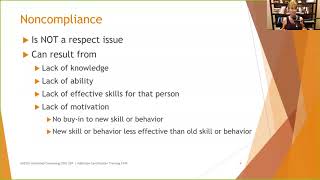
This episode was pre recorded as part of a live continuing education webinar on demand. CEUs are still available for this presentation through all CEUs. Register@Allce.com Counselortoolbox you I'd like to welcome everybody to today's presentation on addressing treatment non compliance and resistance. And a lot of times we kind of put both of these in the same group. We assume if somebody's being non compliant with treatment that they're being resistant. And that might not necessarily be true. So we're going to take a look at some of the reasons that this happens. We'll examine some of the reasons for treatment non compliance, including learning versus performance issues and what that really means, low motivation and how we can help them increase it. And not feeling heard or understood or just having that white coat syndrome where the doctor knows best and they tell you what to do. And even if you don't think it's going to work, you know, you just say huh and walk out of the office and then you do whatever you're going to do anyway. And we'll look at some ways to address this, including rolling with resistance and tipping the scales. So the first question, remember I said we were going to do a little bit more interactive this time is in what ways are your clients non compliant? What do they do that make you think that they're not following their treatment plan? Or they're not. Maybe they're not showing up for sessions or they're not going to support group meetings or not completing their homework? You know, I'm wondering if you have particular sticking points with certain clients. You know, I've just listed three of mine, so. And in the same vein, thinking about what things are your clients often resistant about? And so completing homework seems to be one they tend to forget. And so one of the reasons we want to look at why they're forgetting to do their homework and it could be a time management issue. It could be they don't have buy in, they don't understand the purpose of the homework. You know, we'll take a look at some of those things, but we'll keep coming back to that. Showing up late is another non compliance or resistance issue. Or missing appointments. You know, I'm feeling good today, so I'm not going to show up. But then on Thursday, all of a sudden I'm in crisis and I have to have an emergency appointment. So we'll want to take a look at why it's important to come on the good days as well as the days you're not feeling so well, and also, again, look at what's the motivation behind missing appointments if you're in a course of treatment. And one of the things that we can do at the outset for that is let clients know ahead of time. And with my clients, I generally say, expect to be with me 10 to 12 sessions. And it may be a little bit shorter, it may be a little bit longer. Since I use a cognitive behavioral approach after 10 to 12 sessions, I want to know where you're at and I really want to see some significant improvement in how you're feeling and what's going on instead of. And I have a lot of colleagues, and it's just the way we were trained or not trained, as the case may be, who don't give clients an end date. So they don't know how long they're going to be going. They always assume they're going to be going indefinitely. So missing one session here or there or frequently doesn't seem like as big of an issue. You know, it's just kind of one of those things. So I want clients to really CHERISH the, the 10 to 12 sessions that they have, you know, with me while they're working and use that as their thinking. Thinking of it like a semester class. You wouldn't want to skip 6 out of your 16 lectures. Or maybe you would, but if you would, then we want to look at what's up with that professor and why you're not wanting to go. So, yeah, definitely. Missing appointments and then wanting you to be on their timetable are some things that we may look at in terms of client resistance. So non compliance is typically not a respect issue. It's not that they're saying, oh, I don't respect her at all, so I'm just not going to show up. It's. They tend to be. A lot of times the clients are more egocentric at this point. They're thinking, I've got too much going on to go to counseling today. I'm feeling pretty good. I just don't have time to deal with that because I've got these other 18 things that are pressing on me. So you see where the time management thing starts coming in. As clinicians, we can also help clients see how important it is to have the weekly sessions or bi weekly or whatever it is, and why it's important to maintain that continuity. Some clinicians that I know have sort of a 3 absence policy. If they have a certain number of, maybe the clients are in group, and if they have a certain number of absences, then the client is Discharged because they're not getting the whole program and they're not going to benefit from it. Or if they're not discharged, they're switched over to individual counseling or something else. So finding a way to help clients understand why all 12 sessions are important. If you've ever taken antibiotics, and this is the best example I can give, I take antibiotics and usually after I get about halfway through the bottle or whatever, it's been a long time, I feel good. And a lot of people do this and they feel good, so they quit taking the antibiotic. Well, what happens? You start getting treatment resistant bugs coming out. Now, we're not saying that depression is going to become treatment resistant, but what we're saying is the antibiotic hasn't cleared all of the bacteria that are in your system away yet. You're just fighting it off and you're feeling better, but you still need that extra bump from the antibiotic to get those bugaboos out of your system. Same sort of thing with counseling. People may start feeling better, but life can throw them a curveball. The skills they're learning, they're not second nature. Even if we're building on strengths, the things they're learning, they're having to stop and pause and go, okay, I'm going to use my new skills. I'm not going to react by punching the wall or screaming or doing whatever, because that's not how I want to live anymore. So these are new skills, new ways of being that they're having to solidify. So yeah, they have the skills and they're starting to practice them and they're working pretty well. But it's important that they keep coming in for those tune ups so we can help them individualize their skills and really solidify them. So the old behaviors just don't even seem appealing anymore. So one of the things that we want to look at is why clients may not continue to come or they may come sporadically. Another issue that somebody brings up is clients may come in and be resistant to working on the very issue they came in for. And this is one we're going to talk a lot about today, because clients come in and sometimes they come in and they have tried everything or they think they've tried everything and we're kind of their last ditch effort. Well, let's think about it. If you feel really crappy and you've tried what you perceive as everything and everything has failed, it's kind of hard or scary to get your hopes up that this might work. So in some ways, clients May be putting up a wall to try to protect themselves from another disappointment. Other times, they're there involuntarily. You know, their spouse says, you got to go deal with your anger issues. So we want to look at how can we increase their motivation to work on that particular issue. But we will continue to look at some of the reasons why clients may present for treatment for depression or anxiety or addiction and then decide, you know what? I don't want to work on this. Another thing we want to look at is their level of readiness for change. You know, sometimes clients come in and they're thinking about change. They're dipping their toe in the pool, going, I'm really hot sitting out here in the sun, but the water is kind of cold. I'm not sure if I'm ready to take the plunge yet. So they come to us, and they're hoping we can offer them something that's relatively easy, simple, and painless, and when we can't, because that's just not how therapy works. So sometimes they will get frustrated and seem to throw up some walls. So we might want to look at making sure they walk out with some sort of useful tool to start chipping away, you know, getting that, Getting one or more toes in each time they come into our office so they're ready to take the plunge. We don't want to just assume that because they come in for depression treatment that they are ready to do whatever it takes. That's kind of the definition of being in the action phase of readiness for change. Non compliance can result from lack of knowledge. You know, if a client doesn't have the feelings, vocabulary, if a client doesn't know what is triggering them, if a client doesn't know, you know, all the things about vulnerabilities and how sleep is important and nutrition is important, and unhelpful cognitions can get in their way. And all this stuff that we learned in graduate school. Well, yeah, they may not be able to implement what we're asking. We may be asking them too much. I know the first time I tried to teach the ABCs of cognitive behavioral, I just assumed that people would jump right on board with those automatic beliefs and understand what I was talking about. And I was wrong. Whoops. So having to back up and go, okay, I'm assuming knowledge that's not in your toolbox yet. So they may not know how to do what we're asking them to do. The lack of ability is, you know, taking knowledge. I can have knowledge of how to use a circular saw, and you Know, I can look at all the YouTube videos in the world and be a think, yeah, I think I know how to do this. Read all the books. And then when it comes down to actually using the circular saw, something like finding the on switch might throw me for a loop because that wasn't covered in the video. So I didn't have the knowledge. But taking knowledge and that's that head education and putting it into abilities, actually putting it into practice are two different things. I can, you know, think about a recipe or doing a hobby or just about anything or even grad school. And I can tell you I was terrified my first practicum because I had gone through grad school and I had gone to those courses and I had read all the literature and I knew what the theories were. But actually taking that theory and turning it into something useful in session, I had no clue what I was doing. So practice practicums, I guess is where we're supposed to translate knowledge into abilities. At least in the program I went through, it was. But we want to look at clients the same way. We can provide them tons of knowledge and tons of insight. But then they might go, okay, I've got this, now what do I do with it? So we want to make sure they can translate that we might be giving them skills that are not effective for them. Not everybody is going to find every intervention helpful or effective. So we need to take a look at individualizing treatment and a lack of motivation. Sometimes clients will just not have buy in to a new skill or behavior. I find this is really true for clients. For example, with meditation, they can mindfulness, if you separate it from meditation, they're more open to. But a lot of my clients initially kind of balk at meditation and they're like, yeah, no, I'm not going to sit cross legged and say one word over and over and over again. And so it's up to me to help them understand and get the knowledge that there's different types of meditation and how it could be helpful. And then look for types of meditation, if you want to use that term, like Tai chi, that are more useful or more individualized for that person. If you have somebody who just is not willing to sit still and the new skill or behavior can be less effective than the old skill or behavior. In addictions treatment we see this a lot because what do addictions do? Addictions numb the pain, they make it go away. And am I going to tell you that going to a 12 step meeting is as rewarding as shooting up or using crack or snorting cocaine. You know, I haven't done those things, but I can pretty much guarantee you that no, it is not going to have the same level of relief with the same intensity. And as quickly doing this, however, you know, we want to look at those long term goals and what you're really working towards. So understanding that what they have been using to survive until now has worked in some way. And we need to make sure that what we're providing them helps them in the same sort of way. And if it doesn't help them to the same intensity, what else can they do? How can they get through it so they're not feeling like they're suffering and struggling? So there are different types of resistance. And we're going to move from noncompliance and resistance. We're going to kind of go back and forth a little bit. But issue resistance is related to a specific issue. And that's what you were talking about a minute ago, such as smoking cessation, changing a dietary pattern, physical activity, or even addressing their ptsd, for example. You know, if somebody comes in and they've got this issue that is extraordinarily sensitive, think about a cut on your arm. You know, if you are a burn, a burns even it hurts and you don't want air to touch it. You don't want anybody to touch it, you don't want anybody poking around at it. But you go to the doctor because you need it fixed and then you don't want them to work on it because you're afraid it's going to hurt more. And you know, it may hurt more for a few minutes. Same sort of thing that we're looking at with these clients. There's a reason they were using that behavior and it helped them in some sort of way. And they may be afraid that if we start helping them work on it that it's going to hurt more first. And you know, depending on the client, I try to forecast ahead of time, but I let them know that therapy is hard work. And yes, it may hurt, it may get a little bit worse before it gets better. So let's look at how to handle that. So when we're talking about issue resistance, I want to understand why is it they want to change that behavior, you know, change their diet, increase their physical activity, stop smoking, but what are their fears about it? I want to know what's holding them back? What are their, you know, biggest concerns about stopping this behavior so we can address those before we start talking about stopping the behavior. You know, let's Put something else in place first, if we can. And then relational resistance has to do with the relationship between you and the client. There can be discord in the interactions, and the client may say, you just, you don't understand, or there's no way you can help me. Most of us have probably heard this at one time or another, whether it's working with a client from a different cultural background or working with a client who has addiction issues. That's a real common comment from clients with addiction issues is, well, if you've never been an addict, then you can't help me. I hear the same thing for people who have, who work with soldiers and military. If you haven't been in the military, then you can't help military people. So there's a relational resistance there to letting someone else in who may not have the same experiences. And so figuring out if there is relational resistance, if there is a block between you for developing rapport and working together, talking together about, what is it? What's this block that we have? And, you know, how can you help me understand? One of the first things that I tell a lot of my clients. Well, all my clients is you're the expert on you. You've lived in your skin for 20, 30, 40 years. So I have a lot of ideas and suggestions. But you're going to know what works for you. You know your experiences better than I do because I have known you for 20 minutes now. So we're going to let you kind of guide what's going on, and you can help me understand. And when I seem to be missing the point, tell me if I'm missing what you're saying or I seem to be having a block. It helps some, but opening that channel with the person often will help. Now, some people are just determined that they need to be treated by somebody who has a similar background. And that's going to be something that we may not be able to get through. But instead of holding them and saying, well, you need to continue to come for 10 more sessions, even though we're not going to get anywhere that can help them choose another therapist that's going to fit with them better. Now, this is the exception, not the rule. Most of the time you can. I have found that you can work with relational resistance. So learning versus performance, if the client is motivated, they want to get better, they're showing up for sessions, they're on time, but they're not following through. So they're not doing their homework, or they're coming in and it seems like they're really excited when they leave session, they're like, okay, I'm going to use this tool this week. And then when they come back the next week, they totally forgot to use it and nothing has changed. And you're kind of back at square one. So we want to say what's going on? So the first question is, do they know it? And if they do, then that's fabulous. But the first thing is, do they know it? So I want to know, can you teach it to me? Can you tell me how to implement the ABCs or the challenging questions worksheet or what's the point in this? And if they can't explain it to me, then that shows me that I did a poor job of explaining it to them. So we want to go back and make sure they have the fundamental knowledge of what it is and why it's important. And then can they do it? You know, once they have it, can they do it? Can they actually put their thoughts on paper and identify their automatic thoughts or the emotional reasoning from factual. Factual reasoning? And if you've ever tried to do something, you know, maybe learning your electronic medical record, you go to the seminar and you're like, you're listening to it, you're like, okay, that sounds pretty easy. I can do that. And then you get back to your office and you turn on your computer and you're like, oh crap, I haven't a clue what I'm doing. That's what some of our clients may experience. And they may be ashamed or embarrassed to say, you know what, I don't think I got that. So they may not do their homework or like I said, they may not see the point in it. So we want to help them understand that their old behaviors are ingrained. You know, it's kind of, it's a habit in the way they react to certain situations. This new tool that I'm giving you, we want to make this a habit. And in order for it to be a habit, you have to consistently do it for 28 days. And the research is 28 to 30 days. But you know, I want them to see that. I want them to see that it's important for them to be able to do things on a daily sort of basis. So can they do it? We'll talk about how to teach this and how to teach performance a little bit more in a second. And then do they have confidence that they can do it? They may know it, they may be even be able to role play it in session. But do they have confidence when they're in the outside world that they can do it. And same thing thinking about that emr, at least for me, going through EMR training, I could even do this stuff when I was in the training with the proctor. But as soon as I got back to my own computer, I was like, okay, I'm really scared. I don't remember what to click and where to click. Some things that you can do is if you have short little videos on your website on how to use certain tools or do certain activities that can help people have more confidence. So how do you teach adult learners? And one of the things I put out there is the ABCDS acquisition. Auditory, visual, and kinesthetic. So for those of you who are auditory learners, you're hearing me right now, and that's more important than what you're seeing. So you can listen to something. You're one of those lucky people who can put on headphones and get on the treadmill or be driving somewhere and you can hear things and you can learn them and you can retain them and score. My daughter's like that. She hears a song once or she watches a movie once, and she can remember lines from it like you wouldn't believe. And I'm just like, wow, how do you do that? Visual learners need to see it. And for those of you who were asking me before the presentation about the. The PowerPoint slides, you know, I got a clue at that point kind of who some of my visual learners were because they wanted to have something they could. You could see and follow along. Well, our clients probably. We probably have some clients who are visual. So we want to make sure that we give them the visual information and then kinesthetic. And that's where we are right now. Kinesthetic is having you asking you questions and having you apply it or giving you information and saying, okay, now teach it to me. If you're doing it in group, you can have, you know, four different little topics and each break the group into subgroups, and each subgroup teaches a topic. Or you if you're doing it in an individual, you can have the client explain to you. You know, once you show them the activity and everything, you can have them explain to you what they're thinking as they go through and do the worksheet for the first time. A lot of. Well, not a lot. So some clients feel like you're being condescending if you say, now teach it to me. So what I found works is I'll give them the worksheet and I'll say, okay, let's do this one together. Why don't you start filling it out and tell me what you're thinking as you're going through this and have them talk out loud so I can hear their thought processes. And then if they start making a mistake or if something's unclear, I can add my 2 cents at that point. Adult learners need to have buy in. They need to know, why is this important to me? So if you're just randomly talking about stuff, they're not going to have buy in if you can explain to them, you know, let's look at this particular cognitive distortion and think about how often it comes up for you, such as personalization. Now, what effect does it have when you take things personally and you think that people are being critical or you think everything's your fault? How does that affect your energy? Okay, so let's look at how we can address personalization and why it might be important in your recovery. So once you identify some issues the client has, then moving on to getting buy in from them, encourage them to connect it to current or prior situations. And I usually have them do this by saying, asking them, give me an example of something that happened last week where you might have been able to use this information or this tool. And then tell me, and usually I do this at the end of session. I say, tell me how you think you might be able to use this tool we talked about in the coming week. And then I want you to write a journal about it or log about it or make a note when you do do it so we can talk about how it works for you and maybe figure out if we need to tweak it a little bit to work for you and then divide it into manageable parts. If you think about the challenging questions worksheet, there's like 15 questions on it. Don't give them all of that at once. You know, have them work on the first question. You know, what is the evidence for and against what I'm thinking right now? Or maybe even two. They can also ask, is this based on feelings or facts? Starting with those two usually gives people a lot of insight. Once they get used to looking at information that way and challenging their thoughts that way, then you can start adding all the other questions in there that might be useful. But if you just give them this huge worksheet at once, they're going to look at it and go, I don't have time to fill this out every time I get upset. I wouldn't do anything all day long. So make sure the tools are manageable. They're bite sized. They're something the person can learn and master. I typically kind of say if you can't fit it on a single infographic, it's probably too much to give in one sitting. Teaching performance when you've taught people how to use certain coping skills, there are some things I've used here. What have you used in order to help people learn how to take what you've talked about in session? Use it in the outside world. I use role play. You know, some clients love it, some clients hate it. So it's. I ask them ahead of time, do you feel comfortable? We'll role play it in session. That's generally one of the best ways. But like I said, if a client's really uncomfortable, I'm not going to force that. I'll go to hypothesize. You know, tell me how this might work. If you used it when you and your mother got into a fight next week. If you have somebody who's habitually fighting with somebody and have them hypothesize how that might work and they'll say, I would say xyz and then turn around and say, okay, how do you think your mother's going to respond when you say that? So walk them through the dialogue. So you're not role playing, but it's close. Younger kids do tend to get more excited about role play than teenagers and older people. You know, adults, they're probably 50, 50. And I think a lot of it has to do with self confidence and social anxiety and, or at least that's what it seems like to me. But you know, so there are two different ways you can approach this role playing. You can also do systematic exposure or experience. So if you're using teaching somebody distress tolerance skills for anxiety, you've picked one of the acronyms, improve or accepts, whichever. You have the client develop the distress tolerance plan. So on improvement, I is for imagery. So they've already decided what imagery, what their happy place is or what imagery they're going to use to help them tolerate the distress prayer. You know, if that works for them, then they're already going to know how they're going to do that vacation. They're going to know how. You know, it's great to say take a mental vacation, but what does that mean to you when you get stressed? How can you help yourself? Take a mental break. You know, check out for a second and really have them think through what they're going to do and write it down so they have it on their emergency sheet. Then ask them to remember a time last week when they were distressed and explain how you could have applied the plan, what you could have done, and imagine how it would have worked and have them walk through that. So when they get distressed, you know, they're imagining that that session or situation that got them distressed. Okay, Your stress level is at a 4 on a scale of 1 to 5. Now imagine using your distress tolerance skills. Which one are you going to use? Okay, so why don't you start using that and let's see what happens to your stress. Encourage them to use their skills and work their stress down. Basically systematic desensitization. Work their stress down to a one or a two and then congratulate them. Ask them what worked well, what they might need to change. This gives them an idea about how well it's going to work before they go out and apply it to a really charged situation. From there, once they have imagined it, try role playing a situation that causes them distress and encourage them to use the new skills. This one you kind of have to role play, but you can hypothesize, you know, if you're needing to go in and return something to customer service and the customer service manager is just really cranky, how do you handle that? You know, distress tolerance? How do you handle feeling embarrassed or angry? Talk me through what you're going to do first and where do you feel your anxiety going? Now, obviously, if you're role playing it, it's easier because it's like right there in the moment. Another thing you can encourage them to do is envision themselves successfully navigating a stressful situation using their new skills. So ahead of time, if they're going into their boss's office for their annual review or they've got to have a talk with a significant other or something that's, you know, really charged, encourage them ahead of time to envision themselves in that situation using their distress tolerance skills and successfully navigating the situation. It's kind of like they use in sports psychology, where people envision themselves doing the perfect dive or the perfect golf stroke. Well, we're just getting through a social situation, systematic exposure. And then in real life, you know, once you take it from imagining all these things, envisioning it ahead of time, encourage them to practice using the skill at least once a day on things that cause them anxiety. And they can choose something. And I'm not expecting them to use it every single time because they're not. It's not a habit yet, but I want them to try to remember to use it. When they do identify how successful it was, did it help what parts of it worked and what parts didn't? What do you maybe need to do differently the next time? For me, sometimes things will work really well, and other times I think they're going to work really well, but they just fall flat. So encourage them to identify those things so we can modify this intervention or this distress tolerance skill in a way that's going to work meaningfully for them. So tipping the scales. We need to get clients ready and wanting to change. So going to go through the stages really quickly. Think of a hot day. You're sitting outside on the. On the pool deck or at the beach, and you don't have a problem with it. You think the sun feels good. That's pre contemplation. There's no problem yet. Contemplation. You're starting to sweat. You're like, yeah, yeah, I'm going to be getting too hot. Pretty soon it's going to become a problem. But you're not ready to do anything yet. You've identified that there's potentially an impending issue, but not ready. Preparation. You're sweating. You're like, okay, I'm really uncomfortable, so maybe I'll go down and just put my toes in the water. So you're preparing to cool off, but you're not quite ready to take the plunge. And then action is when you're hot, you're tired of being hot, and you're just ready to cool off. So you jump in the water or you walk into the ocean, whatever it is. Well, that's great. But what happens when you do that? The first couple of minutes or seconds, depending on the person, it's probably really cold, and you've got to tolerate the distress. Sometimes people can't. So they get right back out of the water. They're like, okay, I'm cool. Plenty for me. The same sort of thing happens when we're in counseling. You know, people are in action. They're ready to do something. They come in and what do we do? And it's necessary. We have to kind of open up and debride the wound, if you will, but it hurts. You know, we're bringing up painful memories. We're talking about painful stuff. And sometimes they find it's too painful, so they withdraw. They're just like, okay, that was too much. Not sure if I'm ready to do this. She had a client coming in to deal with the grief of the loss of their spouse. And then you start talking about it, and all of a sudden they're not coming anymore, or they're coming sporadically. So we might want to look at, did they go a little bit too far? Was the pain too much? And they jumped back into that preparation or contemplation stage where they're going, you know what? Maybe I just need to give it some more time. And time heals all wounds. So maybe I just need to give it some more time, which is where we as clinicians can reach out and say, you know what, it sounds like things got a little too intense for you. Come back in. Let's keep talking about this because there's obviously stuff you need to work on or you want to work on, and let's take it a little bit slower the next time and maybe put some stop gaps in place to help the person not feel so overwhelmed when they withdraw. You know, they also might romanticize or minimize the drawbacks to their old behavior. So think about smoking cessation. A lot of our clients want to quit smoking. Well, it's uncomfortable. Talk to anybody who's done it. And so they start saying, you know what, maybe I don't need to quit right now. And they start romanticizing how good it felt when they could smoke when they were stressed. And they minimize the drawbacks to the old behavior. Well, I don't smoke three packs a day. You know, half a pack a day is not really going to be that big of a deal. So you start seeing that minimizing. And we want to help them, you know, really come back and identify why is it they came. And, okay, let's look at how we can make this change in a way that is tolerable to you because it hurt too much. So let's back up a little bit and revisit the drawing board. So it's important for us as clinicians to remember the state stages of change are not linear. They're going to go, and then at some point they're going to hit something that's sensitive and they may jump back and not be willing to work on that issue for a little while. We can address that by confronting it and saying, you know what? It sounds like we went too fast into that area. I think it's still really important to deal with it. Maybe let's table that for this week or table that for a week and talk about what it felt like when you were overwhelmed and maybe what you can do in the future to prevent feeling that way. So we give them more resources to deal with the. Deal with the discomfort. We want to ask them. And this can be done in the decisional balance table. But we want to ask them, what were the benefits of the old behavior? Whether it was drinking, eating, cutting, screaming, sleeping. What were the benefits to that? Because they had benefits. Drinking, you know, numb the pain. Eating it tastes good, and it helps us, distract us from stress. It also releases some dopamine and some serotonin and some happy chemicals. Cutting distracts people from internal emotional pain. It can get them attention. It can also be something they can control. They can control the amount of physical pain they're in. So even with those three, you can see that there are benefits to their behavior. Why do we care? Well, because those behaviors were meeting a need, and we need to know, how can we meet those needs now, you know, if you're not going to do that, what are you going to do instead? And it's up to us to help them figure out things they can do instead and why it's important to keep with those things, even though they might not be quite as rewarding. Look at the drawbacks to the new behavior. So, you know, I'm asking you to start journaling and going on a walk when you feel stressed instead of drinking, eating, or cutting. Well, immediately, it's probably not going to feel quite as rewarding or reinforcing. It may be less enjoyable, and in the heat of the moment, it may be hard to remember to use that skill. So those are some drawbacks, and we want to encourage clients to identify other drawbacks, and they're going to have them. So we want to talk about how can we minimize those. Well, if it's less immediately effective, that means it's not making the pain go away as much or it's not helping them feel better as much. So what else can we add to it? You know, maybe going on a walk itself is not all that, but if they go on a walk and they listen to a comedy skit on their headphones while they're walking, maybe that can be rewarding. If it's less enjoyable, how can we make it more fun? Some people don't like changing nutritional patterns or something because they find it is they don't like, quote, eating like a rabbit. Good nutrition isn't eating like a rabbit. Good nutrition can have pizza and calzones and everything. So we want to look at moderation and look at what their concept of their dietary change is. And, you know, maybe they had to cut out. So cut down or cut out sodium because of high blood pressure or something. Their doctor said they had to. All right, well, let's work with your nutritionist and figure out ways we can minimize this seeming punishment from that. And then we want to emphasize the benefits of the new behavior. You know, you're learning a new take the nutrition change. You're learning about a whole bunch of new foods. And you can start learning about how to use different herbs instead of salt to season things. And you can do some culinary experimentation. And we want to look at the drawbacks of the old behavior. What brought you to counseling in the first place? How can you remember these? We want to. Well, I typically have people write these down so they can go back and look at them when the going gets tough and they're like, maybe I don't need that anymore, maybe I don't need to keep going to counseling. I want you to look at that list of reasons that you wanted to change and look at how far you've come. And do you really want to risk changing that? When the new is not working as quickly, we tend to revert. Knowing that the perceived benefits to the old behavior helps us. And yeah, we definitely want to pay attention to why clients aren't doing something. And like I said, working and co occurring. I've worked with a lot of clients who've used some pretty, pretty intense drugs that gave them a really fast fix. And anything I can offer them is not going to be that powerful or intense for most clients. So we want to help them figure out why is it worth doing this and tolerating some distress in lieu of doing the other. So we need to make sure that we've got that scale constantly going. You know, if you go back to using, what's going to happen? You know, that scale that is going to tip that scale down, Is it worth it? We want to look at why the new behavior is less motivating. We've talked about buy in. So if we're asking them to do something and they're not doing it, why not? Why don't they think it'll help them? Or what is it that they think they need to do differently to make it more individualized for them. Ask them, you know, how can I help you integrate this new tool into your repertoire? It may be too hard, complicated or theoretical. You know, sometimes we give clients things that are just, they seem simple for us because we went to school for a bazillion years for it. But for our clients, it's really pretty complicated. So breaking it down and you know, if we're talking about locus of control, for example, instead of talking about external and internal locus and everything, talking about what things are in your control, that's much simpler. You know, some clients may not need all that theoretical part. Assuming skills not available, which we talked about a few slides ago. For example, before using distress tolerance skills, clients have to pause. You know, you have to go from getting upset to pausing and going, okay, what's the next thing I need to do? And then use the distress tolerance skills. If they can't pause, if they go from emotional turmoil to whatever their knee jerk reaction is, then they're not going to be able to start using those distress tolerance skills. So if we find that they're not implementing those, we want to look and see if we missed something in the interim. Is there an interim skill that we're overlooking? Another example would be if we're talking with clients about communicating to others what you need instead of asking them to read your mind. Well, that's great, but if they don't know what they need, they can't communicate them. So we may need to back up and go, let's talk about mindfulness for a few minutes. Because the client may not even have a clue what they need. They just know they're depressed or they feel icky and they want somebody to fix it, or they're just. And they want people to help them out, but they don't know how. So we need to help clients identify. Do you have the knowledge to implement these skills? The treatment may not be individualized. For example, using meditation for somebody with ptsd. For some it works great, don't get me wrong. But for others, trying to sit still and clear their mind, it can trigger flashbacks. It can be very uncomfortable. Sitting still with their eyes closed can feel very threatening. Same thing with people with adhd. If their minds are going all over the place and we're asking them to quiet their mind, they can get very, very frustrated because they. It's like I'm trying to focus and I can't. So meditation may not work for certain people. So they're not going to be motivated to do it. They're going to try to may try it a few times and get frustrated and then just scrap it. When they start scrapping interventions, it's not going to be long before they start scrapping counseling. So we want to look at, okay, what went wrong there or what didn't work and build off of that. Writing and reading for extroverts. Extroverts like to talk things out. They think while they talk. Journaling is important. But for me, I found with extroverts and myself being one, I tend to do better audio recording and then listening to the audio recordings and figuring it out instead of sitting down, reading and writing, or when I'm writing, I'm like talking to myself while I'm doing it the whole time. But I find it easier to do it or more meaningful to do it that way. And support groups and social gatherings for introverts or cultures that prefer privacy, like my grandmother. You know, people who are from my grandmother's generation, they did not air their dirty laundry. And so asking them to go sit in front of 8, 10, 30 other people and put all that stuff out there, it wasn't going to happen. So making sure that our interventions are tailored and culturally and individually appropriate. And if somebody's tried something already and failed, they may not be motivated to try it again. So if they've tried and failed, what I usually say is, is this something you think could work, or are you willing to give it another shot? And let's look at why it failed the last time? But I typically don't push. If they've already tried and failed and they're like, that doesn't work for me, I'll table that. And then if there's a time later that we want to come back and look at it, we can. We want to regularly review and add to the benefits of change. So as they're using these new skills, as they're using their distress tolerance skills and they're getting more energy and they're finding they're fighting with other people less, and whatever the benefits are, we want, or I want them to add this to their benefits of change list in their notebook. So what are the benefits you're seeing? Because remember, if they start to slack off, we can have them look at that notebook again and see how far they've come and see how things actually were having an incremental effect. Think about your kids, or if you've got. If you've ever had a puppy, you know, you see them every day and you don't notice how they're growing. They grow a little bit every day, but you don't notice it. And then one day, all of a sudden, you look at them and they're like a teenager or a dog, not a puppy or a baby anymore. The same sort of thing is true in counseling. Have our clients and experience some incremental improvements each week, we hope, but they may not see how much they're improving. So we want to make sure that they're keeping a log of that so they can look back and see that things actually are Getting better and just take some patience and frequently explore new or lingering drawbacks to change. So if they're still not happy or convinced that this is working for them, they're doing it, but they still feel like they're not making any movement we want to look at. Okay, you're still thinking about going back to that old behavior or you're missing it. What can we do to address that? How can we help you? Enrolling with resistance? We want to avoid a direct head on argument and the writing reflex, which is us telling them we're right. You just need to do this, trust me. No, if they say they're not going to do it, then we want to empower them to tell us what they need. A lot of times these arguments or resistance results from fear or anger. They're afraid that they're going to fail again. They're afraid that they're not going to be able to get better. They're afraid of you, the authority figure, or they may be angry that they're being forced to do something. So we want to identify that threat and talk about it. You know, if it seems like we're butting heads, let's talk about where that's coming from. Express empathy and try asking and listening more than telling and talking, which I think a lot of us probably do pretty well. Empower the client to come up with possible solutions themselves rather than always suggesting for them. So if they say, well, that didn't work for me, then my response is usually, well, what do you think might work better? Or how do you think we could modify it in a way that would work for you? And develop discrepancies to highlight the differences between what they say they want and their current behaviors. Double sided reflection can be helpful using knowledge the client's already given you, which conflicts with their current statement. So, you know, for one client, client may say, I know you want me to only work 40 hours a week so I have more time with my family and I'm less stressed and everything, but I just can't do that. And your response may be something like, you see that your work is creating some real problems in your marriage, but you're not able to think about reducing your work schedule right now. So you're pointing out that there's some discrepancy in what they're telling you and what they're wanting and what they're doing. You can reframe it. Sometimes they see other people as being adversarial or argumentative or something is awful. See, if we can put a Different spin on it. The client may say, my husband's always telling me I worry too much. It just really bugs me. So we could say something like, it sounds like he really cares about you and is concerned because you're stressed out all the time, although he expresses it in a way that makes you angry. So maybe we can work together to help him learn how to help you deal with your anxiety in a more supportive way. So not invalidating the client, you know, we're saying that we're identifying it's annoying to her, but also pointing out that it may not be her husband, may not be intentionally trying to irritate her. Reflect the resistance statement. If somebody says, I'm not going to okay, you don't like the idea of coming here to counseling or journaling or going to support groups, whatever they're resisting against. And generally they're going to be like, yeah, one of the things I follow up that statement with is cool. I'm less concerned about what you're not going to do than what you are going to do. Instead, reflect the tone of what you're hearing. So if they seem to feel hopeless, reflect that. Or if they're irritable that you're making them do something or giving them homework or whatever it is, you're not happy that I'm doing this or this is going this way, it opens the door for discussion and reflect ambivalence. On one hand you want to start feeling better or fix your marriage or stop smoking. But on the other hand, the time commitment, coming to therapy and doing your homework seems overwhelming and you just don't feel like it's working. So reflecting the fact that they want something, but they're just not sure if they can pull it off or not, then you can start talking about again, time management, priorities, good, orderly direction. Thinking of it as, this is a six month block of time, it's not going to go on forever. Acknowledge the resistance. Just saying, we seem to be arguing and I hear you feel like this, whatever this is, won't work. So what do you think might work instead? Encourage them to brainstorm as much as possible because they're going to do things that come from within a lot more readily than they're going to do things that we put on them and support choice and self control, reminding them that they're in charge and again, asking them how we can help. And in the past, when you felt this way or you've been dealing with a similar situation, what has helped you? And let's build on that because if it's worked in the past, then maybe we just need to strengthen it a little bit. One of you says, I try with varying success to have the client state their own arguments to self about the value of implementation and change. People are better at persuading themselves than being persuaded, definitely. So it's important to help people with Socratic questioning if you can come to their own determination of the fact that they need to do this. But we can again put our two cents in along the way. If it seems like they're going too fast or if it seems like they scared themselves or got overwhelmed, we can reach out and kind of throw them that lifeline and go, you know, maybe we went a little bit too fast or I pushed you a little bit too much or however you want to say it and try to encourage the client to develop a plan for preventing that from happening again. So non compliance often results from fear, hopelessness and disempowerment continuing to press the issue. And you know, the because I said so's is like trying to get a three year old to eat brussels sprouts. Probably ain't gonna happen. They're gonna feed them to the dog, not show up to treatment, not do their homework. So we want to make sure we've got buy in. We want to make sure that they understand the purpose of homework and why it's important to do it. We want to make sure they understand why it's important to keep coming to treatment, even if they start feeling a little bit better because we don't want them to call out on Tuesday and then life throws them a curveball on Thursday and they feel totally unprepared. Increasing motivation and rolling with resistance are ways of helping clients identify why they're not, why they are non compliant. Because like Stephen said, it's going to be more powerful if it comes from them. If they understand, you know, well, I'm really not wanting to come to treatment because sometimes it's about us, sometimes it's a bad fit. But a lot of times it's also, or could be instead about fear or anger or frustration that things aren't going faster or they went too fast. And explore ways to deal with whatever those reasons are the client comes up with. And encourage them to help you figure out how to either change the interventions, you know, if I'm asking you to do things that aren't working for you, help me understand what works for you better and let's figure out how we can tailor it or change their attitude from one of fear and apprehension and just not wanting to go there to, okay, I might be ready to dip my toe in and you know, I want a life preserver before I jump in this next time. Okay. I appreciate all the comments you guys put in. That was, that was really awesome. Resistance can be really frustrating. And so I totally hear what you're saying about that. Hopefully between what we were, what we talked about today and hearing some of your peers, you got some ideas for how you might look at one or two of the clients that you've got right now that might be being a little bit non compliant with treatment. All right, everybody, have an amazing weekend and I will see you on Tuesday. If you enjoy this podcast, please like and subscribe either in your podcast player or on YouTube. You can attend and participate in our live webinars with Dr. Snipes by subscribing at allceus.com counselortoolbox this episode has been brought to you in part by allce.com providing 24.7 multimedia continuing education and pre certification training to counselors, therapists and nurses since 2006. Use coupon code counselortoolbox to get a 20% discount off your order this month.










