Revealing Essential Goals for Eating Disorder Treatment
Transcript of a continuing-education webinar by Dr. Dawn-Elise Snipes reviewing assessment areas and treatment goals for eating disorders. Covers APA-based goals for anorexia, bulimia and binge-eating (medical/nutritional stabilization, motivation, psychoeducation, family involvement, relapse prevention), common physical/psychological complications of renourishment, and evidence-based psychotherapies (CBT, MANTRA/Maudsley model). Practical guidance for clinicians on pacing weight/nutrition plans, therapeutic stance, and module-based interventions is emphasized.
Chapters
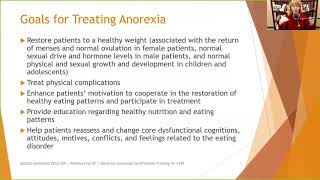
This episode was pre recorded as part of a live continuing education webinar on demand. CEUs are still available for this presentation through all CEUs register@allce.com counselortoolbox I'd like to welcome everybody to today's presentation. This is the second part of three parts on an eating disorders sort of awareness track that I guess we're doing today. We're going to review the prevalence of eating disorders a little bit more. We're going to identify assessment areas and this is really where we're going to focus. And a lot of what we're going to be talking about are the assessment areas that are identified by the American Psychiatric Association. Some of them obviously we're going to be able to do as clinicians, not medical doctors. Some of them we will have to defer to our medical staff, whether it's a nurse or a psychiatrist that we have on staff. But we're going to talk about the things that do need to be assessed. We'll identify risk and protective factors, explore complications, and explore potential guidelines for treatment. So the goals for treating anorexia. Now remember, this is from the APA guideline and what we're going to assume is that we either have a compliant patient or a motivate, motivated patient here. This is not necessarily. I mean these are the same goals if you're dealing with somebody who's involuntarily committed to a psychiatric unit for treatment. But for most of us, I think we're going to be dealing with voluntary clients. So when we're thinking about how to set goals and thinking about what we're doing, we're talking about the patient that is generally medically stable. So we want to help restore patients to a healthy weight. And you know, that's probably one of the scariest goals for anyone with an eating disorder, but especially for someone with anorexia. And they define healthy weight as a return of menses and normal ovulation in female patients, normal sexual drive and hormone levels in male patients, and normal physical and sexual growth and development in children and adolescents. So they're going to be looking for things like just growth rate, the body mass index. They're also going to be looking for does the person in anorexia. A lot of times people will get languo which is a kind of a down fine hairs all over their body. Is that still as present? Are they losing as much weight? Are they losing as much hair? Is their hair still dry and brittle? Is their skin still kind of brittle and lax? So those are all the things they're going to be looking for in terms of what is a healthy weight for this patient. Because we all know that what a healthy weight is, has a range and what somebody's biological set point is, where they feel comfortable, where they feel their best, has a wide range. And for people with eating disorders, that range is probably going to be down on the lower end because their anxiety starts kicking up when they get towards the higher end. But, you know, you're going to treat physical complications. And obviously for that we're going to be referring out to medical providers, psychiatrists, maybe physical therapists, but we need to ensure that the client is engaging in their treatment plan. One of the clients that I worked with was starting to have kidney failure and some other issues, and she was also so emaciated that she was having difficulty walking, occasional seizures, you know, so there was a lot of physical therapy she had to do every day in addition to the mental health counseling and everything else. So we want to make sure we know what's in that treatment plan and help the person start addressing the physical complications from their disorder. We want to enhance patients motivation to cooperate in the restoration of healthy eating patterns and participate in treatment. Motivational interviewing here, what we're going to be really looking at is how can we form mutually agreeable goals with this person? If I say, all right, one of our goals is that you are going to put on 30 pounds, they're going to freak out. So what is a mutually acceptable goal if the person wants to stay out of the hospital? Okay, you know, that's one thing. What is it going to take for you to stay out of the hospital so the psychiatrist doesn't involuntarily commit you? So we want to look at what are some mutually agreeable goals to increase motivation. Part of enhancing motivation isn't only tipping the decisional balance, but also developing a really strong therapeutic alliance with the client so they understand that you understand how terrifying it is to gain weight, how terrifying it is even the thought of gaining weight. Because in the back of their mind they may be going, well, what do you have to offer me? You're overweight. Even if you're a normal weight, they may think that you're overweight. So understanding what may be going on in their mind, not taking it personally, enhancing that motivation, helping them understand that you're there to help support them. Now, we're going to talk later about the fact that you really don't want to take a position on the patient's illness. You don't want to take a position about how much weight they should gain and this, that and the other. The medical doctor is going to work with that some. You want to try to stay as neutral as possible. What we want as clinicians is for clients to be able to have the healthiest, happiest life possible. That's what I want for my clients. So how can we help them with that? And dealing with the eating disorder, what recovery looks like for each patient is going to be a little bit different. We want to provide education regarding healthy nutrition and eating patterns. And we talked about this yesterday. This is going to fall on deaf ears early if the patient, especially if the patient is already well versed in nutrition. If we start lecturing them on healthy nutrition and eating, they're just going to feel disrespected in some ways and they'll probably start tuning us out. But we might be able to point point them in the direction of why we're getting certain nutrients important. And one of the things that I found that's worked with patients is to ask them, you know, what is it that vitamin B1 does for you? Where do you get it? Let's play an educational game in group. This is a great game that you can do. It's almost like a jeopardy. And the answer is vitamin B1. And the person is supposed to say what vitamin is responsible for? Yada, yada, yada. So those are things that you can do or you can play Family Feud. That's another game that you can do. You know, name the top 10 things that the B vitamins can do for a person. And it can be a fun game that they can do, especially because a lot of times they feel they already have a lot of the knowledge. So it's a time for them to sort of shine, if you will, but it's also a time for them to learn if they hear things that maybe they didn't know. And you can put in information in there about the fact that, for example, in order to make serotonin, the body has to have magnesium in order to break down tryptophan and make serotonin. So some of those more clinical things that they may not have come across in their reading, you can kind of slide those in there. Help patients reassess and change core dysfunctional cognitions, attitudes, motives, conflicts and feelings related to the eating disorder. Wow. And as we're going to talk, and I may have mentioned yesterday, treatment for eating disorders is usually a longer term treatment, especially anorexia tends to be a year or more. So it's going to be a While before you start seeing a lot of movement and the change in cognitions, once the person is adequately nourished, not necessarily increased in weight, but adequately nourished, and the body is getting the building blocks it needs to make the neurotransmitters and function the way it's supposed to, they're going to be able to participate in treatment a lot more. Their mood may improve some and you're going to see some positive changes, but it's going to be slow going because a lot of these cognitions. And when we get down to the, to the mantra model, the Maudsley model, later, you'll see some of the things that we're going to start addressing. One of them being that a lot of people have identified with their eating disorder. They are an anorexic, they are a bulimic, they are pro ana, if you want to use that term. ANA is the personification of anorexia and it's their best friend. So what is life like without ana? And we'll start talking about those. We want to treat associated psychiatric conditions, including deficits in mood and impulse regulation, self esteem and behavior problems. This is probably easier than changing cognitions. For a lot of people with eating disorders, we can start helping them learn dialectical behavior therapy skills, distress tolerance, impulse control. We can start building self esteem and addressing some of those other issues. Interpersonal communication. If you remember from yesterday, we talked about the fact that a lot of families that have a person with an eating disorder tend to have, tend to be rigid, have difficulty solving conflicts, may be either overly enmeshed or overly detached. So these are some of the things we can start addressing right off. We can improve communication skills, self esteem, relationship and boundary setting, all that stuff. So the person starts feeling like they've got more control. Because remember yesterday we talked about the fact that a lot of times eating disorders in one way or another are about control. So if we can start helping them feel like they've got control in other areas of their and feeling like they don't need external validation in order to exist, we're going to be on the right path. We also want to enlist family support and provide family counseling and therapy where appropriate. Family's not always on board. A lot of times they are. But just like when working with the patient with the eating disorder, the family that that person lives in may have some beliefs that support eating disordered behavior. So it's going to be changing some of those cognitions and some of those ways of interacting. And we want to prevent relapse. Obviously we want to keep the person moving forward at a steady pace. So we want to establish. And when I say we, I'm talking about the multidisciplinary treatment team, because we mental health clinicians are not going to be recommending nutrition. We're not going to be recommending meal plans. We're not going to be recommending weight gain or interventions for things like constipation. Those are things that the medical team have to do. But we do need to be aware because we're going to monitor, and we also don't want to be kind of shocked if we come back and the doctor says, well, I want this patient and outpatient to be gaining half a pound a week. And, you know, the patient themselves is going, no way. No way can I gain that much. We need to know how to be able to handle that and help the person deal with their anxieties. So realistic targets are two to three pounds per week for hospitalized patients. Mostly that's because the patients who are hospitalized are physiologically unstable and it's important to get them stabilized. And a half a pound a week to one pound a week for individuals in outpatient. And that can vary a little bit depending on the physical stability of the patient that you're working with. What are their electrolytes looking like? What is their general overall health looking like? You know, and I've seen it, doctors be willing to go down to a quarter pound a week initially until the person starts feeling less anxious about gaining weight. But it depends on the physician that you're working with and the physical status of the client. Registered dietitians can help patients choose their own meals and can provide a structured meal plan that ensures nutritional adequacy and that none of the major food groups are avoided. So let's think about this for a second. When you think about a lot of the fad diets that are out there and eating regimens that are out there, either cutting out all gluten, which is important for some people with celiac disease, don't get me wrong, cutting out all grains. I've seen there's a trend to do that, cut out all grains. That means no wheat, no oats, no no rice, none of that stuff. It's just meat and vegetables and dairy. I've seen cutting out all fat. I've seen it cutting way back on carbs. So you've only got 50 grams of carbs. You know, there's a lot of different approaches to eating that are out there, and it's important for the person with the eating disorder to be able to not be afraid of any particular food group if they eat Carbohydrates. Yeah, carbohydrates may promote a little bit more water retention, but carbohydrates are necessary, they're a source of energy. So encouraging patients to understand the benefits and be able to articulate the benefits of certain food groups. And sometimes it's like I said, it's go slow, you know, starting with something that's least offensive to the person. Formula feeding may have to be added to the patient's diet to achieve a large caloric intake. Or in the hospital, intravenous feeding may also be added. And this can feel very traumatizing to a person with an eating disorder if they're being forced to eat, if they're being forced to ingest calories. So we're having to, as clinicians, we're trying to have work with them to deal with any trauma feelings that they're having. And if they've got a history of trauma, then this may be re victimizing to them. So from a trauma informed perspective, we need to look at where's the patient's ability to control things in terms of their treatment and how is treatment making them feel? Is it making them feel even more disempowered? And, and if so, what can we do about that? We want to encourage patients with anorexia to expand their food choices to minimize the severely restricted range of foods. Initially acceptable caloric intake levels you'll usually see from the dietitian come back at about 1000-1600 calories a day, which is on the low side for most of us, you know, and weight gain results in improvement in most, most physiological and psychological complications of semi starvation, including fatigue, depression, anxiety and just foggy headedness. It's important to warn patients about the following aspects of early recovery. And this is one of those informed consent sort of things that clients need to be aware of so it doesn't freak them out. As they start to feel their bodies getting larger, they may experience a resurgence of mood symptoms, irritability and suicidal thoughts and ideation. This is something we need to watch out for. We need to talk to them every day about how they're feeling in their own skin and help them deal with it when they feel themselves gaining weight. Mood symptoms, non food related obsessional thoughts and compulsive behaviors, although not often completely eradicated, usually decreased with sustained weight gain and weight maintenance. So that's a good thing. But that's usually not enough for them to say, okay, well, weight gain is fine, then if it's going to help my mood improve, it doesn't work that way. And again, these mood symptoms and cognitions aren't completely eradicated. You're still going to have to deal with those even once the weight comes back on. Patients who abruptly stop taking laxatives or diuretics may experience marked rebound fluid retention for several weeks. The body hasn't had to do it on its own. It's been getting chemicals in its system to tell it what to do. So it hasn't had to figure out how to balance its own fluid levels. It hasn't had to figure out how to move the bowels on its own because it's been getting artificially stimulated to do so. Once those are taken away, the body's offline for a while. It doesn't, it's kind of waiting for that drug to come back in the system. And when it's not there, the person can get constipated and, and, or can gain a lot of water weight, which again, can be extremely anxiety provoking for a lot of patients, Especially when you tell them several weeks, they're like, I can't, I can't be seen with this much water weight. So working with them and working with the treatment team, especially if they're an outpatient, is going to be really important. As weight gain progresses, many patients also develop acne, breast tenderness, and become unhappy and demoralized about resulting changes in body shape. Remembering from yesterday what we see as a change in body shape, you know, maybe a little smidge of a change. Take that and multiply it by like 30. And that's what they see. They see themselves, you know, overnight morphing from, you know, themselves into a Shrek like figure sometimes is one way that a client described it to me. So it's important that we understand how scary it is and what they're seeing, not what we're seeing. So we may have some body dysmorphic disorder stuff going on here too. Patients may experience abdominal pain and bloating with meals from the delayed gastric emptying that accompanies malnutrition. The stomach has gotten kind of lazy. So it may take longer for the stomach to empty. And the bowels, especially if they were using laxatives or weren't eating much at all. Laxatives artificially sped up the bowels. They weren't eating much at all. The bowels didn't have to do anything, so they just kind of went to sleep. They may have problems with constipation. And you're Thinking, well, I'm a counselor. Why do I care? Because these things are tremendously scary for these patients and because too much constipation can lead to what they call obstetion and maybe acute bowel obstruction. So if the patient starts complaining about pain, we don't want to ignore it. We want to encourage them to talk to their physician. Now, some physicians will recommend stool softeners, promotility agents, which basically are laxatives, sometimes are prescribed. But a lot of physicians will steer away from that because then that becomes a compensatory mechanism. If a person has been abusing diuretics and laxatives for a long time, their body is dependent on them. Some physicians will also taper. They'll be willing to taper if the patient is compliant with most other aspects of treatment in order to prevent the severe rebound water retention and the severe constipation. So my point being, the person doesn't necessarily have to go cold turkey. You know, if obviously we can't tell them, well, just wean off, that's going to be with their medical providers. But we can advocate for them and we can look at what are some alternatives that you might be able to propose with your medical team, and let's see if we can work out something that is a little bit more workable for you. And again, this is. You have a lot more latitude in outpatient because people tend to be more physiologically stable. There are fewer rules than you do in residential, but those are a few things you can look at as maybe a taper, being aware of the body changes that happen, just like we talk with clients about when they start taking medication, what the side effects are, how long the side effects will last. We want to make sure that clients know what the side effects of nutritional rehabilitation are going to be and how long they may last. The goals of psychosocial intervention are to help the patient understand and cooperate with their nutritional and physical rehabilitation. Why do I have to gain weight? Why do I have to eat? Why do I have to, you know, put on fat? And this is the first step in helping them kind of grasp where they need to go with their cognitions, understand the benefits, you know, why are you here? If you've got a motivated patient who, I mean, is terrified at gaining weight, but they are tired of being sick and tired, they're tired of the disorder, then they're going to be a little bit easier to help motivate and work on identifying what are the benefits to getting renourished. And let's focus on renourish More than weight gain and help them see the benefits of that in achieving how they define whatever a rich and meaningful life is for them. We want to help them understand and change the behaviors and dysfunctional attitudes related to their eating disorder. And it's not just about food. It's not just about what foods are good, what foods are bad, what you need to do and ritualized eating, but it's also about their weight. What are their thoughts about weight. If I lose 10 more pounds, then maybe I'll be acceptable. If I gain 15 pounds, people will think this about me. So we want to start looking at those attitudes about food, weight, shape, etc. We want to help them identify what some of their attitudes are and where they came from. So if they see somebody who is average weight or slightly above weight, what do they think about that person and why? You know, what tells you that this person is unhappy, this person is lazy, this person is. There are a lot of pretty, not nice adjectives that are associated with people who are overweight. And it's not that they're trying to be mean, it's just that's what they believe. And you know, helping them understand the difference between the person and their weight is also another thing that we can work. We want to help them improve their interpersonal functioning and address comorbid psychopathology and psychological conflicts that reinforce or maintain eating disordered behaviors. So again, looking at what's maintaining this, what's the benefit of this eating disorder to you? What's the benefit of being this number of pounds? And you notice I never say a number of pounds. And one of the mistakes a lot of well meaning television shows make that want to highlight somebody who is recovering from an eating disorder or whatever is they say a weight. And that is taken by many people with eating disorders as a challenge. Oh, that person got down to eight. This other weight, I can do that minus five more pounds. So trying to stay away from weight amounts because it becomes a comparison and it becomes a competition because they want to be the best anorexic, they want to be the best bulimic. During acute refeeding. And while weight gain is occurring, it's beneficial to provide empathic, understanding, explanation, praise for positive efforts. So if they're having a really crappy day, you know, they put on some weight and they just feel completely defeated and demoralized. We want to praise their efforts for still coming. We want to praise their efforts for continuing to try and being compliant with their treatment program. We provide coaching and cheerleading as much as possible. Support Encouragement and positive behavioral reinforcement in inpatient units. A lot of times privileges are linked to weight gain and treatment compliance in outpatient is a little bit harder, but, you know, you can be creative and figure out ways to have certain rewards and a token economy. For example, for people who are making progress, Attempts to conduct formal psychotherapy with starving patients, who are often negativistic, obsessional, mildly cognitively impaired, are probably going to be ineffective. And most of us have never been to the point of being starving. You know, we've been hungry before, but being to the point of being emaciated and grossly malnourished, the body starts to shut down, Certain organ systems start to shut down, Higher order cognition's not important right now. The body's using all the glucose it can find just to function, not think. So you want to understand that people need to start becoming nutritionally rebalanced before they're going to be really productive in psycho education. So does that mean we can't do anything until they get nutritionally stabilized? Heck no. During that initial period is when we build that therapeutic alliance. We do the cheerleading, we provide support, we talk about some of the scary aspects that they're anticipating coming up, and we prepare them for children and adolescents. Evidence indicates that family interventions should help families become actively involved in a blame free atmosphere, in helping patients eat more and resist compulsive exercising and purging. So helping the family figure out how to create a safe environment and basically institute response prevention. When the person wants to compulsively exercise, or when the person finishes eating and they want to go throw up or whatever, how is the family able to prevent that response? And how can they deal with the sequel of anxiety and probably anger at not being able to do what they want to do. Most inpatient programs create a milieu that incorporates emotional nurturance and a combination of reinforcers that link exercise, bed rest, and privileges to target weights, desired behaviors, and feedback concerning changes in weight and other observable parameters. So you can get off of bed, rest, you can have 30 minutes of exercise, etc. If you are compliant with your treatment program. Once malnutrition has been corrected and weight gain has begun, psychotherapy can help patients with anorexia understand the experience of their illness. How did we get here? It started off as a diet. How did I get down to this weight? How did I get down to the point where I was medically unstable and needing to be hospitalized? What does the illness or what does the eating disorder mean to me? You know, help them understand cognitive distortions and how they've led to symptomatic behavior. So what thinking patterns does the person have that may be supporting their fear of gaining weight? And what thinking patterns do they have that may be supporting their desire to hold on to that control? Developmental, familial, and cultural antecedents of their illness. We start talking about all those sociocultural things like we did yesterday, and that makes for some really interesting group activities and discussions to help them see, you know, real versus Photoshop, help them understand how their illness may have been a maladaptive attempt to regulate their emotions and cope, how to avoid or minimize the risk of relapse, and how to better cope with salient developmental and other important life issues in the future. So coping skills training. We're providing them skills and tools, but we're going to talk about what strengths they have. It takes a lot of planning and thought and courage and dedication to be anorexic. It is not something you just easily do. So using that strength, using what they've developed so far in a positive way can help them start coping. So we want to look at what strengths did they develop in their eating disorder and how can you use those strengths, you know, for good instead of for self destruction? Pay attention to cultural attitudes, patient issues involving the gender of the therapist and, and possible issues of abuse, neglect, or other developmental traumas throughout therapy. A lot of people with eating disorders, among other issues, don't automatically trust therapists. So we want to listen as we go through therapy to identify a little bit more about the meaning of the behaviors and anything else that may be going on. Countertransference reactions to patients with a chronic eating disorder often include exhaustion, demoralization, and an excessive need to change the patient. If they could only see how much this was hurting them, if they could only see how awesome they were, if they could only see, yada yada. It is really important if you're working with someone with a chronic illness, whether it's a chronic physical illness, an addiction, an eating disorder that, you know, may have periods of exacerbation and remission and, you know, an ongoing set of events, get supervision, get consultation, at least have somebody that you can just go and sit down in their office and go, oh my gosh, you know, I thought we were on the right path. Or this is exhausting. I don't feel like we're getting anywhere. So getting that feedback, getting help will help you avoid burnout, and it will also kind of give you some different insights into what someone else might do. That's not like intimately involved, understand the longitudinal course of disorder and that patients can recover even after many years of illness. A lot of patients don't seek help until they've already been symptomatic for eight or 10 years. Does that mean they can't recover? No, it means they've been symptomatic for eight or 10 years. So it's not something that's going to be fixed overnight. Anorexics and Bulimics Anonymous and Overeaters Anonymous are not substitutes for professional treatment. These programs focus exclusively on abstaining from binge eating, purging, restrictive eating or excessive exercise without attending to nutritional considerations or cognitive and behavioral issues. So it's really important to recognize that it may be a good supplement to treatment, it may be a good support for some people, but we need to address the biopsychosocial aspects of the person. Anorexics and Bulimics Anonymous, for example, is not going to be monitoring weight and electrolytes and urine density and urine specific gravity and all that kind of stuff. It's important that we make sure that clients are involved in something that monitors their health and well being. Referring an anorexic or a bulimic, and generally it would be, generally the referral I've seen is bulimics being referred to Overeaters Anonymous. And a lot of this happened before Anorexics and Bulimics Anonymous existed. But it's Anorexics and Bulimics Anonymous is not very common. So referring somebody to Overeaters Anonymous probably is not going to go over well because of the negative attitudes that a lot of people with eating disorders have towards people who are overweight and have towards weight itself. So just kind of being aware of that. If somebody isn't willing to go to Overeaters Anonymous and you know, it doesn't mean that they're not necessarily compliant, they may not see what that group has to offer them. So bulimia and binge eating disorder, and I put these two together because we're dealing with binge eating and in both of them and your diagnostic criteria for bulimia are recurrent episodes of binge eating, inappropriate compensatory behaviors such as self induced vomiting, misuse of laxatives, fasting or excessive exercise in order to prevent weight gain. Now remember that anorexia, you can have compensatory behaviors as well, but the anorexic refuses to maintain a weight that is physiologically healthy. It's generally less than 85% of what is considered acceptable. The person with bulimia is typically of average or slightly above average weight. They also use the compensatory behaviors. Binge eating and inappropriate compensatory behaviors both occur, on average at least one time a week for three months. Okay, let that sink in for a second. At least one time a week for three months. There are many situations where I've seen people minimize their eating disorder because they only purged 1, 2, 3 times a week, and, you know, it'd been going on for years. Well, the criteria is one time a week for three months, not, you know, five times a day. So it's important to educate people so we can get in there early and help them understand that there is treatment and there is help. I've had a lot of significant others say, what's the big deal? She only purges, you know, once a week or so, and it helps her maintain her weight, so if it makes her happy. And remember, we're not just talking about vomiting or laxative abuse. We also may be talking about excessive exercise. So somebody who goes to the gym and exercises for four hours once a week and then exercises two hours a day the rest of the week may be using a compensatory behavior. It gets a little bit iffy when you start looking at people who are professional athletes and bodybuilders because they spend that much time in the gym anyway. But we're going to use good, good, sound clinical judgment here about what is helpful and what is harmful. Self evaluation is unduly influenced by body shape and weight. So if somebody can get up one morning and weigh themselves, and the scale says because your weight can fluctuate three to five pounds in a day, they weigh themselves and they're five pounds heavier than they were yesterday, Their day is destroyed. They don't want to go outside. They don't want anybody to see them. With women with bulimia and anorexia, too, when they wake up, and they may be having a day where they've got excessive fluid retention, those days tend to exacerbate any sort of PMS mood issues because they feel gross, they feel fat, and we'll talk later about helping them develop a better vocabulary for emotions. The disturbance does not occur exclusively during episodes of anorexia. So if they're maintaining something of a normal weight, you're going to be looking more towards bulimia. If they are binging without purging or using compensatory behaviors, then you're looking more at binge eating disorder. The following are some behavioral and emotional signs and symptoms of binge eating. Continually eating, even when full. So somebody eats and eats and eats. There's a difference between getting a pizza and it is the best pizza you have had in months and having three or four extra slices even after you're full, or having a little extra or a lot extra at Thanksgiving. You know, it's not unusual in my family for people to like sit down and unbuckle their belts after, after a holiday meal or something. So there's, you know, occasional stuff and then there's regular, regularly, continually eating even when full. Inability to stop eating or control what is eaten. And with some people it's, it's habit. And some of the habits we can break if they tend to, you eat from the bag, they take the whole bag of Pringles instead of, you know, part of it instead of a little bowl of it. You know, we can help them learn to become more aware of what's eating. So they're not eating mindlessly, but sometimes they just don't feel like they have control. They don't feel like they have the ability to stop stockpiling food, to consume secretly at a later time. If you find it under the kids beds, in their closets, you know, wherever eating is normally in the presence of others, but gorging when isolated, experiencing feelings of distress or anxiety that can only be relieved by eating. So this is becoming a coping mechanism for people. Feelings of numbness or lack of sensation while binging. They don't really notice what's going on. They're just kind of in a zone and never experiencing satiation that is being satisfied no matter how much food is consumed. It's like they eat and they're full, but they still want something else, they're still craving something else. So the goals of bulimia and binge eating treatment are pretty much the same as anorexia. Reduce and where possible, eliminate binge eating and purging. Treat physical complications and enhance the patient's motivation to cooperate. Provide education regarding healthy nutrition and eating. Help patients address their dysfunctional beliefs, motives, conflicts and feelings. Treat associated psychiatric conditions. Enlist family support and provide family counseling and therapy where appropriate and prevent relapse. So again, it sounds very similar to the anorexia for people with bulimia and binge eating disorder. They will work with a registered dietitian to develop a structured meal plan, a means of reducing episodes of dietary restriction and the urges to binge and purge. Some people will restrict, like they won't eat breakfast or anything, or they'll eat breakfast and they'll say I won't Eat all day and then they get home and they binge because they're so hungry. Other people, there's a concept called disinhibition. If they believe that they've eaten a forbidden food or they've eaten too many calories already, then they're disinhibited and it's kind of like all bets are off. They're like, well, you know, I already screwed up, so whatever. And the binging begins and gets much worse. And they found that even eating like one bowl of ice cream for some people will trigger this disinhibition. So being sensitive to that and helping them identify things that can trigger binges and the desire to purge and also developing a meal plan so they don't ever get to the point of being so hungry that they're just ravenous and they're ready to eat the paint off the walls. Adequate nutritional intake can help prevent craving and promote satiety. It's important to assess nutritional intake for all patients, even those with normal body weight or bmi, as normal weight does not ensure appropriate nutritional intake or normal body composition. You can have someone who is normal weight but 2% body fat, or you can have someone that's normal weight but 42% body fat and like very little muscle at all. You can also have people that are normal weight and normal, you know, 24% body fat. But nutritionally they are, you know, there's whole groups of nutrients they're not even getting. So it's important to assess kind of where they're at. Sometimes people crave foods and they end up binging on foods to fulfill nutritional deficits. So helping them understand that a more well rounded diet or nutritional pattern may prevent some of their cravings and urges. Among patients of normal weight, nutritional counseling can be a useful part of treatment and helps reduce food restriction, increase the variety of foods eaten, and promote healthy but not compulsive exercise patterns. So you can even do things in group like sharing healthy recipes to introduce food food groups that people maybe normally wouldn't be as apt to eat. Antidepressants, we didn't talk about them with anorexia. Why? Because they haven't been found to be effective with anorexia. According to the American Psychiatric Psychiatric association, antidepressants, especially sertraline and fluxetine, which are Zoloft and Prozac, have both been found to be helpful with people with bulimia nervosa, though. So being aware that especially in early treatment, a course of antidepressants may be helpful for these Clients is useful to know. Okay, so let's talk treatment. Here we have the person nutritionally stabilized, We've developed that therapeutic rapport and they're ready to go. So what do we do now? Well, individual cognitive behavioral therapy for eating disorders generally consists of up to 40 sessions over 40 weeks with twice weekly sessions in the first two to three weeks. Why? Because this is when they're getting nutritionally stable. This is where they're going to have some water retention, some weight gain. This is when those anxiety things may kick in that we talked about that you need to warn patients about and this is when they're starting to try to figure out where they want to go from here. So more intensive at the beginning than easing off towards the end. The aim is to reduce the risk of physical health and any other symptoms of the eating disorder. So physical health problems, dental problems, anxiety, depression, we want to address any of those. We want to encourage healthy eating and reaching a healthy body weight. We'll cover cognitive restructuring, mood regulation, social skills, body image concerns, self esteem and relapse prevention. And there's an 18 week protocol that we're going to talk about tomorrow that the center for Mental Health in Australia put together and they have workbooks on a lot of these topics. Create a personalized treatment plan based on the processes that appear to be maintaining the eating problem. Explain the risks of malnutrition and being underweight. Enhance self efficacy. Include self monitoring of dietary intake and associated thoughts and feelings. So, and we're going to talk about that in a minute. And include homework to help the person practice in their daily life what they've learned. So that's for general cognitive behavioral therapy. Now the Maudsley model, which is abbreviated mantra, was initially designed for anorexia, but there's a lot of components that are applicable to all the eating disorders. It's shorter. It typically consists of 20 sessions with weekly sessions for the first 10 weeks and a flexible schedule after that. Obviously this is for clients who are much more physiologically stable and motivated. Up to 10 extra sessions may be included for people with complex problems, including, you know, kidney problems or organ damage because of the eating disorder or other co occurring physiological issues like fibromyalgia, depression, anxiety, etc. There is a mantra workbook that is out there. I was not able to find it, but we're going to talk about what each session looks like in a minute. It motivates the person and encourages them to work with the practitioner. And the mantra model can be flexible in which modules are emphasized and how much they're emphasized depending on the individual person. So it's a evidence based practice, but it's not one that is really rigid in applying it to fidelity. When the person's ready, cover nutrition symptom management and behavior change as opposed to saying, well this is what we're doing from the get go. When the person's ready to start talking about changing their eating, then we can go there and encourage the person to develop a non anorexic or non eating disordered identity. So module one, getting started. And this link over here, if you copy it and you know, open it in your browser, there is a PowerPoint that I actually found today that goes over all of these, but you know, goes over what we're going to talk about. So the first module, exploration of motivation to change through readiness, rulers and imagining a future with or without anorexia. Oh, so instead of just talking about what life's going to be like when you're recovered, we're going to start doing that decisional balance thing. We're going to start looking at what's life like if you keep on this path right now with anorexia, what do you think it's going to, what are the benefits going to be? What are the drawbacks going to be and what's life going to be like if you switch your identity and is not an anorexic identity anymore? Another exercise that is done is casting the person's mind backward to life before anorexia. And most patients can remember back there, you know, there's a time that they can remember before food became the enemy and before fat became the enemy. Identification of pro anorexic beliefs and the function of anorexia in the person's life and use of externalization and exploration of personal values. You know, before anorexia, you know, what were your values and what, what mattered to you? I mean if you look at little kids, most little kids, you know, they're looking for cookies and popsicles and they're not going, ooh, you know, I'm bloated today. Little kids don't say that. So what happened to change people's values that, you know, any little bit of fat was, was terrifying to them. So these are things that, that you might talk about. There are a lot of different activities you can do to help people explore these. Obviously each module is not just one hour, this is more like a four hour morning to go through each of these in depth. Whether you're doing it in individual, in individual OR group. Module 2 is working with support, identifying Potential support persons, taking the perspective of others, identifying helpful and unhelpful interactions with others and planning for involving others. So we're talking about what's your support system? Who is important in your life? Because a lot of times they probably have a lot of other friends who are pro. Anna. So what does that mean for those relationships? How are you going to work with those? Who's going to support you in your journey? And you know, the patient may still be ambivalent about what that journey is going to look like. They may be being forced into treatment. Their parents say, you are going to go and you're going to talk to the therapist and they're going, whatever. So figuring out where the client is, establishing what support looks like, what do they need support with, what are some mutually agreeable goals? Developing that Therapeutic Alliance. Module 3 is Nutrition Assessment of medical risk. You know, we're going to talk about what are the potential complications of anorexia. And we talked about some of those yesterday. And they range from dental problems to full organ shutdown. So, you know, helping them understand that there are significant risks and some of them are irreversible without being, you know, when you present it, you don't want to sound like the sky is falling. And this is going to happen because they're going to tune you out just like they do when they hear a lot of other warning messages that are meant to sort of frighten them. They're just like, whatever, you're just making a mountain out of a molehill. So we want to be careful about how we present it, but we do want to present that information there. Assessment of risk and ability to change. So daily caloric needs for maintaining weight and for gaining weight. Hopefully they've met with their nutritionist at this point. And this is something that the nutrition module, if you're doing group activities, this is not something you want to do in group because if one person is told that they can eat a thousand calories and another person is told that the minimum they can eat is 1400, you're going to end up with a competition here because the person that said, whose doctor said they have to eat 1400 is going to go, well, she only has to eat a thousand, so I'm only going to eat a thousand. What to eat healthy eating, talking about binging and overeating. What may prompt those things and how, what kind of stopgaps you can put in the, in the environment to prevent bingeing and overeating. You know, for example, you know, not eating out of the bag but getting a plate supports and blocks to safeguarding nutritional health. And what is their nutritional change plan? Maybe adding one food. Not a food group even, but adding one food a week, like apples. Let's add apples back. They're high in fiber, low in calories, but you know, they've also got some carbohydrates in there and they're a little bit sweet. So that's one that's usually a safe initial food that people are willing to consider adding back. Module four is my anorexia. Why, what and how? This module allows patients to build a case conceptualization of how their anorexia developed and is maintained. Again, this is another one that's generally better to do in individual helping the person write their autobiography. And sometimes you can have them write the autobiography of Anna. So Ana is the personification of the eating disorder within themselves. So when they became anorexic, you know, what was the beginning point and how did it manifest? And it gives by personifying it and helping them identify the relationship they've got with this eating disorder. Then when they have to terminate the relationship, it gives them a little something a little bit more tangible to potentially talk about grief and loss issues with. Module 5, goals and experiments identifying areas of concern or difficulty and aspirations and how to set smart goals. This is a great group module. Remember, the smart goals are specific, measurable, achievable, realistic and tangible or time limited, depending on where you go. And using behavioral experiments to to achieve those goals. So encouraging people to do things like what would happen? Try eating an apple and what happens when you eat it. Try going to the gym and only working out for 30 minutes or whatever the case may be. Encourage them to try out new skills that they want to have in their in their healthy, recovered life and see how it feels. Module six explores thinking styles. They're thinking about thinking. So am I overly focused on detail at the expense of the bigger picture? So what is the bigger picture though? And what does a rich and meaningful life look like to you? Where do you see yourself six months from now? What are your hopes, dreams and aspirations? Remember, they probably haven't felt comfortable or safe sharing these things with other people, so they may not have thought about them in a while. So let's start painting that bigger picture. Am I finding it hard to be flexible and switch between different thoughts, rules, tasks and perspectives? So maybe the person is still being very rigid with their eating or with their thinking about other people or whatever the case may be? So starting to look at their cognitive style. What's the Impact of this thinking style on my life. The impact of anxiety about making mistakes. A lot of people with eating disorders are very perfectionistic. So helping them evaluate how they deal with failure, how they deal with mistakes. Do they see it as completely damning? Do they see it as unacceptable and they reject themselves and they expect everyone else to reject them? Or do they see it as a learning opportunity? Help them strengthen bigger picture thinking and cognitive flexibility and strengthen the concept of being good enough. You don't have to be perfect. Module 7 is the emotional Social mind. Looking at what emotions are and you know, we're just now starting to get to this vocabulary about what are emotions, what do they do? What are your emotions in the context of relationships and relationship patterns. Encouraging people to become experts on their emotions. Mindfulness is an excellent intervention here to help people start figuring out what does it feel like when I'm angry, What does it feel like when I'm sad? What are my physical sensations, what are my thoughts, what are my urges when I'm all of these different emotions and what triggers these different emotions. Help the client learn to see the world from other people's perspective to get a more balanced picture of what's going on so they can start identifying some of their cognitive distortions. Module 8 is identity. Looking at anorexia and my identity, are they synonymous or are they not? What does my best possible self look like? What are my qualities, values, struggles, and what coping skills do I have? And what coping skills do other people have who I admire? Encouraging them to figure out what life looks like beyond being an anorexic. Who else are they? They're a daughter, they're they're a lawyer, they're this, they're that, what are they? What are the roles do they have? And moving forward is reflection on how to maintain gains. What else needs doing? What could get in the way? Developing a personal toolkit for keeping well, managing difficult thoughts, feelings and behaviors during the recovery process. They need to have a plan how to develop mottos for a bigger life. And mottos is typically we do a painted rock and I have them paint their motto on their rock and keep that in a visible place so they can look at it whenever they're feeling a little bit stressed because the rock is heavy and it's grounding. So medical stability and nutritional balance are necessary for effective treatment. Once the patient is renourished and even before weight is regained, cognitive abilities will often improve and obsessions and mood will also improve. Psychotherapeutics have not been found to be helpful with anorexia. But sertraline and fluoxetine have been found to be helpful in bulimia. So, you know, consider that if you're, if you have a patient who's struggling, consider referring them for an eval and mantra. And cognitive behavioral interventions have been found to be most helpful with this population. All right, so we covered a lot of stuff and the hows of how to change their cognitions. It's really going to depend on the individual patient. There's no one formula we can implement, just like there wouldn't be with PTSD or anything else to help people change their cognitions. A lot of it will depend on the motivation. The person with the eating disorder, their motivation to get better, their motivation to change, and their belief. They may say, you know, I don't want to do this anymore. I don't want to be purging all the time. But they're so terrified of gaining weight and they may be able to say, people are not going to like me any less if I gain weight. But what they say and what they believe may be two different things. So we need to help them get to the point of actually believing and internalizing that they are okay regardless of their weight, shape or size. If you enjoy this podcast, please like and subscribe either in your podcast player or on YouTube. You can attend and participate in our live webinars with Dr. Snipes by subscribing at allceus.com counselortoolbox this episode has been brought to you in part by allce.com, providing 24. 7 multimedia continuing education and pre certification training to counselors, therapists and nurses since 2006. Use coupon code counselortoolbox to get a 20% discount off your order this month.










