Revealing the Mind Body Connection in Mental Health
Dr. Dawn-Elise Snipes explains how emotions and physical sensations connect, covering the brain's five key neurotransmitters and why they get out of balance. She walks clinicians through how to teach clients that their thoughts shape their body's response, and what actually fixes it: sleep, food, movement, medical care.
Chapters
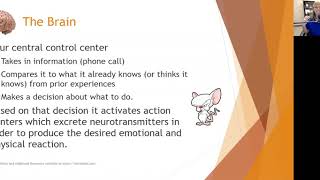
This episode was pre recorded as part of a live continuing education webinar on demand. CEUs are still available for this presentation through all CEUs register@allceus.com counselortoolbox you I'd like to welcome everybody. Today's Presentation Today we're going to start a series which is actually a 20 session series. Obviously you don't have to be here for all of them, but it is on Journey to Recovery 2nd Edition the first edition of Journey to Recovery has been out for about two years now and I've been working on revisions for it. So Basically these next 20 webinars are going to review concepts for you and help you identify individual and group activities that you can use in order to teach these things to your clients. And you know, it can, like I said, it can be individual, group or even activities that you give your clients to use with their family. So. Today we're going to be talking about the mind body connection. So one of the first things that I do with clients when, you know, I'm trying to introduce this concept is have them think about how their mind and body interact. What physical sensations do you have when you're angry, anxious or depressed? So I don't go through all three of those, right? Then I stop and I say, angry, what physical sensations do you have? And people say, you know, they get red in the face or they can feel the heat rising or they get shaky or they sweat or, you know, whatever they do. Okay, cool. So by getting angry, having an emotion, you also have a physical response. Okay, so when you get scared or anxious or worried, what happens? And most people talk about sort of the racing heart and the jitteriness. And again, okay, so another example of an emotion and a physical reaction. When you're depressed, what physical sensations do you have? And angry and anxious are usually really easy for people. They're like, yeah, I got that. But depressed, they're like, I don't know. But I want people to really think about how much everything slows down. Their energy is low. It feels, everything feels heavier. And you know, it may feel like it takes 10 times more energy to move. And I just kind of want them to get the idea as we get into this that their mood does affect how they physically feel. And then we move on to the next question. When you're hungry or your blood sugar is low, what are your physical sensations and how does it affect your mood? My husband's hypoglycemic and I share this with them at the beginning to kind of prompt them for what what I'm looking for. And when he gets hungry, when his blood sugar gets low, it like plummets. And I can see sort of this green pallor come over his face and he gets this grumpy look on his face. And I know it's time to whip out the glucose tablets, otherwise he's going to get cranky. So he tries, you know, he's tried to be a lot better about eating more consistently and less simple sugars and stuff. But his physical sensations, you know, he would get sort of dizzy, he'd get cranky. His physical sensations, he'd get a little bit shaky. And I know when my blood sugar gets too low, I can get shaky as well. So thinking about, you know, just something as simple as being overly hungry or, you know, having your blood sugar get too low can affect your mood. Because most of us, when we are uncomfortable because we're too hungry, can be a little impatient, we can be a little testy, we can be cranky. Another question I asked them is, you know, if you've been eating like crap, how do you feel? And, you know, some of us, all we've ever done is eat like crap. So this doesn't necessarily hit with everybody. But, you know, I think back to when I was a freshman in college and that year, oh my gosh, my nutritional habits were deplorable and I didn't have the same level of energy that I have when I eat better. And even on the weekends, you know, if I'm eating really, I usually eat really well all week. And then on the weekends, I can kind of spiral out of control sometimes. But when I do that, I tend to feel more sluggish and, you know, less energetic and less optimistic and positive and stuff. I'm just like, bleh, leave me alone. When you drink alcohol or caffeine, does it impact your mood? So when we drink these things and when I used to be able to drink caffeine, I would typically have that little caffeine rush and I'd get not jittery, but I'd get a little bit hyper and my mood would tend to go up most of the time as opposed to when I'm tired. And a lot of people, when they drink alcohol, it puts them in a different mood spread. So I want people to reflect on that when they're sleepy or sick. How does it affect their mood? I tend to be a great big old grumpy pants when I'm sick. You know, I'm just like, leave me alone. You know, I don't want to do this, but, you know, to each his own. When you're stressed, how does it affect your sleep? And, you know, everybody gets stressed sometimes, so everybody should be able to reflect on this a little bit. And if you've got a activity tracker, you can probably get a better idea about how much you toss and turn on the nights that you're stressed versus the nights that you're not. But not everybody has an activity tracker. But generally we can get an idea, because when we're stressed, it takes longer to fall asleep. We often wake up more. And then when we wake up to get up, we don't feel as restricted, refreshed. And then I asked them what physical aches and pains they get when they're stressed. And I encourage them to really brainstorm and think about these things. I'm like, and if they need prompts, I'll ask them, no. Do you carry stress in your neck? Do you find that when you're stressed, you're rubbing your neck a lot or rubbing your shoulders, or you get kinks in your back? Does it make your stomach upset? You know, there was a period in my life where one of the places I worked, I really thought that Pepto Bismol was a sixth food group because I drank so much of it. And that's not good. I'm not recommending that. But, you know, those aches and pains are real. So encouraging people to think about how stress and holding stress and tension impacts them. Does it give them headaches? Some people it does. I've got tmj, and when I get really stressed, I'll be talking, and all of a sudden my jaw will just pop. And I swear it's loud enough for the whole room to hear, but I don't think anybody can really hear it. But you know that feeling when you're. When your knuckles pop? So we think about different things because I want people to really start connecting mood and physical sensations. When you're overtired, does life seem more stressful and exhausting? And when you're in pain, what's your mood like? So we go through all those, and I know some of them are a little bit redundant, but I really want to drive home this point before we get into the rest of the rest of the group. So today we're going to learn about the central control center, which is the brain, what role it plays in emotions, thoughts, and physical reactions and sensations, how things can go wrong, and ways that we can try to fix those things. So y' all know I'm a cartoon junkie. So I had to put the brain here just because. So the brain is your central control center. It takes in information, compares it to what it already knows or thinks it knows from prior experiences, and makes a decision about what to do. So think about a time that you get a phone call and you look down and you know that number and you're like, oh, it's never good when this person calls me. So you choose not to answer it. Okay, well, that was your brain going. Prior experience tells me this is going to be an unpleasant interaction, so I'm just going to let it go to voicemail. That was the decision about what to do. So you had those automatic thoughts in response to the. To the stimuli. Now you don't know what was going to happen if you answered that phone call. Other things that you can look at. When there's a storm, and my dogs still do this, we had a really bad storm a couple years ago that took out, you know, a large section of our fence. And it was a vicious storm. And to this day, when it starts, you know, getting blustery, windy outside, my dogs just start shaking and we have to put on their little thunder jackets. And because they think it's going to happen again. So they're using prior experience, this unpleasant experience that imprinted on them. And every time there's something that reminds them of that experience, they say, oh, it's going to happen again. So anyway, the brain takes in information and based on how it's experienced this situation before, it decides what to do. And, you know, think about even starting a new job. You know, some people start a new job and they are just super excited and giddy about learning new things and meeting new people. Other people start a new job and they're like, oh, this is going to be unpleasant for the first month. But that's based on their prior learning experiences. They can be starting the same job, but if they've had different experiences, they may anticipate different things. So it really makes the brain and the physical reactions, it starts to drive them home. So when your brain gets these messages, it decides what to do. So the chemical messengers called neurotransmitters, take orders from the brain through the nervous system. And it secretes neurotransmitters that help us decide whether we need to fight, flee, relax, do whatever we do. So we talk about the five main neurotransmitters. I call them the big five. There are dozens of neurotransmitters and hundreds of hormones involved in our mood and our bodily functioning. But we don't need to know all that for the purposes of, you know, just general information. Talk about the big five. Dopamine is our pleasure chemical. When we do things that are pleasurable, that are exciting, that are rewarding, we have a dopamine rush, and that's what keeps us coming back. Norepinephrine and glutamate are your motivation and your stimulation kind of get up and go neurochemicals. And these are really overly simplified. Each neurotransmitter does a whole bunch of stuff, but I'm just kind of generalizing right now. Your inhibitory or your relaxation neurochemicals. The main one is gaba, and that's the one that's activated when people take benzodiazepines. It's also the one that's activated when people do yoga or meditation. And then serotonin, you know, it kind of. It helps people relax a little bit. It's been shown to be very, very helpful in anxiety reduction. And reduction of compulsive behaviors is not nearly as inhibitory as gaba, but we need it. And so we need to be aware of those five in general. And it's about balance. For example, glutamate, the excitatory neurotransmitter. That's a good one. It gets you up, it gets you going. GABA is made by breaking down glutamate. You want to have a balance of these two. It's kind of like making a bath. And that's the metaphor that I always use. When you run a bath, you want a little bit of hot and a little bit of cold. So it's warm. And warm is our state of contentment. You can have hot, which is excited or angry, and then you can have really, really calm, which is, you know, chill on the couch. But most of the time, we want to be in that warm area. So neurotransmitters, like I said, do more than just emotions. They are responsible for triggering the physiological sensations that we call happiness, sadness, anger, and fear. And I ask people when they're really excited, you know, like when they ride a roller coaster, what happens? And, you know, their heart races and all kinds of other stuff. And then I compare that, and I say, okay, when you're scared, what happens? Their heart races and they get a little bit shaky and all kinds of other stuff. And we compare the two. And exhilaration and fear produce very similar physiological responses. So part of what we feel is dependent on how we label the that physiological reaction at that time. So your neurotransmitters are also involved in concentration, learning, and decision making. Norepinephrine and dopamine are super important for concentration, learning, and decision making. Without dopamine, dopamine is the one that kind of tells us, yeah, this is worth focusing on. This is rewarding. Let's pay attention to this. And norepinephrine gives us the energy and sort of the focus part of it physically. Neurotransmitters also help with sleep behavior. Serotonin is broken down to make melatonin, which helps us sleep. It's also involved in eating behavior, you know, triggering those hormones that help us feel hungry or full libido, gastrointestinal functioning and motility. 80% of our serotonin is actually found in our gut. So if you've got an unhealthy gut, then it's probably inhibiting some of your serotonin. And serotonin, as well as dopamine are involved in our pain perception. So when your serotonin or dopamine are low, you're going to have a lower pain tolerance or things are going to feel achier, and you're going to feel a little bit more achy than you would if your serotonin and dopamine were necessarily higher. So we do want to look at that. If people start reporting that they feel achier, when I have clients that come off of opiates or methadone, their brain is not making those endogenous opioids, and they start feeling achier for a little while. One thing that we do know is that opiates actually increase serotonin levels to a certain extent. So they suspect that in addition to the body not making the endogenous opioids, the body's also not making as much serotonin available right away because it's used to having the. That opiate coming in there and sort of filling the gaps. So just kind of interesting things that you probably wouldn't think about. When I think about. Well, when I used to think about serotonin, I thought depression, serotonin, depression. But it's so much more. It's also involved in heart rate and blood pressure. And serotonin. Serotonin has, I think, 27 different receptors that are all responsible for different things. So serotonin is a workhorse. But I digress. So I encourage clients to think about, you know, when you're afraid, what's your body's response? You know, we already kind of covered that. But then I go on to what is your thought process? Do you tend to be more optimistic or pessimistic. You know, when I'm afraid, when I'm scared, when I'm worried, I'm not looking at the bright side of things. I'm not looking at the most positive possible outcome. I'm tending to look at catastrophizing. You know, that's just. Let's, let's be frank here. So when we are afraid or angry, when we're in a dysphoric state, especially a fight or flight state, a lot of us tend to be more cognitively pessimistic, which means we notice the negative things more. So this is where we're drawing the connection with that cognitive triad between physical, emotional and cognitive. Because if your cognitions are negative, you're going to feel unhappy and you're going to probably notice more of the negative, which is going to compound your unhappiness and it's going to come out in physiological sensations. So, you know, it's important for clients to really start bringing this home. The next step is helping them recognize that thoughts can trigger feelings and physical reactions. Feelings can impact thoughts and physical reactions. And physical sensations can also trigger feelings and thoughts. So I draw the cognitive triad on the board. So you have feelings, thoughts and emotions or physical sensations. Thoughts and emotions. And we go through each one and we kind of look at them. So physical sensations. We've already talked about feelings and thoughts. When you see something, what do you see? Sometimes that may trigger a happy feeling. And we can either you can either go around the room or you can put up the flip chart papers for people to fill out, whatever you want to do. But this can be a fun one. You can go around and just have them do happy. You don't have to have them necessarily do installments for angry and sad if you want to keep it on a lighter note that particular day. But we want to talk about physical sensations. What smells do you smell that make you happy? You know, I smell caramel, makes me happy. I smell Cinnabon. You know, you are walking through the mall and you smell that Cinnabon and you are like, oh, that smells so good. You know, it can make you happy and that's okay. So understanding how different, how your senses bring in this information to your brain and your brain releases the neurochemicals going, do that again. You know, maybe you want to consider walking by Cinnabon again. I know if I eat Cinnabon, I'm going to feel like crap, but if I smell it for a while, I feel great. An imbalance in Neurotransmitters will cause emotional, mental or physical distress. So when you don't have the right level of neurotransmitters, it can cause physical symptoms, it can cause pain, it can cause GI upset, it can cause migraines. There are a variety of physical symptoms it can cause. It causes low pain tolerance, may keep you from sleeping well, upsets your appetite. You know, there's a lot of physical symptoms of a neurotransmitter imbalance. Mentally, you can have difficulty concentrating, learning, focusing, or just, you know, thinking clearly. And emotionally, you may feel more anxious, angry or depressed than you want to. You know, there's always going to be times and things that trigger dysphoric emotions. That's life. We want to have that range of emotions. But if you're stuck in one, it may indicate a neurotransmitter imbalance. So what causes these imbalances? And this is where I harp on this a lot, because too often people want a pill to fix it. They want to take an antidepressant and feel all better. And my question to them is, okay, if you take an antidepressant and you feel better, that means you didn't have enough serotonin, for example. Okay, but what caused that? You know, if you went 17 years, 25 years without having a problem or only intermittently having problems, then when you're, when you're not having symptoms, what is, what's different? Why, when you do start having symptoms, what causes your serotonin levels to be lower? And so then, and I echo what Frank says in my practice, I always, always, always have people go get a physical and, you know, I can't force them to do it. But that is something that I do with every single client. Because hypothyroid can cause depressive, like, symptoms. Imbalances in estrogen or testosterone can cause imbalances in neurotransmitters responsible for mood. Other things like diabetes can cause mood related issues, as can heart problems. Heart problems, I really haven't seen that very often. And people who have things like celiac disease and other GI problems that cause malabsorption syndromes may not be getting adequate nutrition in order to effectively make the neurotransmitters because some vitamins may not be getting absorbed like they need to be. So those are all things that a doctor can say, we need to do this because you're not physically in optimal health right now. So getting that physical to figure out if there's something physical causing that reduced flow and insufficiency too much stress for too long. And we're going to talk about that in just a second. But if you keep that HPA axis activated, then you're going to experience reductions in sex hormones as well as serotonin, which means melatonin is also going down, down the tubes too. Addictive behaviors can reduce your access to neurotransmitters. And when we talk about reduced flow and insufficiency, when you have in the brain, and I explain this to clients, you all probably know this already. You have two nerves, and in this space between the nerves is where this neurotransmitter is secreted. And then it goes over to the receiving side and inserts like a key into a lock. So either not enough, sorry, not enough neurotransmitter is secreted into the synaptic space, or not enough joins up over here because the locks have been super glued. There are a variety of reasons. For some reason, not enough neurotransmitter is getting through the system and we've got to figure out what's causing that. Addictive behaviors cause the brain to flood with dopamine and at a certain point the brain pulls back and says, we can't be that happy for that long. That's we're running way too hot. So we're going to shut down, we're going to super glue some of these locks, so to speak. And so the person doesn't feel as happy. And that's what we call tolerance. Because the brain has said in order to protect itself, has said we don't need this much dopamine going through. So people start to feel flat unless they are using and forcing more dopamine through that ever narrowed pathway. Medications can cause neurotransmitter imbalances. Like I said, opiates impact serotonin as well as other neurotransmitters. And there are a lot of other medications, including beta blockers and stuff and antidepressants, antipsychotics. Pretty much anything you put in your mouth can impact your neurotransmitters to some extent. So you do want to think, and this includes herbs you do want to think about. Have people make a list of any nutritional or dietary changes they've recently started to see if one of those might be contributing to the imbalance. And I've had a lot of clients realize that some herb they started taking or whatever may be contributing to it. Some of the worst offender herbs, so to speak, would be like Sammy, St. John's Wort and 5 HTP, especially if people are taking them, you know, if they're taking them not under a doctor's advice, they may be taking too much or too little and really messing up those neurotransmitters. So it's important, even if you're taking herbs, to encourage people to, you know, talk to their doctor. Poor nutrition. The body makes neurotransmitters and hormones and everything else by the food that we eat. If we eat poorly, then our body can't make the neurotransmitters. We have to have certain vitamins and minerals in order to break down tryptophan into serotonin and serotonin into melatonin. If we don't have those vitamins and minerals, our body can't make those chemicals. If we don't have them, we can't get them from anywhere else. It's not like you can get a serotonin. Well, actually, you can't. You can't get a serotonin pill. The SSRIs actually just affect how much serotonin is available. So an insufficient sleep. Your body rests and rebalances when it's sleeping. This is the time it's not worried about thinking and doing as much to protect you and digestion and all that other stuff. This is the time everything's rebalancing. So if people aren't getting enough sleep, then they are going to be at risk for neurochemical imbalances. Think about if you drive your car, you know, think about sleeping. It's kind of like getting that oil change every 3,000 miles. And if you drive your car 120,000 miles and have never had the oil changed, how does that impact your car? Same thing for us. If we don't get sleep, it does add up because it makes us less efficient and more vulnerable in a lot of ways, which keeps our stress response system activated. So addiction. One analogy that I use with my clients is Black Friday, because most people, even if they haven't done it, know about Black Friday. So on a normal day, say, the store capacity is 750 people, and it needs a constant 500 to stay open. The store generally has eight doors, you know, and I tend to think something like Target, you know, whatever, to allow for people to easily enter and exit without getting all bunched up, you know, and this is a normal flow, and everybody's happy and not a problem. On Black Friday, you have 1500 people. As soon as they open the doors, push through the doors, and, like, knock each other over, the store is destroyed, staff is exhausted, and they can't even keep up with keeping the shelves stocked. So your body's kind of the same way when people are using addictive behaviors and that dopamine is flooding the system. That's like the people pushing through the door. And, you know, your body gets exhausted and it can't keep up, producing dopamine and keep your heart rate up and all that other stuff for that long. Eventually, it's like, I got to restock. You know, you got to chill for a little bit. So in a store, management closes all but two doors and adds security guards to manage the flow. And that's akin to tolerance. The brain shuts down a lot of those doors, those locks that the neurotransmitters would normally enter as no. You know, now everything's got to go through these. This narrowed pathway. You know, eventually, you know, once everything's rested and rebalanced and everything or in the store, once everything's restocked, they open all the other doors, they take out the. The blocks on all those other locks, and that's how the brain recovers. Eventually it'll start opening up those pathways again in most cases. But until the body is for sure that it's not going to get flooded again, it holds. Holds tight because it's trying to protect itself. Your brain wants to survive. So if you look at your reactions in terms of how is the brain trying to protect the person, lot of times things make more sense. So our information comes from our peripheral nervous system, which is kind of like that security guard that's standing there going, okay, we got enough people in right now, or bouncer or whatever you want to call him. The nervous system continues to feed the brain information about whether the threat is continuing. And something else needs to be done. You know, if a dog is chasing you, you know, you're on your bike and a dog is chasing you half a mile, you look back, and if the dog's still there, then, you know, you need to keep pedaling. If the threat is continuing, but there's just no hope of changing it. And this happens when people are too stressed for too long, or if the threat is subsiding and your brain can tell your body to relax, it starts sending out gaba going, okay, let's open those. Those locks and keys again, chill out. The threat is passed. But a lot of people want to know, how does the brain know what's threatening? You know, because I don't know. So we talk about the fact that when people are born, the sort of tabula rasa thing, there were Very few things that were meaningful. And children assign meaning to things through observation and experience. The, uh oh, game is one of the first things that, you know, a lot of kids can remember where they learn that if they throw their bottle off the high chair and mom goes, oh, picks it up and puts it back on the, on the high chair, they throw it off again. Mom does it again, and it's like, I'm training her. They figured out how to do something so that's meaningful to them. They know that if they do this, then if they do X, y happens. We learn about barking dogs based on our experiences. And you know, I've told you guys before, barking dogs, to me, I'm just like, oh, it's a puppy that wants to play. Some people are like, they see a barking dog and they get freaked out. Other people, they see a barking dog and they get annoyed from the noise. You know, it's just based on your prior experiences. Spicy foods. My daughter, for her sixth birthday, wanted to go to Moe's for, for her birthday dinner. Okay, fine, we'll go to Mohs. And somehow she must have gotten salsa from like the bottom of the canister or something where all the spices had settled and it was just wickedly spicy. Well, we didn't know this until she had, you know, eaten a little bit. And after like two or three bites, she got nauseous and vomited all over the table. Was mortified, I think less than the vomiting itself bothering her. Doing it in public was mortifying. But from then on, she wouldn't eat spicy foods until, like two years ago. She's 14 now. She wouldn't go anywhere near spicy foods. So she learned from her prior experience that spicy foods make her throw up. So she didn't want to have any of that. And eventually she retried it and realized that, you know, it may not have been, you know, all spicy foods. Men with beards, I have no idea. When I was little, I was terrified of men with beards. And you know, my mom would put me on Santa's lap and I would just scream and cry and carry on. I don't know what association I had with men with beards. But, you know, when I was little, they were scary to me. So for whatever reason, I had learned that that was a threat. So I asked people that are in my group, you know, are there things that you used to think were scary or fun or something that you don't feel the same way about anymore? And most people have examples that they can share. So the take home message Is that when something happens, you compare it to prior experiences to decide what to do. And sometimes those prior experiences are not 100% accurate. Until about age 7. Children's interpretation of behavior is centric. It's based on one thing at a time. Like you're out hiking and there's a snake in the hiking path. Well, a child is going to see the snake and focus on the snake and maybe freeze. Maybe they're gonna be all about it because they love snakes. I don't know. We'll stick with the child that freezes. It's concrete and over generalized. Snakes are dangerous. You know, in a child's mind, all snakes are dangerous and you know, all, all or nothing. So all snakes are bad and egocentric. This snake is in the path, it's going to bite me. So this snake has something to do with me instead of being like, you know what? This is a little green snake. It's not poisonous. It doesn't have the diamond shaped head. Snakes have a lot of, do a lot of good things for the environment. And this one happens to be in the only Sunny spot for 20ft. So it's probably warming itself up. So see, the interpretations can be very different when you consider, when you have more knowledge and you consider alternate or additional factors about why could the snake be in the path? Is it there to bite you? Is it all about you? So things that children learn are often inaccurate and may be no longer applicable. Things that they learn about strangers, for example, may not fit anymore. Interpretations are only as good as the information coming in and prior knowledge. Things that are learned in early childhood need to be re examined as we grow. Once you're in middle school, you can be taught, you know, you start moving into that formal operational area. According to Piaget, you start considering multiple aspects of the situation. Like the snake is in the only sunny spot it can find and doing abstract reasoning, looking for other interpretations of events. Like dozens of other hikers have probably passed this snake today. It hasn't bitten anybody else. So probability is that I'm not in any danger. So I ask clients, you know, what things did you learn or think as a child that are either no longer relevant or you don't believe anymore. When my son was little, one of the first birthdays that I can remember, that he was old enough to understand what a birthday was. I said, you know, do you know how, how old mommy is today? And he looks at me, doesn't miss a beat and he says, old is dirt. Okay. Mouths of babes. But when kids are little, they think 35 is, like, ancient and, you know, whatever. So encouraging clients to look at some of these things. And now that, you know, you're older, you're an adult, you look at, you know, 35 or however old I was, and you go, that's not so old. You know, that that's still. Still going. When children are little, they need to be cautious of strangers. And, you know, they didn't want to go up and just start talking to just about anybody as we get older. That wasn't necessarily inaccurate back then, but as we get older, we can defend ourselves against strangers, and we're not targets for pedophiles and all that kind of stuff. So as we get older, that information is no longer relevant. So we don't need to be afraid of people in the store. And, you know, we need to be a little bit cautious. You know, it's always good to be a little bit cautious. But that level of stress that we had when we were little where we weren't allowed to go off the same aisle as our parents, that's not the same anymore. All people love a party. You know, this is another one that I had to learn because I'm an extrovert. I love gatherings. I love being around people. And, you know, it took me learning about temperament and psychology and all that kind of stuff to realize that not everybody likes a party. You know, it's really stressful for some people. So, you know, I had to alter my cognitions. Why mom is always angry or sad. Children, again, being egocentric. If mom is always angry or sad or dad or anybody, then the child often thinks it's something they did. So they may feel guilty or they may try to fix it or. Or whatever. As an adult, that person may be able to look back and go, yeah, mom had clinical depression pretty bad back then. Or maybe there was something else going on in their lives that they were shielding the children from that was upsetting mom. But sometimes you have to be older to be able to look back and think, maybe it wasn't all about me. What else could explain why my parent was always unhappy? That X behavior is wrong. And, you know, when we grow up, we're told lots of things and, you know, and this is where some of our judgmentalism may come from. And so we need to look back and judge for ourselves or make a decision for ourselves about whether XYZ behavior is wrong to do. And people will make their own decisions that certain people are bad or sick, like homeless people. You know, when you were little, your parents May have been like, well, you don't want to go near those people. They're dirty and sick. You get older, you realize that, you know, they're actually really nice people. And a lot of times they're not sick at all. People with addictions, some of the nicest people I know are people who are in recovery. So understanding that just because somebody has an illness or is homeless or something doesn't mean they're a bad person and that all people are. And this is one of those things that we learned in high school that. Those generalizations that come when forming cliques. So not only the stuff that we learn when we're real little, but we also learn stuff when we're in. When we're in adolescence that we need to check in order to, you know, help relieve some of our biases against people and overgeneralizations. What thoughts or beliefs do you currently have that trigger feelings of anxiety, anger, stress, or depression? So I encourage people to take five minutes. We usually take a break at this point, and I'm like, okay, I want you to take five minutes and pick one of the emotions and identify thoughts that you currently have or beliefs that you currently have that are supporting and maintaining your unhappiness. And you can have them do this independently. It's what I usually do. But you can also have them break into small groups. You know, an anxiety group, an anger group, stress group, and a depression group. And some examples that I give to get people started may be that, you know, dogs or snakes or airplanes are terrifying because lots of people have fears of those things. So if you're regularly confronted with those things, it may keep you on high alert a lot more. My addiction makes me unlovable. Well, if you're telling yourself that all the time, or even some of the time, that's really going to stick with you because that's global, internal, and stable. To be happy, I must have a super nice car and house. You know, I encourage people to really think about that because not everybody can have a super nice car and super nice house. That's just not where they're at in life right now. But does that mean they can't be happy? Is it impossible to be happy? I'm a failure. I'll never amount to anything. A lot of kids were told that when they were growing up, or they may have been told that by a spouse or significant other. So we look at that. People are not trustworthy. The house must be kept super clean at all times. When people ask you to do something, if you're a good person, you will always say yes and always. And we go back and we look over these for cognitive distortions and those sorts of things. But I encourage people to recognize how some of the things that they tell themselves on a daily basis are helping to maintain their anger, their anxiety, their shame, their guilt, and start evaluating whether those thoughts and beliefs are accurate and if they are, what they need to do about them, and if they're not, how they can start altering those cognitions. So what's the point? Much of your anxiety and distress may come from faulty interpretations of prior experiences, creating faulty interpretations of present experiences. The brain may use outdated experiences to determine things as well. So it could be a faulty interpretation or just an outdated experience like strangers, in order to determine what's scary or, you know, threatening in some way. When you receive a negative message, some sort of a threat that makes you angry or anxious, that triggers the fight or flee reaction, you tend to have a stress related reaction. When you constantly bombard yourself with negative messages that you're not good enough and nothing's ever going to work out and the world is against you. And you know, I could go on, but you get my point. Then your body constantly perceives a threat. It's like, I can't win. I am disempowered, I'm helpless, I'm hopeless. If you're on high alert all the time, eventually you, you get exhausted, depressed, hopeless and helpless because you can only fight for so long before you're like, I can't think about being. You know, if you're shipwrecked and you're 20 miles offshore so you can't see shore anywhere, and you just start swimming and swimming and swimming and eventually you're going to stop and you're just going to float because you're going to be like, I don't even know where the shore is. I can't do this anymore. Your brain does the same thing. It actually turns down the sensitivity of the threat response system so that people don't run out of energy. Basically the brain says, this is a no win situation, it's not worth energy anymore. So I'm going to turn down the threat response system so you can conserve some energy. What that means though is because it's turning down the sensitivity of our receptors, we also start to feel apathy and may have lack of pleasure and motivation. So we see a lot of changes. And if you look up neurochemical changes in PTSD or that's the best one to look up, there are several articles that talk about hypocortisolism. That happens when people are under stress for a long time, especially if they have pre existing ptsd. But that's not all. Reducing stress is not going to fix it. You know, we've talked about addressing cognitions a lot, but it's important to recognize that it's your thoughts, your feelings, and your physical reactions. Your body has to be able to produce those neurochemicals. When you were overly stressed, you may have had poor quality sleep, which kept your body from operating at full capacity. You know, kind of like that, that car that hasn't had an oil change for, you know, 30,000 miles. You may have eaten poorly. So that's like putting bad gas in your car, you know, really bad gas with a little sugar in it, too. And you may have carried tension in your muscles causing pain. You know, you actually spend a lot of energy when your muscles are tense because they're spasming. You know, pain is caused from somewhere and it's because those muscles are tight. So it's important to be able to let go of some of that pain because pain is going to keep you awake, too. To rebalance itself and help people feel optimally happy, the body needs to have times when it's not on high alert. So. So relaxation is actually important for recovery from anything, including depression. Sufficient quality sleep, so that doesn't mean sleeping 20 hours. That means getting good sleep during sleep times and resetting those circadian rhythms so you get deep sleep and light sleep during the sleep hours, and your body knows when it's supposed to be awake. Decent nutrition to fuel the system. Again, I'm not asking people to become health nuts. You know, I want them to figure out what healthy eating is for them. And I'll refer them to nutrition.gov I'll refer them to their doctor to figure out what does healthy eating mean to them. Remember, we can't make nutritional prescriptions, but we can help people understand that good nutrition is really important. So they need to figure out how to do it. So I summarize by reminding them that their brain is the central control center and neurotransmitters are sent out to produce a reaction to help you either survive a threat, you know, fight or flee or repeat a reward. When you do something that makes you happy, dopamine floods the system. It says, let's do that again. Through observation and experience, the brain learns what's okay and what's threatening. So, you know, maybe you have this sort of anxious reaction before you get on a roller coaster and you're not really sure if you're excited or you're terrified. And you get on a roller coaster and you get off of it and you're like, wow, what a rush. That was awesome. So now your brain says, okay, that feeling was excitement. Let's do that again. Then you've got people like me who got off the roller coaster and were like, I'm never doing that again. I thought I was gonna die. So we have a different reaction and we label that as anxiety or terror. Things that were threatening or misinterpreted in the past may now need to be re examined. And that can include you. We have those transference reactions, people that remind you of someone in your past, that. Let's stay with the happy for now. Maybe it reminds you of your first love. So you see somebody that reminds you of them and you may automatically have positive feelings towards that person. Same thing can be said for the negative, but we'll stay positive for right now. So you may need to examine what's going on in the present to make sure that you're using current information and the current situation. Too much stress or excitement for too long means the brain is sending out far more excitatory neurotransmitters, changing the balance. So we're for flooding the system with adrenaline and norepinephrine and glutamate, and we're just, we're running hot. You know, it's like when you drive and the little RPM thing is over on the 5 instead of down on the 2 where it's supposed to be. You can only do that for so long before something bad happens to your car. I'm not sure what, but I'm sure something bad happens. You can't run that hot. So after a hard day, a lot of people want to relax and vegetate. That's the brain sending out the all clear message and inhibitory or calming chemicals to balance out the stress of the day. You're exhausted, you're tired. The brain's like, okay, you know, you've got to calm down, you've got to chill out. So it wants the body to kind of rest so it can rebalance things. If you want to go back to the bath analogy, you know, you've been running hot all day long. It wants to turn on a little bit of cool so we can be in that content area. When the brain doesn't get the all clear, it recognizes that it needs to conserve the excitatory neurochemicals for a true emergency. So. So it turns down the sensitivity of the threat response system, which basically is like the brain saying, if you're not going to conserve energy and chill out, I'm going to force you to. And that's when we start feeling helpless, hopeless, depressed, fatigued, apathetic. The brain's just not letting those stimulating chemicals go through. By addressing those old unhelpful thoughts and interpretations that keep you feeling stuck or unhappy, you can reduce physical and mental stress and anxiety. This in turn helps your body have some downtime to recover between stressors. You know, even if it was a bad day, and it can be, we've all had those days. We just come home and we're like, oh my gosh, that was the worst day ever. Ok, but it's done. And if you continue to perseverate on it, you, you're keeping your body revved up and not allowing it to rebalance so you can get refocused. Recovery not only involves helping your mind and thoughts become healthy, but also your body. So if clients want to start out with personal care and starting to eat a little healthier, starting to get better sleep, maybe even get some exercise, reset those circadian rhythms, any or all of those, I am all for it. Because all of those things can contribute to mood issues, autoimmune issues, general health and immunity issues, pain, and any of those things are going to contribute to poor mood. So let's start at the basics. Let's look at the system and try to get the body operating optimally. Are there any questions? You. Alrighty everybody. Thank you for being here today. I really appreciate it. On Thursday we're going to be talking about trans diagnostic and trans theoretical approaches which is going to build off of this in order to help clients address symptoms that they may be presenting with everybody. Have a great day. If you enjoy this podcast, please like and subscribe either in your podcast player or on YouTube. If you want to attend and participate in our live webinars with Dr. Snipes, you can subscribe at. This episode has been brought to you in part by allce.com providing 24.7 multimedia continuing education and pre certification training to counselors, therapists and nurses since 2006. You can use coupon code counselortoolbox to get 20% off of your current order. If you are a podcast listener, especially on an Apple device, it would be extremely helpful if you would review Counselor Toolbox. To do this on your Apple device, go to the podcast app, search for Counselor Toolbox, select the icon for the podcast, tap the Reviews tab in the middle. You should then see an option to click write a review. We love to see five star reviews. So if there's anything we can do to make this podcast even better for you, please email us at support at allce. Com.










