Revealing the Secret of Effective Assessment & Patient Placement
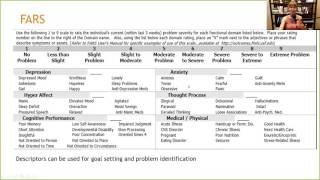
Dr. Dawn-Elise Snipes presents a recorded CE webinar (published to YouTube) explaining three clinical tools used to assess clients and recommend treatment intensity: the Functional Assessment Rating Scale (FARS), the ASAM Patient Placement Criteria (ASAM PPC), and the LOCUS. She contrasts patient placement criteria (tool-driven intensity suggestions like outpatient/IOP/PHP/residential/inpatient) with insurer- and state-defined level-of-care requirements used for billing/authorization. The talk describes how each instrument evaluates biomedical/medical issues, cognitive/emotional/behavioral functioning, recovery environment, comorbidity, risk of harm, motivation/engagement, and treatment history; it emphasizes using these tools for treatment planning, creating SMART goals, documenting decisions for payers, and tailoring care when clients decline recommended placements.
Chapters
This episode was pre recorded as part of a live continuing education webinar on demand. CEUs are still available for this presentation through all CEUs. Register@allceus.com Counselortoolbox you I'd like to welcome everybody to today's presentation on assessment and patient placement tools. The ASAM FARS and the Locus over the course of the next hour we're going to differentiate between level of care guidelines and patient placement criteria, which are two things that you use, especially if you are involved with insurance billing. We'll learn about the Functional Assessment Rating Scale, which is required in some states. We'll learn about the asam, which is required by most insurers, but not all of them. Some use the LOCUS instead. So we're also going to learn about that and we'll discuss why these tools are used and how they can benefit the clinician and the client. Patient placement criteria suggests a treatment intensity level that meets the needs of the client. So the ASAM, it's actually the ASAM PPC 1 and 2 patient placement criteria. The LOCUS also has guidelines for what level of care the person should generally be at. Now the patient placement criteria, I'm going to try not to say that too many more times tells you, for example, the person probably would benefit from being in intensive residential or partial hospitalization, but it doesn't specify to any great degree what services would be provided in that level of care that's usually governed by the insurance companies and or the state in which the person resides and you live. The level of care guidelines are defined by insurance providers and the state in some cases. And these are the guidelines that if you Google like Blue Cross and Blue Shield level of care guidelines, residential or intensive outpatient, you will come up with this list of things that BCBS says has to be there in order to qualify for what they call IOP services. And the criteria differ a little bit between each insurance company. So if you're working with multiple insurers, you want to make sure that you create a situation in which you're meeting the most stringent requirements of all places. Like how quickly does someone need to see a psychiatrist? How quickly does someone need to have their treatment plan completed? So why do we use these? It provides a biopsychosocial approach to care management, which is really important because biopsychosocial is not only kind of the wave of the future, but it also takes into account a lot more than just how the person's thinking or what might be going on mood wise with them. We want to look at what is their environment? What. What medical conditions might be contributing to or exacerbating their mood conditions? It assists in defining potential strengths and obstacles to the recovery process as the client sees them. And when I talk about these things now, the ASAM is typically used for addictions. It's put out by the American Society of Addiction Medicine. I always got to remember what acronyms stand for. However, ASAM also recognizes that co occurring disorders, addiction and mental health, are the expectation, not the exception. So they've expanded their criteria to include mental health, but either one can really be applied to mental health diagnoses and or addiction. They help guide treatment planning for biomedical issues because it brings it to the forefront and says do. Does the person have any biomedical issues that might be causing a problem? I mean, if they've got hepatitis or if they've got chronic pain, that might be exacerbating their mood issues, Go figure. So we want to make sure that we're paying attention to all the things that might be disrupting their sleep and causing depression or anxiety or, you know, interpersonal problems. Obviously they all look at cognitive, emotional and behavioral issues. That's generally what people come to us for. So we would want to look at that they consider motivational issues. How ready is the person to change? You may see, even in mental health situations, clients who are involuntary or less than voluntary. Maybe their attorney said they had to go get counseling, or their spouse told them, you need to go get this taken care of, because I'm tired of it. Those are not the people that are coming, going, I got a problem and I'm ready to do whatever it takes to get better. So we want to look at where their motivation is, because then we can create a treatment plan that uses motivational techniques to help the person move towards the goals that are important to them and also create goals that you know, by default are also what you know, the referring person wanted them to get out of it. We'll talk about that a little more later. The recovery environment. If you take a person who is trying to recover from depression or anxiety and they are living in an environment that is unstable, that is just replete with people who are angry and stressed out and there's a lot of chaos, how is that going to affect them versus if they are in a stable living environment that, I mean, every environment has its stressors, but one that is more stable and supportive and all that happy stuff, I mean, I think we can see pretty obviously that recovery environment does play a huge role. And when I talk with my clients about recovery environment. We talk about not only where they live, but also where they work because they spend 40 plus hours a week generally at this place that they work. So that is part of their recovery environment. If that place is chaotic and stressful and just miserable to be in, I mean, they may not be able to leave it. But we need to pay attention to that and help them figure out how to deal with those stressors or buffer against those stressors so it doesn't keep them from making progress. And these tools can also assist us in providing specific, measurable, achievable, realistic and time limited goals. Smart goals, because it helps us break it down instead of just treating depression, which is kind of this big global meta concept thing we're identifying. Okay, you want to address the biomedical condition of your diabetes. You want to address your recovery environment specifically as it relates to getting along with your co workers. So it helps us narrow down or specify different treatment goals that the person may need to work toward in order to achieve their overall overarching goal of recovery happiness. However you define it. However they define it. So we're going to start with the fars. I love the fars. A lot of people have never heard about the fars, which is why I put it out here. Even if your state doesn't require might be worth looking into in terms of having it as a tool to use with your clients and to help them use to create more specific goals and objectives. It is put out by the OR was initially created at the University of South Florida in Tampa and you can get your FARs certification online for free. If you want to get certified in it, you can also download the manual which is a link to it is included in your classroom. If you like the FARS and you want to use it as sort of a ancillary tool, it's not a placement guide per se. It helps you identify which problems are the worst and specifically why they're being rated that way. And you'll understand more when we look at it and it helps more clearly define anchors for behavioral observations. I found that when we started using it at the clinic I worked at in Florida, the clients actually were a lot more excited because they could see notable changes from treatment plan assessment to treatment plan assessment, which we did every 30 days. And they could see their numbers going down, which is good. You want them to go down more towards one where it's not much of a problem or zero, no problem at all. So the FARS has multiple things that it assesses and it's ranked on a nine point Likert scale, which can be a little overwhelming at times. They do give you word anchors here, so you can use those. So for depression, for example, if a client comes in with depression, we may just normally say, all right, they're presenting with depressive issues, they meet the DSM criteria and be done with it. This actually says what things are going on with this client that we are using to define the depression or that might indicate that there's depression going on. So we can mark off those. And obviously the more things you mark, the more weight it might give to that problem. Now, for example, under depression it has antidepressant meds. Obviously, if you mark that and they are relatively stable on their antidepressants, that's wonderful. Depression may be a less, a less than slight problem, even though it has something marked. So it gives you an idea about where you're standing. Anxiety, obviously, again, it has anti anxiety meds. Now that can be a cause for concern for some of our clients. Maybe they don't want to be on those meds anymore. It's also important to understand whether the meds are working. If they're presenting with symptoms of depression or anxiety that are in your moderate range or above, for example, and they're on medication for anxiety or depression already, then we want to talk to them about how much improvement have you seen since you started taking this medication and advocate for them as needed, maybe to go back to their physician or psychiatrist and talk about the treatment plan and what may be going on. If that med's working for them, maybe it needs to be increased. Maybe they need to switch altogether to a different type of, of antidepressant or anti anxiety, hyper affect, thought processes, cognitive performance, medical and physical. Now you're going to go through and you're going to mark each one of these. If the client is having problems, for example, with cognitive performance and you have short attention span, that can be a treatment goal in and of itself. Cognitive performance is pretty broad. But if we can define it as something small and maybe it is, when the client presents it's a severe problem, it's a seven. And at treatment reassessment, we've moved it down to a five or a six, the client can see on that one particular problem they've made progress. Most of our clients present with multiple problems, multiple issues, multiple presenting symptoms. And if they can see progress in one, then they can see that they're making progress even if they're not feeling a ton better. They can see that they're making baby steps. And that often is Motivating for a lot of our clients. And it can help when you're sending things back and trying to get additional services or additional days authorized from the insurance provider. If you can show what your monitoring, other things, the fars measures. And I'm not going to go through these, each one of these in super detail. Traumatic stress, substance use, interpersonal relationships. You may have somebody who has four different treatment plan problems just under interpersonal relationships. And that's fine. You can choose a place to start addressing or ask the client, what is the most important thing for you or what do you think would be most helpful for you to get you started moving toward where you want to be. And maybe it's their traumatic stress, maybe it's their relationships that's going to be kind of up to the client, what they're most motivated to work on. If they have. If you've identified 15 different things on the Fars, it's going to be overwhelming to hand them a treatment plan and say, okay, we need to work on all this. They're going to be like what that would be like starting college and then giving you your entire curriculum and say, okay, we're going to start working on all of these classes right now. You would have looked at the advisor like they had three heads. So we want to help them narrow it down and learn how to prioritize which things they're most motivated to work on and they think are going to be most helpful in moving them in the right direction. Because as they experience positive changes, their presenting symptoms or presenting issue will probably show some positive effects which will keep them moving forward. Family environment and relationships are different because, you know, again, the environment, your recovery environment is different than your relationships necessarily. Sociolegal issues. When we're looking at conduct disorder, when we're looking at people who might have substance abuse issues and you know, duis, things like that, that becomes a treatment plan issue potentially. Maybe they're working towards going to court for the getting off probation for their DUI or something. It's important to know what some of their motivators are. A lot of times socio legal can be used as a motivating factor, also as a treatment plan problem. If they've got pending charges, doing well in treatment generally looks good to the court. For example, if they're on probation, same thing. It's a. You can use it as an advocacy sort of thing. Work, school problems. Some people have some basic issues and problems with what I consider activities of daily living. So we want to help them look at work attendance and how long they stay employed and how they get along with others and you know, presentation at the office. If they've been fired a bunch of times. Let's take a look at that. Was it an interpersonal issue or was it some sort of skill set that they didn't have? And activities of daily living functioning. You may or may not in your particular setting handle this. A lot of people consider this more case management. However, thinking back to Maslow's hierarchy, if they don't have enough money to buy food and keep a roof over their head, they don't have a safe place to live and they can't afford medications or medical care, they're going to have a hard time dealing with any sort of depression, self esteem or relationship issues. So however you consider it, if there are ADL issues, you may need to refer out if that's not something you treat at your facility, the ability to care for their self. Most of the time, this is going to be a non issue for a lot of our clients that we see in outpatient. Every once in a while it does become an issue. I've worked with some clients who are schizophrenic and they are on the FACT team, which stands for, I don't remember what it stands for, but it's an intensive case management program where the case managers and or counselors go around and they touch base with people in their residence, in their home to make sure the person is taking their meds and showering and doing what they need to do. It assesses danger to self and others. You know you're going to do that on any good assessment anyway and identifies any security management needs. So this, the FARS is really comprehensive at helping you identify any of those minutiae problems in addition to the big problems that may need to be addressed or considered when doing your case conceptualization. What is it that's contributing to this person's current mental health state? So the FARS is optional. In many states it's required. For example, at least when I left Florida, it was required by any state that received funding from the state, by any treatment center that received funding from the state. So if you're not familiar with it, take a look at it. If you like it, great. If not, you know there are other tools out there that may be more useful or you may already have an assessment tool that you love. And that's awesome. The ASAM is patient placement criteria. We generally, in the treatment centers that I've been in, the insurance companies and the organizations required the ASAM to be done at assessment, reassessment and discharge. So pretty much every 30 days the ASAM assessed your physical dimension. It asks about acute intoxication and withdrawal potential. Now remember, this originated as a patient placement criteria for clients with substance abuse issues. So that one is still on there. Your client, even if they are not an alcoholic or a drug addict, may be using alcohol excessively right now to deal with their depression, their grief, whatever's going on. So if that's an issue, and you think it is an issue of concern, you can mark that off biomedical conditions. What other things are going on that may or may not be stable, that may or may not be contributing to this current situation. And that can be anything from chronic pain to hepatitis to HIV to, you know, you name it. So talking about the client, about what medical conditions do you have going on? It becomes more important if you're going to try to place somebody in residential, but you know, less important in IOP or outpatient services because we're going to refer out to, to a physician, we don't have to figure out whether we can manage it on site. Then it goes on to ask about emotional and cognitive issues. What emotional or behavioral issues are present and how serious are they, how treatment resistant or accepting are they. So if they've got major depressive disorder, maybe they have some suicidal ideation and they are ready for change, they are there, they are wanting help, they're wanting treatment. That's far different than someone who is brought in on a baker act, brought in involuntarily, who is not wanting to change. They are still in that state where they are wanting to harm themselves or someone else. So that will help you kind of gauge what level of care that person may be best at. Obviously if they're actively suicidal or homicidal, it's sort of a no brainer about the level of care you're not going to put them in once a week outpatient. But this helps you really demonstrate because as they always say, if it's not written down in the chart, it didn't happen. You can demonstrate that you went through in a systematic way, not only to identify the issues that needed to be addressed for treatment planning, but you identified any issues that might make the treatment placement more important where someone needs a higher level of care to maintain their safety. Behavioral looking at relapse or continued use, potential continued use. Obviously we're talking about substances, but behaviorally we also want to look at your mental health issues. If someone was self harming, if they were cutting, if they were engaging in binging and purging behavior. If they were doing some using some sort of compensatory behavioral thing in order to deal with depression or anxiety or grief or anger, that's going to be important for us to identify. How safe is it? Basically is what the ASAM is getting at to have somebody in once a week. Do they need once a week care or do they really need to touch base more often in order to maintain any gains that they've gotten from higher levels of care? And the social and environmental aspect. What is their recovery environment like? Do they have social supports? Is it a safe, stable environment where the same people live there and they relatively, they get along with them relatively well, or is it a chaotic, violent, destructive environment? May or may not be able to change that, but we can identify whether, you know, if it's not a supportive environment, we may recommend a higher level of care. They may score out for a higher level of care. By the same token, if they choose not to, maybe they score out for residential on the asam. You know, you go through and do all your check marks and it says, yep, the best placement would be residential for you. But this person says, no, can't do residential or I won't do residential. And they have an option, which generally they do. Then we want to understand that recovery environment might be a primary priority in treatment planning. So how can we help this person make mental health and or substance abuse related gains, you know, start getting better, an environment that's not 100% conducive. So your ASAM levels are really pretty simple. Early intervention, which is basically getting to people before there's a big problem, you know, before it becomes an addiction, before they become clinically depressed and relapse prevention. So it's at the beginning, at the end, when they trying to prevent them from ever having to use services, giving them the tools that they need, and at the end helping them maintain their gains. Probably once a week. Group, this is really high level, if you will, or services where you're not going in depth with the person. It's mainly psychoed and community building. Outpatient is less than nine hours a week. And that's what most of you probably are involved in. You're probably in private practice or working on an outpatient basis where you're seeing clients once a week, maybe three times a week. For group, it's less than nine hours per week. So that's a pretty broad range of what you can qualify for. Outpatient, generally, insurance is not going to pay for nine hours of individual a Week. So, you know, there's some question about how to bill for services, but it does not meet the standard of intensive outpatient until it becomes nine or more hours a week, partial hospitalization. This is basically people who don't want to be in residential, but they need somewhere safe to be the majority of the time that they're not at work. So oftentimes it's like after work from six until 10, five days a week, 20 hours and maybe optional Saturday and Sunday services, not services, but Saturday and Sunday groups to help them when there's downtime. People in PHP need a whole lot of structure in order not to start decompensating. Residential, pretty self explanatory. They're going to be staying there 24 hours a day, seven days a week. Level four is medically managed inpatient services. And these are the people who need to be in a psychiatric hospital. They need to be somewhere where physicians are on duty all of the time because of medical conditions, psychiatric conditions that may require that level of intensity. So the ASAM is what's used at a lot, for a lot of facilities, especially ones that provide substance abuse services. And I think partly, and I'm guessing here, purely speculation from using all of these instruments. The ASAM is really quick to do. Once you get used to it, you can do it in under five minutes, figure out where somebody scores and be done with it. The locus, on the other hand, measures a lot of the same things, but it is a much longer instrument to use. So some agencies may not want to use it. Certain insurance companies require the locus to be used. So, okay, so what does the locus measure? Very similar to the asam. The risk of harm. How, what is the risk that they are going to harm themselves if they are in a outpatient situation? Minimal. So that would probably be outpatient, low, again, outpatient. Once you get higher, you're probably going to move towards. If they have a high risk of harming themselves, you want them to be in residential, their functional status and on the locus you can go through it, you can download it in your class. They give you definitions for what each one of these represents. So they are anchored so you know what minimal impairment is defined as. But I didn't figure you'd be interested in going through the minutia today. Somebody with minimal, mild, moderate, serious or severe impairment. You can see that the lower the score, the lower the intensity of services they're probably going to be put in. So we've looked at risk of harm and functional status. Then it goes to medical, addictive, and psychiatric comorbidity, which is a little bit different than the asam, which separates biomedical from cognitive and behavioral. But, you know, we're still looking at kind of the same thing. When they talk about comorbidity, they're saying you have your presenting issue, whatever that is, depression, anxiety, addiction, what other things are going on. So do you also have medical conditions that are comorbid to the primary presenting issue? A lot of people will have some level of comorbidity. However, it may not be severe. You may not have severe medical issues and severe psychiatric issues. It could be some minor chronic pain that's being managed pretty well. And your presenting issue, which is maybe major depressive disorder. So you're getting an idea about whether there's anything else that we need to be attending to. Recovery environment assessed on both ASAM and locus. Your level of stress and your level of support. I do like how the locus breaks this out. How stressful is the environment? Remember I said I talked to my clients about home versus work because both of those are their recovery environment. It just happens to be which time of day. So what is the level of stress and what is the level of support in each environment? Maybe they have an extremely chaotic, stressful work environment, but their home environment is super supportive. So with their level of support at home, even though they've got a fair amount of stress in part of their recovery environment, they may be able to manage. And their treatment and recovery history, when they've gone to treatment before, assuming they have, what happened, did they respond well? Well, great. Then we know that we probably can tune up some skills that they had before. They already know what works for them. That's awesome. If they've had moderate or an equivocal response. So you're looking at it going, not sure if it helped very much. That's going to be more of a problematic because we don't know what's going to work for this person. We have an idea that what they did before didn't work super well, or there was something that prevented it from working well. Sometimes motivation levels or the way it's presented can prevent. Prevent them from benefiting from treatment as much, or maybe something just completely different that was going on. Maybe they had somebody in their family die and they weren't focused on treatment at that point. But we want to look at what their history has been. If they've had a negligible or poor response, then we may need to look at a higher level of care. Now, one of the rationales for this is, is that if you move them into higher levels of care, then you're extricating them, if you will, from some of the stressors that may have distracted them and kept them from being as engaged or kept treatment from being as effective as it could have been. This may or may not fit with your client's history. So you want to look at, really consider this, what went on that may have prevented the person from getting maximum benefit from that treatment program. It may have just been a poor fit. And so that's something that we want to consider and not say, well, you need a higher level of care. If the prior level of care may be adequate and accurate, but the last program was not a good fit for that. Client engagement, number one is option, not optional, optimal. The client is there, they're ready to go in substance abuse recovery and even some mental health recovery. We're starting to look at the stages of change more. This would be the action stage. The client is there. They're like, I'm done with this. I'm sick and tired of being sick and tired. Help me figure out what to do. Level two, the person is preparing, determined to do something about it. In the very near future, they may just be dipping their toe in the water, not quite ready to commit yet. Level 3, 4, and 5, the person's really not engaged in the treatment process. Now, if somebody is not engaged in the treatment process, it may or may not benefit them to be in a higher level of care. But you'll see in a few minutes the locus dimensions will push them more towards a higher level of care for their own safety or to hopefully maximize treatment gains. So how do we use all this information? You've ranked them on all these subscales. You've given them between a one and a five. What do you do? So level one is basically your prevention, your early intervention, up to three hours a week. Now, remember, there was a much different definition with the asam, but for locus, it's up to three hours a week. The risk of harm is a two or less. So they're pretty much no risk of harm. They're a good level on their functional status. Again, a 2 or less. Comorbidity is a 2 or less. So they don't have a lot of compounding issues in their recovery environment, their treatment and recovery history. They've always done pretty well when they've tried. And some clients don't have any history. So you might not have anything to put here. Their engagement, they're highly engaged. They're ready to do something. So these Clients are probably going to benefit from your lower intensity services, if you will. Their level two, which is your low intensity iop, it's more than three hours a week. The risk of harm is still a two or less. Because they're living in the community, their functional status, they need to maintain a 3 or less. They need to be relatively independently functional on their own, but there can be a little bit more impairment. We still are looking for low comorbidity and a supportive low stress recovery environment, positive recovery history and an engagement. We want them to be optimally engaged. We want them to be ready to go for LIOP again. These are people who are not going to be seeing you more than a few hours a week. So they need to be able to maintain gains and not decompensate without seeing you every single day or multiple days, multiple hours, multiple days a week. Level 3 on the locus usually equates more to IOP and PHP anywhere from 9 hours to 20 hours a week. These people have a higher risk of harm, but it's still not one where you'd be concerned as a clinician that the person needs to be in. In an inpatient setting, their functional status is still really good. They're able to, for the most part, do what they need to do to function. Their quality of life may not be optimal. If it was, they probably wouldn't be seeing us. However, they're able to feed themselves, bathe, you know, do the basic things. Comorbidity is still pretty low for IOP and php. We want to make sure that they are not going to suddenly decompensate medically. If they've got a medical issue or, or an addiction issue going on, that's not their primary presenting issue. The comorbid issues are relatively under control and not causing a significant impact on the primary presenting issue. Their recovery environment can be a little bit more chaotic, but we still want it to be relatively supportive and not overly stressful. If it's overly stressful, they're probably not going to be able to focus on treatment and do the things they need to do, which will lead to low compliance and potentially low benefit. Potentially some clients will not go to a higher level of care even if their recovery environment is not super supportive. So we just need to have that out there and know how we can work with it. And their engagement can be a little bit less for IOP and php. They're just not like all over it and super enthused about doing what needs to be done and doing their homework assignments and all that kind of stuff, you know, that's okay because you're going to see them more often so you can provide more prompts. My son is in high school right now and I kind of think of it this way as, you know, I see him every day so I can prompt him to do his homework, do his assignments, make it, get his stuff done if I need to, and you know, follow up and do that sort of thing. Because he's not all that engaged in some of the stuff he's studying right now. You know, I'm just. It is what it is. I'm a realist. Hopefully when he gets to college and he only sees his teachers, you know, once, maybe three times a week, he's going to have more enthusiasm and will be more self motivated so he won't need somebody kind of looming over him. Levels 4 through 6 on your locus correspond to residential. I didn't see a need to go through those in high level minutia, but you can get an idea how. Both the ASAM and the locus are really looking at similar things. They break them down a little bit differently and they identify a need for a higher intensity level of care, more connection with the clinician based on how bad, how severe the problems are, how unstable the environment is, and how low the motivation is, which, you know, like I said, there are some reasons for that may not always play out the way you had hoped. I worked my first job out of college was working with felony probation and parole and those clients were really not motivated to be there. There's just, they're really. I can't think of a single one of them who is excited to go to group. Would they have been better off? You know, we had them in outpatient care because they were not willing. And even if we would have put them in residential, they probably wouldn't have done the work. They would have done what they had to do to get by and probably not internalized it because they weren't motivated to learn, they weren't motivated to work on that issue at that point. One of the other nice things about these guidelines, no matter which one you use, the LOCUS or the asam, when you look at motivation levels, if they have low motivation, then it probably points you in the direction of brushing up on those motivational interviewing skills and the motivational enhancement approaches to figure out how to create win win situations. A lot of times that puts the client more in control. Where you're saying, what is it that you want to work on? When I work with substance abuse clients, if they're not Ready to give up the substance. They don't think they need to get up the substance, but they're on probation, for example. I'm like, okay, you know, you're not ready to do that. You're stuck with me for the next 12 weeks or however long it is. Usually it was a 12 week session and you don't want to go back to jail, I don't want you to go back to jail. But in order to stay out of jail, you can't use. So how can I help you not use and comply with the requirements of your probation or whatever your employer says or whatever it is? How can I help you meet your goals, which are to get off probation and not have to see me again? And generally the way to do that was to comply with my goals and it was staying clean for that period of time. So I wasn't telling them from the get go, you can't ever use again. I was telling them, I hear what you're saying, let's see what we can do during this 12 weeks. One of the other things I would often tell them is I am state sponsored therapy. You know, the court is paying for you to see me. You might as well get benefit out of it. So what can we work on together that you might benefit from? Sometimes that would alter the conversation a little bit where they didn't feel like I was trying to judge them because they used cocaine or put them into a group with everyone else. You know, I was really talking to them about how is it that I can be of service to you? So the five M's, these are what we need to do at every level. Regardless of its early intervention services, intensive, outpatient, residential. We need to motivate clients, look at their readiness for change and their recovery environment, engage them and build alliances by creating win wins. We want to model this because as we model it, they will learn from it. If we ask them instead of saying, okay, your treatment plan goals are X, Y and Z. If we ask them, what do you think would help you meet the requirements that you have got or you want to be happier? You've lived in your skin for 40 years. I've known you for 40 minutes. So you're the expert on you. Why don't you tell me what the first thing is you think would be helpful to work on to start moving you forward? Stepping down, we are always probably going to be seen by most clients as an expert. There's always going to be a power dynamic, but we can minimize that some by being somewhat realistic and saying, you Know you better than I know you. Help them feel comfortable speaking up and saying, that's not gonna work for me, and then figure out how to make it a win win. If they score on the ASAM or the locus for residential, and they say, I'm not doing that for cultural reasons because I am a single parent and I've got two kids at home because I can't lose my job. There's a whole host of reasons they might not be able to or be willing to do residential, even though it would probably be the best placement. I want them to feel comfortable telling me that instead of just walking out and never coming back so we can talk about, okay, well, what can you do? And then how can we fill in the gaps to minimize or mitigate those things that might cause harm to your recovery? We need to manage, and it's just to make it an M family, significant others, work, school, legal and financial. We need to help them figure out how to balance all these things, figure out how to bring in a healthy support network which may or may not be blood relatives. That's going to be partly culturally defined and partly defined by the client themselves. Help them figure out how to make work, you know, that's part of their recovery environment. We need to help them figure out how to make that not harmful to them, preferably helpful and inspiring and all that kind of stuff, but at least not harmful. How can they deal with their legal issues? I don't want them going to prison after they've gone through, you know, eight weeks of treatment with me. And financial issues, obviously we're not financial Counselors. We're not CPAs. We're going to refer out for some of this stuff. But it's important to make sure that we're making the referrals so the clients can get that lower level of Maslow's hierarchy all in order. Medication if needed, for detox, for hiv, aids, for medication, assisted addiction treatment. And I separate that from psychotropic medication because most people don't lump them together. Medication addiction treatment is more like your methadone and your suboxone. Psychotropic medication also assists treatment. They're on an SSRI or an SNRI or one of those other mental health medications that's working for them. But we need to advocate for them. Advocate, help them advocate for themselves if their meds aren't working or if there are side effects that they're finding troublesome. We also need to help them make sure that they can pay for their medication and if they can't, again, you may refer to a case manager, but do know you can go to a pharmaceutical company's website, find the patient assistance program page. And most insurance companies have patient assistant programs. For most medications that are out there. It's in most cases it's like a half a page or one page sheet. The doc fills out, faxes in and the client can get low cost medication that may not be on other formularies. They need to go to meetings, some sort of integration with other people, mental health or otherwise. If they're in, if they're seeing you for grief, there are grief support groups. There's depression, not depression, just divorce support groups. There is our support groups for survivors of suicide. So when I talk about meetings, I'm not just talking about addiction, I am talking about helping people connect with other people that are going through similar things and you know, succeeding at moving towards recovery. And we need to monitor the continuity of care. We want to make sure that relapse prevention activities are in there. If they're seeing you for depression and you see that they're starting to decompensate or they're starting to do things that you know has triggered their depression in the past when or you're coming up on an anniversary of a significant loss which may trigger their depression, this is what we want to monitor for and point it out to them so they can learn to self monitor. And we're also encouraging them by us monitoring what they tell us about their recovery environment and social supports. We're encouraging them to be more aware and you could put mindfulness here, but that would just be another mistake. We want them to learn how to do all of these things for themselves so they can advocate, they can self motivate, they know where they can go to find other people who are supportive. So the FARS is a very helpful tool to conceptualize problems and rank severity and kind of create sub goals for treatment plans. It provides small focus areas that we can use and that clients can hone in on. So if they're working on instead of just relationship skills, they can work on specific aspects of that and see that aspect improve, which is obviously going to improve the meta concept too. The ASAM and LOCUS are used relatively interchangeably to identify the appropriate level or intensity of treatment for clients. Some places require it, some places it's optional. I find it very helpful if for nothing else than to document in a very consistent way across charts that this is what I look at. And yes, I looked at all these aspects when I did the case formulation. Treatment intensity does not necessarily equal treatment program placement. So if somebody scores out for residential, that may not be where they are going to be best served from an individual culturally respective respectful standpoint. So recognize that all these tools are just guidelines. And like I said earlier, both of those tools point you towards higher intensity levels of care for people who are less motivated. And you may run into a client who's just very involuntary and is not going to benefit from residential care. So you want to take all those factors into consideration. And yeah, you'll have to justify why you deviated from the recommendations, but that's usually one or two sentences. Insurance companies often define the services to be provided at each level of care for reimbursement purposes, but states may Florida is a perfect example in 65D30 where it's the state of Florida actually defines certain services that have to be provided at certain levels of care so you can listen to this again if you really want to on the CounselorTool Box podcast, which is put out every Saturday. You can like our Facebook page to find out about upcoming courses. You can subscribe to our YouTube channel the Friday after the course is taught the video version. The video replay is uploaded to YouTube so you can go if you really want to watch it over again. And you can access CEUs and certificate training@allce.com if you enjoy this podcast, please like and subscribe either in your podcast player or on YouTube. You can attend and participate in our live webinars with Dr. Snipes by subscribing at allceus.com counselortoolbox this episode has been brought to you in part by allce.com, providing 24. 7 multimedia continuing education and pre certification training to counselors, counselors, therapists and nurses since 2006. Use coupon code counselortoolbox to get a 20% discount off your order this month.










