Revealing the Stages of Supervisor and Supervisee Growth & Development
A recorded continuing-education webinar by Dr. Dawn-Elise Snipes describing three parallel developmental stages for supervisors and supervisees—forming, storming, and norming—and practical supervisory strategies. The talk covers how supervisors should foster autonomy, self/other awareness, motivation, teach skills (treatment planning, progress notes), address ethics and administrative duties, adapt to learning styles, and prevent burnout.
Chapters
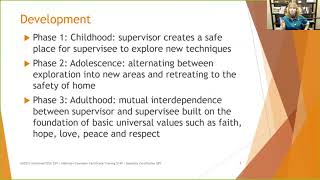
This episode was pre recorded as part of a live continuing education webinar on demand. CEUs are still available for this presentation through all CEUs register@allceus.com counselortoolbox you I'd like to welcome everybody to today's presentation. This is a continuation of our supervision series. Today we're going to be talking about the three stages of supervisor and supervisee development. We're going to review the three stages and they're the same for supervisor and forming, storming and norming. It's important to remember that when we're helping supervisees develop, we're still providing that nonjudgmental support and using a counseling or therapeutic approach to address feelings, thoughts and actions that may impede the supervisee's professional performance. But we're not providing counseling. We're using that warmth and empathy to identify areas where that person might need to seek counseling. Supervision is consultative with self evaluation and exploration. I don't want to be doing all the work. I want my supervisees to be able to look at their sessions and go, you know, I can see how I impacted this particular situation, or I can see some of the dynamics that are going on, or I can evaluate ethical quandaries that may be coming up. And one of the last slides, I'm going to propose to you different areas where we need to help supervisees develop. And I'm going to encourage you to think about ways you can do that with your supervisee. And even if we're not technically in supervision anymore, we've gotten our license, we're on our merry way, we still need to self supervise. And occasionally it certainly doesn't hurt to continue to get supervision, whether it's meeting with a group of colleagues on a weekly or monthly basis basis or something like that. Three structures underlie the development of basically our new identity, our new hat, our new role as a supervisor, or for the supervisee, a sense of autonomy, self and other, awareness and motivation. So eventually we want to encourage the supervisee to get to a point where they feel like they can function autonomously. They feel like they've got it, they've defined who they are as a clinician, they're aware of their impact on self and others, they're able to empathize and do all those things, and they're motivated. And motivation is one of the first things that go when people start getting burned out. And one of the things that we really need to do as supervisors is teach from the very beginning. And this should even start happening when people are in college Teach them how to prevent burnout, teach them how to deal with stressors and frustrations and you know, clients that don't go so well so they can manage those things a little bit better. So phase one and from a developmental perspective, basically you're looking at childhood, adolescence and adulthood in terms of the progression of someone becoming a clinician or becoming a supervisor. In phase one for the supervisee, the supervisor needs to create a safe place for the supervisee to explore new techniques, to try out things, to go into a session with a new kind of client or you know, even maybe the same kind of client and basically get their land legs. You're really solidifying those basic counseling skills of listening, non verbal skills, paraphrasing all that stuff. And you know, in phase one, they're still starting to learn new techniques. You're going to have supervisees, some who are more interested in, you know, starting to learn techniques from the get go and others who are really wanting to get that humanistic undercurrent going where they can provide the basic environment that is conducive to change. So you're going to have to kind of play with it depending on where your supervisee is at and where their motivation is. Now in phase one, it's really important. Remember I said autonomy. We don't want to spoon feed everything. It's really important that we ask supervisees what's their opinion, what do they think needs to happen, what interventions do they think would work, and if they come up with a great big goose egg, then we can refer them to start looking. At this point at phase one, I really want them to start learning how to do research and go online to the National Library of Medicine, go online to journal articles or whatever and start figuring out, okay, I've got this client who's presenting with this particular issue, what are some of the best ways to address it? Helping them figure out where there's resources where they can find good group activities or good homework activities to drive home a particular point, such as boundary setting. There are tons of websites online where you can download worksheets and find different activity ideas. So at this point in phase one, I'm really encouraging the supervisee to start learning where those resources are. You know, I'm not going to leave them out there and go, well, good luck to you. I'm going to point them in the right direction, maybe suggest some search terms. If they don't have luck on their own, but I want them to feel like they're becoming autonomous, they'll bring those tools back into supervision, and then we'll talk about, okay, you have seven tools to deal with clinical depression. Someone who has clinical depression. Which ones would you use with which clients and why? So then we start to process them. And again, I want them to sort of sort those tools using their own judgment and be able to explain to me why they would use them. I want them to teach me how to use those tools. You don't know what you don't know until you start to teach it. I've learned that the hard way. I can hear stuff and I can read stuff, and I can say, you know, I have it down, I've got it. And then I go to try to teach it to somebody else, and I start stammering and I'm. I don't know, you know, I'm not sure what I'm doing here. So. And it's really important, even for us as supervisors, if we're going to teach a technique, do a dry run, you know, try to teach it to. Heck, teach it to your family members, teach it to yourself if you need to, but try to figure out, how are you going to explain it and make sure that people are understanding it. And a lot of supervisees remember, we're playing to different learning styles. Kinesthetic learners, remember, prefer to manipulate the information. They want to take that technique and say, let me flip it around in my head and think about who it would work with and what issues it would work with, and that's how they learn best. Visual learners are going to want to read about it, and then they're going to read about what clients you might use it with. Obviously, they have to, you know, implement it and work with it, but they're going to prefer to read about it first doing, you know, homework assignments and worksheets. Like one of you says you prefer the worksheets. I really, I'm a visual learner, so I really like worksheets myself. And then auditory learners are going to prefer to hear about it, such as in a brown bag luncheon or, you know, a video or something like that. And there are a lot of videos online that can help you learn different techniques. You want to be careful and make sure whoever's teaching it is, you know, kind of has a clue about what they're doing. But a lot of. A lot of the techniques are out there, so the Internet can be a good resource. In phase two, adolescents. Now, think about how we deal with adolescent children or young people, whatever you want to call them, and think about what they're going through. They're trying to define their identity. They're trying to find kind of where they belong, what their niche is. Same sort of thing for the adolescent, or the storming is what they call it supervisee. They are alternating between exploration into new areas. They're going out, they're trying to learn something new. And then they come back and they go, you know what? That didn't work so good. I like this comfortable set of tools that I use right now. And that's great, you know, that they have a comfortable set of tools. But as clinicians, as supervisors, we can encourage them, we can share with them when we've tried techniques that have fallen flat or, you know, had us had sessions that didn't go so well because we want to make sure that they are not losing enthusiasm. We want to encourage, but we also want to encourage them to examine why did it fall flat or why did the session not go well. Look at what the dynamics were, what was going on. It could be the client was just not emotionally present that day. It could be the supervisee was not emotionally present that day. But in adolescence, we're their safe home base. But they're going out and they're exploring a little bit more on their own. They're trying some more things. They're not nearly as reliant on us for telling them, you know, you need to go look at, you know, books by this particular author or whatever. And then in adulthood, the supervisee and supervisor have reached sort of mutual interdependence. It's built on a foundation of universal values such as faith, hope, love, peace and respect. You know, you've created an environment that's flourishing. You've created an environment that is nurturing to both you and the supervisee. I learn from my supervisees and, you know, obviously I'm hoping they're learning from me too. Even as adults, we can learn more about ourselves. We can learn more about techniques. And this is a place where you reach more of a level of collegiality, if you will. And, you know, in phase three, rarely will you have a supervisee who is working towards licensure supervision, who reaches this stage. You know, they say it usually takes three to five years before you really hit this stage of adulthood. And some books will tell you it's actually more like six to nine years, but whatever. And, you know, thinking back over my career, yeah, my first, you know, three to five years kind of flew by, and I was learning a lot of stuff, and I was drinking it in. And then when I got to phase three, I Was much more solid in my ability to articulate what my theoretical foundations were, what techniques I used, why I did them. You know, I was more there. So, you know, be aware that most of the people we're going to work with in supervision are probably phase one and maybe, you know, moving into phase two right as they're getting their license. So level one is forming. It's characterized by high dependence on others, lack of self and other awareness, categorical thinking, high motivation and commitment to work. So you have these people coming out of graduate school and they are just wide eyed and they are enthusiastic and they're gonna change the world. And they haven't started doing paperwork yet. They have a certain amount of dependence on the supervisor. A lot of counselors in the beginning stage of the forming will come to the supervisor and they're going to want reassurance, is this okay? How do you think I'm doing? What do you think I should do next? And we can answer those questions. I would encourage you, in order to spur development, to respond to it. Well, what do you think you should do? You know, what are your ideas? And then I'll tell you mine. And then we can talk that way in the early beginning, like the first three months, sometimes that is a little bit more challenging and they really need me to throw out some ideas. But most of the time, especially because supervisees know what to expect when we create our contract. They know they're going to be asked to come up with the ideas. So yes, they're dependent on me to a certain extent to help them navigate, to help them figure out, you know, when do you make the call to the abuse hotline to do all these things? Because that confidentiality thing just freaks people out, which, you know, I don't blame them. But this is the time where it's really important for us as supervisors to really be looking at the ethical, the administrative and the clinical aspects what they're doing. Let's not form bad habits. A lot of forming counselors are plagued by feelings of anxiety and driven by the desire to do it right. And it's not going to work. You know, whatever it is, any technique you use is not going to work with every client. And what does right mean? Is it textbook or is it doing in a way, doing it in a way that best meets the client's needs. So you may need to make some adjustments here and there. Now, obviously if you're implementing a evidence based practice to fidelity, you don't have as much wiggle room. But we're just talking about General techniques, when you're sitting in a session with a client, what does it mean to do it right? And that's important for counselors to be able to sort of articulate in their own mind so they can look back over a session and say, you know, I was doing it right, I was doing everything I needed to do. We just hit a hurdle or we hit a speed bump. In level one, they're also formulating clinical concepts on the basis of a single aspect of the client's history, such as an abuse history or, you know, substance abuse or depression. They're just looking at this one thing and we need to help them expand. Not only look at the biopsychosocial history, but also look at the person in the present from a multi dimensional perspective what things could be contributing to this depression, anxiety or whatever is going on. A lot of times forming supervisees practiced by formulas such as all clients in early recovery are blank. All clients who are depressed are, you know, need blank. And we know from, you know, experience that that's just not the way it is. You know, all clients, you can't really say anything about all clients. So we want to look at what their symptoms are, what they're presenting with, what their motivation is. And we want to dispel this. Rather rigid theory and encourage clients to look at or supervisees to look at each client as an individual. What's going on with this person? When you are diagnosing depression, for example, with all the different permutations you can get, there are like 124 different ways that depression can present in treatment and still be diagnosed as major depressive disorder. Which means you could have 300 clients and, you know, only two of them have similar symptoms. So we need to look at what are the symptoms, what's going on with this person, what are their resources and what are their strengths? In level one, a lot of times supervisees don't know how to formulate treatment plans. And this is one area that I hit really hard because I think it's important not only because we got to do treatment plans. I think it's important for the supervisee to be able to explain to the client, when you have a problem, how do you develop a goal and a solution? How do you develop an individualized service plan? Because it's basically goal setting. So in my practice, a lot of times we start out with something they know, whether it's a recipe or rebuilding an engine or, you know, planting flowers, whatever it is, we start out with that. And I say, write for me a List of instructions for how to go from not having whatever it is to having the finished product. And they do that. That's usually pretty easy. That's not scary. So then we throw out something like major depressive disorder. And I give them a clinical history so they know which symptoms they're dealing with. And they have this client who's presenting with these symptoms and they're here. That's, you know, ground zero. And this is where they want to be. That's a finished product. How do you get them there? We focus a lot on knowledge, skills, and abilities. Starting out by helping to educate the client or helping the client educate themselves, then developing skills slowly and then being able to generalize those skills so they can use them, you know, in the outside world. And then I want them to take the information that they've gotten from learning how to do treatment planning and help make sure that their clients can set a goal. If their clients want to get a raise at work, well, let's set those goals. Let's start looking at what are the sub goals. What do you need to do if the client, when they start doing relapse prevention, you can have the client really be integral in development of that. A lot of times supervisees can't visualize or articulate the therapeutic process from intake through intervention and termination. It's like, okay, the client comes in, they've got major depressive disorder, and we talk and we meet for eight to 15 weeks and not sure what we're going to cover, but, you know, at the end of 15 weeks, they're going to be feeling better. Yeah, no, no. Let's look at, you know, can you articulate what's going to happen? And again, it's individualized, so you need to look at what the client is presenting. But you have a client that presents with these, you know, four symptoms, and they want those four symptoms gone. And in terms of recovery. So how do we help them do that? What interventions might you use to help them start moving towards that end goal? And, you know, we can make a list of interventions and talk about ones that may be too advanced and ones that are, you know, let's start here. But I want them to really start seeing how all of the ingredients go together to make the full recipe. The supervisor environment needs to be one that encourages autonomy of providing instruction, support, and modeling within a structured setting. So we're not going to let them flounder out there on their own. When they've got questions, you know, we're going to try to answer them. And if we don't know. One of the best things you can say is, you know what? I don't know. I will look that up. And if a supervisee, for example, says, you know, I don't feel like I'm very competent or confident writing treatment plans or taking progress notes, then as a supervisor, it's incumbent upon us to A refer them out to try to find some resources that can help them learn that and for us to also do the same thing so we can make sure that our supervisee A knows how to find that information should they need it, B, but then we can talk about it in supervision. We can say, you know, alright, so for this month, we're going to work on enhancing your progress note abilities. And each week I want you to bring your progress notes for each client and then we'll create a rubric to score those progress notes based on, you know, what we figured out needed to happen. Yes, I'm big on rubrics. If you hadn't picked up on that. And for those of you who are unfamiliar, a rubric is basically just a score sheet that has different concepts or things that need to be present. And you check them off either as yes, no, or you can do a Likert scale kind of, yes, it's there, it's kind of there, it's really there or it's perfect. But it does help put a visual and put more of a numerical assessment on each treatment plan or progress note or whatever you're looking at. The primary responsibility of supervisors for level one counselors is to protect client needs at all times while encouraging risk taking by the counselor. So we're looking at, you know, what is the client needing, what is the clinician doing? And you know, sometimes there are going to be some techniques that we share with the supervisee that they're not familiar with or they hadn't used before. We'll role play them a few times in supervision and then, you know, we might encourage them to try that with the client or teach them about a worksheet like the ABCs of Cognitive Behavioral, teach them how to teach that, then have them teach the client how to do that and give them homework. But we want to encourage them to get outside their comfort zone a little bit and, you know, maybe push some limits. Because a lot of level one counselors tread very lightly. They're afraid of triggering a crisis, they're afraid of putting the idea of suicide in somebody's mind. They're afraid that they're going to break the client. And our clients generally are pretty resilient So I encourage the supervisees to go slowly. I mean, we're not going to just start doing wild, wacky stuff, but recognize the reality of what's going on. To facilitate growth, a supervisor should introduce the counselor to ambiguity and conflict. So again, a lot of this for me in my sessions comes up when the supervisees come in and they say, I'm just not making any progress with this client. I don't know what's going on. And so I will encourage them at that point to start explaining to me, well, what do you think you're bringing? And what areas might you be hindering? What else could be done with this client? And is there possibly something that we're missing in the diagnosis? You know, maybe you're trying to treat this major depressive disorder and you're just not making any progress. The client is tired all the time and just feels lousy and has fatigue and difficulty concentrating. But they haven't had a physical in three years. You know, that might be something to look at, but I'm going to try to push the supervisee to coming to that conclusion on their own. So I might say, what are some other things that might be causing these symptoms? And we'll write them up on the whiteboard and then rule out anything that we can. And I'll sort of teach them how to differentially explore what might be going on. It's imperative that we take into account the supervisees learning style. You know, they've graduated from college. Obviously they figured out how to learn on their own. But we do want to create an environment that's as efficient and effective as possible so they don't feel like, oh, my gosh, this is just painful. Every time they come to supervision. Now level two counselors are storming. They realize they can't save the world and may become frustrated by their inability to solve difficult problems. Now this is, you know, again, kind of adolescence. Reality has kind of slapped them in the face a few times, probably, and they can start getting discouraged. And this is when it is so important for us as supervisors to point out the good things, point out the progress that certain clients have made, point out the data and the reliability and the reality that not every client is going to get better. With you, you know, it's, you know, I believe that every client does have the ability to get better, but it may be a bad fit. And that's not because you're a bad clinician. It's just a bad fit. There are a lot of extra therapeutic factors that could be going into that when they have difficult problems, they may, you know, feel like they're kind of banging their head into the wall. So this is the time where we back up. And if you're doing group soup, it's great because then you can do a brown bag on a particular case. But if it's individual, again, just start. I like the whiteboard because I'm very visual, so I like to make sort of mind maps of what we're talking about. And I encourage the supervisee to be the one to do it. I sit and I let them write on the whiteboard because it's important for them to be able to do the process. This stage is characterized by vacillating between autonomy and dependence. They think they've got it, they're on par, and they get a little offended when they get constructive feedback sometimes. But they also have times when they're feeling really dependent. When things get really tough, they may come back and go, I'm out of my depth here. And that's okay. You know, that's. That's when we step in and go, well, it's good that you recognize you're feeling like you're out of your depth. What's going on? What do we need to do? And we can help the supervisee stay consistently motivated, realizing that there are going to be some things that are really tough. So just like, you know, when your kids are growing up and you're letting them drive for the first time, when you're letting them go for their first sleepover, when there's apprehension on our parts as supervisors or parents, there's apprehension on their parts, too. They're excited about it, but it's a little intimidating to think that, oh, I've got to write the whole treatment plan myself. Yeah, write it, and then we'll go over it. You know, you don't necessarily have to give it to the client first. We'll go over it, we'll review it, will make some modifications. And I try really hard with counselors who are in the storming stage to make sure that I encourage them to use their philosophical approach and their techniques in the treatment plan. And we may talk about what I might do if they don't happen to be cognitive, behavioral in nature. But I really want them to figure out what's comfortable for them and what is effective for them. Because if you remember from two sessions ago, only about 15% of the change that takes place in counseling is because of techniques. So I'm not going to get real hung up on what technique a person uses. As long as it's safe and ethical. Although level 2 counselors have more skills and tools, they often don't know which tools to use with which client and why. You know, they may just throw cognitive distortions at every single client who comes through. They're not sure why they know. Cognitive distortions tend to make you upset. We need a little bit more than upset. We need to understand how those cognitive distortions impact the person to produce which symptoms. You know, help me understand if we address the cognitive distortions, what's going to get better, because that's how you keep the client motivated. If the client understands, well, if I start working on this, then this particular symptom or this particular issue might start to get better, they're going to be more motivated. Level 2 counselors often vacillate between rejecting advice and assistance to desperately wanting to be comforted and protected. And, you know, I'm thinking back to college when, you know, there were times that I just wanted my daddy to fix it, and there were other times that I was just like, you don't know anything. So going back. And he always did know a whole lot more than I gave him credit for. But at this point, the supervisee is sort of struggling to find their independence and know what they know and know what they don't know. Level 2 counselors can empathize excessively with the client. They can get stuck down there in the well. I always use the analogy of empathy versus sympathy. Sympathy is if somebody's down in a dark, cold, wet well, they're stuck down there. You lean over the side and you go, ooh, looks dark, cold and wet down there. Sucks to be you. Well, you know, obviously you probably wouldn't put the last part on, but you're standing up there, you're warm, you're comforted, you're in the light. It's not a big deal. You have sympathy for that person. You know, it probably is awful down there. Empathy is when you strap on that rappelling gear and you go down there and you sit with the person in the cold, dark wetness. Now, the difference is that you've got the rappelling gear on so you can get back out. Level 2 counselors often cut the rope and they get stuck down there with the client over empathizing and start getting really burnt out or can get caught in that area where they can't see the forest for the trees because they can feel how distraught the client is and become more distraught themselves. Level 2 counselors progress in a cyclical fashion, not Linear. So they're gonna make some progress and then they're gonna back up a little bit and then they're gonna make some progress and back up. And that's okay. You know, think about your own learning processes, whether it was counseling or algebra. You know, you get a few things and then you forget a little bit and then you get a few things. I know for me, you know, I'm helping my kids. My daughter's starting to do a college math course and I'm having to go back and review it. I knew it before, but I'm having to Review now. Level 2 counselors will get some enthusiasm, they will get some confidence, and then something will happen and it'll knock them on their butt. We'll help them get back up and take some steps forward again. And if they're going in a linear fashion and never falling back down, you know, I want to question what's kind of going on with that because that tells me that either they're probably not as aware of self and other and as aware of the client's progress as they need to be, they're probably thinking the clients are project progressing far better than they are, or something else may be going on. But I expect, just like I expect in my client base to have some hiccups with clients where they go backwards a little bit. It's important for clinicians to be able to see where their confidence is, where they feel their knowledge is, because sometimes they'll get way up here and then they realize, ooh, I missed a big step, I don't know that. So let me go back, let me learn a little bit more and then I'll try it again. Now when they move to level three, which is norming, and I said, you know, depending on the text you use, some places say that you don't even get to the norming level until you've been in practice as a licensed class clinician for six to nine years. Others are a little bit more generous and tend to say that people start getting into this norming phase as early as two or three years in. But it's a long, it's a long process because our clients are so diverse, our situations are so diverse that it takes a while to really what I call get our land legs. And so we wouldn't expect norming in somebody who just got out of college last year. This involves establishing their own therapy model and normalizing that approach in a range of clinical situations. So they have to have had experience with people with co occurring disorders, with generalized anxiety, with Personality disorders. They have to have had a breadth of experience and figured out, you know, this is what I need to do in this particular circumstance and how to, how to handle it. Level 3 norming is characterized by secure autonomy, awareness and acceptance of self and others. So, you know, accepting people where they are and a stable motivation. You're not that wide eyed, enthusiastic, going to save the world, but you're also not pessimistic either. You're aware that you're able to help people, but there have to be some other elements. Like they have to be ready to help themselves. And you have some techniques that can help increase their motivation. That's great, you know when to use those. And it's, you know, a little bit more methodical at this point now for supervisors. And remember I said yesterday, sometimes you can have a supervisor at level one and a supervisee that's, you know, at level two. So it's important to know where we are as supervisors. Level one supervisors display a mechanistic approach. You come in, you do the interview, I take you on as a supervisee. We do the individual development plan. You sign all the paperwork every week. You come in, we do xyz, yada, yada, and it's just, is very routine. Level one supervisors often play a strong expert role. And for me, I have always tried to kind of back off of that even with level one supervisees, because I want them to realize their own potential. But a lot of level one supervisors think that they know, think that they're the expert and they try to guide supervisees towards certain outcomes, towards certain results or answers. I tend to like supervisees to come to their own results and answers. And then if it's not the one that I had, you know, hoped they were going to come to, we'll talk about what's going on with them. The supervisor that's level one is undergoing, hopefully supervision. This rarely happens and ethically it really should. If you are a new supervisor, you really should get supervision from somebody who's a seasoned supervisor who can help you figure out what paperwork needs to be done, how to write the individual development plans, if you're still struggling with that, how to deal with supervisees at different stages. Supervision for Level 1 supervisors is moderately to highly structured. And they're invested in trainees adopting their model. So a level one supervisor may only take on supervisees who adhere or embrace the same model they do. You could argue whether that is ethical and beneficial for the supervisees. But with level one, the supervisor is basically by doing that, they're Minimizing one variable so they have more control on the situation. And those supervisees are certainly going to develop well. However, it's important to recognize when supervisees have different philosophical approaches, how you're going to handle that. Level one supervisors have a lot of trouble with level two counselors. Because level two counselors are going through that teenage year where they're storming and they're vacillating with that push pull. And the level one supervisor may just be like, oh, it's so inconsistent. You know, I wish this person would just, you know, slow down a little bit. Instead of trying to race out there and trying to grow up too fast, so to speak. Level 2 supervisors may have confused fusion and conflict issues with things that are going on. They're trying to figure out, you know, that boundary between being a clinician and a supervisor. They're trying to figure out how to best enhance their supervisees and really develop their techniques and their approaches. Because we all have unique approaches, A unique flavor that we bring to counseling and supervision. Level 2 supervisors see supervision and counseling as more complex and multidimensional. So at this point, the Level 2 counselor may start getting overwhelmed by all of the moving pieces, all of the variables that might be affecting the client outcome. Because you got the client variables, you got the clinician variables, and then you've got the supervision variables. And creating venn diagrams to see how all those overlap and interact can just be mind blowing. So it's important for the supervisor that's at level two to be able to step back and take a breath and go, let's not make this too complicated. Because you can get lost down in the details. A lot of level 2 supervisors spend too much time focusing on the supervisee. Remember, level one, they're focusing on the client. Level two, they're focusing on the supervisee and developing these skills. Instead of saying, how's the client doing? How's the client progressing? What do you need my help with? In order to help the client progress? Level 2 supervisors can lose objectivity and have a lack of self supervisee differentiation. Where they want the supervisee to just. Would you just do what I tell you to do, please? And again, I can hear myself as a parent of a teenager saying these things. Sometimes a level 2 supervisor will blame the supervisee for their problems. And that's a big ethical issue. But it's one that we need to be aware of. When the level 2 supervisor starts to get overwhelmed because they've got too many supervisees. Because this one supervisee is taking up More time than you had hoped they would, or, you know, a variety of things that could go amiss. But it's important to reflect on what's your part in it, etc. And the level 2 supervisor can have fluctuating motivation because, you know, sometimes, just like the Level 2 counselor fluctuates between, you know, being dependent and being independent, the level 2 supervisor deals with that. When the supervisee comes in and they may have fluctuating motivation on who they want to work with, they may just have this motivation that I really want to just work with Level one counselors, they are easy, they're malleable, they're awesome. Or they may want to work with Level 2 clinicians who have more skills and tend to be more vocal and they have frustration working with clients, supervisees that are as dependent. So motivation can fluctuate with who they're working up. Level three supervisors are norming. And again, there's no set rule for how long it takes to get to this stage. It takes however long it takes. But the level 3 supervisor functions autonomously and displays self and supervisee awareness. You know, I'm aware of what I would do in this situation, but I'm also aware of what my supervisee would do, whether it's the same or different, differentiates boundaries and roles, administrative, clinical, etc. And is able to supervise at all times, preferring to work with a certain level of counselor. So level three supervisors are great. However, you know, sometimes you have level three supervisors who only want to work with level two or level three supervisees. And they really, you know, most of the time it's. They either don't like working with level one or level two. Level three clinicians are usually pretty easy to work with. So this can be difficult in an agency setting where, you know, you have. It's just kind of a pick of the litter who you get and what stage they're at. But being aware, being self aware of which types of clinicians, what level of clinician you prefer working with helps you be more aware. Just like there are certain diagnostic issues or certain types of clients that you prefer working with, you know that it doesn't mean you can't ethically and serve other clients. I apologize, y'. All. It doesn't mean you can't do it. It just means that you have preferences. And being aware of those preferences, especially when it comes to making sure that you're not showing favoritism, is really important. So as I said earlier, we were going to think about this. It's our duty to Ensure that counselors remaining in the field are competent with regard to personal characteristics, philosophical foundations, communication abilities, counseling skills, administrative skills, and ethical behaviors. So how can you enhance those? Each of those in your supervisees, While y' all are thinking, I'll kind of share with personal characteristics. I encourage supervisees to develop a wellness plan to prevent burnout. And I want them to write it down and, you know, present it so not necessarily to the group, but just to me. So I could see that they're thinking out thoroughly how they're going to handle their client load and all that kind of stuff. I also encourage them to take on additional training on cultural awareness, because a lot of us had a class when we were in graduate school, but we didn't have a lot of information on techniques to help work with clients from different cultures, and we didn't have a lot of information about all of the different factors and variables that go into culture. So there's so much to learn, and I think it's really important for supervisees to be aware of that. So I may assign them readings to do. I may have them take inventories or something. There's a fair amount of things that I could do. Philosophical foundations, like, at the beginning, I have them write out their theory of counseling and mental health and mental illness. And then we review that at about every six months. And I say, do you still agree? What do you want to add to this? Because most of the time, I know even today I am still, you know, periodically adding and building on my philosophical foundations. So helping clients understand, or supervisees understand where these things come from, their communication abilities. Now, that's pretty much direct observation, motivational interviewing, motivational enhancement, paraphrasing, empathy, all that sort of stuff. Making sure that their verbals and nonverbals are effective. And that can be done just through direct observation, counseling skills. A lot of times I'll ask my supervisees, you know, from your philosophical foundation, what skills do you want to work on, developing what tools? Because I want you to have a toolbox. And that's one of their goals to work on throughout the first six months or whatever, where they can identify things that they want to learn, how they're going to learn them, books, conferences, whatever. And then we're going to make a plan and a deadline date so we make sure we're making progress. And one of you pointed out that when people are discussing their philosophical foundations and their theories, they need to be able to defend or express or explain why they think these are their theories. It's not just, well, that seemed like the coolest thing when I was reading my abnormal psych book. Tell me, how is it that cognitive distortions do this? Tell me, how is it that failure to form effective attachment relationships creates this situation? And explain to me how it doesn't happen every time, you know, what other variables might mitigate that? So because we know with humans, nothing happens every time. With administrative skills, I have my supervisees bring in at least one assessment a month so I can review it, and earlier I have them bring more. Every client that comes in, I want to see their integrated summary and their treatment plan. And depending on the supervisee and where they're at with progress notes, I may have them bring in their progress notes for each client, at least until I'm confident that they are able to write a good progress note that's not too sparse and not a dissertation. Asking supervisees, how are they learning skills, what skills they want to learn and how can we help them? And that's a great question. How can I help you learn these skills? What is it that you need from me? Because, you know, let's not just assume, you know, if they want to role play, if they want us, if they want the supervisor to assign particular readings, if they want to go to a conference that they need us to facilitate, you know, the payment for or whatever it's, you know, how can I help you? And sometimes they're going to want to learn new skills that may not be in your toolbox. So how do you handle that? And, you know, generally it's time for both of you to learn the tools together and seek supervision from somebody else who is, who is really good with that particular tool. Hopefully you have somebody at your agency and ethical behaviors, if ethical behaviors or ethical issues are not coming up. For my supervisees, which is pretty unheard of, that comes up, you know, they come up. I will propose ethical scenarios at each supervision session. You know, I have a list of 40 ethical scenarios that I want to hear how they solve. So if we go through a supervision session and there was no ethical dilemma, I will propose one. Sometimes they're easy to solve. It's, you know, a pretty direct answer and takes two minutes. Others may require some weighing of the pros and cons. For example, notifying someone, notifying a significant other who is in a sexual relationship with someone who is HIV positive about that person's HIV positive status, which would be obviously breaking confidentiality, and, you know, notifying them of the HIV status. If that person, if the person who's your client who has HIV Is unwilling to notify their significant other and use protective take protective steps in order to avoid infecting their partner. Is it incumbent upon you to do you have a duty to warn that person? And you know, there are in many states it's a felony to breach confidentiality for that. Regardless, in some states they will allow you and I believe HIPAA itself allows you under certain circumstances to notify the partner. But there are a lot of factors that have to be present before you can ethically break confidentiality. But would you. Let's see. One of you suggests showing Supervisees your own notes from different sessions that you've done. And I try to teach supervisees one of the tricks that I use. And you may love it, you may hate it, but whatever, it helps me get the notes done and helps end the session. Kind of ties it up in a nice bow. The last 10 minutes, you know, after the 50 minutes are up, we write the progress note together and I ask the client, you know, okay, so summarize for me what we talked about today so I can put this down here. What do you think were the important points? What goals did you accomplish? You know, what goals or what things are you going to work on for next week? And then if there were any referrals that I needed to make, I would do them at that point. So we spend that last 10 minutes writing the note together so they see their progress, they review what we talked about. It just kind of condenses everything and then my notes done. So that makes it a little bit more helpful for me. But. Let's see, You can also one of you suggested asking Supervisees about ethical dilemmas that they're experiencing or they've heard of, you know, because they're. Especially if you work at an agency, there are frequently ethical dilemmas that come up. So how do you handle it? How do you figure out what's law versus what's ethics? And you know, where do you look up those laws? Like if you have a client who is in residential treatment and law enforcement shows up with a arrest warrant, can you do you notify, break confidentiality and let law enforcement know that that person is there? Are you able to break confidentiality? So there are things like that that you can do. Most state boards also have notes meeting minutes where they go over ethical violations. So if you go to your state board and look and see what people are getting brought before the board on, those are other things that can come up. And yes, a lot of them are going to have to do deal with dual relationships. There's a lot to do with dual relationships with etherapy, with texting and all that stuff too, that you can talk about. Okay. Forming whether you're a supervisee or a supervisor is akin to the developmental stage of sort of a young child. You're developing skills, you're learning this new world. Nick's exciting. But you have a high dependence on your own supervisor. You're going back to that parent, going, am I getting it right? Am I learning what I need to learn? And you can be sort of rigid or, as Piaget would say, concrete in your application of principles. This is the way it's got to be done. When you get to the storming phase, it's sort of akin to the teenage years, vacillating between independence and dependence. But you can get easily overwhelmed and have difficulty kind of with boundaries, not only between you and the client, sometimes over empathizing, but also between administrative, clinical, and ethical roles that you have to play. Once you get to the norming stage, the person has found their identity as either a therapist or a supervisor, they tend to be a lot more flexible. Recognizing that, okay, well, normally I am pretty concrete, cognitive, behavioral. But in this particular situation, that's just not gonna. That's not gonna be effective. You know, when I'm working with somebody who has extreme acute trauma issues, you know, I'm going to use a more Rogerian, humanistic approach, most likely norming. The person's also better able to take more. More. Take multiple perspectives, and they're more advanced at balancing multiple, multiple demands of the client, the counselor, and the agency. So, you know, you have to have the billable hours. You know, you can only go for an hour. That's another thing that supervisees have difficulty with, is cutting it off at that hour and not going two or three hours. Well, the person was upset. Well, yeah, the person was upset. I hear that. So how can you de. Escalate that and set boundaries? Because you had two other clients waiting in the waiting room. So talking about those different things, because that issue comes up a lot. All right. I appreciate all of the input and feedback I got during class today. Are there any questions? Alrighty. If y' all are good to go, then you can go take your quiz and be done and I will see you next Tuesday. If you enjoy this podcast, please like and subscribe either in your podcast player or on YouTube. You can attend and participate in our live webinars with Dr. Snipes by subscribing at allceus.com counselortoolbox this episode has been brought to you in part by allce.com providing 24.7 multimedia continuing education and pre certification training to counselors, therapists and nurses since 2006. Use coupon code counselortoolbox to get a 20% discount off your order this month.










