SAMHSA TIP 42 Treatment of Co-Occurring Disorders Part 6
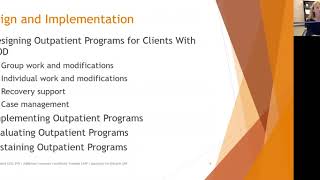
Dr. Dawn-Elise Snipes (recorded webinar) outlines essential elements and implementation strategies for integrated treatment programs for persons with co-occurring mental health and substance use disorders. She covers core service components (screening/assessment/referral, medication management and on-site psychiatry, psychoeducation and dual-recovery groups, case management and ACT teams), program design adaptations for co-occurring clients (more individualization, shorter groups, co-leaders, trauma-informed care), and recommendations for implementation, evaluation (rapid-cycle change, operational benchmarks) and sustainment (staff training, consumer involvement, community buy-in).
Chapters
This episode was pre recorded as part of a live continuing education webinar on demand. CEUs are still available for this presentation through all CEUs. Register@allceus.com counselortoolbox Alrighty. Welcome everybody. We are going into part 6 of SAMHSA TIP 42, Treatment of Persons with co occurring disorders. And I know it hasn't been super exciting up until now, but I'm hoping we're going to get into some interesting stuff today. We're going to identify essential programming for clients with co occurring disorders. Because remember, it's not the same as programming for somebody with a simple mental health issue or a simple that means only that one diagnosis, addiction. We want to look at the interaction between these issues. We're going to explore modifications for clients with co occurring disorders and identify components in successful implementation of programming. Because if you get a program up, you need to make sure that it's successful and that you can keep doing it. I mean, it really stinks to get a program up and running and then not be able to continue it because of lack of funding. So we're going to talk about some of those things. All right, so the basics essential program for clients with co occurring disorders includes screening, assessment and referral. Your agency is most likely not going to provide all of the services that this person needs. So we need to screen for all of their needs. Their biopsychosocial needs. We're talking about medical, financial, legal, mental health, addiction, child care, you know, employment, anything in that spectrum that we would consider treatment and wraparound services we need to screen for because all of those are potential stressors that could contribute to a relapse or exacerbate an existing condition. We need to be able to do assessment for mental health and substance abuse issues. So in your facility you need to make sure that there is somebody who can do both. And if not, you need to have some sort of an arrangement with another clinician who can do whatever you can't. If you're a mental health clinician, they need to be able to do the substance abuse and vice versa and then those referrals. Now referrals is kind of a broad term. A lot of times we think of referrals as referrals to outside agencies, but referrals can also be within the same company. And the company I used to work for, we had different departments and we were pretty isolated in terms of our department did our thing and, and their department did their thing. So when we were making a referral, we shared the same electronic health record. We shared the same files and the same CEO, but we didn't share a lot of other stuff. So it was the same process to make a referral to case management or housing or something at our agency as it was to make an external referral. Okay. We need to provide physical and mental health consultation because we recognize that if a person comes in for a substance abuse evaluation, I'm assuming most of you who are listening are either substance abuse counselors or want to be. Somebody's going to come in for substance abuse, but they are likely going to also have mental health issues and physical health issues going on. Now, they may not be earth shattering, but in order for them to reach their maximal quality of life, we need to make sure that they are physically, mentally and emotionally healthy. Ideally, we want to have a prescribing on site psychiatrist. That doesn't always happen. Now you can get some psychiatrists that will come in locum tenens one day a week and do their thing. That is one way. And you can contract with a psychiatrist in your local community to do that. That's generally the most cost effective way. Sometimes they will come in and just basically use a space in your facility and then they will bill through their own provider number and stuff. So it may not be where you've got to actually hire them, but, but you need to have somebody come in on site. A lot of people with substance abuse issues have issues with transportation as well because they've lost their license or whatever. Not all of them, but a proportion, I would say 30% maybe. And so we want to make sure that we're not making it more difficult for clients to access the services they need. We should have medication and medication monitoring because with mental health and substance use disorders, people may be on different medications. You've got all of your psychotropic meds for mood stabilization, psychotic issues, antidepressants, anti anxiety, yada yada. You also have medication assisted therapy for substance use disorders, including methadone, buprenorphine, suboxone, medications for smoking cessation, and medications including Vivitrol for alcohol abuse. So you may have medications in both areas, mental health and substance abuse, that need to be monitored with. We need to make sure that this person is compliant, they're not taking anything else that could be contraindicated. And we need to monitor medications in terms of relapse prevention. If their meds aren't right, or if they DC their own meds or they can't access meds because they don't think they can afford them, then they're going to be setting themselves up or we're going to be setting them up for a relapse. No love, get familiar with your patient assistance programs. Now. You can go, you know, online to like goodrx.com and find a lot of really inexpensive prescriptions, but that may still be too much for your clients. Most pharmaceutical companies have something called a patient assistance program. You go to their website, find their patient assistance program or PAP generally it's a 1:1 page sheet that the psychiatrist or the physician fills out. It gets submitted to the pharmaceutical company who will make a determination at that point if the client qualifies for free or low cost medications. To date in 20 years I have never had one rejected. So you know, that is definitely an avenue that you want to consider if you've got a client who is uninsured and doesn't think they can afford their medication. So we do need to make sure that they're taking those meds and that they're stable. I mean, if they're taking the meds and antidepressants, take six weeks to work in general to get to full effectiveness. You know, that first six weeks there's going to be some danger periods. And with antidepressants and any other psychotropic meds, there's a good chance that the first medication the person tries isn't going to be the right fit. It isn't going to be the right antidepressant or the right mood stabilizer for them. So there may be some art involved which can get really frustrating for the client. And it's important for us to work with them and help them maintain hope and optimism as they self advocate to find the best medication to help them achieve their goals. So we have screening, assessment, referral, physical and mental health consultation, a prescribing on site psychiatrist, medication and medication monitoring. Now we need to also talk about psychoeducational classes. What is cognitive behavioral therapy? What is acceptance and commitment therapy? What is self esteem? All of those things that we teach in psychoed classes and family and community education need to be available. Addiction recovery, mental health recovery is a systemic process. It's not just the identified patient who needs to learn and grow, but everybody else is going to have to change a little bit. So it's important to make sure that we have psychoeducational classes available to the consumers as well as to the people that they define as their family or who are significant. And ideally we also want to have psycho educational classes available to the community to educate them about opiate abuse prevention, to Educate them about addiction prevention and all those other things so we can, you know, help people not get started because. And also help them educate them about depression and anxiety and all that other stuff that can prompt the beginning of substance use. All right. We also need to have double trouble groups or dual recovery mutual self help groups. Have those on site. Why? Again, because transportation is often very difficult. And unlike AA and NA and some of the other 12 step programs that are really widespread, double double trouble groups are not really widespread. So it's important to have them where the consumers are in order to encourage the consumers to engage in them and use them in a way that's meaningful. So how do we design these programs? I mean, that was a lot of stuff to incorporate and I recognize it is, but it's not as hard as you might think. The first thing is we need to make sure that we provide programming that has group work. And group work is going to need to be modified for clients with co occurring disorders in order to accommodate when they're having an upsurgence in symptoms of their mental health issue or when they're in early detox or experiencing post acute withdrawal symptoms. So we are going to need to be aware of those things when we do group work with people with co occurring disorders. When we talk about relapse, we're talking about a return to prior functioning in mental health or substance use. So when we talk about relapse prevention and triggers, we're talking about both mental health and substance abuse. And we need to make sure that clients understand this. So when I say, what are some relapse triggers for you? I want to know what triggers your depression. For some people it may be, you know, a lot of rainy days, they have seasonal affective disorder, it may be holidays, it may be, you know, who knows what. And I want to know about those. In addition to what triggers you to want to use? Well, depression may trigger you to want to use, but what else? So I want to really get a very global idea of what their triggers are. We want to look at individual work and modifications. Depending on the person's diagnosis, they may need more or less individual work. And people with extensive trauma may need more individual work and less group work in order to deal with their presenting issues. We need to provide recovery support. So relapse prevention and making sure that there are wraparound services. And when I say that, you know, that's what we used to call it before the recovery oriented system of care. That's everything else besides counseling and psychiatric treatment. You know, your child care access Your transportation, your legal issues, your physical, you know, primary care, physicians, dental. Dental is a big thing. A lot of people have dental problems. And it's really hard to not be self conscious if you've got a lot of missing teeth or if you're, you've got toothaches all the time. Okay, so, and case management is the final thing, and case management is really important. But the nice thing is case management can be integrated. It can be facilitated by peer support personnel who are either paid or volunteers, and it can also be facilitated just by volunteers in some cases. Now, this isn't what we're talking about with intensive case management. This is more providing a single point of contact for somebody in who will help them navigate all of those wraparound resources. And the system as it is, once we design the program, we need to implement it. So a lot of programs are already in existence and you're not going to shut down everything and then, boom, you know, start with another program. So implementing an outpatient program, a lot of times you want to look at what you already offer and, and ways that you can slowly integrate this change into, into your organization. It doesn't have to be overnight. Your organization in, you know, whatever hometown USA you're in will have different needs. Those clients will have different needs than clients in the city that I live in. So you'll want to implement use principles of rapid cycle change when you're implementing these programs a lot of times, so you're going to implement a phase and you're going to let it ride out, you know, because every phase is going to have its little growing pains and you're going to see how it's working, what is working for the clients, what doesn't seem to be working as planned. You're going to make modifications. Once that part is stable, then you're going to either scrap it if it's not working at all, or, or hopefully you're just going to build on it. So in implementation, use rapid cycle change. When you evaluate your programs, you want to look at more than how many patients am I getting through the door, how many buts am I keeping in seats every day? Because you can have a group of 15 people, but if it's a different 15 people every single day because your turnover rate is so high, that's not a really good statistic. You want people who start and complete. So you're going to define your benchmarks or your dashboard goals according to what your facility sees as meaningful. So how many days they're in the community that they're not incarcerated or in the hospital and they're clean, how many employment days they have, how many people actually successfully complete treatment, how many people show improvements on certain measures of functioning, whether it be depression or substance abuse or whatever. Your agency will have to define what their goals are in order to say this program is working, this is an awesome program. And then sustaining these programs is really important. You need to get community buy in, you need to get agency buy in and you need to get consumer buy in. So consumers are going to come, but consumers are also going to talk to other people who will make referrals. You want the buzz in the community to be really positive in order to make sure that you've got, you know, butts and seats, which is the only way to keep the program open. The population of people with co occurring disorders is heterogeneous in terms of motivation for treatment, nature and sensitivity of substance use disorder, and nature and severity of mental disorder. So we need to be aware. Remember from one of the prior lectures we had the four quadrants. Some people will present and if you're in a substance abuse treatment facility, they're probably presenting with a high substance use issue, but they may have low to moderate mental health issues or they may have significant mental health issues. And the treatment plan is going to look different for those two groups of people. When they're in treatment, their substance use may remit and they may be feeling really good, but their mental health issue may get exacerbated. So then you've got somebody who is high mental health and low substance. So you need to be able to accommodate that. And this is really not that uncommon when you're working with clients who have a trauma history. As they get clean and sober, some of those PTSD symptoms may become more prominent and overwhelming. So their mental health may get worse. You know, their mental health symptoms may get worse for a period and, and you've got to switch focus and help them deal with that so they can tolerate being clean and sober. Other things that affect the severity of substance use disorder is the drug of choice and whether they were poly substance using and their method of administration. There's a lot of things that we want to look at in terms of what we're dealing with. So when we use individual counseling with people with co occurring disorders, you need to use a variety of approaches. Not everybody's going to respond to cognitive, behavioral, and you need to look and see which approaches are appropriate for your client population. It needs to be culturally responsive. And again, not every approach is appropriate for every single culture. Some cultures prefer to be much less direct. Some, some cultures prefer to be much more direct, and some cultures prefer to involve the whole family and not have much in the way of individual counseling. Your approaches, regardless of which one you choose, should be trauma informed. And that makes the assumption that most people have experienced trauma at some point in their lives. Adverse childhood experiences, and I will just say adverse life experiences contribute in large part to, to people experiencing mood issues and, or developing addictions. I mean if you go through a traumatic incident and you know it's just intolerably painful and you decide to, you know, self medicate with alcohol, that may alter the neurochemicals, so eventually you become addicted to alcohol. Now that doesn't happen for everybody, but I'm just saying there are paths to go through that some people can go through in after a trauma that can lead to substance use and mental health disorders. So we do need to just assume that there probably was a trauma in this person's life. I mean, think about yourself. Can you look back in your life and say, no, I've never experienced a traumatic event? Well, if you were alive during 9 11, you can't say that. If you were alive during Hurricane Katrina, even if you weren't living there, you probably can't say that. So there are a lot of things that we don't consider. Individual counseling for people with co occurring disorders needs to be regularly scheduled, not just, yeah, we'll see if we get an appointment in this week. No, they need to be able to know that they just have to hold it for six days if it's once a week or whatever it is. In residential, our clients used to meet with their primary clinician every morning at 8:30 and that was when they would address any issues that were currently presenting or they would tell their primary clinician if they were decompensating and needed more individual help. Individual counseling needs to be guided by the treatment plan. What does this mean? And you know, I gave you a little example here. So if the problem is depression, now that is not the goal. Okay? The problem is depression as the client defines it. And this is not the best written treatment plan. It's just to give you an idea how to write your notes. So the first goal for treating the depression, the first goal the client wants to achieve is to self report a mood of three or above six out of every seven days. Well, that's not going to happen overnight, but that is a great goal to have. So you know, most days you're either content or happy or elated. So the first thing they're going to do is learn about the causes of depression. So when you meet with them in an individual session, this is the first thing you're going to talk about. Do you know what causes depression? The second objective is to have the client identify their symptoms of depression and what might be causing it for them. You know, because there are a lot of different things that can cause fatigue. There are a lot of different things that can cause irritability. So we want to ask the client, okay, this is in general what we know about depression. Educate the client and then we want to look and say, what's going on with you? You know, what are your symptoms and what do you think might be causing them? And then in the next session you start addressing, you know, some of their, some of the causes of their symptoms. And you can just go down objective 1C, 1D, 1E. So when you write your not, you're going to say, we addressed goal number, the problem of depression. Goal number one, objective A and B. Today we discussed causes of depression and the client began identifying their symptoms of depression and speculating about what might be causing them. That is a good summary statement for leading into what else you covered in your note. But that will tell any auditors, you know, yeah, we're not just going in there and sitting down and shooting the breeze for an hour. We actually have a plan to what we're doing. Because people with co occurring disorders can feel very out of control sometimes, especially during that early recovery period. And it's easy to get sidetracked by the crisis of the moment. I'm not saying we want to ignore that. You know, when they come in, definitely do a check in, see how they're doing, process anything, but make sure that you get to the objectives of the session. So you're not just doing crisis intervention every single session. Because that doesn't get you anywhere. That's like spinning your wheels in the mud. When working in groups with people with co occurring disorders, we need to make sure that we augment group therapy with individual counseling. So if you do a group on self esteem or relationship issues or skills or something, that's great. But then in group work, in individual work, I'm sorry, we want to talk about what did you learn in that group? How can you apply it to your life? How is it useful to you? You know, what are you going to take from the group? What are you going to leave? Because not everything's going to be appropriate or applicable. And how can we integrate this into your change plan? We want to Reduce the emotional intensity of interpersonal interaction in co occurring disorder group sessions. So if you're doing a traditional therapy group, you want to make sure to monitor the emotional intensity so people with co occurring disorders don't get overwhelmed because they're already feeling pretty emotionally dysregulated. Because many clients with co occurring disorders have difficulty staying focused, treatment groups usually need stronger direction from staff. So we have to, you know, keep it on target. And this can be true again with psychoed groups. Those are easier to keep on track. But therapy groups, because there is so much emotional dysregulation and the clients with co occurring mood or bipolar disorder may tend to have more emotional intensity. Sometimes they can tend to monopolize the group. So it's important for group leaders to be able to effectively manage the group and, you know, keep it flowing. And group or activities should run for no more than 40 minutes. And I know you're going, excuse me. Where I come from, we weren't allowed to run a group that was less than an hour and 15. And that is just painful for clients that with co occurring disorders and or in early recovery. So what we would do is we would go for 40 minutes and then we would take a 10 minute break and then we would go for another 40 minutes. And that gave them time to get up, walk around. We still allowed smoking at our facility. So a lot of people went out and smoked, but it allowed them some decompression time. Because of the need for stability, groups should run regularly without cancellation because that really does upset people. And in early recovery, psychoeducational groups are usually more beneficial in early recovery. This is the period where they're at a detox, but the fog hasn't completely lifted yet. They're still exhausted, their body is still reeling from, you know, all the drugs that have been in it and the lack of sleep and everything else. So it's important to help them learn new skills, but we want to take it slowly. It's important to let them, you know, stabilize out a little bit because now they're not self medicating and stuff really hurts, they're starting to feel stuff. So relapse prevention, post acute withdrawal and cognitive, behavioral and dialectical behavior tools are really helpful to empowering clients to understand what's going on with them and feeling like they have tools that they can use to control it. You know, we don't want to start poking the bear and putting them in a crisis before they have new tools to deal with stuff that's not really smart. So early Recovery. We want to focus on those psychoed groups and provide them stability and structure. We used to say the first 30 days is all about getting up and showing up. And then after that anything on top of that was usually icing. Because many clients with co occurring disorders have difficulty in social settings, group sizes may need to be smaller. So be attentive to social anxiety and anything else. Co leaders are especially important in these groups as one leader may need to leave the group with a member. So if you do have somebody who starts to decompensate or emotionally dysregulate, one therapist may have to leave with that client while the other therapist stays and facilitates the group considerable. And if you don't have in group co leaders, it's good to have two people. You know, we used to do it where I worked. I would touch base with somebody before I went into group. I would say this is what we're covering, yada yada. I would have a general curriculum that we were going through that I would leave at the front. If I had to leave with a client, that person would stay available while I was in group. They would be in their office doing notes or something. And if I had to leave, I could tap that person. They would go in and pick up the group kind of where I left off. They would usually need to do some de escalation because when somebody walks out of group it can be pretty intense. But that way the group wasn't just sitting there twiddling their thumbs for 40 minutes, you know, trying to figure out what was going on. So co leaders are really important, whether you're both in the group the whole time or you have somebody that is your backup that you can tap, who can just step right in for you. Considerable tolerance is needed for varied and variable levels of participation depending on the client's level of functioning. You know, and that can be cognitive functioning, that can be their functioning because they just started a new medication that makes them really sleepy. It could be that their medication's not stabilized yet. So their bipolar is still all over the place. There's a lot of things that, that can affect functioning. So they may not participate as much or may be more boisterous. Because of their level of functioning, their symptoms may not be stable. So one day they may be feeling really great and the next day they may feel really crappy. And that's part of post acute withdrawal. And that's also part of starting any kind of psychotropic medication. A lot of times there's ups and downs. Even within days, their response to medication and their mental status. If they are depressed, they are going to have obviously generally less participation. They're going to be more withdrawn, more sullen, and potentially have more difficulty sitting still in group than someone who is not experiencing that. So when a client is not participating as you want them to, either too much or too little, you want to ask yourself, is there something going on with this client that could be contributing to this, you know, medication, general health, post acute withdrawal, anything going on in their family? Maybe they just found out that their spouse has filed for divorce, who knows? But we do need to be aware of that. And instead of viewing it as resistance, view it as an indication that there's a problem. We need to affirm accomplishments more than disapprove or sanction behaviors as much as possible. So when a client comes in and they're kind of withdrawn, you know, if we understand something's going on with them, which 99% of the time it is alright, we want to try to encourage them that day. But if they come in the next day and they're actively participating, we want to give them kudos for that. The first day when they're not participating as much and you're kind of bummed that they're not as engaged, that's okay. They came and I'm going to give them affirmations for, you know, I'm really glad you at least came to group today. I know it was really hard for you to sit through the whole thing. Give them those affirmations of, you know, you try, you're trying, you're moving forward. They may be baby steps, but you're moving forward. And negative behavior should be amended rapidly with a positive learning experience designed to teach the client a correct response to a situation. It's not uncommon to have drama. And when you have a house of 80 people in early recovery or you have people in outpatient who are often, you know, where I was from, they were often all from the same neighborhood or from a couple of closely close neighborhoods. We didn't have a very large town and there was generally interpersonal drama that was happening outside treatment that would come inside treatment and there would be aggressive outbursts. So that needs to be amended rapidly and we need to teach them effective conflict management and communication and all that kind of stuff. Medication management, like I said, is important. There are medication assisted therapy options for opiates are that alcohol and nicotine. So if we can make it a little easier, especially for people with co occurring disorders, you know, that's probably going to facilitate their recovery. Process because, you know, if they're already depressed and anxious and then they start feeling all these withdrawals and cravings and everything, it can be incredibly overwhelming. We need to manage acute and post acute withdrawal symptoms. Most of your post acute withdrawal symptoms are going to have to do with cravings and foggy headedness and fatigue and some of those sorts of things. But we do need to make sure that the client is advocating for themselves with their psychiatrist or their primary care, and we are modifying treatment appropriately. And then, like I said, psychopharmacology, and that's everything else for the mental health. Primary care. Consults or referrals are needed to rule out mood or pain issues caused by autoimmune disorders like fibromyalgia or Crohn's disease. Crohn's disease prevents the absorption of sufficient amounts of B6 in a lot of people, which can impair their serotonin production, which can exacerbate, which can increase their depression. So, you know, let's rule this out, and if they've got it, let's make sure that they're getting enough vitamin B6 and anything else they need. And if they're in pain because of their Crohn's disease, that could negatively impact their mood. And in addition to set them up for relapse, we need to rule out liver or kidney issues, diabetes, sex or thyroid hormone issues, including low testosterone or post premenstrual dysphoric disorder, you know, and. And postpartum issues. Low sex hormones can lead to low availability of serotonin. A lot of people. Low high sex hormones can also lead to irritability and aggression. So if we've got somebody that has an imbalance in their sex hormones, it can greatly affect their mood. Premenstrual dysphoric disorder, you know, we know that that's related to your sex hormones. Hypothyroid is generally the slowing down, and that's not enough of your thyroid hormones. And it really mimics depression. But it's a physiological cause. It has nothing to do with, you know, serotonin and hyperthyroid is your thyroid is going too fast. These patients often report heart palpitations, anxiety, feeling like they're sped up all the time, which can look very similar to hypomania. So we do want to rule out those STDs. HIV and musculoskeletal issues can all cause pain, depression, some of the STDs can migrate and cause some cognitive problems. So just get a good, clean bill of health to make sure there's nothing physiological that is contributing to their mood issue. Family education has got to be a part. Particularly in cultures that value interdependence and are community and or family oriented. A family and community education and support group can be helpful. Let's get the family in there so they understand what John's going through. Otherwise, when John comes out of treatment after 30, 45, 60 days, all they know is the John that went in there. So they're kind of expecting that same John to come back out instead of this new and improved version. So we do want to help them see these changes along the way and understand what addiction and mental health issues are, understand more about their loved one's condition, and, you know, improve communication and support in that family. Programs must provide this instruction in an interactive style that allows questions not in lecture mode. Families don't want to listen to lectures. I don't want to listen to lectures. God bless you for listening to this lecture. But, you know, understand that most people do a lot better in an interactive format where they can break into groups, they can do worksheets, they can talk, they can whatever. The essentials of information that needs to be communicated in family education include the name of the disorder. You know, what are we talking about here? It's symptoms, prevalence, and cause. Now, prevalence, you don't want to get into that a whole lot, but that's to help families understand that this is not a rare thing. This is not unique. Your loved one has a lot of company in what they're experiencing right now. So, you know, let's say, support them. We're going to present information about how the mood disorder or mental health issue may interact with substance abuse and vice versa, so they understand why it's important to treat both of these concurrently. Some people will say, you know, if you just treat his depression, then he'll quit drinking, or if you just treat his drinking, then his depression is going to go away. That's not likely to happen. There's a lot of stuff that happens in the interim that prevents that from being just such a simple solution. So we need people to understand. We need to go over treatment options and considerations in choosing the best treatment so families understand, you know, okay, after residential, what is Tom going to do? Or Tom's in IOP and is not doing really well. What are our options here? We want to help them understand the likely course of the illness. All of them, you know, physical mental health and substance abuse and programs, resources and individuals in the community who can be helpful so all of those wraparound services and Ideally, if you have a case manager who that person's identified case manager is, that can help them navigate that system. Assertive community treatment emphasizes shared decision making with the client as an essential to the client's engagement process. Now, in a lot of places, we call these fact teams or ACT teams. Where I came from, it was the Florida Assertive Community Treatment Team. Loved this program. We just didn't have enough of them. Multidisciplinary teams, including specialists in key areas of treatment, provide a range of services to clients and members. Typically include mental health and substance abuse treatment counselors, case managers, nursing staff, and psychiatric consultants. Okay, that sounds like what we've been talking about so far. What's so unique? We're getting to it. The ACT team provides the client with practical assistance in life management as well as direct treatment, often within the client's home environment, and remains responsible and available 24 hours a day. Now, how awesome would that be for a lot of our clients who, you know, do fine when they're campus and then when they go home, they start struggling or, you know, whatever, if they had an outreach. Now some of you are probably going, well, that's what a sponsor is for. Well, that's true. Sponsors can be helpful, but a lot of times sponsors are not able to do everything that an ACT team can do. They're not psychiatric consultants, they're not nursing staff. The ACT team, where I came from would stop by, you know, each case manager would stop by their client's house every single day to make sure that they were taking their meds, that they were doing okay, and address any presenting issues for that day. As the client got more sobriety time and their symptoms stabilized, then the case manager would back off and wouldn't approach every single day. They may only visit, you know, twice a week, but it was a gradual step down. And if the client ran into a hiccup at 8 o' clock on a Friday night, they had somebody they could call, and it really helped stave off that risk of relapse. Nine essential features of assertive community treatment services are provided in the community. Go figure. Most frequently in a client's living environment. So we're not making them come to a clinic. A lot of people who qualify for ACT have severe and persistent mental illness. So it makes getting to treatment and following through with instructions more difficult. There's assertive engagement with active outreach. So we're really going out there and we're going, hey, I'm here. We're not going. Yeah, I'm here if you need me. No, we're going out and going. Hi, it's Monday morning. I'm here. How are you doing? There's a high intensity of services, small caseloads, continuous 24 hour responsibility. A team approach. So the full team takes responsibility for all the clients on the caseload. This is the only way to provide 24 hour coverage because one person could get burned out really easily. So a lot of times they'll rotate on calls. The multidisciplinary team reflects integration of services and there's close work with support systems and continuity of staffing, especially with clients with severe and persistent mental illness. If you have staffing changes frequently, it really stresses them out and impairs their recovery. So it's good to know the nine essential features of an assertive community treatment program. They are extraordinarily helpful if you can get funding for them. Advice to administrators. Provide intensive outreach activities. Use active and continued engagement with clients. Employ a multidisciplinary team with experience in substance abuse and mental health. A lot of times act teams or treat. These treatment teams are geared around people with severe and persistent mental illness. But we do need to recognize that a lot of people with SPMI also have substance use issues. So we need to have both professionals on the team provide practical assistance in life management. Emphasize shared decision making with the client. We're not there to tell them what to do, we're there to talk with them and empower them and encourage them. One man I worked with, you know, just a delight of a man. He was a nuclear physicist before he had his psychotic break. Brilliant man, obviously. But when he was not stable on his medication, he had a lot of difficulty functioning. So, you know, far be it from me to make decisions for this person. He is very capable. It was just a matter of working with him and understanding how to work with him. Even when he wasn't as lucid as we would have liked. We want to provide close monitoring, maintain capacity to intensify services as needed. So if you've got a client who stepped down to twice a week visits and they start having a resurgence of symptoms, mental health or substance abuse, we need to be able to ramp them back up to seven days a week if necessary. And administrators need to foster team cohesion and communication to ensure that all members of the team are familiar with clients on the caseload. So it's up to the administrator or the team leader to make sure that everybody's read in and it can get easy to let case reviews slide. Don't do it. It is crucial to make sure that everybody is read in on every single client so they can respond appropriately if they're the one that gets the call at 8 o' clock on Friday night. Case management, this is not a sort of community case management. This is just simple old case management or even intensive case management. But it serves as a central point of contact for multiple agencies or providers. Case management provides outreach and engagement activities, brokers community based services and advocates for client access. So case managers are going to be going down to, you know, workforce development going, I've got clients who are really needing work, they're really wanting work or supported employment. And yes, they've only been clean for 60 days. However, you know, it is really important in their treatment plan and this is why they would be good, you know, candidates for supported employment or whatever. But a case manager often does a lot of advocacy. They can broker community based services. They provide some support and counseling services. They assist the client in system navigation. Now, case managers can be counselors. Sometimes, you know, we wear many hats and that's just the way it is because that's what our agency has or doesn't have funding for. It can be a broker and this is somebody who is outside of your agency and that's all they do is broker services. They don't provide a lot of counseling. It can be an intensive case manager who may work for your organization or not, who does some counseling, some crisis intervention and all the case management services. And it can even be a volunteer. As I said earlier, sometimes you can get people who are in recovery peers to come in and help others navigate the system that they've been navigating for five years. You can also get, especially if you live in a college town, a lot of times you can get interns or volunteers from the university, especially ones that are working on their undergrad in counseling, that are willing to come in and volunteer in order to get the experiential hours that can really help defray the cost if your agency is strapped. Examples of intensive case management activities and interventions include engaging the client in an alliance to facilitate the process and connecting the client with community based treatment programs. Now with case management, in order to get paid, we use a lot of fancy language. And when you do your documentation, if you're documenting and billing for case management, there are special keywords you've got to use such as facilitation, linking, connecting intensive case managers assess needs, identify barriers to treatment and facilitate access to treatment. We don't enroll people in it, we facilitate access, offering practical assistance in life management and facilitating linkages with support services. Monitoring progress, providing counseling and support to help the client maintain stability in the community. So they're going to have a counselor, but you may as an intensive case manager, if that's the hat you're wearing, you may also be providing some counseling and support at this point. Crisis intervention and assist in integrating treatment services provided by facilitating communication between service providers. So you've got a client who is functioning at a moderate level. The case manager is going to make sure that the psychiatrist, the primary care physician, the pain management specialist, the addiction counselor and the mental health counselor are all communicating and on the same page so the client's not having to repeat himself six different times. In order to have the most successful program, you need to be able to either provide or contract to provide multi level services. There needs to be detox, there needs to be crisis stabilization that handles the crisis points. There needs to be a residential option for clients who need to be in 24 hour care. Mental health or substance abuse, Partial hospitalization. Mental health or substance abuse. You want to have options for both. Intensive outpatient programs for mental health or substance abuse or both. You know, sometimes you can, you'll have a co occurring program but if you don't, you need to make sure that you've got programs that are going to coordinate with one another. You need to provide low intensity intensive outpatient services and that's when you go a little bit over three hours a week. Low intensity IOP usually meets one to one and a half hours, five days a week. Outpatient counseling individual and outpatient intervention level groups which meet once or twice a week in order to, you know, maintain recovery gains. Not quite after care yet, but getting ready there to go there and then aftercare services. So program implementation, some guides for involving clients and consumers. You know, if you're going to implement a program, it's good to get information from the people who are going to be in the program about hey, what they need and what works and what doesn't. So form a consumer advisory group. Include both current clients from the program and past clients. Elect a client representative to discuss client concerns with staff. So you know, as you're developing this program, like I said, not everything is going to work as you anticipated or as you hoped. So if you're getting feedback from clients about what's working or not and even which clinicians may be more helpful than others, you know, it doesn't mean you have to fire that clinician. But some clinicians may need additional training. Provide a staff liaison to help coordinate client meetings and Provide a continuing link to, to staff. Hold regular meetings and phone conferences. Provide incentives to clients for participation. That's not participation in the program, but that's participation in this development process. You know, if you're willing to sit on the advisory board, you know, there are these incentives. Solicit input on a variety of matters in an ongoing way. Not just, you know, right before you launch the program, but when you're thinking about the program, when you're developing the program, when you're launching the program. A week after the program starts, a month, three months, six months. We want to get continuing feedback in order to make sure that things are continuing to go in the direction they're supposed to and they're not kind of dwindling as we go or there's not some major problem that we're missing. Involve clients in meaningful projects. You know, if you're going to involve them in the development of this, let them feel like they've got a say and a stake, because hopefully they do. When client input is solicited and received, consider it respectfully, respond appropriately and give the client feedback. For example, you know, one of the things that we did right before I left the agency that I worked for was we became a non smoking facility. Oh boy. That caused a lot of upset and consternation. There was a lot of client input that was received and you know, we heard what they were saying and we respected that. However, given state mandates and everything else, we were being forced to go smoke free. So, you know, okay, so we backed off or we didn't back off, but we helped make the transition smoother. You know, grandfathered in. The clients that were already in there, any clients who enrolled after that, we made sure that they got a consult for smoking cessation and anything else they needed. There was smoking cessation groups, you know, in order to make this change in the program, we had to make sure that it worked for the clients. And we need to train staff. Differing perspectives regarding the characteristics of the person with Coke co occurring disorders are going to happen. If a person is a mental health counselor versus a marriage and family therapist versus a licensed clinical social worker versus a, you know, we can go on. So it's important to recognize that everybody may see this symptom or the characteristics a little bit differently and communicate so we get a broader understanding of the client. We want to train staff on the nature of addiction and mental disability and the interactive effects of both conditions on the person and his or her outcomes. We need to make sure that staff recognizes and understands the Symptoms of various mental disorders. So you know, basic diagnosis. You don't have to be a diagnostician in order to be effective with this population. But it's important that even your techs understand the symptoms of bipolar disorder or paranoid schizophrenia. So if a client starts to decompensate paranoia, they can recognize what might be going on and seek appropriate assistance. Staff needs to understand the relationship between different mental symptoms, drugs of choice and treatment history. So, you know, somebody with depression may tend to lean towards either certain opiates or stimulants in order to feel better. Makes sense. So helping staff understand that individualizing and modifying approaches to meet the needs of specific clients and achieve treatment goals is another area for training. We want to make sure that staff understands how to access services from multiple systems and negotiate integrated treatment plans. And finally, we want to make sure they're trained on preventing burnout because we need them and we need continuity and consistency for the clients and for our bottom line. Let's just be frank, if we have a high turnover, we're going to be able to get less people through the program each year. We need to improve adherence of clients with co occurring disorders in outpatient settings. And we can do this by using telephone or mail or even with appropriate HIPAA considerations. Email reminders provide reinforcement for attendance such as snacks and transportation. So, you know, if transportation is difficult, finding out a way to help them get there. Making sure that they have access to, to an environment that's pleasant. Increase the frequency and intensity of the outpatient services offered as needed in order to make sure clients can get to groups, but they also have somewhere to go if they are struggling. One of the programs that I worked for, we had a study room, for lack of a better word. And if clients were not there for their treatment groups, it was a safe place. They could come and hang out, tap into the wi Fi and drink coffee so they were not, you know, tempted to go somewhere else where there would be more triggers if they couldn't get to a meeting. For example, you want to develop closer collaboration between referring staff and outpatient program staff in order to make sure that handoff goes really smoothly that we can hand back up if the client starts to not do so well in outpatient. We need to reduce waiting times for outpatient appointments. A lot of times clients, when they call, they're in crisis and if you tell them there's a six week wait, you're going to lose them. You know, I managed a wait list for many, many years and it was very disheartening to See how long it took to get clients in and to see how many that just kind of dwindled and we lost track of one thing that we did. And I've told you this in other classes. We created an intervention level outpatient program. So after people contacted us, they would go, they could come into the walk in clinic and get their assessment. So they got their assessment, you know, within 72 hours of contacting the agency. We would tell them when the next walk in clinic was and then they would be enrolled in intervention level groups. So they were coming in and getting some psychoeducation. This wasn't intensive, but it gave us the ability to continue to encourage hope in those clients and to keep an eye on them and to make alternate referrals as needed. So if the client came in one day and qualified for detox, we could refer them out right then and we weren't losing track them. So that's one thing that you, one option that you can do in order to reduce waiting times. If you don't have as many individual outpatient therapists as you need, have outpatient programs designed particularly for clients with co occurring disorders and provide clients with case managers who engage in outreach and provide home visits. Oh, that's ideal. It doesn't happen a lot because of funding, but it is ideal if you can get, you know, some sort of financial support for that kind of a program. Coordinate treatment and monitoring with other systems of care, providing services to the same client. So if you're working with the client's, working with a primary care or a pain physician, making sure that we're coordinating that treatment and the monitoring. So if the client relapses, you know, everybody on the team knows data can also be used to improve programs. The first thing you got to do is define those operational goals in terms of client behaviors for which change is sought. And I already talked about that. Exactly what does a successful program look like? If a client successfully completes treatment? What characteristics does he or she have? What benchmarks have he met? Locate and or develop instruments that can be used to assess client functioning in the areas of concern for those outcomes. So it can be the asam, it can be the fars, it can be the sase, you know, whatever you use can be very helpful at identifying benchmarks. So you can do pre test, post test and follow up, develop a plan for data collection, data analysis and reporting and how you're going to integrate those results into your program for what was it again? Rapid cycle change. So you've got this program, you're going along, you're chugging, you get some data back and you find out that the timing of your program is not working for the people in your area right now because the bus system stops running at 8 o' clock and group doesn't get out till 9. Well then you're like, oh my gosh, got this data. This is one of the reasons we're having a lot of dropouts. What can we do? So then you start brainstorming solutions and implement solution number one, whatever you think is the best solution and see if that improves compliance and attendance. If it doesn't, then you may have to try something else. But that's the rapid cycle change where you're regularly evaluating, identifying problems early and implementing solutions one at a time. And you're not changing 16 different things. You're not just scrapping the whole program going, well, that didn't work. You're going okay, we're having difficulty with attendance and compliance. What's causing that and how can we adjust that issue? Other best practices in integrated treatment include continuous cross training of professional and non professional staff, empowerment of clients to engage fully in their own treatment. Don't do the treatment plan for them, do it with them. Ask them what works. Use a solution focused strength based approach. Rely on motivational enhancement concepts and culturally appropriate services. It is so important. Tip 59 I believe it's either 57 or 59 from SAMHSA goes over cultural responsive services. Make sure you have a long term stage wise perspective addressing all phases of recovery and relapse from detox to aftercare. Have strong therapeutic alliances to facilitate initial engagement and retention. We want clients to feel like they're being treated as humans and people, not numbers. Make sure your group based interventions are available as a forum for peer support, psychoeducation and mutual self help activities. Provide a side by side approach to life skills training, education and support. So we want to make sure that we're training but we're also helping them take that knowledge, turn it into a skill. You know, I can read about how to do anything but you know, motivational interviewing, let's say I when I started learning that I could read about it and I could recite that book backwards and forwards but implementing it was a whole other step that took a little bit of training or a lot of bit of training. So we want to make sure that we're providing the psychoeducation. So that's the knowledge part, but we're helping them translate to that knowledge, to skills and abilities. Provide community based services to attend to clinical housing, social or other needs and encourage fundamental optimism. Help them recognize that there is hope and recovery is possible and all staff need to believe that in their heart and communicate that. So clients with co occurring disorders may need some minor adjustments to programs including more individualization, more structure, slower pace, and more comprehensive services. Implementation of programming should involve client input, staff cross training and data collection, and continuous quality improvement. Alrighty everybody. Thank you for being with me today and I will see you on Wednesday same time, same station. If you enjoy this podcast, please like and subscribe either in your podcast player or on YouTube. If you want to attend and participate in our live webinars with Dr. Snipes, you can subscribe atoolbox. This episode has been brought to you in part by allce.com providing 24.7 multimedia continuing education and pre certification training to counselors, therapists and nurses since 2006. You can use coupon code counselortoolbox to get 20% off of your current order. If you're a podcast listener, especially on an Apple device, it would be extremely helpful if you would review Counselor Toolbox. To do this on your Apple device, go to the Podcast app, search for Counselor Toolbox, select the icon for the podcast, tap the Reviews tab in the middle. You should then see an option to click Write a Review. We love to see five star reviews, so if there's anything we can do to make this podcast even better for you, please email us at Support@Allce.com.










