Secrets to Goal Success
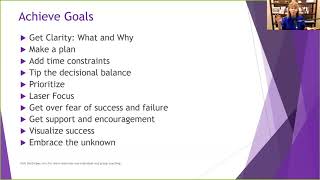
Dr. Dawn-Elise Snipes shares 10 strategies for reaching your goals, from getting clarity on what you want to enlisting support and visualizing success daily. She covers how to handle fear of failure, tip the decisional balance in your favor, and make a stepwise plan with deadlines.
Chapters
Welcome to Happiness Isn't Brain Surgery with Doc Snipes. This podcast was created to provide you the information and tools Doc Snipes gives her clients so that you too can start living happier. Our website, Docsnipes.com has even more resources, videos and handouts, and even interactive sessions with Doc Snipes to help you apply what you learn. Go to Docsnipes.com to learn more. Hi, everybody, and welcome to Happiness Isn't Brain Surgery with Doc Snipes. Practical tools to improve your mood and quality of life. Today, we're going to talk about 10 ways to achieve your goals. The first step is to get clarity, understand what you want to do, as well as why you want to do it. So, for example, if you want to get in shape, that's great. Well, first, what does that mean to you? Does that mean running a marathon or does that mean being able to walk up a flight of stairs without getting out of breath? You know, the what is going to be different for each person? Some people would rather be bodybuilders and not focus on cardio. So what does get in shape mean to you? And then you want to answer the question, why? Why is this important to me? Because right now, not being in shape, whatever you're filling your time with is serving a purpose. It is fun, it's relaxing. It's something. So you want to know what's the reason to change your behaviors? Because when you change, it involves a little bit of hard work. So we want to know why? Is it, Is it because you want to feel better in your clothing? Is it because you've got a vacation coming up and you plan on wearing a swimsuit? Is it because you want to be around for your kids when they are 60 years old themselves? What is your preliminary? Well, what are all of your reasons for wanting to get in shape? The same thing is true, you know, if you're trying to quit smoking, for example, you know, what is it that you're going to do? Quit smoking. Now, some people may want to cut back on smoking or may want to switch to E cigarettes or whatever your goal is. You know, you need to define what your goal is and then look at why you want to do it. So when it gets tough, you know, when you're wanting to have a cigarette or when you're not wanting to go to the gym or whatever the case is, you can look back at your why reasons and go, yep, I really need to do this. The next step is to make a plan. Now you know what you want to do you know why you want to do it, so you're kind of getting motivated. How are you going to do it? And making a plan is where you identify all of the steps to get there. You're at a 1 right now. Your goal is a 10 or maybe a 6 if it doesn't have that many steps. But you want to break it down into steps, just like you break down changing the oil in a car or cooking something from a recipe. It's one step at a time. So if you want to get in shape, for example, you first need to have workout clothing, you know, tennis shoes. It doesn't have to be expensive shoes, but you need to have proper shoes to work out in. And then you need to figure out where you're going to work out. If it's in your neighborhood, well then great. If it is at a gym, then you might have to get a gym membership. And then how are you going to work it into your day? So if you're working out, are you going to do it before work, on your lunch break, after work? How are you going to make this happen and how are you going to stay motivated? You know, you've probably tried to do this before, and obviously since you're trying again, you weren't completely successful. What helped you stay the course before? Sometimes getting social motivation, you know, getting a friend to do it with you or just telling somebody about it so that they can ask about it and you can feel like you're being held accountable can help. Add time constraints. There is a theory that if we don't have time constraints that a task will expand to fill whatever time's allotted. So if you need to get the house cleaned, for example, holidays are coming up that can start taking a long time. Unless you say, I need to get the guest room cleaned on Saturday. Well, then you're going to get the guest room cleaned on Saturday. If you don't put that time delay on, you may do part of it on Saturday and then dilly dally and do a little more on Sunday. There's still stuff to do, but if you give yourself some time constraints, it'll help you stay a little bit more focused. Tip. The decisional balance. That means remind yourself all the reasons that you want to do this and all of the reasons that you don't want to stay the same. So that's the first half of the decisional balance. So why are you doing this and why don't you want to stay the same? Why is it that you want to make this change and then you've got to look at whatever this change is that you're making, which may be a little bit uncomfortable at first, and figure out how to make it as comfortable as possible. So let's go with working out initially. What can you do to make it as enjoyable as possible? Starting out by going in and running three miles your first day, probably not going to do it. You're going to be really sore afterwards. And you know, it may be miserable getting through it. Getting to the gym and walking on the treadmill for 15 minutes, that's something that's doable. So you're taking the pain aspect out of it because you don't want to have unpleasantness come out of your new behavior change. If you're trying to quit smoking, for example, that is challenging. There's a lot of cravings, there's some irritability, there's a lot of that goes on with quitting smoking. So how can you make that as painless as possible? And it's not going to be completely pain free. Don't get me wrong, it's going to be a challenge. But how can you address some of that medication designed to help with cravings? Nicotine gums. There are a variety of things. Talk with your doctor about different interventions that can help you get through that initial period. And you know, for the irritability and some of that other stuff, exercise does help, but also letting the people around you know that you're trying to quit smoking so they can give you a little bit of support but also give you a wider berth. So if you bite their head off one day, instead of responding negatively back at you, they can just take a breath and go. Must be having a bad craving day. So tipping the decisional balance, just to recap means figuring out all the reasons you want to do this change, all the reasons you don't want to stay the same, and making this change as pleasant and as painless as possible. Prioritize. Achieving goals means trying to fit something in this change into your life. So you're going to have to prioritize and figure out what's most important. And this goal ideally is going to be one of those priorities. So if this is a priority, it's got to be in there. Just like a meeting with your boss that you put in your day planner in ink. It's not something you can erase or fudge on. It needs to be a priority. That means you may have to get rid of some other priorities. So you got to look and say, what can I get rid of to make time for this or what can I do differently for this? And how can I prioritize this goal? How can I make this really important? Which may mean providing reinforcers for doing it. So if you go an entire day without smoking, then providing a reinforcer for yourself, ideally not food, because a lot of people already gain weight when they stop smoking. Maybe a bubble bath or go to a movie or do something that you really enjoy. Have a laser focus. Too often when people set goals, they set too many goals. They set broad goals, they don't define their goals. There's a lot of reasons. When you set a goal, you want to have a laser focus and this is what is important to get done. Now I say that cautiously because you can have too much of a laser focus where you're only focusing on this goal and everything in your life goes to hell in a handbasket. And that doesn't work either. But set aside time. For example, if you want to get a promotion at work and that's really important to you, then when you're at work, then work needs to be your laser focus. Not what your co workers are doing, not whether or not you got involved, invited to go out to lunch, not what your kids are doing at school. This needs to be your laser focus when you're at work and then when you're at home, you can have home time. But if you train yourself to focus on that one thing during that period of time, you'll be more effective at accomplishing your goals. If you're talking about trying to work out or get in shape, your focus needs to be on that. How can you work that into your day? This is a non optional thing. So laser focus means maintaining those priorities and getting rid of other things that may creep in, going, oh, but you want to go out for drinks with your friends after work instead of the gym. No, my focus is on my goal, which is to get in better shape and I work out after work. Maybe I can meet you at the restaurant after I work out. But laser focus means pushing some of those other things that creep in that you go, oh, that would be fun. Push them out of the way and say, no, right now. This is the time for this goal. Get over your fear of success. You might be thinking, wait a minute, that's fear of failure, right? No, we have fears of success as well as failure. Fear of success means that if you do something and you succeed at it, then you may have further to fall. For example, if you fail, if you do something and you succeed at it, then people are going to expect More out of you. So sometimes fear of success holds us back. For many people trying to get in shape, lose weight, quit using drugs, stop smoking, they fear success because, number one, they're not ready to give up that part of themselves. You know, they. There are some really rewarding things about whatever they're doing, and they're not quite ready to give that up yet, because if they succeed in changing, they won't have that anymore. The cigarettes, the food, the drugs, whatever it is. So that's the first part. But also, if you succeed, then you've got to maintain it. And maintenance is a lot of hard work. And if you fail to maintain it, then maybe people will be disappointed. You'll be disappointed in yourself. So if you don't try, you can't fail, but you also can't succeed. Now, fear of failure we know about, so we want to look at failure as a learning opportunity. When you fail, you learned how not to do it. That's the easiest way to look at failure. Failure is the best teacher. It doesn't mean that you are a failure. It means that you've got more to learn. It means that you overlooked something. It doesn't mean anything about you as a person. So getting over your fear of success, letting go of that thing, and getting over your fear of failure, looking at failure as an opportunity to learn more about yourself and. And how to do it better next time, get support and encouragement from other people. That sounds easy, but it's sometimes a little bit hard to do because you feel kind of silly going, hey, I'm starting this exercise plan, so can you be my cheerleader? But what you can do is find people who also work out. I belong to an online community called Spark People, and you can download the app and monitor your food, your exercise, your moods. You can keep journals. There's a lot of stuff you can do in that app, but it has a really active community that's really supportive. So finding support and encouragement for whatever you're doing. Also giving yourself support and encouragement, silencing that internal critic that's going, you can't do this, or, I knew you'd fail. Making that person shut up and giving yourself support to do it. And if you start to backslide, if you start to get a bad attitude about it, acknowledge it and say, you know what? Today is really tough to do this. What can I do to help myself get through it? Encourage yourself, you know, you can do it. But what do you need to do to support yourself? And, you know, for some things, let's go with Quitting smoking, maybe that means you're having a really stressful day and you need to take a time out, go on a walk around the building or something in order to kind of breathe and get your stress under control so you don't have as many cravings to smoke. Because a lot of people smoke to relax for. Going to the gym, find battle buddies that are willing to go with you. I'm much less likely to skip the gym if I know that somebody's going to meet me there. But there are a lot of other things that you can do to encourage yourself to go ahead with this goal, even when the going feels a little bit tough. Visualize success. Now, this is super important. And you may think, oh, that's kind of silly. No, it is important. You want to start your day and end your day visualizing what it's going to be like when you achieve your goal, when you're in shape, when you're not smoking, when you get the promotion. Whatever your goal is, you want to see yourself achieving that goal and how things are going to be different and better in that new state of being. It doesn't take long, but it does help reinforce your desire to go forth. A lot of people, at least, you know, when I was younger, when we got ready for spring break, we would buy our swimsuits ahead of time. Then you would envision yourself in that swimsuit as you were trying to get in shape for spring break because you probably put on a little bit of weight over the holidays. Everybody does it. But envisioning yourself in that swimsuit in a healthy body is one way to get there. Or envisioning yourself in that swimsuit as you are, you may be like, oh, yeah, don't want to do that. So that'll help you stay motivated to keep on your physical fitness plan and embrace the unknown. Change always involves unknown. What is it going to be like if I never smoke again? I can't imagine myself a non smoker. What is it going to be like if I get in shape? You know, what is it going to be like if I get this promotion? What's going to change in my life? And some things you can anticipate, hopefully they're going to be positive. And the things that you anticipate that are not so positive, figure out how to put a good spin on those and embrace all of the other stuff that you don't even realize is going to happen yet as a byproduct of your positive change. Some things you can do when you're trying to keep yourself motivated for change. Going back up to that tipping the decisional balance is write down what do you think the benefits are going to be? So you want to change. You want to quit smoking because you want to be healthy for your kids. That's great. But what are some other sort of ancillary benefits? How much money will you save each month? Your clothes won't smell of cigarette smoke? What are the other things that you can identify that are positive reasons for changing? Hopefully this has given you some ideas and some tips on achieving your goals and can help you understand some of the reasons why you may not have achieved your goals in the past when you've tried. So just to sum up, get clarity. Define what you're doing and why you're doing it. Make a plan with time constraints. Give yourself deadlines. Tip the decisional balance make sure that you're motivated to do it and you're motivated to give up the other behavior. Whatever you're doing right now, prioritize, because you're going to have to have energy and time to probably make this goal happen. Have a laser focus during your goal time. If it's when you're going to the gym. If that's after work every day, make sure that you have a laser focus and nothing gets in the way of you going to the gym after work. Get over your fear of success and failure, which means also letting go of whatever this old behavior is. There's something positive about it and sometimes it's hard to imagine yourself never being able to do that again or never wanting to do that again. So getting over that and envisioning yourself smoke free or healthy or whatever it is. Get support and encouragement from yourself. Silence that internal critic. Be kind to yourself and from others. Have cheerleaders, have battle buddies when you start to make a change. Visualize your success every day. First thing in the morning, even before you get out of bed, and last thing at night right before you go to sleep. And embrace the unknown. Because every positive change produces innumerable positive changes in multiple areas of your life. Thank you for tuning in. If you like this podcast, you can subscribe on your favorite podcast player. Join our Facebook group@docsnipes.com Facebook subscribe to our YouTube channel at YouTube.com allceducation or join our community and access additional resources at docsnipes.com. Thanks for tuning in to Happiness Isn't Brain Surgery with Doc Snipes Our mission is to make practical tools for living the happiest life affordable and accessible to everyone. We record the podcast during a Facebook Live broadcast each week. Join us free@docsnipes.com Facebook or subscribe to the podcast on your favorite podcast player. And remember, Docsnipes.com has even more resources Members only videos, handouts and workbooks to help you apply what you learn. If you like this podcast and want to support the work we are doing for as little as $3.99 per month, you can become a supporter@docsnipes.com join again. Thank you for joining us and let us know how we can help you.










