Silencing Your Inner Critic: Expert Counseling Tips
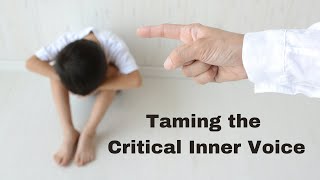
Dr. Dawn-Elise Snipes explains how the critical inner voice protects you from disappointment but damages self-esteem. She traces it to early criticism and teaches cognitive restructuring, behavioral steps, mindfulness, and writing exercises to quiet it down.
Chapters
Welcome everyone to today's presentation, Conquering the Critical Inner Voice by Robert and Lisa Firestone. During this presentation, we're going to define what the critical inner voice is, identify helpful responses to the voice, and reflect upon why positive affirmations and prior interventions may not have worked. So what is the critical inner voice? It's the defended, negative side of our personality that's opposed to our ongoing development. Now that kind of sounds a little odd. Why would we have something like this? Well, think about it in terms of the small child that's inside of you that kind of wants to stay small and kind of wants to withdraw. Pardon me? The voice consists of negative thoughts and beliefs and attitudes that oppose our best interest. It doesn't want us to grow. It doesn't want us to step outside the comfort zone. It may diminish our self esteem, which makes us more dependent or keeps us dependent. It warns us about other people, which isn't necessarily a bad thing. It can promote angry and cynical attitudes and we'll talk about how that can form a protective function. And it creates a negative or pessimistic picture of the world. So the question is, why would we want to do that? Well, it protects us from disappointment. It protects us from the unknown. It makes us keep ourselves sort of walled off and defended so we don't risk mental, emotional or physical hurt. The voice edits our thoughts, controls our behavior and inhibits our actions. So think. All of us have a negative internal critic. Some of us have tamed it, some of us have befriended it, others of us still have it running rampant. But think about yours. When you go to do something and it says, you know you can't do that, or why would you even think that you could accomplish this? Or you're not good enough, these are the thoughts that we need to figure out what to do with those so they don't negatively impact our self esteem. This voice, like I said a few minutes ago, it thinks it's protecting us from being hurt or feeling abandoned. It's telling us, come over here, you know, I've got your best interest in mind. Why don't you stay away from anything that could be threatening, which unfortunately reinforces our feelings of helplessness, shame and guilt. So if we're constantly telling ourselves, you're not good enough, you're not smart enough, you can't do this, we why did you even think that you should be able to do this? Then of course we're going to start believing that and wondering, you know, am I good enough? When managed effectively, the barbs of your inner critic prevent complacency and boredom while nudging you to improve your life. Now, if you think back to the crisis intervention presentation, we talked about how crisis is an opportunity for change. We want to push people out of their comfort zone into a state of a little bit of chaos. So in order to emerge from that chaos, they've got to make some changes. They can't just stand on the edge and go, mmm, do I want to jump? You know, we're kind of pushing them off the edge and hoping the ball isn't too deep in order to encourage them to continue to grow as individuals, in order to encourage them to explore what this crisis resolution would mean to them. So, common voices, how many times have we heard somebody tell themselves or somebody. How many times have you told yourself, you're stupid? I make mistakes a lot. And unfortunately, you know, I was like, that was really stupid. I use that word more than I probably should now. Do I let it affect me globally? Do I think I'm stupid? No. Do I know that there are some things that I'm not very smart about? Yeah. But there are other things that I am. So these voices, we want to start walking the middle road and go, okay, if this voice is telling me I'm stupid, let's look at that. Let's look at the objective evidence. Is there something I need to learn? Is there some way I need to grow? And what do I already know that I'm smart about? That I'm good with the voice that says, you're unattractive again, we can take a good look in the mirror and go, am I doing everything that I can with what I've got? I mean, we are not all going to look like Christie Brinkley. So looking in the mirror and going, am I trying my best, or am I rolling out of bed, not even bothering to brush my hair and walking out the door? So this voice can tell you you need to step up your game a little bit. I like this one. The voice that says, you're not like other people. Well, good. I don't want to be like everybody else. I like being kind of my own unique person. I walk to the beat of my own drummer, and that's okay with me. So we want to look at. What does that mean? If the voice is telling you you're not like everyone else and you don't fit in, that's very different than just you're different. So if you don't feel like you fit in, then evaluating, what is it that makes you feel like, you don't fit in. And, you know, if you want to fit into a certain group, what do you need to do? And if you don't care, then that's fine too. You're a failure. This is one of those that we talk about with the all or none thinking you are a failure. That's a global representation of a person. It's saying that you didn't fail at a certain thing, you didn't fail at a certain task. You're a failure as a human being. Now, that's an awful big statement, and I would be really hard pressed to think of anyone that you could say this about. Globally, everybody has successes in something. So calling that voice on the carpet and going, I'm not a failure at everything. Yes, I may have failed at this, and I may have failed at some other things, but failing means I'm trying, I'm stepping outside of my comfort zone. And yeah, when we fail, it sometimes really hurts. However, when you come out the other end, you can say, I tried, I gave it my best shot. What did I learn from this failure? But not internalizing it as I am a failure. A lot of these voices are very. If you look at your cognitive distortions are very steeped. Cognitive distortions, all or none. Thinking, magnification, globalization. So many of the techniques we're going to use to address these voices are going to be cognitive, behavioral, but not all of them. You never get anything right. Never. And anything. Extreme words. We all get something right sometimes. So what did you get right? And if you mess up more than you would like to, how can you address it? No one will ever love you. That's one of those irrational thoughts that comes straight out of the pages of the CBDT manual. So encouraging the person to look and say, who does love me and do I love myself? If we don't love ourselves, then we can't really expect everybody else or anybody else to love us, can we? Now, we all love things about each other, and it's important to consider what that means. What does it look like if somebody loves you? What does it feel like if somebody loves you? And how is that different than codependency? How is that different than just having power over someone? You're fat. You're such a loser. These are some negative voices that people may have internalized from when they were younger. They may be voices that came through the media. You know, the media gives us a lot of messages about what we're supposed to look like and what we're supposed to be like to be Successful. And if we are not conforming to that, either because we can't for some reason, or we choose not to, should we, and this is kind of a rhetorical question, should we hold ourselves accountable and say, well, you're fat? Who says? And we'll get to talking. Back to it in a minute. You'll never make friends. Well, you know, if you never try to make friends, you're never going to get hurt. But I don't know of anybody who can't make friends if they try. So it's a matter of you may not make friends with a certain group of people or you may not make friends with a certain person, but does that mean you can't make friends with anybody ever? And another one of those extremes, you'll never accomplish anything. Well, you've accomplished surviving until now. You've accomplished, you know, graduating from high school. You've accomplished a lot of things. Let's look at some of those now. There may be some other things over here that you want to accomplish. So let's talk about how to set those goals. Common voices in your career. These are things that we hear especially as we get older in life. Not as much when we're, when we're knee high to a grasshopper, but as we get older, as we're starting to develop our sense of competence in what we do. Going back to those Ericksonian stages, we hear these voices going, you don't know what you're doing. Now, that could come internally, or it could have come from a parent or caregiver who was not good at providing constructive feedback. And they said, back off, let me do it. You don't know what you're doing. Who do you think you are? You'll never be successful. You're under too much pressure. You can't take it. Well, a lot of our clients feel this way. They feel like they're under too much pressure and they can't take it. And that's probably one of the reasons they're in our office. So let's take a look at that. You are under too much pressure. You're feeling that right now. So how can we fix that? This is your internal voice going, we need to survive. We need to protect ourselves. So you need to take down the pressure notch a little bit because eventually you're not going to be able to take it. It's like a pressure cooker. So what can we do to fix it? Instead of getting stuck listening to that voice going, you can't deal with this. The person needs to say, you know, What? You're right. There's a lot of stuff going on and I'm having difficulty dealing with what can I do differently? You're lazy, followed by you should just put it off till tomorrow. Imagine how those two things work together. There is a certain amount of procrastination that goes along with being a perfectionist. Because if you're a perfectionist and you do something and you fail, guess what? It hurts. It's a failure. So people who are afraid of failure and who thrive on perfectionism often are some of our worst procrastinators. No one appreciates you. Well, you know what? There are going to be a lot of people in the world who don't appreciate you. And that's just reality. Some people may not have any, you know, interaction with you, so of course they can't appreciate you. Some people may not have the ability to appreciate other people because they're just so stuck, stuck in their own stuff. But can you really realistically say no one appreciates you? You'd better be perfect or you'll get fired. I've had employees for years. I've been an employee for years. And you know what? I've never been perfect and I've never been fired. So this kind of perfectionism keeps people anxious, keeps people nervous, keeps people revved up, and makes them focus on every little itty bitty mistake they make and make it a huge thing because, oops, I got this paper in 24 hours late. I'm not perfect. The world is going to end. Nobody likes you here. Well, if that's the case, then we need to look at why that is. But is that really accurate? What is your source of information for this statement? Is there a reliable resource that's going, yeah, you know what? Nobody likes you here, go away. My sense is in many cases this is more of a emotional reasoning that somebody's doing. When are you ever going to get a real job? So when you hear this in the back of your head, maybe you haven't achieved the job or the career that you thought you wanted to achieve. Maybe you haven't been able to achieve some of the career goals you wanted to because something else has come up. Does it mean you don't have a real job? If you are in a non traditional job, does it mean you don't have a real job and no one would hire you? Well, if your voice is telling you that, then you need to look at, why wouldn't someone hire me? If I were a boss, why wouldn't I hire me? This is Using that voice and almost making friends with it in a way to say, okay, there's probably a kernel of truth in what you're saying, and you're telling me this to protect me in some way. So let me take a look at how I can understand your point of view. Think about having a really, really critical supervisor or parent who may not be good at saying, providing constructive criticism. This is kind of like the voice, the critical inner voice. In relationships, we hear these same messages. You're never going to find someone who understands you. You get too hooked on people. They don't really care about you. How many. How did this statement come to be? Most of the time, you're using prior experiences, whether it's from your family of origin or from prior relationships, where the person's been hurt, where the person has thought that there was more to a relationship than there was, where the person has been in a lot of relationships and felt misunderstood. So this is prior learning coming back, but being blown out of proportion in a very extreme way. It's not. You'll never find another person who understands you. But yeah, it's hard work. Don't get hooked on that person, parenthetically, because they're going to leave. People leave. Sometimes it happens, but not everybody leaves. She or he is too good for you. Who says that you're better off on your own? Well, sometimes it's easier because then you don't have the question about whether somebody cares about you or whether they're going to leave. But is that the goal you want for your life? As soon as he or she gets to know you, he or she will reject you. Well, that could be prior learning coming out and going, warning, warning. That's fine. Warnings are okay. Warning doesn't mean stop. It's kind of like the yellow light, not the red one. You've got to be in control. This tells me that somewhere in the person's past, they weren't in control and there were negative consequences. So I'm going to want to go back and take a look at that and also look at times when the person hasn't been in control, but things have turned out okay. So we want to challenge these cognitions with evidence. It's your fault if he or she gets upset. True, lack of boundaries here. I hear this a lot from people who grew up in addicted households where you don't talk, you don't trust, and you don't feel. So people are always pointing the blame. It's not my fault I got upset. It's your fault you made Me, do it and don't be vulnerable or you'll wind up getting hurt. It's a possibility. It's a real possibility every time we're vulnerable that we will end up getting hurt. But it's also a possibility that we will end up growing from it, that we will end up benefiting from it. So again, we want to look at the experiences this person has had that brings them to this point, that has got that voice saying these things, and go, okay, when you've been vulnerable in the past, let's talk about those times. A, what does it mean to be vulnerable to you? And B, give me examples of when you've been vulnerable and have gotten hurt. And let's take talk about when you've been vulnerable before, but you haven't gotten hurt. And being vulnerable runs a really broad spectrum. Every time you send out a resume, if you're looking for a job, you're making yourself a little bit vulnerable because you're putting yourself out there going, would you like to hire me? And if people say no, it's like, oh, okay. Some people take that and go, all right, was a bad fit. No big deal. Other people will take that and feel it very personally. So we want to look at where these messages are coming from and what they mean to the person. So this is my favorite part, because I love talking back. When we hear those voices, what do we do with it? So what if somebody. If that voice in your head says, you're fat, you're lazy, you're stupid, we can come back with, so what? I am who I am, and I'm okay with that. And that is the caveat. The person actually has to believe that they're okay. Who says that you will never find somebody to love you again? Right now, likely, it's just your own inner voice telling you that. Why is it telling you that? To protect you. It doesn't want you to go out, get in a relationship, and get hurt again. So it's saying, you know, you're not going to find anybody, so why don't you just stay in the safe little isolation box? Who cares? If your voice is telling you something very critical, you can say, who cares? I don't care. But the key is the person has to truly not care. Prove it. And this is my favorite one, because it encourages people to bring out objective evidence. Prove to me that you will never find someone again. Prove to me that every time you've done this, it's wound up in catastrophe. Helping them highlight the exceptions will help them take a more Balanced approach. Walk the middle road. Be able to accept the fact that, you know, for example, being vulnerable. Being vulnerable can hurt a lot, but it also can produce wonderful results. So being able to tolerate the ambiguity. Positive affirmations only help when you actually believe the message. If you look in the mirror and you say, I'm okay, that's, that's great. But if you don't believe it, you're just talking to a mirror. The person has to actually believe that they're okay, which means their self esteem has to be on some level, okay. Trying to substitute positive words for negative feelings can delay self discovery. So we don't want to tell people, every time you say I'm stupid, remind yourself how smart you are. We want to say, okay, if you're telling yourself you're stupid, what's the evidence? In what way are you stupid? And A, is it important? And B, if it is, what can you do about it? More responses. Cognitive restructuring is only effective when you have no subconscious desire to hold on to a negative thought. And as we went through a bunch of those thoughts, I pointed out that there are legitimate survival sort of motivations to holding on to some of these thoughts. A lot of times these protect us from putting ourselves in our situation where we might fail or be rejected or be exposed to the unknown or loss of control. These are the things that we naturally fear as individuals. These are the things that naturally trigger that fight or flight reaction. So it makes sense that there's going to be a protective voice in the back of our head going, you don't want to do that. This is sort of a. If you think back to Pinocchio, Jiminy Cricket was his conscience. Well, this is a really critical, mean Jiminy Cricket, but it's trying to protect us. So we want to replace negative thoughts with realistic ones, not necessarily positive ones. Instead of saying, I have to be the best. How many times are we really the best? I mean, if you're an Olympic athlete and you get the gold medal five times in a row, then theoretically you're the best. But there still could be somebody out there that could beat you. So do you have to be the best or do your best? And when you take on something, when you embark on a journey, when you try a challenge, is it to impress someone else? And if so, why is that important? Why do you need their validation? Or is it to prove to yourself that you can do it? So this goes back to that whole self esteem thing. When people have a strong sense of self and a positive self esteem, they don't need the external validation. They don't need to try and work to impress people to avoid rejection. They do what they can, they do their best, which makes them happy with themselves, which most of the time gives people the ability to go, you know what? I'm not perfect, but I'm pretty darn good. So if you like me, great. If you don't, that's on you. So how do we identify this critical inner voice, except for hearing the noise in our head coming? Constantly recognize events that trigger this voice. If you're getting ready to be vulnerable, if you're getting ready to do something that is anxiety provoking. A lot of times anything that provokes anxiety is also going to trigger that critical voice because it's going to go, you probably don't need to be doing that. Why don't you come back? It's safer in here. But there are also other things, like going to a family reunion that can trigger that critical inner voice. Because all those negative messages you heard when you were growing up or maybe even now come back. So understanding that there are certain events where that critical inner voice is just going to be screaming to keep you grounded or to try to convince you that this is probably not where you need to be right now. We want to recognize the specific outside criticisms that support your inner critical voice. So what did people say when you were growing up? What did people say yesterday that support your internal critical voice? Because if we have a loud internal critical voice, guess what we hear and guess what we remember more than anything else. External criticisms. If it supports our perspective of ourselves, we're going to hear it and we're going to remember it. And a lot of times again, those cognitive distortions, wacky little things, we discount anything positive that we hear. We always have a yes, but your boss says that was a really great job on that project. And your critical inner voice says you could have done better. So your response is, yes, but I could have done better. Excuse me. We want to encourage ourselves to pay attention to the positive outside feedback as well as the constructive criticism and learn how to separate constructive criticism from just criticism. Become aware of times you may be projecting your self attacks onto other people. So if you're feeling insecure, you're doing a group project and you're feeling insecure about your abilities in this particular class or on this particular project, or you begin feeling insecure that your group is going to produce what you think they should produce, you may start projecting that anxiety and anger on them to work harder. Do things differently, do things your way and become something of a bully. With all this, we want to notice changes in emotions, thoughts, sensations or urges. You know, our feelings. If we notice that we're getting anxious or angry or even depressed, that's probably that critical inner voice is in there somewhere telling us something. So we need to say, what am I telling myself? If you want to go back to the ABCs, you can say, what are these beliefs? What are these automatic beliefs that I'm hearing? These that are triggering my threat response, my fight or flight response. Visualizing the real you and developing self esteem. Help the person make a list of their positive qualities and abilities, because we all have them. Make a list of their interests and activities, long term goals, short term goals. And then they can figure out where they stand in relation to their goals and and how to get there. They can make an action plan. Once they've got it down on paper, once they've got it kind of out in the open, they've hashed it out, it becomes more concrete, it becomes more doable to start working toward self actualization, if you will it. They've identified what they want to do and where they want to go. And sometimes they need a little help figuring out how to get from point A to point B, point F over here. But that's okay. That's what our job is. We can help people figure out how to make a plan and achieve their goals. Small steps, small successes. If they want to become a doctor, wonderful. You're in high school right now, so there's a bunch of steps between now and med school. So what do you need to do? And start laying out those steps. Because each step is an accomplishment. Each step is an affirmation of their self esteem. Each step is something they can look back on and go, you know, I did that. It was scary, but I did it. Or it was hard work, but I did it. So then when the negative voice starts coming and going, you're lazy, you're this, you're that. The person can look back on these objective successes and go, you know what? No, now I'm not really. So why am I telling myself that? In therapy, and this is something they talk about in the book, the client will identify the content of the thought process. So when they start having these negative thoughts, they identify the content and articulate it in the second person. Instead of saying I'm stupid, they say, you are stupid. The voice is saying, you are stupid. Then discuss insights and reactions to verbalizing the voice. So as a therapist, I'm going to say, alright, how do you feel when the voice says you are stupid, what's your knee jerk reaction? What do you want to do? How old do you feel when the voice says that? Because it may take them back to a time when they were 5 or 15 when somebody was telling them they were stupid. Which can identify a sticking point that the person needs to work on either individually or in therapy. We want to help them attempt to understand the relationship between the voice attacks and early life experiences. A lot of these things, you know, go back to that list. They were. A lot of them were very dichotomous. And what do we know about children's thinking when they are younger, elementary and earlier? It's very dichotomous. They don't have the gray area, they don't have the abstract thinking. So anything that the child took in and sort of filed away in their memory banks back before the formal operational period is likely to be very extreme in its tone. So this is why we want to look back at early life experiences. If the current negative voice is extreme in its tone, then it's reflecting an earlier stage of learning and development when the person started telling themselves this. Most likely, then we want to teach them how to answer back to the voice attacks. If somebody told you you're stupid, what would you want to say to them? Okay, so when your internal voice says you're stupid, what are you going to say to it? If they have difficulty answering that question, I always kind of put it outside of them a little bit. And I said, okay, imagine this. You're on the playground and you're supervising your kids, and some other kid comes up to your kid and goes, you're stupid. What would you want your child to say? What would you want your child's response to be to that? And so envision the critical internal voice as something outside of oneself in order to get the emotional detachment, in order to make a cognitive choice about how they're going to handle it. Develop insight about how the internal critic is influencing present day behaviors. So if you have an internal voice that's always said you're never going to amount to anything, then in the present day, how is that affecting you? Is it holding you back or is it propelling you because you want to prove that internal voice wrong, Is it causing more anxiety or is it something that you can silence and then plan changes for any needed behaviors? If this internal voice is holding you back, if this internal voice is creating an emotional distress, then how are you going to address it? Other interventions. Stop ruminating. Something happens and you play it over in your head. Not once, not twice, but more like two or three thousand times. How could you have done it differently? Oh, my gosh, I wish I wouldn't have said that. And you keep remembering. You lay down at night and maybe you said something insensitive when you were at work or at a party and you go home and you lay down at night, and that's all you can think about. You replay that situation in your head over and over and over again. And I encourage clients to think about, you know, in reality, if there were 50 people at the party, and maybe all 50 heard you say it, how many of them are even remembering that two days later, a week later? So the ruminating is keeping it alive in your head, but because for some reason, that is devastatingly important to you. But for most other people, they hear it and they brush it off and they're just like, whatever, and they move on. Very rarely will they ruminate on it, unless maybe you said something really mean to somebody. Then they may ruminate on it. Shift your attention. Kind of a dpt focus. Find something, the room that you can focus on. Or do your typical mindfulness exercises. Identify four things you see, three things you hear, two things you smell. It helps you get your attention away from whatever those thoughts are. Write it down. Kind of like that list when you're laying down in bed at night and you're like, I've got to remember to pick up dog food tomorrow. I've got to remember to do this tomorrow. I've got to remember. And you can't get to sleep because your mind is just going, going, don't forget you've got to get dog food tomorrow. If you get up, write it down. Then your brain doesn't have to stay activated. Remembering that same sort of thing with our internal critical voice. If we hear it, we can write down what it's saying, we can write down the response to it, and then we can let it go. Get it out of our head. If we let it bounce around in there, it may stick for a while. Kind of like ping pong, not ping pong. What's pinball? That was it. Remember playing pinball when you were little? You could keep that ball bouncing around for a really long time if you were focused on it. But if you shifted your attention away from it, the ball would fall out and you'd lose the game. These negative thoughts are kind of like that ping pong ball, not ping pong. I keep saying that. Pinball, we want to shift our attention away from it so it can Leave the board. That's not something we want to pay attention to. Obviously you can't write down a pinball game, but getting it out of your head so it's not bouncing around in there. Think about who these voices sound like when you hear the voices. I know when I was, oh, golly, about eight, my grandfather said something and it was just an off the cuff comment, but it stuck with me for decades. And whenever a situation would come up that would prompt that, that criticism to come up again, I would hear his voice in the back of my mind saying that over and over again. So direct experience is definitely something that sticks with us. If somebody, somebody who is important in your life says something to you, especially something critical, you may hang on to it. Now if somebody important to you says something awesome, then of course we're not going to care and we're going to go like, yeah, we want to dwell on that. But if it's critical, then we may need to look and objectively think about what did that person mean and did that person mean anything big or were they just making an off the cuff, insensitive comment? We can also hear voices from things that weren't directly said to us. Observational learning. Like I said, the media tells us a lot of things about how we should be, what we should look like, what we should want, what our aspirations should be, our family and our friends. They also communicate a lot. Even if they're talking amongst themselves and you just happen to be in the room, you hear these things. We get messages that tell us, okay, the people that are important in my life think these things are important, so they should be important to me. This is how we get a lot of these messages in our brains. Now the question is, at what point do we evaluate them and separate the wheat from chaff? Do we go, this is important to me? Yeah, I agree. And you know what? No, I don't really care. For example, exercise. Exercise is really important to me. It's my stress relief. I feel really good after I go to the gym and it's sort of necessary for survival. It's how I get my stress out and clear my head in the morning. Not necessarily because there's anything all that bad, but I wake up and I'm just kind of foggy headed, get the oxygen going, the blood flowing and. And I have a much more productive day. Now. My children see me exercise all the time and neither one of them has any interest in it. They're just like, yeah, you can go on to the gym. You know, I don't need to run 10 miles and get absolutely nowhere. That's goody on you. So they've heard what I think is important, but what is important to me and they've taken it in and gone, yeah, no, not important for us. And you know, I'm okay with that and they're okay with that and everybody's okay. But we do need to encourage our children and ourselves to check those messages every time we get one and start saying I should. Who says and do I agree? Ask what advice you would give a friend who is experiencing self doubt. So if you have a friend who has this negative internal voice always telling them they're not good enough, they're not smart enough, nobody's ever going to like them, what would you tell them? What would you encourage them to look at objectively to either support or negate this broad statement? Examine the evidence. I've talked about that quite a bit in this presentation. Look at exceptions to the rule. Yes, we've all failed. When you've tried and you've succeeded. Tell me about that too. You know, we can talk about what failure feels like and how it hurts and embarrassing and anything else. I'm not going to take that away from you. But before you say you are a complete failure all the time, let's look at the evidence for that. Replace overly critical thoughts with more accurate ones. Specific, changeable. You know, I may be unintelligent when it comes to computers. I walk into a room and computers, blue screen. That's just the way it is. Could I learn about computers if I wanted to? I certainly could. Is it important to me? No. At this point in my life I have an IT person that fixes it because I know that's just not where I want to invest my energy. But it doesn't mean I'm stupid. So replacing those overly critical thoughts, those global generalizations with specifics. Balance acceptance with self improvement. Accepting that you're not perfect with. Okay, what things do I have? The energy and the time and the desire to work on improving because we can only do so much. There's only so many hours in the day. Balance the negative with the positive and practice self compassion. Everybody has a critical inner voice in some ways. You can look at it as something or someone that is trying to protect us in keeping our comfort zone. Conquering the voice requires understanding of what you may want to hold on to in those messages. What's important in those messages, what's the kernel that I need to take away and then develop self acceptance and practice. We've spent so many years listening to this voice and succumbing to the voice that it's going to take practice to talk back and go, you know what? No, I'm not listening to you today.










