Social Work Considerations for Chronic Conditions | Comprehensive Case Management Certification
Dr. Dawn-Elise Snipes covers social work approaches to chronic conditions, which affect 60% of US adults. The webinar walks through assessment, patient education, behavior-change frameworks like the Five A's, and how to support both patients and their caregivers through self-management and follow-up.
Questions this video answers
When it exists for more than three months.
60% of people in the US have a chronic illness.
YouTube video titled 'Social Work Considerations for Chronic Conditions | Comprehensive Case Management Certification' (created July 3, 2019).
Chapters
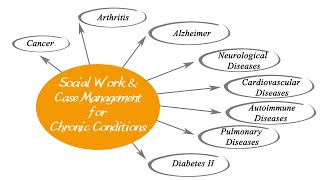
This episode was pre recorded as part of a live continuing education webinar on demand. CEUs are still available for this presentation through all CEUs. Register@allceus.com Counselortoolbox you I'd like to welcome everybody to today's presentation. We are going to be talking about social work considerations for addressing chronic conditions. I am Dr. Donnelly Snipes. We're going to learn about the prevalence and impact of chronic conditions such as diabetes, arthritis, Crohn's disease and depression. As we talk through this presentation today, we'll identify the goals of various chronic care models, identify types of interventions that are unique to working with people with chronic chronic conditions, and review how to set good, smart goals. Now remember, this is an hour, so we can't go in depth into the impact of any of these things on particular issues. I do have another one coming up in short order on for nephrology, social work or kidney disease and a couple others. But really, we're hitting the highlights of chronic conditions today. 60% of people in the US have a chronic illness. Let that sit in for a second. 60% of people, wow, that's a big number. So we are dealing with people, whether you're a social worker or a counselor or a nurse or whatever your profession. Six out of 10 people that you work with have a chronic illness of some sort. It could be depression, it could be substance abuse, it could be diabetes, it could be fibromyalgia, but they're dealing with it. Many serious illnesses have a much longer course with episodes of exacerbations and remissions. To be defined as chronic, it needs to exist for more than three months. We all, I mean, pregnancy is chronic, if you want to look at it that way, because that is obviously more than three months. But people may also have other chronic conditions that go for, you know, six months, a year before they're able to fully recover from it. Some people who have a stroke are often recovering for an extended period of time. Chronic illnesses can be highly stressful for patients and for families because that person is not the person they used to be. Or maybe they've had this condition for a while, they just got it diagnosed, and now this person is having to change stuff in their life which affects the whole family system. We don't live in a vacuum. Care for people with chronic illnesses is increasingly done by family in the home. When my mother had me back in, you know, a long, long time ago, women used to stay in the hospital for a day or two, even after a uneventful birth. Now you're out in under 24 hours. That is their goal. I had major surgery a couple years ago and their goal to get me out in under 24 hours. They didn't want to have to bill for an entire hospital day or whatever. So people are being sent home in sicker conditions, if you will, than they necessarily would have before. Untreated mood disorders in individuals with comorbid chronic health conditions increases morbidity and mortality rates and reduces the capacity for self management. Well, it makes sense if somebody's got a chronic condition and then they've got major depressive disorder on top of that. They have no energy, they're fatigued, they have difficulty concentrating, difficulty remembering, may have some low motivation to actually implement their treatment plan because they feel helpless and hopeless, which means that that chronic condition may get worse. We also know that stress increases because of all the biochemical changes caused by stress and high cortisol. Stress worsens a lot of chronic conditions. You've got a double whammy. One, no motivation to implement the treatment plan. Two, stress and emotional stuff and high cortisol actually making the problem worse. So let's talk about some of the biopsychosocial impacts of chronic conditions. And there's a lot of them. Think about mood disorders. It affects your sleep. You know, when people have mood disorders, they typically either sleep too much or don't sleep enough. It's one of those DSM criteria. People with mood disorders, especially depression and anxiety, tend to experience more pain. Their pain threshold is lower and, or they've got. Physical pain. You know, people with depression tend to not move as much and so they start to feel achy. People with anxiety may have a lot of muscle tension, so they may feel achy or they may grind their teeth and have tmj. People with mood disorders may take medications that have side effects that make them groggy or anxious or gain weight or be hungry all the time. They may have fatigue, circadian rhythm disruption, physical changes. When you're talking about mood disorders, we do see changes in weight change. Some people lose weight, some people gain weight, some people just start eating crap. We also know that when people are under a lot of stress, physical or emotional, that they tend to lose hair more quickly. So their hair tends to thin. And some people notice that a lot. Other chronic conditions like cystic fibrosis may require people to have permanent ports installed so they can get IV medications on a daily basis. Cancer and things like diabetes may require somebody to have a permanent pump installed in order to maintain their insulin levels. All of these physical changes can impact a person's self esteem. It can impact their mood. Loss of mobility can happen especially due to physical chronic conditions. Whether it's pain oriented or neurological autoimmune copd. There's a variety of things that can make it more difficult for people to get around. Either because they can't walk, even aging, if you want to look at aging as a chronic condition in some circumstances. But they have more difficulty getting from the couch to the bathroom. I'm not even talking mobility. They can't go walk for three hours around the mall. I'm talking. They have difficulty with mobility in daily life. Depression, anxiety and anger. Well, all of those things may come along. Depression is a sense of hopelessness and helplessness and anxiety and anger. It's that fight or flight reaction. I'm feeling vulnerable. I'm afraid that my family's going to be mad at me, that I'm going to experience rejection, that I'm going to lose my job, that my life is never going to be the same, yada yada yada. There are a lot of emotions that go along with chronic conditions and these can be emotions that go along with mood disorders or physical chronic conditions. Jealousy or resentment of other people who don't have that issue, people who aren't clinically depressed, people who don't have an eating disorder, people who don't have asthma. Irritability, withdrawal. And in this case withdrawal is with social withdrawal. Withdrawal from other people, withdrawal from activities because you don't have the desire to engage with other people because you hurt too much, because you're too tired, because you're too depressed, because you feel like they're going to reject you in some way. I know, I see a lot of people who have colostomy bags often go through a period where they withdraw from contact with other people because they feel very self conscious of that self esteem changes. Loss of social support or on the other side, smothering social support. Sometimes, especially in the case of children with chronic conditions, the parents can become absolutely so worried that this condition is going to get worse or that the child is not going to follow instructions, that they can be oppressively attentive, if you will. And that's a problem for kids. We know that kids at a certain point want to individuate a little bit and they may struggle if their parent or their caregiver is overprotective. The same thing can be true in adult relationships too. You can have a significant other who just becomes highly attuned and overprotective of the person with the chronic condition. And that can cause a lot of arguments because you know, one person may say, I am a grown up, I can do this. You need to back off. And then the person, the caregiver is like, but I need you around, I need to make sure you're doing the right thing. Or you know, you didn't do the right thing before, so how can I trust you to do the right thing now? The person with a chronic condition may have an inability to engage in prior important activities, a loss of independence because they can't drive themselves. Places, for example, vocational problems. Maybe they can't do the job they used to do because they can't stand for eight hours at a time or lift 15 pounds or more. Whatever the case is, financial hardships that come from medical expenses, doctor's offices, doctor visits, needing special wheelchairs or walkers, job loss or necessary environmental modifications such as if somebody does get into a position where they have loss of mobility. When my grandmother was much older, she couldn't get in and out of the bathtub by herself. And she was one of those ladies that she was going to take a bath. And so we needed to look at getting her one of those bathtubs that you can walk into because every time she would lift her leg to get over a regular bathtub, she'd lose her balance. There are some inexpensive environmental modifications and there are some really expensive environmental modifications that may need to happen. People who have a two story house and for some reason or they choose not to sell it, but the bedrooms are all on the second floor, have to figure out how to get the person who lives there who can't walk stairs anymore upstairs. There are a lot of financial considerations, access to nutritious food. Well, if you can't drive, it's harder to get nutritious food. You know, really fresh food is very rarely delivered and it may be harder to get to the grocery store to get the stuff that you want, so your pantry may end up running bare before you actually get out to get something. And physical, sexual and emotional problems in relationships there can be a loss of libido. They're due to neurochemical changes from the depression or from medications or just because of self consciousness, because of changes due to the physical condition. Or there can be loss of libido due to pain. People who are in chronic pain generally aren't really up to, you know, having sex, physical problems in their relationship and that's, you know, who's doing what aspects of the chores. And you know, we used to always go to the park or we used to go to the gym together. Well, we can't do that anymore. And then obviously, the emotional and cognitive problems that may go along with blaming or guilt or depression that they need to work out. And as Nancy points out, in some cases, the social support may balance its balance itself out in some way where it's workable for those two people. Where, you know, somebody could be sort of smothering in the beginning, but then the person with the chronic condition may turn over some of that control. And that's a personal choice, whether they become that dependent on that person or not. But that is definitely one outcome that can happen. Anyhow, over here, you can see there's a whole list of chronic conditions that we may see. PTSD is considered a chronic condition. For some, it will resolve over time. For others, it's a lifelong condition. But you've also got migraines. How many clients have you worked with that have had chronic migraines or Crohn's disease? Fibromyalgia, Lupus is a little less common. Rheumatoid arthritis, copd. Organ dysfunction, Cardiac issues, liver issues, kidney issues, lung issues. There's a lot of stuff that can go wrong in our body machine that we may have to figure out how to live with. Doesn't mean we can't. It just means we may need to adjust our lifestyle a little bit. The goals of chronic care models are to shift from acute episodic treatment to one of ongoing proactive care. Not reactive, but proactive. Which means we want people to take charge of their life, do things that are enhancing, they're preventing further problems. Remember prevention, you've got primary prevention. You don't want the problem to ever happen. Well, in this case, we missed the boat on that one. Secondary prevention, that problem exists, but you want to make sure that it doesn't get worse. You want to kind of stop it in its tracks. And tertiary prevention, you want to make sure that the person doesn't develop other problems as a result of it. So, for example, primary prevention for secondary prevention for diabetes might be having somebody monitor their blood sugar and follow a nutritional plan set by their dietitian. Tertiary prevention, we're going to want to look at weight gain. We're going to want to look at clinical depression. We're going to want to look at some of those things and any of the consequences of diabetes, like blindness or limb amputation, we want to prevent those from happening. That would be your tertiary stuff. Chronic care models emphasize prevention. We want to make sure, that we're doing. We're working proactively, not just waiting till a symptom comes up. And it emphasizes the patient's role in managing health with mutual goal setting and action planning. We want to talk to the client about what are your goals, how do you want to see this play out, what can you do, what are you willing to do? And for the things that you're supposed to do according to your provider, if there's one other than you, which ones are you afraid you can't do, or they just don't seem palatable? We want to talk to them about this and identify reasons why they may not want to do it. For me, I'm very blessed that I haven't been diagnosed with diabetes, but I am terrified of needles and I cannot imagine having to take my blood multiple times a day, every single day, or give myself a shot or have somebody else give me a shot. Regardless, would I figure out how to overcome that if I had to? Yes, but that would be one of those. If we're talking about managing with mutual goal setting and action planning, one of the things that I'm supposed to do that I'm not going to be real motivated to be compliant with has to do with those needles. So as a clinician working with somebody who has those issues, I would need to help them address those issues to overcome that obstacle. The goal of self management interventions are to improve knowledge about the condition and intervention options, increase health literacy, increase their confidence in their ability to change, help them recognize, see what they can do, and help them leverage what they can do to promote personal health, the prevention aspect, nutrition, health, exercise, compliance with treatment programs, all that kind of stuff. The goal of self management interventions also improve motivation and problem solving rather than rely on simple compliance with a caregiver's advice. So we are seeing, we'll stick with the, the insulin idea. If you're seeing a client who has to start testing their blood sugar and potentially administering insulin and they are overwhelmed by this, you know, okay, this is one of those things that needs to have happen. Let's talk about what's going to happen if you don't do that. And then let's talk about what are some options to make this less aversive, scary quote, impossible to do. Maybe have someone else test your blood and give you the injections, educate them about all of the different, I'll say, gadgets out there. Evidently, testing your blood has become much less painful than it used to and figuring out ways to make it less aversive for this person to do that. And we want to help them master the six fundamental self management tasks. Problem solving. So in this case, the problem is the needle. Well, the needle may not go away for a while, but it's possible that if you follow the treatment plan, you can get back down to the point where you don't need insulin for some people. Whether that's possible for that particular client, I don't know. But. But encourage them to start solving problems and figuring out, okay, this is an issue for me, how can I work around it, or what are my options to deal with it. Making decisions, using resources, forming a patient provider relationship. You notice that's in the patient. This is something the client needs to do. If clients aren't forthcoming with us, if they don't speak up and go, oh no, that ain't gonna happen, then we can't help them figure out how to make it happen if it's one of those things that has to happen. Make action plans for health, behavior change and self tailoring. Remembering that clients are all at different levels. And I don't know that I went into the Prochaska and Diclementi levels of readiness for change. But everything you're asking a client to do is going to have its own level of readiness for change. We'll stay with diabetes for right now. Do I want to address my diabetes and get it under control? Yes, I'm motivated to do that. All right. What's my level of motivation to eating a healthier diet as prescribed by my dietitian? I'm good with that. I'm in the action phase. I'm ready to go. What is my level of motivation for managing my stress? I'm in the action phase for that. What is my level of motivation for exercising three times a week? Oh, well, not so much. You know, maybe I'm in the pre contemplation stage right now. I don't see any problem with my activity levels. Contemplation is when a person starts to see that there might be a problem. Preparation. They're starting to explain. Explore options. They're not ready to do anything yet. And then action is when they're ready to do it. So in the preparation stage, someone might start exploring different options for activity. Self management support. We want to provide feedback, develop a collaborative relationship with the client, get feedback from them on what they're ready to do and what they're not ready to do yet. And remember, this is we're talking about social work aspects of it. We're not talking about the counseling aspect. So to Speak, we're talking about more of a biopsychosocial approach. So in this collaborative relationship, they may need identify that they still need to work on grieving their losses. They may need to identify that, you know, they're having relationship problems and that needs to be addressed in family therapy, etc. If they're not telling us what's going on, we can't help them, we can't work with them. So we want to develop this collaborative relationship recognizing that they're the expert on themselves, they know what they're willing to do, and we can help them. I mean, we've got all kinds of tools and tricks, but until I know why they're not willing to do something, then I can't help them find alternatives. And we also provide feedback using an ask, tell, ask framework with both clients and caregivers. So we ask them, what do you know about diabetes? And they'll tell us what they know. And okay, then we may educate them a little bit about diabetes and then ask them to paraphrase what you said or ask them a question to check for understanding of what you said. We want to put responsibility squarely on the shoulders of the person with the chronic condition. I can't make them do anything. It is up to them. So I need. Or we need to increase their sense of self efficacy and motivation for change, and this will fluctuate. So some days will be good days, some days not so much, and that's okay. But we need to tailor interventions appropriately. So if they're having a symptom exacerbation, their blood sugar is just kind of all over the place, or if they've got major depressive disorder, they're having a period where they're symptomatic, then we may need to assist them a little bit more than the periods when they're not symptomatic and they're just, they're chugging along, they're able to do everything on their treatment plan. But then when they're. They have their symptoms get worse, all of a sudden, they come to a screeching halt and they're like, well, crap, I've been doing everything right, and I'm still, you know, this problem is getting worse for some reason, and I don't know why. Heck with it, you know, what the heck? And sometimes their motivation will go in the toilet. They'll throw up their hands. We need to step in there and go, all right, you know, let's take a look at. Is this a speed bump or is this a sinkhole? You know, let's figure out what just happened. And different things can make their motivation and their ability to self manage their care fluctuate. Symptom, symptom exacerbation is only one. Wow, can't talk. Medication changes may be another one. Whether it's high blood pressure medication. I know when my grandma had to have her blood pressure medication changed, it was a little dicey there for a couple of days after her medication was changed to figure out if it was at the right level or not. Same thing is true for people on psychotropics or anything else. Medication changes may have reverberating side effects and life changes. The condition itself may be relatively stable, but then all of a sudden their sister dies or they lose their job, or they find out they're pregnant or whatever. And that might throw them into a little bit of a mini crisis because of that life change, which may impact their ability to make good choices regarding their chronic condition. And it may reduce their motivation because all of a sudden, whatever this crisis is over here is more important than getting to the gym or making sure that you have all the food ingredients that you need to make the meals on your meal plan. We need to be cognizant of that. And when we see things start to fluctuate, we need to say, okay, what sort of assistances assistance do you need in order to keep this other stuff going and stay on your treatment plan despite the fact that you've got this crisis going on over here? We want to provide advice using education and scaffolding to empower clients to adjust their behaviors and take control of health self management. Assess first. Don't just assume that a client is ignorant because that is so insulting. Assess first what they know and then help them figure out where to find reliable education about their condition or give them information about their condition and then use scaffolding. Remember, this is where we help people as much as they need help. Think about it like teaching somebody how to ride a bike. You wouldn't just tell your kid, okay, this is how you ride a bike. You put her on the bike and you give her a shove and go, good luck. That's kind of mean. Scaffolding is when you're teaching somebody how to ride a bike, is telling her how to do it, maybe showing her how to do it, putting her on the bike and then walking, holding the handlebars in the back of the bike and then you let go of the handlebars and you're just holding on the back of the bike and then eventually you let Go and let her go on her own and that scaffolding. And then maybe the next time when she starts, you know, you only hold the back of the bike and you let her get on and start trying to ride. That's what we want to do. We want to help clients do as much as they can on their own. But then when they start to falter, we can provide immediate assistance to go, okay, you got this far, that's awesome. Now let me help you the rest of the way or let me help you through this speed bump. We want to provide them a menu of options based on individual circumstances and resource availability. What kind of options are out there for your treatment and which ones are you interested in? Some may be right up their alley, others may not. Provide empathy and encouragement and enhance self efficacy. Regularly remind them what they have done, how far they've come, what they're capable of doing, the five A's of behavioral change assessment, what they know, what their motivation is to accomplish this goal. Advise and engage. Advise them on how ways they might be able to change that behavior, things they might be able to do, and how to enhance motivation. Agree or collaborate? I don't like the word agree, but it's the only A they came up with. Collaborate with the clients, validate what they're feeling and collaborate on developing a strategy and preventing any relapse. Assist them in identifying obstacles and interventions that they're willing to implement and arrange for follow up. And that could be an evaluation or a review. You go out and basically that's what we're doing on a week to week basis. We're assessing, advising, collaborating and assisting in, in the session. Then they go out, they try this new technique or whatever it is, implementing their treatment plan for a week. They come back next week and what do we do? We evaluate their progress, we review what happened, what worked and what didn't and that helps keep us moving because then we find out, you know, what worked, we're going to keep doing that, what didn't work? Well, let's look at why that didn't work and what needs to be adjusted. Categories of interventions, your assessment, regular assessments and enhancement of motivation and readiness for self management are essential. Some clients really want you to do it all for them and it's important to enhance their belief that they can self manage and you know, look towards stepping down levels of care and encourage them, you know, regularly assess their motivation level, not just how they're doing, but how's their motivation to continue doing it. Complete an ongoing biopsychosocial Assessment, including a quality of life and health risk appraisal. A health risk appraisal is a systematic approach to collect information about risk factors. If they've got diabetes, for example, then you're going to look at what are the risk factors in their environment that may be contributing lack of exercise, a sedentary job, lots of food in the house that are not compatible with their nutritional needs. Whatever the case may be, provide individualized feedback about those risk factors and, you know, potential interventions, and then link the person with at least one intervention to promote health, sustain function or prevent disease. So we're going to look at their risk factors and for a lot of us as counselors, we're going to look at some of their interpersonal and emotional risk factors potentially and then offer them an intervention, something to try this week to help them promote their health and well being. We want to advise them, using multimodal education, auditory, visual and kinesthetic about the condition, treatment options don't just talk to them about it. Not everybody processes stuff. And if they're in crisis, when you're telling them you've got diabetes or you've got cancer or you've got this, they may be in a state of shock and not ready to process. So talk to them about it, provide them a handout about it, or refer them to a website and also let them, you know, figure out what they need to do. Teach Self monitoring for clients and Caregivers Self monitoring for Clients Obviously, how's the condition doing? How compliant are you with your treatment plan with caregivers? Caregivers in some cases are going to monitor the clients, but caregivers also need to self monitor because caregivers can get worn out and exhausted. Caregivers can worry about stuff. You know, a lot of times if you love somebody, you don't want to see them in pain or hurting or suffering. And you may want to make them do things that they're just not willing to do and you get caught in this frustration, anger, loop and it can be very draining on caregivers. Caregivers can also get frustrated at the providers that are working with the person with the chronic condition. So they need to have a lot of assistance. And caregivers may also need to grieve. Like Pat points out, some caregivers, for example, a friend of mine was in a car accident. Her spouse was driving and she broke her back in multiple places, has a rod down her spine, had to learn how to walk again. And you know, it's. He feels a lot of guilt for that. Caregivers you know, if you give birth to a child that has a chronic condition, you may feel a certain amount of guilt or responsibility for it. There's a lot of stuff. And you may also have to grieve the fact that your child is not as healthy as other children. And that's a bigger or smaller process, depending on the person. We want to also advise families and clients about the illness, what to expect from a family member who has the illness. So what things are we going to see here? How can they best help and how to take care of themselves. It's really important to help keep this whole system functioning because the whole system is going to be impacted by the chronic condition. Collaborate or agree and assist by educating through goal directed counseling and conferences with patients, families and support networks to motivate and empower them to take an active part in the recovery process. Not just all. The doctor said I got to go to this meeting and the doctor said I got to take this pill to take an active role. You know, I'm taking this medication and yeah, I'm feeling great, let's keep on doing it. Or I'm taking this medication, I'm having all these horrible side effects. Self advocacy. I need to talk to my doctor about this because this is not working for me. That active part is actually being engaged and speaking, speaking up and being a participant in your treatment team. Teach them how to monitor, improve their motivation and commitment to tasks. Remember, motivation is emotional. How is it going to make me happy? It's mental. How does this make sense? How does doing this make sense in order to help me achieve my goals? Motivation is physical. How is it going to make me feel better? More energy, less pain, whatever. Motivation is social. How is it going to if I do this, how is it going to positively affect my relationships? And who do I have in my corner to help me get through this? Who's my support system and environmental. Environmental motivation are those things you put in the environment to remind you to do stuff. Whether it's push notifications to remind you to take your medication or. Or a menu on the refrigerator to remind you what you're supposed to eat. Or even pre prepared vegetables in the refrigerator. So there's a healthy snack there. So when you open up the fridge, you're not seeing the pie from last night, but you're seeing celery and carrots and ranch dressing. I'm hungry now. We want to engage with the family to help them set goals collaboratively and use templates that can be modified based on the client's context. So this is generally what you're going to do on a day to day basis. This is what your meal plan is going to look like, yada yada. But when you go on vacation, when you go to, maybe you're going to go on a cruise, well, what do you do then? So let's figure out how we can modify this treatment plan for that context. Or, you know, when you're at work, it's different than when you're at home. Help clients develop tools that they can use in the future. We also want to encourage the use of specific tools and templates that can be modified and teach them how to break down goals and tasks into smaller steps. So creating a menu is a big thing. Creating Monday's menu is a smaller step. Help clients and families integrate feelings and attitudes regarding their condition and life with a focus on issues and concerns they've experienced since developing the signs of the problem and how to address those problems. So yeah, there might be a lot of psychodynamic stuff that they've got to do, but in terms of addressing this condition in this particular setting, what we're talking with clients is since you've developed this condition or realized that you had it or developed the symptoms, how has it impacted your life and your relationships and, and what can you do to address them so you can have the highest quality of life? We may need to provide crisis intervention, social support, facilitation, interdisciplinary care, planning, collaboration and referrals. And that can be everything from to other professionals to church based support groups to community based support groups, even Internet information and support groups or Internet based activities. We may need to advocate on the patient's behalf, including addressing problems related to treatment options and setting transfers. Remember, as their ability for self care or self management waxes and wanes, they may need more or less help. So if they're being transferred or they've been transferred to a lower level of care and they're decompensating, then it may be on the clinician to step up and advocate on the patient's behalf to return to a higher level of care. We did this a lot in substance abuse treatment assistance with decision making with regard to advanced directives, helping them fill out that paperwork and providing personalized feedback and help. Personalized feedback and help the client learn to ask for help, receive and use feedback. You know, those are three different tasks there. They may ask for help but then they don't want to hear it, or they may ask for it and they hear it, but then they don't do anything with it so we want to help them figure out how to ask, hear and use the information they need. We want to arrange for follow up and step down by building in evaluation processes to help the client measure their progress and conduct service plan reassessments. So have them keep logs and journals so we can look at it objectively and figure out what the next step is and start planning for discharge so we can identify what resources they're going to need when they're not as intimately involved in care on a daily basis. Additional services that may be considered assertive. Community treatment programs monitor medication and treatment plan compliance clients with low motivation and or low functioning. So this can be used with clients who have physical health conditions that have low motivation for compliance or in people for example, with severe and persistent mental illness. We want to assist clients in using information from self monitoring techniques to adjust their own behavior. One of the things that I use, I have a fitness tracker and I monitor my sleep and I monitor my heart rate and I know that when my heart rate goes up more than it should and it stays elevated, it means that I'm a little bit over trained so I need to back off from the gym a little bit. But helping clients identify those things using clinician extenders like mindfulness, cognitive behavioral therapy or pain management applications can also help them monitor what they're doing and linking them with community support programs. In the change process. We have goal setting, problem solving, solution and identification, action planning, solution implementation and then evaluation and revision qualities of good action plans. It's something the person wants to do. For example, if somebody wants to avoid having to take insulin or to feel less pain, all right, so that's a good place to start. They're motivated to do needs to be specific and positive. So in order to avoid having to take insulin, maybe they need to improve their weight, their nutrition, exercise and stress levels. That's a lot. But you get my idea. Instead of taking something away, we're saying okay, what do you need to do? What's a positive thing for somebody who wants to feel less pain, they may want to be able to comfortably sleep and engage in meaningful activities. Okay, so we need to add in their measurable what? How do we know that if you've achieved this goal? So the person may who wants to avoid having to take insulin may say they want to reduce their weight by 5%, follow the prescribed diet 90% of the time, get 30 minutes of exercise 5 days a week and reduce daily stress levels from a 7 out of 10 to a 4 out of 10. You know those are measurable. For the person that wants to reduce their pain, reduce their daily pain rating from a 4 out of 5 to a 2 out of 5. Get at least 7 hours of quality sleep and be able to take their dog on two 30 minute walks a day. Not necessarily what your clients would choose, but that gives you an idea of specific and measurable. These are achievable with a high probability of success. The goals that we're having them do, like for this person, reducing their weight, following the prescribed diet, getting exercise that's relevant to them, not having to take insulin. If they do those things, then they're likely going to get in a better condition where they may not have to take it. And time limited. Three months is about the longest you ever want to set a goal for most people can't wait for three months. You want to have weekly goals, monthly goals, and then quarterly goals. It is important again to set these goals based on what the clinical professional that's overseeing that condition has identified. You know, you don't want to just say, okay, you have diabetes. Well, hey, let me tell you all the things you can do. You want to make sure that you're collaborating with their multidisciplinary team. Treatment for people with chronic conditions requires the use of many strategies outside of the traditional emotion or cognitive focused counseling in order to educate them, empower and motivate them to take charge of their condition. You know, when you first get a diagnosis like this, whatever the chronic condition is, maybe you've known you've had it all your life. Whatever the case may be, there's a point in there at some point that people often have to go through the grief process of I am different than what I expected to be. And I encourage them not to say I'm not normal, because, you know, I don't like that word. So many people have clinical depression, so many people have diabetes. And so what is normal exactly? Is your body functioning at 100% perfectly? Well? No. You know, there's something a little bit wonky in your body machine, but everybody probably has a little bit of something that's not functioning quite the way it's supposed to. So I encourage clients to kind of reframe it instead of the I'm not normal to I don't have the abilities I used to or I don't have the abilities I want to. And then we can start addressing those cognitions right there. But they do need to grieve because it is a loss for a lot of people. And there are some things that come with it. That may be overwhelming. When my daddy had cancer, he had to give himself injections of interferon every day right into his thigh. And they were evidently terribly painful. And I'm just like, I can't imagine doing that. Of course, obviously how I'm afraid of needles and everything. We want to help them work through this. And that's part of the motivational concept and that's part of the counseling aspect of dealing with a chronic condition. You know, they may have all kinds of other issues out there, but when we're talking about addressing this chronic condition, we want to talk to them about how it's affecting their quality of life and everything that goes with it, their relationships, their independence, their comfort level, all that kind of stuff, and help them deal with all those things. It's beneficial to educate the client as well as the family or support system about the condition, the effects of the condition, expectations for improvement and benefits and drawbacks of possible interventions. I find this is best if it can be presented on paper as well as discussed. And I mean, in the ideal situation, you present it on paper and you talk through it with them. Then you let them go home and read it and think about it and mull it over and come up with questions and then you talk about it again at the next session or answer any questions that they may have. Because it takes a while to process when somebody tells you that, you know, there's a part of you that may never function the way it is supposed to ever again. Using the FRAMES approach empowers the client to take charge of self management, provides a menu of options and support to help the client enhance self efficacy. And remember, FRAMES is feedback about their condition. You know, you're going to look at their assessment information and their risk factors and their protective factors and you're going to say, okay, this is what you're diagnosed with, Diabetes, Crohn's disease, whatever it is, this is information about, this is feedback about the condition and about where you're at on the continuum. You know, people with diabetes, it ranges anywhere from being able to self manage through nutrition to having to have an insulin pump installed. So there's, there's a wide variety. So providing information about kind of where they're at so they have an understanding and providing feedback about the different treatment options that are available to them and put, put it out there. We want to the same thing, find out what they want, what do they want for their life and what are they willing to do. I remember with daddy, he, you know, had cancer and he Smoked until the day he died. He's like, well, whether it causes cancer or not is kind of irrelevant because I got cancer, and I'm gonna die, so I ain't gonna quit smoking. And I said, well, okie dokie, then, you know, he knew all the risks, factors, and, you know, everything that went into it, and he made a conscious decision that, you know, as his kid, I had to respect. But even as a clinician, if I had a client say that to me, you know, once they have the information, we have to respect their autonomy. We also. And R stands for responsibility. And that goes with what Nancy is saying about talking to them about how they've survived this far. You know, addiction, it's a solution to a problem. It's not a good solution, but it's helped you survive until now. If you've got fibromyalgia and you've survived until until now, wow, you know, there's a lot of pain you've been dealing with, and there are things that can help you improve your quality of life. So how awesome is that that you've survived this, you know, hell that you may have been in for the past two years, and now that there's a light at the end of the tunnel, so, you know, you've got all these. The strength that you can pull on for that. So those are things that you can do when you're putting the responsibility on them and empowering them. Are there any questions? I know this was kind of off topic a little bit because we usually deal with the cognitive, emotional stuff, but some people, you know, social workers, tend to deal with a lot more biopsychosocial stuff. Rehabilitation counselors, we deal with a lot of biopsychosocial stuff. Mental health counselors, not as much, usually, but in some situations, like community mental health, you may be doing a lot of that biopsychosocial stuff. So I think it's important to be aware of the importance of empowering scaffolding and recognizing the impact of things, you know, clients diagnosed with Crohn's disease. Well, I'm a mental health counselor. That doesn't impact my work with her at all. Well, yes, it does. The client was seeing you for depression prior to this, was diagnosed with Crohn's disease. How is that Crohn's disease going to impact her depression, and how is it going to impact other areas of her life that may impact her depression? We do want to consider the ramifications to chronic illnesses. And remember, 60% of people, and I don't think that's on your test, but that number was a little bit shocking to me. But yeah, six out of 10 people walk in the streets have a chronic illness. Chances are the number of people with chronic illnesses that are seeing us for mental health related issues is much higher. And yeah, when doing family counseling it is valuable to use sort of a biopsychosocial approach because you want to help everybody figure out how to find their new normal and still get all the functioning that needs to be done done. So there's nothing grumpiness or guilt, you know, guilt that I can't mop the floors every day like I used to or whatever. And everybody figures out how to pitch in. So no one person is feeling overburdened and caregivers are able to open a dialogue with the person with the chronic condition to find out what is it that you need. So I'm not not giving you enough support, but I'm not giving you oppressive levels of support. Alrighty everybody. I will see you tomorrow. Remember, if this podcast helps you help your clients or yourself, please support us by purchasing your ceus@allce.com or getting your agency to sponsor an episode. A direct link to the on demand CEUs for this podcast is at allce.com/podcastce. That's allce. Com podcastce. To sponsor an episode of Counselor Toolbox and reach over 50,000 clinicians per week, go to allce. Com sponsor. Thank you.










