Supporting Student Mental Health
A recorded continuing-education webinar by Dr. Dawn-Elise Snipes offering practical guidance to support mental health among college and high-school-to-college students. It reviews prevalence statistics (e.g., suicidal plans, food insecurity, sexual assault), outlines campus and community roles, prevention strategies (screenings, peer education, destigmatization), athlete-specific concerns, substance use and disordered eating risks, sleep impacts, and principles for early crisis intervention and reintegration.
Chapters
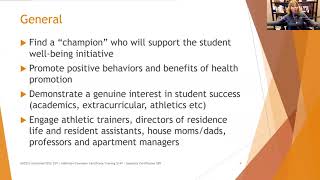
This episode was pre recorded as part of a live continuing education webinar on demand. CEUs are still available for this presentation through all CEUs. Register@Allce.com Counselortoolbox you. I'd like to welcome everybody to today's presentation on supporting student wellness. Now, this is the last in our series that we've been going through kind of sporadically over the past month about supporting college students and high school students transitioning into college. Different issues that may come up and different issues that may be relevant not only to clinicians working on a college campus, but also to school counselors that are working at the high school level and. Parents and people and counselors in the community that are working in communities where there are universities because not every university has a counseling center. So sometimes students are soliciting services from private clinicians even though they are students at a local university. So we're going to talk about some general guidelines for supporting student mental health, specific information regarding student athletes, explore some information relevant to students regarding alcohol and drug use and disordered eating, and identify the basics for early crisis intervention. We're also, you know, I had a request at the beginning of class, we'll talk some about the roles that schools and government play in helping support student mental health. Because a lot of times it's a hands off approach, you know, not my problem. And everybody walks around going, not my problem. Well, it's everybody's problem. So we need to look at, and I'm going to talk a lot today about the way the community as well as the administration can bond together to support student wellness. Because when you've got, you know, for example, in the Gainesville where I went to school, the University of Florida has roughly 75,000 students and the population of Gainesville is, I believe, like 250,000. So, you know, the student population makes up a significant chunk of Alachua county, especially in Gainesville proper. So what that means is if you've got students who are not functioning well, if they're depressed, if they're not able to work, if they're, you know, getting involved with the law, if they're having drug problems, it's going to affect the community as well as the school. So the community is well served to make sure that there's enough funding and activities and resources for the students as well as the universities. And obviously it's partly up to the students to take advantage and to create some of their own activities. I'm not saying that the impetus falls on everybody else to do it for the students, but Students need to say, hey, we need this service. Hey, this is important. Hey, can I help volunteer and put this together? So we're going to talk about some of those things, just some general statistics. And as you all know, I don't test you unless I specifically tell you I'm going to on specific statistics because that doesn't help your practice. I just want you to have a general idea about the scope of the problem. One in every 12 US college students makes a suicide plan. Okay. Wow. Just think about sitting in your college classroom. I remember there were some classes I had that had 40, 50 students, some classes that had like 700. But the average 40 person class, we'll say 48, because I can't do math that well. Four people in that class were going to make a suicide plan. Four people out of 48. That's a lot. That's a whole lot. One in four adults experiences mental illness in a given year, according to the national alliance on Mental Illness. Now, that isn't just college students, but young people seem to be making up a larger segment of that population in the recent years. In 2015, students were asked if they worried their food would run out before they had money to buy more. And 22% of undergraduate students answered yes to this question. So we've got a lot of students going to college that don't have good money management skills, may not have a lot of skills to get a job, or, you know, may not have some sort of funding in order to provide their food. So they're not sure how they're going to get food, which adds extra stress. So making sure that there are some jobs available in the community for college students can be really helpful. 32% of female students reported experiencing sexual assault within their lifetime. Now, again, this is their lifetime, not just during the four years that they're in college, but that's still a big number. And we know that sexual assault on campus is a problem. The CDC has found a sharp increase in three sexually transmitted diseases, and young adults account for the majority of cases. That was in a release that was put out in November of 2016. So current research shows that certain STDs are increasing kind of at an alarming rate. 30 to 70% of those seeking treatment for an eating disorder receive medical treatment for weight loss, indicating that individuals with eating disorders are much more likely to receive treatment for a perceived weight problem rather than mental health treatment for an eating disorder. So we've got a lot of students going to the health center or going to see a doctor and trying to get weight loss medications even if they are not technically overweight, or even if they are technically overweight, it may be because they've got some emotional eating, some eating disordered habits that need to be addressed. And instead of addressing those, they're trying to get medications to take the weight off. 4.4 to 5.9% of teens enter college with a pre existing untreated eating disorder. So again, just kind of putting that into perspective, that's about 1 in 21 in 20 teens enter college with a pre existing untreated eating disorder. So we've got to do something different. The first thing, and these are just general guidelines we're going to start out with, is to find a champion on campus who will support the student well being initiative. And you know, I say on campus because if we're talking about students, ideally some, but the point person is going to be on campus. It doesn't necessarily have to be. If you have a county commissioner who wants to be the champion, Whoever wants to be the champion is great. But ideally it will help with the interfacing if it is somebody within the administration or faculty of the student body, promote positive behaviors and the benefits of health promotion. So have wellness fairs out there, have screenings, have pamphlets available. I know poor trees have a lot of stuff available on the website. One study that was done by nehda, the National Eating Disorders alliance, found out that informal educational resources like websites and brochures served a critical function in helping students identify whether their eating was normal or abnormal or they needed to seek help. So having that out there because a lot of students may not want to present for a screening, they may not think they've got a problem or they may be in that contemplation stage where they're trying to figure out if it's really a problem that warrants going through all the hoops to go to counseling. Not so if they have something that they can reference that is reliable and not chicken Little. You know, we don't want to scare them into coming into counseling, but information that helps them make an informed decision that will be really helpful. We want to have clinicians and teachers and people that are involved in students activities and students lives demonstrate a genuine interest in student success, including academics, extracurriculars and athletics. You know, as a professor, when I would hand out papers, you know, I always felt guilty and you know, maybe it's just me because I'm kind of an extrovert, but when I handed back term papers, I couldn't just hand back a paper that had A grade on it and, like, no comments, and definitely not hand back a paper that didn't have any positive comments. You know, I'd always try to find something positive, even if there was constructive feedback, providing genuine interest, encouraging students individually even to come to office hours, or calling a student after class to talk with them and go, you know, I noticed that your work's been kind of falling in quality lately. I'm wondering if there's something going on if you're working with student athletes, going to the athletic events and making a presence there so they can feel your support and extracurricular activities. If you have a student who's in the drama club and they're putting on a presentation, any of those things where you can show that they are more than just a number to you is going to help forge a connection. So students feel more like the university is sort of an extended family, if you will. And smaller universities, obviously it's easier to do that than larger universities. But, you know, I would notice when I was in college and when I was in grad school, when I would do something and professors would be there, you know, I would notice, you know, when I went to the gym, you know, professors showed up at the gym and they would come over and say, hey, how you doing? You know, we weren't talking about school, but they acknowledged me as a human being, not just a butt that was in a seat in their class. Engage athletic trainers, directors of residence life and resident assistants, house moms and dads. These are the adult overseers that live in a lot of sorority and fraternity houses. Professors and apartment managers in this cause. Now, why apartment managers? Because you have those students who live off campus and they're not part of student housing. But the apartment managers are going to be well served to make sure that their residents are happy, healthy, and productive, because that will ensure that they're getting paid. You know, if they are not getting. If the student drops out, then they're going to probably have to move out. If the student is depressed and not going to school, not going to work, they may not pay their bills. And if they're not paying their bills, the, you know, the rent will be delinquent, etc. So it benefits apartment managers to link with the community. It benefits apartment managers to have an open discussion about how can we make this an awesome place for students to live. What types of resources do they need? I know, you know, in Gainesville, a lot of the apartment complexes, now, this was way back when, but we had computer labs, the apartment complexes. So if you didn't have your own computer. Yes, there was a time that happened you could go down to the computer lab at the apartment complex and do your homework instead of having to go to the computer lab on campus. And that helped with a lot of stuff because parking was a bugger and a half on campus. So being able to do that at home, it saved time, it was less stress. You got to meet your neighbors, all that kind of stuff. Having clubhouses that, you know, actually have activities and, you know, pool tables and things that people like to do, not just an open room with a television, can also be useful because people who live in the apartment complex will go hang out. So we want to engage as many different stakeholders as we can. How do we engage them? By helping them see how it's a win win for them. If you help us help the college students, how does it benefit you? And you know, a lot of times you want to look at dollars first. How does it benefit you financially? How does it benefit the community? How does it benefit, you know, the apartment managers, etc. And the healthier the college is, and the healthier the community is, the more people that are going to want to come to that college and community. So you can really start building on it in sort of a political fashion and get people energized and on board, communicate about the consequences of not seeking help and the benefits of early intervention. Now, we don't want to beat this one too much because a lot of people have heard this before and they're like, yeah, yeah, you know, I need to early intervention, yada, yada yada. But if they don't think they've got a problem, then they don't really care. One of the ways we can communicate about the consequences is provide some surprising facts, if you will, and we're going to talk about some of those later that may catch people's attention and they go, oh, I didn't know that. Well, that's important to me. You know, maybe I want to get more sleep in order to ensure that my cognitive performance is at its peak or whatever. So we want to make sure when we're presenting this information, we're presenting it in a meaningful way to these students that really connects with what they're concerned about. Their future careers, their family, their finances, their physical appearance, whether you believe that that's something we should emphasize or not. A lot of students, a lot of people put a high emphasis and have a lot of anxiety about their physical appearance. So if we help them see that, you know, for example, when you're overtired. Your hunger and satiation hormones get out of whack, and people who are overtired tend to overeat. So one way to help stop overeating is to get enough rest, draw that there, and help them make their own educated decisions. We want to normalize and destigmatize mental health issues. Make it a project, if you will, to highlight people who are diagnosed with, who have dealt with who, whatever word you want to use. Mental health issues, you know, whether they be actors, professors, coaches, athletes, you know, and it doesn't even have to be at your school, but prominent people who have dealt with mental health issues, you know, and there's no shame in is what it is. It's, you know, if you have diabetes, you don't go, oh, I've got diabetes. You know, they say I'm diabetic. So why do we treat depression or anxiety any differently? Where we say, oh, I've got major depression. No, let's destigmatize it and start talking about it a little bit more. Now. One important issue with colleges is there tends to be really strong cohesion among certain groups. And this can be especially athletics and sororities and fraternities. And there's probably other groups out there that I'm missing, but, you know, my personal experiences, those groups have their own norms about health and safety behavior that they tend to go by. You know, what's okay, how much is okay to drink, Is it okay to drink on the weekends? Is it okay to drink on weeknights? What types of eating behaviors are acceptable and unacceptable. So it's important to figure out, you know, perceive them as their own unique culture, if you will, and figure out how it is that you can best communicate with them and find a champion there. When we talk about sororities, for example, you have the house mom, but then you also have the president of the fraternity or the sorority and, you know, the people that are in leadership roles, we really want to get them on board with health positive behaviors. Train peer health educators. And this kind of goes with athletics and sororities and fraternities. Those people who are in strongly cohesive groups will often hear their peers a lot sooner than they're going to hear the counselor from the counseling center or somebody who comes in off the street. So if we can train the peer educators, the team captains, the presidents of the fraternity and the sorority to educate those that look up to them, if you will, or are on their, in their group, then it's going to help get that message Out. Be aware of high stress times. And if you think of others that I didn't include here, please feel free to shout them out. Fraternity and sorority rush tryouts for athletic teams, but also tryouts for other things. If the drama club has a tryout, you know, it's a big deal if you're wanting to become an actor. If you don't get a particular role, it's a big deal if you want to be a dancer. If you don't get a particular position on a dance team or cheerleading or whatever it is. Midterms is another stressful time, as is finals, because a lot of times significant portions of your grade ride on those tests. And a lot of times students have put off studying until, you know, the 11th hour. So now not only does a lot of their grade rest on it, but they haven't even cracked the book yet. So they have a lot of time pressure. They have, you know, other stuff is going to go by the wayside. They're going to get overtired, yada yada. So if we can encourage students to work steadily through the semester, and as professors, you could see it as enabling or you could see it as helping them learn better habits, you know, however you want to see it. What I used to do is I used to set goals, and Instead of having two big tests, I would have a test every three or four weeks, you know, and there's only 16 weeks in the semester, so they're not having a lot of them. Two of the tests wouldn't count for anything, but I wouldn't tell them which two of the tests. And, you know, I would give them these tests in order to make sure that they weren't getting too far behind. And that encouraged them. If they knew that they were going to have their quarter test to stay caught up, and then, you know, they'd study for that one. So then they would only be a quarter behind when it came to the midterm. And hopefully that helped them stay on target a little bit more. Other classes that I taught, depending on the level, especially my freshman level classes that I taught, I would have students turn in something that indicated to me that they had truly read the material and digested it every week. And yes, that was a lot of grading for me. Towards the end, I started doing peer evaluations so they would share among their group and they would score each other on a rubric. Took the pressure off me, but it also still encouraged people to get their work done. They had to produce something before. Breaks can be really stressful, and you're thinking, well, before breaks should be awesome. They're getting ready to get out. But before breaks can be stressful. If they're going home to a chaotic home environment or. Or if they are, they have a new sweetheart on campus and they're going home and they're going to be separated for two or three weeks, and they're jealous that their significant other is going to hook up with his or her high school sweetheart. You know, there's a lot of drama that can go on around breaks. There's also a lot of stress around money. If people are going for spring break to Cancun or whatever, and some of the people in the group can't afford it or are borrowing from Peter to pay Paul in order to afford it, it can add a lot of stress. And after breaks, we all know it's hard after a break to kind of get back into the swing of things. But also, things that happen during the break can impact students. They can have a resurgence of their homesickness, for example, that can occur after break. So we want to be aware. So basically what I'm saying is pretty much anytime during the year, there potentially could be a high stress time for somebody. Be alert to signs of hazing and have a clear policy and procedure for handling hazing reports. Students need to know how they can report it. Anonymous tip lines, if nothing else, can be helpful to point administration in the right direction. But those things need to be taken seriously, and students need to feel that they're going to be handled correctly. So let's start talk a little bit about student athletes in particular. Just because student athletes are generally healthy doesn't mean that they're immune to mental health issues. Matter of fact, you know, they can face more mental health issues in many cases than a lot of other people because of the perception that they're supposed to be healthy and, you know, role models for wellness. A lot of times student athletes may not want to seek help for any sort of eating, physical or mental health sort of issue. So we need to make sure that there's a way that they can access services in a confidential manner. And we want to destigmatize for them, let them know it's okay. Again, have a program or. I can't think of what I'm trying to. The word I'm looking for right now. But showcase different athletes who have had mental health issues or have mental health issues and are very successful athletes. Help them figure out that it's okay to not be 100% all the time. Athletes face pressures related to scholarships. If they're in school on scholarship, then they, number one, have to keep their grades up, but number two have to stay on the team. So there's a lot of anxiety potentially about that, especially if they're not performing really well right now. Academic pressures come up. Athletes travel a lot for their games. So during the season especially it's hard for them to stay caught up, to keep up with their, with their schooling as well as their practices and their games and their trips. And they can get jet lagged. I mean even just traveling one time zone can be exhausting. Plus they're putting forth an enormous amount of energy in their, in their play. So you know, it's important to understand that their academics can be a stressor, helping them figure out how to navigate that. Whether it's hopefully the university has a tutorial program where people can access tutors online or in person so they can get help when they need it. Hopefully coaches are honed in on making sure that athletes have specific study times. Hopefully coaches are honed in on the best wellness practices and recognize that late night physical activity is likely going to disrupt sleep. The body needs to cool down in order to get ready for rest and relaxation. So intense physical activity like late night practices or late night games is going to disrupt sleep schedule as is traveling and other things. So it's important for coaches and athletic trainers as well as athletes to kind of all be aware of what's going to help them enhance not only their athletic but also their academic performance. Athletes have pressures as a reaction to an injury. You know, if they feel like they are, you know, maybe they're the team's star quarterback or, you know, whatever, and they get injured. They may feel like they're letting down their team if they don't go back out there. They may feel like they're letting down their family if they can't play for the rest of the season. They may feel fear losing their scholarship or losing their place or potentially losing the opportunity to play pro. Depends on the athlete and their caliber and all that kind of stuff. But injuries can be huge for athletes. One of the suggestions in the literature that I was reading is to make sure that students know ahead of time. Student athletes know ahead of time when they come on, on scholarship or what the options are in the unlikely event that you should get injured and be unable to play anymore. How can you afford, how are we going to help you continue to pay for college? And you know, that can be helping them secure loans and grants and stuff. It doesn't mean they got to be paid for. But making sure that there is an avenue where they can meet with a financial aid counselor and get the assistance they need to continue to stay in college. Over training leads to all kinds of problems, including sleep disruption, injuries, irritability, depression. We could do a whole class on the effects of overtraining. Overtraining can become really prominent at the beginning of the season when they're doing 2A days for, you know, who knows how long, and then generally right at the end of the season when they're coming up on, you know, state championships and SEC finals and all that kind of stuff or whatever your, what are, whatever conference you're in. So those are times where we want to be extra alert, but we want to make sure again that the athletic trainers and the coaches are alert to what causes overtraining, what are the signs of overtraining, how it can be prevented, and what to do if they think that an athlete is getting over trained. Key people influencing student athlete decision making are coaches, teammates and parents. So the pressure that comes from that triad is going to have a significant impact on whether they seek help, whether they take care of themselves, whether they stay up on their academics, etc. If the coach's attitude is, you know, as long as you maintain a C average, I don't care, that's going to have a much different feeling in the locker room, for example, than if the coach says, you know, let's see who can get the highest GPA this semester or whatever it is. Program for student athletes must consider timing issues such as differences in alcohol use, dieting and workout schedule, and time availability in the off season compared to the competitive season. Wrestlers and gymnasts, for example, in the competitive season are going likely. Most of them engage in much more intense dieting and workouts than during the off season when they're recovering. Alcohol use tends to go up in the off season. They tend to drink less during the playing season. So making sure to hit the relevant topics at the relevant times can make it more absorbable and useful. Student athletes may experience an increase in anxiety when exposed to a new coaching style or team. It's always kind of a shock when you go from your high school coach that's coached you for four years to college and you've got a Bobby Knight style kind of coach or something. It can be shocking. And you know, I remember when I was at the University of Florida, we went through a lot of football coaches, from Steve Spurrier to Urban Meyer to Zook to. I can't even list the whole list of them right now. But they all had extraordinarily different coaching styles and it would take the team a while to adapt, to know what to expect, what to do to please that coach, etc. And that's really stressful on a lot of athletes. Coaches do need to be particularly responsive and professors. So this isn't just student athletes here. We need to be particularly responsive and careful with depressed students as they may interpret interactions and communications more negatively than intended. Now, you know this one, this part came out of the NCAA pamphlet that's in your class. But so think about if you remember Bobby Knight or even Coach Spurrier. I remember him getting red in the face and throwing his visor down and getting right up in somebody's face. If you've got a student that's a student athlete that is exceptionally depressed, they may do more internalizing, personalizing, more cognitive distortions. So the depression and sense of helplessness, uselessness can get much worse. If comments that are intended to be constructive come out strongly, they can be perceived as extremely negative. The same thing is true when you're working with a professor, working with any students, if you provide constructive feedback, some students can take it really, really personally. I remember when I got back one version of my dissertation and I swear my committee chair had hemorrhaged on it. He had, he must have used three red pens. And his response to me was, well, think about how I felt when I did mine. When I had to type it on an old fashioned typewriter. I'm like, really Dr. Archer? But making sure that students are aware that it's constructive feedback. Now yes, we've got to provide constructive feedback to help them grow. But when students are depressed or tend to personalize, we want to make sure that we help them see both sides, you know, embrace the dialectics, what they did well, as well as, you know, the constructive stuff. And we want to establish back to student athletes, establish a practice of following up with student athletes who suffer career ending injuries or, or are otherwise disconnected from the team. If they have to leave because there's a death in the family, if they are in a car accident, if they develop a substance abuse problem and have to go to treatment for 90 days. There are a lot of reasons why somebody can be separated from the team either for a season or permanently. And we need to know what the practice is for following up with them. The same thing is true for athletes who get suspended for poor behavior for whatever reason. If they are separated from their team, that's like yanking them out of their family. And they can feel a lot of anxiety, anger, rejection, all kinds of stuff. So we need to intervene and make sure that they have access to resources to deal with it in order to prevent the problem, whatever it was, from getting worse. Alcohol awareness. Now, these are some of those facts that I told you we were going to talk about that might prove interesting to people and relevant. It's not the same stuff that they generally hear in classes. Alcohol inhibits the absorption of nutrients and diminishes protein synthesis, resulting in decreased muscle growth. Now, that's not just athletes who care about that. There are a lot of us who love to go to the gym and who work out in order to have a healthy body. So if we are doing that, we want to make sure that we are getting the benefit from our workout. We know that every pound of muscle burns an additional 50 calories. So in my mind, I'm going, okay, five pounds of muscles is an entire pack of M&Ms. Every day that I can eat. And that's how I get myself to the gym. Don't judge. But when I hear that, that if, if I'm drinking alcohol, I'm not going to build the muscle as quickly, that means a longer time till I can feel great about eating that extra pack of M&Ms. Alcohol causes dehydration that slows the body's ability to heal. Now, this can be after injury, this can be after illness, but it can also be after working out. If you've ever gone it gone in and had a really hard workout, and not the next day, but the day after that, you couldn't hardly get out of bed, and you're like, okay, that hurts so good. That's. You're making micro tears. In order to strengthen, you've got to make micro tears in your muscles. When you're drinking alcohol, it takes longer for those muscles to repair themselves, which means it's longer before you can go back to the gym, which means it's going to take longer to build the muscle. Alcohol negatively impacts sleep, which can result in decreasing the body's natural production of human growth hormone. And we've heard a lot about that in the news in terms of maintaining youth and helping build muscle and all that stuff. And HGH deficiencies can compromise muscle repair and growth. Decreased sleep also hampers memory and information retention. And this can be anything from the plays to. To the dance routine to chapter 14 in biology. Alcohol produces a substance that's directly toxic to testosterone. This is again, important because athletes need testosterone in order to have that aggressive drive. Testosterone is also helpful in building muscles and things like that. So it's not just a sex hormone as we think about it, but it also is important for the athletic performance. For a lot of people. Alcohol use depletes energy sources and can disrupt water balance and cells and alter their ability to provide fuel for muscles to contract again. You know, obviously a lot of these are targeting athletes and people who are very into fitness and health and working out, but that is a pretty wide swath of our population anymore. So, you know, think about all the people. How many gems are popping up around you? You know, if they're popping up, that means there's people going to them. Alcohol inhibits the ability to learn new information and form memories. So people don't need to be drinking while they're studying because it actually inhibits the formation of those memories. Consuming five or more alcoholic beverages in one night can affect brain and body activities for up to three days. That was a new fact that I learned. And two consecutive nights of drinking five or more alcoholic beverages can affect the brain and body for up to five days. So if Sunday, Saturday, let's say Saturday after the football game, you party and then you wake up Sunday and you go to a picnic, you have five more beers, then potentially the entire next week of school and practice and whatever else, you're going to be less than optimally functioning because that alcohol is potentially still affecting your neurotransmitters and your electrolytes and all your body functioning. Marijuana slows reaction time, impairs motor and eye hand coordination, impairs learning and memory, may increase anxiety, and in some cases cause psychosis. This is especially true with. Certain strains of marijuana as well as synthetic marijuanas. So there have been a lot of reports of psychoses with spice and other synthetic marijuanas. And people who use marijuana often have frequent respiratory infections. So for athletes and even people who like to work out. I'm a runner and I hate it when I've got a respiratory infection because it just, it's miserable to try to run. Stimulants such as amphetamines, cocaine, ephedrine, which is found in a lot of pre workout supplements and medication for adhd, can cause people to become nervous or jittery, increase heart rate, blood pressure, heat production and body temperature. None of these is good for the body and it's basically like, you know, being in park and revving your engine into a little red zone. You can imagine your body's going to have a hard time doing cognitive things when it's running on, you know, Wide open, full bore. So things that we can do, be aware of the symptoms of substance use, understand the reporting protocol for students who are violating substance use policies, and for referrals of students seeking assistance with substance abuse issues. So not only do we need to identify it, we need to intervene and make sure we've got somewhere to send them to. Not just go, well, you need to find help. We need to make sure we make that warm referral. Encourage help seeking for all mental health concerns, including substance use. You know, sometimes students don't want to seek help for substance abuse because they're afraid they're going to get expelled or suspended from school or kicked off a team, especially if they're on a dry campus. And a lot of campuses are dry, so, you know, make. Or they're underage, so they're technically breaking the law by using substance. We need to have some sort of program policy ability for students to seek health care for substance use issues and not fear legal or academic repercussions. We need to communicate with group members about the consequences of substance use and establish clear expectations about the role that all group members play in keeping each other healthy and in preventing substance use. So think about the fraternity that, you know, tends to have parties on the weekends and, you know, keggers and, you know, think about the. Even the. The apartment complex where there may be, you know, wild parties. And it happens, especially if it's a dry campus. Most parties move off campus. So what are the expectations of management for, you know, if there are parties and, you know, people spilling out? A lot of that revolves around noise complaints and maintaining order. If you will be aware of how their own substance use behaviors and attitudes are modeled for students. So if I'm a coach or a house mom or a sorority president, and I am telling you, you know, you don't need to be drinking, it's going to impact. Negatively impact the image of the sorority. It's going to negatively impact your academic performance, yada, yada. And then I go out and I get schnockered every single weekend. You know, there's a disconnect there. So people look up to us, and just like children look up to parents, you know, other people will learn more from us by what we do than what we say, especially if they're incongruous risk factors for disordered eating. And, you know, we're moving off of substances now. Perceptions about weight and performance. If athletes think if I'm thinner, I will perform better, then we see potential disordered eating, an emphasis on BMI over Overall health and body fat. Now, BMI is a ratio of height to weight. Now think about some athletes that are, you know, bodybuilders, for example, if they have a lot of muscle mass, they may be very heavy for their height, but they may not have much fat at all. So does that mean they are unhealthy? Not necessarily so. BMI is really not a good measure for a lot of people, especially for athletes and people who work out. So we want to look at their overall health. Let's look at their cholesterol profile, their blood pressure and their body fat. That'll give us a much better picture. Other risk factors are the images or standards set by the group or the media of what you should look like. Magazines, newspapers, etc. Upcoming spring break or formal season can add a lot of disordered eating. I remember before one spring break, one of the gym owners in our community decided to go around and post pictures with a whale and with a female's face on it. And the whale was wearing a bikini. And it said, you don't want to look like this this season. Come sign up with us. I mean, it was just atrocious, but it certainly got a reaction. And the freshman 15, I mean, people can eat unhealthfully and gain weight when they first go to college, which can lead to severe dieting. You know, suddenly they'll be like, oh my gosh, I put on the freshman 15. I can't eat for a week. So it's important to look at all of those things. Educate people, especially incoming freshmen, about healthy eating habits. Not getting into the habit of eating a full pizza at 11 o' clock at night, every night. Consequences of disordered eating Restricting carbohydrates forces the body to convert protein into a less efficient form of energy and increases the risk of injury. Intense dieting can negatively affect VO2 max and running speed. Anxiety, depression, decreased concentration, emotional dysregulation and obsessions with eating. Food and weight all increase when people have disordered eating, especially if they're restricting, if they're over exercising, or if they're purging. The body will crave the nutrients that it needs, which can lead to obsessions. If it's not getting enough calories, it will make the person obsess more. They found a lot of these obsessions go away when people are returned to a regular can't talk now to a relatively normal weight. And remember that the neurotransmitters responsible for the production of serotonin and GABA come from the foods we eat. So disordered eating can prevent people from having those building blocks. Vomiting, excessive exercise and restricting calories often lead to dehydration, which can compromise performance not only academically, but or athletically but academically Electrolyte imbalances can impair performance as well as lead to heart failure. And this isn't just in athletes, especially in those people who are severely malnourished, underweight, or are purging either through excessive exercise or through vomiting or laxative abuse, they can really mess up their potassium levels, which can lead to arrhythmias and potentially cardiac arrest. All of these things can also contribute to stress fractures. The bones need to have enough calcium and other minerals in order to stay strong. And if you're purging all those out, they're not getting to where they need to be. Male and female students who are inadequately fueling their bodies may experience hormonal disruptions that lead to compromised bone density and increased risk of bone injuries, including stress fractures. So another reason that you want to make sure that you're getting the right nutrients. Advice for group leaders. Be aware of the symptoms of disordered eating. Lanugo, which is basically increased hair growth on the body when people get severely underweight. Russell's sign is calluses on the back of the hand, usually the dominant hand, from forced vomiting, A sudden drop in weight, puffy face, which happens with a lot of vomiting, dehydration, or refusing to eat in front of others. Among a bunch of other signs. But these are some of the big ones that may come up that may indicate that there's a problem. Seek out services of a registered dietitian. If you have a dietitian. You know, if you're a sorority house mom, have a dietitian help with planning the meals in order to make sure that they're healthy, well rounded. Same thing for coaches. Have a dietitian available to students on campus. You know, a lot of campuses have a dietetics program, so it's possible to create some sort of scenario where there's an open consult clinic where people can get advice from a dietitian. Know what services are available to students with disordered eating. Students with disordered eating need specific counseling services, not just your run of the mill. So it's important to make sure you know who the eating disordered specialists are. De emphasize weight when you're talking about performance or whatever. Focus on increasing performance status for the individual as well as for the. For the group. And, you know, if we're talking about, like sororities and fraternities for Example, increasing the status of the organization. You know, who are you? What do you bring to the table besides your physical appearance? You know, what is it that, what goal are we working towards? It's not to be the prettiest, it's to be the, you know, fill in the blank. Remember that body composition and training for optimal health differs between people. So some people, you know, well, training goals and training needs just differ. And it's important to involve other stakeholders to make sure the messages are consistent. And you're not having, you know, a coach over here saying you need to make weight, you need to not eat for a week. You need to do this. Then you've got a counselor over here going, you need to eat, you need to ignore your coach. Everybody needs to be involved in developing a healthy relationship with food on campus. Services for eating disorders educational events, programs and workshops such as body image workshops and participation in National Eating Disorders Awareness Week can be helpful. It helps people start recognizing that their eating habits may not be okay. They may have disordered eating. There's a lot of binge eating, especially on college campuses among men and women. Have on campus screenings for eating disorders. Counseling services with staff practitioners who have specialty in eating disorders. Academic classes, research and programs for formal education and training and in eating disorders for students and staff. So if you actually have a class that trains counselors and provides in service for students and staff, that's excellent. Residence life programs and peer advisors who are trained to identify and offer referrals for disordered eating. Athletic department services to prevent, screen for and refer student athletes with eating disturbances. Informational resources for students, including articles, websites, pamphlets and library collections specifically on eating disorders. And again, availability of a dietitian, physician and counselors. Best treatment for eating disorders is multidisciplinary dietitian, obviously for the nutritional component, the physician. Because a lot of times people with eating disorders can benefit from certain psychotropic medications to help with the compulsive nature of their behaviors or the anxiety surrounding the fear of fatigue. And then counselors to help process everything. Lack of sleep risk factors in the sport environment. Lack of sleep can be due to athletic scheduling, the timing of practices, travel and competition, intense exercise in the evening and post game socializing, especially after big games. But really after any games, you know, the attitude is often work hard, play hard. So people want to go out and celebrate. They don't want to go back to the hotel and go to sleep. They're too jazzed from what they've been doing. So it can cause people to have a lack of sleep. All right, I'm not expecting you to go back to the hotel and go to sleep after you've won the SEC championships or whatever. That's not realistic. But how are you going to make up for it basically the next day? Because you're probably not going to get great sleep that night. So how are you going to make sure you get kind of caught up on your sleep, if you will? General risk factors for students Time demands, including if they have jobs, if they're involved in clubs, school responsibilities and spending time with friends. All of these things can decrease sleep opportunity, poor time management, lack of studying until the last minute. So you've got to stay up, you know, and do all nighters in order to prepare for your midterm. That's not helpful. Homesickness. Sometimes people lay down in bed to try to go to sleep, and all they can think about is wanting to go home. And it keeps them awake. And poor nutrition. Making sure that the body has enough tryptophan to make serotonin, which is broken down to make melatonin, will help with making sure the body can help you get good quality sleep. And there's no magic to that. Just eating good quality proteins is all people need to do. Consequences of disordered sleep Diminished reaction time. Diminished cognitive function, which results in greater difficulty learning and remembering. Compromised hormones, including diminished testosterone. Changes to the athlete's metabolism. And also athletic people, not just college athletes, but anybody who works out a lot, can change the metabolism, which can make it challenging to stay at an optimal body composition. Individuals who are sleep deprived are more likely to overeat. A lot of times you're eating to stay awake, and then you're eating to get sleepy. And then you're eating because you don't know what else to do because you can't think straight. There's also a decreased ability to regulate emotions, which can result in greater irritability and impulsivity. Think about when you're exhausted. You know, how is your emotion regulation compared to when you're not exhausted? And there's obviously a decrease in energy in most people when they start to become sleep deprived. So all coaches, faculty and group leaders need to have information annually about the signs and symptoms of mental health disorders. Programming for first response to emergency situations, the importance of and how to create a positive culture that promotes personal growth, autonomy and positive relationships. Now, some people will roll their eyes and go, oh my gosh, I don't want to do any more of this. We need to make sure that we present it in a way that Creates a win win. Why is this important and how can we present it so it doesn't sound like. So it doesn't sound off. Putting to different groups of people information about sexual assault. And one of the things, I'll go back to that one, look at some of the common and popular health magazines that are out there, like Shape and Self and Muscle and Fitness and, you know, some of those others, Prevention, all of those are actually written and, and get a lot of people reading them. So let's target whatever messages we're sending in a similar way. So we're not preaching to people, we're providing them. 10 tips to do this or 20 ways to do this. We need to make sure group leaders have information about sexual assault, interpersonal violence, and hazing. They need to know how to encourage and support diverse students who are facing mental health challenges and, and encourage them to seek help. A lot of cultures don't look fondly upon mental health or substance abuse issues, so it may be perceived as bringing shame to themselves or their family to seek help. So we need to figure out how to make services available and help them access those services and what services are helpful for them. Some people will feel more comfortable going to a spiritual leader instead of. Of a counselor. And the importance of understanding and minimizing the possible anxiety about adverse consequences for seeking mental health care. What are the friends going to say? What are my peers going to say? Students should annually receive education about signs and symptoms of mental health disorders and how to obtain mental health guidance from licensed practitioners. How do you go about getting help? What services does the community offer? What services does the counseling center offer? What services can you tap into online or at 2 in the morning if that's when you have a crisis? Programming about preventing and responding to sexual assault, interpersonal violence, and hazing is also important because students, basically, they're your front line. They see what's going on with their compatriots and they're probably going to be the first ones to say, yeah, something's not right here. And there needs to be programming about peer intervention in the event of student mental health distress. If you notice that your roommate is decompensating, if you notice that, you know, whatever, if you notice something is wrong, what, as a student, what are you supposed to do? And in the residence halls, the first step is usually to contact the resident assistant, but help them have an action plan. Just like we have an emergency escape route on the doors on the back of hotels so you know how to get out in case of fire. Make sure they have an emergency plan so they know what to do if and when one of their friends becomes depressed. Because remember, 1 in 12 will develop a suicide prevention or a suicide plan. We want to ensure, as a community and as a college, we want to ensure that there's a written policy for when students, family members will be notified of a mental health emergency. Most students are not juveniles anymore. They are legal adults. So work with your local legal counsel. Develop a clear policy indicating who is responsible for what in the event of an emergency, all the way through academic reintegration. Not just okay, who sits with the person, who calls the crisis team, who hospitalizes them hands off, but you know, once they are stabilized and they are ready to come back to school, who helps them get caught up, who helps them work with their professors, who helps them reintegrate, who helps them figure out how to drop the classes that they missed, etc. We want to ensure that individuals in a crisis are not turned away. We don't want students to go to a professor during office hours and confess to them that, you know, I'm feeling suicidal or, you know, I'm really, really depressed and I haven't been in class the past three weeks because I just can't get out of bed and have the professor go, well, it sounds like you need to go down to the student health care center. So we want to make sure that the professor knows how to do a facilitate a warm handoff so that person gets connected. Instead of just saying, well, sounds like a problem, let me send you off to somebody else and make it somebody else's problem. Wherever somebody enters the system, they need to be able to basically be handheld to the right resources. When somebody's in crisis, they need assistance. This is not the time to empower them to be independent. Ensure that interveners have a comprehensive understanding of the crisis. So, you know, if the person comes to the professor's office hours, make sure the professor knows what questions to ask to figure out which pattern to take. You know, is it a sexual assault, is it suicide? Crisis intervention, is it eating disorder? Who do I call? Provide timely access to supports and services in the least restrictive environment, ideally group counseling, etc. Make sure that people can spend adequate time with the individual in crisis and ensure individuals with appropriate training and demonstrable competence are available to evaluate and effectively intervene with problems being presented by the student. There are unique issues for athletes, students over traditional age, students experiencing domestic violence, especially if they're living in married housing, athletes, people with eating disorders, people with LGBT issues, etc. So we need to make sure that our crisis response team is well versed in culturally responsive counseling. Help the individual regain a sense of control. Attend to issues of culture, gender, race, age, sexual orientation, health, literacy and communication needs in the individual being served. If they're a student and English is their second language, make sure that you have an interpreter available because this is not the time that they're probably going to be thinking, how do I translate this? Respect individual rights. Ensure trauma services are trauma informed. Take meaningful measures to reduce the likelihood of future emergencies, not just for that person, but for every person. So we want to help them develop a relapse prevention plan. But then we want to, then we want to look at what created this situation and is there anything we could have done as a university, as a community, to have provided earlier resources and intervention for this person? Ensure peer support is available. Note recurring crises and consider whether they signal problems in assessment or care. We used to have, in the summer, we'd have spike in admissions to our crisis stabilization unit of people who were actively psychotic. Well, turns out they were actively psychotic and they were homeless. And in Florida, it gets really hot when you get dehydrated. Your older antipsychotics tend to get destabilized in the blood levels. So people aren't stable on their meds anymore. So we looked at that and we identified a pattern. Same thing you can do on a college campus. Are there problems in assessment? Are there problems in the culture? Annually review incidents to identify areas for improvement and prevention. What could we have done differently? We had 20 people present over the course of the year with suicidal ideation. Where could we possibly provide more early intervention? And how can we better engage people? University students are not a homogenous group. Supporting student mental health has some fundamental aspects, but different groups also have unique needs. Supporting student mental health requires multidisciplinary action of students, teachers, counseling staff, housing and financial staff, coaches, parents and administration especially. But then you also look at the wider community and you may want to bring in representatives from the community to help support the students that are living off campus. Schools need to have protocols in place for prevention, intervention and referral of students with mental health issues. And services need to be available. You have to be able to access them if they're going to get used. They need to be welcoming. It has to be so a student can go in and feel like they're going to get help, not be put on a waiting list for six weeks. And they have to be normalized so people aren't, you know, pulling their hoodie over their head and trying to sneak in going, I need help. You know, we want them to walk in proudly and say, you know what, I'm struggling, I need help. So we want to normalize the fact that, you know, depression and anxiety, among other things, are very common. Are there any questions. In response to the roles that schools and governments play? I mean, I think I talked a lot about the role that schools play. We need, as you know, professors, we need to make sure that our workloads are reasonable, that we're available to students, that we connect with them, we show interest in them. And if they do identify a problem or we suspect a problem, we assist them in getting to the services that they need. We also, as professors, you know, we see these students two, three, five times a week. So if we notice that there are problems or issues that could be addressed by mental health or student counseling or wellness or the student activity center, we need to be able to speak up and present that need or observation to someone on campus who is our champion in order to get those needs met. As far as the government, government provides a lot of funding and so sometimes working with the county commission or the city commission can get grants in order to provide certain services, especially for off campus students. Another tangential aspect that we didn't even touch on here is law enforcement. If they are referring to if law enforcement officers are not. Adequately trained in the stressors facing college students or the services available on campus, they may not know how to make the appropriate referrals to students. Because a lot of times on campus services are free to students because they're paid for in their student activity fees and stuff. So you know, we do need to make sure that anyone students come in contact with know what services are available to students. Alrighty. If there are no other questions. Oh my gosh, I am so excited about this animal therapy presentation we've got coming up on Thursday. Animal Assisted Therapy. It is just the tip of the iceberg. Introduction found a great text. I don't know if you can find this edition anymore. I don't think you really need to buy the older edition. But it is 477 pages of jam packed material. So I'm going to condense the highlights of that into one hour and we'll see where we go from there. Alrighty. You should have plenty of time to go take your exam and earn your certificate in the in the allotted time. If you are coming to class on Thursday for the animal assisted therapy workshop, try to think ahead of time. Different ways that you could use animals in therapy with your clients or different client issues that you think might be useful or able to be treated with animal assisted therapy. Because I'm going to ask you for some ideas on your own interventions to make it more interactive so I'm not just lecturing at you. Alrighty everybody, have an amazing day and I will see you on Thursday. If you enjoy this podcast, please like and subscribe either in your podcast player or on YouTube. You can attend and participate in our live webinars with Dr. Snipes by subscribing at allceus.com counselortoolbox this episode has been brought to you in part by allce.com providing 24.7 multimedia continuing education and pre certification training to counselors, therapists and nurses since 2006. Use coupon code counselortoolbox to get a 20% discount off your order this month.










