Surviving Toxic Parents Live Stream Replay with Dr. Dawn Elise Snipes
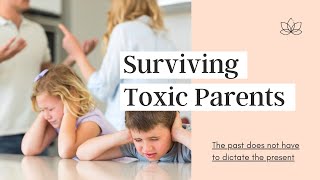
A live-streamed talk by Dr. Dawn-Elise Snipes defining ‘toxic parents,’ describing common toxic behaviors (emotional unavailability, enmeshment, inconsistency, invalidation, martyrdom, aggression), explaining developmental causes (attachment disruptions, learned communication deficits, childhood trauma), and outlining coping and recovery strategies for adults (distress tolerance, forgiveness, healthy boundaries, self-esteem rebuilding, assertive communication, fact-based reasoning and reparenting). The talk is a high-level survey intended to help survivors identify toxic patterns and begin practical change.
Chapters
So I need to go more this way. There we go. Good morning everybody and thank you for being with me today. As I promised yesterday, today we are going to talk about surviving toxic parents. The past does not have to dictate the present. I'm your host, the Dr. Donnelly Snipes. The first thing we want to talk about is, is what are toxic parents. There are a lot of different definitions and really we're going to just go over parents that were not ideal and that covers a lot. Toxic parents may have unhealthy boundaries. They may be emotionally unavailable, so they are detached. They have a hard time connecting with their children, or they may be enmeshed and overbearing. They're in their kids lives all the time. They are telling their children how to think, how to feel, what to do, and not respecting the child's personal feelings. Now why does this happen? Well, people don't get into relationships. People don't become parents and say, okay, I really want to suck at this. People do do the best they can with the tools they have. So I believe that people that have unhealthy boundaries, whether they're parents or otherwise, are often dealing with their own stuff. They may be emotionally unavailable because they are just too overwhelmed with life as they know it, as they experience it. They don't have effective coping skills. They may never have learned how to cope. They may never have learned how to be effectively attached to another person. That's something that we learn thankfully, when we are pretty much from the moment we come into this world, we start learning about attachment. That's why that primary attachment is so important. Parents who were deprived that healthy initial attachment when they were younger often don't develop attachment skills later in life. So they have a hard time displaying healthy attachment. If you never learned it, you can't display it. We do want to recognize that. Are we saying that, well, that's okay, everything's fine? No, I mean, there are consequences to people's behavior. But it's also important to understand, especially from a child's point of view, that my parents are not doing this intentionally. And that's, you know, almost impossible for small children to understand. But in retrospect, a lot of times we can look back and say, you know what? My parent was doing the best they could with the tools they had. They didn't grow up with boundaries or, and were never allowed to have boundaries of their own. And so they didn't know how to permit me to have boundaries. What can I do now? Toxic parents may have inadequate communication skills. Now this is another one of those things that we learn from our family of origin. We, we are not taught, we are not born with the ability to effectively assertively communicate. That is a skill that we learn over time. Toxic parents tend to be either physically or verbally aggressive with their children or with others. Toxic parents don't necessarily have to be aggressive or toxic with their child, but they, if they're toxic or aggressive with others in the presence of the child, social learning communicates to the child that this, this caregiver, this parent may be aggressive, may not be safe, they are threatening, they are scary in some way. Another form of communication that we see in a lot of toxic parents, parental relationships are, are parents that tend to hold that martyr role. You know, I have to suffer like this because of you. They may blame the child for their current situation, their current feelings, their current relationships. They may use guilt to manipulate the child. None of these are healthy. These, the martyr blaming guilt thing is a very passive aggressive method of communication, and it also demonstrates a lack of personal responsibility if the caregiver is blaming the child. So it's really important for people to recognize a lot of times we're talking about adults that are looking back over their childhood going, I grew up in a really toxic situation. How do I break that cycle? And that's really what we're talking about today. We're talking about people who recognize it's toxic and are trying to identify what is healthy versus what is toxic. And these physically or verbally aggressive communication styles, you know, obviously that's not helpful. And we want to again look back at the fact that behavior has meaning. Behavior is communication. When a caregiver, when a parent is aggressive or sir acts as a martyr, or blaming or guilt trips children, what are the benefits to the, to the caregiver? What are they getting out of that? How is that protecting them in some way? Maybe it is just how they learn to communicate because they grew up and, you know, your grandparents did it and their, their parents did it. So they never learned assertive communication. That's possible now. Can we start trying to request assertive communication now and set boundaries so we don't get a feel like we're being attacked by this barrage of martyrdom. Certainly that's something we can start doing, but we'll get to how to, how to address this later. Toxic parents also tend to be inconsistent. They may be emotionally available one minute and not the next minute. They may be kind of borderline esque in their interactions where one day they love you, the next day they hate you. There's very little unconditional positive regard. It's all often about what you do, whether your behaviors are lovable or, or not. So there's not a lot of consistency in how they respond or even sometimes if they respond. And that is really difficult for young children who are relying on those primary caregivers to be there for them to be a secure home base, to be responsive. Which takes us down to our next thing. Parents. Caregivers who are unresponsive can be very detrimental when children are little. That primary attachment relationship teaches children how to react in the face of stress. A responsive caregiver is going to see their child upset and go over to the child or call the child over to them and provide comfort. Model coping skills, provide some self soothing techniques and tools. As children get older they internalize this so they start being able to do it themselves. But an unresponsive parent just kind of leaves junior out there flopping in the breeze. And that is very exhausting and threatening for a little child. And it sends the, sends the message to the child that I'm not worth my parents attention. My parent doesn't love me enough to pay attention. Inattentive parents, it's different than responsive. Responsive is reactive. So when child gets upset, parent responds and helps the child work through it. Attentive is proactive. That's the parent or caregiver who gets up and says hey, good morning, what would you like to do? They are proactive to the child. They attend to the fact that the child's there. They ask them their feelings, they ask them their thoughts, wants and needs. An inattentive parent tends to not be proactive. They could be inattentive because they are overwhelmed with their life stresses. They could be inattentive because they are clinically depressed or you know, intoxicated or there's a lot of reasons that they may be inattentive. The take home message for a lot of children though is my parents not interested in me. They don't love me enough to pay attention. They can be invalidating. And this is so true for children who are what we might call highly sensitive children who tend to dysregulate easily and, and early in life. And some of this I actually learned and we'll be talking about in today's class at one o' clock Eastern standard time. In utero. Exposure to certain substances, even the legal ones, can alter brain chemistry making infants more reactive to stress. So they're easy, more easily upset and they tend to react with a greater amount of Dysregulation in an environment that that child exists in. A lot of times the caregiver can't understand why the child is dysregulating so much. So they invalidate that child's response by saying, you know what? You're overreacting. Get over it, deal with it, be quiet, calm down, whatever they're telling their child. But it's invalidating and set. Instead of acknowledging how overwhelmed that child feels at the moment, which again, sends the message that your reaction is wrong, your feelings are wrong, and that is very hard on a small child. And these messages get internalized and become part of our inner critic, which is. Can be so detrimental later in life. Toxic parents can also be discouraging. Whether it's the unavailable parent who says, I don't have time to tote you to football practice or cheerleading practice, or you shouldn't want to do this, or there's no way you'll ever succeed, succeed at doing this. They can be discouraging, which can be really challenging, because when we, as we grow, every time we grow, we have to step out of that comfort zone just a little bit. And that is extremely anxiety provoking for a lot of people. And it requires caregivers to be encouraging and go, you got this. You can do this. When parents are discouraging, it reinforces the message that you can't, you're not lovable enough, you're not strong enough to do this. And finally, toxic parents can be very unsupportive and promote insecurity in the relationships. And that kind of goes along with discouraging. But unsupportive parents are often the ones that say, well known, and they're not there to help children sort of pick up the pieces when things go wrong. Unsupportive parents, just like it sounds like, make, leaves the child in a position where they feel like they're just kind of on free fall and there's no safe place, there's nobody who's going to. To catch them. So it's important to recognize these. And sometimes these behaviors may be extremely overt and you can look at it and go, oh, my gosh, wow, that is really dysfunctional relationship. And other times, most other times, the relationships tend to be a lot more covert, you know, a lot more subtle. And those inconsistencies, for example, may be a lot more subtle. What matters is how the person perceives the relationship. So how do we survive? What happened in the past happened in the past. And it may have. As children, we may have internalized Some messages from that. But as adolescents and adults, we don't have to maintain and keep telling ourselves those messages. We can check those messages and go, is this accurate? Is this what I believe? And that is part and parcel of surviving toxic parents. You. It's important for the older child or the adult to basically reparent themselves. Part of that is going to start with developing distress tolerance skills because the toxic parent has gotten very used to this dynamic. They are very used to behaving the way they behave, acting the way they act for whatever reasons. And when the adult or older adolescent starts setting boundaries and refusing to accept toxic behavior, it is going to cause some chaos until those energies are rebalanced a little bit. So distress tolerance skills is generally the first place I start when I work with people on just about anything. Because whenever we make a change, no matter how small or how large it is, it is going to cause a little bit of upheaval. And it's important for people to be able to tolerate that upheaval. So distress tolerance skills are one of those things, like learning how to walk that I think everybody needs. Forgiveness is the next one. And some of you may be cowering from that right now, going, oh, I can't forgive. Think of forgiveness as a power play. Forgiveness is you saying, you know what, staying angry at you over this is not worth my energy. It doesn't mean it was okay. It doesn't mean that, you know, I'm absolving everything. It's meaning. It's me saying, I am not going to keep my energy tied up in this, in the past and being angry at you because it's not going to do any good. Forgiveness is for me, it's not for you. Forgiveness is hard, but when you explore it from the position, from the standpoint of a power play, saying, I am choosing not to continue to invest my energy in anger. That is a very powerful and empowering step that a lot of people can take. And it takes time and it is still hard. You know, those thoughts of frustration and resentment and things, they'll still come back up periodically, but it's important to address those. And ask, ask yourself, is staying angry about this? Is getting myself worked up about this again worth my energy right now? The next thing is to develop healthy boundaries. And sometimes you may or may not be able to do that with toxic parents, but it's important to be able to develop healthy boundaries for yourself. And that is hugely difficult when you've been raised in a household where boundaries were just not, not okay. So physical boundaries what's okay? How close can you sit to me? Are hugs okay? You know what feels okay in terms of physical boundaries and being, and we'll get to assertive communication in a minute, but being able to assertively set those boundaries and say, you know what? I'm not comfortable with that. I love you. However, affective boundaries mean protecting how you feel. Your parent, your spouse, your someone else may be angry, maybe depressed, maybe stressed out. It doesn't mean that you have to be. You can empathize with them and say, you know, I, I can see how you are really just overwhelmed with this situation right now, but it doesn't mean that you have to become overwhelmed. You can set that boundary. Cognitive boundaries are the same way. Respecting other people's right to have their own thoughts and, and ideas, while not necessarily feeling that you have to change your thoughts and ideas to fit with theirs. And feeling confident enough in yourself and having a strong enough self esteem to say, you know what? I have my own thoughts and you may not agree and that's okay. You don't have to agree with my thoughts or opinions all the time to, for us to be friends so we can set those cognitive boundaries. Environmental boundaries have to do. They're kind of like physical boundaries, but they have to do with your environment, learning how to set environment, environmental boundaries. This is my diary, this is my closet, this is my drawer. And I don't want you going through it being, this is my mobile device. I don't even know where mine is at the moment. But those environmental boundaries are also often violated in toxic relationships and, and by toxic parents. So being able to set boundaries that say this is my stuff and I should feel like my stuff is safe in addition to my thoughts, feelings, and physical person being safe. And then relationship boundaries, you know, kind of wraps everything up and, and boundaries and relationships have to do with practicing asserting all of those other boundaries in your interactions with other people, but also holding yourself accountable for those boundaries, not invading other people's physical space, not expecting them to feel the same way or think the same way you do. Respecting their, their stuff, respecting their environment, those are all things that are so important. And boundaries go, you know, kind of both ways. Self esteem and maybe I should have put self esteem before boundaries. But self esteem is so important because when you grow up in a toxic family, you often internalize messages that you're not good enough, you're not lovable, you're not strong enough, and that has to be unprogrammed. And it's important to develop self esteem so you're not relying on, on others to tell you you're okay. You are not feeling completely crushed or wounded if somebody disagrees with your thought or your, how you're feeling with something. When you have a strong self esteem, you have those boundaries and you say, I am okay as me. I am lovable for who I am with my feelings, with my thoughts. And if you don't like that, that's okay. You know, you have your right to your feelings and thoughts, which is so hard. Self esteem and boundaries go very much hand in hand. It is very hard to maintain healthy boundaries if you don't have strong self esteem because when people disagree with you, it can be, if you have low self esteem, it can be very easy to want to give in and go, oh yeah, you're right. Assertive communication skills. You know, I've done multiple classes on, on assertiveness and it is important to learn how to effectively communicate with other people where, where you are aware of your thoughts, wants and needs and you can state them as what they are. You can also respect other people's thoughts, wants and needs. In assertive communication, you, you are saying, my thoughts and wants and needs are just as important as yours. In passive communication, which is often what happens when you grow up in a toxic environment, you learn that you're, you're taught that your thoughts, wants and needs are not as important as the caregivers and that sets a very unhealthy dynamic. Or you may learn that or develop the reactive coping skill that says that my thoughts and wants and needs are important and yours aren't. Sometimes we learn that through social learning. Sometimes that is a reaction to growing up in an environment where we consistently felt invalidated. Cognitive distortions that are common in toxic families include personalization. Whatever happens, it's your fault. And if we grow up with that inner critic telling us that, you know, if somebody is mad, if somebody is unhappy, if somebody is sad, it must be my fault. That is a very toxic environment. Again, that shows a very gross lack of boundaries and communication. But it's important to address those distortions. Children when they're little, have very egocentric thinking. They can't see the middle ground, they can't see gray areas. It's either my way or, you know, the highway, so to speak, because children can't, young children can't take other people's perspectives. They're very egocentric. And if they experience interactions with a toxic parent that make them feel ashamed, that make them feel powerless, then they get that message and it's internalized, you know, from a very young age. So then in the future when anything happens, they perceive that as their fault. Mind reading is also often expected in households where there are toxic caregivers. And that mind reading is really where the caregiver says, well, you should know what I'm thinking, you should know what I want, and if you don't, I I'm going to get angry with you because you didn't anticipate my every need. And all or none thinking that everything always happens. It is another common cognitive distortion that needs to be addressed in as we grow up, as we develop more higher order thinking abilities in adolescence and adulthood when we start feeling or angry, unhelpful thinking styles. Another thing we need to do when we grow up in toxic families, a lot of times we are just riddled with guilt, just completely riddled with it. And it's important to examine guilt and recognize that guilt is the, is a form of anger. It's a form of self anger. When you're telling yourself you shouldn't feel some a certain way or you shouldn't do something, or you should be better at something. Guilt can be just extremely exhausting to carry around with you and evaluating the things that you feel guilty about and asking yourself, where did I get this message that I should feel guilty about this and do I agree with it? And that's the key. We need to look at it and go, is this message accurate? Where did it come from? You know, is this something I came up with or I learned, you know, growing up and you probably learned it and is it accurate in the present? Examine and thoughts and beliefs based on facts. A lot of times when we grow up in toxic environments, we make our reasoning based on emotions. I feel anxious, therefore it means bad craps about ready to hit the fan. I feel anxious, I feel angry, therefore something's going to happen. We want to examine the facts with things because in toxic environments we become very hyper vigilant. We come become very alert and hyper alert to microaggressions and dog whistles as they call them now. And it's important to step back and examine the facts in the current situation. If you grew up in an alcoholic household, for example, and you know, an alcoholic caregiver comes home and is, you know, inebriated, that could trigger anxiety. And that anxiety may trigger a whole litany of thoughts because you have expectations of what's going to happen in the present. Your significant other comes home after a holiday party and is inebriated and you start having those same Anxieties. Well, fact based reasoning means stopping and saying, okay, in this context as an adult and with this person, is the same thing going to happen that happened back when I was little? And hopefully the answer is no. Hopefully your, your new significant other. Yeah, they're, they're inebriated, but they're going to go sleep it off and wake up the next morning with a doozy of a hangover with no negative repercussions. So we want to look at the facts in the current context. Secure attachment begins within. When we grow up in, in toxic environments, we don't develop those secure attachments. We develop anxious or a lot of times they're anxious attachments. We need to start redeveloping that attachment. And that begins with developing that attachment with ourselves. Consistency with yourself. Be there for yourself. Be kind to yourself. And what I tell a lot of people is it's kind of like reparenting yourself. Be the parent or the best friend to yourself that you wish you had. You know, you didn't. Okay, it sucks, it happens, can't change that. But now you can choose to be. Treat yourself as you wish someone would have treated you. So be consistent with yourself. Be consistently compassionate. Be responsive to yourself when you are. Which means practicing mindfulness and being aware when you feel like you're starting to get anxious. Practice those self soothing skills. Be like that care responsive caregiver that runs over and gives you a hug and says, okay, let's think about what you need right now. Practice. You know, why don't you take a couple deep breaths with mommy or daddy or whomever and then let's talk about what's going on. Being responsive to yourself. Being attentive to yourself. Waking up in the morning and go looking in the mirror and telling yourself, you know what? You are pretty awesome. Being proactively attentive. Not waiting to tell yourself, well, the world's not going to end, but being proactively attentive, treating yourself well, doing things that are nice for yourself for no apparent reason. Imagine that, validating yourself when you have a feeling, saying, you know what? This is how I feel. I feel angry, I feel anxious, I feel elated. However you feel, validating that and going, this is how I feel and it's okay. Um, and then you, even if you're not feeling great, if it's a dysphoric emotion or you're feeling physical pain, you can say, all right, this is how I feel and it's okay, it is what it is. How do I improve the next moment if you're feeling great, you say all right, it's okay. How do I maintain this in the next moment? Encouraging. Being encouraging with yourself, giving yourself those pep talks that a good friend would give you or you, you wish your, your parents would have given you and being supportive of yourself, telling yourself you've got this and when things fail, because they will, occasionally you're going to fail. Being supportive of yourself and ideally finding people developing relationships that are like this, that so you can evaluate it and pick yourself back up and say, all right, let's try this again or let's do something different the next time and finally develop healthy relationships. You've got to have a healthy relationship with yourself and a good self esteem in order to develop truly healthy relationships with others. But as you're going through this process, it doesn't have to be do one, then the other. It doesn't have to be linear. As you're developing the secure attachment with yourself, develop relationships with others that are consistent, responsive, attentive, validating, encouraging and supportive. Now in 30 minutes I went through what I could probably literally spend 10 hours going over on specific skills. So obviously this was a super high level survey of some things you may need to do. It's important to recognize that toxic parents can leave us feeling bad about ourself and leave us feeling angry about what we think we should have had or wish we would have had. We need to grieve that, but we also need to get to the point where we can accept and maybe even use the F word, forgive, accept and forgive what happened because we can't change it. We can't go back and relive our childhood, leaving holding anger and resentment about the fact that we didn't have the childhood that we wanted. All that does is drain our energy, reduce our immunity, increase our inflammation and keep us from having the energy to do things to, to make the future better, to improve the next moment. So I saw you guys were just typing right away here, so let me review some of these. And you know, sometimes, and I'm sorry for your experiences, Lord, but yes, inattention can be a blessing if the only attention you get is negative attention and abusive attention. But either way those are two extremes of negativity and recognizing as once you're an adult that others can exist and can give you positive interaction. It takes a long time to come to that for a lot of people and be willing to even try to trust another human being. But you raise a huge point that if when you grow up scared and you know, sometimes you'd rather be ignored than get attention because either way, you know, feels overwhelming and dangerous. But getting, getting to the point where you are not afraid to try to trust another human being is a huge step. And it can be, can feel very threatening at first. And just like any adverse childhood experience or adverse childhood experiences, prolonged exposure to trauma in, in childhood and adolescence, especially when the brain is still developing, can cause changes in the structure of the brain. And this is even true when you're an adult. Extended exposure to trauma or extreme stress actually does cause the death of neurons in the brain and brain shrinkage. So it is important to recognize that people who grew up or have experienced extended trauma do have different brains than people who haven't been exposed to that. It doesn't mean they can't live a very happy, healthy, functional life. Because the nice thing is that our brains do have the ability to develop significant workarounds, but it also means that they may react differently, they may perceive things differently. And it's important to recognize that this is not just an emotional thing or a cognitive thing. Our emotions, our emotional reactions are the result of chemical reactions, chemical things that happen in the brain. And if the brain is operating differently, then our emotions may be different. And when the brain has been exposed to trauma, it tends to disregulate in the face of threat or even reminders of a threat, which can make us more, more prone to emotional dysregulation. I really love Linehan's work for her work, for her tools to deal with distress and, and dysregulation. I think she made some wonderful strides, not only for people with borderline personality disorder, but also people who've experienced trauma in their lives. And even in our adulthood. And probably until you are, you know, senior, you're not going to erase the messages. You're not going to completely eradicate that critical voice. There are times when it's going to come back. That's a memory. We can't. I wish we could erase memories completely and just scrub them, but we can't. And occasionally they will be triggered, which is why it's so important to be aware of that and be aware that it's separate. It's a thought, it's a voice, it's a memory. And then figure out how to address that instead of feeling like it is us. And remember, when we talk about forgiveness, it's not necessarily, not necessarily something that you have to do, but forgiveness is a power play. And forgiveness is one of those things that you can do that a person can do to take back their power and say, you know what? I am choosing not to give you power at this point in time. I am choosing how I spend my energy. I am choosing who I let rent space in my head. And definitely being afraid of other people's anger when we're little. When we are. They've done studies and they've shown even when we're preverbal, when we're infants, we can't turn over that infants are very responsive to emotional clues and cues from their caregivers. And when they start feeling overwhelmed, infants that feel overwhelmed will avert their gaze and they will start to yawn. Now, sometimes kids do this when they're tired. Don't get me wrong. But it is important to recognize that we now know that infants on some level recognize a threat. And if they aren't protected from that threat, or if their caregiver is the source of that threat, it can leave the infant feeling very vulnerable. And that is, that is traumatic for, for children, None of these skills are easy. Something that you learned over the course of your lifetime is not going to be easy to change. It's going to take time. The key in my mind is to decide that, okay, you know what? Maybe my past sucked. My past sucked. You can say that. However, I am choosing to figure out what to do so my future doesn't have to suck and deciding from there. What is the next step? What is the first step I need to do in order to start moving toward that brighter future? And in my mind, as I said earlier, I think it starts with distress tolerance skills. Because before you start making a change, you need to have the coping skills to deal with the emotional, cognitive, and even physical distress that you may experience as you start moving toward what? Whatever your goal is. Alrighty everybody. Thank you for being here with and participating in this very intense topic on an otherwise very intense day. I appreciate you being here and paying attention to some of the options that are available and I really am excited to see you tomorrow. What are we going to talk about? Turning fear into power. Hey, I figured that was a different decent segue and as I said at the beginning and I'll give you this link again. Oops, Maybe I created a playlist of long form videos on all of the topics that we talked about here for survival. So if you want to learn more about distress tolerance skills or assertiveness or any of those things that we talked about, you can do a deep dive with some of those videos. Have a great day, stay positive, stay strong and find your voice.










