The Fascinating World of Neuropsychobiology & Neurotransmitters
Recorded continuing-education webinar by Dr. Dawn-Elise Snipes covering the neurobiology of dopamine, GABA, glutamate, serotonin and acetylcholine: their functions, locations (central and peripheral), symptoms of excess/insufficiency, nutritional precursors, common medications that alter each system, age-related changes, and practical guidance for clinicians to help clients advocate when medication side effects occur. Includes brief Q&A about who to refer patients to and limits of neurotransmitter testing.
Chapters
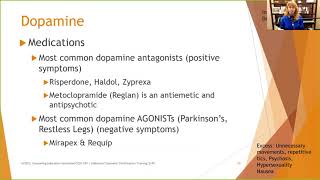
This episode was pre recorded as part of a live continuing education webinar on demand. CEUs are still available for this presentation through all CEUs. Register@Allce.com Counselortoolbox. I'd like to welcome you to today's presentation on neurobiology of dopamine, gaba, serotonin, acetylcholine and glutamate. I didn't put that one in the title. So we're going to start out by defining neurobiology and for the following neurotransmitters, dopamine, gaba, glutamate, serotonin and acetylcholine. We're going to look at what do they do, what's their function, where are they found? Because we find that neurotransmitters are not just in the brain. A lot of our neurotransmitters are found throughout our body, symptoms of excess and insufficiency. And you may be wondering, you know, why is that important? That seems more like a medical or a psychiatrist sort of thing. Well, it is. However, we see clients once a week, someone who just started a new psychotropic medication, or maybe they were taking psychotropics and just started taking some other kind of medication. They are probably only seeing their doctor once a month, once quarterly, and the psychiatrist same. So if there are any changes, if we see any side effects, we may want to encourage our clients to advocate for themselves if they're having some unpleasant side effects from the medication. And we can also help educate them about even over the counter medications and things that may interfere or enhance their psychotropic medications. And we'll talk about why that could be a problem too. We'll look at some nutritional building blocks because as I say repeatedly, it's important for people to have the building blocks to make the neurotransmitters, otherwise they're going to be deficient. There's just no way possible for some of these neurotransmitters, namely serotonin, to get effectively created without having a good diet. Because tryptophan is an essential amino acid that our body can can't make on its own. So we get it through food. And we're also going to look at different medications that are used to enhance or decrease some of these neurotransmitters, some of their side effects, because remember, our neurotransmitters are in a balance. So while you may have enough serotonin, for example, generally speaking, it may be too much or insufficient in relation to the other neurotransmitters, that that person has. So it's all balancing act, which is why sometimes and very often, if people start taking psychotropics, they don't get the right one right away or don't get the right dosage right away. It's an inexact science. So we're also going to talk about helping clients advocate for themselves. For example, if their doctor puts them on a SSRI and they don't start feeling better, you know, it could be other neurotransmitters are out of whack. So we want to look at, or encourage them to look at what other things could be causing it. And then we're also going to talk about some neurological changes over the lifespan, because neurochemicals over the lifespan, and I'll give you a hint now, they decrease. So we may see some cognitive changes and some mood changes in people just as a result of normal biological changes. If you remember from yesterday's class, as people get older, hormones change, testosterone, hgh, estrogen, our body's functioning system, functioning goes down a little bit and a lot of other things kind of slow down, which also may mean that some of our neurotransmitters are either less available or not, as many are being made. So neurobiology is the study of the brain and the nervous system that generates sensation, perception, movement, learning, emotion, and many of the functions that make us human. When we get to serotonin, the first time I did this presentation, or one similar, I was astounded at how many different types of serotonin receptors there are and how many different things serotonin is involved in. And the same can be said for a lot of the other neurotransmitters. But serotonin really has its fingers in just about everything. And glutamate is one of the most. Glutamate receptors is an excitatory neurotransmitter. And those receptors are some of the most prevalent throughout the body. So some of these neurotransmitters can really have far reaching sort of ripple effects. It's not just mood that we're looking at. So let's start with dopamine. It's our pleasure chemical. This is the one that is flooded in our system when people engage in addictive behaviors. But what else does it do? It is responsible in some ways for movement, memory, pleasurable, reward behavior, and cognition. What we do, I mean, generally we do things that have a reward, so we learn from what produces the reward. Attention. So, you know, if somebody doesn't have good attention, it could be Dopamine, it could be a variety of other things too. Sleep, mood, and learning. And I want you to pay attention to how many neurotransmitters are involved or can disrupt, if you will, sleep, obviously mood and learning and cognition. You know, these are. We're going to hear this over and over again. So if somebody comes in, think about our symptoms for major depressive disorder. Eating disturbances, sleeping disturbances, difficulty concentrating and low mood, lack of motivation, apathy, whatever you want to call the primary symptom. So when somebody comes with depression, it may not be. And actually they found out. I'll give you another hint. It's usually not serotonin. It's something else that's going on. They found that serotonin is really helpful with anxiety, but it is not really all that helpful with alleviating depression in the majority of patients. Now, there are some that still respond to SSRIs. So our mechanism of action of dopamine, the precursor l dopa, is synthesized in the brain and kidneys. Why do you care? Well, if you've got a client who starts having kidney problems for some reason, goes on dialysis, their dopamine levels may get a little bit wonky. So they may start having symptoms of insufficient dopamine. Something to be aware of. So if your client starts having physical problems. Dopamine also functions in several parts of the peripheral nervous system. So it's out there taking in stimuli and figuring out, helping our body move. In blood vessels, it inhibits norepinephrine, which is an excitatory neurotransmitter and acts as a vasodilator. And all four of these are relaxation, slowing down sort of activities. So in the pancreas, it reduces insulin production, so blood sugar will go up. As insulin goes down in the digestive system, it reduces gastrointestinal motility, so it slows everything down potentially. You know, excess could lead to constipation, I suppose, but I don't see people getting to having that much excess. And it protects the intestinal mucosa. So if you've got somebody who has GI disturbance, dopamine could be involved in the immune system. It reduces lymphocyte activity, so it reduces your white blood cell activity. So dopamine has a lot of different things besides pleasure and reward. Symptoms of too much dopamine, unnecessary movements, repetitive tics, psychosis, hypersexuality and nausea. A lot of your anti psychotic drugs are dopamine antagonists. And think of antagonizing meaning taking away or, you know, trying to Take something. Your antipsychotics typically reduce the amount of dopamine that is available in order to address the positive symptoms. Dopamine antagonists are also some of the most effective anti nausea agents. So if you've got somebody who is on chemotherapy, they start taking one of these drugs we're going to talk about for nausea, you may see that they start having too little dopamine, which is what we're going to talk about here. Negative symptoms of schizophrenia, your catatonia, your flatness, pain. So pain goes up as dopamine goes down. Parkinson's like symptoms, restless leg syndrome, attention deficit hyperactivity disorder. Neurological symptoms that increase in frequency with age, such as decreased arm swing and increased rigidity. And changes in dopamine levels may also cause age related changes in cognitive flexibility. So we see changes in cognition, changes in gait, but we also see things symptoms of Parkinson's and restless legs syndrome. So again, if you've got a client who just started taking an antipsychotic or, or some sort of, what's the word I'm looking for, dopamine antagonist, then it's important to pay attention to what's going on with them. And if they start complaining of restless legs or something, encourage them to talk with their doctor. Other symptoms of insufficient dopamine, lack of motivation, fatigue, apathy, inability to feel pleasure. Symptoms of depression here too. Procrastination, low libido, sleep problems, mood swings, hopelessness, memory loss, and an inability to concentrate. So a lot of these overlap significantly with the symptoms of depression and what we often associate with low serotonin. So this is another reason I'm going to keep emphasizing it's not one size fits all. A lot of these symptoms that we typically see in generalized anxiety or major depressive disorder can be caused by any of these neurotransmitters. Dopamine levels declined by 10% per decade from early adulthood and have been associated with declines in cognitive and motor performance. So what can you do with that? Well, we can encourage clients to eat a healthy diet. We can encourage clients to engage in things that make them happy. Most people, you know, the majority of people are not ever going to need to be on a dopamine agonist. They're not going to need to be on a medication to increase their dopamine. But it is important to recognize that, you know, some of those highs may not be quite as high and they might may experience more changes in their sleeping and some of those other issues. Dopamine levels are also impacted by the availability of estrogen so key here, if you've got a client who's going through menopause or for some reason their estrogen levels are going way up, they may experience more of these symptoms. As estrogen goes down, they may start having less dopamine, which means fatigue, lack of motivation, apathy, procrastination, yada yada yada. So instead of looking at increasing dopamine directly, necessarily, they may need to go in and have a medical evaluation for their hormone levels to make sure that the hormones that increase the availability of dopamine are also at the right level. It's not necessarily just about neurotransmitters. Medications, your most common dopamine antagonists, these are the ones that we give or psychiatrists give people with schizophrenia to address their positive symptoms, their hallucinations, their delusions, etc. Risperdone, Haldol, Zyprexa. Interestingly, Reglan is also a dopamine antagonist. And Reglan is really pretty frequently prescribed for nausea. It increases how quickly the stomach empties. My son, had I known it was a dopamine antagonist, probably wouldn't have agreed to it. But when he was an infant, he had gastric esophageal reflux disease or gerd, and they put him on Reglan so he wouldn't throw up as much. This is important just to be aware that some of the things that we take for GI disturbances and things can impact our neurotransmitters. More common dopamine agonists, and there are others, and these are drugs that will be prescribed for symptoms of Parkinson's and restless legs. And negative symptoms of schizophrenia are like Mirapex and Requip. And I didn't use the generic terms because half the time I can't pronounce the generic drugs anyway. But a dopamine agonist is going to increase the amount of dopamine in somebody's system. So if they have Parkinson's like symptoms or restless legs, they may start taking these. So then again, you want to start looking for symptoms of dopamine excess, what we are probably going to notice more than anything. I mean, I guess obviously we would notice psychosis, but clients may start complaining of nausea and hypersexuality. If they start complaining of that again, encouraging them to advocate for themselves with their doctor. Nutritional building blocks. Eating a diet high in magnesium and tyrosine. Tyrosine is a protein rich foods will ensure you've got the basic building blocks for dopamine production. Foods that increase dopamine building blocks, chicken almonds, apples Avocados, bananas, chocolate, green leafy vegetables, green tea, lima beans, oatmeal, pumpkin seeds, sesame seeds, watermelon and wheat germ. So there's something in there for everybody if you're a vegetarian, if you're a, you know, no matter what you eat, you can probably find something in that list to try to include in your diet a few times a week. Glutamate is an amino acid and is present in most high protein foods. So I'm not going to go through the whole list, but pretty much any of your eggs or meats or high protein dairies like cottage cheese and stuff is going to have glutamic acid in it. So don't worry too much about that. It's the most prevalent excitatory neurotransmitter, so it's throughout the body. It's the most prevalent one that gets, it gets our get up and go going. You thought it was norepinephrine, you were wrong. It's glutamate. Well that's wonderful. And it's used to make gaba. So there's a teeter totter. Glutamate is excitatory. GABA is your inhibitory, it's your anti anxiety neurotransmitter. So glutamate is broken down to make gaba. If there's not enough glutamate, you're not going to get enough gaba. It facilitates learning and memory, so that's important. This is another one of those. It's helps with your get up and go, your motivation and facilitates learning and memory and cognition. If some of those start going, you might want to consider looking at what's going on with this person. Excess glutamate is associated with panic attacks and anxiety, impulsivity and ocd. Those make sense. You got something that's going to rev somebody up. Makes sense that these might be symptoms, but it's also associated with depression. And we found that people who tend to be more stimulated tend to be more stressed, which can lead eventually to depression or noticing more stressors and starting to feel more hopeless and helpless. So you know, you can get a variety of symptoms. Glutamate availability declines with age and is affected by serotonin availability. So this is another one. As serotonin goes down, the availability of glutamate goes down. So if you have insufficient glutamate, you may have somebody who has some agitation, irritability, memory loss, sleeplessness, low energy level and depression. And when we talk about serotonin, we're going to talk about How Melatonin comes from breaking down serotonin. So if you don't have enough melatonin, people are not going to sleep well. They're wondering if there's a correlation. When glutamate levels are low, serotonin levels may be low. They're not sure which one causes the other one to be low or if they just happen to seemingly co occur. But in any event, when glutamate slow, you're kind of blah. GABA is the opposite of glutamate. It tells the neurons quit firing, it's time to relax. It's your anti anxiety and anticonvulsant neurotransmitter and it's made from glutamate. It functions as an inhibitory neurotransmitter, which means it calms you down and tells the cells kind of not to fire. It's time to relax. Whatever the danger is, it's over. We're just going to chill for a while. Close to 40% of the synapses in the human brain work with GABA and therefore have GABA receptors. 40% of the synapses in your brain. So if GABA is out of whack, it could have some pretty far reaching symptoms. Symptoms of too much gaba, excess of sleepiness, shallow breathing, and potentially increased blood pressure. So if we have a client that's starting to complain of blurred vision and headaches, and especially if they start complaining of floaties, they need to advocate for themselves or at least check their blood pressure. If they're complaining of those, in addition to chest pain, we definitely want to get them evaluated by a medical professional kind of asap. Symptoms of insufficiency. This is what more what we run into is people don't have enough gaba. And is it because they don't have enough glutamate, or is it because they don't have enough other stuff to break down the GABA or the GABA receptors are malfunctioning. It depends on the person. But if they don't have enough GABA going into the system, they may have anxiety, depression, difficulty concentrating, insomnia and seizure disorders. Your nutritional building blocks. Now remember, glutamate is made from proteins because it is a protein. But what we're looking for with GABA is the cofactors, so to speak, that help the body break down glutamate to make gaba. You can get those in fermented foods like sauerkraut, yogurt and kefir, almonds, walnuts, tomatoes, bananas, brown rice, potatoes, oats, Lentils, navy and lima beans. Vitamin B6 is also important, but if you look at a lot of your Powerades and sports drinks and things, B6 is included in almost all of them. Most people get enough B6, but, you know, if somebody is not eating any grains and is eating a low carbohydrate diet, they may want to check and make sure that they're getting enough B6. Check with a nutritionist or registered dietitian. Drugs that increase the available amount of GABA typically have a relaxing anti anxiety or anticonvulsive effect. They're going to help you chill, but too much obviously is going to suppress the nervous system too much Gabapentin. And a lot of our clients, or at least a lot of the clients that I work with, are on gabapentin for fibromyalgia for a variety of things. I have one client who is recovering from a double mastectomy who is on gabapentin for pain. It is a GABA analog used to treat epilepsy and neurologic pain, which means the body, when the person takes it, the body thinks it's gaba, basically. And just like GABA fits into the receptors like a lock and key, the gabapentin has the same kind of key and fits into those receptors real nicely. Your benzodiazepines and your barbiturates, including ghb, Valium and Xanax, increase the availability of gaba. But depending on, you know, the mechanism of action, and it depends on the different drugs, they may deplete the amount of glutamate because they may increase the amount of glutamate being broken down to make gaba. So you can have rebound depression from taking some of these or you can have rebound anxiety when, when people come off of these medications. And yes, your barbitur, well, any of the, your barbiturates, benzodiazepines, all of those have really high addictive abuse potentials. Gabapentin, not so much. So being aware of that. And Klonopin falls in here. Klonopin does have an abuse potential. That's more of a anti seizure medication that is given out as, I guess, off label. It may be on label, I'm not sure for anxiety, but Klonopin is still addictive too. Mechanism of action for serotonin. Oh, and I told you we would get to this. And believe it or not, and you may believe it, Wikipedia had one of the best charts for this that I can show you. These are all the different things that Serotonin does or can affect, including memory, vasoconstriction, anxiety, dopamine release, cardiovascular functioning, memory consolidation, going to the bathroom. So there's a lot of things that serotonin does. It helps regulate mood, cardiovascular functioning, memory, intestinal motility. When people have too much serotonin, they're gonna notice that they're going to the bathroom more. And even just increasing it to a good level for them may cause jump start their system a little bit. So if they're starting to have symptoms of diarrhea or upset stomach, encourage them again to talk with their doctor. They may need to slow down how quickly they're going onto the medication. Sleep patterns. Serotonin helps make melatonin, which helps us get sleep. And there's a variety of other reasons that serotonin is involved in sleep patterns. But enough appetite. Serotonin helps us regulate and figure out when we're hungry, when we're supposed to be eating, and pain. Serotonin, interestingly, is involved in our, basically our pain tolerance. As serotonin goes down, our pain tolerance goes down, or our perception of pain goes up, however you wanna look at it. So people who are experiencing low serotonin may have more pain issues, which is one of the reasons why some people say that depression hurts. Well, if their serotonin is out of whack as one of the many neurochemicals, that could be a reason. And remember, dopamine was also involved in pain as well as a lot of depressive symptoms. Serotonin is mainly found in the brain, but 70% of it is found in your gut and intestines. So these tests that say you can do a urine specimen and we can tell you what your neurotransmitter levels are. Well, yeah, maybe they can, but they can't tell you what your neurotransmitter levels are in your brain. They can only tell you in the whole body. And that doesn't really affect your moods as much, or it's harder to gauge the moods by that. The other thing it doesn't tell you is how effective the receptors are. Sometimes you have enough of a neurochemical, but the receptors are malfunctioning for some reason. In addiction we see that a lot where the receptors have naturally kind of shut off some of their ports so the system isn't continually over flooded with dopamine. The nice thing is in addiction, those ports, ports, if you will, open up eventually once the body realizes, okay, we're not doing that awful stuff anymore. But it's important to Understand that just looking at neurotransmitter level doesn't tell you the whole story. Serotonin syndrome. Now I harp on this a lot because it is way more common than a lot of people realize, especially subclinical serotonin syndrome. It is not. A lot of doctors, you know, still don't really recognize or know anything about it. So it's important that we educate our clients about what it is and what it looks like so they can advocate for themselves. If somebody is taking either just started taking an SSRI or they're taking an SSRI and they start taking some supplements or any combination of things, if they do something that increases the level of serotonin too high for their body, they will experience shivering, diarrhea, muscle rigidity, fever, potentially seizures and irregular heartbeat. What we're going to hear clients complaining of if they're coming in maybe right when they start a SSRI or SNRI is generally diarrhea and upset stomach. But if they're also experiencing shivering, confusion and maybe some tremors or something, we need to make sure that they go see a medical professional asap. It can get worse. Serotonin syndrome can be triggered with one dose. It's not something that necessarily comes on over time. So it's important to make sure that clients are aware of all the things that could happen with serotonin. Symptoms of excess in relation to other neurotransmitters because sometimes you have, like I said, you can have a normal, an average amount of serotonin for you, but in relation to some of your other neurotransmitters, it's too high because some of your other neurotransmitters may be too low. Apathy, emotional flatness, dullness, passivity, insomnia, or other sleep problems. Serotonin is sort of an anti anxiety. It's not near as potent as gaba, but it is, it helps chill people out. It's your relaxation helper. So if you've got too much, you're going to be, you know, a little bit over chilled. It can also cause difficulty concentrating and learning, poor memory, amnesia, difficulty making decisions and acting on them, and sexual dysfunction, encouraging people to really look at their symptoms and figure out when did these symptoms start happening. One of the side effects of SSRIs is sexual dysfunction. Does it mean they have too much serotonin for them? Not necessarily. So we want to look at the whole picture and make sure that what they're doing is helping them achieve their goals and address their particular neurological needs. Too little Serotonin is implicated in depression. Now, they're still not sure exactly how much of that is the serotonin, how much of that is dopamine, how much of that is glutamate. But we know when we see low levels of serotonin, for whatever reason, you know, that people may have depression. But we also know that we can see people who have symptoms of depression whose serotonin levels are quite normal. Only about 41% of people respond positively to psychotropic medications. So, you know, we still have, what is that, 59% of the people out there who need some help insufficiency anxiety. Now, they have found that SSRIs are really helpful with anxiety for a lot of people. Pain sensitivity, appetite disturbance and sleep disturbances. So some people who have chronic pain actually may be prescribed SSRIs to address some of that pain and some of the corresponding depression that may go along with having a chronic illness. But it's not uncommon to see somebody with chronic pain on ssri. Nutritional building blocks. Remember I said the body cannot make tryptophan, so we have to get it from our foods. Tryptophan is converted to serotonin in the brain and it's found in whole wheat, potatoes, brown rice, lentils, oats, beans. You can go online and Google world's healthiest foods and tryptophan and you can find it there. You can also google good sources of tryptophan. Find those things. I typically discourage. Well, I always discourage clients from going to supplements and buying tryptophan pills because that's not the way nature intended it. And it's easy to overdose even on amino acids and really throw things out of whack, especially if they're already taking psychotropic medications. So I encourage people to eat a healthy, sensible diet, work with a dietitian if they need to, work with their doctor, but definitely get medical clearance before taking any supplements. Medications that work on the serotonin system. Selective serotonin reuptake inhibitors. Well, those are the obvious ones. Your SSRIs. SNRIs, selective norepinephrine reuptake inhibitors actually work both on increasing norepinephrine and serotonin. So norepinephrine is a get up and go. And serotonin helps people feel a little bit better and is somewhat anxiety reducing. So they balance each other out, so to speak. 5 HTP and same are over the counter supplements that some people take to increase their serotonin. Again, thinking about serotonin syndrome, people can really get into bad shape really fast when they start monkeying with these if they're not under medical supervision. And your atypical antipsychotics, now your typical antipsychotics are working your dopamine system, their dopamine antagonists. But a lot of your atypical antipsychotics work on the serotonin system. So if somebody is on something like Seroquel, understanding that it is affecting their serotonin system, so to speak, age related changes. Serotonin goes down when estrogen or testosterone go down. So think about, you know, men, women, both of us experience decreases in our sex hormones with age, which means the availability of serotonin may go down. And they're not exactly sure how that works. But it's not that our serotonin levels go down, but the availability it getting throughout the body seems to go down. Important, important point. Melatonin does not, does not decline as we age. And there, here's a research article that will help you read about that if you want to. Unless serotonin declines significantly. So as serotonin goes down, melatonin goes down. But generally melatonin production itself, if the serotonin levels are staying stable, melatonin doesn't decline significantly like people may want to believe. So a lot of the melatonin supplements may be unnecessary if the body is making enough melatonin. You know, just one of those things to have clients talk over with their doctor. A lot of physicians readily prescribe the use of melatonin to help people sleep. And you know, that's fine. You know, they may not be breaking down serotonin enough. They may have anxiety going on. It helps with shift work. Sleep disorder, there are a lot of reasons for it. But understanding that just because estrogen is going down or not estrogen, but serotonin is going down some as we age. This plummet of melatonin, like some, some people would want us to believe really doesn't seem to be happening. And acetylcholine, acetylcholine in lowers amounts acts as a stimulant by releasing norepinephrine and dopamine. Now norepinephrine, if you remember your hypothalamic pituitary, adrenal axis, your threat response system, the brain, when it senses a stressor, releases cortisol. Cortisol causes a cascade of reactions that causes the body to release norepinephrine and glutamate and really get us get up and go, increases our heart rate, stimulates us, increases our breathing, etc. So it's important to understand that norepinephrine is important to have sort of in our repertoire, so to speak. And if we don't have enough acetylcholine, then we may not be releasing enough norepinephrine, which can impact motivation, concentration, memory, yada yada. Acetylcholine is implicated in memory, motivation, higher order thought processes, sexual desire and activity and sleep. And a lot of times people talk about acetylcholine as a modulating neurotransmitter. The important thing to remember is that it is important in terms of, you know, some of these symptoms of depression and anxiety that we might see. It could. Acetylcholine could be the thing that might be out of whack. Symptoms of excess depression, all of the symptoms. If you've got too much acetylcholine, you're typically going to have somebody who is having difficulty sleeping, changes in eating patterns, just not kind of restless and irritable, nightmares, mental fatigue and anxiety. Well, so what's going on there? If there's too much acetylcholine, they found there's an inverse relationship between serotonin and acetylcholine. So what that means is as acetylcholine levels go up, for whatever reason, serotonin levels go down. So if you don't have enough serotonin and you know, to keep you calm, to modulate or moderate your anxiety and depressive symptoms and all that kind of stuff, there's going to be a problem. So we really want these to stay in this nice little balance, like a. Well, like a balance. We don't want them to be teeter tottering, we want them to be copacetic. Too little acetylcholine is implicated in Alzheimer's and dementia symptoms, Parkinson's symptoms, and impaired cognition, attention and arousal. Now you'll remember that that's similar to the symptoms that people experience with dopamine. So paying attention to what's going on here and we'll go back up to dopamine really quick because I can just scroll. So insufficient dopamine. Parkinson's, restless legs, attention deficit disorder. Nutritional building blocks for acetylcholine are foods that are high in choline. So if somebody already has too much acetylcholine, they're having nightmares. Mental fatigue, anxiety and some depression. They may be, it may be recommended that they don't eat a lot of foods that are high in choline. I have heard some dietary recommendations that way. Obviously a registered dietitian needs to make that call. Foods high in choline Meat, dairy products. Dairy products, Poultry, chocolate. Again, love chocolate. Peanut butter, wheat germ, Brussels sprouts and broccoli. These are obviously not the only ones, but they are some your anticholinergenic drugs. The ones that work against acetylcholine basically are used to treat a variety of conditions. So let's go back up here. Insufficiency, impaired cognition, attention and arousal. And this is what we're going to hear about from our clients, more so than the Parkinson's or Alzheimer's dementia type symptoms because, you know, by the time they get to that point, they're showing up at their medical doctor's office going, doc, something is seriously wrong here. But if somebody starts taking some of these medications for one of the conditions and starts having difficulty thinking, paying attention or just, you know, staying conscious, when we say arousal, we mean kind of awakeness, then we want to again encourage them to advocate for themselves with their doctor. What are these drugs used for? Gastrointestinal disorders to treat gastritis, diarrhea, diverticulitis. I know a lot of people with diverticulitis, ulcerative colitis, nausea and vomiting, genitourinary disorders, cystitis, urethritis, prostatitis. Your itises are all inflammations, respiratory disorders, asthma, chronic bronchitis and chronic obstructive pulmonary disease. And then on a short term basis, insomnia. So thinking about the clients that you work with, you know, how common are some of these disorders or issues with them? When we think about like gastrointestinal disorders, those can be caused by a variety of things including chemotherapy. So if you've got a client who's on chemo and is vomiting, they may be assigned an anticholinergenic drug to help them with that nausea. So what drugs are we talking about here? Atropine, benzantropine, which is trade name cogentin, Chlorphenramine, which is chlortrimentone. So that's over the counter Diphenhydrinate, which is Dramamine. Diphenhydramine, which is Benadryl, Sominex, Advil, pm, Unisom, a lot of your over the counter sleep aids and over the counter antihistamines. Over the counter cough and cold medicines will have diphenhydramine in them. It's important to recognize that. Remember, as acetylcholine goes up, the serotonin goes down, but diphenhydramine is known to increase serotonin availability. Diphenhydramine, you know, all of these are anticholinergenic, so they're going to decrease acetylcholine, which increases serotonin in all of these. But diphenhydramine and dextromethorphan are known to affect serotonin more. We'll talk about dex in a minute. But if you have a client who is taking diphenhydramine to help them sleep at night, there's a lot of people used to be that that was what doctors prescribed, your over the counter sleep aids. A lot of them are diphenhydramine. So if your client is starting to complain of confusion and apathy and sort of persistent depressive disorder, I still have to not say dysthymia, persistent depressive disorder type symptoms. Ask them if they started taking any over the counter medications recently or any other prescriptions that you don't know about. It could be that. Their acetylcholine has gone down too much. Likewise, since it increases serotonin availability. If there are also taking an ssri, is it likely that the prescription, not the prescription, but the recommended dose of diphenhydramine is going to negatively interact with an SSRI is really unlikely. But could it happen? Or if somebody took a double dose of diphenhydramine, double dose of Benadryl, could it? Yeah, that it could start causing a lot of problems and maybe put you on the precipice of serotonin syndrome. Hydroxyzine, which is Atarax or Vistaril, bupropion. This is your anti smoking drug. It's used for a bunch of other things, but a lot of people will see them on, they're trying to quit smoking and they're either on Zyban or Wellbutrin and dextromethorphan, which is a cough suppressant. You'll see it in, you know, Robitussin, DM and any of the things that have a DM on it. What's the name of it? Deltium is a 12 hour dextromethorphan preparation. But a lot of youth are taking dextromethorphan and abusing it. They're taking it way over prescribed doses and they're taking it through an enema, which increases the absorption into the bloodstream, which can increase serotonin levels dangerously high. It's important to understand that dextromethorphan, you know, it's an over the counter medication, but it affects acetylcholine as well as serotonin levels. So there are a variety of different neurotransmitters involved in addiction and mental health disorders. It's not always about increasing a neurotransmitter you may need this much, whatever this much is serotonin for you to feel normal, or how you define normal. But you may have some other neurotransmitters that are too low or too high. So adjusting those and recognizing that we'll keep with acetylcholine for right now, or serotonin, for that matter. When you address, when you increase serotonin, you're also affecting the available levels of acetylcholine and dopamine and glutamate. So it's a balancing act, and it's going to be up to the patient and the prescriber to figure out what the right levels are for each person to help them feel what they consider to be okay. Human brains try to maintain homeostasis. And too much or too little can be bad. And again, it's all about balance between all of them, because you can't just monkey with one without upsetting the whole apple cart. Think about going to the grocery store and, you know, they have everything stacked so nicely in the produce department and reaching in the middle and taking out an apple. What happens? Everything else on that display starts to cascade to the floor. So the same thing is kind of true with our. With our brains. Think about our brains. Each neurochemical is a different apple in that stack somewhere. And you can't just pull one out. Jenga is another game. I think that's what it's called. It's really hard to pull one out without tipping over the whole tower. A balanced diet will provide the brain the necessary nutrients in synergistic combinations. So if somebody's eating relatively healthfully, then they're probably getting the building blocks they need. And when we think about psychotropic medications and just generally the availability of the neurotransmitters in our brain, the way they work, they can either increase the production, they can increase the absorption, or they can increase the amount of time that that neurotransmitter stays in the synapse so it can be absorbed more easily. So there's. It doesn't. Just because somebody is experiencing symptoms of insufficiency, for example, it doesn't mean that they're not making enough. Like I said earlier, it may mean that the receptors are malfunctioning or the neurotransmitters not staying in the synapse for long enough to be absorbed, and it's just like out and in again. So helping clients understand that there's a lot of different moving pieces that are going on and educate them in Your course. There is a Word document that I call the Neurotransmitter Cheat Sheet. And it can help clients really conceptualize what these different neurotransmitters do in a quick little look. So they can say, you know what? Yeah, I can see where I have all these symptoms, and that could be a variety of different neurotransmitters. So just because the SSRI didn't work, I'm not giving up because there could be something else that needs to be adjusted. So there are a bunch of references at the end of this PowerPoint you guys can go look at if you want to. I enjoy reading the clinical articles on it just to make sure that I understand where everything's coming from. I know this was a. Detailed. There's the word I'll use detailed presentation. Unfortunately, there just wasn't a lot of things. Weren't a lot of things that I could think of to ask you that you might want to contribute. But do you have questions about any of these? I know there's a lot to digest. My biggest takeaway from this is not so much because we're not diagnosing. We are not doing that, but to be aware of symptoms that may occur when people start taking different medications. So if they start having a mildly adverse reaction, we can tell them, you know, that might be something you want to consider talking to your doctor about. Now, sometimes it's the first three days, you know, your body's getting used to a medication. A lot of your psychotropics are like that. But, you know, again, encouraging people to be cognizant of what's normal for them and to advocate for themselves, because they're not going to remain treatment compliant if the medications they're taking are making them feel like crap. Okay, so let me put on my headphones, and then I will. I will go to our audio. The years. Some want to create a space Corps. Yeah. A space Corps with a mission to.
Protect America from outer space.
Okay. So if you have any questions, you can unmute yourself. And.
Do I unmute myself?
You are unmuted.
I am unmuted.
Yep.
Oh, can I ask a question now?
Certainly can.
I'm sorry. I'm having a time trying to figure all this out. Okay, I guess a couple of questions. When you're referring clients back to their doctor with whatever issues concerning these. Are you talking about the medical doctor? The psychiatrist? Is there a certain physician that might be more helpful for them than others?
Part of it goes with the prescribing physician. If they recently started taking a medication and they recently started having symptoms, then I would send them back to whoever that prescribing physician is. If I think it might be something neurochemical and they do have a psychiatrist, I might suggest they go back to their psychiatrist because the psychiatrist is going to be the one that's, that would adjust any psychotropic medications, most likely. But then again, there are a lot of primary care physicians that prescribe your basic antidepressant medications. So if it's somebody who has, you.
Know, whoever describes it, I'm sorry, essentially.
That's essentially. But if they have multiple doctors prescribing multiple medications, then your question is, who do I send them to? And you know the question, that's a really good question. And I would say let's look at when the symptoms started and what medication you started taking right before that and maybe go back to that doctor first and, or try to get in with that doctor first. And sometimes if, if somebody is evidencing signs of serotonin syndrome, I encourage them to go to the emergency room if they're feeling really poorly because it can become life threatening real fast.
Okay. And in terms of the levels of these, are there certain tests or blood panels that, how would someone know what some of the levels are in their body? Is it done to blood work?
There is no way to know.
There is no way at all.
Because the neurotransmitter levels, the neurotransmitters are found throughout the body. There's no way to tell, like I said, how much of that neurotransmitter is in the brain. And of the neurotransmitter in the brain, how much of it is actually being utilized? Is it getting through the system? So to figure out the levels of neurotransmitters, it's, there's just really no way to know how much is in the, in the brain. They can do urine tests to see how much body mentioned that, but all that's telling you is how much you have kind of in general and you know, 90% of it could be in your gut or something.
It's really based on the patient's expression of their symptoms.
Exactly. And you know, most of your, well, your psychiatrists and your medical doctors, they're going to take a general symptom survey and go there. They're not. That's why doctors don't, and psychiatrists don't start out with a blood panel or a urine screen because there is no, to date, no way of effectively measuring neurotransmitter levels and balances in the brain.
Is there any research being done see that effect?
I believe there is. The last time I looked, though, was about two years ago. And at that point, that was when some of the tests that said, oh, we can measure your neurotransmitter levels through urine screens. And there was some research that came out to, in response to that saying, well, yeah, they can, but you're probably not going to get the information you need if you're trying to address mood disorders.
Okay. Well, with some of these, though, some of the side effects are if clients begin to have problems, they kind of, they overlap. They can be the same. Tell me again, like someone, like say if someone get. Has excess of any of these.
Right.
Of the symptoms they might be having, could be the same. Exactly right. I guess I'm trying to figure out in my mind how do you sort through that when you have a client that's, you know, complaining of perhaps having problems with their appetite, sleeping, their, you know, lack of motivation, how do you. How is the best way to kind of go about this, to decide what is that?
And it's, which is why it's part art. And a lot of clients, it takes several months to find the right concoction, if you will, of medication or the right levels, because it's trying to figure out which neurotransmitters are out of whack and which things need to be addressed. And psychiatrists generally start with the things that are most, most common and most likely out of whack, and then they kind of go from there. So, you know, you have your atypical antipsychotics which affect the serotonin system. So you may see somebody prescribed an atypical antipsychotic which is going to work on some of the same serotonin receptors that might be influencing dopamine levels as well, which is how it has part of its antipsychotic effects on it. That's generally where I see people going. I don't see doctors typically in the practices that I've worked in, typically going from. To anything that's like too far out there. Most of the time they start with antidepressants and, you know, may look for, like to boost borone or something for anti anxiety. Most doctors stay away from your intensive barbiturates and benzodiazepines because they are so addictive. And then if that's not giving sufficient symptom relief, then they start looking at something else. The one challenge, which is where patients need to advocate again for themselves if they start feeling worse taking a medication, a lot of physicians, not all of them, you know, there's probably the majority don't. But there are a lot of physicians that just continue to add and add and add, and before you know it, you've got a client who's on nine different medications. One medication is the primary, and the other eight are to treat side effects of the other medications. And they're just like, oh, my gosh, I feel like I'm a walking drugstore. So encouraging them, if a medication really makes them feel poorly to talk with their doctor, if they don't think it's working for them to talk with their doctor. You know, I had a patient recently who was on Lexapro for anxiety and just could not wake up. Felt like she was dragging constantly, wasn't sleeping well, but never felt rested, you know, yada, yada, yada. And the anxiety still wasn't really getting all that much better. It was getting somewhat better, but was starting to have depressive symptoms because she couldn't wake up and was getting so frustrated. And I encouraged her to advocate with her doctor, and she ended up switching over to a different ssri. And it made a world of difference. But a lot of times our patients have that whole white coat syndrome thing, and they think, well, the doctor prescribed it, so it must be the right thing.
And they may be reluctant to call.
Yeah. And, you know, you're living in your body. You know, what works for you, and if something is making you feel wonky, then the doctor needs to know that. He or she may say, you got to ride it out for a couple of weeks. But, like with the patient I just told you about, those symptoms were just not even tolerable. And she was like, I can't do another three weeks on this to see if anything gets better. It's. I've been on it for two and a half weeks, and it's miserable. So she was able to kind of stand up for herself and say, you know what? Something's got to be done, like, right now. And thankfully, the doctor was amenable to that.
Okay, well, thank you.
Sure. I see a few people are. Other people are still in the room. Does anybody else have any other questions? All right, everybody, have a wonderful day, and I will see you tomorrow. And we're going to be looking at the framing bias in differential diagnosis.
Thank you.
If you enjoy this podcast, please like and subscribe either in your podcast player or on YouTube. You can attend and participate in our live webinars with Dr. Snipes. By subscribing@allceus.com Counselortoolbox this episode has been brought to you in part by allce.com, providing 24. 7 multimedia continuing education and pre certification training to counselors, therapists and nurses since 2006. Use coupon code counselortoolbox to get a 20% discount off your order this month.










