The Surprising Facts About Human Growth & Development: Part 2
Dr. Dawn-Elise Snipes covers biological, cognitive, and social changes from early adulthood through old age, including midlife crisis, retirement, and bereavement. She offers clinicians practical prevention strategies: skills workshops, social support, exercise, and cognitive engagement tailored to each life stage.
Chapters
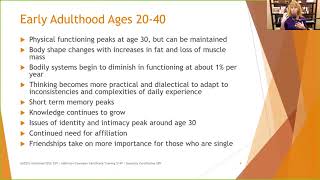
This episode was pre recorded as part of a live continuing education webinar on demand. CEUs are still available for this presentation through all CEUs. Register@Allce.com Counselortoolbox you I'd like to welcome everybody to today's presentation on human adulthood through old age. This is part two of a two part series. So the first part we talked about infancy up through adolescence and today we're really going to focus on adulthood through old age. A lot of our clients that we're working with for the most part probably are in this category right now. So they may not have accomplished some of these tasks or they may have already gone past that age range but have still not accomplished the tasks. So we're going to be looking at things in terms of not only intervention, but also prevention. And what kinds of things can we as clinicians do to maybe provide resources, provide group activities, provide seminars that can help people learn how to prevent some of the problems that may occur or that often occur as we age? So we're going to review the stages of adult development mainly based on the theories of Erikson, Valiant and Levinson. And I tell you those only so you can go learn more about each one of their theories. Should this be of particular interest to you? That's not going to be something particular on the quiz. Identify biological and psychological and social issues which must be dealt with at each stage. Just like as the child was developing, they were developing coordination and their bodies were changing and they had to adapt to that. As we get older, our bodies change and we have other issues, slowing of reaction time that we need to learn to accommodate. And we're going to explore where stuck points can occur and how to help people successfully resolve those issues to prevent or address depression, anxiety or addictive issues. So we really want to help people have the best shot at having a happy, healthy adulthood. So I am going to ask you, and this is the one question I am going to pose as we go through in each stage of development that we talk about. I would encourage you to share how you help people address the developmental challenges and maybe developmental challenges that we are not talking about. You know, things you about talk, typically see that you might regularly address. And also think about what prevention activities or groups you could see hosting in order to help people. Because we know that from a financial perspective groups can produce more revenue and getting people together in a group does have certain benefits and the social connection and support and all that. And it doesn't have to be a therapy group. It can be a workshop that you might use or put on. And this also can be a good marketing tool for your clinic or practice. So we're going to start with early adulthood. And this is still, I mean, technically, adolescence goes up to about age 24. Early adulthood is ages 20 through 40. And thinking about, you know, what we went through or are going through during this stage. You know, this is when you graduate high school, you start college, you begin your career, you. You may meet your significant other, you may start having a family. So there's a lot of stuff. Physical functioning peaks at age 30, but can be maintained. And this is kind of the. One of the downer things that I don't really like to wrap my head around. But technically, physical functioning peaks at age 30. So if you have a client who is not in good shape when they're 30. Is that all? No. And I really want them to think about your potential for physical ability peaked at age 30. But if you have somebody who's 45, well, stick with this age 40 years old and they decide they want to get in shape and turn their life around and live a healthier, happier lifestyle, great, wonderful. It doesn't mean that they're stuck at whatever fitness level they were at 30. It just means they're probably not going to be as physically fit as they could have been when they were at 30. So there's declined a little bit, but there's still a lot people can do. And people are staying in really good shape well into old age now, which helps, and we're going to talk about this later, prevent or slow down cognitive decline because the oxygenation of the blood and getting the oxygenated blood to the brain actually helps reduce some of that confusion and cognitive decline. Body shape starts to change with increase in fat and loss of muscle in both genders. And, you know, this is partly just normal physiological. Physiological changes. But we also see these changes because we're going from being, you know, kind of carefree high schoolers, if you want to think of high school as carefree to adults. And we're working 40 hours a week and, you know, between driving and coming back. And a lot of us aren't working out as much as we used to. We may be eating differently than we did when we were kids. You know, think about going to college and gaining the freshman 15. And, you know, for me it was plus the sophomore 20. So understanding that things are going to shift and start changing, some people, a lot of people will be just fine with this. It's just one of those things that happens. But there is a Proportion of people who are going to have difficulty adjusting to these changes. Those who either have had an eating disorder or are prone to the development of eating disorders. Because we see that eating disorders typically peak right around 16, 17, 18, but they continue, you know, we continue seeing people develop eating disorders well into their 30s. So paying attention to what may be going on, bodily systems begin to diminish in functioning at about 1% per year. I really didn't like this statistic, so I choose not to share that with people very much. But we know that our bodily systems when we're, you know, however old we are right now, are far different than the bodily systems of our grandparents or our parents who are significantly older. Just kind of wrapping your head around that, you're going to slow down a little bit thinking now this is one of the places where we can help intervene. Thinking becomes more practical and dialectical to adapt to inconsistencies and complexities of daily experience. Now we're talking about in an ideal situation. This is what happens for a lot of adults. They don't learn how to think dialectically. This is something, this is a skill that we really need to learn how to accomplish. And dialectical thinking, if you remember, is embracing the both and seeing that two seemingly contradictory things can both be true. It can be raining and a gorgeous day outside. You know, I love fall. And so when we start getting the misty rain that comes in and it's kind of gray outside, I like to open the windows because it smells like fall fall to me. And that's just, you know, that's me. So I can see. You know, I think it's awesome, but encouraging people to embrace the fact that, okay, my body shape is changing or my physical functioning is declining a little bit, but, or and I can maintain it. So looking at the fact that yes, this is happening and there's a positive to it. Finding that silver lining is important to helping people deal with life on life's terms. You know, they go to a job that they don't like, you know, they're really struggling at work. So accepting the fact that, you know, this job really stinks right now, or I'm really unhappy at it and it's putting food on the table and helping me meet my other goals. So both. And you know, there's, there's a benefit to it, there's also a downside. So figuring out how to deal with those short term memory peaks during this period and knowledge continues to grow. So during your 20s and 40s, we start taking all that book learning that we have, and creating practical knowledge, which is great, and helping people focus on the skills that they're gaining and the knowledge that they have. Somebody once said, and I can't tell you who it was, that it's amazing how much smarter our parents got as soon as we got into our 20s, because during our teenage years, we think we know everything. You know, we got that book, learning some of it, and we think we know it all. But once we hit our mid-20s, we start realizing, you know, we don't know all that much. And our parents actually did know quite a lot. So we're getting that wisdom, if you will. Issues of identity and intimacy theoretically peak around age 30. So figuring out who you are, what you're doing, you've started, graduated from college, started a career, you're starting to get ingrained, and you're figuring out what's important to you. Now, you might think this peaks at age, like teenage years before you go to college, but no, it's something that we keep revisiting. It starts back in middle school and will continue. These issues of identity and who am I and what's important to me continue to emerge until about 30, when people start to feel more confident in who they are and helping our clients identify, what is your identity? What do you stand for? And you can even go back to acceptance and commitment therapy's approach of identifying the people, things, and experiences that are important to you and the values that are important to you. There's a continued need for affiliation. So teenage years, your peers are super important. But into the 20s and 40s and 30s, our need for affiliation is still there. Now, some people will connect with their significant other and start a family. That doesn't mean that they don't need outside friends. They don't need, you know, friends outside of that, you know, immediate family. But friendships also take on more importance for those who are single, for those who are going, well, you know, all my friends have kids and, you know, what do I do with myself? Because back in high school and college, we would, you know, theoretically go out to meeting, not meetings, movies, and do things together. And as your friends start becoming paired off into family units, the people who are not paired off may start feeling somewhat isolated. So it's important to make sure they figure out the ones who are paired off, if you will, figure out a way to maintain their identity and not completely lose themselves in one area and they maintain their social relationships. But for those who are not paired off, helping them figure out, okay, where do I reach out? Where do I socialize where do I, you know, find my affiliation and meet my affiliation needs? So the early adult transition, 17 to 22, the person is developing an identity that allows separation from their parents. So one of the things that happens is choosing to go to college or enter the workforce. You know, not everybody goes to college. So what may happen during this point, this is a huge life decision for a lot of people, and it can have a couple hiccups if the family's not supportive. Maybe the person chooses to go to college, but not following the legacy of the family. Or they choose not to go to college and just go directly into the workforce and the family's not supportive. Or how does the person deal with that? Because they're still trying to separate that identity. But if they feel a lot of rejection from the parents, there may be some guilt, stress, anxiety, those things that they've got to figure out how to deal with. Lack of direction. You know, some kids, some youth will get out of high school and they have no clue what they're doing. And even some people will get out of college and they're still just kind of flapping about a bit. So helping people in this age group really look at what does a rich and meaningful life look like to you and what's important. My daughter, for example, is going through looking at different careers and trying to do some career exploration stuff. And I always figured her because she's very good at writing, she's very artsy, she's very creative. And I always figured her for going into a field that was more like that. And she's looking more towards computer technology now because there are certain areas that do fulfill her need for affiliation. It's an environment that's more conducive to what she wants to work in, and it allows her to meet some of her other needs because she wants to be able to travel and doesn't want to have to go into the office every single day. She wants to be able to work remotely and focus on some other priorities, but still get paid well. So she's weighed all of these options and figured out, you know, what's more important and, you know, some of the more artsy stuff that she does. She's like, that would be great as a hobby. But I can't see it being a productive career to get me to where I want to be. And I'm like, well, score, girl. You know, whatever it is that you see. And, you know, she's 13, so this is going to change probably five or six times. But the fact that she's considering all of these aspects. And we can help, you know, people who come in and they're struggling with direction to figure out, you know, let's weigh what's important to you. And people may not choose to go or may choose to go into the college or enter the workforce. And they may have difficulty with choosing a task, or they may have difficulty with a chosen task. So if they go to college, for example, and I was a resident assistant for many years when I was in college, in graduate school, and I would watch people come to college and think they had the world by the tail and flunk out because they couldn't figure out how to manage their time and do those sorts of things. So time management, prioritizing, those are a lot of things that, whether the person is in, you know, in the workforce, maybe picking up a skill or a trade or they are in college, a lot of youth still need structure and still need a little bit of help because think about it, they're going from theoretically structure at mom and dad's house and rules and high school, where you've got assignments and things that are due and somebody like kind of looming over you pretty much all the time, to a free for all. You know, if you don't go to class for undergraduate, at least where I went to college, a lot of times nobody noticed because there were 45 to 700 other people in the class with you. So, you know, it wasn't as pertinent or as important for you to be there. And it was easy to get really slack and go, you know what? I'm not going to that today. And then before you knew it, the semester was over. So encouraging people to figure out what's important and what do you need to do to achieve those goals and how do you prioritize? Some people at this age will have difficulty when they choose to leave home because they'll have difficulty with self regulation again, that time management, figuring out when to party, when to not party, and when to study. Or they may have no idea how to fend for themselves. And this is basic life skill stuff. How do you pay bills? How do you cook for yourself? How do you go shopping? There was a Simpsons episode where Homer opened the refrigerator and he's like, it was a full refrigerator. He's like, there is nothing to eat, there's no food. I see things to make food, but there's no food. So, you know, helping people learn the basic skills that we kind of take for granted because we do them all the time, doing laundry, budgeting, feeding themselves Those sorts of things like cooking for yourself, obviously you can go to a fast food restaurant, but that's not necessarily in everybody's budget. So these are different adulting skills that can be taught and usually do pretty well in terms of workshops to help people get the basic skills they need, because a lot of stuff that we used to take, or at least that I took when I was in home economics back in high school, isn't really covered all that much anymore. Development of intimacy is also important at this point. So. So choosing to develop a reciprocal relationship with another person, which involves developing and embracing a sexual identity, and there's a lot of variability or latitude or whatever you want to say in how people define their sexual identity now, and that's just a whole other topic. But helping people explore what options are out there if they're unsure of their sexual identity and find a niche where they belong, find a place where they feel accepted and connected. And they also need to develop effective interpersonal skills to develop these healthy relationships. So another, you know, set of workshops that can be done is talking about boundaries and codependency and, you know, what does. How do you navigate things like online dating or, you know, social networking and those sorts of things. So people develop the skills they need to survive in the environment that they choose. So if they prefer to be online, a lot of times they're going to have to develop the interpersonal skills to develop healthy online relationships. But since a lot of people do spend a lot of time online, they may need additional coaching on face to face interpersonal skills because a lot of current youth find that they have a lot more social anxiety because they're not as used to interfacing with people in a face to face setting. So that's another great topic that you can present, how to get people interested in coming. Because saying come learn social skills doesn't usually fly. But I'm sure one of you has a creative niche or a creative side out there that you can figure out how to promote that in a way that would engage this age group. This is also a time where you expand yourself to include another person and you're still developing that solid identity. So the person is trying to figure out what's important to me. So then they get in a relationship and that new person, that person they're in a relationship with, has different goals, different objectives. So figuring out what's important to me, you know, you get together when you're in college and one person is going to go on to graduate school and have to move halfway across the country. So do you follow that person halfway across the country or do you stay and proceed on the course that you are already on? So making choices around your identity and based on what is most important to you to help you live a rich and meaningful life are things that we can help clients with and helping clients develop healthy both and boundaries. So accepting the fact that you may have a different opinion than I do, you may have different needs than I do, and we can work on trying to get those met for both of us. You know, there's going to be some compromise here, which, you know, we have to do when we're younger, but it becomes a lot more paramount when you're in these new relationships. Entering the adult world 22 to 28 people may start having children at this age. They may delay it until later. So, you know, there's a lot of variability. People are usually graduating from college like around 22 sometimes, you know, they may stay in for graduate school, may go a little longer, or maybe they enrolled in the military and they're just starting college, but generally they get out by about 28. At this age, people tend to have more concrete decisions regarding occupation, friendships, values and lifestyles. They're starting to know or think they know who they are and they're starting to wrap their head around it and go, this is what's important to me and this is what I'll compromise on and this is what I won't. At this point. We also have what's called career consolidation. A job turns into a career once it provides contentment, compensation, competence and commitment. And this includes being a stay at home parent or spouse. You know, it doesn't have to be one of those that you go out of the home to do. It can be somebody who works from home, it can be a stay at home parent or whatever it is that you choose to do with your day, with your work day, so to speak, that provides you contentment, a sense of competence, you're committed to it and you're compensated in some way. You know, whether it's a smile and a laugh from an infant or whether it's a paycheck. And one of you identified that you noticed difficulty that clients have when it comes to transitioning from online relationships to interacting in person and some of the really cool, well, cool, interesting nuances. You know, when you're online, you can delete and retype and delete and retype. You don't have to be right the first time, but when you're in person, whatever comes out of your mouth, it came out of your mouth and you can't put it back in. So that increases a lot of anxiety. A lot of youth of today are not as good at reading non verbals because they haven't had to, you know, they've been texting or they've been, you know, doing online and even video chatting. You get some non verbals, but you don't necessarily get all of them and you don't necessarily get them in sync. You know, there could be a delay in the responding. So helping people make this transition where they feel comfortable interacting in groups is important. So maybe you can't do it as or you choose not to do it as a group, but if you have a client who is struggling with that, creating a treatment plan that has them interacting with certain safe people at first so they can develop more skills, you know, ideally in some sort of social environment, encourage them to start going and interacting. Maybe at the gym where you're not really expected to sit there and make small talk the whole time. I don't want to throw them into a mixer to begin with, but encouraging them to start taking baby steps to interacting with others and then coming back and processing what felt comfortable, what felt weird, what didn't you understand? Because sometimes people will go into social situations and they'll come out and not understand why somebody reacted or seemed to react the way they did. So we can help people better interpret. From age 30, 28 to 33, there are significant lifestyle changes. Marriage, having children, promotions. It's a lot more adulting at this point. Generally you're getting more settled, so you may have a mortgage or have chosen not to have a mortgage, but you still have bills. So some people may have start having to deal with grief and loss issues such as all their friends are married and you're the only one that's not, or you're married with kids and can't live the single lifestyle anymore because your time and money ain't yours no more. Helping people identify some of this so it doesn't turn into a resentment. I've seen people start developing resentments towards their friends who are married and can't come out and go out on the weeknights or whatever. And likewise, I've seen people develop resentments towards their family if they want to be able to go out and live that lifestyle, but they can't anymore. One of the things I encourage people to do is embrace the both. And yes, you can't go out and party every night. However, it may be important for some people to set aside one night A week where they can go out and you know, re experience their friends and that sort of thing. So it's not just come home, feed the kids, bathe everybody, put them to bed and go to sleep, get up and repeat, which is great. But some people, especially extroverts, tend to need more social interaction with a variety of people and that's cool, but figuring out how to work that into your life, that's one of those things that we look at as being important in a rich and meaningful life. Having multiple friends and social outlets is really important for extroverts, whereas for introverts it's not as important. They have a couple of friends and they're cool. Having less social interaction during this time, you can also have people start having a lot of anxiety and or anticipation. So they're starting new careers, they're getting promotions and they start wondering, what if I can't do it? Or maybe they're not married yet and there's a lot of pressure on them from their family to get married. And they're like, well, what if nobody wants me? What if I can't find somebody to marry? And this is huge at this period. If people aren't attached in our culture, we tend to make them feel to a certain extent like they're ostracized. That's changing some with the newer generations, but there are still a lot of people who when they get to be 28, 33, that biological clock is going ding dong. They start questioning, am I ever going to be able to have a lasting relationship? So we can help people explore what they want in a relationship, what they're doing to achieve that relationship. You may find that you've got somebody who's been working 80 hours a week and not coming up for air. So yeah, of course they're not going to be in a relationship right now because they've been full bore into their career. That's cool, you know, that's what they've wanted. But if they want a relationship, then they may need to adjust their time priorities a little bit. Encouraging people to step back and look at whatever it is that they're anxious that they may not be able to do. What are you doing right now to achieve it? What are you doing right now to make this happen? Settling down age 33 to 40 is sometimes called the contemplation stage. And a lot of times we establish a routine at this point. The kids are in school, if you've got children, if you're single, you still have a routine. You know, you're pretty entrenched in your career. And this can feel oppressive to some people, especially, again, especially extroverts and temperamentally, people who are perceivers, those who prefer not to have quite as much structure, can start to feel like everything is mundane because it's just the same thing at least five days a week. So encouraging people to look at their temperament and really say, what is it that I need to be happy? What part of this routine? And maybe they need to schedule in spontaneity, so to speak. If they've got, you know, family and other things, they can say, you know, one weekend every quarter I am going to go do something for me. Or, you know, encourage them to figure out what would feel less oppressive to you or what is it now that feels oppressive, you know, you know, it's, it's boring, it's mundane. And how can you spice it up? This age group tends to make progress on goals for the future. They're getting promotions. They are moving forward in their career, in their family life, etc. And start to reflect on a deeper meaning and purpose for their life. So this is where we start getting, you know, conceptual. So why are you doing this? Yes, you're going to work every day? Are you going to work because of what work produces? Or is work a means to an end? What is the meaning in your life? Why do you get out of bed anymore in the morning? These are questions that people start having. What is most important to you and what is your purpose on this earth? So starting to look at connectivity, you know, how am I influencing things for the better? And this can be a great support group or workshop for people who are exploring the meaning, exploring the meaning of life. People like to seem to, like to discuss where they see they're making a difference or where they hope they want to they can make a difference. So middle and adulthood, 40 to 65, bodily changes continue. And you've got wrinkles, gray hair, menopause, those sorts of things. Again, some people go into it really smoothly. Some people fight it kicking and screaming. And some people refuse to accept it and hit this huge depression. And this is when we start looking at midlife crises because people are going, oh my gosh, I don't look 20 anymore. Many people start to need reading glasses. And, you know, I fought that one kicking, screaming as long as I could. I was like, no, I can see just fine, thank you. But accepting that fact, increased vulnerability to health, increased vulnerability to diseases and health problems. So it's easier to get sick sometimes. And your fluid intelligence may Decline. So what changes from moment to moment? What you can learn really easily may decline, but what you know, tends to keep flourishing. Reaction time and mental processing speed slow. And this is towards the end of it. But you know, think about people who are 55, 65, their reaction time is not what it was when they were 20. I was playing Tetris the other day because it doesn't take much to amuse me. And I notice once I get above a certain level it just goes too fast. And I used to be a Tetris fiend, but I can't. My reaction time even at this age has slowed enough where it becomes more difficult or maybe the computer's just faster. I'll just accept that short term and long term memory are remaining stable at this point. So if we've got clients who are starting to have problems with short or long term memory, we want to look into what might be causing that. It could be depression, it could be anxiety, it could be a variety of physical issues, or it could be like early onset Alzheimer's. So we want to pay attention to this and, and intervene. Cognitive abilities dependent on speed and adapting to novelty tend to decrease. So again, think about people who are, you know, when you were younger, who were your grandparents age who are towards the end of this, they tend to get a little bit more rigid in their thinking. They have more difficulty adapting to situations like when the grandkids come over or whatever because it's the way it's, they've been doing it for 20 years and it's the way they're going to continue to do it, thank you very much. And it's not that they're trying to be difficult, it's just they're not able to adapt that quickly. And your cognitive abilities about the world increase and related to experience flourish. So you're developing expertise, you're taking that book knowledge and by the time you hit about 40, you've started to figure out how it all applies to life and that's flourishing. And you're able to make stronger connections because remember, the connective paths that we use continue to get stronger. So those things that you're using every day are going to improve. Marital satisfaction may increase as children move out. So you know, there is the whole empty nest thing that is a grief and loss period that some people go through. But not having the children around and being able to devote time towards one another again can increase marital satisfaction. It can be a bumpy road though, initially. So helping people adjust to this change and adjust to being especially once you retire. And we'll talk about that more on the next slide. Can be a challenge because you're used to, again, you have difficulty adapting. You're used to things being a certain way and all of a sudden it's not that way anymore. And you've got, you know, eight, ten hours a day with your significant other and you're just kind of staring at each other. So what can you do with your time? Do you need to spend it together? Some people feel like, you know, the children are gone, so we need to spend all our time together now. Some people are great with that and other people would still prefer to, you know, start interfacing with other couples whose, or other people whose children have moved out. Greatest productivity, but high risk of burnout at this age because again, the children are older and they're more, you know, if you had them, well, even up until 30, they're self sufficient at this point. You had them at 30, they're at least 10 by this point. So they're able to dress themselves, bathe themselves and you know, go to school. So you've got more time and you've got more time to devote to work and being productive. Productive. But it's also the time where people can get lost in work and other things like family and recreation get put on the back burner and then they pick their head up one day and they're like, I don't like this. This is no fun. So we want to help people figure out how to maintain work life balance at this age. It's huge. And I know a lot of EAPs go around and do workshops, work life balance. And that includes turning off the mobile devices and not checking the email 20 hours a day. You know, that includes not being accessible to everybody all the time and setting boundaries between home and work and making sure to get recreation in. People forget or maybe they never knew about how important relaxation and recreation are. And towards the end, age discrimination starts to become an issue. Sometimes it's harder to get a job if you are 60 than if you are 20. You're seen as having more expertise, being more expensive, whatever the case may be. So getting an entry level position is going to be a lot harder. And even getting hired at a company at a similar position, lateral move may be more difficult if you're close to that retirement age because a lot of companies don't want to invest a whole lot of time into someone who's going to retire in three years or something. So we need to pay attention to age discrimination, help clients advocate for Themselves. During the midlife transition, age 40 to 45, a lot of people go through a midlife crisis, which is the transition in their sense of self and relationship to the world. And I always say change causes crisis, and crisis causes change. During this midlife, your life. Your life is changing, your body's changing, and it's going to cause a crisis. You know, people have got to figure out, how are you going to adapt? But once you hit that point where it's uncomfortable and you're like, I don't like this, or this is uncomfortable, then people are going to change to embrace it in some way, shape, or form. Now the stereotypical, you know, somebody hits their midlife and they get a convertible. You know, that's a change that they try to make to see if that helps them feel better. At this point, again, we want to help people solidify in their minds, what is it that I want and what is going to help me feel happy? What is going to help me feel fulfilled? We're dealing with the issue of the empty nest at this point. So your kids have gone off to college, and maybe you feel like they don't need you anymore. Your view of what's important changes. People start to reflect on goal progress. So even at 40 and 45, you start looking back going, I'm halfway through life, and, you know, I haven't done two thirds of the things I thought I would. I always stop people and I say, you know what? You get to take off 12, at least 12 years of that, because the first 12 years, you were figuring out how to, like, dress and bathe yourself, and, you know, you were a kid. So that part wasn't toward working towards your goals, you know, of being a CEO or something for most people. So you really have only gotten, you know, 20, 30 years into it. You've still got. Let's look from here forward. You've got another 40 years that you can work towards your goals. So trying to help them get perspective on how much time they've actually been working on what they see as their goals right now and how much time they have left to accomplish them, and acceptance of an aging body, and this is another one that's really difficult for a lot of people. Some people start living healthier and taking care of themselves, and that's awesome. Other people start feeling the aches and pains and going, oh, no. And I'm guilty. I'm one who's like, no, I can still run a 5k at the same pace I ran when I was 20, thank you very much. No, I can't. But I refuse to accept that fact right yet. Helping people come to acceptance of what their capabilities are and again, that unconditional positive regard for themselves. Okay, so you can't do this anymore. Or not to the same level you could before. What do you have now that you didn't have then? What is awesome about where your life is at this point? Back in high school, you had lots of potentially pressure on body image issues and choosing a career and lots of stuff that you don't necessarily have now. So let's compare and contrast. Yes, it's different, but it's almost like comparing apples and oranges. And at this stage, some people begin thinking about death and leaving a legacy. It's a little early for some, for a lot of people. But some people do start about this age thinking, you know, I got a plan for retirement and when I start planning for retirement, I need to write a will and yada yada. Middle adulthood is termed benevolence. Choices are made about the future and possibly retirement. So you started thinking about it last period. You're really making choices now. And it may be important for some to help them address their anxiety about retirement finances. I know my grandmother got really freaked out about retirement and money and after my grandfather died, knowing that things were actually going to be taken care of because she wasn't working anymore, obviously. But understanding that even though she wasn't working, there was still money coming in. So wrapping her head around the fact that she was going to be okay was a huge step. And the first couple of years, every time something broke around the house and she had to call a repairman, she about had a panic attack. So helping people start making these choices and developing a sense of confidence that they're going to have enough money to survive, commit to new tasks and think about the legacy they're leaving. So middle adulthood, a lot of us start making a bucket list and new tasks and thinking, what are people going to remember about me? And what's important? You see as people are moving out of that head down focus on career. A lot of times at this time, at this stage, they start picking their head up and start looking at volunteerism and getting more involved in the community. Generativity involves the unselfish will and capacity to give. For example, serving as a consultant or mentor to others can help establish generativity. So some people start volunteering to teach courses or to be mentors or to be, you know, foster grandparents because this is important to them at that age to be able to reach out and say, I have these capabilities, let me spread some of the wealth, so to speak. Encouraging people during middle adulthood to identify what is this legacy that you want to leave and how can you accomplish that? So you don't get to be 60 and go, ooh, I should have been doing this for a long time, or I should have already started. We don't want the should haves. What are you going to do so you don't look back and have regrets. Late adulthood, the brain becomes smaller and functions more slowly. There's just no way around it. But they found in many, many studies that people who are actively engaging their brain, they're taking on hobbies, they're going to community education classes, they're playing, you know, scrabble and sudoku and different things to stimulate their brain tend to have much slower cognitive decline. And it can help arrest some of the cognitive decline. So just like any muscle, it's important to use your brain on a regular basis. And when people are using, remember the pathways solidify the more you use them. So if you're doing one thing like playing scrabble all the time and that's all you do, or playing chess all the time, that's all you do. Well, that one's going to be really strong, but your adaptive ability is going to go down. So it's important to encourage people to have a variety of things that they engage in on a regular basis. Bodily changes continue at this stage. Most people have started to come to a. Acceptance of it decreases in the immune system. So you see people start getting sick easier and part of it is because the immune system decreases and part of it is just you're exposed to a lot of different bugaboos, so to speak, because grandchildren come over who've been at school in a whole nother state and they come over and every time our kids visit their grandparents, both sets, the kids and the grandparents end up getting sick. It's just kind of the way it is and we've accepted it. Age related changes. And this is important because a lot of people look towards old age and they're like, oh golly. But it's important to help people understand that age related changes may impact sexual functioning, but not desire. So there are ways we can help people who are having problems with sexual functioning. Referring them to their physician, referring them to a sex therapist can help. So it's important to realize that into old age people can have a very fulfilling sex life. Philosophical or spiritual interests emerge or intensify. And you know, we've, you see that In a lot of people. So helping them explore that and if it's not, you know, with us, if that's not a comfortable place or something they want to go over in counseling, encouraging them to connect with others that support their philosophy or in a similar age group that where they can have these kinds of discussions about philosophy and spiritual issues. Experience based skills, problem solving and semantic knowledge still increase. So these things that you are an expert at, you're going to continue to develop expertise in unless something physical happens. I think I shared with you. My grandfather used to make miniatures and oh my gosh, they were stunningly beautiful. I have no attention to detail, could never do it. And he made these little tiny, I mean the little drawers would come in and out, dollhouse furniture and they were gorgeous. But then his Parkinson's set in and he couldn't do it anymore. So when at this age, as the body starts to fail, in some cases people are going to experience the loss of hobbies. So there's a lot of potential grief issues over the loss of functioning that we need to help them, you know, cope with. Retirement happens during this age and that can be great or it can be really daunting to some people because they don't have anywhere to go. They don't feel like they have a purpose anymore. Encouraging people to plan ahead for when you retire, what are you going to do? I mean, my husband and I both kind of say we're not the retirement types. You know, as soon as we retire from this job, you know, he's planning on doing flight instruction and I'm planning on doing animal rescue. So, you know, we all, we will have something that we're doing probably until our bodies give out. But encouraging people to figure out what is it that is your next phase? What's the next chapter in your life? Instead of looking at it as closing your work chapter, looking at it as, you know, moving on to the next section. Satisfaction with life at this age is largely dependent on the strength of family and social relationships. So, you know, the kids, the family, the significant others in your life become really important in especially as you step out of the workplace and you're not interfacing with those people on a day to day basis. You still have that need for affiliation. There can be issues of bereavement for spouse and friends as people pass on. My stepfather is 84 and you know, a lot of his friends have passed on. So each time he was a journalist and very prominent. So a lot of his people I hear about when they pass on because they were news anchors or whatever. And every time I hear about one of those or one of the movie stars of that generation, I think, oh my gosh, you know, poor Walter, because, you know, it reminds him of his own mortality. Encouraging people to deal with their existential anxiety at this point, come to some understanding or acceptance of their mortality, but also figuring out how to deal with the bereavement, the grief when they lose someone that's close to them. You know, how can they incorporate that? Because it starts coming more quickly. End of life care planning needs to begin to incorporate pain management, psychological support for both the individual and the caregivers. The psychological support, not the pain management. So it's important, you know, we assume that we're going to live to a ripe old age. And if you have to have end of life care, knowing where you're going to get it, if you're going to get it at home, if you're going to plan to go via a hospice route or something, it's important to make sure that the caregivers who are going to be in charge of your care have respite. You know, if you're going to move in with your kids, okay, that's fine. But making sure that you plan in a way that they're going to have some respite and they're not going to have to be tending to you 24 hours a day. Age 60 plus. Wisdom, reflection of life and the decisions people have made. This can bring up a lot of regrets. We can help people focus on their gratitudes and the successes they've had and, you know, start dealing with any regrets that they may have, addressing them as they can or figuring out what are you going to do with that regret? Because you can't change the past. You can't go back in time and do it. So how are you going to move to acceptance? People need to process the loss or change of routine and the loss of socialization from retirement and work on maintaining friendships and family relationships. And this can be difficult at this age because the older people are retired and the children are grown up and they've got, they're in their career phase and they've got a lot going on. So it's sometimes they may, the older people, the parents who have retired may feel like the kids don't have time for them anymore. Think about the song by Cat Stevens, Cats in the Cradle makes me cry every time. But anyway, at this stage, people become keeper of the meaning, passing on traditions of the past to the next generation. And you know, you May like to talk at this point, and that's okay. People hopefully move to the point where they achieve integrity and a sense of peace and unity with respect to their life and to the world itself. You know, it is what it is. I've changed what I can and I've done my, my best to leave a positive legacy. And they've accepted death as a reality. So while adults go through fewer changes at each stage than children, you know, think about infancy when they're learning how to use their fingers. These changes the adults go through are much more qualitatively complex. Partly because they often involve a lot of other people and partly just because they're, they're different. You're working on careers and finances and, and yada yada. It is vital at each life stage to explore and address how well each task was accomplished and integrated. So did you develop your identity? How well did you develop your intimacy? How well did you develop your sexual identity and orientation? How well did you develop your goals and start working towards achieving your goals? So each stage has some things that need to happen and helping people figure out how well they did it compared with what's important to them. You know, becoming a CEO of a company may not be a big deal for some people. Some people may be happy just doing what they do, getting paid and focusing on other aspects of their life. So we really want to look at the tasks and having people wait, the importance of those tasks based on what's important to them, not what society says, but based on what makes you happy and helps you create a rich and meaningful life. How well did you accomplish these tasks? We need to help people deal with their feelings about the changes that occur at each stage. There's generally some elation, some freedom, some liberation. But there's also generally some anxiety about the upcoming changes and maybe some grief about how things aren't going to be anymore. You know, you're not going to be able to live footloose and fancy free or whatever it is. So helping them identify how they feel about moving to this next chapter of their life and, you know, process those feelings, how they feel about bodily changes and how they deal with relationship changes because you move from, you know, the passionate love to the more friendship type love. Relationships change in terms of how much time you have to spend with one another in a relationship, like in a husband, wife dynamic or with your children. You know, when they move out, they start developing their own lives and independence. Whereas when they were knee high to a grasshopper, you couldn't go to the Bathroom by yourself. So figuring out how you feel about these changes, and for some of us, it's really difficult to, you know, let our young ones fledge. Anxiety and depression often emerge in the 20s and 30s. So this is when you're going through all those changes, figuring out, okay, what now? What do I do with my life? All this responsibility is on me. And, you know, you go from being pretty much, I don't want to say controlled, but having a lot programmed for you to having a lot of responsibility on your own, having to deal with the anxiety and manage your own time and regulate things. So there can be a lot of angst that happens during this period. This is not the only time that depression and anxiety emerge. So it's important to look back, for example, in later life when people start reflecting on what they've done and what they've accomplished and they may have regrets. Depression can emerge at this point too. So helping people figure out what may be spawning their depression. Are they not getting a need met or is there a regret or what's going on so you can address the root of what's causing the depressive symptoms. Prevention involves educating people about what's normal and how to slow or prevent. Some problems, like osteoporosis can be slowed down by engaging in weight bearing exercises every day. And cognitive decline can be slowed down by encouraging people to engage in a variety of activities and reading and things like that on a regular basis to keep those mental connections going. Cardiovascular exercise, you know, aerobics has been found to also decrease cognitive decline because it keeps the oxygenated blood going up to the brain. Prevention also involves having ensuring people have social support, helping them develop distress tolerance skills. And this is at any age, and introducing the concept, especially early on, of dialectical thinking. But if people haven't developed that by 30, it's never too late to learn distress tolerance skills or dialectical thinking or to develop healthy social support. So we can help people prevent problems by providing this stuff to the younger age group, the 17 to 22, but we can also provide it to older age groups. And a lot of times these types of groups are more effective if they're conducted with sort of an age area. So you want to target young people and then you may want to target older people and go into senior centers and community senior centers is another great place to reach out to some people who may be relatively underserved. So here are some references that you can look at there in your course. Are there any questions? If you enjoy this podcast, please like and subscribe either in your podcast player or on YouTube. You can attend and participate in our live webinars with Dr. Snipes by subscribing at allceus.com counselortoolbox this episode has been brought to you in part by allce.com, providing 24. 7 multimedia continuing education and pre certification training to counselors, therapists and nurses since 2006. Use coupon code counselortoolbox to get a 20% discount off your order this month.










