Today's Topic is Relationship Skills | Live Chat Replay with Dr. Dawn-Elise Snipes
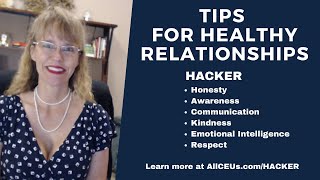
A live-chat replay by Dr. Dawn-Elise Snipes offering practical tips for healthier relationships using the acronym HACKER (Honesty, Awareness, Communication, Kindness, Emotional Intelligence, Respect). The talk mixes brief psychoeducational explanations, personal anecdotes (marriage, parenting, temperament), concrete practices (love languages, grounding/breathing exercises), and resource recommendations (Gary Chapman, DBT skills by Marsha Linehan).
Questions this video answers
October 5, 2020
Honesty; Awareness; Communication; Kindness; Emotional Intelligence; Respect
Words of affirmation; Quality time; Gifts; Acts of service; Physical touch
Breathe in for 4, hold for 4, breathe out for 4
Chapters
Foreign. Everybody. And welcome to today's live presentation. I AM your host, Dr. Donnelly Snipes. So today we're going to discuss tips for healthy relationships. And you know, there's always a lot more that can be said than what we're going to be able to cover in this 10 minute snippet. However, I did want to give you some tips and tools that might be helpful. I created the acronym because you all know how fond I am of acronyms. The acronym is Hacker, Honesty, Awareness, Communication, Kindness, Emotional Intelligence, and Respect for similarities and differences. So let's talk about each one of those things. Honesty in relationships, it is so important to be honest not only with the other person, but also with yourself. About your wants, your needs, your desires, what feels good, what doesn't feel feel so good. It's important to be honest. And part of that honesty comes from being mindful and self aware. You need to be honest with yourself. Sometimes maybe you get really upset about something and you start looking at it and asking yourself, well, what was it that I really actually got upset about? And you realize it wasn't that big of a deal. You, you realize that, you know, maybe your blood sugar was low or something. So honesty, part of honesty may mean going to your partner, going to your friend and going, you know what, I'm sorry, you know, I really, my blood sugar was low and I overreacted to that situation. So being honest with one another about what's going on, taking responsibility for our own behaviors and our own thoughts, that's number one. We can't have trust without honesty. So we've got to start getting honest. And remember, I said honesty with self. Checking in with yourself in terms of the relationship and making sure that it is meeting your needs, it's meeting your wants to the best of its ability. No relationship is going to be perfect all the time. Sometimes it may not even ever be perfect. Perfect because we have this Disney version of perfection out here that, you know, is rare, if at all possible to even meet. So being honest with yourself about what's realistic to expect and what you really need in relationships. Number two, awareness of self and other and the reciprocal impact. When we're in a relationship, we impact our other person, whether it's our significant other, our best friend, or our child. Whatever relationship we're talking about, we impact that other person. If we're in a bad mood, you know, that person probably has a certain amount of empathy and that is going to affect them. They may feel bad for us, they may empathize with us because we're in a bad mood, it doesn't mean they have to be in a bad mood too. Preferably they've got strong enough boundaries not to, you know, have to morph to match our feelings. But we do need to recognize if we are stomping around the house and just, you know, creating this energy of misery, that tension, that aura in the house is going to permeate everyone and everything to a certain extent. Now maybe it means that people are just going to, you know, regress to their rooms and hide from it. Maybe it means they'll get in bad moods. You know, there are a lot of things that can happen, but we need to recognize that our non verbals as well as our verbal behaviors will impact the energy in an environment and the energy in a relationship. We also need to recognize that, you know, if we have a positive attitude. And I've told you guys in some of the longer classes about my best friend from college, and when she would walk into a room, the room would just light up. She, she was Ms. Positivity. And yeah, she could have moments where she was like, oh, screw this. But most of the time she was just brimming with optimism. And it was, it was contagious whenever she was in the room. And I loved being around her for that reason. She was a very positive influence on not only me, but everybody in our program. When as grad students, we would congregate in the grad student lounge, you know, whenever Stephanie was there, people were tended to be in a more positive frame of mind. We also need to recognize that other people are going to, you know, have bad days. Like Stephanie, when she'd walk into a room, she would impact us, we would impact her. We need to recognize that give and take and think to ourselves. You know, how is this relationship impacting me right now and what can I do to improve this relationship to make it better in the moment? You know, if you're sitting there and somebody is just oozing with positivity and you are sitting on your grumpy stump, maybe asking yourself, is there something I can do? Because this person isn't what's making me grumpy. It's something back here. So what can I do in order to improve this moment? Communication and compromise are also important. We need to communicate our feelings. Feelings, our wants, our needs, our desires. That's important goes back to that whole honesty and mindfulness thing. First we have to know what our needs, wants and desires are before we can communicate them. But we need to be able to communicate those things. How much interaction we want, how much, you know, if you want somebody calling you or texting you every day or if that's, you know, way too much. We need to be able to communicate those things. We need to be able to communicate our feelings and our thoughts, and we need to be able to compromise. My husband and I are, you know, polar opposites. And I am an extrovert. He's an introvert. I think while I talk and he thinks and then he talks. So whenever we have to have a serious discussion about something, you know, I have to respect, I have to be, you know, open to communicate, but willing to compromise and say, you know what, you don't function, you don't think, you don't, you know, operate exactly the same way I do cognitively. I need to compromise and let you have some time to think before we sit down to talk instead of going, okay, we've got an issue right here. We need to talk it out. He needs time to process. So it's important to compromise. When we buy a house, you know, we've, we've. When we had kids, when we raised our kids, when we spend money. There's a lot of things we need to communicate about that are important in the big scheme of life. But neither one of us gets our way 100% of the time. All the time we compromise on, okay, you know, where can we meet in the middle to, you know, make both of us as happy as possible. Kindness and compassion is, you know, one of those things that we take for granted and we really shouldn't. Random acts of kindness are so important. But I would add to that, know your partner, your friends, not just your partner, know your friends and your children's love languages, do they respond best to words of affirmation, to gifts, to, you know, acts of service go through? If you're not familiar with the five love languages, you can look it up. There's a wiki on it has a list of five. But make sure you know how that person best receives or best understands how you can best communicate love and compassion for that person. Showing kindness. Relationships are not something that you can just let go stagnant and then expect them to be there for you when you need them. Relationships are ever evolving and you need to work on them. If you're one of those people who needs to plan, schedule in, you know, put a little note in your day planner that you, you are going to do some sort of random act of kindness or express yourself to your friend with their love language, you know, on Thursday, if you Have a lot of friends, if you have a lot of family, you're not going to be able to do this for each one of them each day. But it is important to regularly do it for our friends to make sure that we are building these relationships. We need to have compassion. Not everybody is going to feel the same way about everything. That's just the way it is. And having compassion and empathy means being willing to try to take that other person's perspective and understand how they feel in that moment without judgment, not telling them it's right, not telling them it's wrong, just having compassion and going, wow, that must be really scary or that must be really overwhelming right now. Emotional intelligence kind of builds on that compassion and it means being aware of how you feel, being aware of what triggers your emotions, what you can do to enhance your emotions, and being aware of other people's emotions and being able to read their emotions. So when somebody comes into a room and if they're scowling, you know, you can anticipate or you can read that so you can, you know, make a better paraphrase. If my son comes in the room, my son has, you know, he wears his, his emotions right on his face. So, you know, if he comes into a room and he's just shaking his head, I can say something like, you know, you seem to be really bothered by something. What's going on? Or what is it that has you disgusted at the moment? And you know, he's more than happy to tell me. But emotional intelligence helps us open those conversations, helps us be more empathetic with other people. We can practice emotional intelligence. Do it, you know, watching tv, you know, turn off the, turn off the words, turn off the volume and just look at the non verbals and try to anticipate or, or identify what the people are feeling. And then, you know, rewind. If you've got TiVo or, you know, Roku or whatever it is, a lot of times you can rewind and listen, you know, then turn the sound back on and listen to what's being said and see if you are somewhat on point as to what was going on and respecting similarities and differences. I am a big believer in the Myers Briggs or the Kirsi temperaments, the estj, you know, in infp sort of approach to understanding people. And I have a lot of videos on the YouTube channel on dealing with temperament. I haven't studied enneagrams as much. I know some friends of mine have gotten really into enneagrams. But what's important in both of Those, both of those are ways of understanding similarities and differences. I've said earlier, my husband and I are polar opposites. He's spontaneous. I'm rigid. You know, I'll say it, I am rigid. I like structure. I thrive on structure. And he gets very bored with it. I am one of those people who likes to talk it out and think while I talk. He likes to have time to ponder and then talk. I focus on the big picture. You know, I'm kind of a dreamer, broad strokes kind of person. He's a detail guy. So, you know, the two of us, we balance each other out very well because we are so opposite. But it's important to respect those differences and see them as an opportunity. As. Covey, sorry, drew a blank on his name, Stephen Covey would say, use. They get. Use it as an opportunity to synergize. Instead of seeing it as something bad, seeing it as an opportunity to meet in the middle, to learn something different. And that can even be. Okay, hold, hold on here. That can even be in terms of politics and public policy doesn't mean you have to agree with the other person. But getting into their shoes, getting into their mind and understanding where they're coming from, again, it doesn't mean you have to agree with them, but it can help you understand and respect that in their reality. And we called, in psychology, we call it phenomenological reality based on their life experiences and their perception of things. This is what's true. It doesn't mean that it is, you know, 100% true, but our realities, our phenomenological reality, is probably not a hundred percent true because we all look at facts and things that happen through a lens that is shaped or colored by our prior experiences. And that's what's so important. Two people can go and through the same exact situation and interpret it very, very differently based on their prior learning experiences. So we do need to recognize and respect some of those differences. I'll give you another example just real quick, before we move on to the discussion part. You know, I said I like structure. I also love to work. I love what I'm doing. I love to do research. And my husband, you know, gets. Gets a little frustrated with me sometimes because I want to be in here and I want to be doing, you know, presentations and I want to be writing research papers and doing those sorts of things. And it's hard for him to wrap his head around the fact that it's not so much work for me. It's something I really enjoy. And I wrap my Head around, you know, some of the stuff that he likes to do. And I'm just like, more power to you. Um, he's a pilot, for example, and I can't stand to fly. Not afraid of it. I just don't like doing it. But he loves it, and, you know, I respect that. And, you know, we. We work giving each other room to be our individual selves in our relationships. One other. I didn't put this on here, and. But it's an analogy that I make in a lot of my classes on relationships. I like to think about relationships like chocolate chip cookies. So if you haven't had breakfast yet, you're going to be hungry by the end of this chocolate. I think chocolate on its own is an amazing food. And, you know, I know it's stretching it a little bit to call it a food because it's not super nutritious, but I love the stuff. I think sugar cookies on their own are an amazing dessert because, you know, they're just. They're there, they're yummy. The two of them can stand alone in a relationship. You want to find another person. You want to find two people that can stand alone and be just fine. But when you put them together, when you put sugar cookies with chocolate chips, you get this amazing chocolate chip cookie that's just melding the best of both desserts. See, I told you you'd be hungry. Instead of looking at your friends, your partners, your. Any of your relationships is trying to complete you, thinking of them as something that you can meld with, that complements you and brings out the best in both of you. So that's my chocolate chip cookie analogy. Lore Ipsum identifies a book recommendation called Liminal Thinking by Dave Gray. And it talks about how our beliefs shape our reality, and different belief systems can collide and need to be understood. And, you know, I remember growing up in a household where my mother and I had very different approaches to life. I'm a lot more like my daddy. And so what she thought was appropriate was the best thing. What she thought was the ideal wasn't necessarily mine. And having to base that on, you know, where did our belief systems come from, what influences shaped our beliefs, what experiences shaped our beliefs, and respecting that fact. My mom was a hardcore feminist from the 60s. You know, she went. You know, she didn't go to Woodstock, but, you know, she grew up during that time where, you know, it was important. It was part of who they were, it was part of the culture to, you know, fight for rights and freedoms and, you know, all that kind of stuff. So that was so important to her. To the opposite, interestingly enough, of my father, who tended to be much more traditional in. In approaches. But, you know, it was important for me to understand her perspective because, you know, for the entire. For the entirety of her life, we never agreed on a lot of things, but we were able to respect one another's positions, I think, learning love languages. And I always forget at least one of them. There are. Help me out here if you remember all of them. There's acts of service, there's words of affirmation, there are physical touch. Help me out. There's two more. I'll look them up real quick. What questions? What would you like to discuss today while I am looking up those love languages? Because I am having a difficult moment. This is a perfect example, if you will, of how when you don't get enough sleep and you don't clear out that adenosine, sometimes you have more difficulty concentrating and thinking clearly. We had. I had the windows open last night and there were two warring factions of coyotes that were just. They were going at it from about midnight until about 3am and I was totally stressed about my donkey. But. Gary Chapman is the man who wrote the book about the five love languages. So if you haven't picked it up, I think it's available at different libraries, but you can also get it, I'm sure, online. Words of affirmation, quality time, Gifts, Acts of service, and physical touch. When you communicate with your people, your relationships using their love languages. It is so helpful. I remember when I was studying for my ncmhce, which is one of our board exams, I was getting ready to go in for it, and I was a little bit stressed about it because I had been licensed for about 15 years and it had been a long time since I'd had to take a board exam. And my daughter, who was about 8 at the time, had gone around and put little sticky notes all around the house in places like on my. On my pillow. So I'd see it when I made the bed and in my makeup drawer. So I'd obviously see it when I was putting myself together. Just words of encouragement, which I thought was so awesome and it was so sweet and it was so not something that I would ever think to do. So my point being words of affirmation are one of her major love languages. And that was something that I took to heart, and I always try to use that in communicating with her. For my son, it is more acts of service. You know, that's one of his big love languages. But it's knowing that, you know, different people communicate differently is, you know, really important in navigating the uniqueness of each individual person. Are there other questions, other things that you guys want to talk about or as we say in the South, y' all want to talk about? I'll give you a little preview while I'm waiting to see if you have anything else to talk about. Tomorrow we're going to talk about assertiveness, then dealing with uncertainty, dissociation and creating safety, the impact of past trauma, dealing with toxic people and 15 ways to cope with social anxiety. So you know, that gets us through early next week. Alrighty everybody. Well, thank you for being with me today. And if you have any topics that you want to see me talk about in these morning discussions, please feel free to email me@supportlce.com and I will put it here in the chat window. And let's just go to. I will share with you. Golly. Golly, golly. The Holderness family, they have got some really hilarious parody videos. Very clean, very positive. I found them the other day and I wouldn't say I've lost time watching their videos because it was time well spent because it made me get a good belly laugh and relief, some relief. Release, release some of those endorphins but you can get sucked into it. And then if you want to learn a little bit more about temperament, I will. Here are some of the videos that I have on a YouTube channel that you can look at. If any of you are experts on enneagrams and want to be on one of these morning discussions or even want to be on the full hour long counselor toolbox video that I do. Please again feel free to email me and let me know. And we will. In the anxiety videos we will talk about some things on de escalation. I will say just briefly, remember escalation is that fight ORF flight response kicking off. That is your HPA axes, dumping cortisol, adrenaline and glucose to prepare you for the to. To prepare you and give you energy to to assess the situation and determine if you need to fight or flee. We need to remember that when we feel a feeling that is just our brain telling us, hey, stand up and take a look. It doesn't mean that there's necessarily a threat. Once we assess the situation, then we can determine the next best course of action. But before we can do that, a lot of times we need to let that adrenaline bleed off a little bit so we can think clearly, we can get into what Linehan called the wise mind. Remember that when you slow your breathing, it automatically forces your heart rate to start slowing down a little bit. So one of the easiest de escalation techniques is to breathe in for four, hold for four, out for four. You can also, you know, look around, identify five things that you see, four things that you hear, three things that you smell, two things that you can feel. You know that's something else that you can do in order to distract your mind from whatever that perceived threat is until you can get into your wise mind and assess what to do next. Good Communication Skills books. I'm at a loss on that one. I do have some videos on no, can't spell. There are some videos on communication skills. Of the books that I have used, I think Linehan's work on interpersonal skills is probably the best. Let me see. Nope, I moved that into my other office. If you go online and you look up Linehan and Interpersonal skills, you will find some writings from her that you might be able to find useful. This is the one. I have the second edition of the DBT Skills Training handouts and worksheets. Love that book. I think it's very, very useful. I have found personally that a lot of Linehan's books, for obvious reasons since she created dbt, tend to be better than and more detailed than a lot of the other people that try to provide you information about dbt. Not to say that there aren't some really good ones out there, but if you're really looking for practical worksheets and things to do instead of just theory, this book by second edition Handouts and Worksheets, DBT Skills Training by Marsha Linehan. Definitely worth the money. Alrighty everybody, have a great day and I will see you tomorrow.










