Understanding Addiction Counselor Certification
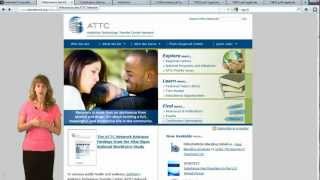
Dr. Dawn-Elise Snipes walks through how to become an addictions counselor, using Florida as an example. Florida requires about 2000 client contact hours, 150 hours of addiction training, 100 hours of supervision, and passing an exam. Requirements vary by state, so check your state's board and the ATTC website for specifics.
Questions this video answers
Approximately 2000 hours (roughly one year full-time).
150 hours of addiction-specific training.
A minimum of 100 hours of supervision.
Recommendations from three professionals.
46 out of 50 states.
Chapters
Hi and welcome to all CEUs. Over the past few years, we've often gotten the question of how do I become an addictions counselor? The answer to that is not real easy, but it's not real hard either. I'm going to try to cover that here in this video. The first thing to understand is that every state has their own requirements for people to become certified or licensed. Some states only provide certification, others only provide licensure. Some provide both. So you need to figure out what your state wants you to do. The best place to start is by going to a website called the Addiction Technology Transfer center, or attc. On this page, you'll find a lot of information about addictions counseling, things that are coming up, new research information, etc. But you'll also find information about how to become certified. So about halfway down, you'll see where it says find certification information. You'll click on that link. When you click on that link, it takes you to this page and you can scroll down and find your state on the map. When you click on your state, it will take you to the state page. In this particular example, we're going to use Florida. Florida is nice because they only have one body that does certifications. Some other states have multiple different certifying bodies and, and you can look at what each one offers you. So for Florida, it's the Florida Certification Board, and they offer a whole range of certifications. So clicking on this link will find out more about the Florida Certification Board. FCB has an office in Tallahassee, Florida. In order to get definitive information about certification or clarification, you're going to want to contact them. I suggest going to their website first, which is here, as is their phone number and an email address to contact someone. Here you'll see a list of the different types of certifications you can get in Florida. The nice thing is there's a bunch of different certifications that can allow you to hone your skills to work with a specific population. Each certification has its own requirements, and we'll talk more about those in a few minutes. One of the things that you also can figure out is that each certification allows you to deal with a slightly different population. So figuring out who you want to work with, do you want to work with adolescents, criminal justice, eating disorders, et cetera? A lot of people get multiple certifications. That is up to you. So let's start by figuring out what the basic requirements are to get certified in the state of Florida. So we'll go to the Florida Certification Board website. Here you See along the top there are a bunch of different certifications that are listed. And you want to select the one that applies to you or that you're most interested in. Right now we're talking about addictions, so we've selected the addictions tab. We'll start out by looking at addictions counseling specialist or certified addiction specialist. Now, in Florida, the certified addiction specialist is your entry level position. Each level of certification here requires a different amount of training, different amounts of direct contact with the patients, different amounts of supervision. So your entry level is where you want to start. And if you can look through it and go, yeah, I've already got all that, you might be able to go to the next higher level. For this purpose, we'll start with certified addiction specialists and let's see what Florida requires. The really awesome thing in Florida, as in many other states, is that you can become a certified addiction specialist without having a college degree. So if you really want to help somebody and haven't had the benefit of getting a college degree or maybe you got a degree and it's just not even close to the area of counseling that doesn't keep you from getting certified. The next thing you have to have is expense. And this is defined as direct contact with the consumers who you want to serve. 2000 hours is roughly one year of full time work. Now, it doesn't always work out that way if you have a lot of vacation time, etc. But roughly one year of full time work. During that time, you also need to get a total of 150 hours of addiction specific training. What that means is training that will help you work with this particular population. Many states will allow you to get your pre certification training online. So it's important to figure out what your state requires. Certain states, such as California, have very specific requirements about who can provide addictions pre certification training. Most of the other states are happy if you can get your pre certification training from a NAADAC approved provider of education. Those agencies that provide online training and face to face training who are NAADAC approved will have an approval number. So you can look on their website and find out what their NAADAC approval number is that allows them to provide addictions counselor pre certification and continuing education training. So we'll look at this training list and there are a lot of very vague terms. Clinical evaluation, treatment planning, referral. You know, it's hard to know exactly what courses and what trainings you may have already taken and that you may be able to take that would fall into each of these categories. There is a publication that's put out by samhsa, the Substance Abuse and Mental Health Services Administration, that defines each one of these areas and the key aspects that you need to learn about in each area. We'll look at that in just a minute. Let's stay here and figure out what else we need to do to get certified in the state of Florida. So another thing that we're going to need is supervision. You're going to need a supervisor who is licensed or certified who can provide you guidance and further education. We while you're getting your direct contact hours, Florida specifies that you have to have a minimum of 100 hours of supervision. That would be roughly two hours every week. Most people are not going to be able to get two hours of supervision every week. So this is really written. So you have about two years of client contact in Florida. You need a recommendation from three professionals that you work with. That's usually not too hard. You'll have to sign a code of ethics, usually not a big deal. And then you have to take a written exam. Now, the written exam again varies from state to state. Some states require a national exam called the icnrc. Other states require a state specific exam, and still other states require both. So you want to look and figure out what exam you have to prepare for in order to become certified or licensed in your state. Now, these exams are based upon the training domains that are listed above. So if you've taken those classes and if you've worked with the clients most of the time, it's not a huge big deal to take these tests. So don't let the word exam scare you. It's just to make sure that you actually had good quality training and good quality supervision during your client contact hours. Once you get certified. It doesn't stop there, though. You are going to have to continue to get continuing education hours. Most licensed professionals, whether it be counseling, engineering, veterinary science, most licensed professionals have to get continuing education. This helps us stay up to date on the different things that are going on in the field and also keep our skills kind of tick because we realize once we get into the field where some of our weaknesses may be and then we can get training and get credit for those trainings as we go along. Again, if you have any questions about your state specific requirements, you need to contact your state board. They are the ultimate authority on what will and will not be accepted. So let's look at what the TAP21 says and how we can use that to help us understand what sorts of trainings that we're going to need in order to get certified. So tap 21 is available online. You can get it as a PDF, you can look at it as HTML, you can even order it from SAMHSA if you want. It basically is a guideline that defines each one of those terms we were talking about. So you get tap 21, you're going to go to the table of contents and it's going to look something like this. And you say, hmm, okay, well, I want to know what clinical evaluation really means. So you'd go to the page that starts defining and there are multiple pages. Clinical evaluation. And in this it tells you that what you need to know under clinical evaluation revolves around screening and assessment. So courses that you take that talk about assessment of persons with mental health issues or assessment of persons with substance use disorders, or screening in the criminal justice system, those are all courses that would fall or apply under clinical evaluation. One of the things I suggest to my supervisees is to gather all the certifications and certificates they've gotten to date and we sit down and we look at what each class is that they've taken and where it might fit. There's no sense reinventing the wheel. But we can also identify where their major gaps are in their training and help them pick courses that are in each domain area that will help them fill those gaps. We also work together to identify courses they can take that are in those domain focus areas that will make them more employable. The buzzwords right now are things such as motivational enhancement therapy, motivational interviewing, dialectical behavior therapy, and co occurring disorders. As a supervisor, as an administrative supervisor, when I would hire people, I would look for applicants that were already trained in working with persons with co occurring disorders who had a good handle on motivational enhancement therapy. Those are things that were sort of bonuses in addition to just the run of the mill education. It's good to find out what the buzzwords are in your community by talking to other addictions counselors and finding out what sorts of approaches they're using in their treatment centers. Again, certification itself comes down to satisfying the requirements set forth by your state and keeping up your training through continuing education. Most states allow you to do all or part of it online. It's important to make sure that that's true in your state. But the vast majority, I believe right now it's 46 out of the 50 states will allow you to do the vast majority of your training online. So you can do it at 2 in the morning, you can do it on your shift, on a computer while the clients are out doing something else. It makes it a lot easier for you to get the professional training you need so you can have a career in addictions counseling. Thank you. And I look forward to working with you in the future.










