Understanding and Preventing Tuberculosis | Counselor Education
A pre-recorded continuing education webinar by Dr. Dawn-Elise Snipes introducing tuberculosis (TB) for counselors and behavioral-health staff. Covers TB basics (Mycobacterium tuberculosis), differences between latent infection and active disease, symptoms and routes of transmission, risk factors (including HIV and immunocompromise), drug-resistant TB causes and prevention, and practical infection-control and reporting guidance for mental health, residential, correctional and healthcare settings.
Chapters
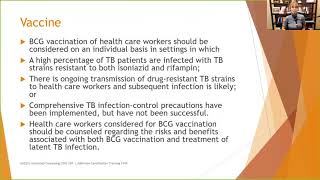
This episode was pre recorded as part of a live continuing education webinar on demand. CEUs are still available for this presentation through all CEUs. Register@Allce.com Counselortoolbox you. I'd like to welcome everybody to today's presentation on tuberculosis. In this presentation we're going to learn about basic tuberculosis facts, differentiate between latent tuberculosis infection and tuberculosis, identify signs and symptoms of tb, identify risk factors for tb, learn about TB prevention protocols and explore the connection between TB and HIV co infection. Tuberculosis is caused by a bacterium called Myobacterium tuberculosis. It usually attacks the lungs, but it can attack any part of the body such as the kidney, spine or the brain. So it's important to recognize that once the TB bacteria gets into somebody's system, even if they're not coughing and hacking, they may still have TB infection. Not everyone who's infected with TB bacteria becomes sick. If they don't become sick, it's considered what's called latent TB infection. So they've got the bugs in their system, but they're not showing any symptoms right now. If not treated properly, tuberculosis can be fatal. So this is going to be more important to look at in our immunocompromised people because that'll happen probably more quickly. Most people who breathe in tuberculosis bacteria and become infected, the body is able to fight the bacteria and stop them from growing. So the infection is there, but they're kind of at a stalemate, if you will, with the immune system. People with latent TB infection have no symptoms, don't feel sick, can't spread the TB bacteria to others. So that's important. They can't spread it when it's latent. They do usually have a positive TB skin test reaction or positive TB blood test because the germs are in their body and they may develop TB disease if they don't receive treatment for the latent TB infection. So their immune system and the TB infection are kind of at a stalemate. But if anything happens to kind of upset that stalemate, where the TB infection can gain a foothold, they can develop active tuberculosis disease. About 5 to 10% of people with normal immune systems and latent TBI will develop TB disease. So if somebody has the infection in their system and it's latent, Even if they've got a normally functioning immune system, about 5 to 10% are still going to develop TB disease. The risk is the highest in the first two years after infection. The take home from this, you know, really is even if it's latent TB infection, it still needs to be treated. You can't just say, well, I've got it in my system, but it's not causing me any problems, so I'm going to ignore it. It is important to get it treated. TB infection, or TB disease, as it's called, has symptoms that may include a bad cough that lasts three weeks or longer. Now I've got allergies, for example, and I cough a little bit, pretty much all the time. It's a little tickle in my thro. It's not a coughing, hacking pain in the chest, coughing up blood or sputum. Those are the things we're going to be looking for. And you know, in people who are chronic smokers, you may see if they've got emphysema or other stuff going on. They may also have a bad cough, pain in the chest and coughing up sputum. So it's not necessarily meaning they've got tb. But if they have these symptoms, it is really important that they get tested. Weakness or fatigue, weight loss, no appetite, chills, fever and sweating at night. So those are all your kind of warning signs. And when people come into a mental health clinic, these are the questions we ask them to screen to see if they need to be tested for tb. It is contagious when somebody actively has symptoms of tuberculosis. So how is it spread? It is spread through the air from one person to another through coughing, smoking, speaking or singing. So speaking, if you're sitting in really close proximity or relatively close proximity to somebody who has active TB infection, you can get infected. It's another reason why it's so important when you cough or sneeze that you sneeze and cough into your elbow instead of just like out in the air. So it is important, and as a note, certain children, children can have TB disease and we know how good kids are about covering their mouth. So it is important again, to keep an eye out for symptoms. Even in children, TB is not spread by shaking someone's hand. So if they cough into their hand and then they shake your hand, which is gross in and of itself, but if they do, you're not going to get tuberculosis. You have to inhale the bacteria, sharing food or drink, touching bed linens or toilet seats, sharing toothbrushes or kissing, these are ways that CDC says you cannot get the disease. Now, you can get all kinds of other diseases from these things. So, you know, use good infection control procedures. But TB is only spread by inhaling the droplets. When a person breathes in TB bacteria, it settles in the lungs and can move throughout the body via the blood, into the kidney, the spine and the brain. TB infection in the lungs or in the throat can be infectious, but TB in other parts of the body, such as the kidney, spine or brain, is often not infectious. That doesn't mean it's not deadly. That means it's not. You're not able to spread it to other people. People with TB disease are most likely to spread it to people they spend time with every day. So if somebody that you work with, somebody that rides your bus, somebody that you know is regular client or in your family, and they come down with active TB or have symptoms of tb, then you're going to need to get tested. Risk factors so, you know, a lot of us work in situations where we are exposed to people who potentially have tb. So what are the risk factors for us acquiring TB or for our clients spreading tuberculosis? Close contacts to a person with infectious TB disease, which is why in mental health settings, it's so important to do that screening at intake before you put the clients in with the general population, in a residential setting or in group with other people, we want to make sure we do a screening, and that takes about two minutes, not even to fill out the screening form. The same is true if you work in corrections or a hospital or anywhere else. You want to try to get that screening done as quickly as possible so you minimize the contact with other people. Should that person have active tb? Persons who have immigrated from areas of the world with high rates of tb. So if you deal with a lot of immigrants, it's important, especially people coming from places that have high rates of tb, it's important to be aware that you're at higher risk. Does it mean you're going to get it? No. But it does mean that your exposure much greater. Children less than 5 years of age who have a positive TB test, this may show or be a risk factor for infecting other people. Groups with high rates of TB transmission, such as homeless persons, injection drug users, and persons with HIV infection. If you work in mental health, if you work in substance abuse, if you work in emergency rooms or in law enforcement, for example, or emergency services, you're going to encounter these groups of people. So it's important to be aware of how TB is transmitted and how to protect yourself. When my husband used to work the road, you know, sometimes he would end up arresting somebody who would have a lot of those symptoms. They'd be hacking and coughing and, you know, just generally look unwell and be sweating. But he had to transport them, so he would always, you know, put them in his car like he, like he had to do, but he would keep the windows down, which was not the best solution, but it was one way to prevent the contamination because the air was blowing backwards. Persons who work or reside with people who are at high risk for TB in facilities or institutions such as hospitals, homeless shelters, correctional facilities, nursing homes and residential homes for those with hiv. So if you work in any of these places, you know you're at higher risk than the average person for being exposed to tuberculosis and potentially contracting it. And if you have conditions that weaken the immune system, you are at a higher risk for developing TB disease, let alone latent tuberculosis infection. So if you have HIV infection, even if it's not full blown aids, if you have HIV infection and your immune system is compromised, then you're at higher risk. Substance abuse, silicosis, diabetes, severe kidney disease, low body weight organ transplants, especially with anti rejection drugs, can make your immune system less responsive if you will head and neck cancer. Medical treatments that involve the use of corticosteroids or specialized treatment for rheumatoid arthritis or Crohn's disease, which we know are autoimmune disorders. So any of these things, and there's a whole list of them, but diabetes is one that I didn't know about. Any of these things that can compromise the immune system can make a person more likely to develop tuberculosis infection if they're exposed to the bacteria. Patients can be considered non infectious when they meet all of the following three criteria. They have three consecutive sputum smears collected in 8 to 24 hour intervals, at least one being an early morning specimen. Their symptoms have improved clinically and they're compliant with an adequate treatment regimen for two weeks or longer. So they have to meet all three of these. Now why do we care as clinicians? Well, if you work in a residential facility, then you may not be able to admit someone until they are non infectious. So these are the criteria that the client would have to meet before they could be admitted to your residential or intensive outpatient program. So these are guidelines that is good to have in your welcome manual to let people know you know you're being screened for tb. If you come back positive, these are the steps that we've got to take. There is a vaccine that healthcare workers can get, but it should be considered on an individual basis. Not everybody needs to get it and there are costs and benefits or strengths and drawbacks to getting the vaccination. So you want to talk about that with your doctor or with your infection control coordinator. A high percentage of tuberculosis patients are infected with TB strains resistant to both isona, well, these two antibiotics. So if you're in a situation where you know that you've got a lot of clients coming in who have drug resistant tb, then you may want to consider getting the vaccination because it's not going to be the normal tb and here's your antibiotics and you know you can clear it out of your system. If it's already drug resistant, then you know that you're fighting with something of a monster. If there's ongoing transmission of drug resistant TB in your facility or in your area, then it might be something that you consider having the workers at your facility look at the vaccination for. If comprehensive TB infection control precautions have been implemented but haven't been successful at controlling TB in your facility probably means there's some people in there with drug resistant tb, but you could just have the turnover where you've got so much, so many people coming in with TB that you just can't keep, keep, keep it under control. Either way, if this applies, you know, if it's just kind of a pool of TB bacteria where you work, then definitely considering the vaccine would be something to talk about with your doctor. Healthcare workers considered for the vaccination should be counseled regarding the risks and benefits and treatment of latent TB infection. I know when I worked in community mental health, we had to get tested every two years for tuberculosis. We had to have the skin test just to make sure that we hadn't acquired it. And if we had, if we tested positive for a latent infection, then we could start getting treatment right away. TB and HIV co infection without treatment, as with any other opportunistic infection, HIV and TB will work together to shorten the lifespan. Someone with untreated latent TB infection so they don't have symptoms of tb, but they've got hiv, is much more likely to develop TB disease during his or her lifetime than someone who isn't immunocompromised. Among people with latent TB infection, HIV infection is the strongest known risk factor for progressing to TB disease. So if you've got latent TB infection and you've got one of those other conditions that were listed, like diabetes or Crohn's disease or something, yes, it increases the risk of it becoming full blown tuberculosis, but the greatest risk in it becoming full blown tuberculosis is if you have concurrent HIV infection. A person who has both HIV infection and TB disease has an AIDS defining condition. And this is important to realize not only for healthcare and treatment planning for them, but, but also in terms of whether there are certain regulations and discrimination policies that you need to be aware of when it comes to admitting them to your facility once they have developed full blown as. But it's important to be aware of what's going on with the clients, what medications they might need to be on and how they're going to be able to interface with your program. Drug resistant TB can occur when the drugs used to treat TB are misused or mismanaged. Examples of misuse or mismanagement include not completing a full course of treatment, doing like half of it, and then forgetting or just choosing not to because you're feeling better. Health care providers that prescribe the wrong treatment or the wrong dose or the wrong length of time, so they might prescribe the right drug, but they might not give you a strong enough dose for your age and body weight or whatever it is, or they might give you a week's course when it was supposed to be three weeks. So either way you're getting the bacteria are exposed to the antibiotic and they're able to develop a resistance to it before they can actually be completely wiped out. If the drugs for proper treatment are not available, then drug resistant TB may develop because they may try to throw different things at it to see if they can get something else to work or if the drugs are of poor quality. So if they're, you know, generic or out of date or almost out of date, those can cause problems. And the extreme strain on a lot of our health departments and public health systems does cause some of this to happen as well as lack of education on the parts of some providers that are treating the tb. So to prevent drug resistant tb, take the right amount of medication in the right amount for the right length of time and complete your full course of treatment. Drug resistant TB is more common in people who do not take their TB drugs regularly. So if you're like me, you know, when I get sick, I have a hard time remembering, especially if it's like three times a day to take something. I do well to remember to take something once a day. So you might need to institute something alarms on their, on their mobile device or some other method to remind them to take their medication every single day. If they don't take all of their drugs, you know, they take some of them, start feeling better, they quit. If they develop TB disease again after being treated for it in the past, you know, maybe they were treated, they became non Infectious or, you know, asymptomatic, and then 10 years later they develop TB disease again. That means we probably have a slightly different animal we're dealing with and it's probably drug resistant. If they come from areas of the world where drug resistant TB is common, then they might have it. Or if they've spent time with someone known to have drug resistant TB disease. And again, looking at a lot of the clients that come in for addiction corrections in detox units and even some crisis stabilization units, homelessness, a lot of those clients for one reason or another are, are often medication non compliant. So you'll find a lot more drug resistant TB in that population. People who work or receive care in healthcare settings are at higher risk for becoming infected with tb. TB infection control programs need to ensure the prompt detection of infectious patients, which at the beginning of this presentation I emphasize how important it is to do that screening early, before clients are put in with the general population in a correctional facility or before they're put in with a group of people in group counseling or residential counseling. We need to make sure that they're not going to spread whatever's going on. I mean, if they came in and they had a fever or the flu or something, you wouldn't put them in with everybody. The same thing with tb. Agencies need to have airborne precautions telling people how important it is to cover their mouth, wash their hands, do all those kinds of things. General infection control and treatment of people who have suspected or confirmed TB disease. So we need to make sure that once we determine somebody may have tuberculosis, what are your airborne precautions? Some places will have the little masks that they can put on and then what is the treatment for people? A lot of times in mental health facilities we don't provide the treatment. They have to go to the health department or somewhere else. But you need to know where to refer them, where they can get treatment. And it's not just a here, call your doctor and you know, see about it in two weeks. This is something that needs to be addressed now because every person they come into contact with when they walk out your doors is potentially going to be infected. The TB infection control program should be based on a three level hierarchy of control measures, including administrative measures, environmental controls and use of respiratory protective equipment. And yes, this applies even in mental health settings. So administratively, somebody has to be in charge of the TB infection control procedures. They need to conduct a TB risk assessment of the setting. We usually did ours once a year. Some places that are at high risk may do it every six months. This person needs to develop and implement a written TB infection control plan, which all agencies really need to have. I think by law, in most states, in order to get licensed, they need to have something in their manual that talks about how they screen and refer, ensure the availability of recommended laboratory processing, testing and reporting of results. If you have a client come in and you screen for them and determine that they need to be tested for tb, that doesn't mean your facility has to provide that testing. In mental health clinics that's often not going to happen, but you need to have a direct referral, know where they're you're going to send them to so they can get tested and the report results can get reported. Implementing effective work practices for managing patients who have TB disease. Now, in most cases in mental health settings, they're not going to come back until they're non infectious, but they still need to, they may still need to be taking their medication. So it's important for your staff to know what they're supposed to be doing. If they are non infectious but still under treatment, this person also has to ensure the proper cleaning, sterilization or disinfection of equipment that might be contaminated. Now, most of the time in our facilities we don't have stuff that's going to be touching around their mouth. But if someone was, you know, I can't think of something in a mental health setting, but your infection control person would need to make sure that there was no area that the person had been in or touched that could transmit the disease environmentally. Primary environmental controls consist of using a control source of infection by controlling the source of infection by using local exhaust ventilation, hoods, tents or booths, and diluting or removing contaminated air by using general ventilation. Now this is when you're treating people with TB disease in our clinics, people are going to come in. We don't have this kind of stuff set up. But it's important if you screen somebody who you determine might need to be tested that you air out your office. And this is kind of where we go down to secondary environmental controls controlling the airflow to pretend contamination of air in areas adjacent to the source of the airborne infection. So hopefully you have a window that you can open Cleaning the air by using high efficiency particulate air filtration. So having HEPA filters available, it's a good idea to have them in every office anyway to clean the air. And ultraviolet germicidal irradiation, it's an ultraviolet light that they put in the air handler that cleans the air as it goes through the, goes through the building. Those are all things that mental health clinics can do and actually does help reduce the incidence of a lot of viruses and bacteria, not just tb. So that's secondary. Environmental controls are something that a lot of mental health centers, especially residential ones, should look at. Respiratory equipment, there should be a respiratory protection program. Like I said, if you screen somebody, they're hacking up all kinds of stuff. Ideally you've got some sort of a mask or something that they can put on to prevent spreading those germs. Until you can get them to where they need to be to be tested. It's important to train everybody in your facility on respiratory protection. If that person comes in to check in and they're just hacking all over the front desk staff and everywhere else, there needs to be a procedure for how to handle that so that person's not sitting in the waiting room, so contaminating everybody around them. So front desk staff also needs to be trained on the signs and symptoms of TB infection and how to handle that, what masks or respiratory protection is available. And we need to educate patients on respiratory hygiene and the importance of cough etiquette. So even if it's just a cold, make sure that they're coughing into the crook of their elbow and they're washing their hands frequently to prevent the spread of any kind of germs. Remember, TB can only be spread through inhalation of airborne droplets. But other bacteria, other things, can be spread differently. Because TB is considered a significant threat to the public's health, the disclosure of patient information from the private healthcare worker to a designated public health authority in usually your health department without the patient's permission or authorization is allowed for the purpose of TB control, which is the long version of if you have somebody who tests positive for tb, you have to make the report to the, to the health department. Now, if they're screened and you know you're referring them out for a test, you need to check with your agency policy on what reporting requirements are generally screening for. It doesn't mandate reporting, only a positive TB test mandates the report. Passive case reporting is the required reporting of suspected or confirmed TB cases to a public health authority. So again, check with your agency's rules and regulations on if you do a screening, whether you have to report it, or if you only have to report it if it's a confirmed case. TB is still a pressing problem. Unfortunately, hiv, the weakening of the public health systems and emergence of drug resistant TB are making it more difficult to control the disease. It's spread by air droplets which are inhaled People with weakened immune systems are at much greater risk for TB infection, and we had that whole list of different conditions that can weaken the immune system. People with normal immune systems may have latent TB infection and should still be regularly tested if they're exposed to TB on a relatively regular basis. Working in emergency services, substance abuse, or criminal justice settings increases exposure risk. Health and behavioral health agencies must have an infection control policy which addresses tuberculosis. If you enjoy this podcast, please like and subscribe either in your podcast player or on YouTube. You can attend and participate in our live webinars with Dr. Snipes by subscribing at allceus.com counselortoolbox this episode has been brought to you in part by allce.com, providing 24. 7 multimedia continuing education and pre certification training to counselors, therapists and nurses since 2006. Use coupon code counselortoolbox to get a 20% discount off your order this month.










