Understanding Depressive Symptoms Part 1 Happiness Isn't Brain Surgery
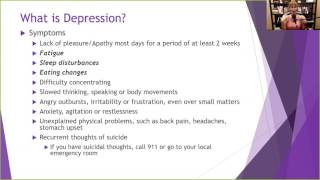
Dr. Dawn-Elise Snipes breaks down depressive symptoms and why depression isn't one thing. Sleep disruption, shift work, thyroid issues, and pain can all trigger it. SSRIs work for only about a third of people, so finding what's actually causing your symptoms matters more than assuming a diagnosis.
Questions this video answers
About 33% effective (speaker cites JAMA/NLM summaries stating SSRIs no more effective than placebo for many).
About 30 days.
Chapters
Welcome to Happiness Isn't Brain Surgery with Doc Snipes. This podcast was created to provide you the information and tools Doc Snipes gives her clients so that you too can start living happier. Our website, Docsnipes.com has even more resources, videos and handouts, and even interactive sessions with Doc Snipes to help you apply what you learn. Go to Docsnipes.com to learn more. Hi everybody, and welcome to Happiness Isn't Brain Surgery with Doc Snipes practical tools to improve your mood and quality of life. Today we're going to be talking about some of the causes of depressive symptoms. Not necessarily depression itself, but symptoms that are common to depression and ways to address them. We're going to start out by doing the obvious and defining depression and exploring why many people just can't take a pill to fix it. So what is depression? Let's start out with the very basics. Depression is characterized by a bunch of symptoms that kind of occur together, but like a lot of other things in life, you may have those same symptoms that occur together that might be caused by a variety of different things. So depression is really a description of a state of being, and it's not necessarily talking about specifically what is causing your state of being. And that's a critical point that you really need to understand is the fact that even though you may have depression and you may be in a support group with 15 other people with depression, what is causing each one of your depressive symptoms? Each person's depressive symptom may be different. So let's look at what those symptoms are. The first one that has to be there is lack of pleasure or apathy, just really not caring. Most days for a period of at least two weeks. Now, for persistent depressive disorder, which used to be caused called dysthymia, that can go on for longer than that, but it's of a less lower intensity than major depression. When you've got major depression, if the symptoms go on for more than about two weeks, you're starting to feel that this is pretty darn intolerable. So lack of pleasure and apathy. Now, as we go through these symptoms that accompany lack of pleasure and apathy, you're going to look at them and go, well, if I don't get enough sleep or if I can't concentrate or I'm stressed out all the time, then I don't have a lot of pleasure or motivation to do much of anything. So you'll see where a lot of these symptoms actually can cause a lack of pleasure or apathy, which is why you want to look at what. Which symptoms do you have and what's causing those. Okay, so let's start at the very beginning. Fatigue. A lot of people when they've got depression, they feel fatigued, they're tired all the time. And it's not necessarily just sleepy. It's, ugh, I can't move. I feel like my arms and legs weigh a thousand pounds. And that's a normal symptom of depression. Not everybody experiences it, but it's pretty common. Sleep disturbances. You're not able to sleep or you're sleeping too much and you can't seem to get enough sleep. You never seem to feel rested. That's pretty common in depression, too. And you'll find when we get to the section on sleep, if you haven't already watched one of the other videos on sleep, when you sleep too much, if you're not getting quality sleep, you're going to wake up and you're going to be tired. Then if you sleep too much, your body doesn't know when it's supposed to secrete your sleep hormones. So you're going to get poor quality sleep and you're never going to feel really rested. Eating changes. One of the things that my mom used to say was, crap in equals crap out. When we are depressed, anxious, fatigued. A lot of times we crave high fat, high sugar foods in order to increase serotonin levels, but also because we're trying to do something that that's going to give us energy. And we get energy from carbohydrates, sugars, and fat. So in the back of our mind, we may be thinking, if I eat this, maybe I'll get some more energy. Difficulty concentrating, you wake up and you just feel like you're in a fog all the time. And I personally find it extremely frustrating when I have those days where I am just totally fogged out. Slow thinking, speaking, or body movements. And this kind of goes along with your arms and legs and just kind of your body feeling like it weighs 1,000 pounds. You get up off the sofa and you're like, oh, my gosh. So understanding that this is a symptom of depression and it can be caused by a variety of things. So we want to take a look at that. Angry outbursts, irritability or frustration, even over small matters. Now, this is one of those things that people don't often see associate with depression. There are types of depression or people with depression who have anxiety and or anger irritability with it. When you are Angry or anxious, that is your body's fight or flight response. If you're activating that all the time, if your body constantly thinks there's a threat, eventually you're going to get tired, you're going to be on so much, you're going to be revved so much, you're going to be exhausted, which is going to lead to fatigue and sleep disturbances, maybe eating changes. And, you know, when you're stressed out all the time, it's hard to find pleasure in a lot of things because you're just stressed. Unexplained physical symptoms, such as back pain, headaches, and upset stomach. Now, we know that serotonin, which is what a lot of people think of when they think of depression, which isn't necessarily the be all, end all neurotransmitter, that serotonin is involved in a lot of stuff with your stomach. It's involved in a lot of stuff with pain tolerance and perception. So when people are stressed, not only do they tend to be more tense and have a lot more muscle tightness, which can cause headaches and back pain and all kinds of stuff, but a lot of people also get GI disturbances, could be because they change what they eat. It also could be because their serotonin levels are getting out of whack with some of the rest of the neurotransmitters that's causing them to either get constipated or have diarrhea and all kinds of other stuff. Understanding how do you react? How does your body react? Think about the last time you were going through a really stressful period. Did you have sort of unexplained aches and pains? You know, your back ached and you're like, well, I haven't been to the gym. I haven't been moving or doing anything. I don't know why I'm achy all over. Part of that could be because of the neurotransmitter imbalances and recurrent thoughts of suicide. Now, this one is obviously not one to play with. If you have suicidal thoughts, call 911 or go to your local emergency room, like right now. It's not time to start trying to diagnose and ferret out what's causing each individual symptom. If you're suicidal, let's get that under control, and then you can work with your doctor or your therapist to try to figure out what might be causing it. So depression is not one size fits all, which is what a lot of people mistake it for. They think, well, if Jane over here Is able to treat her depression with this thing, then it should work for me. Or if I go to this particular type of treatment center that works for a lot of people, it should work for me. Well, it might, but it might not. It's important to understand what is causing your symptoms. Each person may have a different set of symptoms. All those symptoms we went through on the last slide. You don't have to have all of them to be diagnosed with depression. Quite honestly, any one of them might make you feel pretty lousy. So don't wait until you meet the clinical definition of depression. And don't assume that everybody's depression is the same. It's kind of like when everybody, what anybody, gets the flu. You go to your doctor and you may have some very similar symptoms. Not everybody has a high fever. Not everybody is vomiting. You have a. A few symptoms from a list of symptoms that they characterize as the flu. I mean, there are lots of different strains of flu, Just like there's lots of different permutations of depression. Even people with the same symptoms may need different treatments because there's so many things that can cause the same symptom. So let's look at one example, and I use sleep a lot because most people understand and most people have experienced sleep deprivation. So you can kind of relate to it and say, yeah, I can see how sleep problems might cause some of this stuff or at least make my symptoms worse. So shift work. Shift work is a biggie. They even have shift work sleep disorder. Because people who work a different shift, an evening shift, or worse yet, the night shift, they're working the opposite time when their body thinks they're supposed to be sleeping. And if they don't keep their sleep schedule the same on their days off, then they're constantly experiencing basically what we call perpetual jet lag. So shift work can really mess with your circadian rhythms and your ability to get good quality sleep. When my husband was working night shift, he used to love that shift. So he stayed on that shift because that's where all the fun was, if you will, when he was in law enforcement. So he would work his 7P to 7A. He would get off, the sun would already be up, which tricks his brain because he's like. His brain thinks sun up means you're up. But that was time for him to be going to sleep. So he would come home and he would go to sleep. And on his days off, he would sleep for like three hours and then get up to be with my son and I. And that, you know, Told his body, okay, we're supposed to be awake during the day now. Well, two days later, it was time for him to be asleep during the day and awake all night. Your body doesn't switch gears like that. Your body can't just turn on a dime and go, okay, we're going to do a complete 180 in our sleep schedule. It takes about 30 days for your body to really adjust to a significant sleep change. It's important for shift workers and organizations that employ shift workers to understand circadian rhythm. Sleep disruption and this can be caused by a variety of things. What causes it in a lot of people is not sleeping at the same times or sleeping too much. So you're sleeping all day long, you're napping all day long. When I was on bed rest with my daughter, I was sleeping a lot. And I never knew how tired I could be from sleeping all the time. So that caused me to wake up. I'd be sleepy, I'd be frustrated. You know, I just kind of be in a cranky sort of mood, which didn't help with anybody's mood. Too much caffeine or other stimulants can keep you awake using sleep aids that impair quality sleep. A lot of the sleep aids that are available over the counter help you get to sleep faster, but they will impair the quality of your sleep after that. For a good portion of your sleep time. If you have light in the sleeping environment, your eyes, even if they're closed, can perceive that light. And it goes into your brain and your brain says, you know, lights up. It's time for us to be up. So it doesn't secrete melatonin the way it should. Hormone changes. And this is not limited to just hot flashes waking you up in the middle of the night. Even people who are in their young teens and twenties who are experiencing hormone fluctuations, not just estrogen. We're also talking testosterone and some others. But those are the two primary culprits can experience sleep disruptions and sleep changes. It's important to know this. Estrogen makes serotonin more available. Melatonin is made from serotonin. So you want to make sure that your hormones are in balance. And thyroid imbalances, which can be caused by a variety of things. This is one of the least common causes of sleep disruptions. But it's important to check because a lot of people who think they have depression actually have hypothyroid. So you want to make sure your doc does a workup. Your medical doctor can be one of Your best tools in figuring out what's causing your depression. So any of these things can disrupt your sleep. Now think about how you feel when you have gone an extended period. We're not just talking a day or two. When you've gone an extended period without getting good quality of sleep, boggy head, irritability, not tolerating as much, stress, difficulty concentrating, fatigue. Well, those are all. Let's go back up to this other slide. Yep, that's hitting a bunch of them. The other thing I didn't mention is when you aren't getting good quality sleep, when your circadian rhythms get kind of mucked up, the hormones that tell your body when you're hungry and when you're satiated, those also get out of whacked. So you may experience eating changes if you your sleep gets disrupted. There's a lot of other causes of eating changes. There's a lot of us who stress, eat and stuff like that. But it's important to understand that lack of quality sleep has far reaching impact on your quality of life and can contribute greatly to causing, or at least making worse your symptoms of depression. So why can't you just take a pill? There are all kinds of antidepressants out there. Why can't you just take one? Well, number one, because SSRIs, which are most common antidepressants now only work for a small percentage of the population with depression. Now that means it does work for a small percentage of the population because there's some organic cause of the neurochemical imbalance, but it only works for a small portion. And I think, and these articles here from the Journal of the American Medical association and the National Library of Medicine go into great detail if you want to look more at that. The one from the American Medical association found that SSRIs, your typical antidepressants, are no more effective in treating depression than a sugar pill. This means they're about 33% effective. So if you go to your doctor and three people who go to their doctor and get an antidepressant, only one of them is going to feel any better. Important to know. Now the good news is one of them is going to feel better. The downside is two of them are not. Depression may be caused by an imbalance of serotonin, norepinephrine or dopamine, or a combination of two or more of these. You've got a lot of chemicals going around in your brain and they need to be in the right balance. Too much of one can overpower another one or too Little of one. So you got to look at what's going on and make sure everything's in the right balance for your brain. So the bigger question if you've got depressive symptoms is what's causing this chemical imbalance in your brain where you're not feeling happy, where you're not able to sleep. When I talk with people about taking medications and it can, like I said, it does work for about 33% of people. So I'm not saying don't try it. If you, you are on antidepressants and they're working great. If you are not and you want to try them and your doctor's on board with it, you know, sure, it probably won't hurt, but I do want you to realize it's not a panacea, it's not a cure for everything. And even people who start taking an antidepressant that increases the level of a certain neurotransmitter. But what's causing what was causing the deficit to begin with? And a lot of times it's lifestyle factors or cognitive factors. So you do want to look at what's causing that. Think of taking a pill like an antidepressant, like addressing a water leak by turning up the water pressure. So you've got this pipe going into your house and you notice that the water pressure is kind of low. And you know, you notice your water bill is going up, there's a leak somewhere, but you can't get the plumber out there for a while to actually fix the leak. So you increase the water pressure at the road so you have more water coming in. So it's going to keep pushing in and it's going to increase your water pressure. So you can do your laundry or whatever, it's going to get you by, but that leak is still there and it's probably going to get worse with the increased water pressure. So you still need to address what's causing that leak, what's causing that imbalance. Depression is diagnosed by a cluster of symptoms. You know, you need three out of five of these symptoms, etc. So not everybody's depression looks the same. So not everybody's treatment is going to look the same. Depressive symptoms are often kind of a symptom of an underlying problem, which is not always cognitive or trauma based. It can be lifestyle factors like using way too much caffeine, not getting enough sleep, not actually having any fun in your life, or focusing on the negative all the time. So all you see is death, doom and destruction, health and happiness. Require eliminating or addressing at least four of the symptoms of depression. If you want to be happy, you need to get your sleep where you're getting some quality sleep and you're not just living on a caffeine high all the time. You need to address unexplained pain. Nobody can be truly happy if they are chronically in pain all the time and don't feel like they can do anything to address it. Now are you going to have pain? Sometimes? Yeah, that's just part of being human. And some people do have chronic pain which they can address with a pain specialist. But it's important to feel like you've got control over your pain and it's not just coming from out of the blue. Fatigue. Again, it's really hard to say you're having a high quality of life if you're exhausted all the time and just getting up and taking a shower sounds like a big ordeal and lack of motivation or apathy. Feeling like Eeyore all the time. Nothing really matters. It doesn't. Whatever. We want to have some excitement. We want to look forward to things. We want to get excited and feel joy and happiness and all those other feeling related emotions throughout the day, throughout the week. Now we can have some stressful weeks, but there need to be some high points. One of my clients referred to it as colors. When you're depressed, it's like seeing things in shades of gray. When you start coming out of the depression, you start seeing more vibrant colors. The next few presentations will present some possible causes for each symptom and things you can consider trying to improve those issues. Now, as always, this is not medical advice. This is just information that you can consult with your doctor. Try to figure out what's going to work best for you because each person is an individual. If you like this podcast, you can subscribe on your favorite podcast app. Join our facebook group@docsnipes.com Facebook and or join our community and access additional resources@docsnipes.com the ability to launch Docsnipes.com and the happiness Podcast is in large part due to the sponsorship from Our sister site allceus.com providing continuing education and pre certification training to addiction and mental health counselors around the globe. Since 2006. If you are a mental health counselor or addictions counselor needing CEUs or if you want to become an addictions counselor, peer specialist, recovery residence administrator or certified recovery Coach, please visit allceus.com unlimited CEUs starting at $59 and specialty certificate tracks starting at $89 go to allce.com to learn more.










