Understanding Diagnosis Part 1 Happiness Isn't Brain Surgery Episode 30a
Dr. Dawn-Elise Snipes (Happiness Isn't Brain Surgery podcast) explains how symptoms (especially anxiety- and depression-related) are not always equivalent to a diagnosis and reviews how to evaluate symptoms holistically. The episode emphasizes that lack of pleasure (anhedonia) can come from multiple causes — neurochemical imbalances, poor sleep, HPA-axis activation, hormonal changes, medications, substance use, nutrition, and stress — and outlines practical interventions (improve sleep quality, nutrition, behavioral activation, cognitive reframing, medical evaluation). The talk uses everyday analogies and invites listeners to consult physicians before changing treatments.
Chapters
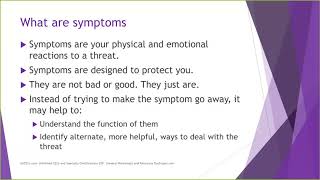
Welcome to Happiness Isn't Brain Surgery with Doc Snipes. This podcast was created to provide you the information and tools Doc Snipes gives her clients so that you too can start living happier. Our website, Docsnipes.com has even more resources, videos and handouts, and even interactive sessions with Doc Snipes to help you apply what you learn. Go to Docsnipes.com to learn more. I'd like to welcome everybody to today's podcast, Happiness Isn't Brain Surgery with Doc Snipes. Practical tools to improve your mood and quality of life. Today we're going to talk about understanding symptoms. A lot of times when we're depressed or we're anxious or whatever's going on, even when we're sick with something physical like we've got a runny nose and a cough, we say we have a cold, we automatically assume that that's what it that's not necessarily true. I can tell you for myself that a lot of times I'll have a little bit of a cough and a runny nose and it's not that I'm sick, it's that my allergies are acting up because I have a lot of grass and pollen allergies and we live on a farm. So just because you have a symptom doesn't necessarily mean you have a condition or disorder, because symptoms are common to a lot of different issues and disorders, if you will. So we're going to talk about how to differentiate and some things that you may want to look at because maybe you've been struggling with depression and, you know, you don't seem to feel like you're getting any better. So we want to look at what other things might be causing that lethargy and fatigue and difficulty concentrating. It may not be as much your cognitions, your thoughts, your mental health stuff as it is maybe you have some hormonal imbalances, maybe your thyroid out of whack, maybe you haven't been sleeping well. So we want to look at some things or look at symptoms from the perspective of the whole person. We're going to identify the common symptoms for anxiety and depression based disorders because that's what most people present with if they're coming to counseling. Even if you have an addiction, you probably also have underlying anxiety or depressive symptoms. So we're going to talk about what causes those and other ways to address them. We'll learn how a positive change in one area or symptom can have positive effects on all symptoms or areas, such as if you're not sleeping very well, it may cause you to have difficulty concentrating, be fatigued, be impatient, have a sense of hopelessness and helplessness because you're just tired all the time and you can't seem to get stuff done. And when you start sleeping better, all those other things also start to improve, which will reduce your stress, which will help you sleep better. So you know, it's a reciprocal thing. And we're going to explore the function of each of the symptoms of anxiety and depression based issues, the potential causes for those symptoms, not just mental health stuff, but also physical health, social, environmental, and potential interventions for each of those symptoms. Now, it's important to remember before you make a change in your dietary habits or your physical habits, to run it by your doctor. You know, that's something we have to say. You want to use good common sense and not just turn something on its ear. But it will help you be more educated and be able to carry on a conversation with your physician and advocate for yourself, identifying what you think may need to be done. It's important to remember that everything you feel, sense, think and do is caused by communication between your nerves with the help of chemical messengers called neurotransmitters. So if those neurotransmitters are out of whack, then everything you feel, sense, think and do will likely be impacted. You may feel more anxious, you may feel low motivation, you may feel depressed, you may feel, you know, exhilarated. If that's the case, you know, some people, when they get really stressed, have a rush of norepinephrine which gets them really, really hyper. Higher order thinking is able to override sensory input and tell us that there's a threat when none exists, or that there isn't a threat when there really is one. So it's important to look at your thoughts. Those aren't going to be the sole cause probably of what's causing your symptoms, but it's important to look at your thoughts. And if you're looking at things in terms of all or nothing or in stressful ways, then your body may perceive a threat. If you, from prior learning experiences have come to believe that certain situations are dangerous, then, for example, flying, then when you get ready to fly, you may tell yourself that there is a threat, that it's dangerous when it really isn't. So your thoughts can really impact how you feel. They can rev you up, get you stressed out, or they can calm you down. Think of your brain as a computer processor. It simply does what it's told based on the information it has, especially as long as it's functioning well. If your motherboard starts to go out or if you don't have electricity, it's not going to function as well. So we need to pay attention. You know, if think about when your computer has acted up before. A lot of times it's probably because of some update that just recently installed. But sometimes it could be because a wire's loose on your mouse or your motherboard is getting ready to go bad. So again, it could be a physical cause, or it could be, you know, something else. And when we think of updates on computers, you know, I kind of think of that as our thoughts. Software things that we program in are more like our thoughts, and the hardware is more like our body. So what are your symptoms? Symptoms are your physical and emotional reactions to a threat. When you break it down and really get down to the nitty gritty, you've got two main feelings. Fight or flee, anger or anxiety. Depression comes in when you lose something. But you also have a lot of depression when you've tried to fight or flee for so long and you haven't been successful, and your body just kind of throws up its hands and it says, I'm hopeless and helpless to change this situation. But it started with a threat that you perceived. Happiness is another symptom or feeling. But a lot of times you're not going to sit there and try to figure out, well, I'm too happy right now. How can I fix this? So we're really going to focus on your unpleasant or distressful feelings. And I try not to call them negative, because they're not. Your body is reacting on what it thinks to be true in a way to help you survive. Symptoms are designed to protect you. They're not good or bad. They're not positive or negative. They just are. And when they happen, you want to say, all right, what is going on? What is my brain or my body trying to tell me? So instead of trying to make the symptom just go away, you know, when you're depressed, try to cheer yourself up. Or when you're angry, go to the gym and work on a punching bag for a while or something. That's probably going to or may distract you for a little while, but it may not make the symptom go away if there are underlying causes for it. So ask yourself, what is the function of this symptom? Why am I feeling this way? What is. What are my thoughts? You know, if you're depressed and you're feeling hopeless and helpless, and you Just, you know, what's the point? I don't want to do it anymore. Then you want to ask yourself, what in my life, don't I have power over that? I wish I did. And, you know, your body's trying to tell you, either you need to do something different to address this situation, or you need to figure out how to accept the situation after a loss. For example, if somebody passes away, you go through a period of depression. You're hopeless and helpless to change the situation. Now, if you stay in that period, if you get stuck in that period, which some people do, it's important to look at. You know, your body is telling you, you can't change this situation, okay? You can't change it. What can you do to improve the next moment for you? Because you know that person is gone or that thing is gone? So how can you come to accept it and integrate it into what I call your life narrative? Think of your life as a book, and you're writing it chapter by chapter by chapter. And, you know, characters come and characters go. So how do you keep the storyline going in the direction you want it to, despite this event, and identify alternate, more helpful ways to deal with the threat? So let's go back to flying. If you think flying is terrifying, but you've got to fly, sitting there telling yourself how terrifying flying is probably not a real helpful way of dealing with it. Doing research to find out, you know, in reality how safe or unsafe is flying. Now, you could use your energy to do that and find. Because I've done the research, my husband's a pilot, so I do that research. But you would find that flying is a whole lot safer than driving. Now, don't get me wrong, I'm not telling you to avoid driving, but I'm telling you to recognize that your fear about flying is probably based more on impressions than on facts. So using that energy, instead of fighting with it and getting all worked up because we do, and getting freaked out before you get on the plane, use that energy to do the research and then continuously remind yourself about the facts of the situation. And if you can, you know, sit next to somebody who's a frequent flyer who can kind of help you get through when there's a little bit of turbulence or whatever, so you can feel a little bit more comfortable. So the first symptom we're going to talk about is lack of pleasure. The form or symptom is lack of pleasure in most things. So you can have little periods where you laugh or you're like, okay, I'm doing okay. It's in most things, most days for a period of at least two weeks. And I'll tell you, during one time where I was experiencing a depressive episode, you know, one of the only things that really made me happy at that point were two of the things my kids and my cat. And my cat would notice when I was stressed, and he would, which was most of the time at that period, during that period, and would crawl up on my lap and make biscuits on my chest. Does that mean I'm not depressed? Since that brought me pleasure and every time he did it, it brought me pleasure? No, because it was lack of pleasure in most things. Going to the gym, making dinner, talking with family and friends, watching tv, going to work. Nothing was really making me happy. That usually makes me happy. And it lasted for longer than two weeks. So it was important, important to recognize that you probably will have a few things that kind of give you a light at the end of the tunnel. That doesn't mean that you're not depressed or experiencing this symptom. And you don't want to wait. If you notice it early, you don't want to wait till you meet this criteria before you ask for help. If you notice you're starting to lose motivation and lose pleasure in most things, you know, the first day, start trying to do something and look at what might be causing it. What can I do differently? One of the first things I tell my clients is when they start feeling a symptom, to ask themselves what changed or that, you know, I was doing fine and then all of a sudden I don't have any pleasure and stuff, what changed? Or look at times when they've been happy in the past or haven't had this symptom, ask themselves what's different When I was happy, what was different than what's going on right now? And how can I maybe make that happen again? So the causes of lack of pleasure are many. They're like we said, generally neurochemical imbalances because there may be insufficient dopamine, which is your pleasure chemical, or norepinephrine, which is your kind of get up and go and motivation chemical. And there's a whole bunch of other chemicals. But, you know, those are the two biggies that we're going to look at for this one. It can be caused by lack of sleep. If you're not getting enough sleep, your body can't reset and rebalance, and it thinks that you're under duress, you're under a threat of some sort. So lack of Sleep causes your body to trigger the threat response which will keep you from feeling as happy because there's this underlying, I don't know what's going to happen. And think about a time when you've been really sleep deprived. If you've had a new baby in the house, it is not hard to see how lack of sleep can cause you to lose feelings of pleasure in most things. I remember when my son was little, when he was an infant, he had gastric reflux really bad. And we went through two months where we didn't get a solid two hours of sleep. It just didn't happen. And I was exhausted, I need my sleep. And I just, I could barely, could barely go. Excessive stress, you know there, if you've got excessive stress in your life, whether it's with a job or with finances, your relationship or all of the above, you're not going to have the happy chemicals. You can have the stress chemicals or the happy chemicals, you're generally not going to have them both. So if you've got this underlying stress, anxiety, dread, anger, it's going to be a lot harder to find pleasure in most things because all your energy is going to what you call stress, which is either anger or anxiety about things that are going on in your life. Drug or medication use can also cause lack of pleasure. And it's important to understand that even some psychotropic medications, mental health medications, can cause lack of pleasure. But there are other medications like opiates and blood pressure medications and yada, yada, yada, that can also have the side effect of making you exhausted and maybe having lack of pleasure and things or disrupt your sleep, which can cause lack of pleasure. So if this symptom started right after you started taking a particular medication recreationally, using some sort of drug, including alcohol or nicotine, over the counter medications or supplements, then it's important to look at could this substance may be causing my lack of pleasure. And that's one of those things you run by your doctor and you go, what might be going on here? Hormone imbalances, including thyroid hormones, also can cause a lack of pleasure. Thyroid hormones help with your get up and go, they help get you energy. Norepinephrine helps get you energy. Estrogen, interestingly enough, and testosterone, both, you would think not so. But both tend to be excitatory hormones. So as your sex hormones get out of whack, progesterone, estrogen and testosterone, you may have a lack of pleasure, low libido. So it's important again to look at what has changed and this could be an aging thing. It could be over training at the gym, it could be a side effect of medications. You know, there's a lot of things that could cause it. Even changes in nutrition can cause neurochemical imbalances. So again, ask yourself what changed? And nutritional changes generally aren't going to show up as symptoms, so to speak, right away. So if you look in, you know, over the past three days or week and nothing really has changed, then go back maybe a month and see if maybe you started eating like crap when you used to eat really well, or you cut a particular food out of your diet. Some people who are prone to depression don't do well on very low carbohydrate diets because you need a lot of those foods and substances that are, that are in carbohydrate based foods like vegetables and grains in order to produce the neurochemicals. So, you know, if you need to go on that kind of diet for health reasons, or you choose you want to, it's important to recognize that it could affect your mood. Sometimes it's for a short period, sometimes it's for a long period. But that would be something to talk about with your doctor. Causes of lack of pleasure also include HPA axis dysfunction. Your HPA axis is your threat response system, so to speak. When it's triggered, your body is going, I need to fight or flee. There is danger. So it secretes a hormone called cortisol which increases norepinephrine, which is a get up and go, and motivation, neurochemical, and glutamate, which is another get up and go neurochemical. So your body's going, all right, I'm ready, I can take it. Think about a little Chihuahua that's trying to get to the mailman. This causes, and it makes sense when you think about reductions in estrogen and testosterone. Your body says, you know, there's a threat. Right now we don't need to spend energy on procreation. But remember what I said on the last slide. Estrogen and testosterone tend to be excitatory or stimulating hormones. So if those go away, your energy may go down. But so estrogen and testosterone go down. This also means that serotonin, one of your main calming neurotransmitters that can help you say, all right, you know, there's, there's no threat here, let me regroup, regather my energy and use it for something I need. Well, when estrogen and testosterone goes down, serotonin is not as available, which increases anxiety and depression and it also reduces the availability of your sleep hormone, which is called melatonin, because melatonin is broken down or comes from broken down serotonin. So if you don't have enough serotonin, you're probably not going to sleep as well, which is going to increase anxiety and depression and impair sleep. And I said, as I said earlier, if you're not sleeping well, it throws the whole system out of whack. Going back to the analogy of the computer, it's like a hard drive. The fan's not working. If the fan's not working, that puppy's going to overheat at a certain point and everything's going to kind of fry. They found that people who have poor sleep, well, people who are sleep deprived for a long period of time, and I mean, like not allowed to sleep, actually start, actually can die. The body starts kind of shutting down. But think about a time when you've been really stressed, maybe final exams, and you didn't sleep much. Did you get sick afterwards? I know I always do. I was a horrible student. So I'd wait till the week before finals and then I'd start to study and I wouldn't sleep much that week. And sure shooting as soon as finals were over, I would come down with some form of a bad cold or strep throat. So sleep is really important not only to your mental health, but to your physical health. And think about how pleasant you are to be around when you're sick and snot and everywhere. So that generally doesn't help your mood. Sleep is important. Most people are not going to go, you know what, I just don't want to work on making my sleep better. So this may be one of the places to start because it's one of the easiest places to start improving not necessarily the quantity of sleep, but the quality of sleep. You need a certain amount of deep sleep, and we'll talk about that in later videos. The lack of pleasure is your body's way of signaling that there may be a problem. It conserves excitatory neurotransmitters for a real crisis. Your body is going all right, you know, there may be a problem going on. I don't want to spend all my energy on being happy and elated and all that. I'm going to, going to kind of hoard some energy right now just in case something else comes along. Well, if you address whatever the threat is, then your body will turn loose, if you will, those happy chemicals or excitatory neurotransmitters. So you need to address it. This is why people. You know, when you're depressed, you don't want to be depressed for very long. You don't want to feel that way. And it's your body's way of going, dude, you gotta do something. You've got to do something different because the path you're on is not helping the situation. So how do you cope? Think back over a few times when you've been depressed, even if it was just for a few hours. Make a list of the things that you do to help yourself feel better. Identify things that make your depression or lack of pleasure worse, and identify things that you can do to prevent triggering your depression or lack of pleasure. Now this can be you don't want to trigger stress. You also don't want to trigger depression. So, you know, look around. Sometimes if I'm, you know, feeling low on energy or whatever, I will avoid social media. Sometimes I will avoid going through certain pictures I have. You know, living on a farm and having animals. All my life I've had animals come and go from my life and sometimes seeing them makes me a little bit sad. So if I'm feeling particularly vulnerable, I may not go looking through those pictures and think about things that I don't have anymore. Sometimes watching certain shows or thinking certain thoughts can also trigger your depression or lack of pleasure. So you want to identify and it can be things you do. Like if you happen to be really stressed out and eat a lot that day, you may have negative self talk about how powerless you are or how weak you were to eat all of that, or how you shouldn't have eaten all that or whatever. Is that going to do you any good? No, it's not. So it's important to catch those thoughts and go, okay, it happened, so what now? What can I do to improve the next moment and to not make it worse? Another thing you can do in that situation to prevent triggering your depression is to be compassionate with yourself. You know, if you had a second helping of ice cream or whatever because you were stressed out, not because you were hungry. Well, learn from it. Figure out how to address it and turn it into a learning opportunity so you don't feel hopeless and helpless. You feel empowered so that you'll be able to handle it the next time. Simple interventions. Don't expect exhilaration, but try to do some things each day that make you mildly happy. This will trigger some of those happy chemicals. Like I said, you can't be angry and happy at the same exact time. So you're going to Focus on the happy stuff. When you're in that happy place, get plenty of quality sleep. This will help stabilize your circadian rhythms, which tell your body when to sleep, be awake, and eat. So you may start finding that your eating patterns stabilize. If your sleep quality improves, improve your nutrition. And you can search online for terms like nutrition for depression. You can also talk with your doctor or a nutritionist about things you need to have in your diet or vitamins and minerals that are necessary for your body to produce for your body to produce the neurotransmitters and stay in balance. Think back to a time when you didn't feel this way and ask yourself what was different or what changed that made you start feeling hopeless and helpless. And remember that depression is a natural part of the grief process and also very normal after trauma. So if you just lost something, whether it's a movement, you know you lost what you were used to, which a lot of people don't even think of as a loss. But after you move or when you have a new baby, when life as you knew it changes, that's a little bit of a loss. Or, you know, obviously if you lose something, maybe you lose your house or, you know, your wedding ring or whatever it is, it's important to remember that it's okay to get depressed and let your body work through that and try to figure out, all right, I'm helpless to change the situation, whatever happened, so how can I integrate it into my life narrative? How can I make this part of my life instead of struggling against it because I can't make it go away now. So, in summary, the brain takes information in that you already have and combines it with input from the current situation that to decide if there's a threat. So based on prior learning and what you expect to be true, your brain may perceive a threat when there isn't one. And you can stop yourself and go, that may have been true when I was 6, that that was a dangerous situation. But I'm 36 now, and it's not dangerous anymore. Again, don't expect it to fix everything right then. I had one client who came from a very chaotic, angry household, and whenever he heard doors slamming or cabinets slamming, it increased his anger and anxiety greatly. But in the present, he was in a very safe situation. But those things, slamming doors, slamming cabinets, even if somebody didn't mean to slam them, they just shut it too loud and it made a loud noise would trigger those same feelings. And he started, you know, focusing on the fact that, okay, that was true, then it's not true now, and also addressing the situation and educating people in his household that it's really important for me and my stress levels that you don't slam the doors. Higher order thinking is required to override your threat response system, so it is required to stop, practice that pause and go is this really a threat? And what can I do now to improve the next moment? I may not be able to change what's happened, but what can I do to either improve how I feel about the situation or improve the situation? The HPA axis or your threat response system triggers the release of cortisol and creates a cascade effect which will prepare you for battle if you will, but it also keeps you from feeling as happy, keeps you from feeling relaxed, and can impair your sleep. Interventions for lack of pleasure include doing things that make you happy, improving your sleep quality, improving your nutrition to make sure you're getting all the building blocks to make the neurotransmitters focusing on your thoughts. You know, look at how you're thinking and what you're thinking and ask yourself, is this accurate and helpful right now? If you like our podcast, please subscribe on your favorite podcast player. You can join our Facebook group on facebook.com groups HappinessPodcast. You can subscribe to our YouTube channel at YouTube.com allceducation or join our community and access additional resources at Docsnipes.com the ability to launch Docsnipes.com and the Happiness Podcast is in large part due to the sponsorship from Our sister site allceus.com providing continuing education and pre certification training to addiction and mental health counselors around the globe since 2006. If you are a mental health counselor or addictions counselor needing CEUs, or if you want to become an addictions counselor, peer specialist, recovery residence administrator, or certified recovery coach, please visit allce.com Unlimited CEUs starting at $59 and specialty certificate tracks starting at $89. Go to allce.com to learn more.










