Understanding Diagnosis Part 3 Happiness Isn't Brain Surgery Episode 30c
Dr. Dawn-Elise Snipes (podcast: Happiness Isn't Brain Surgery) explains causes, functions, and interventions for sleep disturbances. She frames symptoms as signals requiring whole-person evaluation and reviews physical (pain, allergies, sleep apnea, hormone/thyroid imbalances, nutrition), behavioral (poor sleep habits, naps, caffeine/alcohol, mobile device blue light), and cognitive (stress, anxiety, PTSD) contributors. Practical interventions include consistent nightly routines, limiting caffeine (stop ~10 hours before bed), short naps (10–15 minutes) or ≤45 minutes maximum, bedroom allergen control, light exposure to wake up, cool showers to aid sleep initiation, progressive muscle relaxation, pain management options, and seeking medical evaluation for thyroid/sleep apnea. The episode mixes clinical suggestions, self-help strategies, and personal anecdotes, with referral to Docsnipes.com for more resources.
Chapters
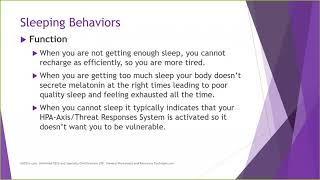
Welcome to Happiness isn't Brain Surgery with Doc Snipes. This podcast was created to provide you the information and tools Doc Snipes gives her clients so that you too can start living happier. Our website, Docsnipes.com has even more resources, videos and handouts, and even interactive sessions with Doc Snipes to help you apply what you learn. Go to Docsnipes.com to learn more. We're going to continue talking about symptoms. And if you remember from the last two presentations, symptoms are just that. They're particular issues you might be experiencing. But those issues can mean a variety of different things. For example, low energy may mean you're not getting enough sleep, may mean you're dehydrated, may mean you've got depression, may mean you're getting ready to get sick. So you can't just say, because I've got low energy, I know I have this. We want to look at what's going on with you in totality. So in this section, we're going to identify the causes, function and interventions for sleep disturbances. And, you know, sleep is one of my favorite topics. When people are depressed or anxious, they generally do one of two extremes. They either sleep too much or have insomnia. So what might cause that? Well, there are a lot of different things that can disrupt your sleep. Unfortunately, that's one of the easiest things to disrupt sleeping. Too much can indicate poor quality sleep. So, you know, if you wake up and you're exhausted and you go back to bed and you sleep some more and you wake up and you're still exhausted, you go back to bed, well, something's wrong. If you're sleeping that much, your body's probably not getting quality sleep, which is what it really needs to rebalance and recover from whatever it's struggling with. Unfortunately, when we are under stress, our body prevents, perceives that as kind of a threat. It keeps our cortisol levels higher. We often drink a lot more caffeine when we're under stress, but all of those things contribute to disrupting our sleep quality. So stress can in and of itself inhibit sleep. Which, when you're sleep deprived and you want to sleep, you're not feeling like you're rested, it tends to cause more stress. So it's a negative cycle there. So that's one thing you want to check is what can you do to minimize or eliminate stress, at least right before bed, you know, like the two hours before bed, what can you do to help yourself relax so you can get good quality sleep and be recharged for the next day. Poor sleep habits also contribute to sleeping too much or having poor sleep. Because when you don't get quality sleep, then you're sleepy a lot, so you may take naps and that throws off your circadian rhythms. So you're not going to sleep well. If you don't go to sleep at the same time, then your body's not as primed to make melatonin so you can get ready to sleep. So there's a lot of things that we're going to talk about with developing good sleep habits that you can do in order to improve the quality of your sleep. We all know that pain may disrupt our sleep. So you want to look not only at do you have chronic pain from arthritis or did you lift too hard at the gym? I've done that. I've awakened after I've had a really hard lift at the gym the day before, the day before. So it's like two days since I lifted and I wake up in the middle of the night and my quads are just killing me or something. So it's important if you're working out, for example, to stretch to address anything that might be causing pain, including a bad mattress or a bad pillow. Hormone and neurochemical imbalances can also cause poor sleep if you're under stress. If you don't have enough serotonin, you're probably not going to get as effective or as good quality of sleep. So it's important to look at those things. Also, thyroid imbalances. There's a lot of stuff your doc can actually test for to see if he or she needs to help you. Try to figure out how to balance some hormones. Your sex hormones also play a role in how well you might be sleeping. So if you're a woman and you're going through menopause, then that might be impacting your sleep. And not to mention the night sweats, which may impact your sleep. Allergies or sleep apnea can also cause poor quality sleep. I'm horrible about allowing my dogs not only in the bedroom, but in the bed. And I'm allergic to them, so I will frequently wake up coughing or sneezing or, you know, whatever. So do as I say, not as I do. Try to eliminate as many allergens as possible from your environment. Use a pillow cover that blocks dust mites. Change out your pillow frequently in order to get rid of any dander dust mites that may have accumulated. Do what you can in order to keep just dust in general. Maybe have a HEPA air Purifier running in your room. Anything that you might be allergic to, especially, you know, allergic to as far as smelling it, you want to try to eliminate from your from your bedroom. It doesn't mean you have to necessarily eliminate from your whole house. You'll probably find significant improvements if you get it out of your bedroom. Carpet is famous for for holding dander and allergens. So if you can get carpet out of your room and get solid surfaces, you're probably going to notice an improvement. Not everybody can or is willing to do that. So you know you got to make your choices. And poor nutrition can also cause poor quality sleep. If you don't have the building blocks to make serotonin, you're not going to be able to make melatonin and get good quality sleep. If you're hungry, if you're craving, if you. There's a lot of things that can keep you nutritionally or hungrily from getting good quality sleep. So if you're not sleeping well, if you're waking up and you feel unrested, you want to look back and ask yourself why. Another thing that can disrupt your quality of sleep is caffeine. It stays in your system for a long time. The half life. The amount for the first half of the caffeine that you drank to get out of your system is five to six hours. So, you know, if you don't want caffeine disrupting your sleep, you want to make sure that you stop drinking it kind of before noon. Unless you're one of those people who goes to sleep really late because only half of it'll be out of your system by 6pm if you quit drinking it at noon. So if you still want coffee in the afternoon, consider switching to decaf. Those are decisions to make with your healthcare team. Insomnia can indicate an inability to relax. If your mind is going a million miles a minute. I know before I have a test, before I have an interview, before I travel. Those are the three biggies that I pretty much know. I ain't gonna sleep well that night because I've got 1001 things going through my head. So if you can't relax, you want to look at what is causing that inability to relax. Do you have stressors going on in your life? Do you have things that you keep thinking, oh, I need to remember to do that tomorrow? Well, if you have those gotta remembers, keep a notepad next to your bed so you can write them down. That way you know you'll remember and you don't have to worry about not remembering pain again can make it difficult to sleep. So if you have pain, talk with your doctor about pain management interventions including hot baths and hydrotherapy, stretching, yoga, tai chi, acupuncture. There are a lot of non pharmacological interventions that can help with pain. They also have TENS units, which is electronic nerve stimulation. You put on these little patches and it basically blocks the nerve signals. You can get those over the counter now. So they're a lot more readily available than they were when I was younger. There are a bunch of different options that you can explore and I would really encourage you to look at what options you have. An insufficient serotonin or melatonin can also make it difficult to get to sleep because you don't have that sleep hormone kicking in. Another thing which you know whether it causes poor sleep or causes insomnia. If you're using your mobile devices until you know the wee hours of the morning or late into the evening, the blue light that's admitted from computers, televisions and mobile devices tells the pineal gland in your brain that it's daytime, it needs to be awake. So it would be helpful to have a blue light blocker on your mobile devices and on your computer after say 7:30 or 8:00pm on your television. What I have done and what seems to help some people is I turn down the blue tint on my television so it looks like it's kind of got a red haze over it. But it helps because I do watch TV right before I go to bed. So you want to make sure that your brain is getting the signals that, hey, it's time to start winding down. So the physical causes can include poor nutrition, pain and bad sleep habits. So your brain is just not engaging with the concept that it's time to sleep. Cognitive reasons can be that you're worried about a lot of things. Some people have difficulty getting to sleep because of safety reasons. They may have PTSD from trauma in their childhood. You know, little kids may not sleep well sometimes because they're worried about monsters under their bed. Whatever you can do to make your environment feel as safe and welcoming as possible will help improve your sleep. When you're not getting enough sleep, you can't recharge as efficiently. So you tend to be more tired. Your body's going, I really need that good sleep. I don't need a lot of sleep. I just need the good stuff. If you take naps during the day, it's generally recommended that you don't sleep for more than 45 minutes because during a nap you don't want to get into the deep sleep. If you do, then your body's like, wait, was this nighttime daytime? Was this supposed to be sleep time? So in order to avoid confusing your body, you want to stay in that light sleep. If you're taking a nap during the day, a lot of times a 10 to 15 minute power nap will make you feel a lot more rested. When you're getting too much sleep, your body doesn't secrete melatonin at the right times, leading to poor quality sleep and feeling exhausted all the time. So if you're taking naps in the afternoon or if you're, you wake up at 6am, you get up, you putter around for 30 minutes or so and then you go back to bed, or you sit on the couch and you fall asleep for a couple more hours and then you wake up and you eat lunch or breakfast and you fall back to sleep. Your body's not sure when it's supposed to be awake and when it's supposed to be making melatonin. So it's just kind of in this limbo stage. You really want it to know that at this time, whatever that is for you, for Me it's about 8:30. For most adults it's probably closer to 10. At this time, it's time for my body to start winding down. When you can't sleep, it typically indicates that your threat response system is activated so it doesn't want to be vulnerable. Whether you're anxious over upcoming event, you know there's anxiety. That's that threat response system saying something's getting ready to happen and I don't know if it's going to be good. So you want to look at what's causing the anxiety or the stress or the quote, agitation, whatever you want to call it, that's keeping you from being able to relax and go to sleep. So how do you cope? What do you usually do to help yourself? That's the first place to start. Instead of reinventing the wheel, what, what do you do to help yourself get to sleep when you can't sleep? For me, I get up, I read for a little while and I go back to bed. Some sleep. People will tell you that if you lay in bed for more than 15 or 20 minutes and you can't get to sleep or can't get back to sleep, it's better to get up and do something and then go back to bed. If you stay in bed and continue to fight with it, you're going to increase your agitation and keep yourself from sleeping. Because you're going to start getting frustrated that you can't go get to sleep. And doing that sleep math where you're like, if I fall asleep in five minutes, then I can get another three and a half hours of sleep, which just keeps you revved up. So what do you do to help yourself get to sleep when you can't? Likewise, what do you do when you've been sleeping too much and you need to help yourself wake up? Sometimes after you've been sick, you know, you've had the flu, you've been in bed for a week, and it's, oh my gosh, it's hard getting started again. So how do you help yourself wake up? The same thing is kind of true when the time changes. I know you don't think an hour is a big deal, but it's kind of hard to get jump started for those first couple of weeks after the time changes for a lot of people. So what can you do to help yourself wake up? Exposure to bright lights is definitely helpful. You know, let your brain know that, hey, it's daytime, even if it's artificial lights. You know, don't sit in a dark breakfast room or a dimly lit breakfast room if you can. You want to be near as much bright light as possible. Interestingly, when you go to sleep, your body cools down. So a cool shower, not a cold one. A cool shower can help you relax and get ready for bed. A warm shower warming your body up gives it the cue that it's time to get on with the day. So a warm shower or a hot shower in the morning might actually help get you awake and energized. Create a good sleep routine that involves the same two or three activities every night. Just like you did with your kids when they were young. For my kids, you know, we would bring them home from preschool and they would have some playtime while I was making dinner. We'd eat dinner, they would take a bath because they were usually filthy from dinner. And then we'd read a story and they'd go to bed. That routine, once they got used to that, that routine kind of triggered it is time to go to sleep. And if you do the same two or three things every night before bed, you'll notice that your body starts to cue in. For me after dinner, you know, I tend the animals. We live on a farm, go downstairs and start, you know, watching tv, which I don't usually do. I watch TV in the evenings when I'm trying to wind down and kind of turn my brain to jelly. And I start playing either Scrabble or checkers. And that my body has associated with, oh, it's almost time to go to bed. We're, we're playing mind numbing games on, on the tablet. So now even during the day, if I start playing that for too long, any of those games for too long, I start getting a little sleepy and I'm like, okay, that's not a good thing. So your body really does start to recognize cues of its time to get sleepy. Think about when the days start getting shorter. Most of us associate darkness, and your brain does too, with it's time to go to sleep. Well, here in Tennessee, as soon as the time changes, it's getting dark at like 4:45. And so my brain's going, all right, it's time to go to bed. And I look at the clock and I'm like, no, I still got four more hours. How am I going to stay awake for four more hours? So it really does make a difference. So create a sleep routine. Same two or three things roughly every night, about the same time will help your body cue in to when it's supposed to start secreting melatonin and helping you get to sleep. Identify and address anything waking you up at night, such as the dogs. Sometimes, you know, I told you my dogs stay in the room. Sometimes they'll get up and they'll, you know, want something to drink or need to get out or last night Dookie was scratching his ear at 1:30 in the morning and I was just like, dude, stop. But that woke me up. So it's important for, for me to be aware of the things and for all of us to be aware of the things that wake us up, whether we're going to change them or not. That's, that's a personal choice when you have infants at home, you know, you know, especially if they're still sleeping in the room with you. When my son was sleeping in his bassinet, every time he would like squeak in the least little bit, I would be wide awake. So any sound woke me up. Coughing and allergies can keep you up even if it's not waking you up. You know, allergies can cause you to have a worsening of sleep apnea. It can cause you to cough. Even if, like I said, even if it doesn't wake you up, it can make snoring a lot worse. All of these can do disrupt the quality of sleep. So take steps to try to minimize that. If you have a snoring spouse, you know, if your spouse Snores enough where it feels like it's taken the paint off the walls. That's probably going to be interfering with the quality of your sleep. So you need to figure out how you're going to deal with it. Some couples decide that they're going to sleep in different rooms. Other couples, you know, the snoring person starts, does a sleep study and looks into maybe a CPAP machine or looks into what's causing the snoring. That's going to be a personal call. But do recognize if you've got constant noise in your room, it's probably going to keep you up. And if your spouse also has apnea, you know, I know with my husband, he'll snore, sounds like the paint's coming off the walls, but then occasionally he'll stop. And I'm kind of waiting for him to breathe again, and it wakes me up because I'm like, okay, breathe, breathe. And then he starts breathing, and then I'm like, oh, now you're being loud. So we can, you know, as if you're. If you care about the person next to you, whether it's your child or your spouse, if they suddenly stop breathing or they're making a lot of strange noise, it's probably going to wake up some part of your brain and alert it that there might be a problem. If you yourself have sleep apnea, we know that that causes problems with quality sleep. So it's really important to talk with your medical professional about getting that addressed. If you snore a lot, then there's a good chance you may have some apnea. If you're overweight, there's a greater chance that you've got sleep apnea. But that doesn't mean those are the only people who have sleep apnea. So if you can't figure out why you don't feel rested and you've. You've done the sleep routines, you've. You try to be good about not drinking coffee or smoking cigarettes too close to bed. Oh, and don't drink alcohol. You want to make sure your blood alcohol is 0.00, because alcohol will worsen sleep apnea because it slows your respiration. So that's another thing you can do to improve your sleeping. Other simple interventions get a physical to rule out any medical issues, especially thyroid and other hormone imbalances, which can make you feel really sluggish. Chronic pain, which might be keeping you from sleeping as well. Y' all probably have heard on other podcasts, I have a bad shoulder, and I'll go Out. And especially during planting season when I'm doing a lot of weeding and planting and hoeing, my shoulder will bother me a lot and it'll wake me up multiple times in the night. So I know where that's coming from. But it's important to know if it's temporary or if it's permanent and what you can do to address it there. You know, I sleep with a lot more pillows and precariously, I guess you could say, during planting season in order to keep my pain minimized and also, like I said, rule out apnea, reduce or eliminate caffeine at least 10 hours before bed. Yeah, I know I said the half life is five to six hours. Well, yeah, that's true. That's when the first half of it gets out. The first half goes out really fast. The last half kind of trickles out a little bit more slowly, but at least you've gotten the first half out and a little bit more. If you quit drinking caffeine 10 hours before bed. So if you plan on going to bed at 10pm have your last coffee at or Coke at noon, and then if you can switch to decaf, that's obviously again, a medical nutritionist sort of decision that you want to make with your with your healthcare team. Especially if you're addicted to coffee or caffeine, you might want to talk to them about ways to wean down instead of going cold turkey and dealing with the headaches. Keep a notepad by your bed to write down things you need to remember instead of tossing and turning them around in your head all night. Because that, for me at least, it actually starts interjecting into my dreams the things I need to remember. And it keeps me from sleeping as soundly and as well, ideally have. And they're ugly, those little headlamps that have the red. Or have a little lamp next to your bed that has a red bulb in it. So again, you're not exposing yourself to the blue lights, but it's enough light where you can see to write on your notepad whatever it is you need to remember. Use progressive muscular relaxation to help your body relax. And I could do an entire hour on that. If you Google progressive muscular relaxation and look for YouTube videos, there are a lot of guided meditations. Basically, you work from top to bottom or bottom to top, depending. And you practice tensing and relaxing muscles so you can notice the difference between a tense and a relaxed set of muscles. Sometimes you can cue it with a word. So every time you relax, you say to yourself something like Relax or breathe. Then that cue starts to elicit the relaxation response. But progressive muscular relaxation can be really helpful, especially if you carry a lot of stress and tension in your neck, upper back, lower back. It can help you kind of get rid of some of that stress so you're not as knotted up like a ball when it's time to sleep and develop a stress management and relaxation plan. Easier said than none. I know. Identify your main sources of stress, and you can't eliminate all of them or even identify all of them, but identify the main ones, you know, maybe the top 10 or 15, and figure out how to deal with those. But also add in a relaxation plan. For example, if one of your stressors is work, which for a lot of us it is, we may love our work, but it also causes a little bit of stress sometimes. In your plan, set it up so you're leaving work at work and when you're home is when you start relaxing. That's when your body knows we're not going to deal with the stressful stuff anymore. So you want to have relaxation time in there where you're letting your body kind of rest and recharge, if you will. You can't be going full bore all the time. Think about sprinters. You know, they can only run that fast for so long and then they need to rest and recharge. They need a time to recover. So give yourself that time and ideally at the end of the day before bed so you can start winding down once you get off of work. Sleep is when the body rests and rebalances. Mood and addiction issues are often caused by an imbalance in hormones and neurochemicals. So if you're keeping your body from resting and rebalancing, then you're probably getting setting yourself up to trigger an imbalance in hormones and neurochemicals. And that can be brain chemicals that make you happy, brain chemicals that increase anxiety or even like your sex hormones. So you may, if you're tired, if you're not getting enough sleep, your libido may go way down. And that's to be expected because your body's not able to recharge and help you have the energy for those things. Quality sleep is essential to address and prevent mood issues and addictions, illness, you know, if you don't get enough sleep or if you're really stressed, which is going to impair your sleep, you'll probably notice you get sick easier. Quality sleep will also prevent eating disturbances because your circadian rhythms will be in alignment and your hunger and fullness hormones will be kind of in sync. Quality sleep also addresses sleep disturbances. Imagine that if you're sleeping too much or you know not, or you have insomnia. If you can start getting some quality sleep and kind of getting your brain on board with the routine, you'll notice oftentimes that the sleep disturbances start to improve. And high cortisol or a threat response system activation can also cause sleep problems. And quality sleep can help help you lower your cortisol. You have to have low cortisol or lowish cortisol to go to sleep anyway, so by making good sleep habits a priority, you're naturally helping your body reduce your cortisol. Increase your relaxation hormones, which will help you feel happier. If you like this podcast, you can subscribe on your favorite podcast app, or you can join our community and access additional resources@docsnipes.com.










